
Reviewed · TEA CEREMONY EXPERIENCES
Kyoto Local Gourmet Night Experience: Kaiseki & Izakaya & Matcha
Kyoto’s best evening meal may not come with a famous sign out front. This small-group food walk leads you through Gion, Pontocho, and the Kamo River area, pairing three restaurant stops with Kyoto dishes, sake, desserts, and local stories. Guides such as Akari, Ayane, Sura, and Lisa have led recent outings.
I like two things right away: the group is capped at seven people, and the $70.94 price includes dinner, drinks, tea or coffee, soda, and tour photos. I also like the route, which moves beyond one dining room and shows you three very different parts of central Kyoto after dark.
The main consideration is the food policy. Vegetarian meals, including fish, can be arranged with advance notice, but vegan and gluten-free meals are not available. Extra snacks or additional orders cost more, and the advertised matcha experience is not described as a formal tea ceremony.
In This Review
- Key things to know before booking
- Starting beneath Kyoto’s Minamiza Theater
- Gion Shirakawa-dori sets the mood
- Dinner and old Kyoto streets in Gion
- Pontocho brings the izakaya experience
- The Kamo River offers a quieter pause
- A quick look at Kawaramachi’s modern side
- What the $70.94 price really covers
- Who will get the most from this evening
- Guides and the value of local conversation
- Practical details that matter
- Should you book the Kyoto Local Gourmet Night Experience?
- FAQ
- Where does the Kyoto Local Gourmet Night Experience begin?
- Where does the activity end?
- How long does the tour last?
- How many people can join the tour?
- What food and drinks are included?
- Can vegetarian, vegan, or gluten-free meals be provided?
- Are alcoholic drinks served to everyone?
- Can I cancel for a full refund?
Key things to know before booking
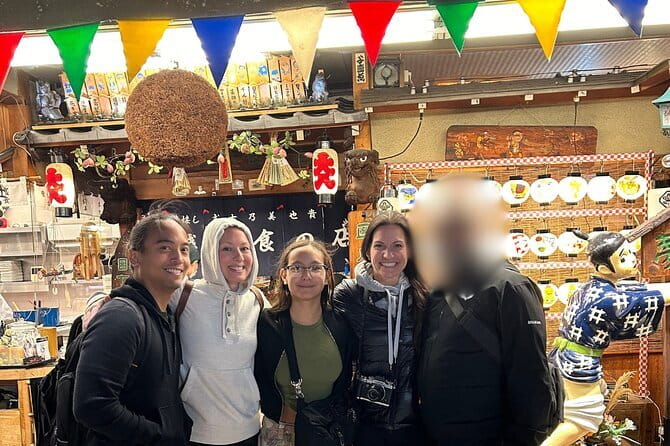
- Three restaurant stops: You receive a full dinner course and dessert across three different local restaurants.
- A seven-person maximum: The small group makes conversation with your guide easier and allows a more personal evening.
- A classic Kyoto night route: The tour passes Minamiza, Gion Shirakawa-dori, Gion, Pontocho, the Kamo River, and Kawaramachi.
- Drinks are included: Sake, other alcoholic drinks, nonalcoholic drinks, tea, coffee, and soda are part of the package.
- Vegetarian food requires notice: Vegetarian meals, including fish, are available by advance request. Vegan and gluten-free meals are not offered.
- Three and a half hours: Time is divided between eating, walking, conversation, and transport between stops.
Starting beneath Kyoto’s Minamiza Theater
The evening begins at Minamiza Theater, at the east end of Shijo Bridge. This is a useful meeting point because it is easy to identify and sits near several of Kyoto’s main nightlife districts.
Minamiza is not just a random landmark. It is a historic theater known for traditional performances, so your first few minutes already place you in an old Kyoto setting. Look for the theater at Kyoto-shi Higashiyama-ku, Shijo Ohashi Higashizume, Nakanocho.
The activity ends back at the same meeting point. That makes planning easier, especially if you want to continue your evening nearby. It also means you do not need to arrange a separate ride from an unfamiliar neighborhood at the end.
The tour runs for about three hours and 30 minutes. Some of that time is used for walking and transport, so this is not three and a half hours of sitting down to eat. That is a good trade for anyone who wants food tied to the streets and districts that shaped it.
A few more Kyoto tours and experiences worth a look
Gion Shirakawa-dori sets the mood
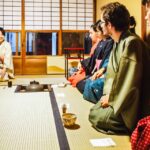
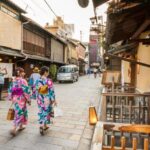
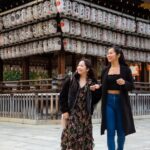
From Minamiza, the route passes toward Gion Shirakawa-dori. This is one of Kyoto’s most photogenic streets, with traditional wooden buildings, the Shirakawa waterway, and a quieter feel than many of the city’s major shopping roads.
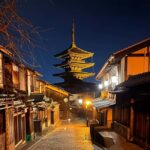
This short passage matters because it gives the food stops a setting. You are not simply being taken from restaurant to restaurant. You are walking through Gion, where wooden machiya houses, teahouses, lanterns, and narrow lanes still define the look of the district.
Keep your camera ready, but be respectful. Gion is a working neighborhood, not a stage set. You might see a geisha or maiko heading to an appointment, but that is never guaranteed. The pleasure here is the atmosphere itself, especially as the light fades and the lanterns begin to matter more than the signs.
The route also passes near Yasaka Shrine. The shrine is not listed as a separate admission stop, so do not expect a dedicated visit inside the grounds. Still, its presence helps explain why this part of Kyoto has remained such an important meeting point for festivals, worship, food, and nightlife.
Dinner and old Kyoto streets in Gion
The first main section spends about 90 minutes in Gion. Here you begin the food experience while walking through one of Kyoto’s most recognizable districts.
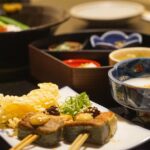
The meal is described as traditional Kyoto cuisine, but the exact dishes can vary. That is worth keeping in mind if you are hoping for one specific kaiseki menu. The package promises a full dinner course spread across three restaurants, not one fixed, formal kaiseki dinner in a single dining room.
That difference can work in your favor. A formal kaiseki meal is often a long, carefully staged event. This tour gives you a wider taste of Kyoto’s evening food culture, with different restaurants and a more relaxed izakaya setting. You trade ceremony for variety and conversation.
The guide’s role is important here. The strongest part of this experience is not simply receiving food. It is learning how the dishes, streets, and drinking customs fit together. Guides have been praised for making the evening easygoing and engaging, including with younger children, so families may find the tone less stiff than a formal dining tour.
You may also see the contrast between Gion’s polished image and its ordinary working life. Teahouses and restaurant doors sit close to convenience stores, side streets, and everyday businesses. A good guide can help you notice that Kyoto’s old districts are lived-in neighborhoods, not just pretty backdrops.
Pontocho brings the izakaya experience
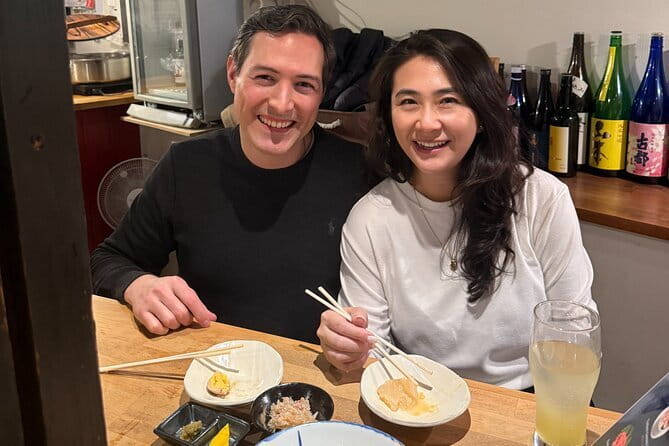
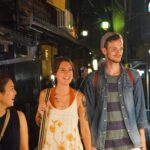
The next section lasts about an hour in Pontocho. This narrow lane runs between Kiyamachi and the Kamo River and is lined with wooden buildings, lanterns, bars, and restaurants.
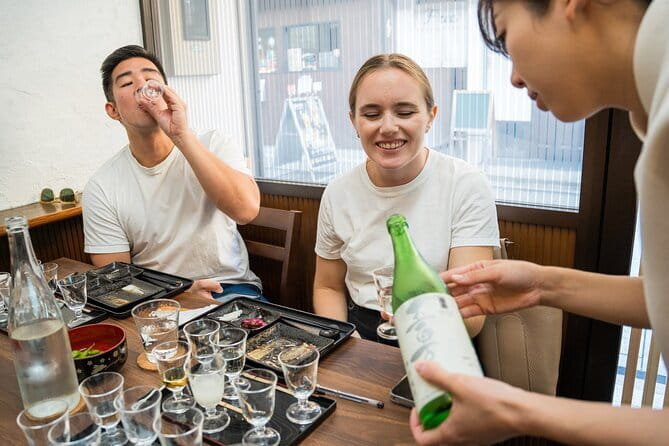
Here the focus shifts toward light snacks and Japanese sake. You can expect your guide to explain the streets as you eat and drink, which gives this stop a different rhythm from the first dinner course.
Pontocho is especially appealing after dark. Its narrow shape and wooden facades create a strong sense of place, but the lane can also feel busy and crowded at popular times. You should be ready to walk slowly, wait briefly at crossings, and stay close to your guide.
In warmer months, restaurants along the Kamo River use kawadoko dining platforms. These riverside spaces are a well-known Kyoto summer tradition. The tour description does not promise a meal on one of the platforms, so treat them as part of the area’s character rather than a guaranteed feature of your booking.
The included drinks add real value at this point. Sake is not an extra charge, and alcoholic drinks are included for participants aged 20 and over. You can also receive nonalcoholic drinks, tea, coffee, or soda. Alcohol is not served to anyone under 20, so the evening still works for mixed-age groups.
I would not book this expecting a full sake-tasting seminar. The focus is local dining and conversation, with sake as part of the meal. That is better suited to you if you want to try a drink in context rather than study production methods or tasting notes.
The Kamo River offers a quieter pause
The Kamo River section lasts about an hour and focuses on places familiar to Kyoto residents. The river runs through the city center, and its banks are used for walks, sitting, picnics, and quiet breaks.
This part gives the tour some breathing room. After the close lanes of Gion and Pontocho, the open riverbank lets you see Kyoto from a wider angle. In the evening, nearby lights and the sound of the water create a calmer setting than the restaurant lanes.
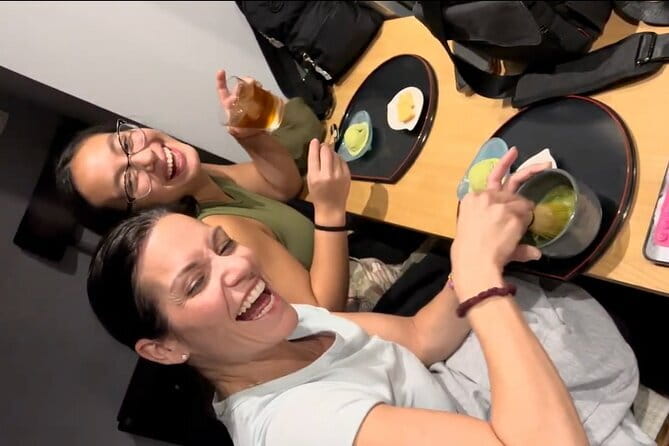
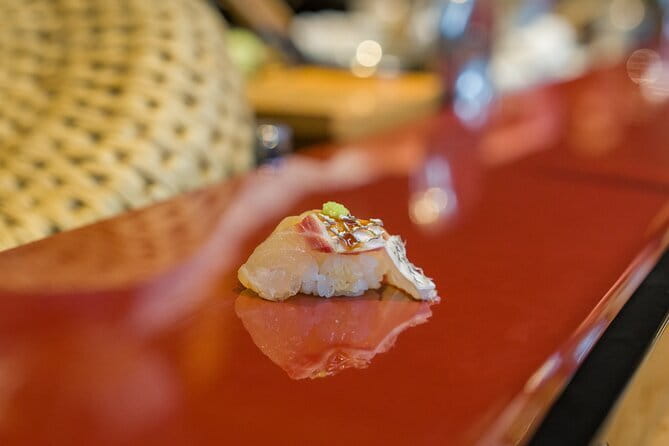
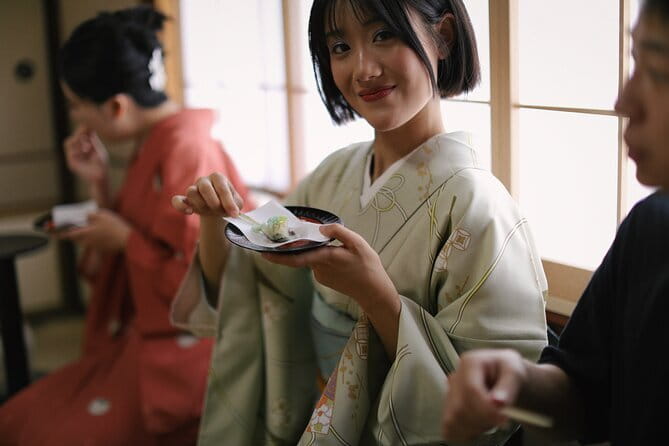
The food here centers on desserts and drinks at nearby shops. The package also includes coffee or tea, and the tour title refers to matcha. Still, the available details do not promise a dedicated tea ceremony or a formal matcha lesson. If matcha is your main reason for booking, ask the provider what form it takes on your date.
That small distinction matters. You should expect Japanese sweets or desserts and a tea-related tasting, but you should not assume a ceremonial tea-room experience unless it is confirmed in advance.
The Kamo River stop also helps connect food with daily life. Kyoto cuisine is not only about expensive restaurant courses. It includes sweets, drinks, casual meals, seasonal habits, and the simple act of meeting friends near the river. That broader view is one of the tour’s better qualities.
A few more Kyoto tours and experiences worth a look
A quick look at Kawaramachi’s modern side
The route passes through Kawaramachi-dori before returning to Minamiza. This is one of central Kyoto’s main downtown streets, filled with shops, cafes, and a more modern city mood.
You do not stop here for a separate activity. Instead, the street shows you how close Kyoto’s old districts are to its shopping and entertainment center. Within a short distance, the scenery shifts from wooden teahouses to department stores, cafes, and busy urban streets.
This brief contrast makes the route feel more complete. Kyoto is often presented as a city of temples and quiet lanes, but Kawaramachi shows its everyday commercial side. You get both versions in one evening without needing to plan another neighborhood visit.
What the $70.94 price really covers
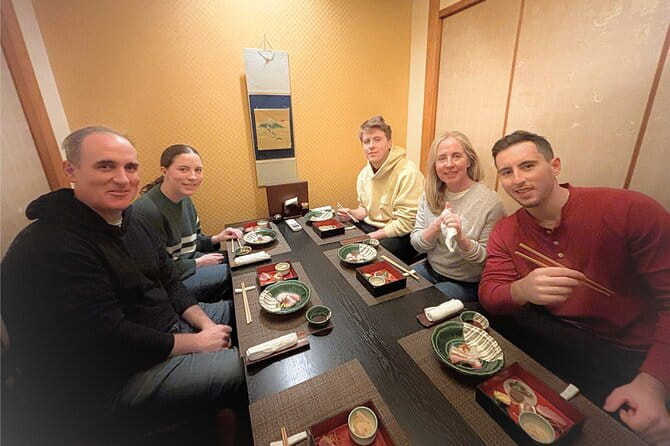
At $70.94 per person, the price is reasonable if you use what is included. You receive a full dinner course, food at three restaurants, alcoholic drinks, nonalcoholic drinks, tea or coffee, soda, desserts, and tour photos.
The important value is the spread across three locations. A single meal might cost less if you choose a casual restaurant on your own, but it would not include a guide, several venues, a planned route through Gion and Pontocho, or included drinks.
You should also remember that extra snacks and additional menu items are not included. The meals are intended to be satisfying, so you should not need to buy more food, but anyone who likes ordering freely should carry a little extra money.
The average booking lead time is 24 days. That suggests you should not leave this until the last minute, especially if you are visiting Kyoto during a busy season. The group maximum of seven is another reason to reserve ahead.
Who will get the most from this evening
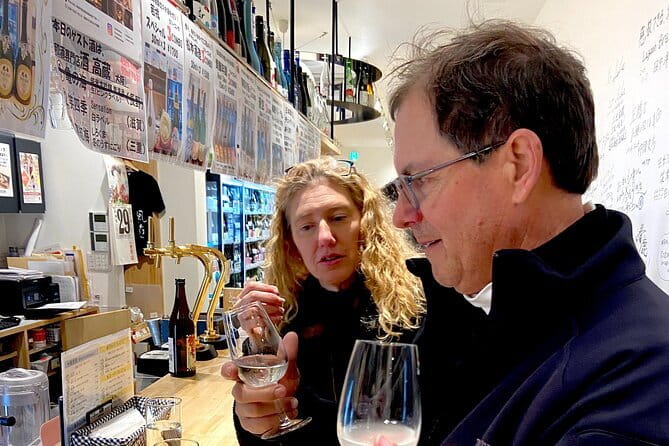
I would recommend this experience to a first-time Kyoto visitor who wants an easy introduction to local food customs and nightlife. It gives you a route through several central areas without requiring you to decipher menus, choose restaurants, or work out how sake fits into the meal.
It also suits solo visitors and couples who want conversation during dinner. With no more than seven people, the guide can usually keep the group together and answer individual questions more easily than on a large coach-style outing.
Families can also consider it. Alcohol is restricted to those aged 20 and over, and the guide has experience keeping children engaged. Still, remember that izakaya dining is built around evening food and drinks, so very young children may not enjoy every stop equally.
Food-focused visitors should like the variety. You get Kyoto cuisine, izakaya snacks, sake, desserts, and tea-related items rather than one narrow tasting. The tradeoff is that the exact menu and restaurant lineup are not specified, so you need to be comfortable with some surprise.
This is less suitable for strict dietary needs. Vegetarian food, including fish, is available only with advance notice. Vegan and gluten-free diets cannot be accommodated. If you need either of those, choose a tour designed around your restrictions instead.
Guides and the value of local conversation
The guide can make or break a food walk, and the named guides associated with this experience include Akari, Ayane, Sura, and Lisa. Feedback has especially praised the relaxed conversation, personal attention, and ability to find restaurants close to major sights without simply choosing the most obvious places.
Sura has been associated with an evening that supported smaller local businesses near busy areas. Ayane led a small-group outing where the three restaurants each offered a different experience. Akari was singled out for making the route engaging for children, while Lisa guided an enjoyable food-focused evening that became especially personal because of the group size.
You should not assume you will receive a particular guide unless the provider confirms it. The useful point is that the experience is built around a local host rather than a recorded audio track or a large bus group.
That human element is where much of the price goes. You can find Gion, Pontocho, and the Kamo River on a map. It is harder to know which side streets to enter, how to order, what the food means, and how to move through the area without missing its quieter details.
Practical details that matter
The meeting point is Minamiza Theater, and the activity returns there. The location is near public transportation, which makes it practical for a night out in central Kyoto.
Confirmation is provided when you book, and a mobile ticket is accepted. Most people can participate. The remaining time is used for transportation, walking, and movement between stops, so wear comfortable shoes.
The tour includes photos, but the main benefit is the guided route and food. If you want a long photography session at each scenic point, this schedule may feel quick. The Gion Shirakawa-dori and Kamo River sections offer photo chances, but meals remain the priority.
The cancellation terms are flexible up to a point. You receive a full refund if you cancel at least 24 hours before the start time. Changes or cancellations inside that 24-hour window are not accepted for a refund.
Should you book the Kyoto Local Gourmet Night Experience?
Book it if you want a friendly, compact introduction to Kyoto after dark, with food, drinks, and several neighborhoods handled for you. The three-restaurant format is the strongest reason to choose it over a standard dinner reservation, and the seven-person limit adds personal attention.
The $70.94 cost is fair for a full meal with drinks, desserts, a guide, and photos. I would book early, state vegetarian needs at the time of booking, and ask about the exact matcha component if that is important to you.
Skip it if you need vegan or gluten-free food, want a formal kaiseki ceremony, or prefer to choose every dish and restaurant yourself. For everyone else, this is a well-focused way to connect Kyoto’s old streets with the food and drinking culture that keeps them active at night.
FAQ
Where does the Kyoto Local Gourmet Night Experience begin?
The tour begins at Minamiza Theater, located at Kyoto-shi Higashiyama-ku, Shijo Ohashi Higashizume, Nakanocho, Kyoto 605-0075, Japan.
Where does the activity end?
The experience ends back at the Minamiza Theater meeting point.
How long does the tour last?
The tour lasts approximately three hours and 30 minutes, including time for walking and transportation between stops.
How many people can join the tour?
The maximum group size is seven travelers.
What food and drinks are included?
The price includes a full dinner course and desserts at three different restaurants, alcoholic and nonalcoholic drinks, coffee or tea, soda, and tour photos.
Can vegetarian, vegan, or gluten-free meals be provided?
Vegetarian meals, including fish, can be arranged with advance notice. Vegan and gluten-free meals are not available.
Are alcoholic drinks served to everyone?
Alcoholic beverages are not served to participants under the age of 20. Nonalcoholic drinks are available.
Can I cancel for a full refund?
You can cancel at least 24 hours before the experience start time for a full refund. Cancellations or changes made less than 24 hours before the start time are not accepted for a refund.
More Bar Hopping & Izakaya Tours in Kyoto


More Night Walks & Ghost Tours in Kyoto
More Tea Ceremony Experiences in Kyoto
More tours in Kyoto we've reviewed


Tea Ceremony Experiences, compared.
 ★ 4.9Kyoto: Tea Ceremony in a Traditional Tea House in KiyomizuFrom $4945 min
 ★ 4.9Kyoto: Tea Ceremony Ju-An at Jotokuji TempleFrom $291h 10m
 ★ 4.3Kyoto: 45-Minute Tea Ceremony Lesson ExperienceFrom $2245 min
 ★ 5.0World Heritage Kyoto & Nara Uji Authentic Matcha ExperienceFrom $129
 ★ 4.9Kyoto: Table-Style Tea Ceremony at a Kyo-MachiyaFrom $451h 30m
 ★ 5.0Kimono Tea Ceremony at Kyoto Maikoya, NISHIKIFrom $65