
Reviewed · KYOTO
Early Half Day to Kyoto Highlights
Kyoto packs three major sights into this five-hour morning tour, using trains and other public transport rather than a private bus. You visit Fushimi Inari, Arashiyama Bamboo Forest, and Kinkakuji, the Golden Pavilion, then return to Kyoto Station with much of the day still ahead.
I like the early start, which gives you a better chance to see the first two sights before the heaviest crowds. I also like the small group limit of eight and the practical guidance from Indra, whose clear planning, friendly manner, and storytelling receive especially high praise.
The trade-off is pace. You get about 90 minutes at each main stop, so this is a smart first look rather than a slow, contemplative day at each site. You also pay ¥1,300 for transport and ¥500 to enter Kinkakuji, on top of the $94.71 tour price.
In This Review
- Key points at a glance
- Why this five-hour Kyoto plan works
- Meeting at Kyoto Station at 8:00 am
- Fushimi Inari and the thousand red gates
- Arashiyama Bamboo Forest in a focused 90 minutes
- Kinkakuji, the Golden Pavilion
- What guide Indra adds to the morning
- The real price: $94.71 plus ¥1,800
- Who should book this early Kyoto tour
- Should you book it?
- FAQ
- What time does the tour start?
- Where do I meet the guide?
- Where does the tour end?
- How long does the tour last?
- Which attractions are included?
- Is Kinkakuji admission included?
- Is public transportation included?
- Is admission charged at Fushimi Inari and the Bamboo Forest?
- How large is the group?
- Can I cancel for a full refund?
Key points at a glance
- Three major Kyoto sights before lunch: Fushimi Inari, Arashiyama Bamboo Forest, and Kinkakuji fit into one tightly planned morning.
- An 8:00 am meeting time: The early departure is designed to reduce the worst crowd pressure at Kyoto’s most popular sites.
- Guide Indra’s practical leadership: Expect a friendly English-speaking guide who keeps the schedule moving and makes room for questions.
- Public transport is part of the experience: You travel around Kyoto like a local rather than sitting on a tour bus.
- Useful cultural context: The tour links Fushimi Inari to Shinto, Kinkakuji to Buddhism, and Arashiyama to Japanese society and daily life.
- A free afternoon: You finish back at Kyoto Station after roughly five hours, leaving time for another activity.
Why this five-hour Kyoto plan works
Kyoto’s famous sights are spread across different parts of the city. Fushimi Inari is south of central Kyoto, Arashiyama is to the west, and Kinkakuji is in the northwest. Visiting all three without a plan can eat up a surprising amount of time.
This tour solves that problem with an early start and public transport. You meet at 8:00 am outside Starbucks in Kyoto Tower Sando, in the Kyoto Tower building across from Kyoto Station. From there, the guide leads the group through the city and handles the practical rhythm of moving from one sight to the next.
I see the main value in the planning. You are not paying for a private vehicle, and transportation is not included, but you are paying for someone who knows how to connect three far-flung sights in one morning. Several comments about Indra point to the same strength: he keeps the schedule on track without making the experience feel cold or rushed.
The group is capped at eight people. That matters on a walking and public transport tour. You can ask questions, stay close to the guide, and avoid the unwieldy feel of a large coach group. The small size also helps at busy crossings, stations, and temple approaches.
If you're still narrowing it down, here are other tours in Kyoto we've reviewed.

Meeting at Kyoto Station at 8:00 am
The starting point is Starbucks Coffee at Kyoto Tower Sando, located in Kyoto Tower across from Kyoto Station. Your booking details include a meeting-point picture, which is useful because a large station area can be confusing when you are trying to find one specific café.
Arrive ready to leave at 8:00 am. This is not a meet-up designed for a late breakfast or a slow first coffee. The early departure is central to the plan, since the tour aims to reach Kyoto’s most popular sights before the day fills in.
The tour ends back at Kyoto Station. That gives you an easy place to continue your day, catch another train, find lunch, or return to your accommodation. The route is also practical for a first morning in Kyoto because you begin and finish at the city’s main transport hub.
Fushimi Inari and the thousand red gates
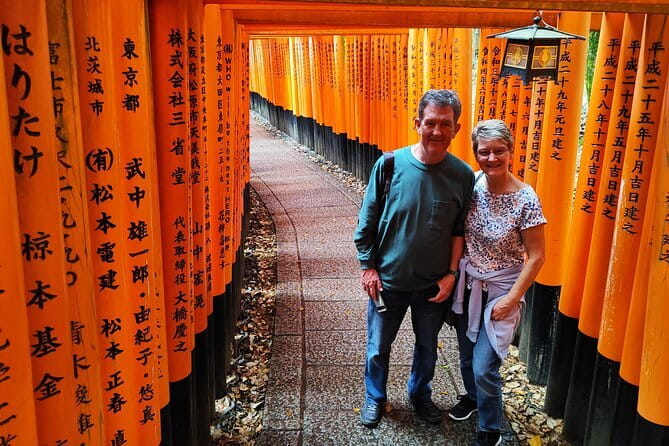
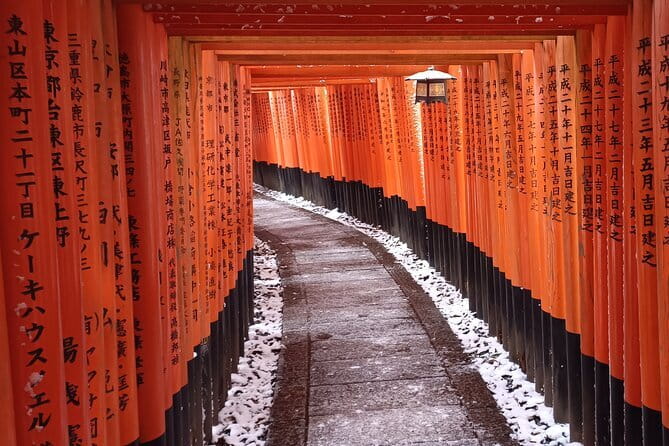
Fushimi Inari-taisha is the first major stop, with about 90 minutes set aside for the visit. The shrine is famous for its long rows of red torii gates, which climb through the wooded grounds and create one of Kyoto’s most recognizable views.
The guide uses this stop to explain Shinto, an important part of Japanese religious and cultural life. That context gives the shrine more meaning than a quick walk through a photogenic tunnel of gates. You learn what makes the site a shrine, how Shinto fits into Japanese society, and why the setting matters.
The early timing is especially helpful here. Fushimi Inari is free to enter, which makes it easy for large numbers of people to visit throughout the day. Arriving early will not guarantee solitude, but it should give you a better chance of walking through the gates with less pressure from the crowd.
Ninety minutes is enough for a strong introduction and time to enjoy the main sections of the shrine. It is not enough for a long uphill exploration of every path. If you have dreamed of spending hours hiking deep into the mountain, this schedule will feel limited. For most visitors who want the classic torii-gate experience and useful background, the time should be well judged.
Wear comfortable shoes. The tour is on foot and uses public transport, and Fushimi Inari involves walking on sloping paths and steps. The information provided does not promise a fully accessible route, so anyone with mobility concerns should check directly before booking.
Arashiyama Bamboo Forest in a focused 90 minutes
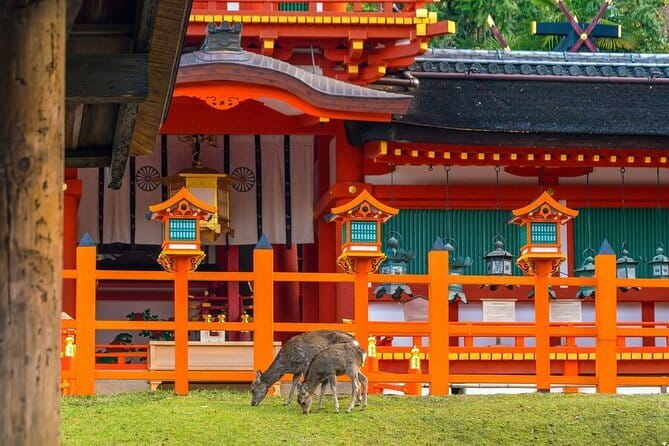
The second main stop is Arashiyama Bamboo Forest, with another 90 minutes to explore. The tall bamboo creates a striking natural setting, but the appeal is not only the stalks themselves. The surrounding area gives you a chance to see how nature, tourism, and local life meet in one of Kyoto’s best-known districts.
Here, the guide talks about Japanese society while you take in the scenery. That wider focus is useful because the bamboo path can otherwise become a quick photo stop. You get a chance to ask how Japanese people relate to natural spaces and how famous places fit into modern life.
The time limit is both a strength and a constraint. It keeps the morning moving and protects the afternoon you paid for by choosing a half-day tour. At the same time, Arashiyama has more to offer than one short walk. You will not have a relaxed day to explore every nearby attraction, and the tour does not list extra visits beyond the bamboo forest.
The best way to approach this stop is to treat it as a focused introduction. Enjoy the path, listen to the guide, and take your pictures without expecting a full Arashiyama day. If this district is your top priority, you may want to return on another morning.
Kinkakuji, the Golden Pavilion
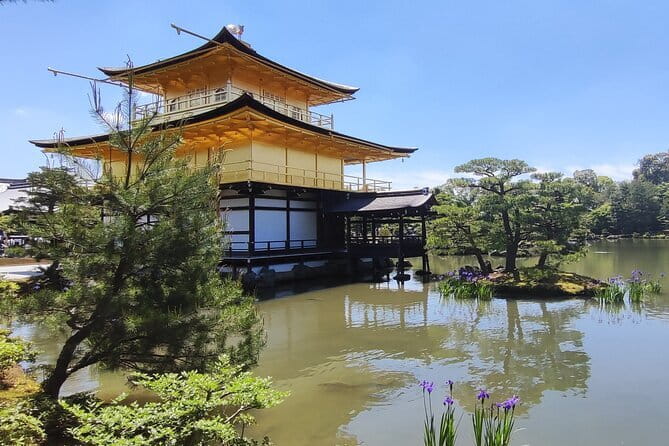
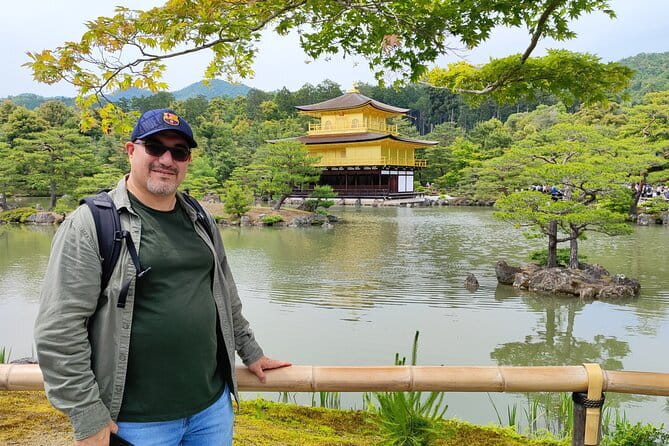
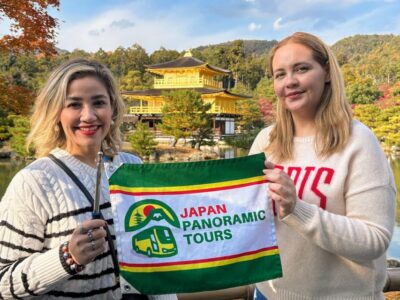
The final major stop is Kinkakuji Temple, also called the Golden Pavilion. You have about 90 minutes here, including time to enter the grounds and view the famous gold-covered temple beside the pond.
An entrance fee of ¥500 per person is not included. The transport cost of ¥1,300 per person is also separate, so remember that the $94.71 price is not the full cost of the morning.
The guide explains Buddhism in Japan and the temple’s history at this stop. That adds needed context, since Kinkakuji is easy to treat as a single picture: a bright golden building reflected in water. The visit works better when you understand its place in Japanese religious life and the story behind the site.
Kinkakuji is often described as Kyoto’s second most visited tourist spot in the tour material, and its fame brings crowds. The early schedule helps, though Kinkakuji comes third in the route, so it may be busier by the time you arrive than Fushimi Inari was at the start.
The 90-minute window should allow time for the main view and a walk through the temple grounds. It does not turn Kinkakuji into a quiet private visit. If you prefer long periods of stillness, take that into account. The advantage is that you see one of Kyoto’s essential sights without giving up an entire day.

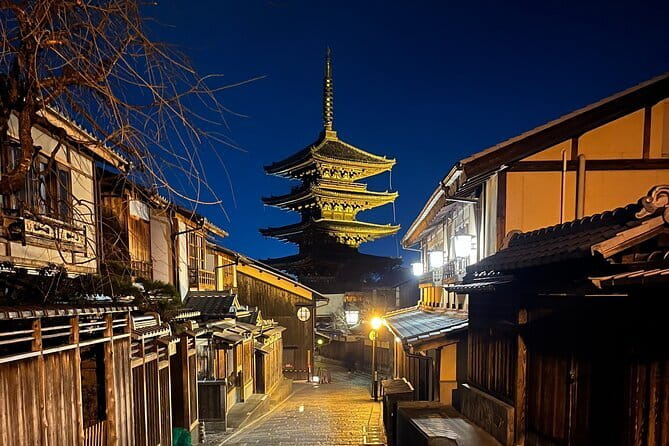
What guide Indra adds to the morning
The guide is a major part of the value here. Indra is described as friendly, informative, enthusiastic, and a strong storyteller. He also appears to be good at the less glamorous work of guiding: watching the clock, choosing efficient routes, answering questions, and making sure the group reaches each stop.
That combination matters more on a public transport tour than it would on a simple walking route. Trains and city connections can add friction to a morning. A guide who knows how to organize the movement lets you focus on Kyoto instead of worrying about the next step.
The small group gives Indra room to respond to individual interests. If you want to ask about Shinto at Fushimi Inari, Buddhism at Kinkakuji, or Japanese society in Arashiyama, this format should feel more open than a large group lecture.
The strongest praise centers on the sense that the guide makes the morning feel almost private. That does not mean you receive a custom route or unlimited time, but it does suggest a personal level of attention. The guide’s English is listed as good, and the experience is led by an experienced local guide.
The real price: $94.71 plus ¥1,800
At $94.71 per person, this is not the cheapest way to see Kyoto’s sights. Entry to Fushimi Inari and the bamboo forest is free, while Kinkakuji costs ¥500. Public transportation adds ¥1,300, bringing the stated extra costs to ¥1,800 per person.
The fair question is what you receive for the tour fee. You receive a five-hour guided route, an English-speaking local guide, transport planning, cultural explanation, and a small group capped at eight. You also receive time savings, which can be important in Kyoto. Doing the same three stops alone is possible, but connecting them in this order while keeping enough time at each site takes planning.
I would consider the price reasonable for a first visit if you value structure and cultural explanation. It is less compelling if you are comfortable navigating Japanese public transport, already know the sights, or want to linger at one temple for several hours.
The half-day format also has real value. You finish at Kyoto Station and still have an afternoon for another activity. That flexibility may be worth more to you than the savings from arranging everything alone.
Who should book this early Kyoto tour
I would recommend it most strongly for a first-time Kyoto visitor with limited time. You get three signature sights in one morning, plus an introduction to Shinto, Buddhism, and Japanese society.
It also suits solo visitors, couples, and small groups who want a social experience without joining a large coach tour. The eight-person limit gives you a better chance to hear the guide and ask questions.
This is a good choice for anyone who wants to make the most of a short stay. The schedule is efficient, and the free afternoon lets you add a museum, market, neighborhood walk, or another planned activity.
You should think twice if your main goal is slow photography, extended temple time, or a full exploration of Arashiyama. The tour is carefully packed. You see the highlights, but you do not have hours to wander at each location.
Bring comfortable walking shoes and budget separately for public transport and Kinkakuji admission. The experience requires good weather, and changes or cancellations made less than 24 hours before the start time are not refundable. If poor weather causes the operator to cancel, you are offered another date or a full refund.
Should you book it?
Book this tour if you want a well-organized first look at Kyoto’s three most famous sights, prefer a small group, and value a guide who can connect places with culture. Indra’s friendly style, clear timing, and practical route planning are the strongest reasons to choose it.
Skip it if you want to set your own pace or already have a strong Kyoto transport plan. For everyone else, the early start, compact route, and free afternoon make this a sensible way to get your bearings without giving the whole day to a tour.
FAQ
What time does the tour start?
The tour starts at 8:00 am.
Where do I meet the guide?
You meet at Starbucks Coffee in Kyoto Tower Sando, inside Kyoto Tower across from Kyoto Station.
Where does the tour end?
The experience ends back at the starting point near Kyoto Station.
How long does the tour last?
The tour lasts approximately five hours.
Which attractions are included?
The route visits Fushimi Inari-taisha Shrine, Arashiyama Bamboo Forest, and Kinkakuji Temple, also called the Golden Pavilion.
Is Kinkakuji admission included?
No. Kinkakuji admission costs ¥500 per person and is paid separately.
Is public transportation included?
No. Public transportation costs ¥1,300 per person and is paid separately.
Is admission charged at Fushimi Inari and the Bamboo Forest?
No admission ticket is listed for either Fushimi Inari-taisha Shrine or Arashiyama Bamboo Forest.
How large is the group?
The tour has a maximum of eight participants.
Can I cancel for a full refund?
Yes, if you cancel at least 24 hours before the experience start time. Cancellations or changes made less than 24 hours before the start time are not accepted for a refund. The tour requires good weather, and a cancellation caused by poor weather offers another date or a full refund.
More tours in Kyoto we've reviewed



Kyoto, compared.
 ★ 5.0PERFECT KYOTO 1-Day Bus TourFrom $129
 ★ 4.8Kyoto: Fushimi Inari, Kinkakuji, Bamboo Grove 1 Day Bus TourFrom $122510 minutes - 9 hours
 ★ 4.9Kyoto: Tea Ceremony in a Traditional Tea House in KiyomizuFrom $4945 min
 ★ 4.7Kyoto Geisha Walking Tour: Gion District & Hidden GemsFrom $252 hours
 ★ 4.9Kyoto: Tea Ceremony Ju-An at Jotokuji TempleFrom $291h 10m
 ★ 4.3Kyoto: 45-Minute Tea Ceremony Lesson ExperienceFrom $2245 min