
Reviewed · WORKSHOPS
Fukusa Shibori Class
The most appealing part of this Kyoto class is that you do not just look at Japanese textile art behind glass. You stitch and wrap the fabric yourself, then dye a 38-centimeter silk cloth and take the finished piece home. I like the mix of museum viewing and hands-on work, plus the chance to learn two different shibori methods in one short session.
I also like that the class uses traditional tools and fabrics, with a local craft teacher guiding you through the tricky parts. The main consideration is time: at 60 to 90 minutes, this is an introduction rather than a full textile course, and the small finished cloth may not satisfy someone hoping to make a large garment or complex design.
In This Review
- Key points to know before booking
- Making cloth patterns with kasamaki and nuishime
- Inside the Kyoto Shibori Museum
- What happens during the 60 to 90 minutes
- Why the practical work is worth your time
- Group size, teaching, and family appeal
- Is $71.67 a fair price?
- Who should book this Kyoto craft class?
- Planning your visit
- Should you book the Fukusa Shibori Class?
- FAQ
- Where does the Fukusa Shibori Class take place?
- How long does the class last?
- What techniques will I learn?
- What will I make during the class?
- Can I take my finished cloth home?
- Is the museum visit included?
- What is the minimum age?
- How many people can join the class?
- Is parking available?
- Can I cancel for a full refund?
Key points to know before booking
- Two shibori methods: Learn kasamaki, which gathers fabric around a cone-like form, and nuishime, which uses stitched lines pulled tight.
- A useful Kyoto souvenir: Dye a 38-centimeter silk wrapping cloth and take your completed work home.
- Museum setting: See finished examples of shibori before or around your practical session, along with items in the museum shop.
- Short, manageable class: Allow about one hour to one and a half hours, making this easy to fit between Kyoto sights.
- Small group size: The class accepts a maximum of 15 people, so instruction should remain fairly personal.
- Family-friendly age range: Children from age eight can participate, and most people can take part.
Making cloth patterns with kasamaki and nuishime
Shibori is a Japanese resist-dyeing craft. Instead of painting color directly onto cloth, you stitch, fold, gather, wrap, or bind parts of the fabric so dye cannot reach them in the same way. The protected areas create patterns once the cloth is opened.
This class focuses on two techniques: kasamaki and nuishime. They use thread and fabric manipulation in different ways, so you get a useful sense of how small changes in preparation affect the final design.
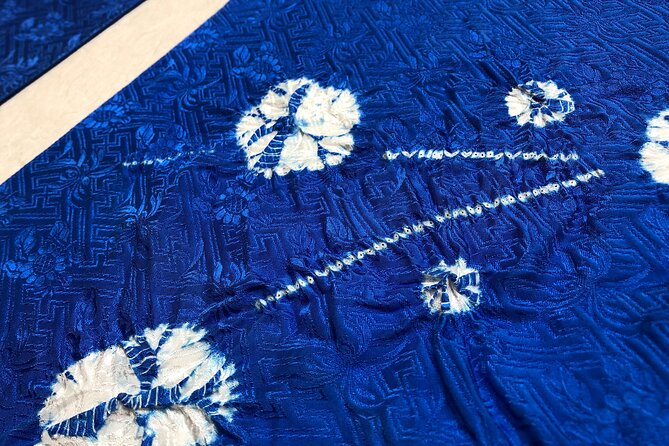
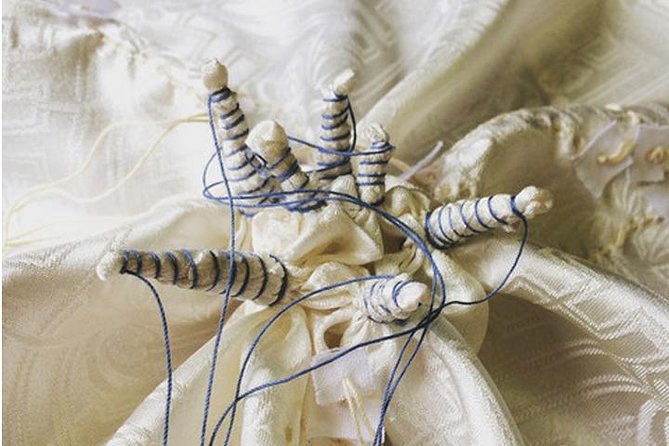
With kasamaki, you stitch around the shape you want to create. You then pull the thread tight and wrap the threads several times around a cone of gathered fabric. This takes some care. The thread must be secure enough to resist the dye, but you also need to handle the silk gently.
Nuishime is more direct. You stitch along a line, then pull the thread tight. The resulting gathered line affects how the dye reaches the cloth. It is a good method for understanding the link between sewing and pattern-making.
You should not expect to produce a flawless museum-quality textile in a single sitting. That is not the point. The value is in seeing how a traditional maker prepares fabric and in feeling the process in your own hands. You leave with a better sense of why shibori patterns look controlled yet slightly individual.
A few more Kyoto tours and experiences worth a look


Inside the Kyoto Shibori Museum
The class takes place at the Kyoto Shibori Museum at 135-5 Shikiamicho, in Nakagyo Ward. The museum setting gives the activity more context than a stand-alone craft table in a shopping area.
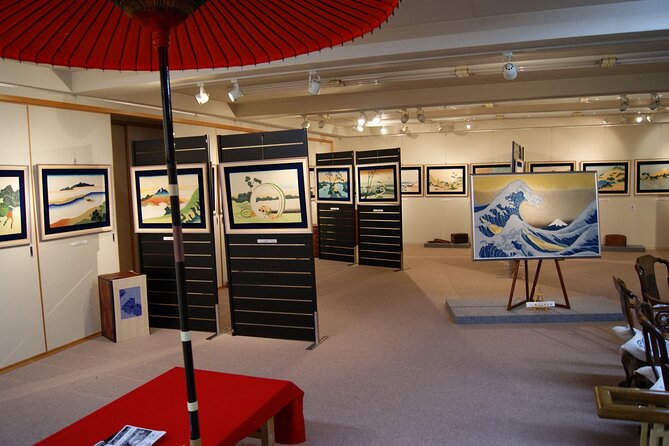
You can look at examples of classic kasamaki and nuishime work and see how the techniques appear when handled by experienced makers. Displays like these help you understand what the small exercise is aiming toward. A finished silk cloth may look simple at first, but the museum pieces show how much pattern and texture can come from basic actions such as stitching and tightening thread.
The museum shop adds another useful layer. You can see finished shibori goods and compare them with the cloth you are making. That can be helpful if you are interested in Japanese textiles beyond this one class, though your purchase there is not included in the activity price.
The experience begins and ends at the museum, so you do not need to arrange transport between several locations. It is near public transportation, and the venue has space for two cars as well as bicycle parking. Those car spaces are limited, so public transport is the safer plan if you are not already driving around Kyoto.
What happens during the 60 to 90 minutes
The precise order can vary, but the class centers on preparing and dyeing one silk wrapping cloth. The stated size is 38 by 38 centimeters, which is large enough to serve as a useful souvenir without demanding a long workshop.
You first learn how kasamaki and nuishime work. An instructional video may be part of the introduction, followed by explanations from the teaching staff. This combination is useful because you can watch the overall process before dealing with thread, silk, and gathered sections yourself.
Next comes the hands-on preparation. You stitch around selected shapes for kasamaki, then pull and wrap the threads around the gathered cone of fabric. For nuishime, you stitch along a line and tighten it. These steps require patience more than strength, and younger participants may need help keeping the fabric and thread under control.
The teacher’s role matters here. One account specifically praised an instructor named Roy for explaining the process carefully and helping with the practical work while still allowing the student to understand what was happening. That is the sort of guidance you want in a craft class: enough help to prevent frustration, but not so much that you simply watch someone else do it.
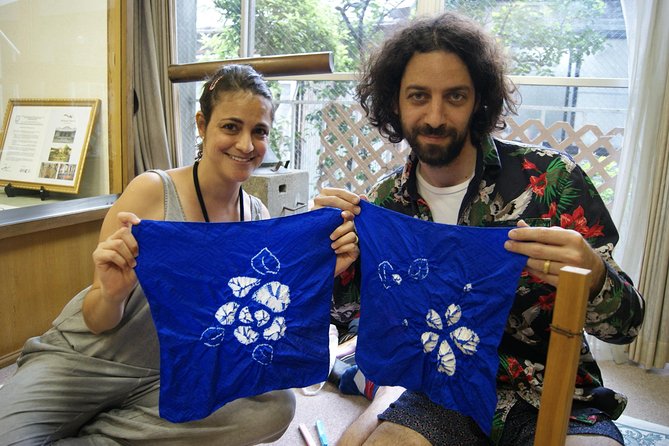
Once the cloth has been stitched and wrapped, it is dyed. The reveal is the best part of the session. When the bindings are removed, the areas protected by thread show a different pattern from the rest of the silk. The result will be personal to your stitching, even if your technique is still at beginner level.
The finished item is a silk wrapping cloth, sometimes called a furoshiki-style cloth in Japan, although this activity information identifies it simply as a silk wrapping cloth. You can take it home as a practical memento rather than a disposable craft project.
Why the practical work is worth your time
Kyoto offers endless temples, gardens, and galleries. A short craft class gives you a different way to understand the city’s artistic traditions. You are not just collecting an image of Japanese culture on your phone. You are learning one small process that depends on care, repetition, and hand skills.
I especially like the fact that the class teaches two methods instead of presenting shibori as one broad technique. Kasamaki gives you a gathered, wrapped structure to manage. Nuishime shows how a simple stitched line can shape the dye pattern. The contrast makes the lesson easier to remember.
The work also slows you down. Kyoto sightseeing can become a rapid sequence of major sights, particularly in a busy schedule. Here, the focus is on a square of silk and a few lengths of thread. That makes the class a sensible choice for a hot afternoon, when an indoor activity may be more comfortable than walking between temples.
The finished cloth also carries more meaning than a standard shop purchase. You may not create a perfect pattern, but you will remember the decisions behind it. The cloth becomes a small record of your time in Kyoto and of the first time you tried these techniques.
Group size, teaching, and family appeal
The maximum group size is 15 people. That is not a private lesson, but it is small enough for an instructor to move around the room and help with the stitching and wrapping stages.
The class is suitable for participants age eight and older. Families can work together, and the activity has enough variety to hold attention: a short introduction, museum displays, sewing, dyeing, and the final reveal. Adults should still expect younger children to need assistance with tight thread and detailed stitching.
The class also works well for solo visitors. You do not need to arrive with a group, and the practical format gives you something clear to do from the first few minutes. If you enjoy making things with your hands, you will probably get more from this than from a passive museum visit.
English ability, exact class language, and the number of instructors are not specified, so you should not book on the assumption of a fully private or language-specific lesson. The available information does indicate that staff provide explanations and hands-on help.


Is $71.67 a fair price?
At $71.67 per person, this is not the cheapest souvenir activity in Kyoto. You are paying for more than a square of dyed fabric, though. The price includes instruction, use of traditional tools and fabrics, the museum setting, and the chance to make and keep a silk piece.
The value is strongest if you care about process. A ready-made textile from a shop may cost less, and it will likely have a more polished finish. This class makes sense when you want the story behind your souvenir and a short lesson in a traditional craft.
The 60 to 90-minute duration also affects the calculation. It is long enough to feel like a real activity but short enough to fit into a packed Kyoto itinerary. You are not committing to an entire afternoon or a full-day workshop.
I would consider the price reasonable for visitors who want an organized cultural activity with a take-home result. It is less compelling for someone mainly seeking the lowest-cost souvenir or a serious multi-session course.
The class is booked, on average, about 21 days ahead. That suggests you should reserve before your Kyoto visit, especially if your dates are fixed or your family needs a particular time. Confirmation is received when you book, and the experience is offered with a mobile ticket.
Who should book this Kyoto craft class?
This activity suits you if you enjoy:
- Small museums and traditional arts
- Short cultural activities between major sightseeing stops
- Hands-on work with clear instruction
- Family activities for children age eight and older
- Souvenirs that you make rather than simply buy
- Learning how a finished textile begins
It is a particularly good choice for a hot afternoon, since the session takes place indoors and does not require walking across Kyoto. It can also balance a temple-heavy schedule with something quieter and more focused.
You may want to skip it if you dislike sewing, have very little patience for detailed handwork, or want to produce a large textile. The finished cloth is modest in size, and the class is an introduction to two techniques rather than advanced training.
The activity ends back at the Kyoto Shibori Museum. That makes it easy to continue sightseeing from the same area, though the information provided does not specify nearby attractions or an exact travel time from Kyoto Station.
Planning your visit
Give yourself enough time to reach 135-5 Shikiamicho in Nakagyo Ward. The venue is near public transportation, which is the most practical choice in Kyoto. Bicycle parking is available, and two car parking spaces are provided, but neither option should be treated as guaranteed.
The class accepts up to 15 people and has a minimum age of eight. Adult pricing applies to every age, so children do not receive a reduced rate under the stated conditions.
Free cancellation is available when you cancel at least 24 hours before the experience begins. A cancellation made less than 24 hours before the start time is not refundable, and changes within that period are not accepted. The cut-off follows local Kyoto time.
You should also keep your expectations clear. You will make one silk wrapping cloth, not take home several finished items. The museum displays and shop are part of the appeal, but the main activity is the preparation and dyeing of your own cloth.
Should you book the Fukusa Shibori Class?
Book this class if you want a compact, practical introduction to Kyoto textile arts. The strongest reasons are the two distinct techniques, the skilled hands-on help, the museum displays, and the silk cloth you take home.
I would recommend it most to families, craft-minded visitors, and anyone who wants a break from sightseeing in the heat. The $71.67 price is fair when you value instruction and a personal souvenir, but it is high if you only want a finished textile.
Reserve ahead if your schedule matters, since the activity is commonly booked about three weeks in advance. If you can spare 60 to 90 minutes and enjoy careful handwork, this is a thoughtful way to connect with a traditional Kyoto craft.
FAQ
Where does the Fukusa Shibori Class take place?
The class takes place at the Kyoto Shibori Museum, 135-5 Shikiamicho, Nakagyo Ward, Kyoto, Japan.
How long does the class last?
The activity lasts approximately 60 to 90 minutes.
What techniques will I learn?
You will learn kasamaki and nuishime shibori. Kasamaki involves stitching around a shape, pulling the thread tight, and wrapping the threads around gathered fabric. Nuishime involves stitching along a line and pulling the thread tight.
What will I make during the class?
You will dye a silk wrapping cloth measuring approximately 38 by 38 centimeters.
Can I take my finished cloth home?
Yes. The silk wrapping cloth you make during the class is yours to take home.
Is the museum visit included?
The experience takes place at the Kyoto Shibori Museum, where you can see displays of shibori work and visit the museum shop.
What is the minimum age?
The minimum age is eight years old.
How many people can join the class?
The maximum group size is 15 people.
Is parking available?
Two car parking spaces and bicycle parking spaces are available at the venue.
Can I cancel for a full refund?
Yes, if you cancel at least 24 hours before the experience start time. Cancellations made less than 24 hours before the start time are not refundable.
More Workshops & Classes in Kyoto
More tours in Kyoto we've reviewed







Workshops, compared.
 ★ 4.3Kyoto: 45-Minute Tea Ceremony Lesson ExperienceFrom $2245 min
 ★ 5.0Ramen Cooking Class at Ramen Factory in KyotoFrom $131
 ★ 4.9Kyoto: Ramen Cooking Class at a Ramen Factory with SouvenirFrom $1271h 30m
 ★ 4.9Kyoto: Samurai Class, Become a Samurai WarriorFrom $70
 ★ 5.0Ninja 1-hour Hands-on Lesson by Japanese master in Kyoto -EntryFrom $80
 ★ 5.0Kyoto: Ramen, Gyoza, and Onigiri Cooking ClassFrom $901h 30m