
Reviewed · KYOTO
Hammer Pattering Experience of Ring
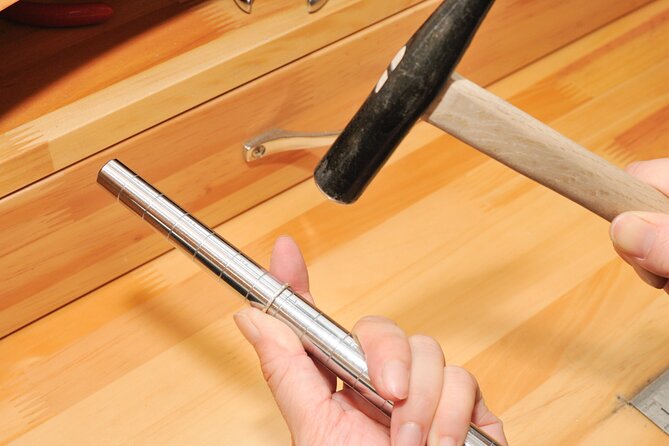
A finished ring is waiting for you when you arrive, but the interesting part is what you do with it. Using the Japanese Tankin method, you hammer a pattern into the surface, choosing the material, shape, thickness, and texture before making the design your own. It is a hands-on souvenir, not a shop-bought trinket.
I like the one-hour format, which fits neatly into a day of sightseeing around Kyoto’s Higashiyama Ward. I also like the patient support from the staff, the final polishing and cleaning, and the fact that you can take the ring home the same day.
The main thing to understand is that this is ring texturing, not full jewelry fabrication. You do not cut a strip of metal, shape it into a circle, and solder it closed. The ring has already been welded or polished, and your work begins with adding its pattern and finish.
In This Review
- Key points at a glance
- What the hour at Itoaware Kyoto is really like
- Tankin hammering, without the jewelry-school confusion
- Choosing a material, shape, and finish
- The hammering stage: simple tools, real choices
- Sizing, polishing, and the finished souvenir
- Why the private format matters
- Who gets the most from this Kyoto activity
- Price, timing, and practical value
- Location and getting your bearings
- The strongest reasons to book
- Should you book the Hammer Pattering Experience of Ring?
- FAQ
- Where does the ring-making activity take place?
- How long does the workshop last?
- Can I take the ring home on the same day?
- Do I make the entire ring from raw metal?
- What can I customize?
- Is this a private activity?
- What is the cancellation policy?
Key points at a glance
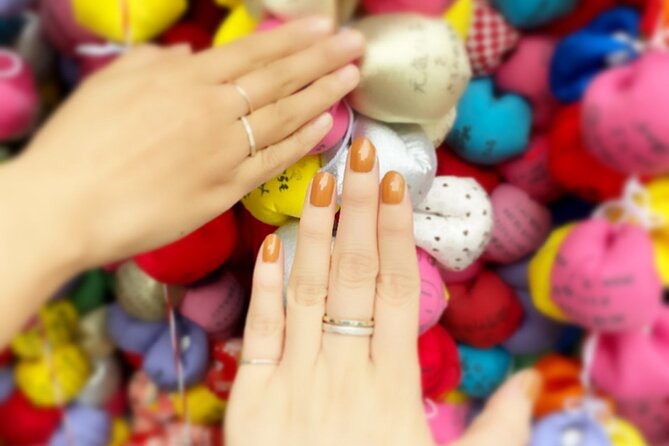
- Hammer a pattern with the Japanese Tankin method: You use special hammers and tools to create texture on an already formed ring.
- Choose the ring before you start: Material, thickness, shape, and texture are selected as part of the customization.
- Take home a finished souvenir that day: Skilled staff polish and clean the ring after your hammering is complete.
- A private one-hour workshop: Only your group participates, making this a more personal activity than a large class.
- A good couple or family activity: Couples have made matching keepsakes, while families with children have enjoyed the short lesson and practical work.
- Easy to fit into Kyoto sightseeing: The meeting point is Itoaware Kyoto, at 91-5 Hoshinocho in Higashiyama Ward, near public transportation.
What the hour at Itoaware Kyoto is really like
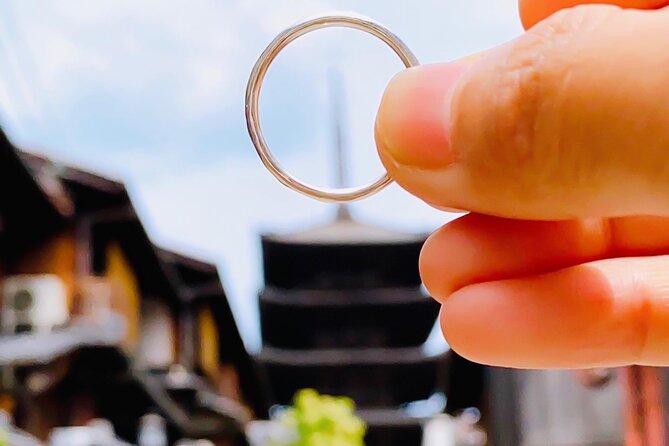
The workshop begins at Itoaware Kyoto, located at 91-5 Hoshinocho in Kyoto’s Higashiyama Ward. The activity starts and ends at this same shop, so you do not have to follow a guide through several locations or worry about finding a separate return point.
The first choice is the ring itself. You select the material, thickness, shape, and texture you prefer. The available information does not give a complete menu of metal options, so you should check the choices available when booking or arriving. Past participants have made silver and gold rings, and one family appreciated the price in relation to the cost of sterling silver.
Once you have chosen your ring, the staff explain how the hammers and other tools work. The process is simple in principle, but the pattern depends on how you place and strike the tool. You can create a more regular surface or a less uniform handmade look, depending on the result you want.
This is not a sit-back demonstration. Your hands do the creative work, while the staff help you control the process. The support matters because the ring is small, and the texture can change quickly with each hammer blow. Staff remain available through the workshop and help you work toward a finished piece that fits and looks right.
If you're still narrowing it down, here are other tours in Kyoto we've reviewed.


Tankin hammering, without the jewelry-school confusion
The word Tankin refers here to a traditional Japanese metalworking style based on hammering. For this activity, the method is used to add a pattern to a ring that has already been formed. You are not learning every stage of professional jewelry making in one short session, and that is worth knowing before you book.
Some people arrive expecting to make a ring from a straight piece of metal. That would involve shaping, joining, and soldering the band. This workshop does not include welding work. Instead, you customize a prepared ring by hammering texture into it and then checking the finish and size with help from the staff.
I see that narrower focus as a strength for a one-hour Kyoto activity. You can produce something personal without spending half a day learning difficult metalwork. The trade-off is that your creative choices are centered on surface design, rather than the full structure of the ring.
The final effect can still feel very personal. A hammered surface records the marks of your own work, and small differences in pressure or placement help make each ring distinct. If you want a neat factory finish, staff polish and clean the ring at the end. If you want visible evidence of the handmade process, you can ask how much texture to retain.
Choosing a material, shape, and finish
Your choices at the beginning have a direct effect on the final souvenir. A thin ring may look delicate, while a thicker one can give the hammered texture more visual weight. A different shape or surface finish can also change how noticeable the pattern is.
The activity allows you to choose a favorite material, thickness, shape, and texture, but the supplied details do not list every available combination. If you have a specific metal or width in mind, contact Itoaware Kyoto before your appointment through its Instagram direct message account, @itoaware.kyoto.
This is especially useful if you are making rings as a pair. A couple can choose matching materials and textures, or select slightly different versions that still belong together. One couple had Kyoto engraved on each ring as a reminder of their honeymoon stop. The information provided does not confirm that engraving is part of every booking, so ask the shop about it before counting on that option.
The material also affects the value of the experience. At $21.68 per person, the price is modest for a hands-on workshop that includes a finished ring. If your chosen ring uses a more costly metal, the final price and available choices may depend on the selection. The listed price should be treated as the starting cost for the experience, not a guarantee that every material or add-on has the same price.
The hammering stage: simple tools, real choices
After the introduction, you begin adding texture. You work with special hammers and tools supplied by the shop. Staff show you the process and help you understand how to place the tool against the ring before striking it.
The activity is approachable because you do not need previous metalworking experience. Most participants can take part, and service animals are allowed. The workshop is also private, so your group does not share the hour with a large class. That setup gives you room to ask questions and adjust your design as you go.
Still, do not expect the ring to emerge perfect after the first few strikes. Handmade texture can be uneven, and that is part of the point. If you are worried about making a mistake, listen carefully to the instructions and start with a lighter touch. The staff are there to support you through the process rather than leave you alone with the tools.
Families have used the short lesson as a creative activity, including two boys who made rings with their parents. The one-hour length helps younger participants stay involved. You should still decide based on your own child’s comfort with tools and close, careful work, since the available information does not state a minimum age.
Sizing, polishing, and the finished souvenir
The workshop does not stop when the texture is added. Staff help with the ring’s sizing, then skilled craftsmen polish and clean the finished piece. This final step makes a real difference. A rough work-in-progress becomes something you can wear or give as a gift.
The staff’s role is particularly useful here. You may know what pattern you want, but judging fit and finish on a small ring can be difficult. Support with sizing gives you a better chance of leaving with a comfortable keepsake rather than a beautiful object that stays in a drawer.
You can take the ring home on the day of the workshop. That makes the activity useful for a last-minute souvenir, a honeymoon memento, or a small gift made during a Kyoto stay. It also removes the uncertainty that comes with workshops that mail finished work weeks later.
The result is not just an object you selected from a shelf. You chose the basic form, added the surface pattern, and watched the ring receive its final clean finish. That connection is the main reason I consider the workshop good value for couples and families.



Why the private format matters
This is a private activity, meaning only your group participates. The format suits people who want a quieter class and those who may need extra help with the tools. It can also make the experience more comfortable for couples making rings together.
A private session does not automatically mean unlimited time. The planned work period is about 60 minutes, and the shop’s staff need to guide the activity and complete the final polishing. Arrive ready to make your choices and use the hour well.
The staff have been described as friendly, helpful, funny, and patient in the supplied feedback. Those qualities matter in a practical workshop. Clear instructions reduce mistakes, while a relaxed manner keeps the experience from feeling like a test.
You can also take commemorative photos with staff assistance. If you are making a ring for a special occasion, plan to ask for a photo before leaving. The workshop ends back at the meeting point, so there is no separate photo stop or final transfer.
Who gets the most from this Kyoto activity
I would recommend this experience most strongly to:
- Couples who want a small shared souvenir rather than another purchased gift.
- Honeymooners or people marking a special trip, especially if the shop confirms engraving options.
- Families looking for a short, creative activity that children can join.
- Visitors who want to try a Japanese craft without committing to a long class.
- Anyone who values a finished object more than a formal lesson in jewelry construction.
It may be less suitable if your main goal is to learn soldering, forge a ring from raw metal, or design every part of the band from scratch. The ring is already welded or polished when you begin, so the workshop focuses on texture, finish, and sizing.
It is also worth thinking about your schedule. One hour is easy to fit between sightseeing stops, but the activity takes place at a fixed meeting point in Higashiyama Ward. Since confirmation is subject to availability and may arrive within 48 hours of booking, leave enough room in your plans to receive confirmation before building your day around it.
Price, timing, and practical value
At $21.68 per person, this is priced below many longer craft workshops. You receive instruction, use of the tools, help with the ring, final polishing and cleaning, and a finished item to take home the same day. That is a fair package for visitors who want both an activity and a souvenir.
The price feels strongest when you compare it with the cost of buying a finished silver ring without the memory of making it. One family found the cost reasonable in light of sterling silver prices. Your value judgment will depend on the material and ring style you choose, since the supplied information does not specify the full range of options.
The activity is booked, on average, eight days ahead. That does not guarantee that every date requires a week’s planning, but it is a useful sign that you should not wait until the final morning if the workshop is important to your itinerary.
Free cancellation is available if you cancel at least 24 hours before the start time. Cancellations or changes made less than 24 hours before the activity are not refunded or accepted, and the cut-off uses Kyoto local time.
Location and getting your bearings
The meeting point is Itoaware Kyoto, 91-5 Hoshinocho, Higashiyama Ward, Kyoto, Japan, postal code 605-0853. The shop is near public transportation, which makes it practical to reach as part of a day in eastern Kyoto.
The information does not provide a detailed walking route from a particular station, so check your map and allow enough time to find the exact address. Hoshinocho is the kind of small Kyoto address where a few extra minutes can prevent a rushed arrival.
You return to the same point when the activity ends. That simple arrangement is helpful if you have another reservation afterward, although you should allow a little spare time for the final polishing and any photos.
The strongest reasons to book
The workshop’s biggest success is its balance. You get a real hand-on task, but not one so long or technical that it takes over your day. The staff guide you closely, and the final ring is cleaned and polished before you leave.
The personal meaning is another strong point. A ring marked with your own hammer pattern can recall a honeymoon, family trip, or first visit to Kyoto in a way that a standard souvenir cannot. The option to add Kyoto engraving may make it even more personal, but confirm that service in advance.
I also appreciate the clear limit of the activity. You are not promised a full jewelry apprenticeship. You are promised a prepared ring, a choice of design details, a Tankin-inspired hammering process, help from staff, and a completed souvenir in about an hour. That is an honest and useful format for a busy sightseeing day.
Should you book the Hammer Pattering Experience of Ring?
Book it if you want a modestly priced Kyoto activity with a physical souvenir at the end. It works especially well for couples, families, honeymooners, and anyone who likes the idea of making a small object instead of simply buying one.
Skip it if you expect to forge and solder a ring from raw metal. The workshop is about hammering texture into a prepared ring, then refining its size and finish. Once you understand that distinction, the experience offers good value, friendly support, and a keepsake you can carry home that day.
FAQ
Where does the ring-making activity take place?
The workshop takes place at Itoaware Kyoto, 91-5 Hoshinocho, Higashiyama Ward, Kyoto, Japan, 605-0853.
How long does the workshop last?
The work time is approximately one hour.
Can I take the ring home on the same day?
Yes. After the ring is textured, staff polish and clean it, and you can take it home that day.
Do I make the entire ring from raw metal?
No. The activity does not include welding work. You customize a ring that has already been welded or polished by adding patterns and texture with hammers and tools.
What can I customize?
You can choose the material, thickness, shape, and texture of the ring. The full list of available choices is not specified, so contact the shop if you need a particular option.
Is this a private activity?
Yes. Only your group participates in the activity.
What is the cancellation policy?
You can cancel for a full refund up to 24 hours before the experience start time. Cancellations or changes made less than 24 hours before the start time are not accepted, and the amount paid is not refunded.
More tours in Kyoto we've reviewed








Kyoto, compared.
 ★ 5.0PERFECT KYOTO 1-Day Bus TourFrom $129
 ★ 4.8Kyoto: Fushimi Inari, Kinkakuji, Bamboo Grove 1 Day Bus TourFrom $122510 minutes - 9 hours
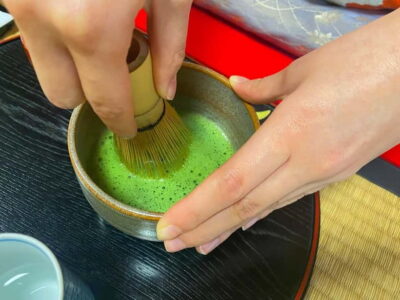 ★ 4.9Kyoto: Tea Ceremony in a Traditional Tea House in KiyomizuFrom $4945 min
 ★ 4.7Kyoto Geisha Walking Tour: Gion District & Hidden GemsFrom $252 hours
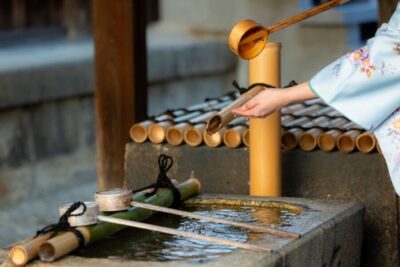 ★ 4.9Kyoto: Tea Ceremony Ju-An at Jotokuji TempleFrom $291h 10m
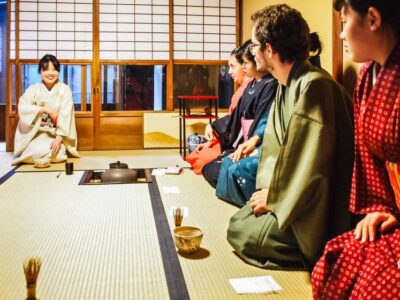 ★ 4.3Kyoto: 45-Minute Tea Ceremony Lesson ExperienceFrom $2245 min