
Reviewed · MARKETS
Kyoto: Enjoy Sushi & Market Tour! Best for Family & Couple!
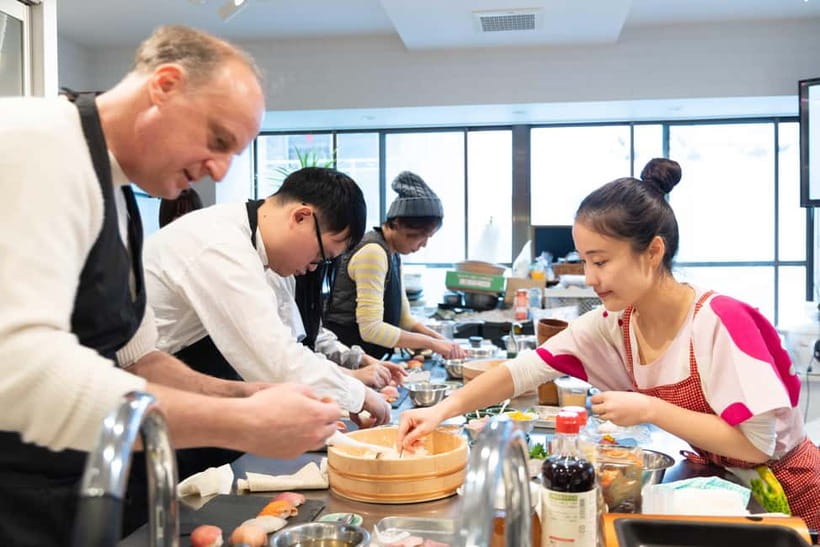
The most interesting part of this Kyoto experience is that your sushi lunch begins at Nishiki Market, where you can watch fresh fish being cut before using similar ingredients in your own meal. Back in the cooking space, you make three styles of sushi, prepare miso soup, and sit down to eat what you created.
I like the mix of market culture and hands-on cooking, rather than a class that keeps you behind a counter the whole time. I also like the practical range of dishes: nigiri, temari, temaki, vinegar rice, dashi, and miso soup give you plenty to repeat at home. The main consideration is the price. At $77 per person for two hours, this is not a cheap lunch, and one participant felt the instruction was not interactive enough for the cost.
In This Review
- Key points at a glance
- Starting near Kyoto Station and Shijo Station
- Nishiki Market: fish cutting before the cooking begins
- Vinegar rice, the foundation of good sushi
- Three sushi forms, three different ways to work
- Dashi and miso soup add depth to the meal
- A meal with dessert, coffee, and optional Kyoto drinks
- Kyoto sightseeing advice from a local expert
- What the $77 price really buys you
- Best for families, couples, and first-time sushi makers
- Timing, group size, and cancellation flexibility
- Should you book this Kyoto sushi class?
- FAQ
- Where does the sushi and market tour meet?
- How long does the activity last?
- How much does the tour cost?
- What languages are available?
- Is Nishiki Market part of the experience?
- What kinds of sushi will I make?
- Does the class include miso soup?
- Is food included after the cooking?
- Can I order sake or beer?
- Can I cancel for a refund?
Key points at a glance
- Watch fish preparation at Nishiki Market: The market visit includes a chance to see skilled vendors cut fish, including salmon.
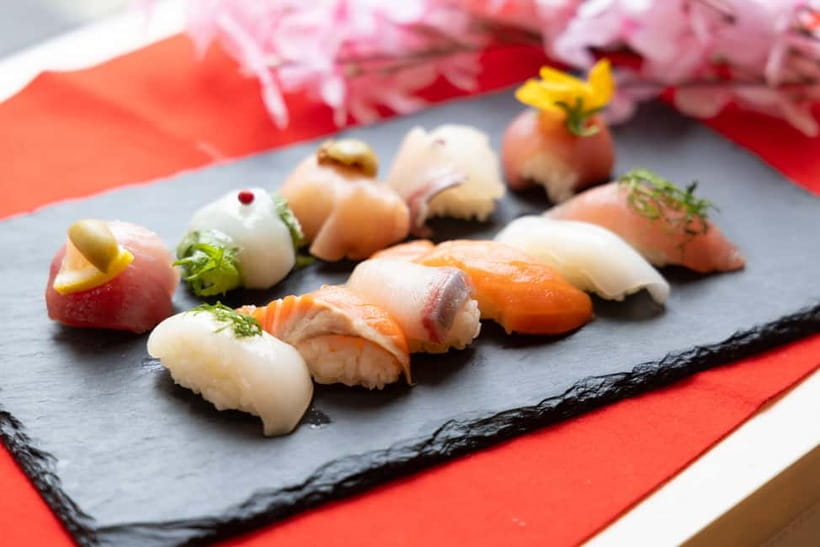
- Make three sushi styles: You prepare nigiri, temari, and temaki, each with a different shape and technique.
- Learn the base of Japanese home cooking: The class covers vinegar rice, dashi, tasting comparisons, and miso soup.
- Enjoy a complete meal: Sushi, miso soup, dessert, and coffee are included. Sake and beer cost extra.
- Keep the group small: No more than 10 people take part, which should make questions and individual help easier.
- Add Kyoto planning advice: An English or Japanese-speaking Kyoto tourism expert shares seasonal sightseeing suggestions.
Starting near Kyoto Station and Shijo Station
The meeting point is in central Kyoto, in front of a building with a hair salon called Salon Roll on the first floor. The location is about 10 minutes from Kyoto Station and five minutes from Shijo Station, so it fits neatly into a sightseeing day.
You are also close to Gion and Kiyomizu-dera. That matters because the class lasts only two hours. You can schedule it before or after other central Kyoto stops instead of spending half a day getting across town.
The meeting instructions are specific, but I would still allow a little extra time to find the building. A hair salon on the first floor is your landmark. The activity is listed as wheelchair accessible, and smoking indoors is not allowed.
The group is limited to 10 people. That is small enough to keep the room from feeling like a large demonstration, though your experience will still depend on how much guidance the instructor gives during your session. The class is offered in English or Japanese.
Other shopping tours in Kyoto
Nishiki Market: fish cutting before the cooking begins
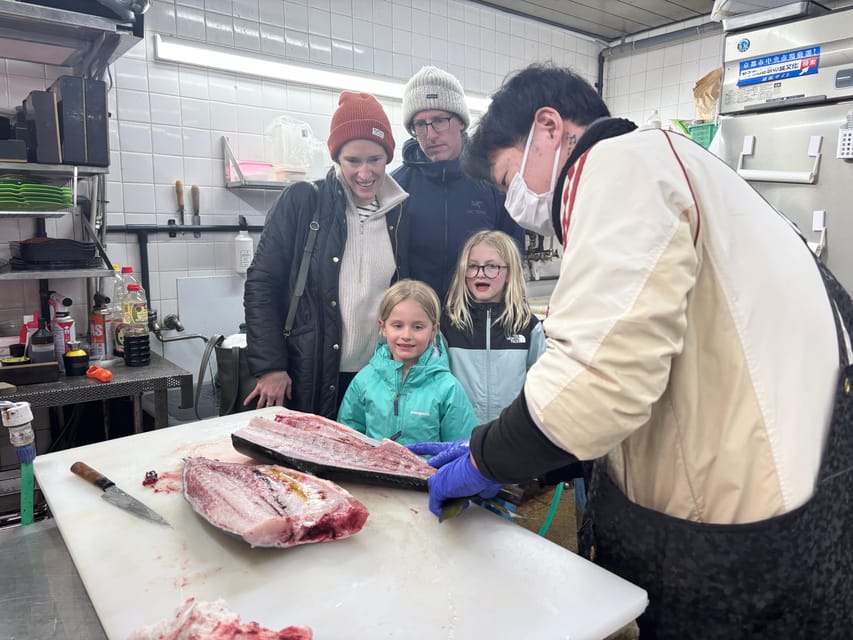
The first stop takes you to Nishiki Market to select fresh fish and watch professional preparation. This gives the class a useful connection to Kyoto’s food culture. You are not simply handed pre-cut ingredients with no explanation. You see part of the work that turns a whole piece of fish into something ready for sushi.
The fish-cutting demonstration is a high point for many people, especially if you have never watched a skilled vendor prepare salmon or another fish for sale. It is brief, practical, and tied directly to the meal you are about to make.
I like this part because it helps explain why sushi depends on careful handling. The market is not just a colorful photo stop. It shows you the ingredients at the start of the process, then the class lets you work with them.
The information does not promise a full guided food crawl through Nishiki Market, nor does it list a fixed fish selection for every date. Think of the market visit as a focused ingredient stop and fish-cutting demonstration, not a long tasting tour.
That distinction is useful when planning. If you want hours of wandering, sampling, and shopping, this activity will feel too short. If you want a quick look at market technique before making lunch, the timing works well.
Vinegar rice, the foundation of good sushi
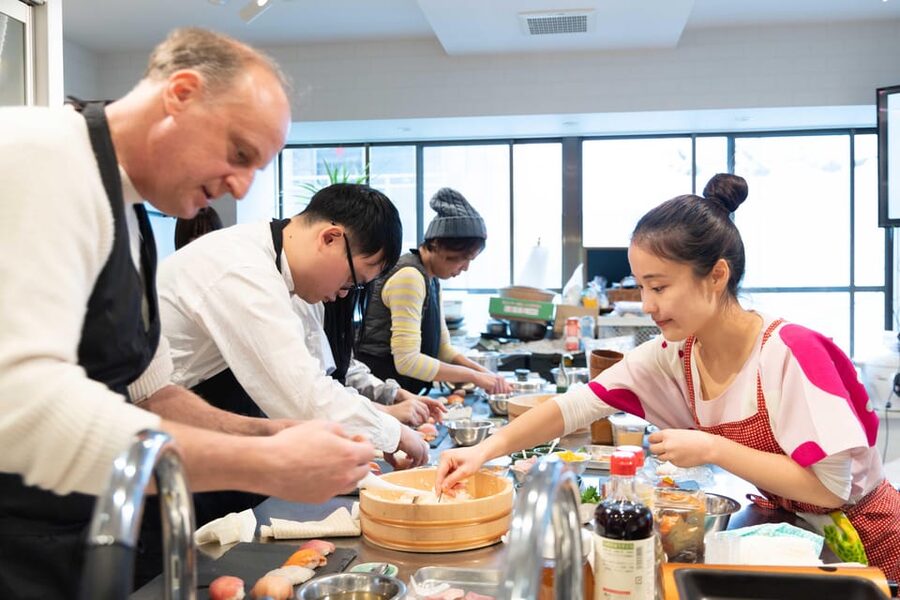
Back at the cooking class, you learn how to make vinegar rice. This may sound simple, but it is the part that holds the meal together. Rice that is too wet, too dry, too sweet, or poorly seasoned can make even good fish feel wrong.
The class presents vinegar rice as a skill you can use at home. That practical focus is one of the better reasons to choose this experience. You do not only shape sushi. You learn one of its basic building blocks.
The supplied information does not give a step-by-step recipe or say which equipment you will use. Still, you can expect an introduction to the process and instruction on preparing rice for the different sushi forms.
If you cook at home, pay close attention here. The decorative shapes may be the most fun, but rice technique is likely to be the lesson you use most often after returning home.
Three sushi forms, three different ways to work
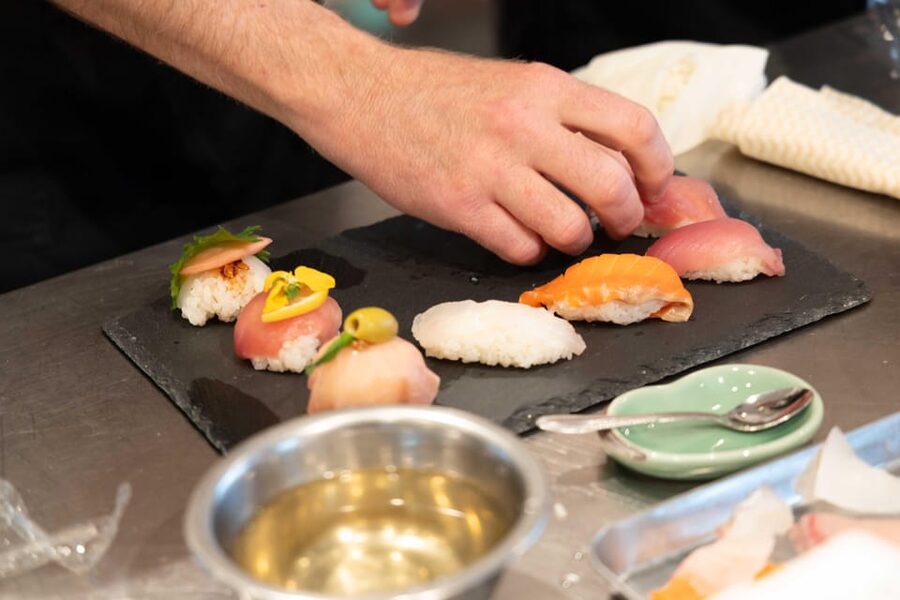
The class includes nigiri, temari, and temaki. Learning all three gives the two-hour session useful variety.
Nigiri is the familiar hand-formed sushi with rice topped by fish or another ingredient. It teaches you to shape rice carefully and place the topping neatly.
Temari sushi is round and decorative. This is where the artistic side of the class comes through. You can make small, visually pleasing pieces that look good on a party table without requiring restaurant-level knife work.
Temaki is hand-rolled sushi, often shaped like a cone. It gives you a more relaxed way to assemble sushi and is usually a friendly format for home meals.
The experience encourages you to use your own creativity. That does not mean you are left entirely on your own. The guide helps with technique and can let you explore different flavors, based on the session details and the positive account of a participant who wanted to develop better sushi-making skills.
Still, expectations matter. This is a short class, not professional chef training. You should leave with a working introduction to these forms, not perfect restaurant presentation.
Dashi and miso soup add depth to the meal
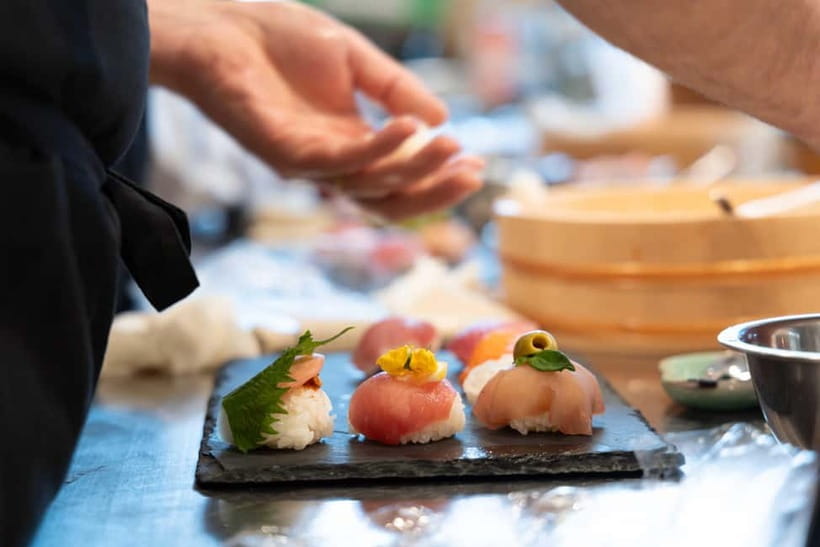
Sushi gets most of the attention, but I am glad the class includes dashi and miso soup. Dashi is a key Japanese soup stock, and the activity includes making it, tasting it, and comparing versions before preparing the soup.
That tasting and comparison is especially useful. It helps you notice how the stock changes the final bowl, rather than treating miso soup as simply hot water mixed with paste.
The format also makes the meal feel complete. You prepare sushi, then sit down with miso soup, dessert, and coffee. This is more satisfying than spending two hours shaping food and leaving hungry.
The exact miso varieties, dashi ingredients, and dessert flavor are not fixed in the information provided. One session included a homemade matcha dessert, along with sake and green tea, but you should not assume every booking will have the identical dessert or drinks.
A few more Kyoto tours and experiences worth a look
A meal with dessert, coffee, and optional Kyoto drinks
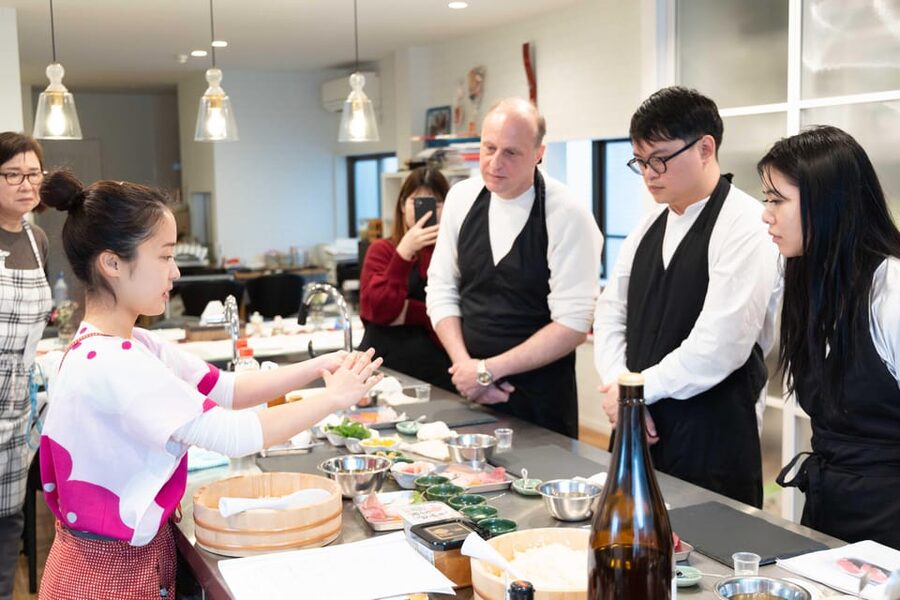
After the preparation, you eat the sushi and miso soup you made. Dessert and coffee are included, giving the session a clear finish rather than ending immediately after the last piece is shaped.
Sake and beer are available for an extra charge. These optional drinks can add a pleasant local touch for adults, but they also raise the final cost. Since the listed price is $77 per person, I would treat the included food as the main value and see the alcohol as an optional add-on, not part of the basic deal.
The meal also creates time for conversation among the group. A family can compare its sushi shapes, and couples can make the session feel like a shared activity instead of another restaurant meal.
The experience is best suited to people who enjoy participating. If you prefer to sit quietly while a chef cooks for you, a conventional sushi lunch may offer better value. Here, the point is the process as much as the food.
Kyoto sightseeing advice from a local expert
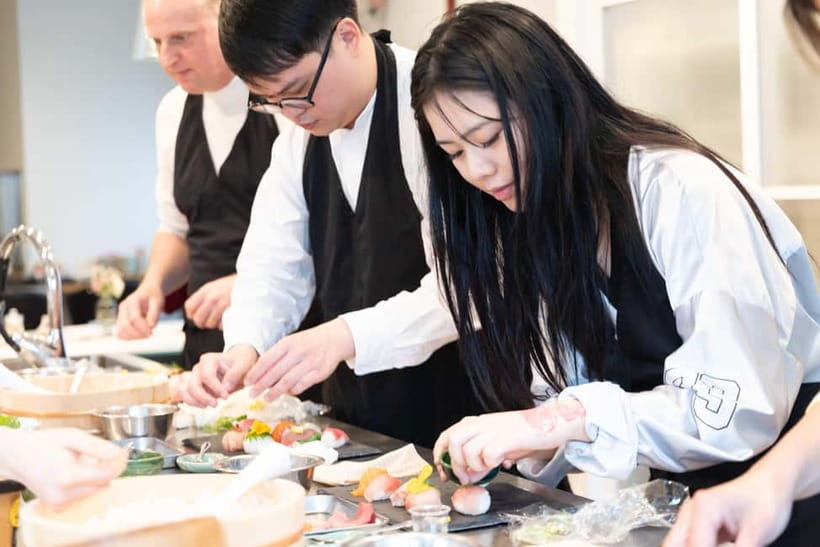
A Kyoto tourism expert shares seasonal sightseeing information during the experience. This is a useful extra, especially if you are unsure how to plan your days around the time of year.
The advice is described as seasonal rather than as a full private itinerary. You should expect suggestions that can help you decide what to see next, not a custom tour of Kyoto.
This part may be particularly helpful for first-time visitors. You can ask about fitting the class around Gion and Kiyomizu-dera, both of which are nearby. The central location also makes it easy to continue sightseeing after lunch.
Because the activity is offered in English and Japanese, language access should be straightforward for English-speaking participants. The actual guide’s name is not provided, so you cannot request a particular instructor based on the available details.
What the $77 price really buys you
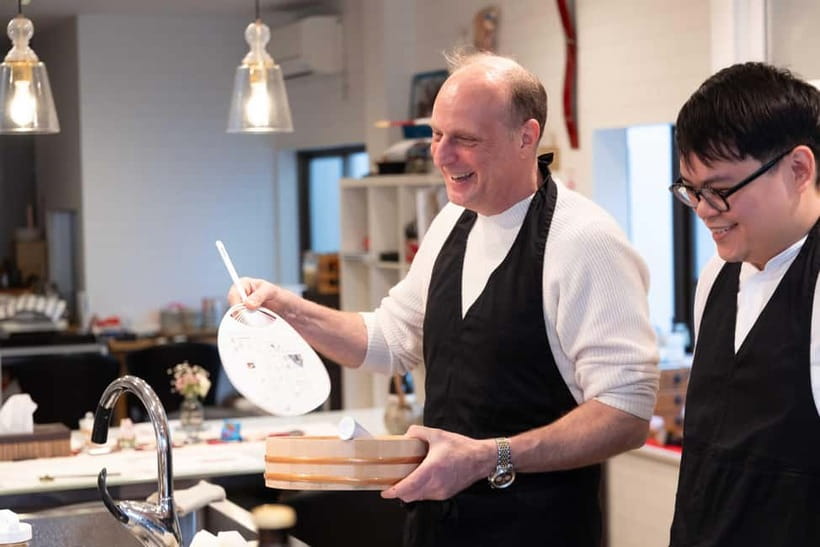
At $77 per person, this is a mid-priced food activity rather than a bargain meal. You are paying for more than the ingredients. The fee covers the market visit, fish preparation viewing, instruction, cooking space, sushi-making practice, miso soup, dessert, coffee, and local sightseeing advice.
The value is strongest if you have always wanted to learn sushi basics but would not arrange the ingredients and instruction yourself. You also get several skills in one sitting: vinegar rice, three sushi styles, dashi, and miso soup.
The value is weaker if you measure the price only against the amount of food. A sushi lunch in Kyoto may cost less, and the cooking session lasts just two hours. One participant also felt that the instruction did not include enough interaction and that the fish did not justify the price.
That criticism is worth taking seriously. A small group of up to 10 does not guarantee constant hands-on coaching. The strongest accounts describe a guide who was kind, flexible, and careful about technique. Your enjoyment will depend partly on the instructor’s energy and on how actively you ask questions.
For me, the price makes sense for a family or couple looking for an activity with a clear meal at the end. It is less convincing for someone who simply wants excellent sushi at the lowest cost.
Best for families, couples, and first-time sushi makers
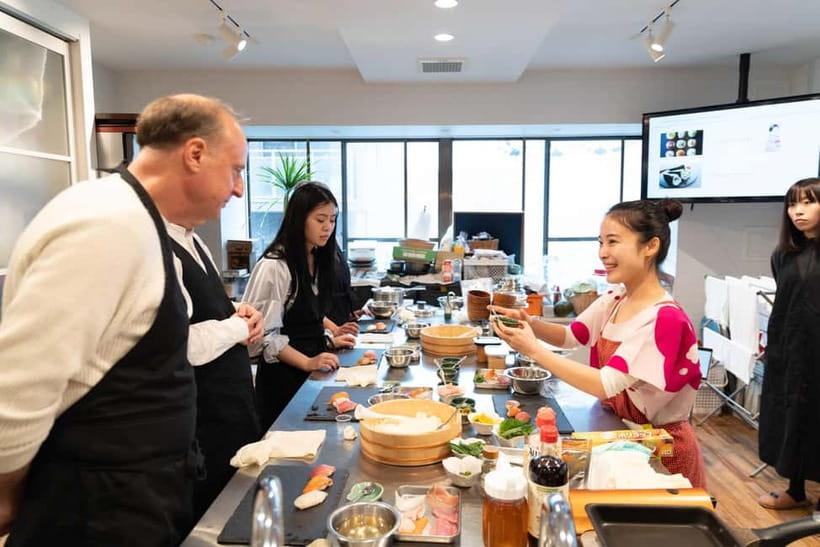
Families are a natural fit. The activity is short, creative, and centered on food, with enough variety to keep children and adults involved. One family described it as a highlight of a Kyoto trip, especially because it combined the market, miso soup, several sushi types, and dessert.
Couples may enjoy the shared task of shaping and decorating sushi. It also gives you a break from temple visits, which can start to blur together during a busy Kyoto schedule.
First-time sushi makers should get the most from the class. You can learn basic techniques without committing to a long culinary course. The chance to repeat the dishes at home adds lasting value.
Experienced home cooks may find the class too basic, depending on the guide and session pace. If you already make sushi regularly, ask yourself if the Nishiki Market visit and Kyoto food context are enough to justify the fee.
The activity is not described as a child-only class, and no age minimum is provided. If you are booking with young children, check the current details before paying.
Timing, group size, and cancellation flexibility
The activity lasts two hours, with starting times depending on availability. That short length makes it easy to place in a full day, but it also means the cooking portion must move at a steady pace.
A group of up to 10 is manageable, yet the session may feel different with two people compared with a full class. A smaller group should offer more room for questions. A full group may require you to wait briefly for help.
You can cancel up to 24 hours in advance for a full refund. The reserve-now, pay-later option also helps if your Kyoto schedule is still changing. These policies are useful in a city where weather, jet lag, and temple plans can shift your day.
The activity is wheelchair accessible. Smoking is not allowed indoors.
Should you book this Kyoto sushi class?
I would book this experience if you want a hands-on food activity near central Kyoto, especially as a family or couple. The best parts are the Nishiki Market fish-cutting visit, the chance to make nigiri, temari, and temaki, and the dashi and miso soup lesson.
I would skip it if your main goal is a large sushi meal, a long market tour, or intensive one-to-one teaching. The $77 price asks you to value instruction and the experience itself, not just the lunch.
For the best fit, schedule it when you can still visit Gion or Kiyomizu-dera nearby. Ask questions, take note of the vinegar rice and dashi methods, and treat the decorative sushi as practice rather than a test. If you want to return home able to make a few attractive Japanese dishes, this compact class makes a good case for itself.
FAQ
Where does the sushi and market tour meet?
Meet in front of a building with a hair salon called Salon Roll on the first floor.
How long does the activity last?
The activity lasts two hours.
How much does the tour cost?
The listed price is $77 per person.
What languages are available?
The instructor and activity are available in English and Japanese.
Is Nishiki Market part of the experience?
Yes. You visit Nishiki Market to select fresh fish and watch skilled vendors prepare it.
What kinds of sushi will I make?
You learn to make nigiri, temari, and temaki sushi.
Does the class include miso soup?
Yes. You learn about dashi, taste and compare it, and make miso soup.
Is food included after the cooking?
Yes. Sushi, miso soup, dessert, and coffee are included.
Can I order sake or beer?
Yes. Kyoto sake and beer are available for an additional charge.
Can I cancel for a refund?
You can cancel up to 24 hours in advance for a full refund. You can also reserve now and pay later.
More Markets in Kyoto
More Shopping Tours in Kyoto
More tours in Kyoto we've reviewed




Markets, compared.
 ★ 5.0Nishiki Market Brunch Walking Tour (7 Tastings + Brunch)From $68
 ★ 5.0Kyoto Nishiki Market Food and Culture Walking TourFrom $80
 ★ 4.8Kyoto: Nishiki Market Tea Ceremony with Koto PerformanceFrom $561 hour
 ★ 4.8Kyoto: Nishiki Market Brunch Walking Tour-7 Tastings+BrunchFrom $663 hours
 ★ 4.7Kyoto: Local Food Tasting Tour at the Nishiki MarketFrom $783 hours - 270 minutes
 ★ 4.7Kyoto: Nishiki Market and Depachika Food Tour with a LocalFrom $422 hours