
Reviewed · KYOTO
Ikebana Traditional Japanese Art of Flower Arranging
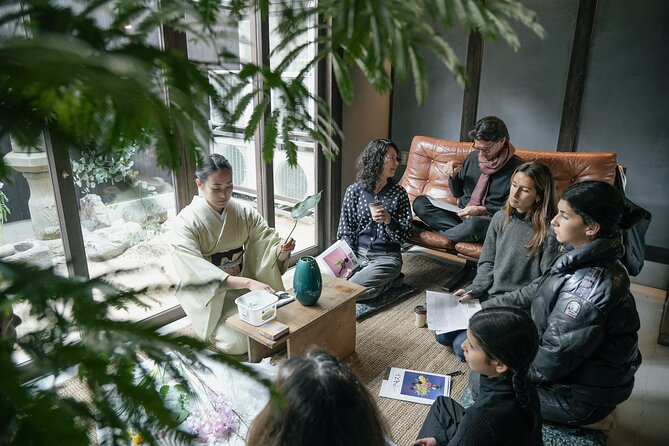
Ikebana turns a handful of cut flowers into a study of balance, space, and mood. In this Kyoto class, Mana introduces you to the Japanese idea of giving flowers a new life, then guides you through two traditional styles, Nageire and Moribana, using seasonal stems.
I like the small maximum of six people, which gives the lesson a personal feel, and I like that you do more than watch a demonstration. You create arrangements yourself, learn how to work with each stem’s natural shape, and pick up flower-care tips that can help your display last as long as two weeks.
The main consideration is depth. Ninety minutes is enough for a useful first lesson, but not a full study of ikebana’s many schools, rules, and history. One isolated booking complaint also involved a missed meeting, so arrive with the address and contact details ready.
In This Review
- Key points at a glance
- A quiet Kyoto lesson built around living flowers
- What the 90-minute class includes
- Nageire and Moribana give beginners two ways to think
- Seasonal flowers make the lesson feel connected to Kyoto
- Mana’s teaching style and the value of a small group
- Mindfulness without turning the class into a lecture
- Flower-care advice adds value after the class
- The meeting point and timing deserve care
- Who will enjoy this Kyoto activity most
- Cancellation and booking advice
- FAQ
- How long does the ikebana class last?
- Where does the activity take place?
- Does the class end at the same location?
- Who teaches the class?
- Which ikebana styles are covered?
- Are seasonal flowers included?
- How large is the group?
- Can I cancel for a full refund?
- Should you book this ikebana class?
Key points at a glance
- Two classic ikebana styles: Mana demonstrates Nageire and Moribana, giving beginners two different ways to arrange flowers.
- Seasonal flowers: The materials change with the time of year, so your arrangement reflects the current season in Kyoto.
- Hands-on instruction: You watch demonstrations, then make your own arrangements with guidance.
- Small group size: The class accepts no more than six participants, allowing room for questions and individual help.
- Mindful Japanese aesthetics: The lesson connects flower arranging with wabi-sabi, balance, restraint, and attention to nature.
- Useful care advice: You learn practical ways to keep freshly cut flowers looking good for up to two weeks.
A quiet Kyoto lesson built around living flowers
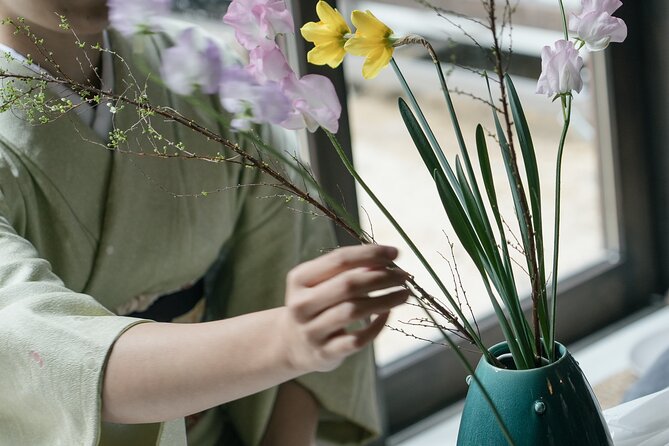
Ikebana means living flowers, but the phrase describes more than putting blooms in a vase. The aim is to respect the natural character of each stem and give it a new role through careful placement. A bent branch, an open blossom, or an uneven leaf can become the central feature rather than something to trim away.
That idea gives this class more substance than a standard craft workshop. You are not simply arranging flowers by color or filling a container until it looks full. You are learning to notice line, height, empty space, direction, and balance.
I like that the class connects those practical choices with mindfulness. You have to slow down and look closely at the materials in front of you. The work asks you to consider what each flower is doing in the arrangement, rather than forcing every stem into the same shape.
The setting is in Kyoto’s Kamigyo Ward, at 3481 Tanbayacho, Symphony Kitano Higashi, postal code 602-8287. The activity begins and ends at the same meeting point. It is near public transportation, though you should still allow time to locate the building before the scheduled start.
If you're still narrowing it down, here are other tours in Kyoto we've reviewed.
What the 90-minute class includes
The class lasts about an hour and a half. That is a good length for a first encounter because it gives you enough time to see the technique, try it yourself, and make adjustments without turning the lesson into a full-day commitment.
Mana begins with an explanation of ikebana and its traditional purpose. The class introduces the idea of flowers as living material, with each stem offering its own movement and personality. This is also where the wabi-sabi side of the art comes in: simplicity, imperfection, seasonality, and the beauty of space.
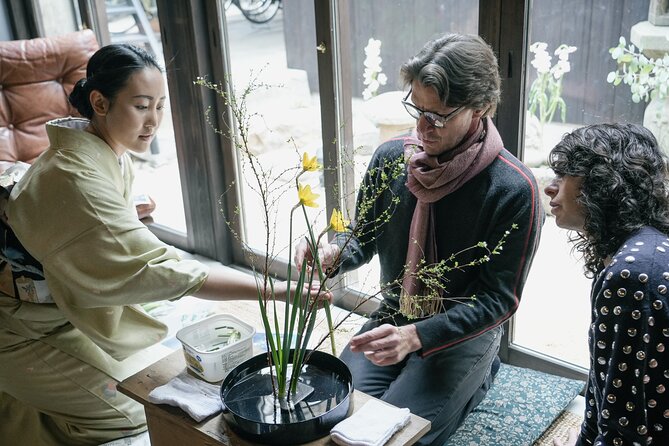
You then watch demonstrations of two arrangements. The styles are Nageire and Moribana, both useful starting points for beginners but different in how the flowers are placed and supported. Seeing the methods first helps you understand that ikebana is not one fixed formula.
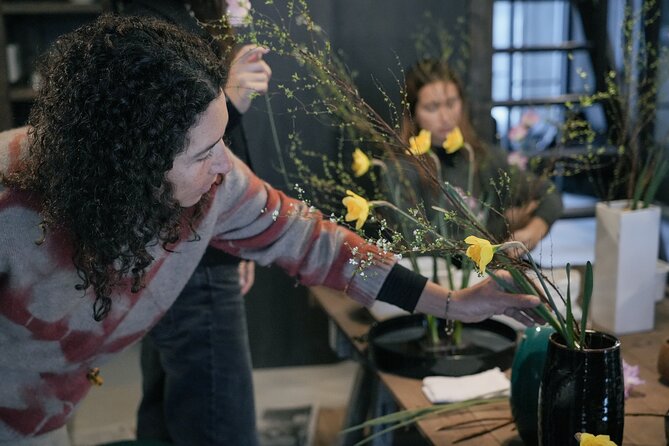
After the demonstrations, you work on your own arrangements. The lesson is practical, so you are not left to guess how to apply what you have just seen. Mana provides instruction and allows flexibility as you make your choices.
That balance matters. A rigid workshop can make a creative activity feel like a test, while an overly loose lesson can leave you unsure what to do. Here, the structure gives you a starting point, but you still have room to shape the arrangement in your own way.
Nageire and Moribana give beginners two ways to think
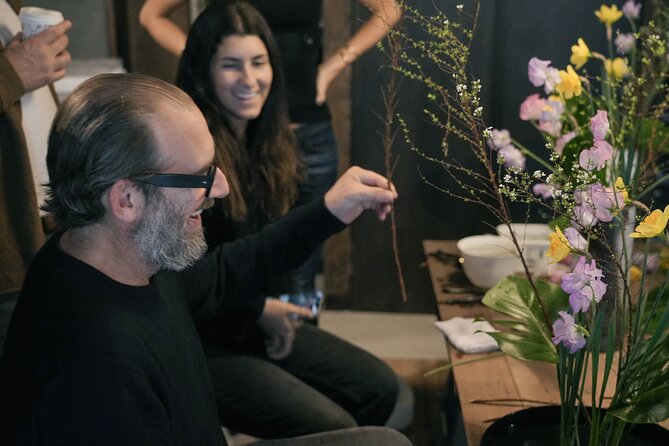
Nageire and Moribana are particularly useful styles for a short introductory class because they show how one art form can create different visual effects. Mana explains and demonstrates both rather than limiting you to a single approach.
The value of seeing two methods is not just technical. You begin to notice how the same seasonal materials can produce different lines, heights, and patterns. One arrangement may feel more upright and free, while another may spread outward across its container. The contrast makes the principles easier to understand.
You do not need previous flower-arranging experience. The class is designed for beginners, and most people can take part. Still, do not expect a detailed course in every ikebana school or a complete set of formal rules in 90 minutes.
That limitation is worth keeping in mind. One participant wanted more discussion of ikebana’s history, different schools, and basic rules. The class does include an explanation of the art and its meaning, but its priority is learning by doing. If you want a lecture on the development of ikebana, this may feel brief. If you want to make something with seasonal flowers, the format makes sense.
Seasonal flowers make the lesson feel connected to Kyoto
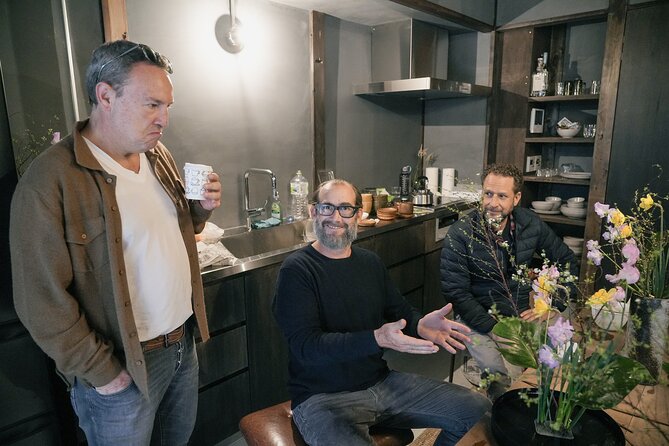
The flowers used in the class are seasonal. That detail keeps the activity tied to the time of year rather than presenting you with an identical kit at every visit.
Seasonal materials also make the lesson more instructive. You learn to work with what nature offers at that moment. A stem may be curved, sparse, heavy with blossoms, or marked by an unusual leaf. Instead of treating those qualities as problems, ikebana asks you to use them.
This is one of the most appealing parts of the activity for anyone who wants a calmer break from sightseeing. Kyoto can fill your day with temples, gardens, markets, and long walks. Ninety minutes spent studying a few stems gives you a different way to pay attention to the city’s connection with nature.
The experience takes place in a typical Japanese home, according to the class description from participants who attended. That setting adds a domestic feel that a large studio or hotel meeting room would not provide. The activity is not presented as a stage show. You sit down, watch the teacher work, and then handle the materials yourself.
Mana’s teaching style and the value of a small group
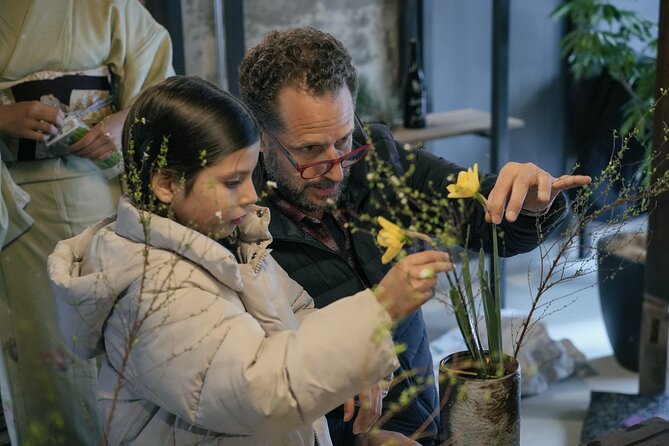
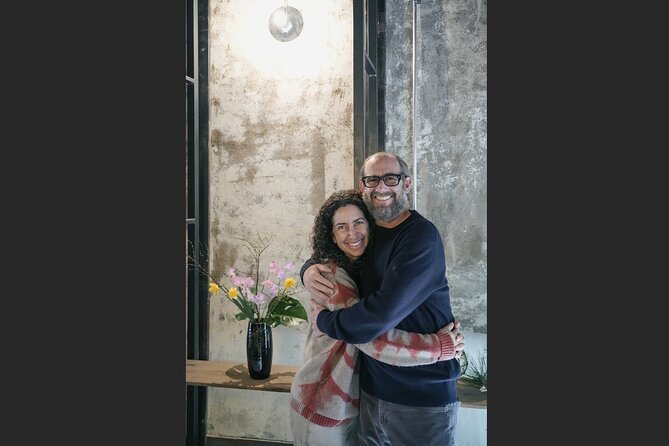
Mana is the named English-speaking ikebana instructor. Her role is important because the class involves subtle choices that can be hard to understand from a printed explanation. She demonstrates clearly, explains the philosophy behind the arrangements, and offers practical guidance as you work.
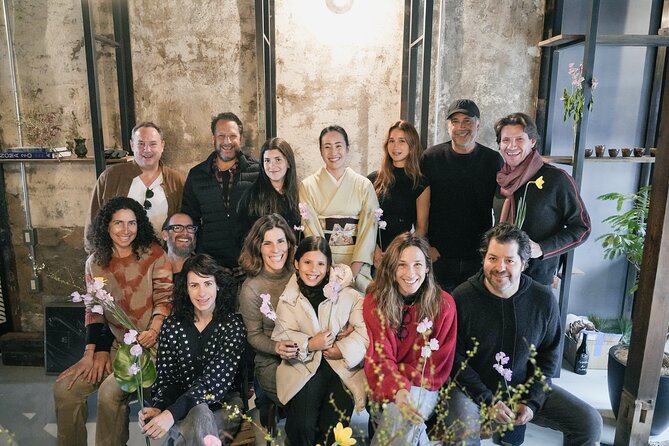
The maximum group size is six. That is small enough to ask questions without waiting through a long line of participants. It also makes it more likely that you can receive feedback on the position of a stem or the overall balance of your arrangement.
The teaching style seems to combine clear instruction with flexibility. You are shown traditional methods, but you are not required to produce an identical copy. That approach suits an art form based on the natural character of flowers.
I would choose this class over a larger group workshop if you value a quieter pace. A small group also works well for couples or friends who want to make the activity part of a shared Kyoto day. One couple particularly enjoyed having freedom while creating their arrangements, which is a useful sign for anyone who prefers guidance without constant correction.
The class is conducted in English with an English-speaking expert. That does not mean every historical detail will receive a long explanation. It does mean you can follow the demonstrations and ask questions about the process.


Mindfulness without turning the class into a lecture
Ikebana is often described as a form of mindfulness, and here that idea has a practical basis. You focus on the angle of a branch, the gap between stems, and the way a flower changes the balance of the whole arrangement.
You also learn to accept some irregularity. Wabi-sabi aesthetics do not demand perfect symmetry or a crowded display. A sparse arrangement can be complete. An unusual curve can be more interesting than a straight stem.
I like this part because you can carry the lesson beyond the class. Even if you never arrange flowers again, you may look at plants differently. You start noticing line and shape rather than seeing only color and fullness.
The mindfulness element is gentle rather than heavy-handed. The class remains a practical flower-arranging workshop, not a formal meditation session. That makes it a good fit for someone curious about Japanese aesthetics but not looking for a spiritual retreat.
Flower-care advice adds value after the class
The class includes tips for keeping fresh flowers in good condition for up to two weeks. This is an important practical extra, since it helps your work last beyond the 90-minute session.
The advice also gives context to the Japanese idea of giving flowers a new life. You are not treating the stems as disposable decoration. You learn how care, placement, and attention can extend the useful life of the arrangement.
At $72.26 per person, the price is higher than simply buying flowers and arranging them at your accommodation. The difference is the instruction, the traditional methods, the English-language guidance, the seasonal materials, and the chance to work in a small group with an experienced teacher.
The value is strongest if you want a structured cultural activity rather than a souvenir-making stop. You leave with a new skill and a better sense of why ikebana looks the way it does. If your only aim is to take home a finished floral display at the lowest possible price, the class may not be the right choice.
The activity is usually booked about 30 days ahead. That pattern suggests you should reserve early if the class fits a fixed Kyoto schedule, especially since only six people can attend at a time.
The meeting point and timing deserve care
The class begins and ends at the same location in Kamigyo Ward. The full address is Japan, 602-8287 Kyoto, Kamigyo Ward, Tanbayacho, 3481 Symphony Kitano Higashi.
The experience is near public transportation, but no detailed route instructions are provided here. I would save the address on your phone, check the location before leaving, and avoid arriving at the last minute. Small residential or mixed-use buildings can take longer to identify than a major tourist attraction.
There was one serious complaint from a participant who said the instructor did not appear and did not answer the phone. The wider pattern is strongly positive, with an overall rating of 4.7 from 19 ratings, but that single report is still worth noting. It may have been an isolated meeting problem, yet confirming the appointment details and having a working phone connection is sensible.
The mobile ticket makes it easy to keep the booking on your phone. Confirmation is received at the time of booking. Most people can participate, and the small group format keeps the activity manageable.
Who will enjoy this Kyoto activity most
I would recommend this class to you if you want a quiet, hands-on cultural activity between larger sightseeing stops. It suits first-time visitors who want to understand a traditional Japanese art without committing to a full course.
It is especially good for:
- Couples seeking a shared activity with room for creativity
- Solo visitors who enjoy learning through direct practice
- Anyone interested in Japanese design, gardens, or seasonal nature
- Beginners who want clear demonstrations before trying the technique
- People who prefer small groups to large workshops
- Visitors looking for an indoor activity that does not depend on the weather
You may want something else if you need a detailed academic history of ikebana. The class offers cultural context, but the short schedule focuses on Nageire, Moribana, demonstrations, and your own arrangements.
It may also be less appealing if you do not enjoy careful, slow work. This is not a fast craft session. The pleasure comes from looking closely and making small changes.
Cancellation and booking advice
You can cancel for a full refund up to 24 hours before the local start time. Changes or cancellations made less than 24 hours in advance are not accepted for a refund.
Since the group is limited to six and advance booking averages about 30 days, I would reserve once your Kyoto plans are firm. Keep the confirmation and meeting address together on your phone, and allow extra time to reach the location.
FAQ
How long does the ikebana class last?
The class lasts approximately 1 hour and 30 minutes.
Where does the activity take place?
It takes place at 3481 Tanbayacho, Symphony Kitano Higashi, Kamigyo Ward, Kyoto, postal code 602-8287.
Does the class end at the same location?
Yes. The activity ends back at the meeting point.
Who teaches the class?
The class is taught in English by Mana, an ikebana expert.
Which ikebana styles are covered?
The class includes demonstrations and instruction in the Nageire and Moribana styles.
Are seasonal flowers included?
Yes. The class uses seasonal flowers for the arranging practice.
How large is the group?
The activity accepts a maximum of six participants.
Can I cancel for a full refund?
Yes, if you cancel at least 24 hours before the experience’s local start time. Cancellations made less than 24 hours in advance are not refunded.
Should you book this ikebana class?
Book it if you want to slow down, work with seasonal flowers, and learn a traditional Japanese art in a small English-language setting. The two styles, personal instruction from Mana, and practical flower-care tips give the 90-minute session enough substance to justify the price for many visitors.
Skip it if your main goal is a long history lesson or a broad survey of ikebana schools. This is a focused beginner class, not an advanced seminar. Save the address, allow time to find the meeting point, and book ahead if you want this calm, creative pause in your Kyoto schedule.
More tours in Kyoto we've reviewed




Kyoto, compared.
 ★ 5.0PERFECT KYOTO 1-Day Bus TourFrom $129
 ★ 4.8Kyoto: Fushimi Inari, Kinkakuji, Bamboo Grove 1 Day Bus TourFrom $122510 minutes - 9 hours
 ★ 4.9Kyoto: Tea Ceremony in a Traditional Tea House in KiyomizuFrom $4945 min
 ★ 4.7Kyoto Geisha Walking Tour: Gion District & Hidden GemsFrom $252 hours
 ★ 4.9Kyoto: Tea Ceremony Ju-An at Jotokuji TempleFrom $291h 10m
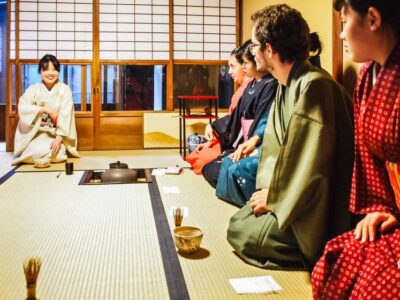 ★ 4.3Kyoto: 45-Minute Tea Ceremony Lesson ExperienceFrom $2245 min