
Reviewed · WORKSHOPS
Sekka Cotton Furoshiki Class
The best part of this Kyoto craft class is that you make something useful, not just watch someone else work. At Kyoto Shibori Museum, you fold an 86 by 89 cm cotton furoshiki, clamp it between boards, and dye it with the sekka shibori method. Your finished cloth becomes a personal souvenir, with the pattern shaped by your own folding.
I like the private format, which keeps the lesson focused on your party, and I like the clever use of drying time. While your cloth rests for about 30 minutes, you visit the museum’s displays of fabrics, tools, and kimono-making techniques. The main drawback is that the hands-on work is fairly standardized and can feel quick, especially for adults hoping for a long, advanced workshop.
In This Review
- Key points at a glance
- Making a furoshiki at Kyoto Shibori Museum
- Why sekka shibori is worth your time
- The private lesson: personal, but not highly advanced
- What happens while your cloth dries
- The souvenir and the museum shop
- Is $43.35 a good value?
- Who will enjoy this Kyoto craft class?
- Timing, transport, and practical planning
- My verdict: book it for the handmade memory
- FAQ
- Where does the Sekka Cotton Furoshiki Class take place?
- How long does the class last?
- What will I make?
- What is the sekka shibori method?
- Is the activity private?
- What can I do while the fabric dries?
- Is the museum visit included?
- Does the museum have a shop?
- How much does the experience cost and what is the cancellation policy?
Key points at a glance
- Your party has a private lesson: The class is designed for only your group, so the teacher can explain each folding and dyeing step at a comfortable pace.
- You make a practical souvenir: The finished cotton furoshiki can be used as a wrapping cloth and gives you a lasting reminder of Kyoto.
- Sekka shibori shapes the pattern: You fold the cloth in a set way, place it between boards, and let the dye create the final design.
- Museum time fills the drying period: About 30 minutes of drying gives you time to see textile art, tools, samples, and an educational presentation.
- The whole visit is compact: Allow roughly one hour, though the class itself may take anywhere from 30 to 60 minutes.
- The shop is tempting: You can browse shibori fabrics, souvenirs, and finished textile goods, so bring a little extra money if you enjoy Japanese crafts.
Making a furoshiki at Kyoto Shibori Museum
This experience begins at Kyoto Shibori Museum, at 135-5 Shikiamichō in Nakagyo Ward. The museum is near public transportation, making it a practical stop between other central Kyoto sights. The activity ends where it begins, so you do not need to arrange a second meeting point.
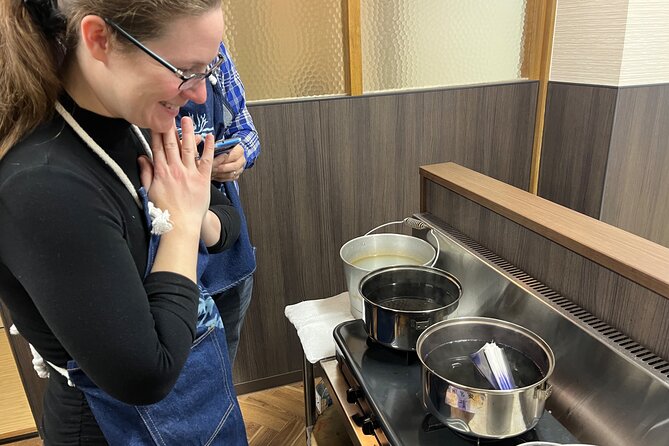
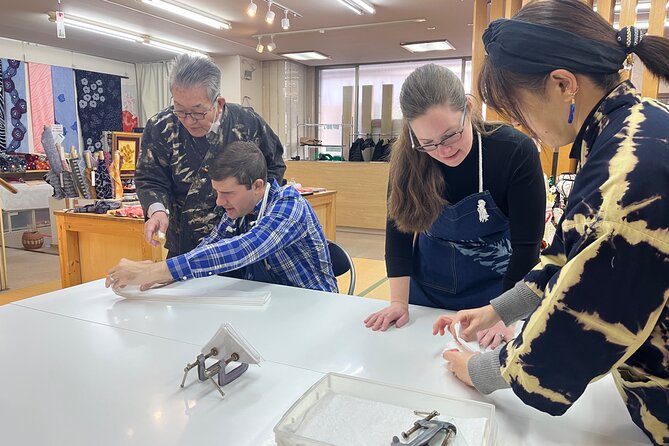
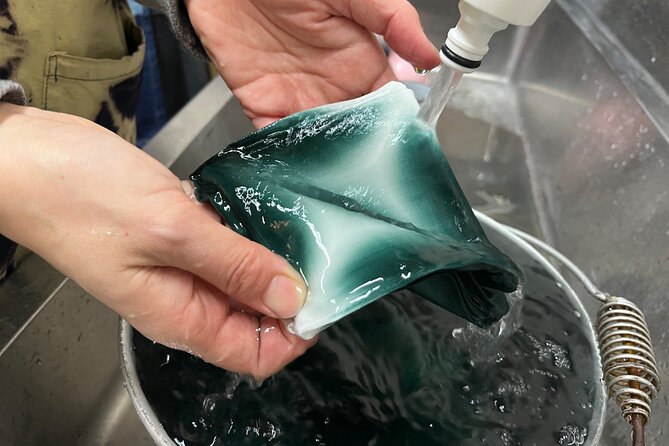
Your teacher starts by helping you choose a color. You then learn the folding method used for sekka shibori. This is not free-form painting. The cloth is folded in a particular manner, then placed between two boards before it goes into the dye. The folds and pressure keep parts of the fabric away from the color, producing the pattern.
That set process is good news if you want a clear result without worrying about artistic skill. You get direct instruction, and the private setup means your party can ask questions as you work. Several people who speak English are available at the museum, according to the information provided, though the booking does not promise a specific teacher or language arrangement.
Once the fabric has been dyed, it needs about 30 minutes to dry. This is when the class changes from a craft lesson into a small museum visit. You are not simply sitting around waiting for your cloth. You can look at shibori samples, tools, finished art pieces, and displays connected with traditional kimono production.
A few more Kyoto tours and experiences worth a look
Why sekka shibori is worth your time
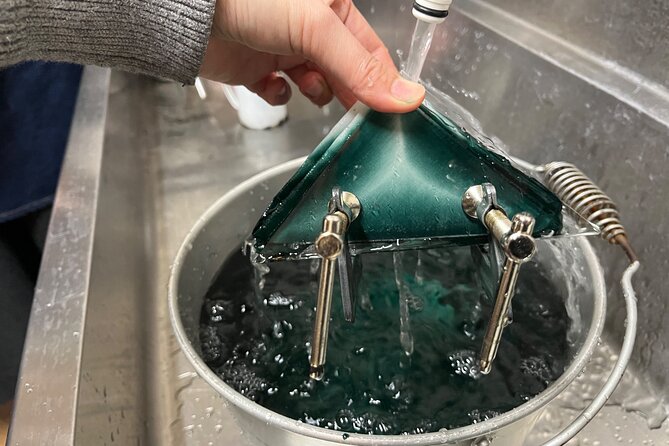
Shibori is a resist-dyeing craft. Instead of painting color onto every part of the cloth, you fold, bind, clamp, or otherwise protect sections of fabric. The dye reaches the exposed areas and leaves patterns where the cloth was shielded.
Sekka shibori uses folding and boards to create a regular design. The method gives you a glimpse of the careful preparation behind Japanese textiles. You will not become a master artisan in one hour, but you will understand why a finished cloth can require such precise handling.
That context matters in Kyoto. The city is full of temples and famous viewpoints, but a craft class gives you contact with a different part of local culture. You handle fabric, follow a traditional process, and leave with an object connected to the place. It is a small experience, but it is more memorable than another quick stop at a souvenir counter.
The result also has a useful life. A furoshiki can wrap a gift, carry a small bundle, or decorate a room. Even if you never use it as a traditional wrapping cloth, it is less disposable than a generic trinket.
The private lesson: personal, but not highly advanced
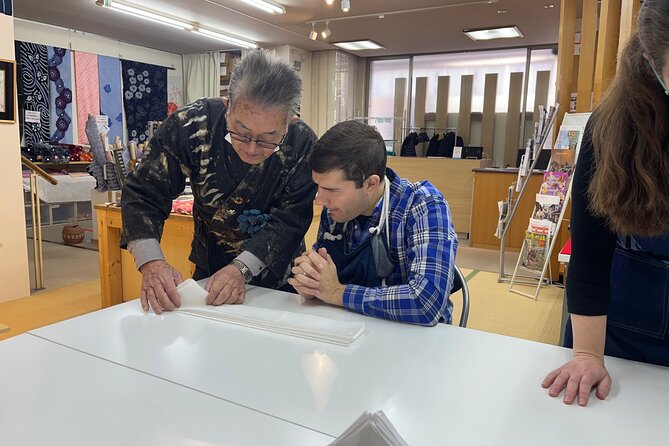
The private arrangement is one of the strongest reasons to book this class. Only your party participates, so the pace is not controlled by a large tour group. That works well for families, couples, and small groups with different levels of confidence.
The teacher gives detailed instructions for folding and dyeing. You do the work yourself rather than watching an artisan make the entire piece for you. That distinction is important. If you want to say you made your own Kyoto textile, this experience gives you that chance.
At the same time, keep your expectations in check. The folding pattern and dyeing process are prepared as a straightforward activity. One fair criticism is that the crafting portion feels easy and somewhat fixed. You are learning a traditional technique, but you are not designing a complex textile from scratch or experimenting with several colors.
I see that as a strength for children and first-time crafters, but a limitation for experienced textile artists. The class is about a satisfying introduction and a finished souvenir, not serious technical training.
What happens while your cloth dries
The drying period is an important part of the visit. Use it to explore the museum upstairs, where you can see art pieces, tools, and samples of shibori work. The displays help explain the craft beyond the single project on your table.
The museum also presents information about ancient kimono-making methods. One especially notable exhibition consists of shibori fabrics made by 50 artisans over 50 years. That kind of long-term work puts your one-hour project in the right frame. Your furoshiki is a beginner’s piece, but it connects to a much larger textile tradition.
An educational video is also part of the museum experience. The combination of video, fabric displays, and tools makes the visit more useful than a class with no cultural background. You can see how much patience and labor goes into fine shibori work before returning to your own cloth.
The museum portion may be the highlight for adults who are more interested in Japanese art than in a simple craft activity. It is also helpful for teenagers, since they can move between making something and seeing finished examples rather than sitting through a long talk.
The souvenir and the museum shop
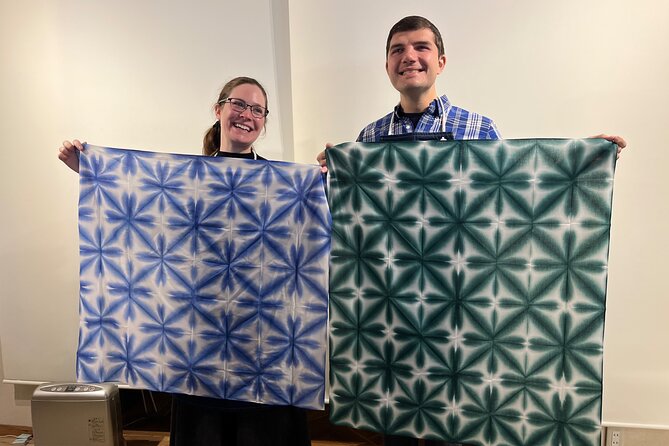
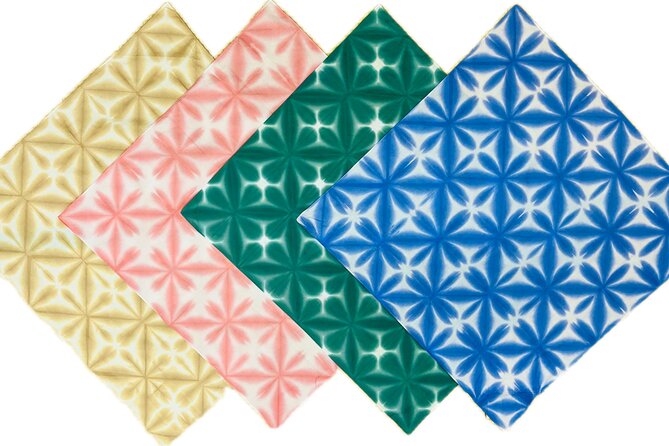
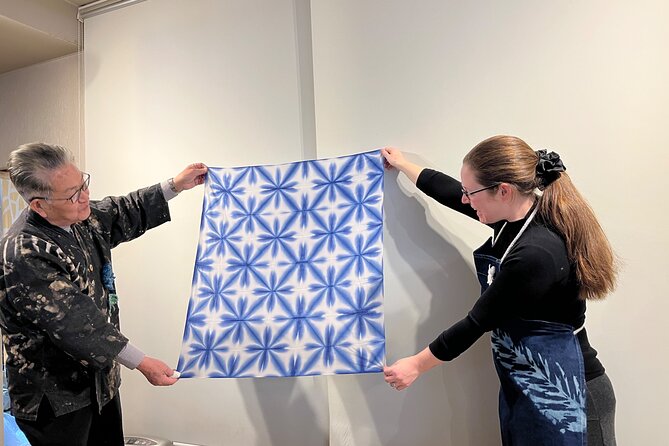
Your cotton furoshiki is included in the activity. The cloth measures about 86 by 89 centimeters, a generous size for a wrapping cloth. Because you choose the color and carry out the folding and dyeing, it has a personal connection that a ready-made souvenir does not.
Do not expect an identical result to a display piece. The appeal is in the process and in the pattern created by your folded fabric. Small differences in the folds, board placement, and dye coverage help make the finished cloth yours.
The shop sells shibori items, fabrics, souvenirs, and other textile goods. This is useful if you want to compare your work with more polished pieces or buy a gift for someone at home. It can also push the final cost beyond the $43.35 class price, so decide in advance how much room you have for shopping.
The shop is not a required part of the class, but it adds choice. You can leave with only your handmade furoshiki, or you can browse additional cloth and craft items. I would treat the class price as the cost of the activity, not as a package that includes shop purchases.

Is $43.35 a good value?
At $43.35 per person, this is not the cheapest short activity in Kyoto. The class lasts about an hour, and the actual folding and dyeing may take only 30 to 60 minutes. If you measure value only by time, the price can look high.
The calculation improves when you consider what is included. You get a private lesson, instruction in a traditional textile technique, a cotton furoshiki to take home, and access to the museum displays during drying. You are paying for participation, not just admission.
The private format matters most for the value. A larger group class might offer a lower rate, but it would give you less control over the pace and less room for questions. For a family or small group, the ability to work together without strangers at the table can justify the cost.
I would recommend it to anyone who values handmade souvenirs and local craft. I would be less quick to recommend it to someone trying to pack every major Kyoto sight into one day. The experience is short, but it still requires a stop, a class period, and time to view the museum.
Who will enjoy this Kyoto craft class?
This is a strong choice for families. The steps are clear, the finished item is immediate, and the museum gives children something to see while the cloth dries. It also works well for teenagers, who can take part in the process and leave with something they helped create.
Couples and friends may enjoy the private setting because you can compare colors and patterns without being split among separate tables. The activity also suits anyone looking for a quieter break from temple visits and crowded streets.
Craft lovers should book it for the museum as much as for the class. The displays of textile art and tools give you a better sense of how shibori works at a professional level. You can use the simple project as an introduction before seeking more advanced craft experiences elsewhere.
I would be cautious if you want a long workshop with lots of creative freedom. The method is taught in a set format, and the making portion can feel quick. You should also allow for the possibility that the museum displays will interest you more than the basic dyeing exercise.
Timing, transport, and practical planning
The meeting point is Kyoto Shibori Museum, and the activity returns there at the end. The museum is near public transportation, which makes it easy to fit into a central Kyoto schedule.
Plan for about one hour, while remembering that individual classes may run from 30 to 60 minutes. The cloth needs roughly 30 minutes to dry, so do not schedule a train departure or timed attraction immediately afterward. The drying period is part of the intended visit, not wasted time.
The booking uses a mobile ticket, and confirmation is received when you book. Most people can participate, and the activity is private for your group. The supplied information does not list special equipment requirements or a strict age limit.
Cancellation is flexible if your plans change early. You can receive a full refund by canceling at least 24 hours before the local start time. Cancellations or changes made within 24 hours are not accepted for a refund.
My verdict: book it for the handmade memory
I would book the Sekka Cotton Furoshiki Class if you want a personal Kyoto souvenir, a short introduction to Japanese textile work, and a private activity that suits a family or small group. The best value comes from the combination of hands-on making and museum access.
Book it with realistic expectations. This is not an advanced dyeing course, and the practical steps may be over quickly. But the result is useful, the museum adds real cultural context, and the process gives you a story to attach to the cloth when you use it at home.
If you are choosing between another sightseeing stop and one hour with Japanese fabric, I would pick this when you need a change of pace. You will leave with more than a purchase: you will understand how folding, pressure, and dye can turn plain cotton into a patterned furoshiki.
FAQ
Where does the Sekka Cotton Furoshiki Class take place?
The class takes place at Kyoto Shibori Museum, located at 135-5 Shikiamichō, Nakagyo Ward, Kyoto, 604-8261, Japan.
How long does the class last?
Classes usually take between 30 and 60 minutes. The overall activity is listed as approximately one hour, including time connected with drying and viewing the museum.
What will I make?
You will dye a cotton furoshiki, or Japanese wrapping cloth, measuring approximately 86 by 89 centimeters.
What is the sekka shibori method?
You fold the fabric in a particular way, place it between two boards, and dye it. The folding and board placement help create the final pattern.
Is the activity private?
Yes. Only your group participates in the activity, making it a private lesson.
What can I do while the fabric dries?
The cloth dries for about 30 minutes. During that time, you can explore the museum’s art pieces, tools, samples, and other shibori displays.
Is the museum visit included?
Yes. The museum displays are part of the experience, including the opportunity to view the exhibition while your furoshiki dries.
Does the museum have a shop?
Yes. The museum shop sells shibori items, fabrics, souvenirs, and other goods. Purchases from the shop are separate from the class price.
How much does the experience cost and what is the cancellation policy?
The listed price is $43.35 per person. You can cancel at least 24 hours before the start time for a full refund. Changes or cancellations made less than 24 hours before the activity are not accepted for a refund.
More Workshops & Classes in Kyoto
More tours in Kyoto we've reviewed




Workshops, compared.
 ★ 4.3Kyoto: 45-Minute Tea Ceremony Lesson ExperienceFrom $2245 min
 ★ 5.0Ramen Cooking Class at Ramen Factory in KyotoFrom $131
 ★ 4.9Kyoto: Ramen Cooking Class at a Ramen Factory with SouvenirFrom $1271h 30m
 ★ 4.9Kyoto: Samurai Class, Become a Samurai WarriorFrom $70
 ★ 5.0Ninja 1-hour Hands-on Lesson by Japanese master in Kyoto -EntryFrom $80
 ★ 5.0Kyoto: Ramen, Gyoza, and Onigiri Cooking ClassFrom $901h 30m