
Reviewed · GUIDED
Kyoto 6hr Instagram Highlights Private Tour with Licensed Guide
Kyoto’s best photo spots are spread across the city, and this private six-hour tour lets you choose which ones matter most. You can pair the orange gates of Fushimi Inari with Arashiyama’s bamboo, or focus on temples, Gion streets, and classic views with a licensed English-speaking guide.
I like the freedom to build a route around three or four must-see places, and I like having a guide handle the public transit connections. Guides such as Tomy, Hiro, Tark, and Amira have tailored routes for families, photographers, and first-time visitors. The catch is that transportation, temple admission, lunch, and personal costs are extra, and trying to cover too much can leave you short on time.
In This Review
- Key points to know before booking
- Why this Kyoto tour works best as a custom route
- Togetsukyo Bridge and the Arashiyama riverside
- Bamboo Forest Street, Kyoto’s most familiar photo stop
- Kiyomizudera’s wooden terrace and city views
- Yasaka Shrine and the lanes around Higashiyama
- Gion, geisha tradition, and an easy time trap
- Fushimi Inari’s long run of orange torii gates
- Kennin-ji’s gardens near Hanamikoji
- Byodoin Temple and the extra trip to Uji
- How the public transport plan affects your day
- What the price means for your group
- Who should book this private Kyoto day
- Should you book the Kyoto 6-hour highlights tour?
- FAQ
- How long is the Kyoto Instagram highlights tour?
- How many places can I choose?
- Is the tour private?
- Is an English-speaking guide included?
- Is transportation included?
- Are entrance fees included?
- Where does the guide meet me?
- Can I cancel for a full refund?
Key points to know before booking
- Choose three or four sites: You select your priorities from the available Kyoto stops rather than follow one fixed route.
- A true private outing: Only your own group takes part, with a licensed local English-speaking guide.
- Public transport is part of the plan: The guide helps you get around, but train, subway, or bus fares are not included.
- Photo stops come with cultural context: Expect help finding good angles along with stories about shrines, temples, and old Kyoto districts.
- Six hours goes quickly: Fushimi Inari, Arashiyama, and southern Kyoto sites can take time to connect.
- Walking is unavoidable: Pickup is on foot within a designated Kyoto area, and the tour itself is built around walking.
Why this Kyoto tour works best as a custom route
Kyoto looks compact on a map, but its major sights are scattered. Arashiyama sits in the west, Fushimi Inari in the south, and Kiyomizudera, Gion, and Kennin-ji cluster farther east. A fixed sightseeing day can easily waste time on places you do not care about.
Here, you choose three or four favorites. That makes the experience useful for a first visit, but it also suits repeat visitors who want a specific mix of temples, shrines, old streets, and photographs. You can ask for a family-friendly pace, more time at temples, or a route built around strong picture opportunities.
The guide is not simply there to point toward a landmark. A National Government Licensed Guide Interpreter has passed a Japanese government certification requiring knowledge of Japanese culture and history. That matters when a place is more than a colorful backdrop. At a shrine, you can learn how the site is used. At a temple, you can ask about gardens, architecture, or customs instead of rushing through with only a few photos.
The private format also helps with pacing. Tomy adjusted the day for a young child and included breaks. Hiro was praised for a patient approach, while Tark built a route around his group’s interests and pointed out the best places for photographs. Amira was described as energetic and kept the day moving, which could be helpful if you want to see a lot in six hours.
Other guided tours in Kyoto
Togetsukyo Bridge and the Arashiyama riverside
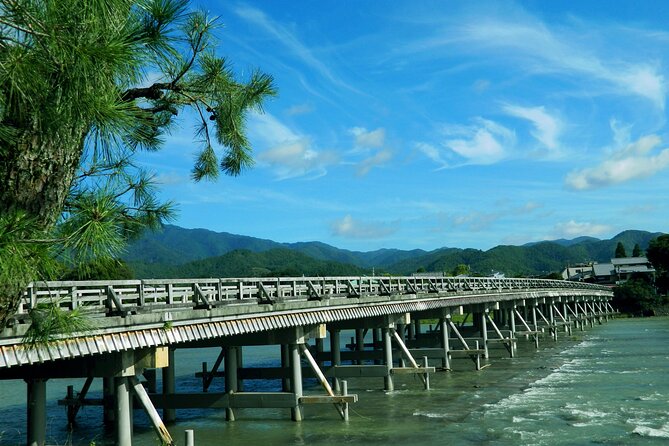
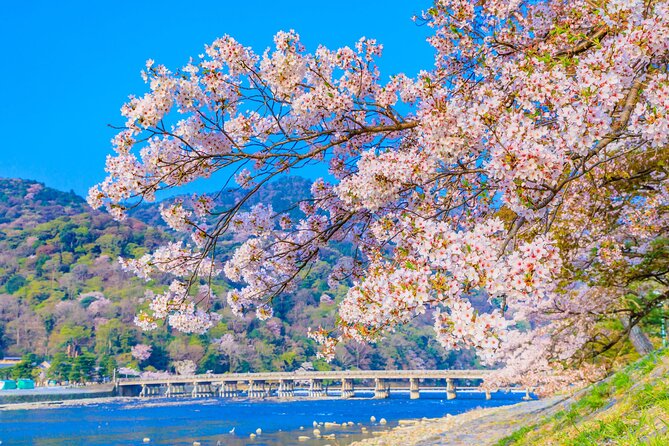
Togetsukyo Bridge is a natural opening stop for an Arashiyama route. The bridge stretches 155 meters over the Katsura River, linking the Saga Arashiyama area. From the surrounding footpath, you get water, the bridge, and wooded hills in one frame.
The stop is listed at about 30 minutes, with no admission charge. That is enough for photographs and a short walk, though not enough for a long riverside wander. I like this stop because it gives you a broad Kyoto view before you enter the narrower paths of the bamboo grove.
The main drawback is distance. If you choose Togetsukyo Bridge, Bamboo Forest Street, and several eastern Kyoto sights on the same day, transit time can eat into your temple visits. Ask the guide to explain the order of stops before you set out. A good route is less about squeezing in every famous name and more about choosing sights that fit together.
Bamboo Forest Street, Kyoto’s most familiar photo stop
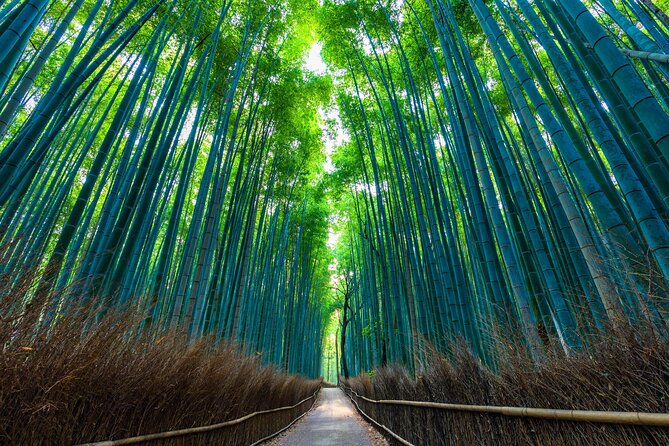
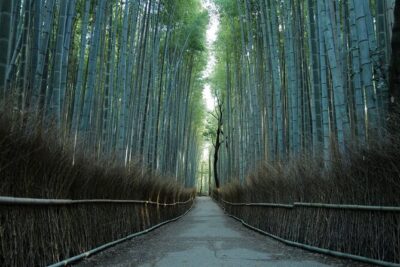
The bamboo path in Arashiyama is one of Kyoto’s most recognizable scenes. Tall bamboo rises on both sides of the walkway, creating a narrow corridor of filtered light and repeating green trunks. It is an easy place to understand why Kyoto appears in so many travel photographs.
The listed visit lasts about 30 minutes and is free. That gives you time to walk through the main stretch and take pictures, but you should not expect a quiet half-day in the grove. The path is short compared with the time it takes to reach Arashiyama from other parts of Kyoto.
Your guide can help you make the most of the stop by explaining how to frame the path and by adding context to the area. Still, the bamboo forest is primarily a visual experience. If you want more history and garden time, you may prefer to use one of your three or four choices on a temple rather than add several Arashiyama stops.
Kiyomizudera’s wooden terrace and city views
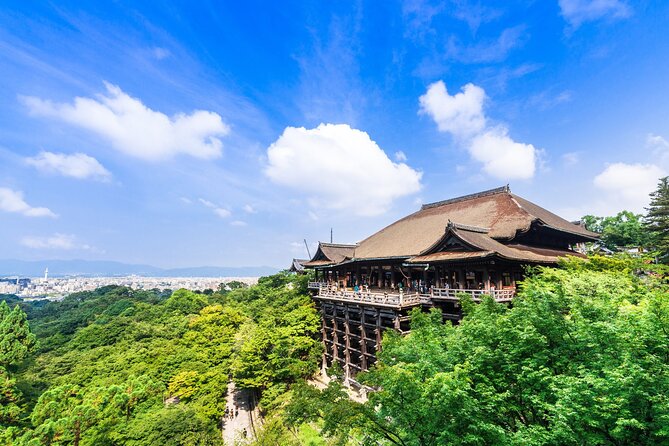
Kiyomizudera is one of Kyoto’s major temples, set among trees on the eastern side of the city. Its large open wooden terrace gives you a wide view over the surrounding area, making it one of the stronger choices for both photographs and atmosphere.
Admission is not included. The planned stop is about 30 minutes, so you will need to keep moving. That is enough to see the main terrace and take in the setting, but it is a short visit for a temple complex with several features.
I would choose Kiyomizudera if you want a classic Kyoto temple without giving up time for Gion or Fushimi Inari. You should also remember that the approach through Higashiyama can involve walking and crowds. The tour does not include a private vehicle, so your guide will help you use public transportation and walk between the station, streets, and sights.
Yasaka Shrine and the lanes around Higashiyama
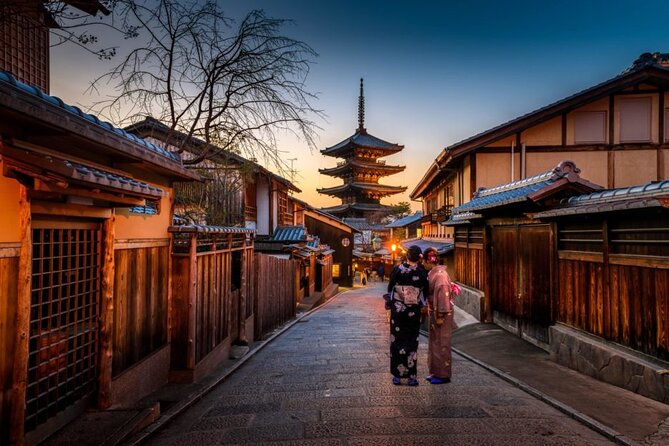
The itinerary information connects Yasaka Shrine with the famous Yasaka Pagoda, a five-story, 46-meter structure associated with Hokanji Temple in Higashiyama. The shrine area gives you a strong taste of old Kyoto, with traditional streets and photo points close together.
The visit is listed at 30 minutes and has no admission charge. That makes it easy to add to an eastern Kyoto route, especially if you are already visiting Kiyomizudera, Gion, or Kennin-ji.
I would not treat this as a stand-alone temple visit. Its value comes from the way it fits into a walking circuit through Higashiyama. If you want time to explore small lanes, shop, or pause for food, tell your guide early. Half an hour can pass quickly here, especially when you stop for photos.
Other private tours in Kyoto
Gion, geisha tradition, and an easy time trap
Gion is Kyoto’s historic entertainment district and one of the city’s most recognizable areas. Preserved streets, traditional buildings, and the possibility of seeing geisha or maiko make it a popular choice for a first visit.
The planned stop is about 30 minutes and free. That is enough for an introduction, but not enough for a long wander through the district. One group ran out of time at the entrance to Gion, a useful warning for anyone who wants shopping, eating, and photography here.
I like Gion as the closing stop on an eastern Kyoto route. After a temple and shrine, the old streets provide a different kind of experience. You can also use the guide to understand local etiquette. Keep your camera respectful, follow posted rules, and do not assume every person in traditional dress wants to be photographed.
Fushimi Inari’s long run of orange torii gates
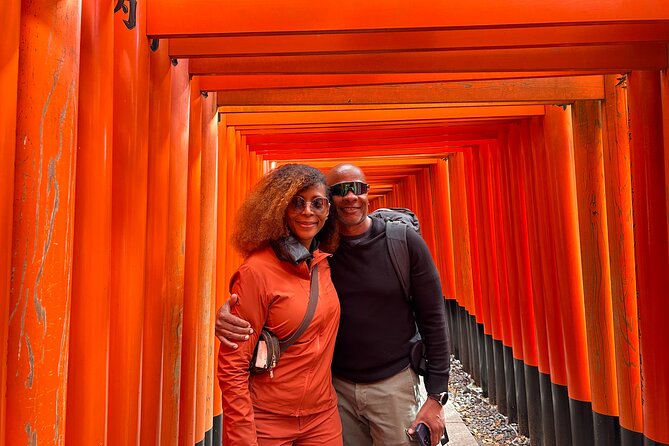
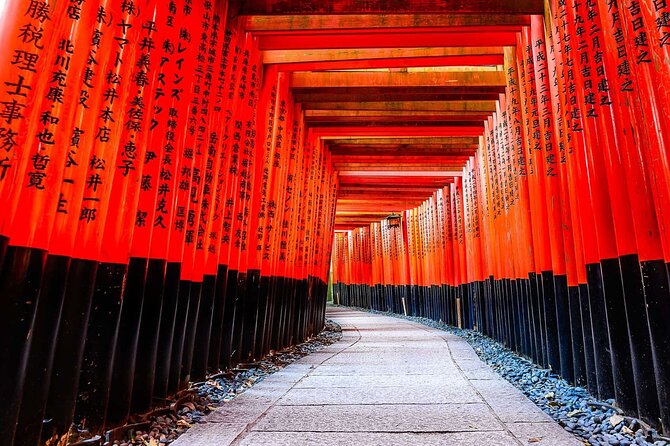
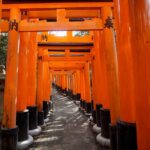
Fushimi Inari-taisha is the tour’s strongest choice if your priority is an instantly recognizable Kyoto image. More than 1,000 vermilion torii gates form paths up the wooded slopes behind the shrine.
The listed visit lasts 30 minutes and is free. That is enough to enter the shrine grounds and walk through an initial section of gates, but it is not enough to cover the full route. The gates continue uphill, so you must decide how far to go before turning back.
This stop deserves careful planning. Fushimi Inari is in southern Kyoto, while Arashiyama is in the west. Combining both with several eastern sights may sound efficient, but the train rides and walking can reduce your time at each place. If Fushimi Inari is your top priority, build the day around it rather than treating it as a quick extra.
The private guide format is useful here because you can say clearly how much walking you want. Some people want the first striking gate tunnel and a quick return. Others would rather spend more time on the uphill paths. The six-hour limit makes that choice important.
Kennin-ji’s gardens near Hanamikoji
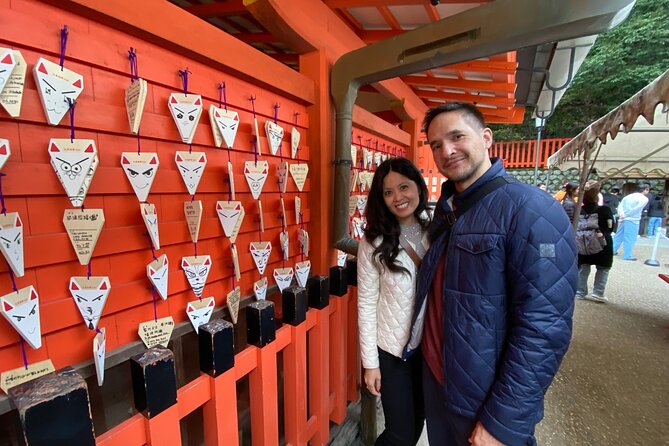
Kennin-ji sits close to Hanamikoji and Shijo streets, giving you an easy way to combine temple grounds with Gion. The complex has two dry landscape gardens and pleasant walking areas, so it offers a calmer change from the district’s main streets.
The planned visit is only 15 minutes, and admission is extra. That is a very short look for a temple. I would select Kennin-ji only if you already know you want a quick garden stop or if your route spends time in Gion.
Its location is the main advantage. Unlike Byodoin, it does not require extra travel to Uji. That makes it more practical for a compact six-hour eastern Kyoto itinerary.
Byodoin Temple and the extra trip to Uji
Byodoin is known for Phoenix Hall, a National Treasure of Japan and a UNESCO World Heritage Site. It is in Uji, outside central Kyoto, so extra travel time is expected.
The listed stop lasts about 15 minutes, with admission not included. That combination should make you pause before adding it to a route with Arashiyama, Fushimi Inari, and Gion. Byodoin may be a fine choice if it is your main goal, but it is not a sensible quick add-on for a packed city day.
Ask your guide how much of the six hours will be spent reaching Uji. The value depends on your priorities. For a visitor focused on Phoenix Hall, the trip may be worthwhile. For someone who wants the broadest look at central Kyoto, Kiyomizudera, Gion, Fushimi Inari, or Kennin-ji will usually make the day easier to manage.
How the public transport plan affects your day
This is a walking tour with public transportation used between districts. Your guide meets you on foot within a designated area of Kyoto, and you pay your own train, subway, or bus fares. There is no private vehicle.
That arrangement keeps the price lower than a chauffeured private tour, but it also means you need to be ready for stations, transfers, and walking. One guide was praised for using public transit quickly and effectively, while a public holiday made another day slower because everything was crowded.
That is practical advice: do not judge the schedule only by the time printed beside each stop. Six 30-minute visits would already fill three hours, and the tour includes only three or four sites anyway. The rest of the day goes to walking, transit, orientation, and short pauses.
What the price means for your group
The price is listed at $154.37 per person, with group discounts available. Since the tour is private, the value improves when several people share the guide rather than booking separate activities. You are paying for a custom route and personal guidance, not for entrance tickets or transport.
You must budget separately for admission at Kiyomizudera, Kennin-ji, and Byodoin, plus transportation, lunch, and personal purchases. Guide entry fees are covered only for sights included under the tour’s listed expectations, so ask about any added site before committing to it.
I see the strongest value for a first-time visitor who wants help connecting major sights without spending the day studying train routes. If you already know Kyoto’s transit system and prefer long, slow temple visits, the price may be harder to justify. The guide adds the most when you use the customization well.
Who should book this private Kyoto day
I would recommend this tour for first-time Kyoto visitors, couples with a short stay, families who need a flexible pace, and photographers who want help choosing the best stops. It also suits anyone who wants a private day rather than joining a mixed group.
Families should tell the guide about children before the tour begins. Tomy adjusted the pace for a young child and included breaks, while another guide kept an energetic schedule. That shows why the private format can help, but it also means you should state your limits clearly.
This is less suitable for someone who wants to visit all eight listed places. The tour is designed around three or four sites, and the six-hour clock is firm. It is also not ideal if you want a private car, since no vehicle is provided.
Confirmation arrives when you book, service animals are allowed, and the activity is near public transportation. Most people can take part, but you should be comfortable walking and using public transit. Free cancellation is available up to 24 hours before the start time. Changes or cancellations inside that window are not accepted for a refund.
Should you book the Kyoto 6-hour highlights tour?
Book it if you want a flexible first look at Kyoto and can name three or four places you care about most. Put your priorities in order, then ask the guide to build a realistic route around them.
I would choose Fushimi Inari plus eastern Kyoto for a balanced day, or Togetsukyo Bridge and Bamboo Forest Street if Arashiyama is your main goal. I would add Byodoin only when Phoenix Hall matters more than seeing several central Kyoto sights.
The tour’s best qualities are its private format, licensed guide, custom itinerary, and help with public transportation. Its limits are just as clear: six hours, extra costs, lots of walking, and no private vehicle. Used with sensible expectations, it can give you a strong Kyoto orientation without turning the day into a race.
FAQ
How long is the Kyoto Instagram highlights tour?
The tour lasts approximately six hours.
How many places can I choose?
The tour includes a customizable itinerary of three or four sites selected from the available attractions.
Is the tour private?
Yes. Only your own group participates in the private activity.
Is an English-speaking guide included?
Yes. A licensed local English-speaking guide is included.
Is transportation included?
No. Transportation fees are not included. The tour uses walking and public transportation, and no private vehicle is provided.
Are entrance fees included?
No. Entrance fees are generally extra. Guide entry fees are covered only for sights listed under the tour’s stated expectations.
Where does the guide meet me?
The guide meets your group on foot within a designated area of Kyoto. Pickup is offered on foot.
Can I cancel for a full refund?
Yes. You can cancel at least 24 hours before the experience start time for a full refund. Cancellations or changes made less than 24 hours before the start time are not accepted.
More Private Tours in Kyoto
More Guided Tours in Kyoto

More tours in Kyoto we've reviewed



Guided, compared.
 ★ 5.0Kyoto Early Morning Tour with English-Speaking GuideFrom $68
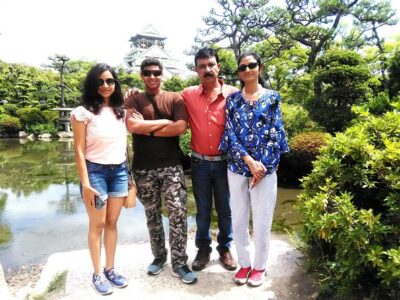 ★ 5.0Kyoto 6hr Private Tour with Government-Licensed GuideFrom $155
★ 4.9Kyoto: Early Morning Tour with English-Speaking GuideFrom $1015h 30m
★ 5.0Kyoto 6hr Private Tour with Government-Licensed GuideFrom $155
★ 4.9Kyoto: Early Morning Tour with English-Speaking GuideFrom $1015h 30m
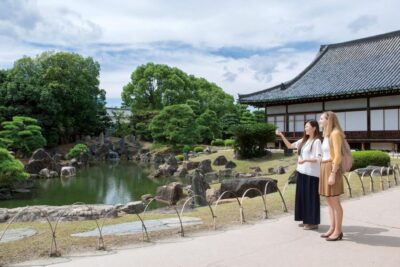 ★ 4.7Kyoto: Nijo-jo Castle and Ninomaru Palace Guided TourFrom $161 hour
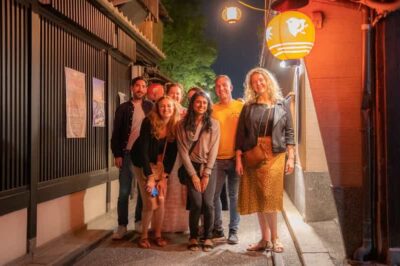 ★ 4.9Kyoto: Izakaya Bars Guided Walking TourFrom $253 hours
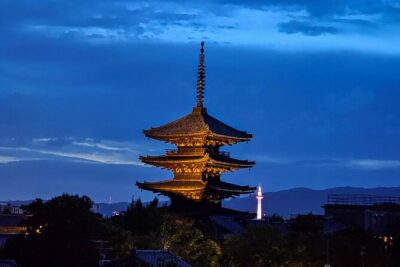 ★ 5.0Kyoto Gion Night Walk & Geisha District Guided TourFrom $18