
Reviewed · CYCLING TOURS
South Kyoto in a Nutshell: Gentle Backstreet Bike Tour!
South Kyoto becomes much easier to understand from a bicycle seat. This half-day ride links Fushimi Inari, Gion, Tofukuji Temple, Takase Canal, and Nishi Honganji, while using narrow streets that buses cannot reach. You cover more ground than on foot without spending the morning stuck in traffic.
I like the small group limit of eight and the way the route mixes famous sights with quieter lanes. I also like that a Cannondale bike, helmet, and bottled water are included, so you can arrive and ride without arranging gear. The main caution is timing: some stops are brief, and Gion in particular may feel rushed if you want lots of photos.
In This Review
- Key points at a glance
- Why a bicycle works so well in South Kyoto
- Starting at Cycle Kyoto near Kyoto Station
- Nishi Honganji and the scale of Kyoto’s temples
- Following the Takase Canal
- Gion, with limited time for photographs
- Tofukuji Temple from the bridge
- Fushimi Inari, Kyoto’s headline stop
- How the guides shape the morning
- Safety, comfort, and the weather question
- Is $79.59 a fair price?
- Who should book this ride?
- Should you book the South Kyoto bike tour?
- FAQ
- Where does the South Kyoto bike tour start and finish?
- What time does the tour begin?
- How long does the bike tour last?
- What equipment is included?
- What sights does the route visit?
- Who can take part?
Key points at a glance
- Fushimi Inari without the usual confusion: Your guide helps choose a practical route through one of Kyoto’s busiest sights.
- Quiet streets between major sights: The ride reaches corners of South Kyoto that bus tours simply cannot cover.
- A manageable half-day: Three to four hours gives you a useful introduction without taking over your whole day.
- A small group of up to eight: This makes riding instructions, questions, and route changes easier.
- Strong guide-led experience: Guides including Jay, Indra, Juan, Kevin, Sam, and others are praised for history, culture, safety, and local advice.
- Good value for active sightseers: At $79.59 per person, the price covers the bike, helmet, water, and guiding.
Why a bicycle works so well in South Kyoto
Kyoto is often presented as a city for walking and buses. Both have their place, but the southern districts can be awkward by public transport. A bike lets you connect several areas without repeatedly finding a station, waiting for a bus, or walking back through the same streets.
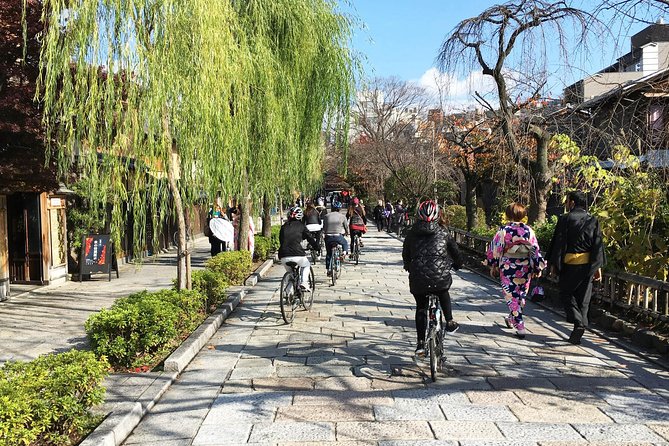
The pace is also part of the appeal. You ride through backstreets, along the Takase Canal, and between temples and neighborhoods. You see ordinary Kyoto between the headline sights: residential lanes, canalside views, and stretches of town that are easy to miss from a taxi window.
This is not a hard cycling challenge. The route is described as manageable, and the tour is intended for people who are comfortable riding a bike. You still need to pay attention to traffic, pedestrians, and the group, but the focus is sightseeing rather than athletic effort.
The three to four hour length is well judged for most visitors. You get a morning of activity and still have time for lunch, another temple, or a rest at your hotel. If you want long temple visits or extended photography at every stop, though, this is not the right format. It is a moving overview, not a series of deep visits.
Other cycling tours in Kyoto
Starting at Cycle Kyoto near Kyoto Station
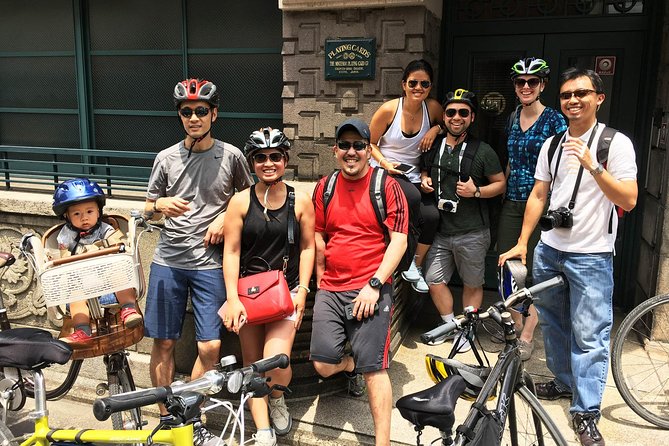
The meeting point is Cycle Kyoto at 7 Higashikujō Nishisannōchō in Minami Ward. The start time is 9:00 a.m., and the tour ends back at the same location.
The opening 15 minutes are used for meeting the guide and other participants, fitting the bike, and getting ready. That short setup matters. A proper fit makes the ride more comfortable, especially if you have not spent much time on a bicycle during your trip.
The included Cannondale bikes are a useful part of the price. You do not have to find a rental shop, compare sizes, or return a bike at another location. A helmet and bottled water are also supplied. Some riders have chosen an e-bike upgrade, which can be worth considering if heat, hills, or stamina are concerns, though the supplied information does not specify the upgrade cost.
The group size is capped at eight people. That is small enough for a guide to give clear riding instructions and keep an eye on the group, while still giving the tour a social feel. Guides have included Jay, Indra, Juan, Kevin, Sam, Jaime, Shaun, Julian, Carl, Thierry, Quin, and Paul. Your guide will depend on the date, but the strongest pattern is clear: storytelling and personal attention are central to the ride.
Nishi Honganji and the scale of Kyoto’s temples
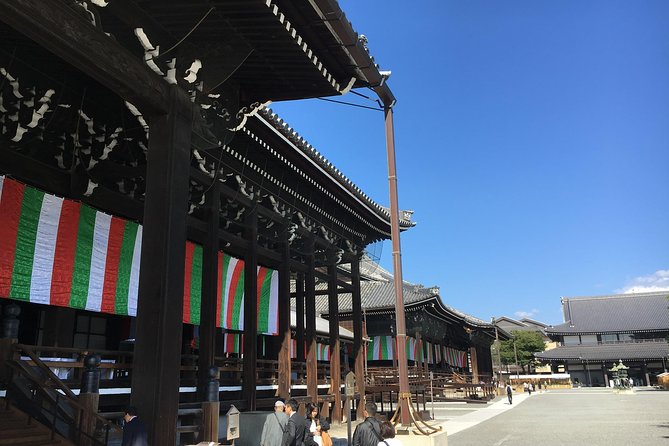
One of the first stops is Nishi Honganji, a major Buddhist temple that many visitors skip. You spend about 15 minutes here, enough to enter one of Kyoto’s large wooden religious buildings and get a sense of its scale.
This is a smart early stop because it widens your view of Kyoto beyond the most photographed shrines. The temple is one of the largest wooden buildings in the world, and its spacious setting gives your guide room to explain the religious and architectural background before you move on.
The short visit is also the limitation. You are not given a long period for quiet observation or a detailed look at every feature. Think of Nishi Honganji as a strong introduction rather than a complete temple visit.
Following the Takase Canal
The ride then follows the Takase Canal. This stretch brings a welcome change of pace after the temple grounds. Your guide explains the canal’s place in Kyoto’s past, and the route offers easy photo opportunities without requiring a formal stop with an admission ticket.
Canals are one of the best ways to read a city. They show how people, goods, and neighborhoods once connected, and they offer a calmer route than a major road. On a bike, you get to appreciate that connection at street level.
The canal section is also where the tour’s backstreet promise becomes real. You are not simply being taken from one famous entrance to another. The links between sights are part of the experience, and those links are hard to reproduce on a standard sightseeing bus.
Gion, with limited time for photographs
Gion is Kyoto’s famous geisha district and one of the most atmospheric parts of the route. The tour pauses for about 15 minutes, giving you a chance to hear about the district, its traditions, and the carefully protected world of geisha and maiko.
You may catch a glimpse of one of these entertainers, but there is no guarantee. The better reason to visit is to notice the traditional streets and the way the district still works as a living neighborhood rather than a stage set.
Here, you should watch the clock. One rider felt the Gion portion was rushed and preferred more time to take photos and absorb the atmosphere. That is a fair concern. The guide needs to keep the group moving, and the route has several more major stops ahead. If Gion is your top priority, plan to return on your own later.
The guide’s explanation can add real value. Jay, for example, has been praised for explaining the culture and history of Gion, while another guide helped a rider make a restaurant reservation. These personal touches can turn a quick orientation into useful trip planning, but the exact experience will vary with your guide.
Tofukuji Temple from the bridge
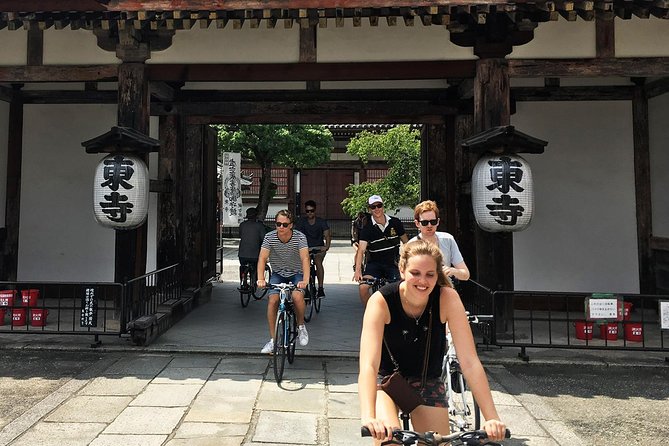
Tofukuji Temple receives a short five-minute stop. That sounds brief, and it is. The point is to swing by the temple, enjoy the view from the bridge, and take in the broad setting of one of Kyoto’s oldest and largest Zen temples.
The bridge view is the reason this stop works in a cycling itinerary. You can get a memorable impression of the temple grounds without committing to a long visit. It is a good place for a quick photograph and a short explanation of Zen temple design.
If you want to explore Tofukuji properly, you will need a separate visit. Five minutes does not allow time to wander through the complex or linger over details. Still, as one piece of a compact South Kyoto route, it gives you a useful taste of an important temple.
Fushimi Inari, Kyoto’s headline stop
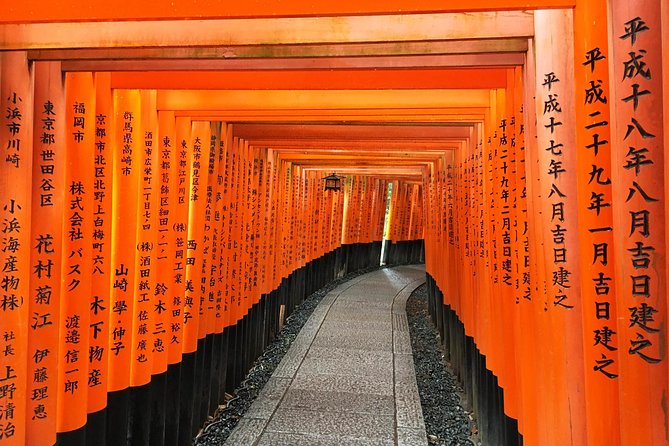
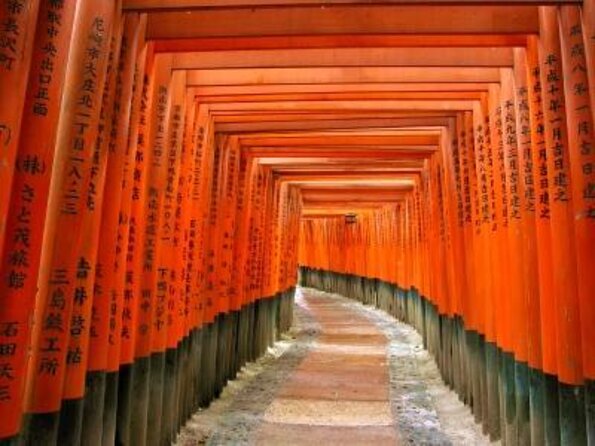
The final major stop is Fushimi Inari-taisha Shrine, the best-known sight on the tour. Its rows of vermilion torii gates draw large crowds, and the paths can be confusing when you first arrive. The guide helps choose a route through the busy area so you spend less time wondering where to go next.
About 25 minutes are allocated here, making it the longest listed stop. That gives you enough time to see the central section, take photographs, and hear about the shrine. It does not provide time to walk deep into the full mountain route, which can take far longer.
This is where the guided format pays off most clearly. Fushimi Inari is free to enter, but free does not mean simple. A guide can point out a sensible path and help the group avoid some of the worst crowding. You still need to accept that this is a popular place, not a quiet one.
The route also helps place Fushimi Inari in the wider geography of Kyoto. Instead of treating the shrine as an isolated morning outing, you arrive after riding through temples, canals, and old neighborhoods. That broader connection is one of the tour’s best features.
How the guides shape the morning
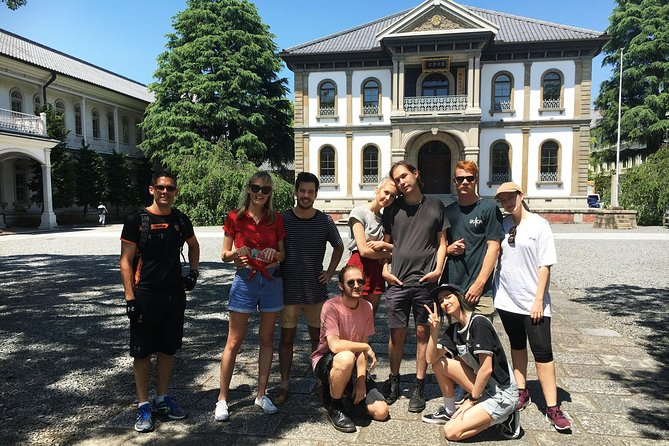
The bikes and route matter, but the guide can determine how much you get from the ride. The supplied guide names include Jay, Indra, Juan, Kevin, Sam, Jaime, Shaun, Julian, Carl, Thierry, Quin, and Paul. Several have been praised for clear safety instructions, strong storytelling, and easy conversation.
Jay appears often in the feedback, with praise for his explanations of Japanese culture and Kyoto’s past. Indra is noted for watching group safety and making the tour work well for families. Juan has been described as personable and willing to add a special stop when a young rider showed interest in Nintendo. Jaime has helped with lunch suggestions, and Julian included a coffee stop on one outing.
These details suggest a tour with room for human interaction rather than a fixed script delivered at every corner. One guide was even an ordained Shinto priest, offering a personal explanation of religion and local customs. You should not assume that every guide will offer the same background or add the same extra stops, but the small group gives the guide some room to respond to the people on the bike.
There is one useful counterpoint. A rider felt that casual conversation took time away from seeing another place. That is possible on any small-group tour. If you want a tightly timed sightseeing machine, tell the guide early that you prefer to maximize stops and photo time.
Safety, comfort, and the weather question
You must be at least 13 and comfortable riding a bike. The guide provides instructions about dealing with pedestrians and traffic, and safety is treated as part of the tour rather than an afterthought.
The tour requires good weather. If poor weather cancels it, you are offered another date or a full refund. That matters in Kyoto, where a rainy morning can turn a pleasant bike ride into a wet and slippery chore.
Weather can also make a large difference to comfort. Riders have completed the route in chilly rain with gloves and a hat supplied by the guide, and another group rode during a 36-degree Celsius day. The tour still went ahead in that heat, but you should take the condition seriously. Wear light clothing, use sun protection, and drink the supplied water. If you dislike cycling in heat or rain, check the forecast before the cancellation deadline.
Most people can participate, but the important qualification is basic cycling confidence. This is not designed for someone who is uncomfortable balancing, stopping, or riding around other people.
Is $79.59 a fair price?
At $79.59 per person, this is not the cheapest way to see Kyoto’s free sights. You could walk through several neighborhoods without paying an activity fee, and public transport may cost less than the tour.
The value comes from the package. You receive a good-quality bike, helmet, water, a guide, a planned route, and a small group. You also avoid the time cost of mapping a route that links South Kyoto’s main sights efficiently. For a first morning in the city, that convenience can be worth more than the ticket price.
I see the best value for visitors staying a short time, people who enjoy active sightseeing, and anyone who wants an introduction before exploring independently. The price is less attractive if you already know Kyoto well, dislike group schedules, or plan to spend half a day inside one temple complex.
The 99 percent recommendation rate and 5 out of 5 average from 225 reviews point to a reliably well-received experience, though the one lower rating is worth keeping in mind. The usual tradeoff is simple: you gain range and local guidance, but give up time at individual sights.
Who should book this ride?
I would choose this tour for a first visit to Kyoto, especially if you want to get your bearings in the southern part of the city. It suits couples, friends, solo riders, and families with teenagers who meet the minimum age and can ride comfortably.
It is also a good fit if you want more than a standard bus route. The canal, backstreets, temple approaches, and short cultural explanations make the city feel less like a checklist of famous entrances.
I would hesitate if your main goal is photography. Fifteen minutes in Gion and five minutes at Tofukuji will not satisfy someone who wants to wait for perfect light or study every detail. I would also hesitate if you need a fully private pace, since the group’s schedule has to work for everyone.
Free cancellation is available until 24 hours before the 9:00 a.m. start. Changes or cancellations inside that window are not refunded, so watch the weather and your plans. The operator also requires a minimum number of participants, with a refund or alternative offered if that minimum is not met.
Should you book the South Kyoto bike tour?
Book it if you want to cover several important sights in one morning and enjoy the ride between them. The route is varied, the group is small, the equipment is included, and the guides add cultural context that you would miss while pedaling alone.
Skip it if you want long, unhurried visits at Gion, Tofukuji, or Fushimi Inari. For most first-time visitors who are comfortable on a bike, though, $79.59 buys a practical and enjoyable introduction to South Kyoto, with enough time left in the day to keep exploring.
FAQ
Where does the South Kyoto bike tour start and finish?
It starts and finishes at Cycle Kyoto, 7 Higashikujō Nishisannōchō, Minami Ward, Kyoto, 601-8003, Japan.
What time does the tour begin?
The tour starts at 9:00 a.m.
How long does the bike tour last?
The experience lasts approximately three to four hours.
What equipment is included?
A high-quality Cannondale bike, helmet, bottled water, and use of the bicycle are included.
What sights does the route visit?
The route includes Nishi Honganji, Takase Canal, Gion, Tofukuji Temple, and Fushimi Inari-taisha Shrine, along with Kyoto backstreets and other scenic stops.
Who can take part?
Riders must be at least 13 years old and comfortable riding a bike. The group can include a maximum of eight people.
More Cycling Tours in Kyoto
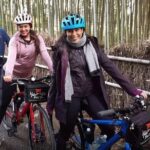
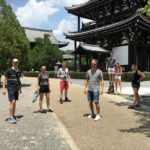
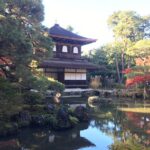
More tours in Kyoto we've reviewed


Cycling Tours, compared.
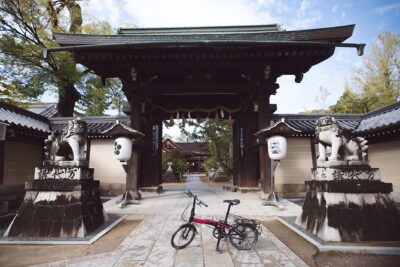 ★ 5.0Hidden Kyoto E-Biking tourFrom $116
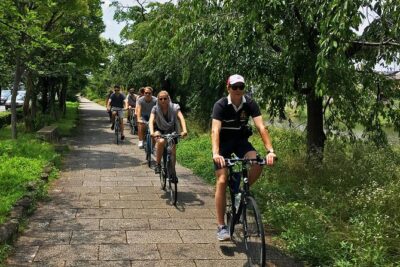 ★ 5.0Bike Tour Exploring North Kyoto plus LunchFrom $106
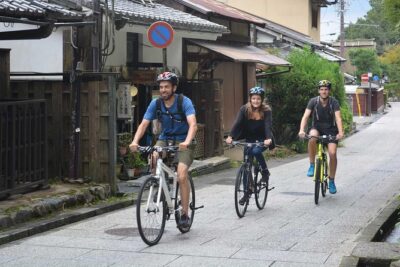 ★ 5.0Arashiyama Bamboo Forest & Hidden Gems Bike Tour (Early Bird)From $106
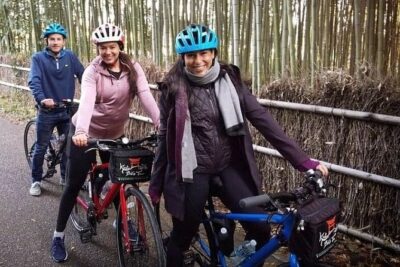 ★ 5.05 Top Highlights of Kyoto Full Day Bike Tour (E-bike option)From $172
 ★ 5.0Full Day Biking Tour Exploring the Best of KyotoFrom $119
 ★ 5.0E-Bike Tours of the highlights of Kyoto!!!From $109