
Reviewed · GION & GEISHA WALKS
Kyoto 5-Star Geisha Night Walk: Small-Group Authentic Experience
Kyoto’s geisha districts make more sense after sunset, when lanterns glow, wooden teahouses open for the evening, and the daytime crowds thin out. This tour takes you from Gion’s Hanamikoji Street through Higashiyama and on to Pontocho, with Richard explaining geisha life, Shinto customs, temple design, kimonos, and Kyoto’s past along the way.
I like the maximum group size of eight, which makes it easier to hear the guide and ask questions. I also like the route’s range: you are not left in one tourist lane, but walk through geisha streets, shrines, temple areas, old alleys, and a lively nightlife district. The main caution is simple: this is a long 3.5-hour walk with steps, uneven stone, and some unpaved paths. It is not a good fit if walking is difficult.
In This Review
- Key details before you book
- Why Gion works best after dark
- Hanamikoji Street and the working geisha quarter
- Kabuki, Zen, and the layers beneath the streets
- Yasui-Konpiragu and the meaning of a small shrine
- Yasaka Pagoda and Higashiyama by night
- Ninenzaka’s stone lanes
- A Kyoto snack on Nene-no-Michi
- Yasaka Shrine after sunset
- A quieter geisha street before Pontocho
- Pontocho, where the evening ends
- What the $98 price really covers
- Timing, meeting point, and practical planning
- Who will enjoy this night walk most
- Should you book the Kyoto Geisha Night Walk?
- FAQ
- How long does the Kyoto Geisha Night Walk last?
- What time does the tour begin?
- Where does the tour meet?
- Where does the tour end?
- How many people can join the tour?
- Is food included?
- Is the tour suitable for people with walking difficulties?
- What happens if bad weather cancels the tour?
Key details before you book
- Richard’s storytelling: Expect clear explanations of geisha and maiko training, Japanese customs, architecture, Shinto beliefs, and Kyoto history.
- A true evening route: Hanamikoji, Yasaka Pagoda, Ninenzaka, Yasaka Shrine, and Pontocho look and feel different after dark.
- Small-group format: The tour accepts no more than eight people, a useful limit in narrow lanes.
- Included Kyoto snack: A local treat is served during a 30-minute pause on Nene-no-Michi.
- Broad cultural coverage: The walk includes Kabuki, Zen, Shinto, kimonos, geisha houses, shrines, and nightlife.
- Walking commitment: Plan for about three and a half hours on foot, beginning at 5:20 p.m. and ending near Sanjo Ohashi Bridge.
Why Gion works best after dark
Gion is one of Kyoto’s most photographed districts, and daytime visits can feel crowded. The narrow lanes around Hanamikoji Street are lined with dark timber buildings, private restaurants, and traditional establishments, but a busy afternoon can make it hard to notice the details.
This route begins in the early evening, then reaches Gion after the light has softened. That timing gives you a better chance to appreciate the district as a working neighborhood rather than simply a photo backdrop. You may see geisha or maiko moving between appointments, but this should not be treated as a guaranteed sighting or a photo opportunity. The point is to learn how the district functions and to observe respectfully.
Richard explains the difference between geisha and maiko, the training involved, and the arts connected with their work. The discussion also covers clothing, including the visual clues in kimono styling. His explanations are especially useful if your image of geisha comes mostly from films or popular culture.
One strength of the walk is the cultural context. Richard is described as having both American and Japanese cultural understanding, and he explains Japanese customs in clear English. That matters here. Gion has rules and traditions that are not always obvious from the street, so a good guide can help you look without intruding.
A few more Kyoto tours and experiences worth a look

Hanamikoji Street and the working geisha quarter
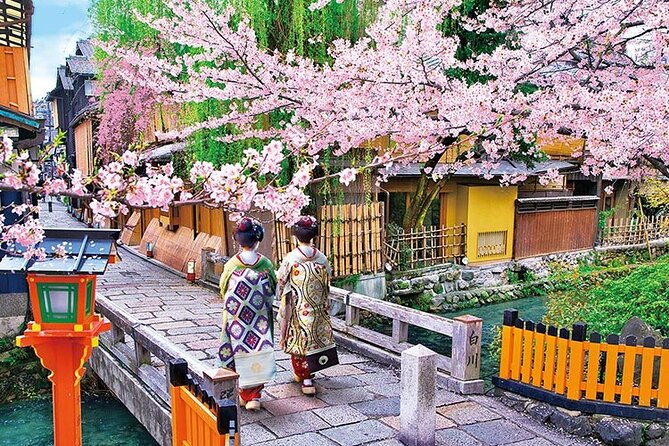
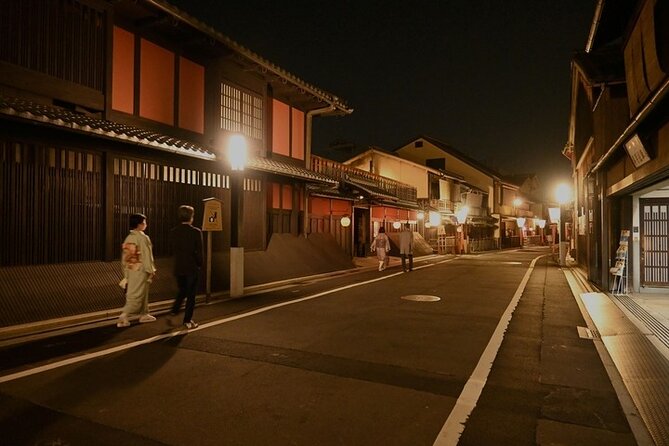
Hanamikoji Street is the central Gion stop, with about an hour set aside for its streets and side alleys. You pass traditional geisha houses and areas connected with geisha living and work, while the guide explains how the district developed and how the profession operates today.
This is not a performance. You are not promised a geisha show, a private tea ceremony, or entry into a teahouse. That makes the experience more of a cultural walking lesson than an entertainment package. If you want an actual stage performance, you would need a separate ticketed event.
The smaller lanes are where the route becomes most useful. A guide can point out features you might walk past alone, such as the restrained entrances, wooden facades, and the separation between public streets and private establishments. You are also taken past Gion Corner, where geisha study and train.
Keep your camera ready, but follow local etiquette. Do not block doorways, chase performers, or photograph people at close range without permission. The evening setting is atmospheric enough without turning the walk into a hunt for pictures.
Kabuki, Zen, and the layers beneath the streets
The route includes a stop by the Kabuki theater, where Richard explains this traditional Japanese form of entertainment. This is a helpful addition because it broadens the subject beyond geisha alone. Kyoto’s arts districts are connected by older systems of performance, craft, apprenticeship, and patronage.
You also walk by one of Kyoto’s oldest temples, with a discussion of Japanese Zen. The exact temple stop is not specified in the tour details, so you should think of this as an exterior and neighborhood explanation rather than a promise of an extended interior visit.
I appreciate this wider focus. A tour limited to costumes and photo spots can leave you with a shallow picture of Kyoto. Here, the conversation includes religion, architecture, social customs, and the way old traditions continue in a modern city. Richard’s style, based on the experience details, leans toward storytelling and questions rather than a quick list of dates.
Yasui-Konpiragu and the meaning of a small shrine
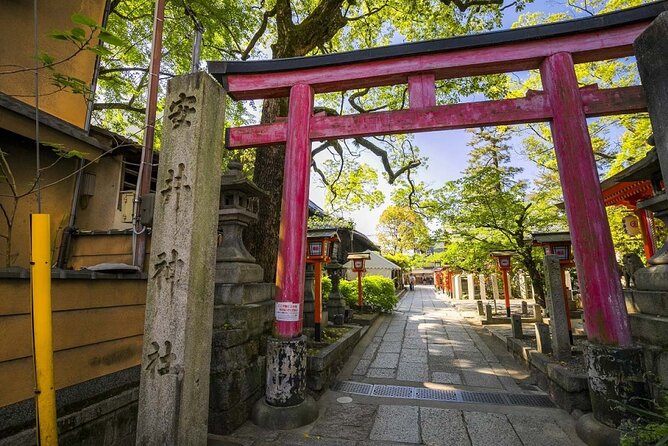
Yasui-Konpiragu receives about 30 minutes. This intimate Shinto shrine is known for its old traditions, and the stop gives Richard room to explain Shinto practice in a setting that feels more personal than Kyoto’s biggest shrines.
The distinction between Shinto and Zen can be confusing on a first visit. Having both discussed on the same walk helps you place the buildings, rituals, and symbols in context. You get more than a quick look at a shrine gate. You learn how the site fits into Japanese religious life.
This stop may be less visually grand than Yasaka Shrine later in the evening, but that is part of its value. Small religious sites often reward patient explanation. The half-hour timing is long enough to hear the story without turning the whole tour into a shrine circuit.
Yasaka Pagoda and Higashiyama by night
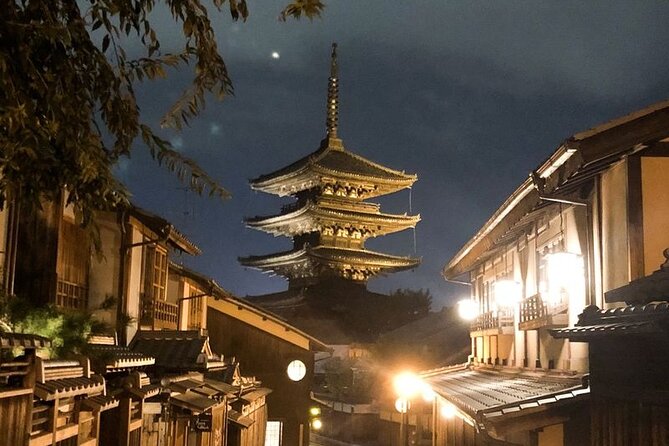
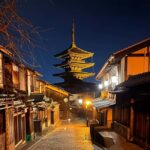
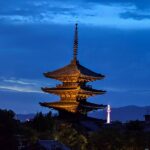
The Hōkan-ji Temple area, best known for Yasaka Pagoda, is scheduled for about 15 minutes. This is one of the strongest photo stops on the route, especially after dark, when the historic streets and pagoda create a striking Kyoto scene.
The short time here means you should not expect a full temple visit. Instead, the guide helps you take in the exterior setting and understand why this part of Higashiyama is so closely linked with Kyoto’s image. The surrounding streets are among the city’s most attractive, though their popularity can still bring other people even in the evening.
Bring a phone or camera that performs reasonably well in low light. The tour does not include professional photography, and you will be walking rather than setting up a long tripod session. Still, the night setting can produce memorable images without the harsh brightness of midday.
A few more Kyoto tours and experiences worth a look

Ninenzaka’s stone lanes
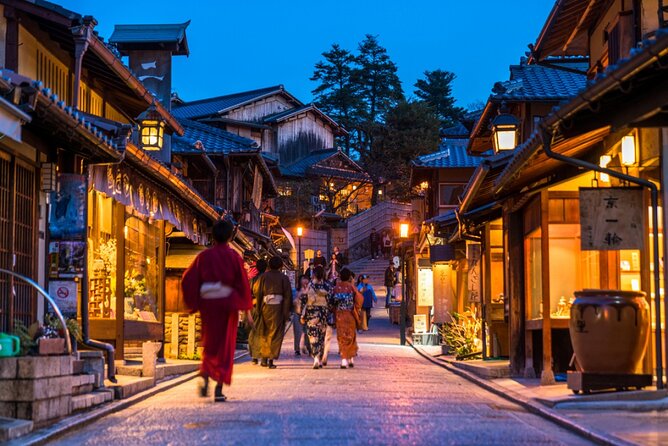
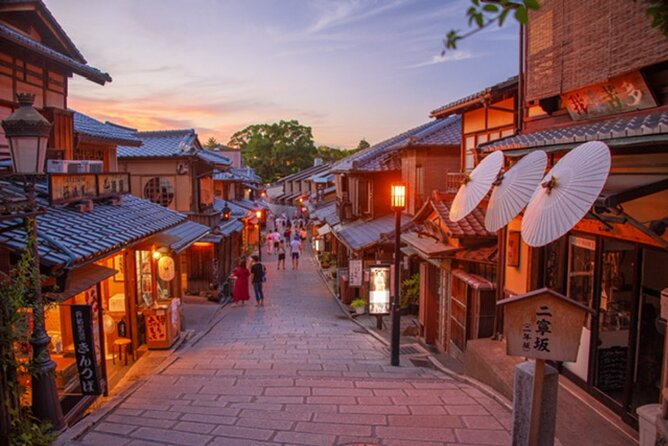
The walk continues through Ninenzaka, another short stop of roughly 15 minutes. Its sloping, old-fashioned lane is particularly appealing at night, but it also explains why comfortable shoes matter.
Ninenzaka includes stone surfaces, steps, and uneven sections. These details are part of its charm, but they can slow you down if you have balance or mobility concerns. Strollers may require extra effort, since some steps and rocky paths need to be handled during the tour.
I would not schedule a demanding temple visit immediately after this walk. Give yourself a quiet evening afterward, or plan dinner near the finishing point in Pontocho. The route is enjoyable, but it is not a gentle stroll.
A Kyoto snack on Nene-no-Michi
Nene-no-Michi is the planned rest stop, with about 30 minutes for a local Kyoto snack. The snack is included, so you do not need to buy food during the tour, though personal expenses are not covered.
This pause serves two purposes. It gives your feet a break, and it adds a small taste of local food to an evening focused mostly on streets and cultural explanation. The snack may not suit every palate, especially if you prefer familiar Western sweets, but the guide explains what you are eating and why it is connected with Kyoto.
That kind of small detail can stay with you. You learn not just what a dish is called, but how it fits into local habits. The pause also gives you a chance to ask Richard about restaurants, gifts, or places to visit during the rest of your stay. Several people have found his local suggestions useful, so bring a short list of questions.
Yasaka Shrine after sunset
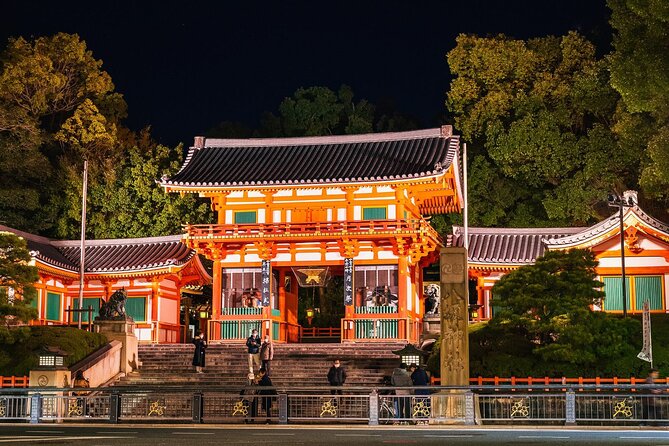
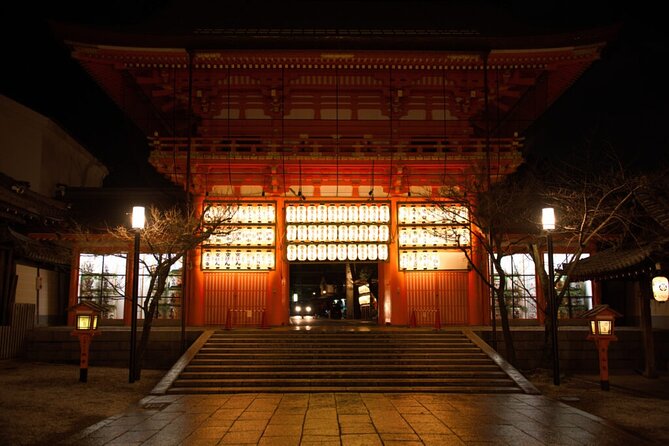
Yasaka Shrine is given about 30 minutes. It is one of Japan’s major shrines and a key landmark at the eastern edge of Gion. The evening visit lets you see its gates, grounds, and religious features without trying to squeeze the site into a crowded daytime schedule.
Richard explains important parts of the shrine and the customs connected with it. This is another place where context improves the view. Without guidance, you can admire the colors and architecture but miss what makes the shrine significant.
The stop also breaks up the route nicely. After the smaller shrine at Yasui-Konpiragu and the old lanes of Higashiyama, Yasaka offers a larger and more formal setting. You get a sense of scale as well as detail.
A quieter geisha street before Pontocho
The route includes a picturesque stop and a lesser-known geisha street before reaching Pontocho. The exact names of these short stops are not provided, but they are intended to show you another side of Kyoto’s entertainment districts.
This is one of the practical advantages of booking a guide. You may recognize Hanamikoji from photographs, but a less familiar lane is harder to find and harder to interpret on your own. Richard can explain how these areas relate to the better-known parts of Gion and point out details you might otherwise miss.
Do not expect every lane to be open for public exploration in the same way. Some buildings are private or operate by introduction, and the tour remains a street-level experience.
Pontocho, where the evening ends
The final 30-minute stop is Pontocho District, ending near the northern end of Pontocho alley by Sanjo Ohashi Bridge. Pontocho has a different mood from Gion. Its narrow passage is packed with restaurants, bars, and traditional entertainment businesses, giving you a look at Kyoto’s evening social life.
This is a smart place to finish because you can continue with dinner or a drink nearby. The end point is also close to public transportation, making it practical for returning to your accommodation. The tour does not include dinner, so budget separately if you want to stay in the area.
Pontocho is lively, but the word should not be taken to mean a large party district. Its appeal lies in the tight alley, small entrances, and mixture of old-style establishments with modern nightlife. Richard’s explanation helps connect this atmosphere with the geisha districts earlier in the walk.
What the $98 price really covers
At $98 per person, this is not a low-cost orientation walk. You are paying for three and a half hours of guiding, a small group capped at eight, an English-speaking guide, and the included snack. There are no admission tickets listed because the stops are viewed from public areas, so the main value comes from Richard’s explanations and route planning.
I think the price makes sense if you want a focused introduction to geisha culture and Kyoto customs, especially early in your stay. Several experiences describe Richard as especially strong on history, architecture, Shinto, kimonos, and everyday life, not just geisha. That broad knowledge can help you understand the rest of Kyoto more clearly.
The value is weaker if you want a performance, indoor visits, or a food tour. You are walking through public streets and shrine grounds, with no dinner included. Think of it as a cultural night walk with a snack, not a complete geisha entertainment package.
Timing, meeting point, and practical planning
The meeting time is 5:20 p.m. at the Disney Store in Kyoto Shijo-Kawaramachi, at the northeast corner of Shijo and Kawaramachi. Arrive early, since a busy commercial intersection is not the place to search for your group at the last second.
The walk ends at Sanjo Ohashi Bridge, at the northern end of Pontocho alley. Starting and ending in central Kyoto makes this easier to fit into a sightseeing day, and the final location gives you several options for food and transport.
Wear shoes with a firm sole. The route includes steps, stone lanes, and uneven or rocky surfaces, and the total walking time is substantial. Most people can take part, but the tour is specifically unsuitable for anyone with walking issues. Strollers can be used only with care because of the steps and rough sections.
The activity is offered with a mobile ticket. Confirmation is provided at booking, and the tour requires good weather. If poor weather causes cancellation, you are offered another date or a full refund. You can cancel for a full refund up to 24 hours before the start time, but cancellations or changes within 24 hours are not refunded or accepted.
Who will enjoy this night walk most
I would choose this tour for a first or second evening in Kyoto if you want cultural context before visiting more temples and neighborhoods. It suits couples, families with older children, and solo visitors who prefer a small group to a large procession.
It is also a good match if you enjoy asking questions. The strongest part of the experience is not simply seeing Gion, since you can walk through parts of Gion without paying for a tour. The benefit is learning what the streets, clothing, rituals, and businesses mean.
You should skip it if you dislike long walks, need frequent seating, or want a highly structured show. You should also manage expectations about seeing geisha. The tour explains their world and passes places connected with it, but no sighting is guaranteed.
Should you book the Kyoto Geisha Night Walk?
I would book it if you want an informed, human-scale introduction to Gion, with a guide who can connect geisha traditions to Kyoto’s wider culture. Richard’s strength appears to be the range and clarity of his explanations, and the small group gives you room to keep the conversation going.
The best reason to book is the combination of timing and route. You see Gion after dark, walk through Higashiyama’s old lanes, pause for a local snack, visit major and minor shrines, and finish in Pontocho. The main tradeoff is the walking load and the lack of an actual geisha performance.
For sturdy walkers who value context over spectacle, the $98 price is fair. For anyone seeking a gentle outing or a ticketed cultural show, choose something more specialized.
FAQ
How long does the Kyoto Geisha Night Walk last?
The tour lasts approximately 3 hours and 30 minutes.
What time does the tour begin?
The start time is 5:20 p.m.
Where does the tour meet?
The meeting point is the Disney Store in Kyoto Shijo-Kawaramachi, at the northeast corner of Shijo and Kawaramachi.
Where does the tour end?
The walk ends at Sanjo Ohashi Bridge, near the northern end of Pontocho alley.
How many people can join the tour?
The tour has a maximum of eight participants.
Is food included?
Yes. A refreshing Kyoto snack is included during a break on Nene-no-Michi.
Is the tour suitable for people with walking difficulties?
No. The 3.5-hour walk includes steps, unpaved rocky paths, and uneven surfaces, and it is not suitable for anyone having walking issues.
What happens if bad weather cancels the tour?
You will be offered another date or a full refund. For personal cancellations, you must cancel at least 24 hours before the start time to receive a full refund.
More Walking Tours in Kyoto
More Night Walks & Ghost Tours in Kyoto
More Gion & Geisha Walks in Kyoto
More tours in Kyoto we've reviewed


Gion & Geisha Walks, compared.
 ★ 4.7Kyoto Geisha Walking Tour: Gion District & Hidden GemsFrom $252 hours
 ★ 4.7Kyoto: Gion Geisha District Walking Tour – Stories of GeishaFrom $202 hours
 ★ 4.9Best of Kyoto: Gion, Geisha, Pagodas & CobblestonesFrom $242 hours
 ★ 4.5Night Walk in Gion: Kyoto’s Geisha DistrictFrom $211h 40m
 ★ 5.0Kyoto Night Foodie Tour in Gion (9+ dishes + 6 Sake tastings)From $163
 ★ 5.0Kyoto Gion Geisha District Walking Tour – The Stories of GeishaFrom $25