
Reviewed · FUSHIMI INARI TOURS
Kyoto: Discover Fushimi Inari, Kiyomizudera, and Yasaka Pagoda.
Fushimi Inari’s endless red torii gates make a powerful first stop, but this Kyoto walk gives you more than a famous photo. In one outing, you move from a mountain shrine to Kiyomizudera’s great wooden terrace, then through the old Higashiyama district and its narrow stone streets.
I like the clear mix of sights and the Spanish-language guidance from Manuel, whose history explanations, punctuality, photo help, and local suggestions have earned especially warm praise. I also like that the tour uses public transport, since you see how Kyoto actually works rather than being sealed inside a private vehicle.
The main consideration is the walking and the transit. You must pay your own train or bus fares, arrive at JR Inari Station by 9:00 a.m., and manage uneven streets and crowded historic lanes. This is not a wheelchair-friendly outing, and baby carriages are not allowed.
In This Review
- Key points at a glance
- Why this route works so well in one Kyoto morning
- Starting at JR Inari Station at 9:00 a.m.
- Fushimi Inari and the famous torii path
- Kiyomizudera’s wooden terrace and pure water
- Walking through Higashiyama’s old Kyoto
- Yasaka Pagoda above Sannenzaka and Ninnenzaka
- What Manuel adds to the experience
- Is $74 a fair price?
- Practical details before you book
- Who should book this Kyoto tour?
- FAQ
- Where does the Kyoto tour begin?
- Where does the activity end?
- What language is the tour conducted in?
- Is Kiyomizudera admission included?
- Is transportation included?
- What should I bring?
- Are wheelchairs and baby carriages permitted?
- Can I cancel for a full refund?
Key points at a glance
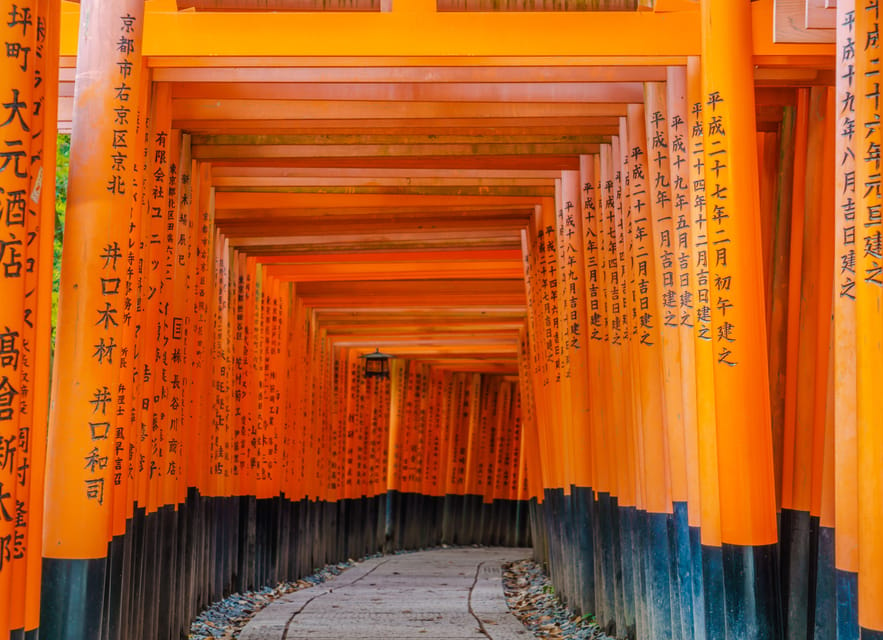
- Fushimi Inari first: Walk beneath rows of vermilion torii gates at Kyoto’s best-known Shinto shrine.
- Kiyomizudera admission included: The temple’s famous wooden terrace and Otowa waterfall are central parts of the tour.
- Spanish-speaking guide Manuel: Expect explanations of Kyoto’s history and culture, plus practical suggestions for the rest of your stay.
- Old Higashiyama on foot: Sannenzaka and Ninnenzaka offer traditional houses, shops, tea rooms, and restaurants.
- Yasaka Pagoda photo stop: Hōkan-ji’s five-story pagoda rises above the old streets and gives this walk one of Kyoto’s classic views.
- Public transport required: Bring cash or an ICOCA, SUICA, or PASMO card for local train and bus travel.
Why this route works so well in one Kyoto morning
Kyoto can feel scattered at first. Its major sights sit in different districts, and a day of sightseeing can easily become a puzzle of train lines, buses, entrances, and one-way streets. This route solves part of that problem by linking three very different sides of the city.
You begin at Fushimi Inari, where the mood is sacred and wooded. Then you shift to Kiyomizudera, one of Kyoto’s great Buddhist temples. From there, the route continues through Higashiyama, where old wooden buildings and stone-paved lanes create the feeling of an earlier Kyoto.
I like this progression because it is not just a checklist of monuments. You get a shrine, a temple, a famous neighborhood, a pagoda, and the streets that connect them. The result is a useful introduction to Kyoto’s religious traditions and historic center.
The experience is conducted in Spanish, which matters more here than it might at a simple photo stop. Fushimi Inari and Kiyomizudera both have layers of symbolism, and a guide can help you understand why the sites look and function as they do. Manuel also offers recommendations for what you can see and do after the tour, making the outing useful beyond its scheduled route.
A few more Kyoto tours and experiences worth a look
Starting at JR Inari Station at 9:00 a.m.
The meeting point is the exit of JR Inari Station, and the start time is firm: 9:00 a.m. That location is practical because Fushimi Inari is right at the beginning of the route. You should arrive early enough to find the correct exit and settle in before the group moves.
Bring a transportation card such as ICOCA, SUICA, or PASMO, or carry enough Japanese cash for the local train and bus fares. Transportation for participants is not included in the $74 price. The guide travels with the group, but you are responsible for your own local transit costs.
This detail is easy to overlook when comparing tours. The extra fare is likely modest, but it is still part of the day’s expense. Public transport also means the pace may depend on station access, transfers, and the group staying together. That is a fair trade for seeing Kyoto through its ordinary transport system, but you should not expect a private door-to-door vehicle.
Fushimi Inari and the famous torii path
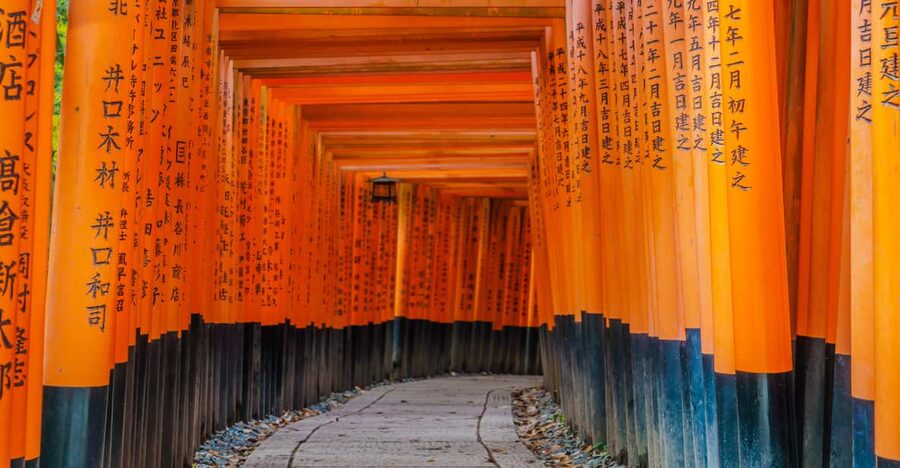
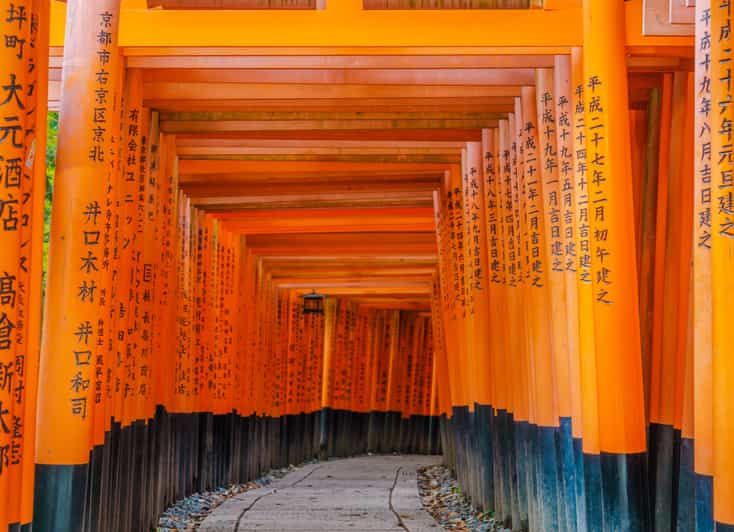
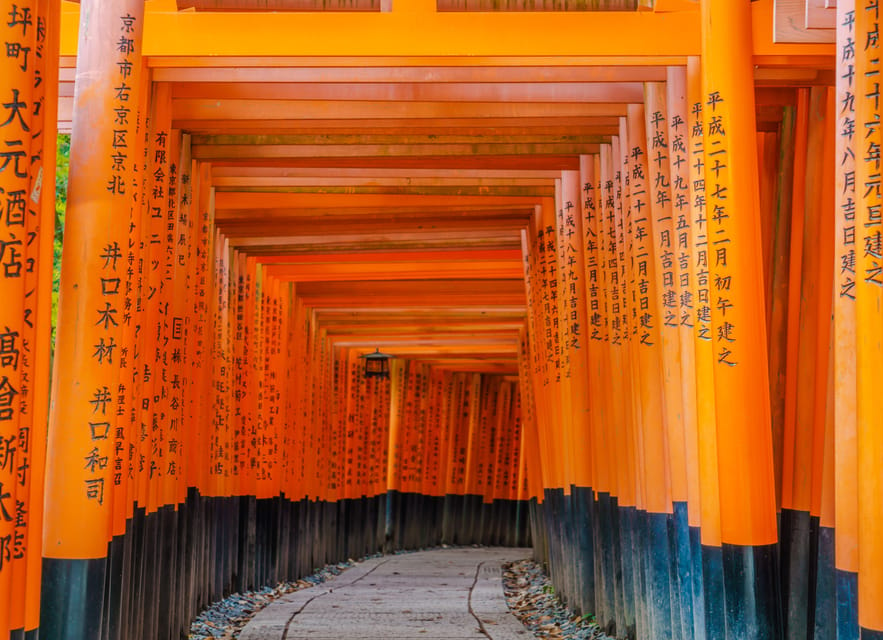
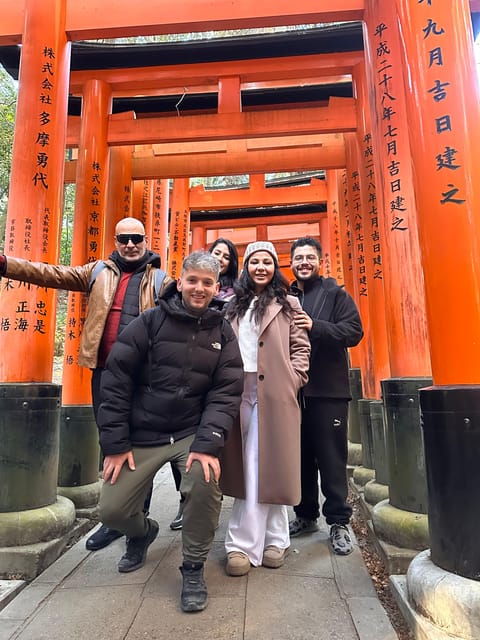
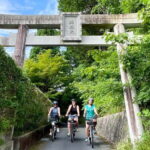
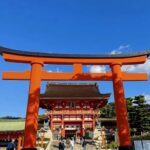
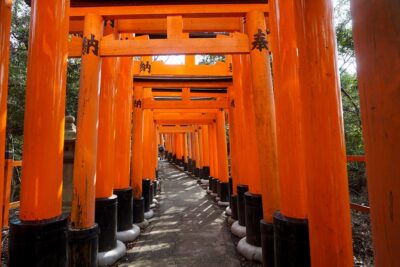
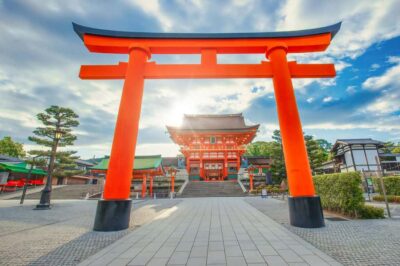
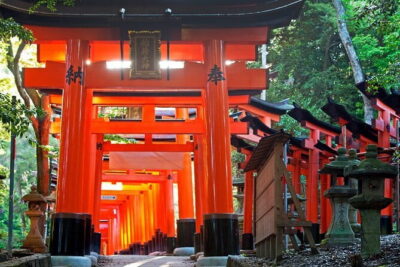
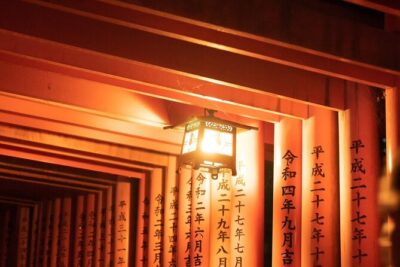
Fushimi Inari Taisha is one of Kyoto’s most recognizable sights. Its thousands of red-orange torii gates form covered paths up the wooded slopes of the mountain. The gates are donated, and many carry names and dates connected with the donors, giving the long corridor a personal and devotional side.
The first stretch is the part most people come to photograph. Rows of gates create a strong visual rhythm, with small gaps of forest between them. It is a place where the architecture does not merely decorate the shrine. It directs your movement and creates a sense of passage from the ordinary world into a sacred space.
A good guide adds value here by explaining the history and meaning behind the shrine rather than treating it as a background for photographs. The visit is also a good introduction to Shinto, Japan’s native religious tradition, though you should expect the setting to be popular and active.
The route description does not specify how far up the mountain you go or how long you spend there. Do not assume you will complete the entire mountain walk. Wear comfortable shoes, bring water, and be ready for stairs and sloped paths. Even a shorter visit involves walking, and the terrain is not suited to everyone.
I like beginning here because the shrine offers a strong first impression of Kyoto. It feels different from the temple and neighborhood stops later in the day, so the route gains variety right away.
Kiyomizudera’s wooden terrace and pure water
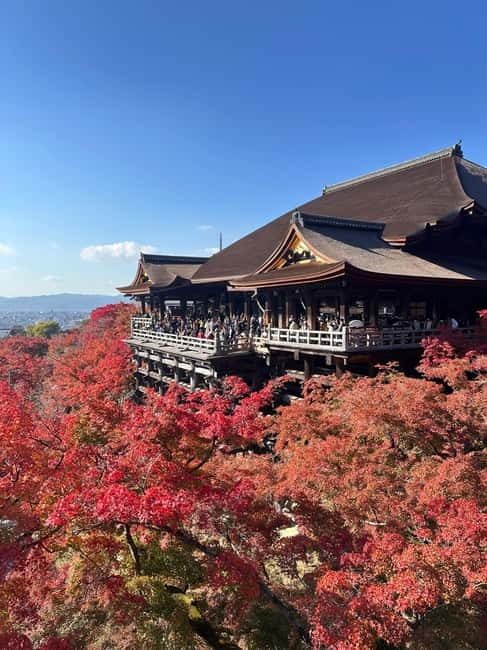
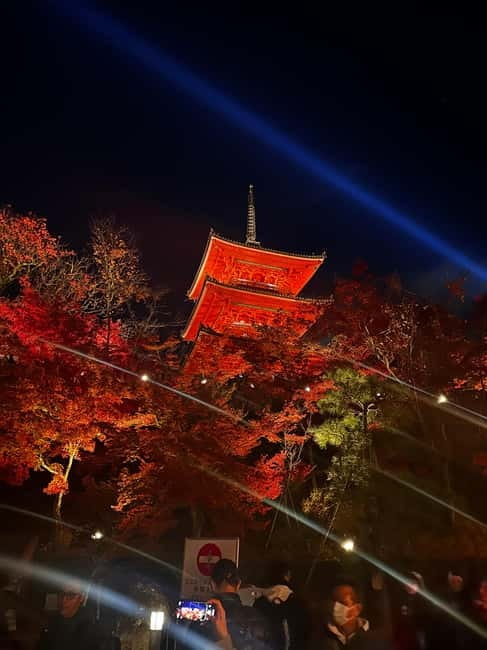
Kiyomizudera, founded in 778, is one of Kyoto’s most important Buddhist temples and a UNESCO World Heritage Site. Its name means Temple of Pure Water, a reference to the Otowa waterfall flowing through the grounds.
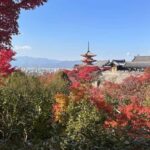
The temple’s best-known feature is its large wooden terrace, held up by tall pillars and opened toward Kyoto and the surrounding natural setting. The structure is impressive even before you hear the background. It also gives you a sense of how temple architecture can frame views rather than simply occupy space.
The setting changes with the seasons. Spring and autumn are especially noted for their natural color, though the temple remains a major attraction throughout the year. Crowds can affect how long you spend at the most popular viewpoints, so patience helps.
Admission to Kiyomizudera is included, which strengthens the value of the tour. You avoid having to handle that entrance separately, while the guide supplies context as you move through the grounds. Other meals, souvenirs, and transport fares remain your responsibility.
The temple is dedicated to Kannon, the goddess of mercy. That detail gives the visit a human focus. Instead of seeing the complex as only a grand building with a famous view, you can connect its spaces to Buddhist devotion and the idea of compassion.
You should also keep your expectations practical. The tour description promises entrance to Kiyomizudera, but it does not list every hall, garden, or sub-area included. The guide will determine the flow of the visit, and time may be shared with the other stops.
Walking through Higashiyama’s old Kyoto
After the temple, the route moves into Higashiyama, one of Kyoto’s most traditional districts. This is where the tour shifts from major religious sites to the texture of daily life in an old city.
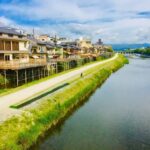
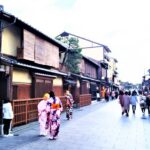
Higashiyama is known for cobblestone streets, wooden houses, craft shops, tea houses, and local restaurants. The lanes between Kiyomizudera and Maruyama Park are especially associated with Kyoto’s old-town character. Sannenzaka and Ninnenzaka are among the most memorable streets in this area, with slopes, traditional façades, and plenty of places to pause.
I find this part important because Kyoto is not only its temples. The streets around them show how commerce, homes, food, and religious buildings have shared the same small district for generations. You get a closer look at the city’s scale here, though the narrow lanes can feel crowded.
This is also the section where Manuel’s practical advice can be useful. His guidance includes recommendations for things to do after the tour and help finding less crowded places for photographs. That can save you time later, especially if you want to return to Higashiyama at a quieter hour or find a particular kind of shop or restaurant.
Food is not included, despite the route passing local restaurants and traditional tea houses. You should plan to buy your own meal or snack if needed. The safest approach is to carry water and some cash so you are not relying only on cards in smaller shops.
A few more Kyoto tours and experiences worth a look

Yasaka Pagoda above Sannenzaka and Ninnenzaka
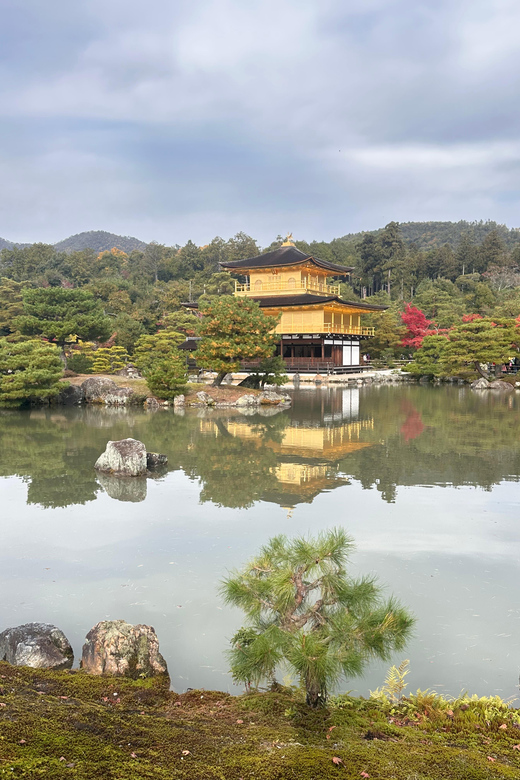
Yasaka Pagoda, officially Hōkan-ji, is one of the defining sights of Higashiyama. Its five stories rise above the traditional houses, creating the familiar Kyoto scene seen in countless photographs.
The pagoda was originally built in the sixth century. Although it is usually closed to the public, it remains a compelling exterior landmark. Its value on this tour comes from seeing it in its neighborhood setting, where the pagoda, sloping street, and wooden buildings form one complete view.
This is a stop for looking and photographing rather than for an extended interior visit. If you hope to climb the pagoda, the information provided does not promise public access. Treat it as an architectural landmark and a walking highlight.
The streets around it are also part of the attraction. Sannenzaka and Ninnenzaka make the pagoda feel connected to Kyoto’s older urban life, rather than isolated behind a gate. At the same time, their popularity means you may need to wait for a clear photo or follow the guide carefully through the foot traffic.
The route ends back at the meeting point, though the exact finishing time is not provided. That makes it wise not to schedule a tight reservation immediately afterward.
What Manuel adds to the experience
A sightseeing route like this can work without a guide, but the guide is the main reason to choose this particular format. Manuel leads the tour in Spanish and explains Kyoto’s history and culture at each major stop.
His strongest qualities are practical as well as academic. He is described as punctual and professional, and he helps with photographs in places that are less crowded. He also shares small facts and anecdotes, which can make a familiar landmark easier to remember.
I especially value the recommendations for the rest of your Kyoto stay. A guide who tells you what to do after the organized route can help you turn one morning into a better full day. Manuel is from Seville, and his friendly manner may suit Spanish-speaking visitors who want a relaxed, conversational introduction to Japan.
Still, a guide cannot remove every challenge. You will still walk, pay your own fares, deal with public transport, and navigate busy historic streets. The tour is best for someone who wants explanation and company, not for someone seeking complete independence or a private car.
Is $74 a fair price?
At $74 per person, the tour offers a reasonable package if you value Spanish-language guiding and prefer someone else to organize the route between the sights. Kiyomizudera admission is included, and the guide accompanies you on the public transport sections.
The price is less compelling if you already know Kyoto, speak comfortably with local signs and transit, and are happy to visit these places on your own. You will still pay for your own trains or buses, food, drinks, and purchases, so the final cost is higher than the advertised tour price.
For a first visit, the value comes from structure. Fushimi Inari, Kiyomizudera, Higashiyama, and Yasaka Pagoda are all major Kyoto sights, but moving between them efficiently takes planning. Spanish explanations and help with photographs add something a self-guided route cannot easily provide.
The group size is not stated, so you should not assume a private experience. Ask the provider if group size matters to you. That detail can affect how quickly you move through narrow streets and how much time you have for individual questions.
Practical details before you book
Wear comfortable shoes and clothes. The route includes shrine and temple grounds, streets, and public transport, so you need to be ready for a full outing on foot.
Carry drinks and cash. Cash is specifically recommended, and you must bring either cash or a local transport card. ICOCA, SUICA, and PASMO are all listed as suitable options.
Arrive at JR Inari Station before 9:00 a.m. The tour starts sharply, and late arrival can disrupt the group. If you are delayed, contact the guide as soon as possible.
The tour is not suitable for wheelchair users, and baby carriages are not allowed. Anyone who finds slopes, stairs, or uneven paving difficult should consider this carefully before reserving.
Cancellation is available with a full refund up to 24 hours before the activity. You can also reserve and pay later, which helps if your Kyoto plans are still shifting.
Who should book this Kyoto tour?
I would choose this tour if you want to see Kyoto’s essential eastern sights with Spanish explanations, a planned route, and help using local transport. It suits first-time visitors especially well, along with anyone who wants historical context without spending hours building a route from scratch.
It is also a good match if photography matters to you. Manuel’s help finding quieter picture spots can be useful around Yasaka Pagoda and Higashiyama, where the most obvious viewpoints fill quickly.
I would hesitate if you need wheelchair access, want to avoid walking, or prefer a private vehicle. I would also compare the cost carefully if you already plan to visit all four areas independently.
For most Spanish-speaking visitors making a first Kyoto visit, I think the tour is a sensible choice. You get the striking torii gates, one of Japan’s great temple terraces, and the old streets around Yasaka Pagoda, with a guide who adds history, humor, punctual organization, and useful advice for the rest of your stay.
FAQ
Where does the Kyoto tour begin?
The meeting point is at the exit of JR Inari Station at 9:00 a.m.
Where does the activity end?
The activity ends back at the meeting point.
What language is the tour conducted in?
The tour is conducted in Spanish.
Is Kiyomizudera admission included?
Yes. Entrance to Kiyomizudera Temple is included in the tour price.
Is transportation included?
Transportation for participants is not included. Local train lines or buses are used, and you must pay your own fares.
What should I bring?
Bring comfortable shoes, comfortable clothes, drinks, and cash. You should also bring an ICOCA, SUICA, or PASMO card, or have cash available for public transport.
Are wheelchairs and baby carriages permitted?
The activity is not suitable for wheelchair users, and baby carriages are not allowed.
Can I cancel for a full refund?
Yes. You can cancel up to 24 hours in advance for a full refund.
More Golden Pavilion & Temple Tours in Kyoto
More Fushimi Inari Tours in Kyoto
More tours in Kyoto we've reviewed



Fushimi Inari Tours, compared.
 ★ 4.8Kyoto: Fushimi Inari, Kinkakuji, Bamboo Grove 1 Day Bus TourFrom $122510 minutes - 9 hours
 ★ 5.0Fushimi Inari Hidden Hiking Tour (Private Option Available)From $63
 ★ 4.7Kyoto/Osaka: Nara, Fushimi Inari Taisha, Arashiyama Bus TourFrom $529 - 10 hours
 ★ 4.4Osaka/Kyoto: Arashiyama, Nara & Fushimi Inari Shrine w/LunchFrom $61
 ★ 5.0Kyoto: Nijo, Kinkaku-ji, Arashiyama, Kiyomizu & Fushimi InariFrom $51
 ★ 5.0Kyoto Fushimi-Inari Night Walking TourFrom $43