
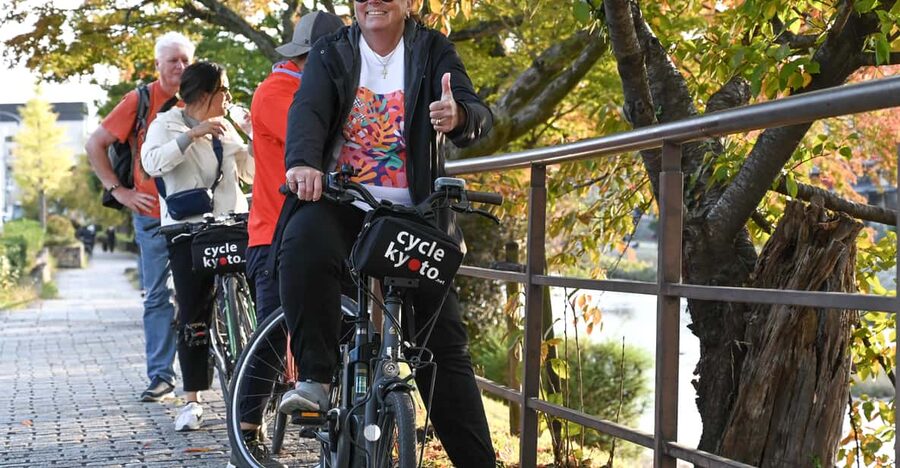
Reviewed · FULL-DAY
Kyoto: Full Day Bike Tour
Kyoto is wonderfully spread out, and this full-day ride gives you a practical way to connect its big sights with the small streets between them. You’ll pedal from Toji and Nishi Honganji to the Golden Pavilion, Imperial Palace, Gion, Tofukuji, and Fushimi Inari, with a traditional lunch along the way. The best part is the shift from postcard Kyoto to ordinary neighbourhoods, where the city feels less staged and more lived-in.
I like the small group of no more than nine, which keeps the ride manageable and gives you a real chance to ask questions. I also like the well-kept Giant and Trek cross bikes, plus the option of an e-bike if you request one. The main drawback is simple: this is a long, active day, with one rider reporting a little over 18 miles, so you need to be comfortable in the saddle.
In This Review
- Key points to know before booking
- Why this route works so well in one day
- Toji and Nishi Honganji set the historical tone
- Sanjo, Shinsen-en, and Kitano Tenmangu
- Golden Pavilion is the day’s famous centerpiece
- Lunch is more than a necessary refueling stop
- The Imperial Palace gives you a change of scale
- The Kamo River and Gion bring you into everyday Kyoto
- Tofukuji and Fushimi Inari finish the ride strongly
- What the bikes and group size mean for you
- Guides add the most value
- Price, weather, and practical value
- Who should book this Kyoto bike tour?
- FAQ
- What time does the Kyoto full-day bike tour start?
- How long does the tour last?
- Is lunch included?
- Is entry to the Golden Pavilion included?
- Are e-bikes available?
- Can I cancel if my plans change?
Key points to know before booking
- Nearly 7.5 hours on two wheels: This is a serious full-day outing, not a gentle short ride.
- A strong mix of major sights and side streets: You see famous temples while also riding through local Kyoto neighbourhoods.
- English-speaking guides with local experience: Guides including Shawn, Juan, Karl, and Jay bring history, anecdotes, and practical city advice.
- Golden Pavilion entry and lunch are included: That makes the $116 price easier to assess.
- Regular bikes are usually workable: Kyoto is fairly flat, though e-bikes are available upon request.
- The final stretch reaches Fushimi Inari: You finish among its famous torii gates rather than merely passing nearby.
Why this route works so well in one day
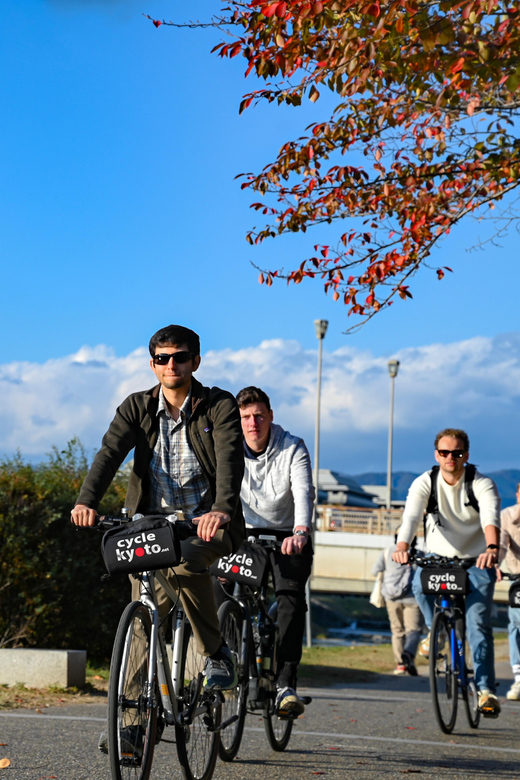
The tour begins at Cycle Kyoto at 9:30 AM. Arrive 15 minutes early for bike fitting and the safety briefing. That early start matters because the day packs in a lot: temples, a shrine, a shopping arcade, a garden, a river, Gion lanes, and two of Kyoto’s most famous sights.
I see this as a good first-day orientation for Kyoto. You cover enough ground to understand how the city fits together, then you can return later to the places that deserve more time. You will not get a slow, meditative visit at every stop, but you will gain a broad and useful first look.
The order also helps. You start west and north, cross toward the Imperial Palace, then move east and south toward Gion and Fushimi Inari. That creates a real journey through the city instead of a series of disconnected transfers.
Other cycling tours in Kyoto
Toji and Nishi Honganji set the historical tone
Toji is the first temple stop. The schedule allows about 30 minutes after the safety briefing, enough to see the grounds and get a sense of why the temple matters. It is a particularly good opening stop because you can settle into the bike before the route becomes more demanding.
From Toji, it is about a 10-minute ride to Nishi Honganji. The temple receives a longer guided visit, around 50 minutes, so this is not just a quick photograph from the street. Your guide can help explain what you are seeing, which is useful when Japanese Buddhist architecture starts to look familiar but its details remain hard to read.
The ride between the temples is part of the appeal. You are not being carried from one gate to the next in a bus. You get a brief, direct look at Kyoto’s streets and how its religious sites sit within the city.
Sanjo, Shinsen-en, and Kitano Tenmangu
The route then heads north through the Sanjo Shopping arcade. This is one of the places where the bicycle earns its keep. You can move through a commercial part of Kyoto without giving up the feel of the surrounding streets, though you should expect to slow down and pay close attention around other people.
A short stop at Shinsen-en gardens adds a quieter note. It is described as picturesque, and the visit helps break up the larger temple stops. You get a change of pace before continuing to Kitano Tenmangu Shrine.
The Kitano Tenmangu visit lasts about an hour and includes a guided look around the grounds. This is a useful stop for understanding the difference between a Buddhist temple and a Shinto shrine. I appreciate that the day includes both types rather than treating Kyoto as one long parade of similar buildings.
The route may also include an extra local shrine or a festival if something important is taking place that day. That cannot be promised, but it shows why a guide-led route can feel more responsive than a fixed sightseeing bus.
Golden Pavilion is the day’s famous centerpiece
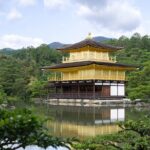
Kinkaku-ji, better known as the Golden Pavilion, is the most instantly recognizable stop. Entrance is included, and you have roughly an hour at the site, with about 25 minutes specifically set aside to explore the pavilion and grounds.
The building is famous for good reason, but the visit is not designed for lingering all afternoon. You should expect a focused stop, not a private audience with the temple. The site can be crowded, and the most popular view is also the one everyone wants. Still, admission included in the tour saves you a separate transaction, and arriving by bike means you avoid arranging another connection.
The Golden Pavilion is one of Kyoto’s places you should see even if you dislike famous sights. Just keep your expectations sensible. You will get the classic view, a walk through the grounds, and time to take photographs. You will not have the place to yourself.
Lunch is more than a necessary refueling stop
After the Golden Pavilion, you ride toward the Imperial Palace and stop for a traditional Japanese lunch at a local restaurant. Lunch lasts about an hour and is included in the price, though the restaurant can change according to availability.
This is one of the strongest practical features of the tour. You do not have to stop the group to search for food while tired, and you get a meal selected by someone who knows the city. Specific meals can vary. One outing included ramen with a special duck broth, while another included a traditional Japanese meal. The useful point is that lunch is not treated as an afterthought.
You should still bring water and keep a little energy in reserve. Eating halfway through a 7.5-hour ride is sensible, but it does not turn the afternoon into a rest day.
A few more Kyoto tours and experiences worth a look
The Imperial Palace gives you a change of scale
The Kyoto Imperial Palace follows lunch, with about an hour to visit. After the compact lanes and temple compounds, the palace grounds offer more room and a different kind of city history.
The stop is valuable because it broadens the day beyond religious buildings. Kyoto was Japan’s imperial capital for centuries, and the palace helps connect the city’s formal past with the everyday streets you have been riding through.
At this point, the full-day format becomes clear. You have already seen several major sites, yet the route is not finished. If you prefer slow visits with long pauses for sketches, detailed photographs, or quiet reflection, this schedule may feel brisk. If you want a strong overview and enjoy moving under your own power, the pace makes sense.
The Kamo River and Gion bring you into everyday Kyoto
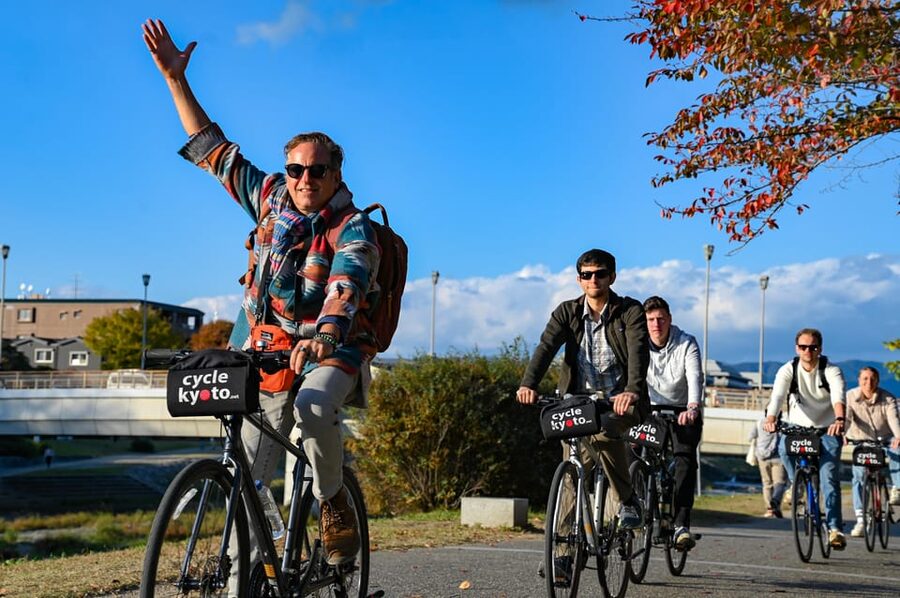
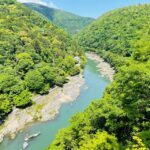
The route picks up the Kamo River and heads south. A photo stop of about 40 minutes gives you a welcome chance to pause and enjoy the open space beside the water.
The river section is also a physical reset. After several formal attractions, the view changes to bridges, water, and city life. You are still inside central Kyoto, but the mood is less ceremonial.
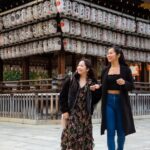
From there, you enter Gion, Kyoto’s well-known geisha district. The guided visit lasts about an hour and takes you through its backstreets. This is where the tour’s neighbourhood focus pays off. You see more than the main road and get a better sense of the district’s lanes, traditional buildings, and careful atmosphere.
You should behave respectfully here. Gion is not a theme park, and the people working and living in the district are not part of the sightseeing display. A guide can help you understand where to ride, where to walk, and how to look without getting in the way.
You may spot a geisha or maiko, but that is not something the tour can guarantee. The more dependable reward is the setting itself and the chance to see Gion in context rather than as an isolated photo stop.
Tofukuji and Fushimi Inari finish the ride strongly
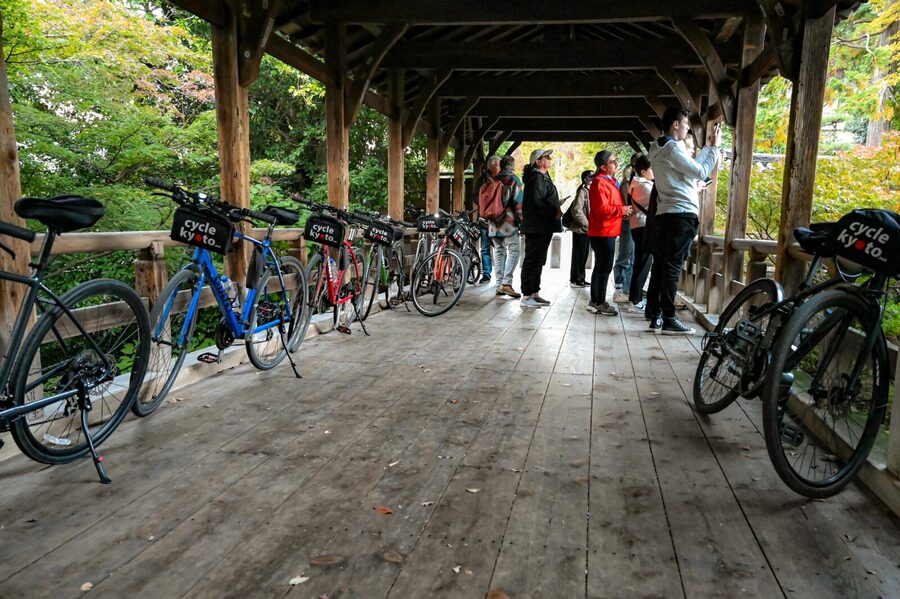
The final section heads south through Tofukuji Temple. This is listed as a 30-minute photo stop, so treat it as a brief look rather than a full temple visit. It gives the route another architectural and spiritual pause before the final destination.
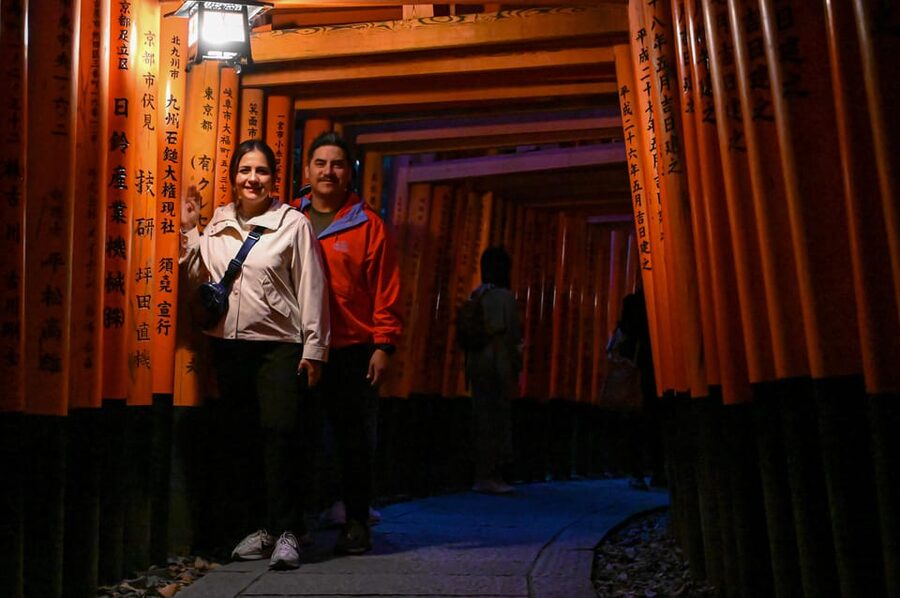
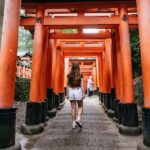
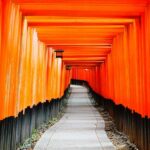
Fushimi Inari Taisha is the grand finish. The tour reaches the Senbontorii area, where the famous rows of orange torii gates create one of Kyoto’s most memorable scenes. The guided visit is planned for about an hour.
This stop can be physically demanding even without a bicycle because the shrine route includes walking and slopes. The tour does not promise a climb to the summit, and the supplied schedule focuses on the torii gate area. That is a sensible choice for a day already covering many miles.
After Fushimi Inari, you ride back to Cycle Kyoto. The ending is convenient, but do not underestimate the last leg. By then, you have been active since morning and have walked through several sites.
What the bikes and group size mean for you
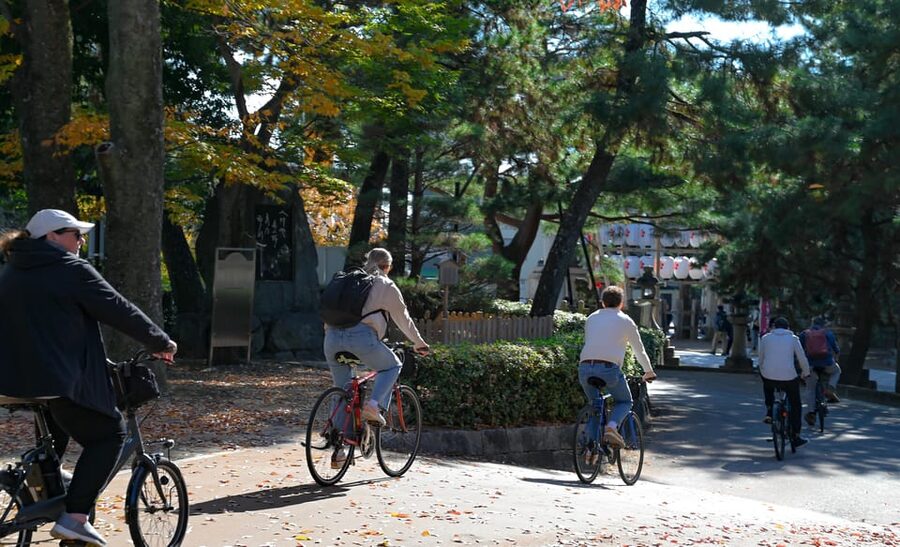
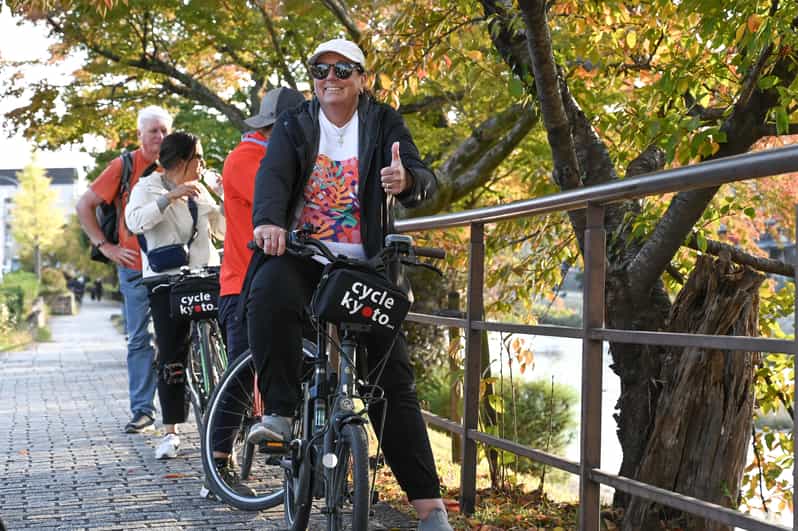
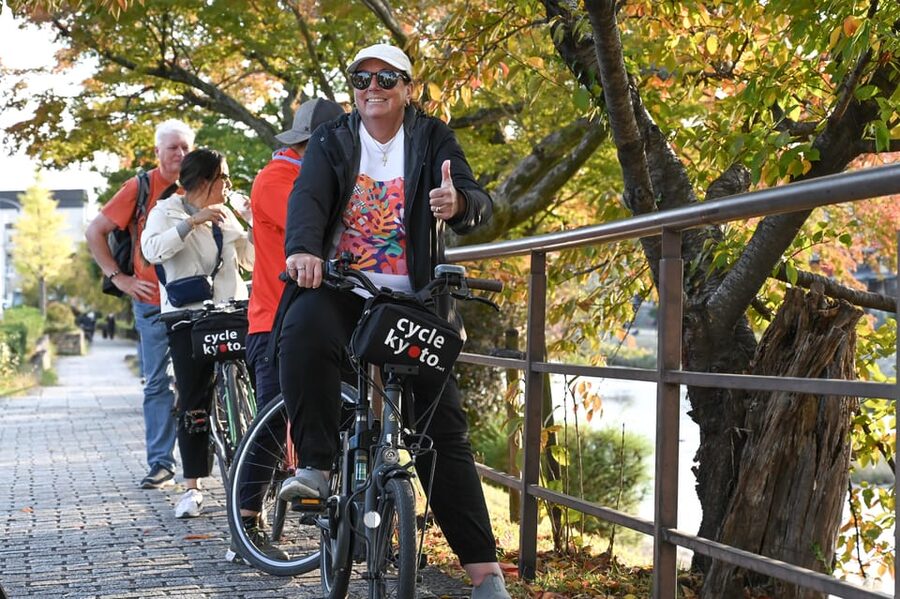
The standard bikes are maintained cross bikes from Giant and Trek. That is a good fit for city riding: lighter and more efficient than a heavy rental bicycle, without being a specialist racing bike.
E-bikes are available upon request. If you are unsure, ask before the tour rather than assuming one will be waiting. One rider who worried about managing a regular bike found Kyoto’s mostly flat streets easy, but that will depend on your fitness, comfort, and the weather.
You need to be able to ride a bike confidently. The route is described as generally safe and often low traffic, but no city ride is entirely free of cars, pedestrians, crossings, or distractions. Comfortable shoes, practical clothing, sunscreen, a hat, and water are sensible choices.
The group is limited to nine people. That is small enough for the guide to keep an eye on the group and explain things without shouting. It also means the experience depends on everyone keeping to the schedule. One slow rider can affect the whole day, so this is better for people who can maintain a steady pace.
Children under 12, pregnant women, and people who cannot ride are not suited to this activity. High heels are not allowed, and smoking is not allowed.
Guides add the most value
All guides speak English fluently and have lived in Japan for a considerable time. The named guides include Shawn, Juan, Karl, and Jay, and the strongest praise is directed at their humour, patience, enthusiasm, cultural explanations, and local food suggestions.
That difference matters. A bike tour can easily become a moving checklist, but a good guide turns the ride between sights into part of the experience. Jay is described as funny and enthusiastic, Juan as patient and helpful with suggestions for later visits, and Karl as a source of both historical detail and food stops.
You should also use the guide as a practical resource. Ask about places to visit on another day, local food, and how to approach Kyoto’s temples and shrines respectfully. The small group makes those conversations possible.
Price, weather, and practical value
At $116 per person, the tour is not the cheapest way to see Kyoto. The price includes the bike, helmet, Golden Pavilion entrance, traditional Japanese lunch, guide service, and a full day of route planning. Once you account for admission, food, and bike rental, the cost is easier to justify.
The bigger question is how you like to sightsee. If you would otherwise pay for several taxis or spend time working out bus connections, the tour offers a clear convenience advantage. You also reach backstreets and local areas that are easy to miss from public transport.
The cost is harder to justify if you want to spend half a day at one temple or dislike fixed schedules. You are paying for range, guidance, and a carefully connected route, not for maximum time at each individual attraction.
The tour does not operate in all weather. In heavy rain, it is cancelled and refunds are provided. Dress for the forecast anyway, because light changes in weather can affect comfort even when the ride goes ahead. You can cancel up to 24 hours before departure for a full refund, and you can reserve now and pay later.
Storage on the bikes is limited, so bring only what you need. Larger luggage can be left in the secure shop space during the tour.
Who should book this Kyoto bike tour?
I would choose this for a first visit if you are active, short on time, and eager to see how Kyoto’s major sights connect. It is especially useful for couples, friends, and families with older children who want culture without spending every hour on foot.
You should book it if you enjoy local lanes as much as famous monuments, want an English-speaking guide, and like the idea of a planned lunch instead of another midday decision. The 4.9 rating from 39 bookings fits the experience described here: the most praised elements are the guides, comfortable bikes, smart organisation, safe-feeling routes, food, and the amount you can see in one day.
I would skip it if you are not a confident cyclist, if you need a slow pace, or if Kyoto’s temples deserve long, unhurried visits for you. For everyone else, the tour offers an unusually efficient introduction to the city, with enough neighbourhood riding to keep it from feeling like a standard sightseeing circuit.
FAQ
What time does the Kyoto full-day bike tour start?
The tour starts at 9:30 AM sharp. You should arrive 15 minutes early for bike fitting and preparation.
How long does the tour last?
The stated duration is 450 minutes, or about 7.5 hours. The schedule includes riding, guided visits, photo stops, lunch, and the return to Cycle Kyoto.
Is lunch included?
Yes. A traditional Japanese lunch is included. The restaurant may vary depending on availability.
Is entry to the Golden Pavilion included?
Yes. The entrance fee to Kinkaku-ji, the Golden Pavilion, is included in the tour price.
Are e-bikes available?
Yes. E-bikes are available upon request. The standard bikes are maintained Giant and Trek cross bikes.
Can I cancel if my plans change?
Yes. You can cancel up to 24 hours in advance for a full refund. In heavy rain, the operator cancels the tour and provides refunds.
More Full-Day in Kyoto
More Cycling Tours in Kyoto
More tours in Kyoto we've reviewed

Full-Day, compared.
 ★ 4.5Kyoto: Full-Day English Guided Tour of Kyoto’s HighlightsFrom $88
 ★ 4.6Kyoto: Full-Day Guided Bus Tour to Top Highlights & TicketsFrom $50
 ★ 5.05 Top Highlights of Kyoto Full Day Bike Tour (E-bike option)From $172
 ★ 5.0Full Day Biking Tour Exploring the Best of KyotoFrom $119
 ★ 5.0Kyoto Private Car Tour – Full Day with Local Guide & Nara OptionFrom $170
 ★ 5.0Full Day Guided Tour to Kyoto and Nara from Osaka by VanFrom $96