
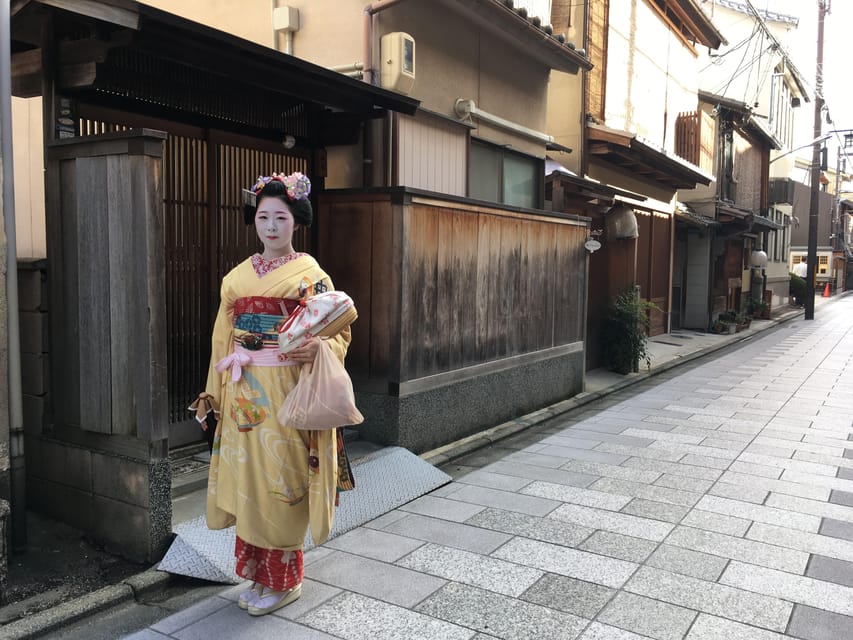
Reviewed · GION & GEISHA WALKS
Kyoto: Gion and Higashiyama Walking Tour
Gion is not just a pretty Kyoto neighborhood. It is a working entertainment district where geisha, also called geiko in Kyoto, still live, train, and perform. I like that this tour explains the customs behind the costumes, then takes you through the narrow lanes after dusk when the area feels especially atmospheric. The welcome drink and practical dinner tips are two useful extras.
The main drawback is simple: this is a walking tour with no seating built into the route, and it is not suitable for people with mobility impairments. You also get a chance of seeing geisha in costume, not a promise, so book it for the cultural explanation and streetscape rather than a guaranteed sighting.
In This Review
- Key points to know before you book
- Why Gion is more than a geisha photo stop
- Starting with a drink at the traveler lounge
- Walking Gion’s narrow lanes from 17:00 to 19:00
- A Shinto shrine, a glowing pagoda, and a Zen temple
- What the geisha explanation adds
- Why the $20 price offers good value
- Is this a good first evening in Kyoto?
- Who will get the most from this walk
- Booking details that matter
- Should you book the Gion and Higashiyama walk?
- FAQ
- How long does the Gion and Higashiyama walking tour last?
- Where does the tour begin?
- Where does the tour end?
- Is a drink included?
- What languages are available?
- Will I definitely see a geisha?
- Is the tour suitable for people with mobility impairments?
- Can I cancel for a refund?
Key points to know before you book

- Gion after dusk: The 17:00 to 19:00 timing lets you see the entertainment district as the light fades and lanterns begin to matter.
- Geisha culture explained: Your guide introduces the work, customs, and history of Kyoto’s geisha world without reducing it to a photo opportunity.
- Three different sacred settings: The route includes a Shinto shrine, a lit pagoda, and the grounds of a Zen temple.
- A useful first-day tour: You get an orientation to Kyoto plus suggestions for dinner and ideas for later days.
- Small practical cost: At $20 per person, the price is modest for a bilingual, nearly two-hour guided walk.
- Guide experience matters: Kevin has been praised for making the history of Kyoto and its geiko and geisha traditions clear and enjoyable.
Why Gion is more than a geisha photo stop
Gion has a special place in Kyoto because its identity is tied to the geisha world. These women are not simply performers hired for tourist photos. They train in traditional arts, work in entertainment districts, and follow customs that can be difficult to understand from a quick walk through the streets.
That is why a guide adds real value here. Without context, you may see a woman in formal dress hurry from one building to another and assume the neighborhood is a stage set. With an explanation of the district’s customs, you can better understand why the streets are quiet, why certain encounters call for discretion, and how the area fits into Kyoto’s living culture.
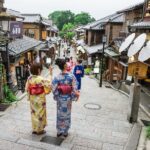
I like that the walk focuses on locally loved streets instead of treating Gion as one single attraction. You move through narrow historic lanes, take in carefully lit views, and hear about both older traditions and modern life. The goal is not to promise access to private establishments. It is to help you read the neighborhood with more care.
You may catch a glimpse of geisha or geiko in full costume, but that depends on the evening. The tour is strongest when you think of that as a possible extra, not the main product.
A few more Kyoto tours and experiences worth a look

Starting with a drink at the traveler lounge
The meeting point is the provider’s office on the second floor of a mixed residential and commercial building. That description matters. You should not expect a grand hotel lobby or a large sightseeing terminal. Look for the correct building and allow a little time to find the office upstairs.
The tour begins with a welcome drink and an introduction to the world of geisha. This is a smart way to start a walking tour because it gives you a framework before you reach the lanes. Instead of hearing unfamiliar terms while trying to keep up with the group, you get some background first.
Food and drinks beyond the welcome drink are not included. The drink is a friendly opening gesture, not a meal, so plan to eat afterward. The tour ends back at the same meeting point, and the guide can suggest places for dinner once the walk is over.
That end-of-tour advice may be especially useful because Gion can feel confusing after dark. You will have spent two hours learning where you are, and a local recommendation can help you choose what to do next rather than simply wandering until you find an open restaurant.
Walking Gion’s narrow lanes from 17:00 to 19:00

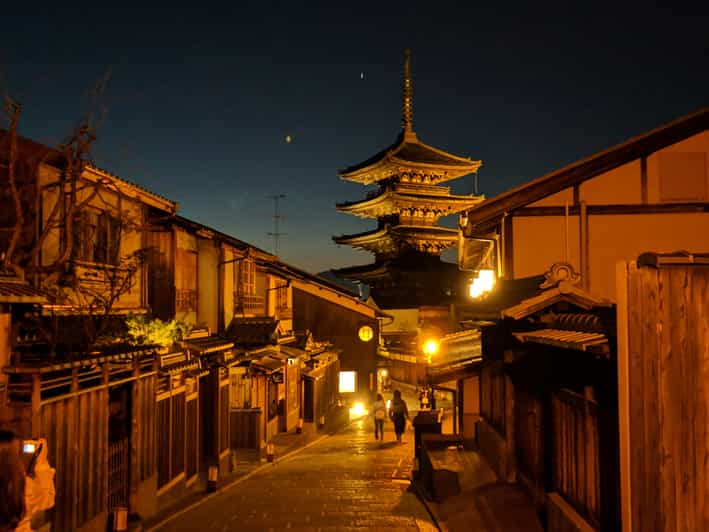
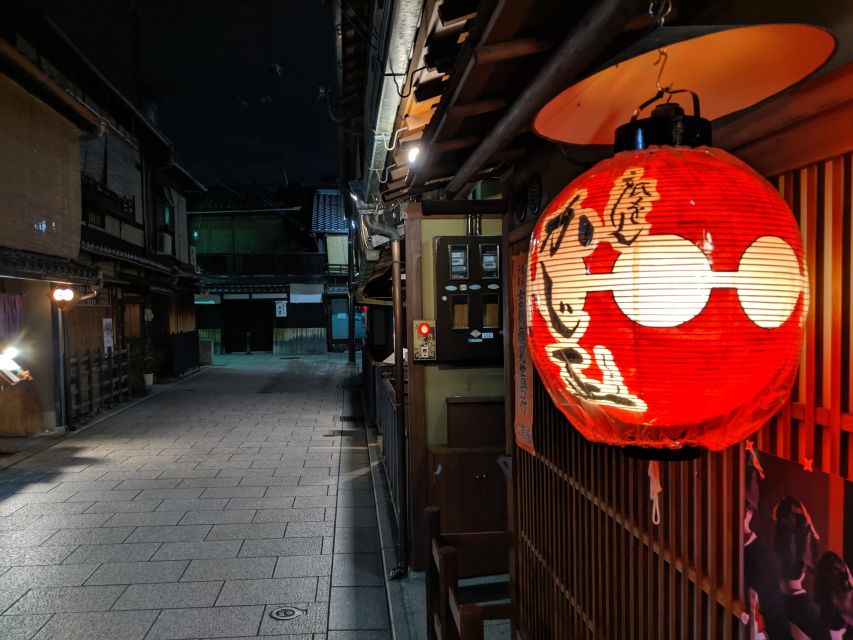
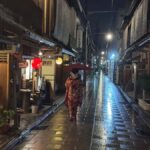
The reported timing, 17:00 to 19:00, is one of the tour’s best features. You begin in the early evening and finish at night, giving you changing light along the route. Kyoto’s traditional streets can look quite different once the daylight fades and the area’s lamps and signs become the main source of color.
Your guide leads you through Gion’s historic narrow streets while explaining the entertainment district’s past and present. The lanes themselves are part of the experience. Their scale feels very different from a broad modern avenue, and the quiet mood makes it easier to notice the details around you.
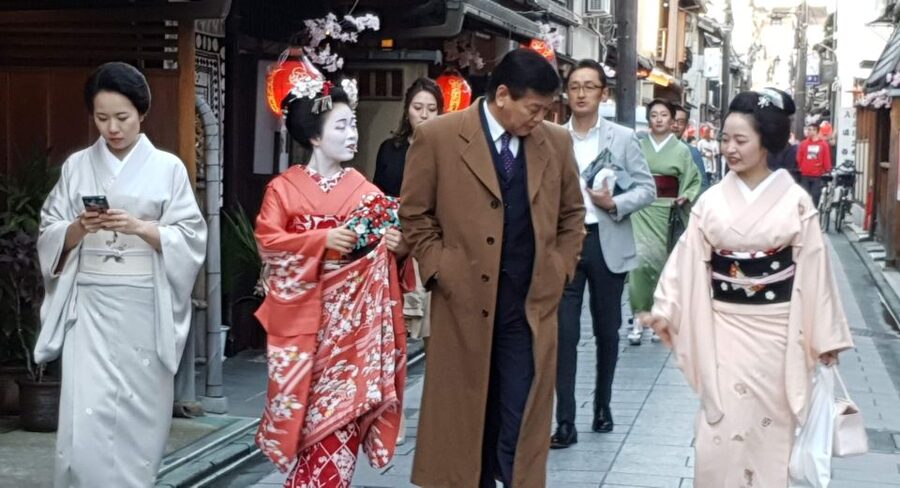
This is also where good manners matter. Gion is a real neighborhood and workplace, not an outdoor theater. The tour’s focus on local customs helps you understand that people in costume may be going to work, not posing for strangers. You should follow your guide’s advice about respectful behavior and avoid treating a possible geisha sighting as permission to block the street or take intrusive photographs.
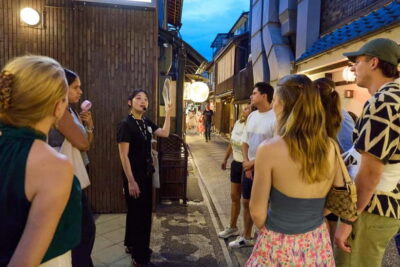
Kevin has received particular praise for his explanations and friendly manner. If he is leading your walk, expect a guide who connects the geisha tradition with wider stories about Kyoto. The tour is offered in English or French, so confirm your preferred language when booking.
A Shinto shrine, a glowing pagoda, and a Zen temple
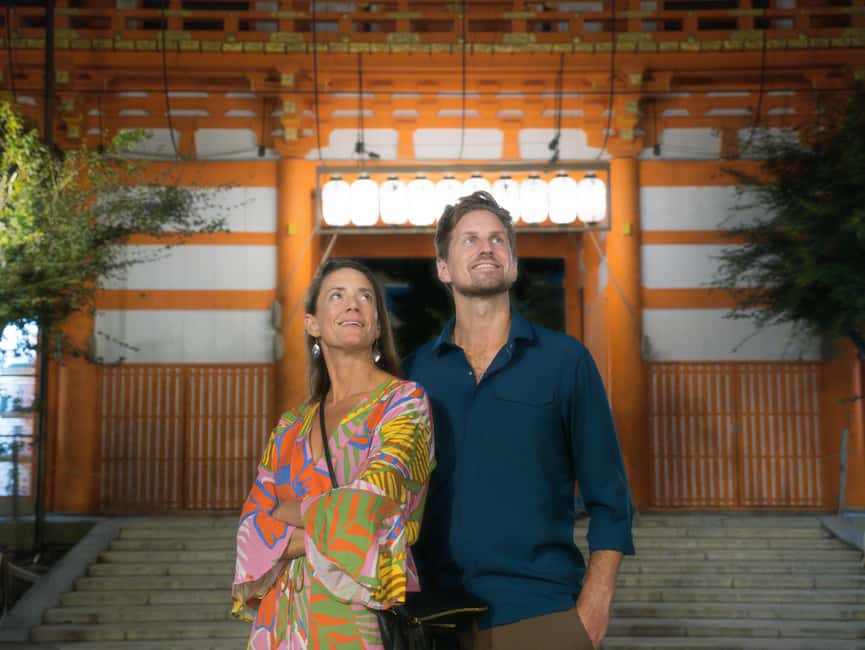
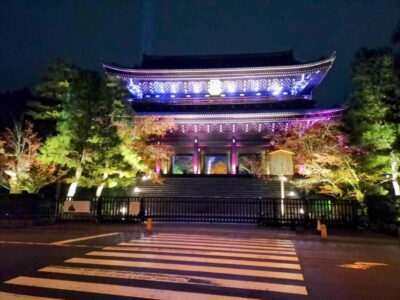
The itinerary brings together several sides of Kyoto’s religious and architectural character. You visit a Shinto shrine at night, see a beautifully lit pagoda, and walk through the grounds of a Zen temple. The supplied details do not name the specific shrine or temple, so you should not book this expecting a visit to one particular landmark.
The variety is still worthwhile. A Shinto shrine and a Zen temple represent different religious traditions and visual moods, while the pagoda gives you one of those classic Kyoto views that becomes especially striking under evening light. Your guide can place these sights in the context of the surrounding district rather than leaving you with a series of disconnected photographs.
The temple grounds offer a quieter pause in the walk. After the tighter lanes of Gion, the gentle calm of a Zen setting changes the pace. I like this contrast because it shows why Higashiyama is so appealing: entertainment culture, religious spaces, and old streets sit close together, yet each has its own atmosphere.
Keep in mind that the tour remains a walking experience. You are not settling in for a long temple visit or a formal meditation session. The value comes from seeing several settings in one route and understanding how they relate to Kyoto.
What the geisha explanation adds
The word geisha can create a lot of confusion. In Kyoto, you may also hear geiko, along with maiko for younger apprentices. The tour promises an introduction to their history and customs, plus information about the modern culture of entertainment districts.
That explanation is more useful than a quick costume sighting. You learn that the district’s traditions are connected to training, performance, hospitality, and long-standing local customs. The guide also helps you separate what belongs to genuine Kyoto culture from the simplified version often presented in popular media.
You should expect an overview, not specialist academic research or access behind closed doors. The tour takes close to two hours and covers a substantial area on foot, so the guide must balance detail with movement. For a first visit to Kyoto, that balance makes sense.
I especially like the way this subject can become a gateway to the rest of your trip. Once you understand how carefully Kyoto preserves and adapts its traditions, you may look differently at temple etiquette, neighborhood behavior, and the city’s traditional arts.
Other walking tours we've reviewed in Kyoto





Why the $20 price offers good value
At $20 per person, this is an inexpensive way to get a guided introduction to two of Kyoto’s most atmospheric districts. You receive a bilingual guided walk, a welcome drink, cultural interpretation, and recommendations for dinner and other days in the city.
The price is not paying for admission to a major attraction or a meal. It pays for orientation and explanation. That distinction matters. If you want private access, a long dinner with performers, or guaranteed geisha contact, this is not that kind of experience. If you want a clear introduction before exploring on your own, the cost is easy to justify.
The tour can also save you time later. Gion and Higashiyama are areas where you can spend hours walking without knowing what you are seeing. A guide gives you a starting map in your head: the kind of place Gion is, how the entertainment district works, and which nearby areas may be worth returning to.
The welcome drink adds a small social touch, but do not count it as substantial refreshment. Bring what you need for the walk and plan dinner after the tour.
Is this a good first evening in Kyoto?
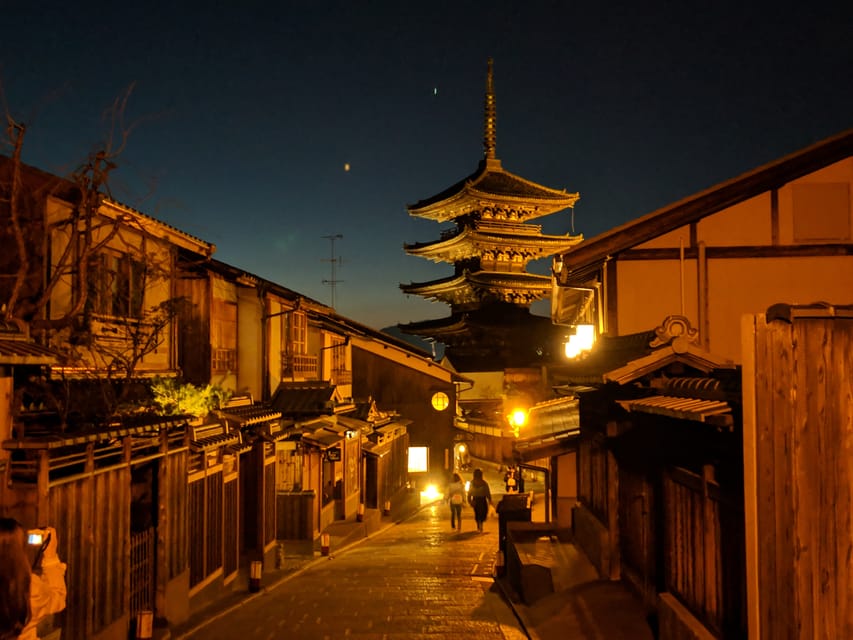
Yes, especially if you arrive with enough energy for an evening walk. The experience is designed to give you a snapshot of Kyoto on your first day, and the 17:00 start leaves the earlier part of the day open for arrival, rest, or another sight.
I like first-day tours that do more than rush you past famous buildings. This one gives you practical cultural context early in your stay. Afterward, you can return to Gion with more confidence or use the guide’s recommendations to shape the next few days.
The timing is also convenient for dinner. You finish around 19:00 at the original meeting point, and the guide can suggest where to eat. Since meals are not included, this keeps the tour flexible rather than tying you to a set restaurant.
There is one caution. If your first day involves a long journey, jet lag, or heavy sightseeing, a two-hour walk may feel like a lot. You should choose it when you can give the evening some attention, since the best part is listening to the explanations and noticing the surroundings.
Who will get the most from this walk
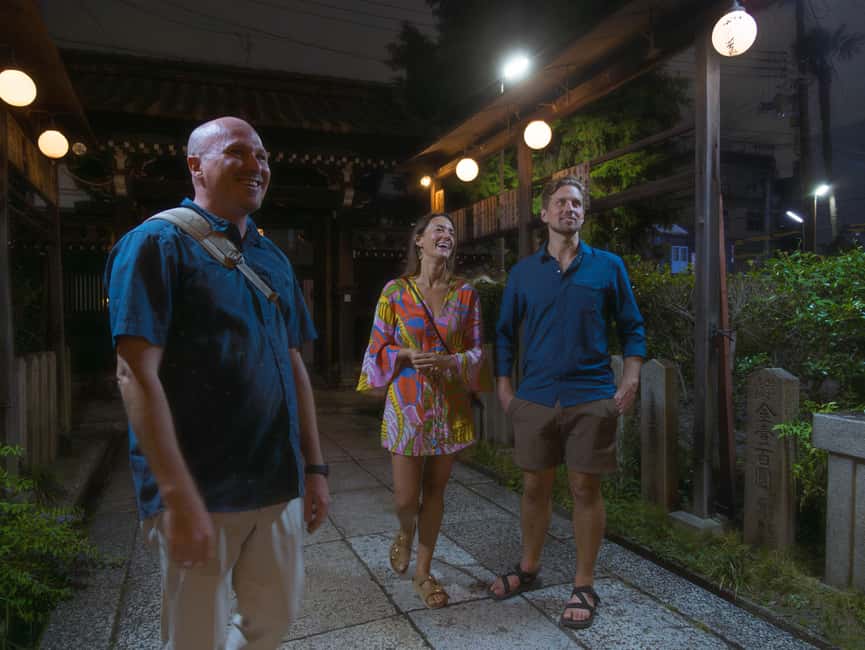
This tour suits you if you want cultural background, attractive evening streets, and a guide who can help you make sense of Kyoto. It is a good fit for first-time visitors, couples, solo visitors, and anyone interested in traditional performing arts.
It also suits people who prefer a modestly priced experience over a costly dinner show. You receive a guided introduction without paying for a staged performance or a formal meal.
You may want to choose something else if you have serious mobility limitations, dislike walking for nearly two hours, or need guaranteed access to geisha performances. The route includes narrow streets and several different sites, and the provider specifically says it is not suitable for people with mobility impairments.
Families and older visitors should think about pace and stamina. The available information does not specify group size, rest stops, or the number of stairs, so ask before booking if those details affect your decision.
Booking details that matter
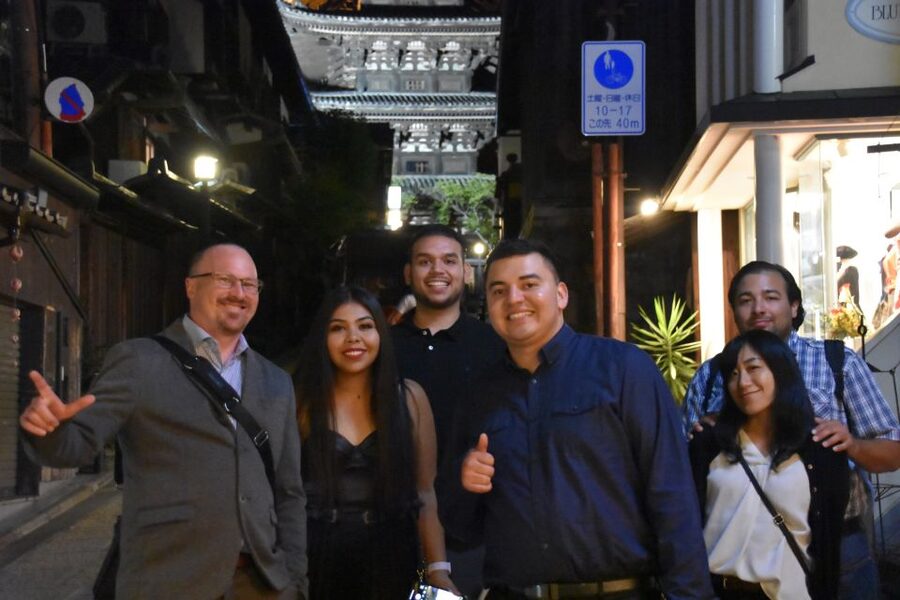
You can reserve now and pay later, which keeps your plans flexible. You can also cancel up to 24 hours in advance for a full refund, according to the stated policy.
The tour begins and ends at the provider’s office. Because it is located on the second floor of a mixed residential and commercial building, check the meeting instructions carefully and avoid arriving at the last second.
English and French are available. Kevin is the guide named in the strongest feedback, and his explanations of Kyoto, geiko, and geisha traditions have been singled out as a major strength. Guide assignments can vary, so treat Kevin as a useful name to know rather than a guarantee unless your booking confirms him.
Should you book the Gion and Higashiyama walk?
Book it if you want an affordable, well-timed introduction to Gion’s geisha culture and the streets of Higashiyama. The combination of a welcome drink, a two-hour evening route, religious sites, a lit pagoda, and dinner advice gives you more than a simple neighborhood stroll.
Do not book it mainly to photograph a geisha. Sightings are possible but not guaranteed, and the district deserves a more respectful purpose. Choose this tour for the stories, customs, and sense of place.
At $20, it is a strong choice for your first evening in Kyoto, provided you are comfortable walking and can manage the second-floor meeting point. Kevin’s friendly, clear guiding has been a particular asset, and the route offers a useful base for exploring the city on your own afterward.
FAQ
How long does the Gion and Higashiyama walking tour last?
The walking tour takes close to two hours. A listed time for the experience is 17:00 to 19:00.
Where does the tour begin?
It begins at the provider’s office on the second floor of a mixed residential and commercial building.
Where does the tour end?
The activity ends back at the same meeting point where it begins.
Is a drink included?
A welcome drink at the traveler lounge is included at the start. Food and other drinks are not included.
What languages are available?
The tour is offered with a bilingual guide in English or French.
Will I definitely see a geisha?
No. The tour gives you a chance of seeing women in full costume, but a sighting is not guaranteed. The guide also explains the history and customs of the geisha world.
Is the tour suitable for people with mobility impairments?
No. The provider states that the activity is not suitable for people with mobility impairments.
Can I cancel for a refund?
Yes. You can cancel up to 24 hours in advance for a full refund. You can also reserve and pay later.
More Walking Tours in Kyoto
More Gion & Geisha Walks in Kyoto
More tours in Kyoto we've reviewed






Gion & Geisha Walks, compared.
 ★ 4.7Kyoto Geisha Walking Tour: Gion District & Hidden GemsFrom $252 hours
 ★ 4.7Kyoto: Gion Geisha District Walking Tour – Stories of GeishaFrom $202 hours
 ★ 4.9Best of Kyoto: Gion, Geisha, Pagodas & CobblestonesFrom $242 hours
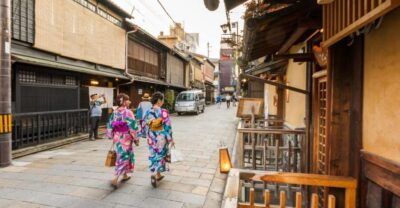 ★ 4.5Night Walk in Gion: Kyoto’s Geisha DistrictFrom $211h 40m
 ★ 5.0Kyoto Night Foodie Tour in Gion (9+ dishes + 6 Sake tastings)From $163
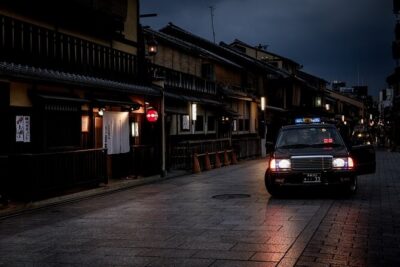 ★ 5.0Kyoto Gion Geisha District Walking Tour – The Stories of GeishaFrom $25