
Reviewed · GION & GEISHA WALKS
Kyoto: Gion Evening Walk with Hidden Gems, Geisha & Sake
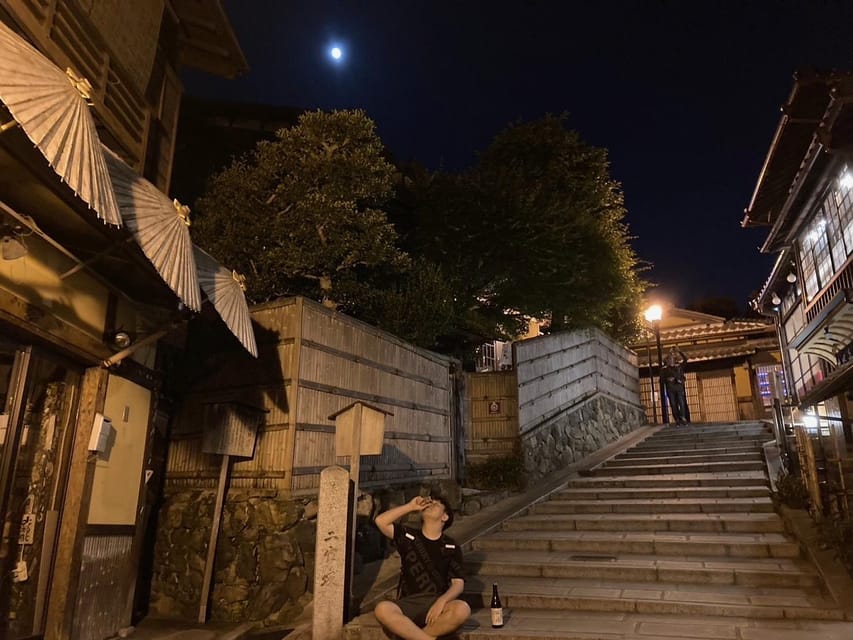
Gion feels most convincing after dark, when lanterns glow outside wooden tea houses and the day’s crowds thin out. This 90-minute evening walk takes you from Shijo Kiyamachi through Hanamikoji Street, Yasui Kompira-gū Shrine, Yasaka Pagoda, and Ninenzaka, ending at Yasaka Shrine.
I like the small group of no more than 10 people, which gives you room to ask about Geiko, Maiko, Shinto, food, or Kyoto life. I also like the simple sake touch: one local drink gives the walk a social feel without turning it into a formal tasting.
The main drawback is the short running time. You see several major sights, but mostly from outside, and the route keeps moving. You’ll need comfortable shoes, a prompt arrival, and realistic expectations about entering temples or seeing a Geiko in person.
In This Review
- Key points at a glance
- Why Gion works better at night
- Finding the meeting point on Shijo Kiyamachi
- Hanamikoji Street: Gion’s best-known tea-house road
- Yasui Kompira-gū and its unusual power stone
- Hōkan-ji Temple and Yasaka Pagoda after sunset
- Ninenzaka’s stone slope and old wooden houses
- Yasaka Shrine: a strong finish
- What the sake adds to the walk
- A compact route with a personal guide
- Is $32 good value for Kyoto?
- Who should book this evening walk?
- Practical tips before you go
- Should you book it?
- FAQ
- How long does the Gion evening walk last?
- What language is the tour conducted in?
- How many people can join the group?
- Where is the meeting point?
- Where does the tour finish?
- Is sake included?
- What should I bring?
- Can I cancel the booking?
Key points at a glance
- Gion after dark: Walk Hanamikoji and nearby lanes under soft lantern light, when the district feels quieter and more atmospheric.
- Four major Kyoto stops: See Yasui Kompira-gū Shrine, Hōkan-ji Temple’s Yasaka Pagoda, Ninenzaka, and Yasaka Shrine in one compact route.
- Small-group format: The group is limited to 10 people, with a conversational English-speaking guide.
- Sake included: Sip local sake as you walk, with the reminder to drink responsibly.
- Photo help: Your guide can help take pictures at key locations, so you do not have to rely only on quick snapshots.
- Good evening timing: Late start options can fit neatly after daytime sightseeing, dinner, or a visit elsewhere in Kyoto.
Why Gion works better at night
Gion is one of Kyoto’s most famous districts, but fame can work against it during the day. Hanamikoji Street and the lanes around Yasaka Pagoda can feel crowded, and it is harder to notice small details when people are stopping every few steps for pictures.
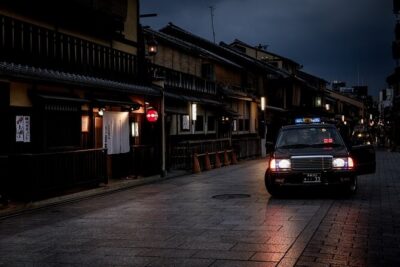
At night, the mood changes. Traditional wooden buildings catch the lantern light, voices tend to drop near homes and shrines, and the route feels more like a neighborhood walk than a sightseeing checklist. You should still expect other people around, especially near the best-known sights, but the evening setting gives the tour its real character.
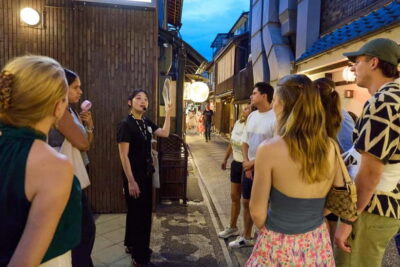
The guide explains the difference between Geiko and Maiko traditions, along with the customs of Gion’s tea-house district. The strongest part of this format is the chance to ask plain, practical questions. You can ask about the work of Geiko and Maiko, where to eat next, what to see in Kyoto, or even local interests beyond the standard history talk.
Several guides have been praised by name, including Shumpei and Nick. The guide assigned to your departure may differ, but the experience is built around a friendly local host rather than a long lecture. That matters in Gion, where a little context can help you behave respectfully and understand what you are seeing.
A few more Kyoto tours and experiences worth a look

Finding the meeting point on Shijo Kiyamachi
The meeting point is on Shijo Kiyamachi, not at Yasaka Shrine or inside Gion itself. Look for a guide holding an Otatrip Guide sign between McDonald’s and the Japanese restaurant Kikunoi Roan, a little south along Kiyamachi Street.
The activity information also gives the starting location as 90-3 Shinchō. Use the named businesses and the sign as your main visual clues, and allow extra time to locate the exact spot. Shijo Kiyamachi is a busy area, and a few minutes spent searching can quickly become a problem.
The walk starts promptly. This is important because the group may leave on time even if someone is late. One past group arrived late but was still welcomed warmly, yet you should not count on that outcome. Arriving early is the sensible choice.
The finish is at 八坂神社, or Yasaka Shrine. That gives you a useful position for continuing your evening in eastern Gion, though the tour does not include transportation back to your hotel.
Hanamikoji Street: Gion’s best-known tea-house road
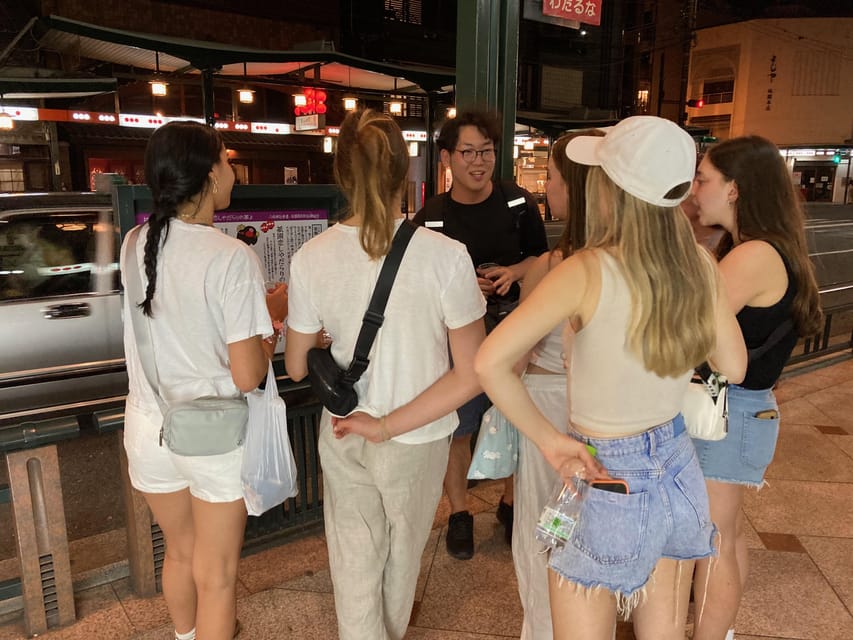
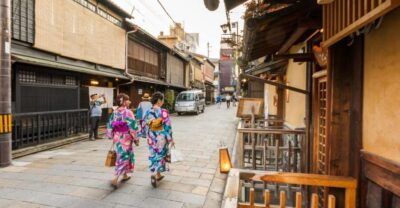
The first major stretch takes you into Gion and Hanamikoji Street. This is the district most people picture when they think of Kyoto’s Geisha quarter: narrow lanes, wooden facades, tea houses, and carefully maintained traditional architecture.
The guide’s role here is not simply to point out attractive buildings. You’ll learn why the district has such strict customs and why quiet behavior matters. Some buildings are private or operate as tea houses, so the walk is also a lesson in seeing Gion without treating it like a theme park.
Do not assume that a Geiko or Maiko sighting is guaranteed. One participant did see two Geisha during a walk, but that was a fortunate moment, not a promised feature. The value of this section is the setting and the explanation of the culture, not a staged encounter.
Keep your camera ready, but use it with care. Photography can be tempting on Hanamikoji, especially when a figure in traditional dress passes by. Your guide can help you get better photos at suitable stops, but you should follow instructions and avoid blocking lanes or photographing people without permission.
The route moves at a relaxed pace, with about 15 minutes set aside for the Gion section. That is enough for an introduction and several photo pauses, but not enough for a full tour of every lane or tea house.
Yasui Kompira-gū and its unusual power stone
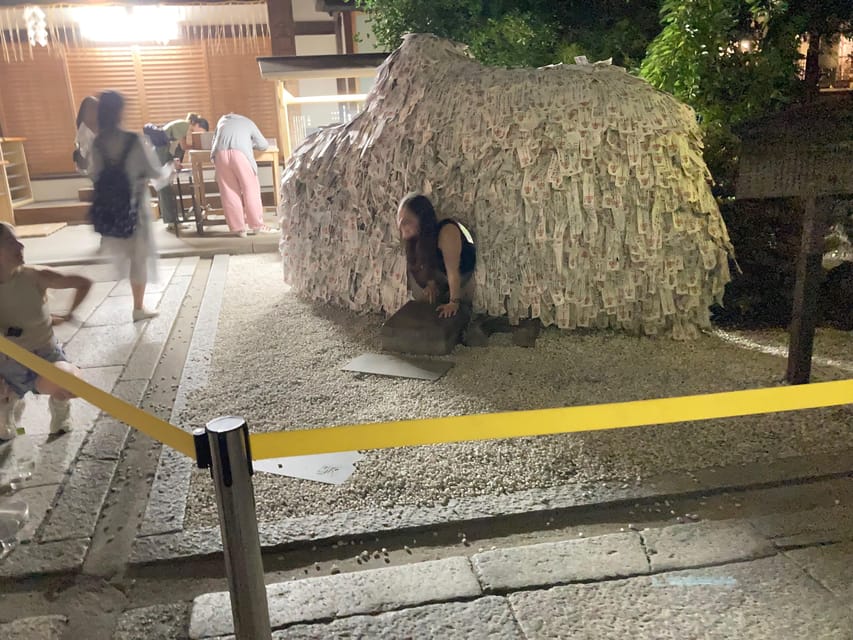
Next comes Yasui Kompira-gū Shrine, a smaller and more distinctive stop. It is known for a power stone associated with cutting bad ties and building good ones. The idea gives this shrine a different feel from the grander sites later in the walk.
Your guide explains how people use the shrine and places it within Kyoto’s wider Shinto traditions. This is a good example of why a guide helps. Without context, the stone may look like an unusual object with people passing through it. With an explanation, it becomes a window into how personal hopes and religious practice meet in everyday Japan.
The stop lasts about 10 minutes. That is enough to hear the story, look around, and take photographs. It is still a sacred space, so keep your voice low and follow the guide’s lead.
This part may appeal most to you if you like local customs and small religious sites more than grand monuments. It is not the biggest or most famous stop, but it adds variety to the route.
Hōkan-ji Temple and Yasaka Pagoda after sunset
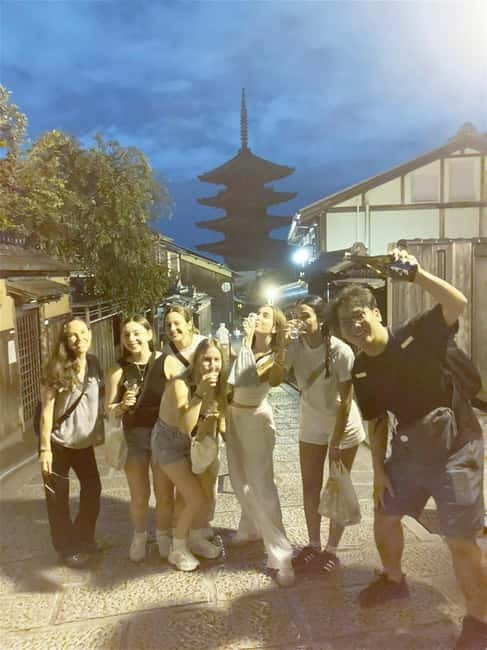
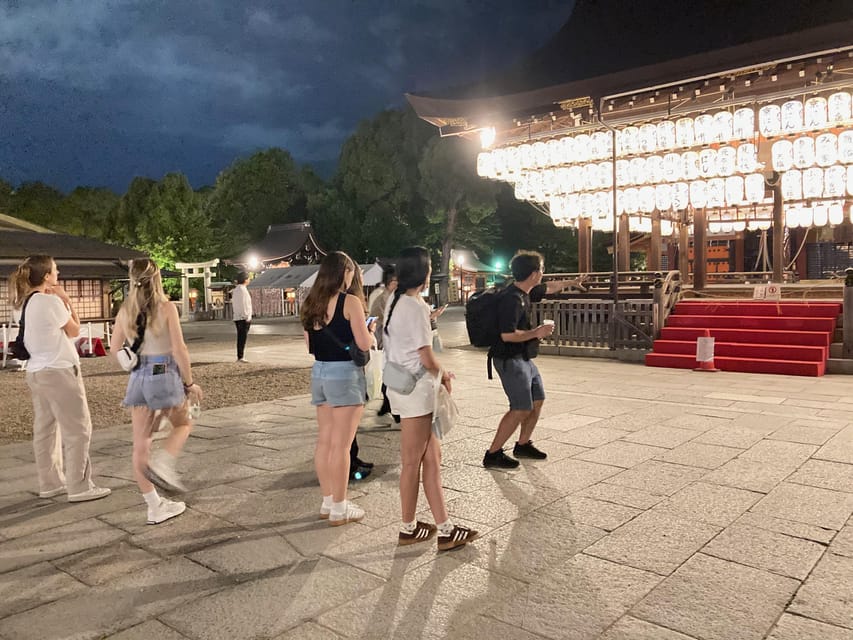
Hōkan-ji Temple is home to Yasaka Pagoda, one of Kyoto’s most recognizable sights. The five-story structure is especially photogenic at night, when it is lit against the darker streets around it.
The tour treats this as a photo stop and guided visit, lasting around 10 minutes. Based on the supplied details, you should expect to admire the pagoda from the route rather than receive a lengthy temple visit. Do not book this walk expecting extended access to the pagoda interior or a full temple tour.
The evening timing is the real advantage. During daylight, this area can be packed with people taking pictures on the approach. At night, the space is often calmer and the lighting adds a softer look. Rain can make the stones shine and quiet the streets even more, though wet weather also makes the walking surface less comfortable.
This is one place where photo assistance has practical value. A guide can help frame the pagoda, place you in the picture, and keep the stop moving so the group does not spend the entire evening around one landmark.
Other sake brewery and tasting tours in Kyoto



Ninenzaka’s stone slope and old wooden houses
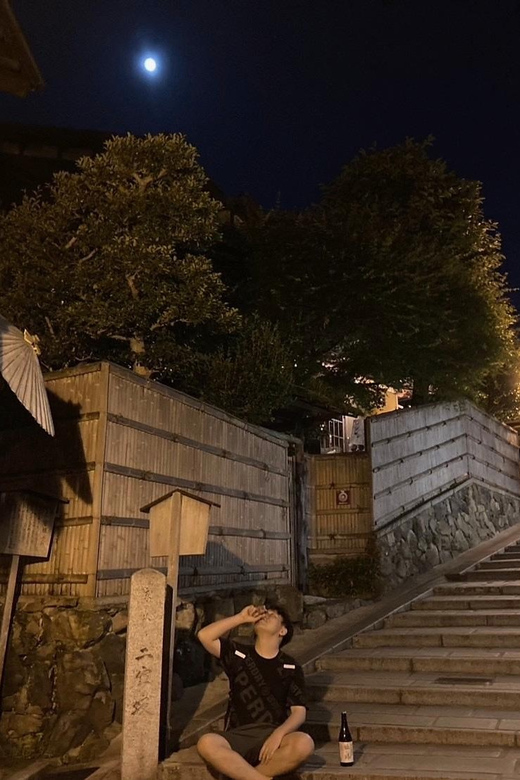
From Yasaka Pagoda, the route continues to Ninenzaka, a traditional cobblestone slope lined with wooden townhouses. In daylight, its shops and architecture make it one of Kyoto’s most popular walking areas. At night, closed storefronts and reduced foot traffic change the emphasis from shopping to streetscape.
You’ll walk rather than linger for a long time, with about 10 minutes planned here. That is enough to appreciate the slope, hear about the surrounding district, and take a few pictures. The uneven surface is also the clearest reason to wear comfortable shoes.
Ninenzaka can be slippery in rain, and the route includes several walking sections. The activity is not suitable for people with back problems, and it is not a good match if you need frequent seated breaks. You should also be comfortable walking through areas where the pavement is not smooth.
The short stop works well as part of a first look at eastern Gion. If you want to shop, enter stores, or explore every side street, you’ll need to return independently at another time.
Yasaka Shrine: a strong finish
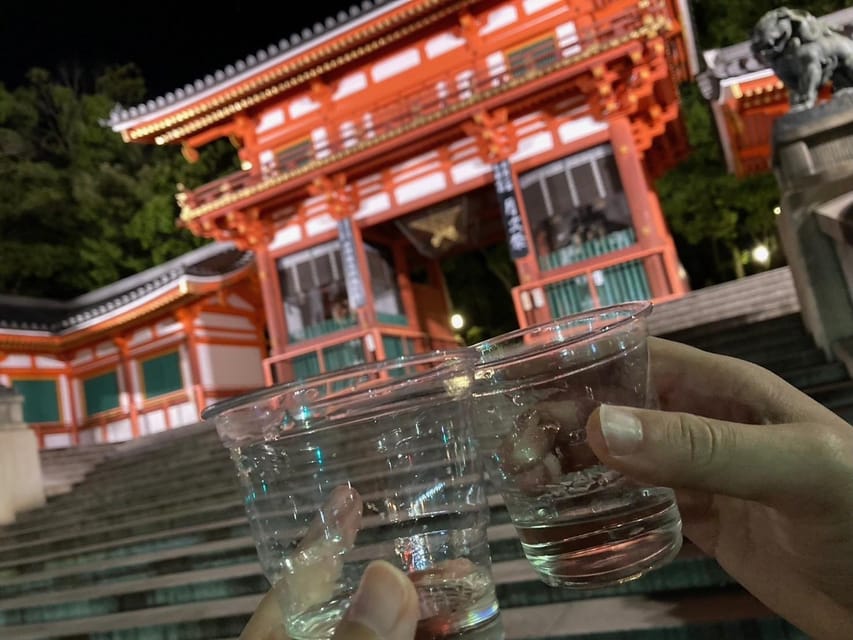
The walk ends at Yasaka Shrine, a major spiritual landmark connected with Gion for more than 1,300 years. It is a fitting final stop because the shrine gives the evening a broad sense of place after the narrower streets and smaller shrine earlier in the route.
The tour does not list a separate timed visit here, so the finish is best understood as the endpoint rather than a long guided exploration of the whole shrine complex. You can use the location to continue your own evening, perhaps with dinner or a further walk through Gion, but those arrangements are not part of the activity.
Ending here also helps with orientation. If you began near Shijo Kiyamachi, the route has carried you east through the district and toward one of Kyoto’s main landmarks. You finish in a place that is easy to recognize on a map and useful for planning the next part of your night.
What the sake adds to the walk
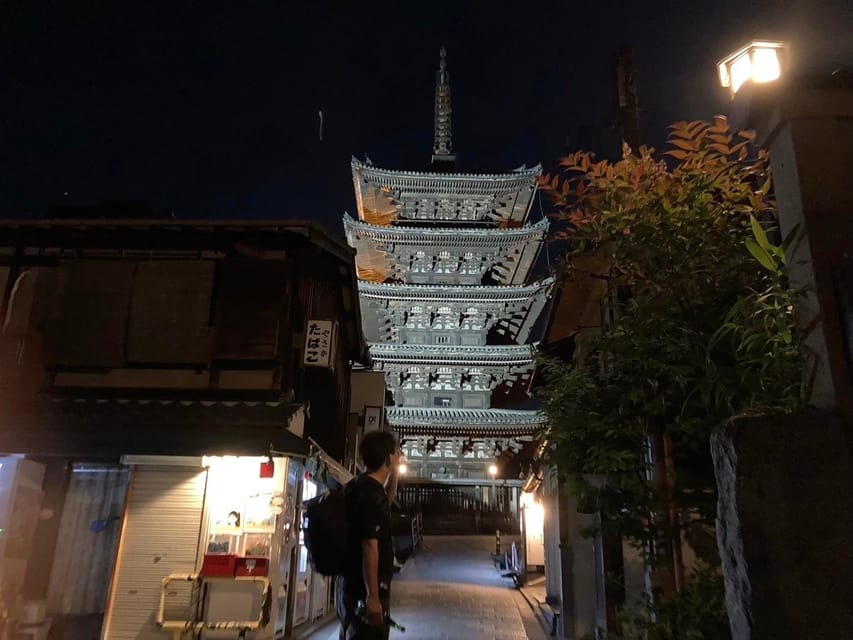
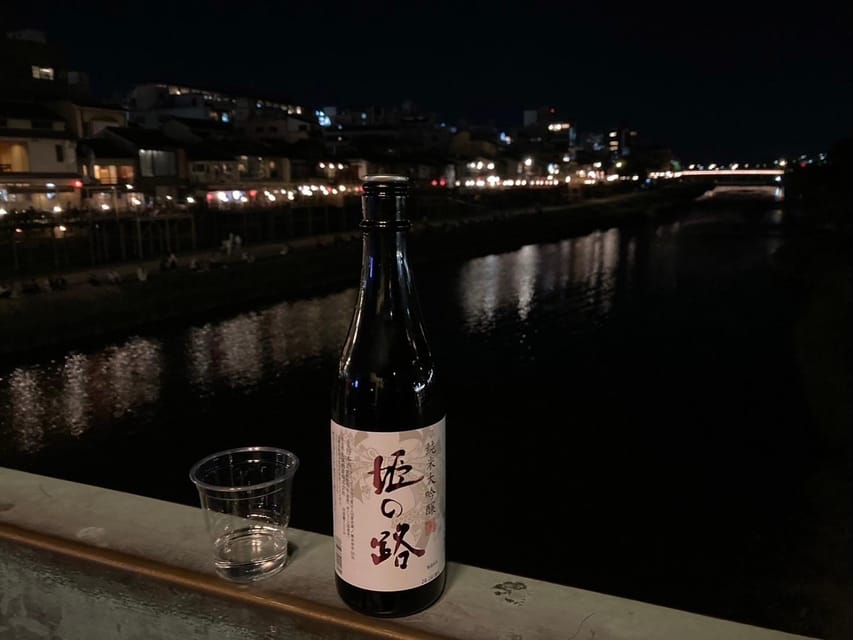
A cup of local sake is included, and you can enjoy it as you stroll. This is not presented as a specialist tasting with a detailed lesson about breweries, varieties, or production methods. Think of it as a small local drink that makes the walk feel less formal.
The sake was repeatedly singled out as a pleasant part of the experience, and one guide in particular was described as generous with it. That does not mean you should expect unlimited servings. The practical approach is to enjoy the included drink at a comfortable pace and remain respectful around shrines and residential streets.
If you do not drink alcohol, the supplied information does not specify a substitute. You should check before booking if that matters to you. Smoking is not allowed during the activity.
The sake also changes the social side of the tour. You have a natural moment to chat with the guide and other members of the group, rather than simply moving from one explanation to the next. Some people continued for food or another drink after the walk, but that is optional and not included.
A compact route with a personal guide

The tour covers a lot in 70 to 90 minutes, with the advertised duration set at 90 minutes. The stops are tightly arranged, which keeps the walk efficient but leaves little spare time. I would treat it as an introduction to Gion, not a complete study of the district.
The small-group limit of 10 is a major practical benefit. In a large group, questions can be difficult and photo stops become slow. Here, you have a better chance to speak directly with the guide, and the guide can adjust the conversation to the group’s interests.
The English-language guiding is described as conversational and plain. That is useful when topics can become complicated, especially the differences between Geiko and Maiko life, the relationship between Shinto and Buddhist sites, and the customs of Gion’s tea-house world.
Guide quality matters more than usual on a walk like this because the route itself is easy to follow. A map can take you to Hanamikoji, Yasaka Pagoda, Ninenzaka, and Yasaka Shrine. The guide earns the $32 price by adding context, answering questions, helping with photos, and making the evening feel comfortable.
The experience has earned a rating of 5 from 41 reviews, with especially strong praise for friendly guides, useful explanations, relaxed pacing, and the intimate group size. Those strengths are consistent with what the activity promises. Still, the guide assigned to your departure can affect the tone, and the route cannot guarantee a Geiko sighting or private access to restricted places.
Is $32 good value for Kyoto?
At $32 per person, this is fairly priced for a 90-minute guided walk with a local sake included. You are paying less for entry tickets and more for the guide’s time, local explanations, route planning, photo help, and the ease of seeing several important places in one evening.
The value is strongest if you are visiting Kyoto for the first time. You can see the main Gion sights without spending your first night trying to work out which lane leads where. The advice you receive may also help with the rest of your stay, especially if you ask about food or nearby places to visit.
It is less useful if you have already explored Gion thoroughly and prefer to move at your own pace. You may want more time at each shrine, more shopping time in Ninenzaka, or a longer sake-focused activity. This tour is deliberately compact.
The free-cancellation policy allows a full refund when you cancel at least 24 hours ahead, and you can reserve now and pay later. Those terms make it easier to place the walk in a busy Kyoto schedule, though you still need to check available start times before booking.
Who should book this evening walk?
I would choose this tour if you want a friendly introduction to Gion, prefer smaller groups, and like learning through conversation rather than a formal speech. It suits solo visitors, couples, friends, and curious first-time visitors who want a little local guidance before exploring on their own.
It is also useful for people with limited time. In one short outing, you cover Hanamikoji, Yasui Kompira-gū, Yasaka Pagoda, Ninenzaka, and Yasaka Shrine. The late timing can fit after other sightseeing, which one participant found especially helpful.
You should think twice if you have back problems, dislike walking on uneven streets, or want a guaranteed Geiko encounter. The route is outdoors, the tour starts promptly, and the evening is about seeing and understanding the district rather than entering every landmark.
Practical tips before you go
Arrive early at Shijo Kiyamachi and look for the Otatrip Guide sign between McDonald’s and Kikunoi Roan. Wear shoes that will be comfortable on cobblestones and sloped streets.
Keep your voice low near homes and sacred places. Bring a camera if you like, but let the guide handle photo timing and follow local rules around Geiko, Maiko, residents, and businesses.
If rain is forecast, prepare for a more slippery walk. Wet weather may make Gion quieter, but it will not make the uneven route easier. Keep the sake to a sensible pace, especially since the tour continues on foot.
Should you book it?
Book it if you want Gion’s best-known sights in a quiet evening setting, plus a local guide who can answer questions and help with photos. The combination of a 10-person limit, a well-planned route, and an included sake makes $32 a sensible spend for a first visit.
Skip it if you want long temple visits, shopping time, guaranteed Geiko sightings, or a serious sake seminar. For most first-time Kyoto visitors who have one free evening and want an easy, sociable introduction to Gion, this walk makes a strong choice.
FAQ
How long does the Gion evening walk last?
The advertised duration is 90 minutes. The walking portion is described as lasting 70 to 90 minutes, depending on the activity schedule.
What language is the tour conducted in?
The live tour guide speaks English.
How many people can join the group?
The small-group tour is limited to 10 participants.
Where is the meeting point?
Meet on Shijo Kiyamachi. The guide will hold an Otatrip Guide sign between McDonald’s and Kikunoi Roan, a little south along Kiyamachi Street. The listed starting location is 90-3 Shinchō.
Where does the tour finish?
The walk finishes at Yasaka Shrine, written as 八坂神社 in the activity details.
Is sake included?
Yes. A cup of local sake is included to enjoy during the walk.
What should I bring?
Bring comfortable shoes. The route includes walking through Gion, Ninenzaka, and other streets with uneven surfaces.
Can I cancel the booking?
You can cancel up to 24 hours in advance for a full refund. The activity also offers reserve-now-and-pay-later booking.
More Sake Brewery Tours in Kyoto
More Sake Brewery Tours in Kyoto
More Gion & Geisha Walks in Kyoto
More tours in Kyoto we've reviewed




Gion & Geisha Walks, compared.
 ★ 4.7Kyoto Geisha Walking Tour: Gion District & Hidden GemsFrom $252 hours
 ★ 4.7Kyoto: Gion Geisha District Walking Tour – Stories of GeishaFrom $202 hours
 ★ 4.9Best of Kyoto: Gion, Geisha, Pagodas & CobblestonesFrom $242 hours
 ★ 4.5Night Walk in Gion: Kyoto’s Geisha DistrictFrom $211h 40m
 ★ 5.0Kyoto Night Foodie Tour in Gion (9+ dishes + 6 Sake tastings)From $163
 ★ 5.0Kyoto Gion Geisha District Walking Tour – The Stories of GeishaFrom $25