
Reviewed · GION & GEISHA WALKS
Kyoto Gion Walking Tour for First Time Visitors
Gion is easiest to understand on foot, but its narrow lanes and quiet temple corners can be easy to miss. This two-hour small-group walk connects the district’s best-known sights with lesser-seen stops, giving you a useful first look at Kyoto’s traditional center.
I like the clear route from Gion toward Yasaka Shrine, and I like that guide Jay uses maps and pictures to make his explanations easier to follow. The group is capped at 15, which keeps the walk more personal than a large city tour. The main drawback is that two hours is enough for an introduction, not a slow visit inside every temple.
In This Review
- Key details before you book
- Why this Gion walk works for first-time visitors
- Starting among Gion’s wooden streets
- Kennin-ji and the Zen side of Kyoto
- A small shrine with a very specific purpose
- Hōkan-ji and the famous Yasaka Pagoda view
- Ninenzaka and the pleasure of walking slowly
- Ending at Yasaka Shrine
- What Jay adds to the walk
- Timing, meeting point, and practical planning
- How the $20 price measures up
- Who should book this Kyoto walk
- Should you book it?
- FAQ
- How long does the Kyoto Gion Walking Tour last?
- How much does the tour cost?
- What places does the walking tour visit?
- Where does the tour start?
- Where does the tour end?
- Is this a private tour?
- Are admission fees included?
- Are snacks included?
- What happens if the weather is poor?
Key details before you book
- Jay’s map-and-picture approach: Guide Jay is praised for clear English, detailed explanations, and using visual aids to explain Kyoto.
- Six central Kyoto stops: The route includes Gion, Kennin-ji, Yasui-Konpiragu, Hōkan-ji Temple, Ninenzaka, and Yasaka Shrine.
- A useful first-day orientation: You finish at Yasaka Shrine, close to the main sights of eastern Gion and Higashiyama.
- Small group, maximum 15 people: This is a manageable size for questions and street-level explanations.
- Good value at $20: Fees and taxes are included, and the tour uses a mobile ticket. Snacks are not included.
- Outdoor plan: The activity requires good weather, with free cancellation available up to 24 hours before the start.
Why this Gion walk works for first-time visitors
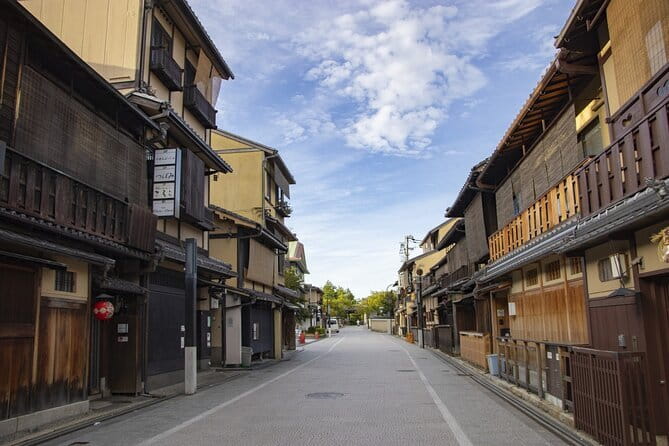
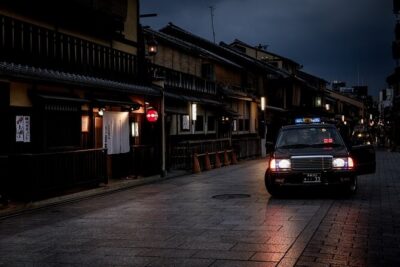
Gion can look simple on a map, but its character changes from one lane to the next. You move from preserved wooden machiya houses and teahouse streets to temple grounds, small shrines, stone-paved slopes, and one of Kyoto’s best-known pagodas.
That mix is the tour’s main strength. You are not only checking off famous sights. You are getting a basic explanation of how the area works, why certain streets look the way they do, and how Shinto shrines differ from Buddhist temples.
The route also helps you get oriented for later independent exploring. After the walk, you will know where Gion ends, where Higashiyama begins, and how Yasaka Shrine connects the two areas.
The tour costs $20 per person. For that price, you are mainly paying for navigation and interpretation rather than admission, since the listed stops are free to enter. I consider that fair if you are arriving in Kyoto without much background and want a strong introduction before setting out on your own.
A few more Kyoto tours and experiences worth a look

Starting among Gion’s wooden streets
The walk begins at the Kyoto Tourist Lounge Gion, at 557-4 Komatsu Cho. From there, the first stop is Gion itself, Kyoto’s best-known geisha district.
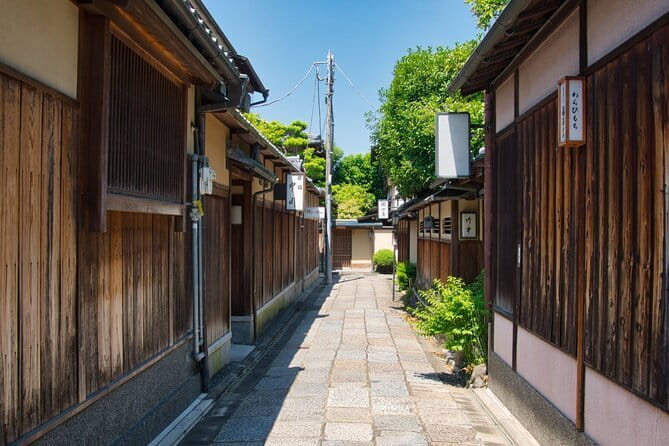
The appeal here is not one single monument. It is the feel of the streets: wooden machiya townhouses, traditional teahouses, narrow lanes, and cobblestones. The guide’s role matters because the district is easy to admire without understanding. A good explanation gives meaning to the buildings and helps you notice details you might otherwise pass without a second look.
Expect about 20 minutes in Gion. That is long enough for an introduction and some street-level orientation, but not enough for an exhaustive tour of every lane. You should also remember that Gion is a working neighborhood, not a stage set. Keep voices low, avoid blocking entrances, and do not photograph people without permission.
This is a particularly useful opening for first-time visitors because it gives you a sense of place before the route moves toward individual temples and shrines.
Kennin-ji and the Zen side of Kyoto
Next comes Kennin-ji, one of Kyoto’s oldest Zen Buddhist temples. It was founded in 1202 by Eisai, the monk associated with bringing Zen Buddhism and tea culture to Japan.
The stop lasts about 15 minutes. That short visit is best understood as a focused introduction rather than a full temple tour. The guide can explain why Kennin-ji matters and how Zen Buddhism shaped Japanese cultural life, including the connection with tea.
This stop adds welcome balance to the Gion streets. Gion is associated with teahouses and traditional entertainment, while Kennin-ji gives you a quieter Buddhist setting close by. The contrast helps you see that Kyoto’s old districts are not just collections of photogenic streets. Religious institutions helped shape the daily life and customs of the city.
Admission is listed as free for the tour. Still, the schedule does not promise a long interior visit or extended time on the grounds, so you should treat Kennin-ji as one part of a wider introduction.
Guide Jay’s strength, according to the supplied comments, is explaining this kind of cultural material in clear English. One particularly useful detail is his habit of using maps and pictures. That can make names, locations, and religious traditions easier to keep straight, especially early in a Japan trip when every shrine and temple may sound unfamiliar.
A small shrine with a very specific purpose
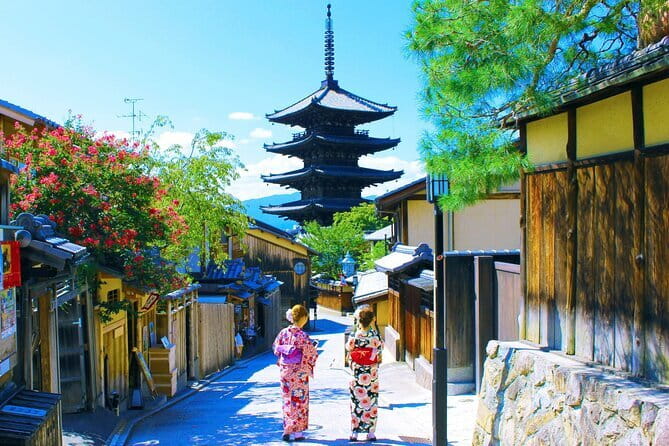
Yasui-Konpiragu is a small Shinto shrine near Gion. It is known for its enkiri and enmusubi stone, associated with cutting harmful ties and forming beneficial ones.
The stop is scheduled for about 15 minutes. This is the sort of place you could easily pass while walking between larger sights. That gives the shrine real value on this route. It shows you a more intimate side of Kyoto’s religious life, where people visit with particular hopes and personal concerns.
The shrine also helps explain why not every important Kyoto site is grand or monumental. A small neighborhood shrine can have a strong local role even when it lacks the scale of Yasaka Shrine or Kennin-ji.
You may find this stop more interesting if you enjoy learning how religious customs connect with everyday life. If your main goal is architecture, it may feel less dramatic than the pagoda or temple grounds. The guide’s explanation is what turns it from a quick photo stop into a worthwhile part of the walk.
Hōkan-ji and the famous Yasaka Pagoda view
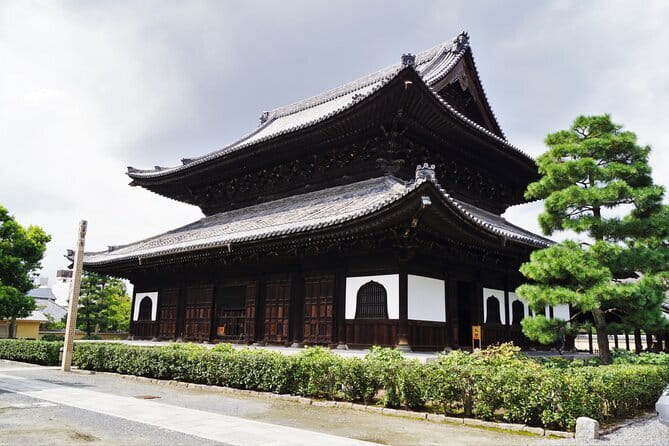
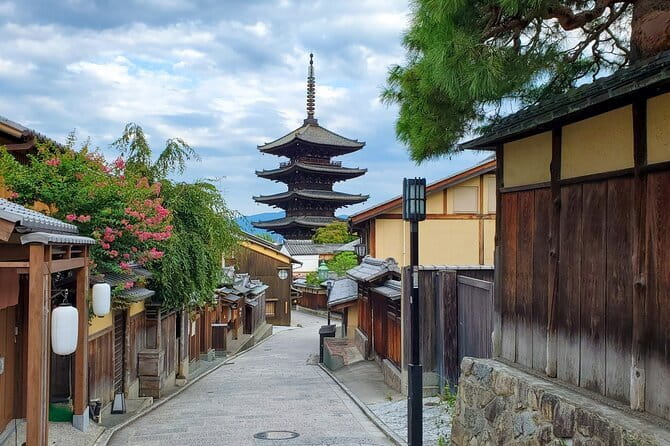
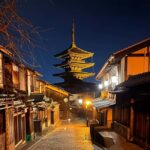
The route then reaches Hōkan-ji Temple, better known as Yasaka Pagoda. The five-story pagoda is one of the most recognizable sights in the Higashiyama area, rising above the traditional streets.
The planned stop is about 10 minutes. That is enough to appreciate the setting and take in the pagoda’s relationship to the surrounding streets, but it is a short window. If you want extensive photography time, you may need to return later on your own.
This part of Kyoto is popular because the pagoda, old buildings, and stone streets create a classic view of the city. It can also be crowded, so a guide helps you move through the area without wasting time on navigation. The small group limit is useful here. A group of 15 or fewer is easier to keep together on narrow streets than a large procession.
Do not expect this stop to function as a long temple visit. Its main purpose is orientation, context, and the chance to see one of Higashiyama’s signature landmarks as part of a connected walking route.
Other walking tours we've reviewed in Kyoto
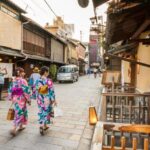




Ninenzaka and the pleasure of walking slowly
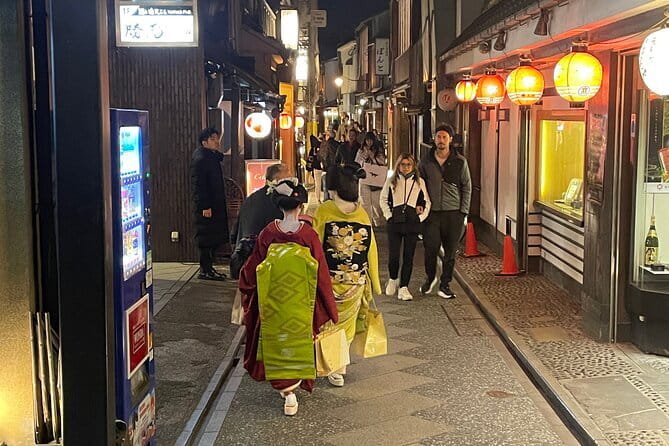
Ninenzaka is a historic stone-paved slope lined with traditional architecture and shops. It connects the wider Higashiyama area with some of Kyoto’s most familiar sights.
The scheduled visit lasts about 10 minutes. Again, this is an introduction rather than a shopping period. You will have time to see the street and understand its place in the neighborhood, but you may want to return later if you wish to browse carefully.
Ninenzaka can be more demanding than it looks. The slope and stone paving call for comfortable shoes, and the area can become crowded. The route is still manageable for most people, since the total walk lasts about two hours and most travelers can participate, but anyone who dislikes walking on uneven surfaces should plan accordingly.
I like this section because it links the major sights together. Kyoto is at its best when you walk between temples instead of treating each one as an isolated stop. Ninenzaka gives you that connecting experience, even though the planned time here is brief.
Ending at Yasaka Shrine

The tour ends at Yasaka Shrine, at 625 Gionmachi Kitagawa. Also called Gion Shrine, it is one of Kyoto’s major Shinto shrines and sits at the eastern edge of the Gion area.
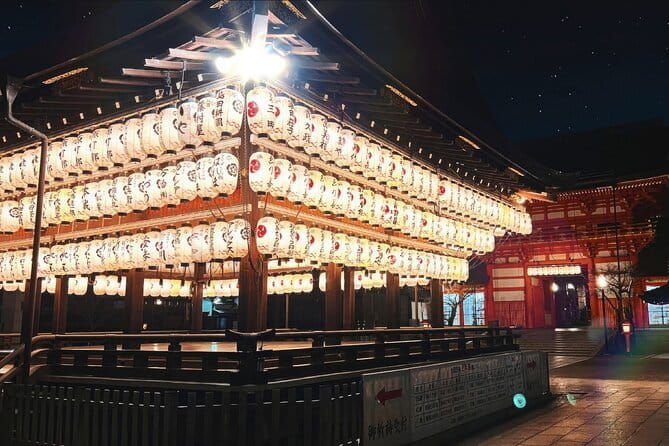
The visit is scheduled for about 10 minutes. You will see the shrine’s vermilion gates and lanterns, then finish in a part of Kyoto that is useful for continued independent sightseeing.
Ending here is practical. You are not left in an obscure side street, and the shrine provides a clear landmark for the rest of your day. From this area, you can decide to continue through Gion, return toward the Higashiyama streets, or simply stop and review the route on your own map.
The short timing means you should not expect a detailed examination of every shrine building. The value is the placement of the ending and the guide’s explanation of why Yasaka Shrine is important.
What Jay adds to the walk
The strongest praise for this experience centers on guide Jay. His English is described as excellent, and his explanations cover both history and culture rather than just giving directions.
His use of maps and pictures is a useful touch. Kyoto has many place names, overlapping districts, and religious sites, so a visual explanation can save you from losing track of where you are. Jay is also described as making time for questions, which matters on a small-group walk.
That said, the exact guide may depend on the date you book. Jay is the guide specifically praised in the supplied feedback, but the experience is operated by Localized Walking & Food Tours, so you should not assume every departure will have him.
The group size is limited to 15 people. That is not a private tour, but it is small enough to hear a guide more easily and ask questions without stopping a huge crowd. If you prefer a completely private pace, this is not that product. If you want company without a packed group, it is a sensible middle ground.
Timing, meeting point, and practical planning
The walk lasts about two hours. The listed stop times add up to roughly 80 minutes, leaving the rest for walking between sites, explanations, questions, and short pauses.
That pace is fairly brisk. You will see six important places, but you will not have a long, unhurried visit at each one. I would schedule this early in your Kyoto stay, then return to the sights you liked best for a slower look.
The tour starts at the Kyoto Tourist Lounge Gion. The full address is 557-4 Komatsu Cho, Pare Gion 101, Higashiyama Ward, Kyoto. The end point is Yasaka Shrine, 625 Gionmachi Kitagawa.
The experience is near public transportation, and a mobile ticket is provided. Confirmation arrives at booking, so keep the ticket available on your phone and check the meeting address carefully before setting out.
Wear shoes suited to walking. Gion, Hōkan-ji, and Ninenzaka include narrow or stone-paved streets, and the route includes several outdoor areas. Snacks are not included, so plan to eat before or after the walk rather than expecting refreshments along the way.
Service animals are allowed, and most people can participate. The tour requires good weather. If poor weather causes a cancellation, you are offered another date or a full refund.
How the $20 price measures up
At $20, this is an inexpensive way to add structure to your first look at Gion. You receive an in-person guide, and all fees and taxes are included. The main thing you do not receive is food, so the price is easy to understand: you are paying for a guided orientation, not a meal or a ticketed temple program.
The value depends on how much context you want. If you are comfortable navigating Kyoto, reading about the sights beforehand, and finding small shrines on your own, you may prefer to explore independently. If you want someone to connect the district’s streets, temples, and shrines, $20 is modest for two hours of help.
The 97 percent recommendation rate and 4.9 rating from 37 reviews point to a strong record, with Jay’s communication and depth of explanation receiving the clearest praise. Ratings are not a guarantee of your exact departure, but they support the idea that the guide is the central value here.
Who should book this Kyoto walk
I would recommend it most strongly to first-time Kyoto visitors who want an introduction without committing to a full-day tour. It suits people who enjoy cultural explanation, want help with orientation, and prefer a small group to a large bus-style outing.
It also works well for anyone arriving in Kyoto with limited time. In two hours, you see Gion, a Zen temple, a small Shinto shrine, the Yasaka Pagoda area, Ninenzaka, and Yasaka Shrine. That is a useful sweep of eastern Kyoto.
You may want something else if you need extensive time inside each temple, a food component, a private guide, or a slow photography walk. The route is designed to connect many sights, so its strength is range and context rather than long stays.
Should you book it?
Book this tour if you want to get your bearings quickly and understand the difference between Kyoto’s geisha district, Buddhist temples, Shinto shrines, and Higashiyama’s old streets. The $20 price, small group, mobile ticket, and central ending at Yasaka Shrine make it an easy addition to an early Kyoto itinerary.
Skip it if you already know Gion well or prefer setting your own pace. For most first-time visitors, though, the combination of six major stops and Jay’s map-based explanations offers a practical start, with enough time left afterward to revisit the places that caught your eye.
FAQ
How long does the Kyoto Gion Walking Tour last?
The tour lasts approximately two hours.
How much does the tour cost?
The price is $20 per person.
What places does the walking tour visit?
The route includes Gion, Kennin-ji Temple, Yasui-Konpiragu Shrine, Hōkan-ji Temple and Yasaka Pagoda, Ninenzaka, and Yasaka Shrine.
Where does the tour start?
The meeting point is Kyoto Tourist Lounge Gion at 557-4 Komatsu Cho, Pare Gion 101, Higashiyama Ward, Kyoto, Japan.
Where does the tour end?
The tour ends at Yasaka Shrine, 625 Gionmachi Kitagawa, Higashiyama Ward, Kyoto.
Is this a private tour?
No. It is a small-group walking tour with a maximum of 15 people.
Are admission fees included?
All fees and taxes are included, and the listed stops have no admission charge for the tour.
Are snacks included?
No. Snacks are not included.
What happens if the weather is poor?
The experience requires good weather. If it is canceled because of poor weather, you are offered a different date or a full refund. You can also cancel for a full refund up to 24 hours before the start time.
More Walking Tours in Kyoto
More Gion & Geisha Walks in Kyoto

More tours in Kyoto we've reviewed




Gion & Geisha Walks, compared.
 ★ 4.7Kyoto Geisha Walking Tour: Gion District & Hidden GemsFrom $252 hours
 ★ 4.7Kyoto: Gion Geisha District Walking Tour – Stories of GeishaFrom $202 hours
 ★ 4.9Best of Kyoto: Gion, Geisha, Pagodas & CobblestonesFrom $242 hours
 ★ 4.5Night Walk in Gion: Kyoto’s Geisha DistrictFrom $211h 40m
 ★ 5.0Kyoto Night Foodie Tour in Gion (9+ dishes + 6 Sake tastings)From $163
 ★ 5.0Kyoto Gion Geisha District Walking Tour – The Stories of GeishaFrom $25