
Reviewed · ARASHIYAMA & BAMBOO TOURS
Bamboo LED Lantern Making Experience in Kyoto Arashiyama
Arashiyama’s bamboo forest is beautiful, but the usual visit can end with a few photos and a crowded walk back to the station. This three-hour craft session gives you something more lasting: a bamboo LED lantern made with your own hands, in the home workshop of guide Noriko and her husband. I like the short forest walk and the chance to hear about bamboo from someone who works with it every day. I also like the small-group format, capped at six people in the practical booking details, so the instruction stays personal.
The main consideration is that you work with fresh bamboo, which may still contain moisture. One earlier participant reported mold after the lamp was wrapped for the journey, and the host acknowledged the problem, explaining that a heated, dried bamboo option would be introduced. Ask which material is being used when you book, and let the finished piece dry properly before sealing it away.
In This Review
- Key points at a glance
- From Saga-Arashiyama Station into the bamboo
- Choosing your bamboo and your design
- Drilling a lantern by hand
- Why the family setting matters
- The finished LED lantern and the bamboo question
- What $79.26 buys you
- Who should book this afternoon
- Planning the afternoon without rushing
- Should you book the bamboo lantern class?
- FAQ
- Where does the bamboo lantern experience begin?
- What time does the activity start?
- How long does the experience last?
- Where does the experience end?
- What can I make during the workshop?
- Are materials and tools included?
- What is the cancellation policy?
Key points at a glance
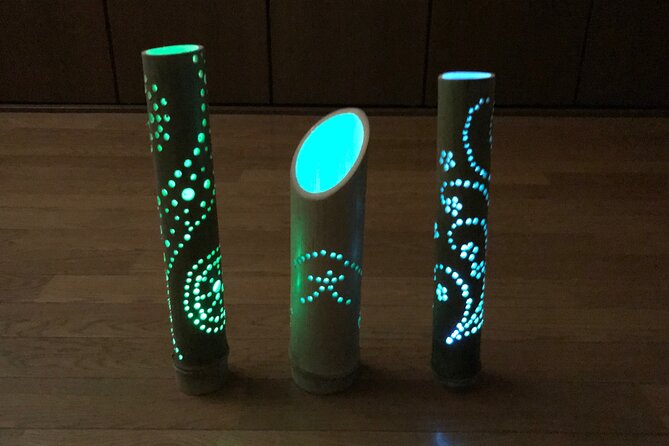
- A bamboo walk with a purpose: Noriko leads you through part of the Arashiyama Bamboo Forest and explains the plant, local culture, and nearby sights.
- A handmade Kyoto souvenir: You choose a bamboo piece and make a lantern, sake cup, teacup, sake bottle, smartphone holder, or another offered craft.
- Small and personal: The activity is designed for a small group, with the practical information listing a maximum of six people.
- Friendly family workshop: Noriko and her husband provide the instruction, help with cutting and drilling, and answer questions in English.
- Good for families: Children have taken part with close help from the adults, including an 11-year-old and a 7-year-old.
- Useful timing: The 2 p.m. start works well after a morning in Kyoto, though you should allow time to reach Saga-Arashiyama Station.
From Saga-Arashiyama Station into the bamboo
Your afternoon begins at 2 p.m. outside Saga-Arashiyama Station, at 11-1 Sagatenryūji Kurumamichō in Kyoto’s Ukyo Ward. The activity ends back at the same meeting point, which makes it easier to plan a train ride or dinner afterward.
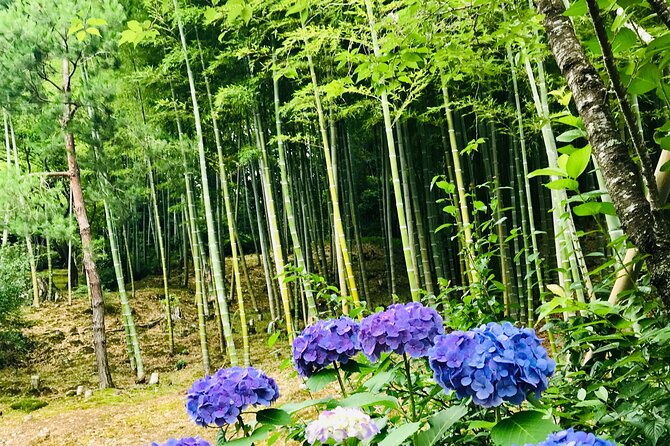
From the station, Noriko takes you toward the Bamboo Forest Trail. This is not simply a transfer to the workshop. The walk is part of the lesson, and she explains how bamboo grows, how it is used, and why it matters in Arashiyama.
The forest itself is one of Kyoto’s most photographed sights. It can also be crowded, especially around the best-known path. This activity does not promise an empty bamboo grove, and you should not expect a private forest tour. The benefit is that the walk gives you a reason to look beyond the famous green corridor and pay attention to the plant itself.
The route may include a shrine and quieter neighborhood streets before you reach the workshop. That change of pace is useful. You get the familiar Arashiyama sight, then move away from the busiest section and see a more ordinary side of the area.
Noriko’s English is described as very good, and she has been praised for explaining both bamboo and the local area clearly. If you have questions about Japanese customs, nearby temples, or the way bamboo is used in daily life, this is a natural time to ask them.
A few more Kyoto tours and experiences worth a look



Choosing your bamboo and your design
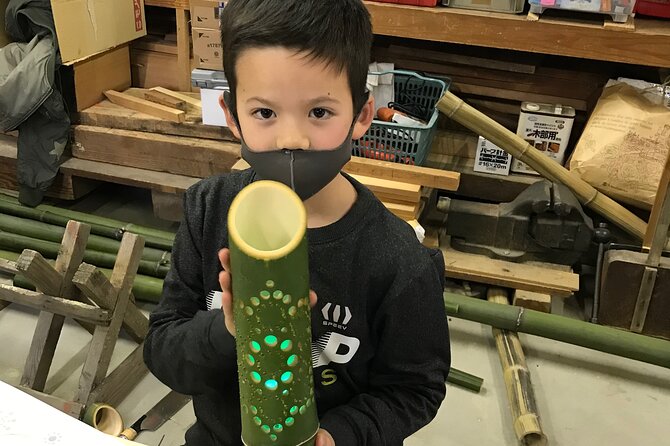
At the family workshop, you begin by selecting the type of object you want to make. The LED lantern is the main attraction, but the available choices can include a sake cup, sake bottle, teacup, smartphone holder, or another bamboo item.
For a lantern, you choose a piece of bamboo and decide on a pattern. Paper templates are provided, so you do not need to arrive with an art degree or a perfect plan. You can use one of the prepared designs, modify it, or create something of your own.
This choice is one of the activity’s strongest features. A standard souvenir has a fixed shape and a fixed story. Here, the finished lantern reflects at least some of your decisions. If you want a more personal result, think about a simple design before arriving. A few participants wished they had prepared an idea in advance, although the ready-made patterns provide a good starting point.
The workshop is described as clean, bright, and well organized. Materials, tools, and the machines needed for the craft are included in the price. You do not need to bring equipment.
Drilling a lantern by hand
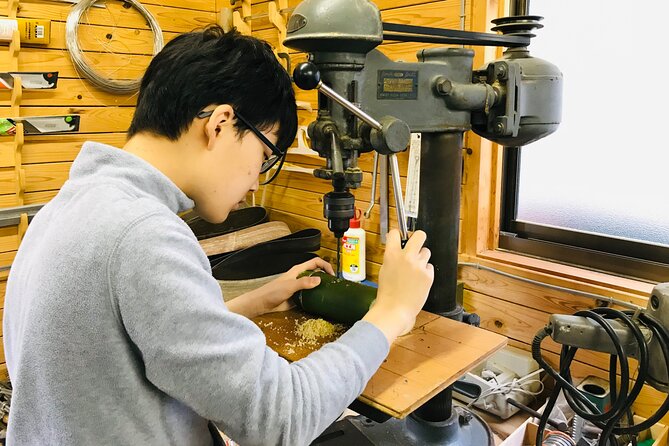
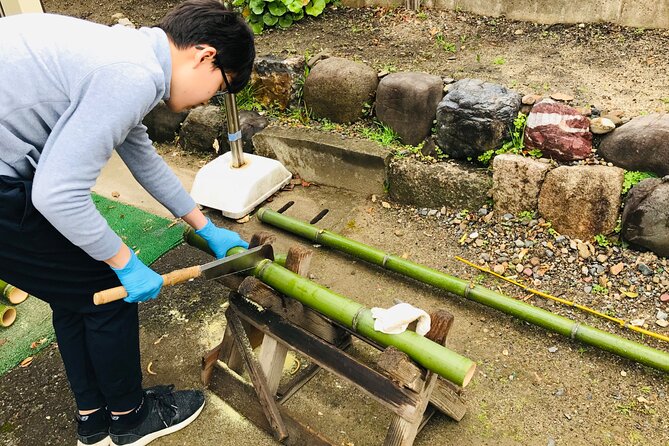
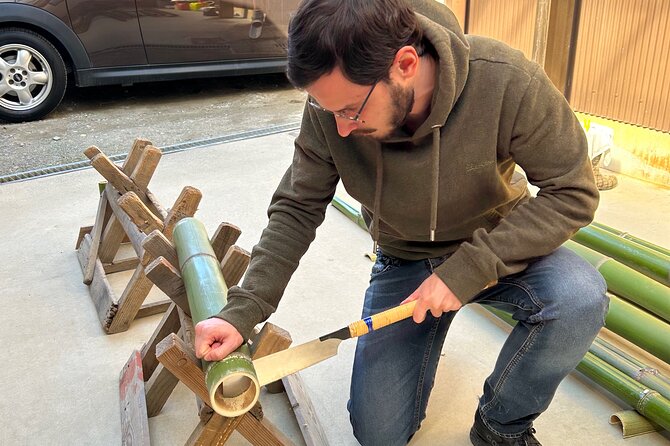
The core of the class is cutting and drilling the bamboo. Noriko and her husband explain each stage before you begin. The drilling process is approachable, but it is still real workshop work, not a preassembled craft kit.
You place the paper pattern on the bamboo and use the drill to make the holes that form your design. The small openings let the LED light shine through once the lantern is finished. The result can be simple or detailed, depending on the pattern and how much time you spend.
The instruction is especially helpful here. Children who have taken part were given practice and close guidance before working on their own pieces. An adult stayed beside one young participant while he used the drill, and another child was allowed to try some sawing with help.
That makes this a good family activity, but parents should still treat it as a workshop with tools. The adults provide safety instruction and supervision, yet children will need attention and patience. Older children who enjoy making things may get more from the process than children who only want a quick souvenir.
Adults can enjoy the craft just as much. The drilling offers enough hands-on work to feel satisfying, while the instructors remain available when a hole needs correcting or a pattern needs adjusting.
Why the family setting matters
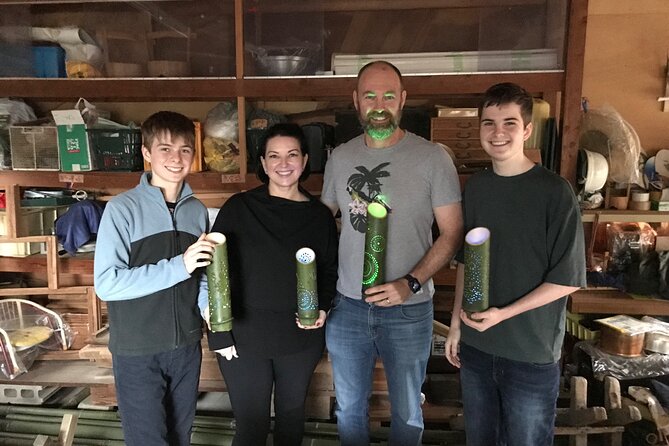
The workshop takes place in the guide’s house, not in a large commercial studio. Noriko and her husband handle different parts of the process, and their relaxed conversation is a central part of the afternoon.
I like this setup because it gives the craft a personal context. You are not only buying time at a class table. You are being welcomed into a working family space and shown a skill connected with the area.
The setting also allows the pace to remain calm. Tea and snacks have been offered during breaks, and the instructors have taken time to talk with participants rather than pushing everyone through the next step. That matters after a morning of temples, trains, and crowded streets.
The small group helps here. The published information describes an intimate class and lists a maximum of six people, while the general description refers to a cap of eight. Because the specific booking information says six, I would plan on a group of no more than six, but confirm the exact number when reserving.
Noriko’s husband is involved in the hands-on instruction, particularly with cutting and machinery. This is useful for a family group because one adult can help a child while Noriko assists another person with a pattern or design.
The finished LED lantern and the bamboo question
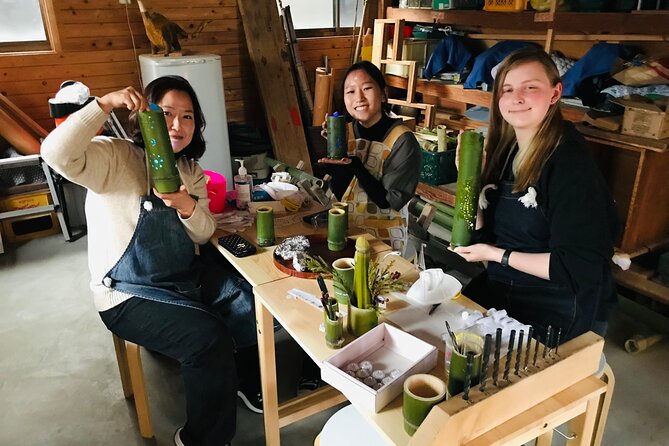
Your finished lantern is the main reward. It is light, easy to pack compared with many ceramic or wooden souvenirs, and designed to hold small lights for soft mood lighting. The LED element also avoids the need for an open flame.
The activity description says you make an LED lantern, but the supplied details do not explain the exact light included or how it is powered. Ask about that before beginning if the lighting arrangement matters to you.
The bamboo itself deserves a little care. The class has used fresh green bamboo, which looks attractive but can retain moisture. One piece developed major mold problems after being wrapped in bubble wrap for travel. The host apologized, accepted the criticism, and said the workshop would improve its wrapping and offer heated, dried bamboo, made from the same plant, for a more stable and lasting result.
This is not a reason to dismiss the class, but it is a reason to be practical. Ask whether your piece is fresh or dried, how long it should air out, and how it should be packed for the journey home. Do not store a damp bamboo object in sealed plastic or bubble wrap for a long period.
A craft souvenir needs a little care. If you are flying home soon, make sure you have room to carry the lantern without crushing it. The workshop provides materials and tools, but the supplied information does not specify a special shipping service.


What $79.26 buys you
At $79.26 per person, this is not the cheapest way to see the Arashiyama Bamboo Forest. You can walk through the forest independently for far less. The price makes more sense if you value instruction, conversation, a guided walk, and a finished object that you helped create.
You are paying for roughly three hours, a small group, the bamboo walk, workshop access, materials, and use of tools and machines. You also receive local guidance from Noriko and her husband, with time to ask questions about bamboo and the surrounding area.
The value is strongest for people who would otherwise buy a bamboo souvenir. A shop-bought lamp may cost less or more depending on its size and finish, but it will not carry the memory of selecting the bamboo, drilling the pattern, and making it during your afternoon in Arashiyama.
The value is also strong for families and couples. Two people can make different designs, compare results, and leave with matching or contrasting keepsakes. A child who enjoys practical projects may remember this more clearly than another brief photo stop.
If you only want a quick look at the forest, the price is harder to justify. The walk is only one part of the afternoon, and the real purpose is the workshop.
Who should book this afternoon
I would choose this for you if you enjoy making things, prefer local contact to a large tour, or want a break from temple interiors and packed sightseeing routes. It also fits a Kyoto itinerary that already includes Arashiyama but needs a more active afternoon.
Families should find it appealing, especially with children old enough to follow instructions around workshop tools. The available information says most people can participate, and the class has accommodated children with patient help. It is also suitable for a solo participant, provided you like spending an afternoon on a quiet craft rather than moving between several sights.
The activity may suit you if you have limited Japanese. Noriko’s English is strong, and clear explanations are part of the class. Service animals are allowed, and the meeting point is near public transportation.
You should think twice if your schedule is tight. The start time is fixed at 2 p.m., the activity lasts about three hours, and it returns to the station only at the end. Lunch is not included, so eat beforehand or plan food afterward.
This is also not the best choice if you want a polished factory-made object with no imperfections. Handmade bamboo can show small variations, and the result depends partly on your design and drilling. That is the point for some people, but not for everyone.
Planning the afternoon without rushing
Saga-Arashiyama Station is the key practical detail. Build in enough time to reach the station before 2 p.m., and keep the meeting address available on your phone. The ticket is mobile, and confirmation is sent when you book.
The activity returns to the starting point, so you do not need to arrange a separate ride from the workshop. You can use the station as your next transport point after the class.
Because lunch is not included, have something to eat before the meeting or plan a meal later. The workshop may offer tea and snacks during a break, but those should not be treated as lunch.
The activity is generally open to most people, and service animals are allowed. If you have a mobility concern, contact the provider before booking, since the afternoon includes a walk through the bamboo forest and nearby streets, but no detailed accessibility information is provided.
Free cancellation is available when you cancel at least 24 hours before the local start time. Changes or cancellations inside that window are not accepted for a refund, and the activity requires a minimum number of participants. If the provider cancels because that minimum is not reached, you are offered another date or activity, or a full refund.
Should you book the bamboo lantern class?
Book it if you want more from Arashiyama than a crowded forest path. Noriko’s walk adds local context, the family workshop gives the afternoon a warm human scale, and the handmade lantern gives you a useful souvenir instead of another small shop purchase.
I would be especially comfortable recommending it to craft lovers, families with patient children, couples, and solo visitors who enjoy conversation. The 97 percent recommendation rate and 4.9 rating from 38 ratings match the strongest parts of the activity: clear instruction, friendly hosting, and a keepsake with a personal story.
The fresh bamboo issue is the one point to handle carefully. Ask about dried material and packing, then follow the care instructions once you leave. If you do that, this $79.26 class offers a thoughtful way to turn an Arashiyama visit into something you can use and remember at home.
FAQ
Where does the bamboo lantern experience begin?
It begins at Saga-Arashiyama Station, at 11-1 Sagatenryūji Kurumamichō, Ukyo Ward, Kyoto, 616-8373, Japan.
What time does the activity start?
The scheduled start time is 2 p.m.
How long does the experience last?
The activity lasts approximately three hours.
Where does the experience end?
It ends back at the meeting point at Saga-Arashiyama Station.
What can I make during the workshop?
Depending on the available choices, you can make an LED lantern, sake cup, sake bottle, teacup, smartphone holder, or another bamboo craft. The activity allows you to choose a design, and you may be able to modify a prepared pattern.
Are materials and tools included?
Yes. The materials and use of tools and machines are included.
What is the cancellation policy?
You can cancel at least 24 hours before the local start time for a full refund. Cancellations or changes made less than 24 hours before the start are not accepted for a refund.
More Arashiyama & Bamboo Tours in Kyoto



More tours in Kyoto we've reviewed









Arashiyama & Bamboo Tours, compared.
 ★ 4.8Kyoto: Fushimi Inari, Kinkakuji, Bamboo Grove 1 Day Bus TourFrom $122510 minutes - 9 hours
 ★ 4.1Osaka/Kyoto:Kinkakuji,Arashiyama,FushimiInariShrine,NaraParkFrom $66
 ★ 4.7Kyoto/Osaka: Nara, Fushimi Inari Taisha, Arashiyama Bus TourFrom $529 - 10 hours
 ★ 5.0Kyoto Arashiyama Walking Tour: Bamboo, Monkeys, Gardens & SecretsFrom $65
 ★ 4.8Arashiyama Bamboo, Temple, Monkeys, or Secret Sake BreweryFrom $875 hours - 330 minutes
 ★ 4.4Osaka/Kyoto: Arashiyama, Nara & Fushimi Inari Shrine w/LunchFrom $61