
Reviewed · PRIVATE DRIVERS
Kyoto Highlight Private Tour with English Speaking Driver
Kyoto’s big sights sit far apart, and this private car tour tries to bring the greatest hits into one long day. You can visit Fushimi Inari, Kiyomizu-dera, Arashiyama, Kinkaku-ji, Gion, Nishiki Market, and several more places without wrestling with city buses and crowded trains.
I like the freedom to change the pace, and I like that the vehicle is reserved for your group of up to six. Guides named Hassan, Mani, and Basra received especially warm praise for keeping the day moving, explaining the sights, and helping with photos. The main concern is serious: several bookings reportedly failed because the driver never arrived or could not be reached.
In This Review
- Key points at a glance
- Why a private car helps in Kyoto
- Fushimi Inari and its endless red gates
- Ginkakuji needs a booking check
- Kiyomizu-dera and the eastern hills
- Two hours in Arashiyama
- The Imperial Palace in central Kyoto
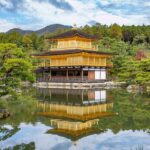
- Kinkaku-ji and the famous golden reflection
- Gion, where old wooden houses meet modern Kyoto
- Sanjusangendo’s remarkable wooden hall
- Nishiki Market and Kyoto’s food culture
- What the guiding is really like
- Is $558.59 good value?
- The best way to shape your day
- Who should book this Kyoto tour?
- FAQ
- How long does the private Kyoto tour last?
- How many people can join the private tour?
- Is hotel pickup available?
- Is transportation private?
- Is the driver English-speaking?
- Are temple and shrine admission tickets included?
- Are lunch and dinner included?
- Can the itinerary be changed?
- Is Arashiyama admission free?
- Can I cancel for a full refund?
Key points at a glance
- Nine major Kyoto stops: The route covers shrines, temples, a bamboo grove, the Imperial Palace, a geisha district, and a food market.
- Private transport for up to six: The $558.59 group price works out better for a full group than for one or two people.
- A long but efficient day: The planned stops total nine hours, before driving time, meals, and traffic.
- Flexible timing: You can request a custom route and decide how long to spend at each stop.
- English-speaking driver: The quality of guiding can vary, so confirm whether you are receiving a sightseeing guide or mainly a driver.
- A booking risk to address: Multiple people reported no-show pickups and no response from the operator.
Why a private car helps in Kyoto
Kyoto is easy to admire and surprisingly awkward to cover. Fushimi Inari is in the south, Arashiyama is in the west, Kinkaku-ji is in the north, and Gion and Nishiki Market sit closer to the center. Public transport works well for individual areas, but crossing the city several times in one day can cost you time and patience.
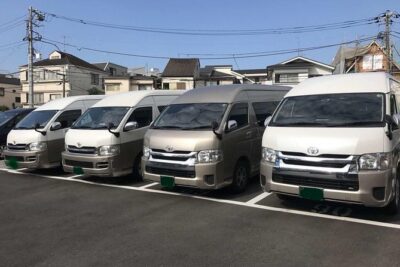
A private, air-conditioned vehicle gives you a simple base between stops. You can leave shopping bags in the car, avoid changing trains, and spend more of the day at the places you came to see. Pickup and drop-off are offered at your hotel or another agreed location.
The tradeoff is that this is a sightseeing marathon. The listed stop times alone add up to nine hours:
- Fushimi Inari: 1 hour
- Ginkakuji: 1 hour
- Kiyomizu-dera: 1 hour
- Arashiyama: 2 hours
- Kyoto Imperial Palace: 1 hour
- Kinkaku-ji: 1 hour
- Gion: 1 hour
- Sanjusangendo: 1 hour
- Nishiki Market: 1 hour
That leaves little room for a leisurely lunch, long lines, traffic, or extended walks. I would treat the schedule as a menu rather than a promise. The private format gives you a chance to cut a stop if the day starts to feel rushed.
Other private tours in Kyoto
Fushimi Inari and its endless red gates
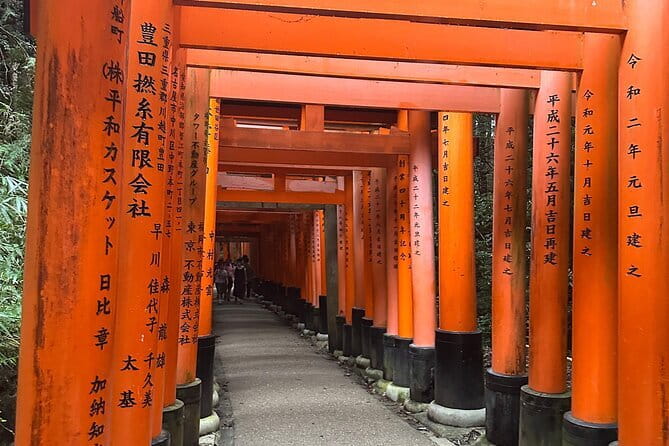
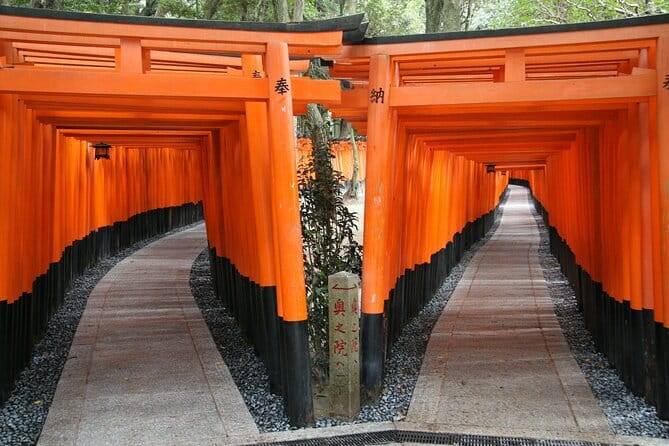
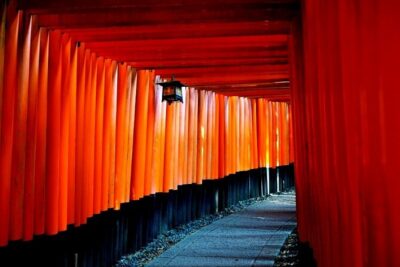
Fushimi Inari-taisha is one of Kyoto’s most recognizable sights. Its thousands of orange-red torii gates form covered paths up Mount Inari, where the shrine has honored Inari, the Shinto deity linked with rice, for centuries. Fox statues appear throughout the grounds because foxes are regarded as Inari’s messengers.
You receive one hour here, which is enough to see the main shrine buildings and walk through the first section of gates. It is not enough to explore the whole mountain trail at a relaxed pace. The paths continue upward into the forest, and the walk becomes quieter as you leave the entrance area.
The admission ticket is not included, though the information does not state a separate entrance charge. Fushimi Inari is best early in the day, but the exact order of stops can be discussed with your driver. If this shrine matters most to you, say so before the car sets off.
Ginkakuji needs a booking check
The schedule includes Ginkakuji, commonly called the Silver Pavilion, but the supplied description for this stop repeats the description of Kiyomizu-dera. That mismatch is worth addressing before you pay. Ask the operator to confirm that Ginkakuji is actually included and which entrance fees apply.
Ginkakuji is valued for its temple grounds and gardens rather than a silver-covered exterior. The one-hour slot should give you time to see the main areas, but you will want clear instructions about where the driver will meet you afterward.
This small detail matters because the day already includes Kinkaku-ji, the Golden Pavilion. A confirmed list prevents confusion between the two famous Kyoto temples.
Kiyomizu-dera and the eastern hills
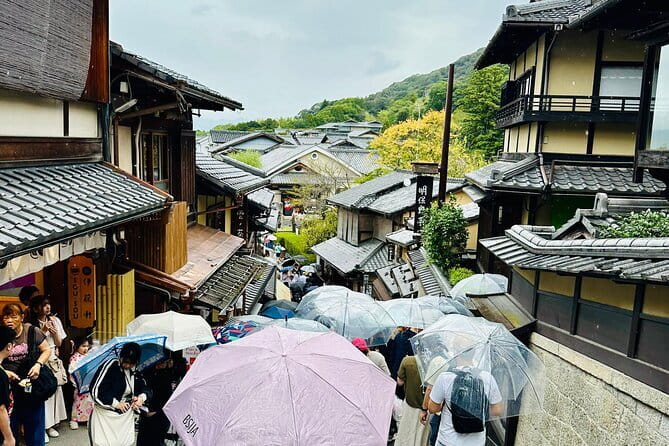
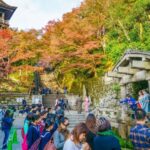
Kiyomizu-dera means Pure Water Temple, named for the Otowa Waterfall on the wooded hills east of central Kyoto. Founded in 780, it is now a UNESCO World Heritage Site and one of the city’s essential visits.
The main hall’s wooden stage projects 13 meters over the hillside. From here, you can look across trees and rooftops, with especially fine color from cherry trees in spring and maples in autumn. The temple also has a strong sense of place because of its hillside setting and long approach through the surrounding streets.
One hour gives you a useful first look, but Kiyomizu-dera is not a quick roadside photo stop. You need time to walk from the vehicle drop-off area, visit the main hall, and return. The entrance ticket is not included.
Kiyomizu-dera can be crowded, and the sloping approach may feel tiring after Fushimi Inari. Still, I would keep it on the route unless you have already visited. It offers a different experience from the torii gates: broad views, a major Buddhist temple, and a close look at Kyoto’s traditional eastern district.
Two hours in Arashiyama
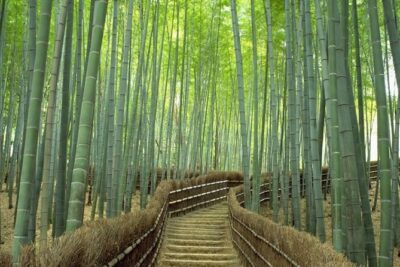
Arashiyama receives the longest scheduled visit, and that makes sense. The area includes the famous bamboo grove, the Togetsukyo Bridge, riverfront paths, and nearby temple grounds and shops. The bridge, known as the Moon Crossing Bridge, dates in origin to the Heian period and was rebuilt most recently in the 1930s.
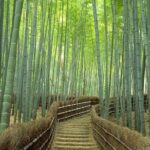
The bamboo grove is photogenic, but the walk is not a private path through untouched countryside. It can be crowded, especially near the most photographed section. Your two hours may be enough for the grove, the bridge, and a short walk along the riverbank, but not every attraction in Arashiyama.
Bamboo has long been used by local craftspeople for mats, baskets, boxes, cups, and other household goods. I like that this stop can be more than a photo. If you have time, look at the small shops and pay attention to the bamboo products rather than hurrying from one viewpoint to the next.
Admission to Arashiyama is listed as free, though particular temples or attractions in the district may have their own charges. The tour does not include lunch, so this is one possible place to ask for a meal break. The schedule does not guarantee a restaurant or a set dining stop.
A few more Kyoto tours and experiences worth a look


The Imperial Palace in central Kyoto
Kyoto Imperial Palace was home to Japan’s Imperial Family until 1868, when the emperor and capital moved to Tokyo. It now sits within the broad Kyoto Imperial Park, which also contains the Sento Imperial Palace and other sites.
The current palace buildings were reconstructed in 1855 after repeated fires and moves around the city. Long walls, gates, halls, and gardens give the complex a more formal feel than the intimate lanes of Gion or the wooded paths at Fushimi Inari.
You have one hour here. That should work for a focused visit, but the grounds are spacious, so ask your driver about the exact entrance and meeting point. Admission is not included, and the supplied information does not specify the current ticket arrangements.
I see this as a useful pause between more crowded attractions. It offers open space and an important link to Japan’s imperial past, though people who prefer gardens and small lanes may find it less immediately rewarding than Kiyomizu-dera or Gion.
Kinkaku-ji and the famous golden reflection
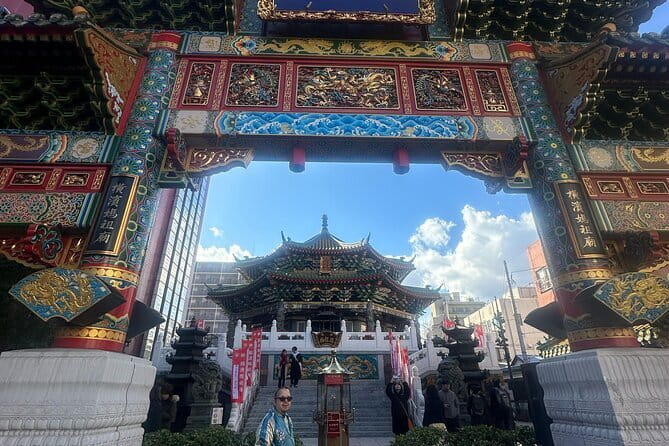
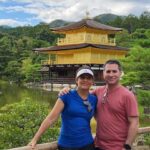
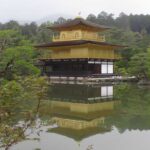
Kinkaku-ji, the Golden Pavilion, is a Zen temple in northern Kyoto with gold leaf covering its upper two floors. It began as the retirement residence of Ashikaga Yoshimitsu and became a Zen temple after his death in 1408.
The pavilion sits beside a large pond, which creates the classic reflection view. The building has burned several times, including during the Onin War, and the present structure reflects the temple’s long cycle of destruction and rebuilding.
The visit is visually powerful but fairly controlled. You follow the established path around the pond rather than wandering freely through the building. One hour is suitable for the main view and grounds, though busy conditions can slow you down. The entrance ticket is not included.
Kinkaku-ji is one of the easiest stops to appreciate quickly, which helps on a packed day. If you need to remove something from the route, I would spend more time at Arashiyama or Fushimi Inari and keep Kinkaku-ji as a shorter visit.
Gion, where old wooden houses meet modern Kyoto
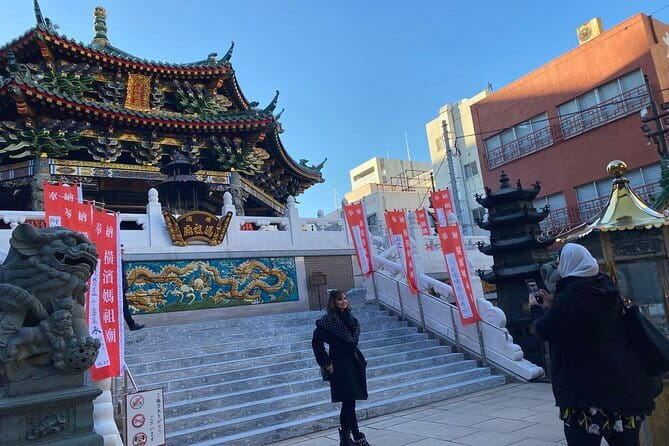
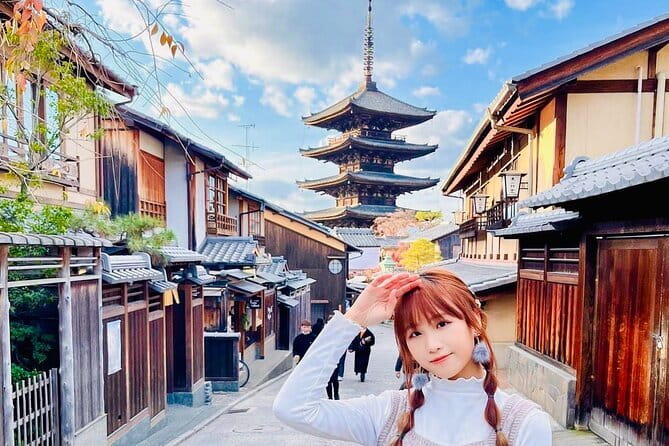
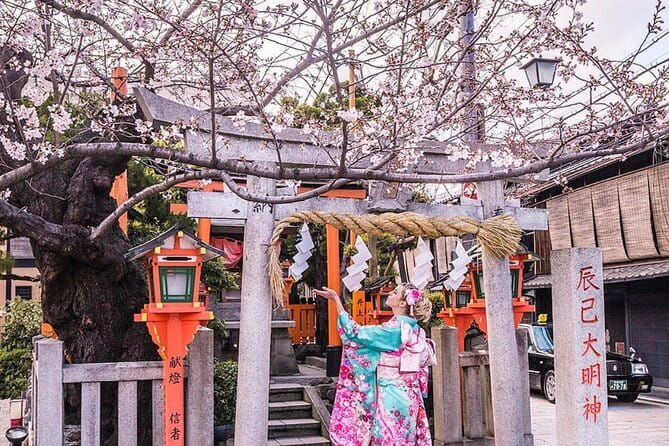
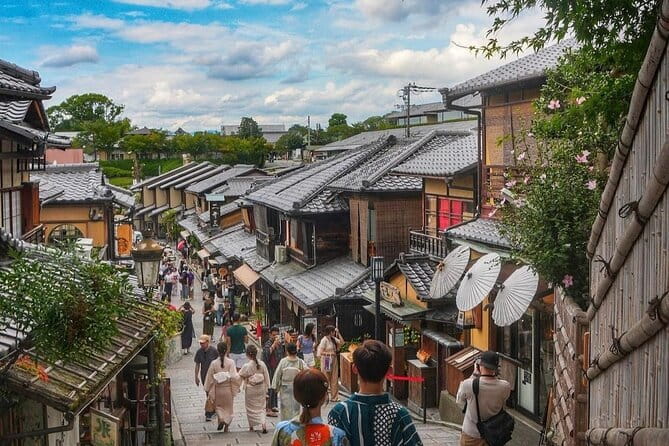
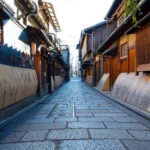
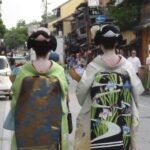
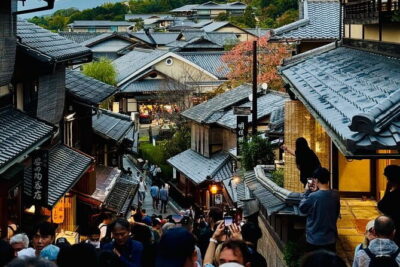
Gion lies along Shijo Avenue between the Kamo River and Yasaka Shrine. It is Kyoto’s best-known geisha district, with traditional wooden machiya houses, restaurants, shops, and ochaya teahouses where geiko and maiko perform.
Hanami-koji Street is the district’s best-known lane, but Gion is not a stage set. Please keep your distance from performers and respect signs that restrict photography. The traditional houses are narrow at the street, often only five or six meters wide, but extend far back because property taxes were once based on street frontage.
One hour is enough for a walk through the main area, particularly if you want to combine Gion with nearby sights. The tour does not promise a geiko or maiko encounter, and no entertainment or meal is included. I would come here for the architecture, atmosphere, and evening possibilities, not for a guaranteed performance.
Sanjusangendo’s remarkable wooden hall
Sanjusangendo is the common name for Rengeo-in, a temple in eastern Kyoto famous for its 1,001 statues of Kannon, the Buddhist figure associated with compassion. The temple was founded in 1164 and rebuilt after fire destroyed the original structure.
The main hall measures 120 meters, making it Japan’s longest wooden structure. Its name refers to the 33 intervals between the rear columns, a traditional way of measuring the building.
This stop offers a welcome change from outdoor walks. You can spend the one-hour visit looking at the long hall and the statues rather than dealing with slopes, traffic, or open-air crowds. The admission ticket is not included.
Because the information does not specify photography rules or the exact interior route, follow the site’s instructions once inside. Sanjusangendo may be especially appealing if you want a temple experience with a strong focus on sculpture rather than gardens or views.
Nishiki Market and Kyoto’s food culture
Nishiki Market runs for five blocks along a narrow shopping street lined with more than 100 shops and restaurants. It is known as Kyoto’s Kitchen, with stalls selling seafood, produce, knives, cookware, sweets, pickles, dried seafood, sushi, and other local foods.
This is a good place to taste small portions and buy edible souvenirs. Shops tend to specialize in one type of food, and many goods are produced or sourced locally. The market is free to enter, though you pay for anything you eat or buy.
The one-hour stop is practical but short. The passage can be crowded, and stopping at every appealing stall would quickly eat up the schedule. I would decide in advance if you want lunch here or simply a walk and a few tastes.
The market is also a reminder that Kyoto is not only temples and imperial buildings. Its food traditions are part of the city’s character, and Nishiki provides a compact way to see that side of Kyoto.
What the guiding is really like
The experience includes an English-speaking driver, but the wording does not clearly promise a licensed tour guide or detailed commentary at every site. That distinction matters. A driver who handles routes, timing, and pickup well can still make the day easier, but you may need to read the temple signs or arrange a separate guide if in-depth interpretation is important.
The strongest named experiences came from Hassan, Mani, and Basra. Hassan was praised for adjusting the route and keeping a full day on schedule. Mani was described as easy to interact with and well informed, while Basra helped create a comfortable day and took valued photos.
The mixed feedback means I would confirm three things before departure:
- Is the driver also providing commentary at each site?
- Can you remove or replace stops?
- What is the exact pickup procedure and emergency contact?
Those questions are not fussing over small print. Several people reported that the driver did not arrive, and that phone calls and emails went unanswered. That is the biggest weakness attached to this experience, and it deserves attention before you set aside a full day in Kyoto.
Is $558.59 good value?
The price is $558.59 per group of up to six. For six people, that is about $93 per person. For two people, it is about $279 each, before entrance fees and food.
That price can make sense for a full group because it covers private transportation, an air-conditioned vehicle, hotel or agreed-location pickup and drop-off, and an English-speaking driver. You are paying for time saved and a route designed around your group, not just for a seat in a vehicle.
The value is weaker for one or two people unless convenience is your main goal. Kyoto’s public transport costs much less, and independent visitors can spend a whole day in one district without paying for a private vehicle. The private option becomes more useful when you have limited time, several family members, mobility concerns related to changing trains, or a strong wish to see sites spread across the city.
Admission fees are not included for the listed temples and shrines. Lunch and dinner are also separate. Set aside extra money for tickets, food, and purchases at Nishiki Market.
The best way to shape your day
I would not try to treat every one of the nine stops as equally important. Tell the driver your top three before leaving. For one first-time visit, those might be Fushimi Inari, Kiyomizu-dera, and Arashiyama, with Kinkaku-ji added if timing allows.
You can also group your priorities by interest:
- For classic photographs: Fushimi Inari, Arashiyama, and Kinkaku-ji
- For Buddhist temples: Kiyomizu-dera, Ginkakuji, Kinkaku-ji, and Sanjusangendo
- For old Kyoto streets: Gion and the approach to Kiyomizu-dera
- For food: Nishiki Market
- For imperial history and gardens: Kyoto Imperial Palace
The day is advertised as lasting about eight to ten hours. With nine one-hour stops, two hours in Arashiyama, and travel between areas, you should expect a full day. Pick an early start if you want a better chance of seeing everything, though the exact start time is not specified in the supplied details.
Free cancellation is available up to 24 hours before the start time. Changes made inside that window are not accepted, and a minimum number of participants is required. Those terms are useful, but they do not solve the pickup concern, so confirm the meeting details directly after booking.
Who should book this Kyoto tour?
I would recommend it most strongly for a group of four to six people who want to cover many famous sights in one day. It also suits families and anyone who values a private vehicle more than the lower cost of buses and trains.
I would hesitate if you prefer slow temple visits, long meals, or a single neighborhood explored on foot. The route is ambitious, and some stops may feel like brief introductions rather than full visits.
I would also hesitate until the pickup is confirmed. The positive experiences point to helpful drivers and smart route changes, but the reports of no-shows are too serious to ignore. Ask for written confirmation of the driver, vehicle, pickup point, and direct contact number.
If you receive clear confirmation and your group values convenience, this can be a practical way to see Kyoto’s headline sights in one day. If the operator cannot answer basic pickup questions, choose another arrangement.
FAQ
How long does the private Kyoto tour last?
The tour lasts approximately 8 to 10 hours.
How many people can join the private tour?
The price covers a group of up to six people.
Is hotel pickup available?
Yes. Pickup and drop-off are offered at your hotel or another location you request.
Is transportation private?
Yes. The tour includes private transportation in an air-conditioned vehicle.
Is the driver English-speaking?
Yes. An English-speaking driver is included.
Are temple and shrine admission tickets included?
No. Admission tickets for the listed paid attractions are not included.
Are lunch and dinner included?
No. Lunch and dinner are separate from the tour price.
Can the itinerary be changed?
Yes. The tour is private, and the itinerary can be customized based on your requests.
Is Arashiyama admission free?
Arashiyama itself is listed as free to enter. Individual attractions in the area may have separate charges, and those costs are not included in the tour.
Can I cancel for a full refund?
Yes, if you cancel at least 24 hours before the experience start time. Cancellations made less than 24 hours before the start time are not refunded.
More Private Drivers in Kyoto
More Private Tours in Kyoto
More tours in Kyoto we've reviewed

Private Drivers, compared.
 ★ 4.5Explore Kyoto | Private Tour – Local English Driver(guide option)From $530
 ★ 5.0Kyoto Private 6 hour Tour: English Speaking Driver Only, No GuideFrom $400
 ★ 4.5Kyoto Private Day Tour with English-Speaking Driver from KyotoFrom $482
 ★ 4.5Private Kyoto Customizable Day Tour with English Speaking DriverFrom $448
 ★ 5.0Kyoto Day Trip using Private Car with English Driver (up to 5)From $548
 ★ 5.0Private departure transfer from Kyoto city to Kansai International airportFrom $109