
Reviewed · GION & GEISHA WALKS
Kyoto Gion Morning Walk: Zen, Temples, Geisha District & Secrets
Kyoto’s Gion district is best understood on foot, one quiet lane and wooden façade at a time. This 4.5-hour walk links the geisha quarter with Zen temple gardens, famous shrines, the Yasaka Pagoda, and Kiyomizu-dera, giving you a broad first look at eastern Kyoto for $28.
I like the small maximum of 10 people, which should make it easier to hear the guide and ask questions. I also like the mix of major sights and everyday streets, from Hanamikoji’s teahouses to Ninenzaka’s shops and stone steps. The tradeoff is simple: this is a serious walking tour, and summer heat or tired legs can make the long route demanding.
In This Review
- Key points to know
- Starting beside the Kamo River at 10 a.m.
- Gion and Hanamikoji, Kyoto’s most watched streets
- Kennin-ji, a quiet Zen pause in the middle of Gion
- Yasaka Pagoda and the Higashiyama approach
- Kiyomizu-dera and its famous wooden stage
- Ninenzaka, stone steps and traditional shops
- Yasaka Shrine, lanterns and Kyoto’s festival life
- What the $28 price really buys you
- Who will enjoy this Kyoto walk most
- Should you book the Gion Morning Walk?
- FAQ
- How long does the Kyoto Gion Morning Walk last?
- What time and where does the tour begin?
- Where does the tour end?
- Is transportation or hotel pickup included?
- Is a geisha sighting guaranteed?
- What languages are available?
Key points to know
- Four and a half hours on foot: The route covers several districts and includes slopes, steps, and temple grounds.
- A useful Gion overview: You see Hanamikoji Street, traditional wooden buildings, teahouses, and the wider geisha district.
- Five major cultural stops: Kennin-ji, Yasaka Pagoda, Kiyomizu-dera, Ninenzaka, and Yasaka Shrine are all part of the route.
- Small shared group: The tour accepts no more than 10 people, a good size for conversation and guide-led storytelling.
- Geisha sightings are not promised: You might see a geiko or maiko, but they are rare and should never be the sole reason you book.
- Good value at $28: Temple admission at Kennin-ji and Kiyomizu-dera is included, while Gion and Yasaka Shrine are free.
Starting beside the Kamo River at 10 a.m.
The walk begins at the Statue of Izumo-no-Okuni in Kawaramachi, in Kyoto’s Higashiyama Ward. There is no hotel pickup, so you need to reach the meeting point yourself. The area is near public transportation, which makes the start practical if you are staying around central Kyoto.
A 10 a.m. start is useful for a first full day in the city. You can begin after breakfast, see Gion in daylight, and still have the afternoon or evening free. It also means you are not seeing the lantern-lit district at night, when Gion has a more theatrical mood. For a first visit, daylight is often better for spotting architectural details and taking photographs.
The group limit of 10 matters here. Gion’s lanes can be narrow, and a huge crowd would make the walk clumsy. With a smaller group, you should have a better chance to hear explanations about the buildings, customs, and religious sites without constantly losing sight of the guide.
Guides named in the experience’s feedback include Aron, Aaron, Erin, and Marie. The strongest praise centers on friendly, patient guiding, clear English, humor, and stories about Japanese culture and history. The exact guide depends on the date, so do not book on the assumption that one particular person will lead your walk.
A few more Kyoto tours and experiences worth a look

Gion and Hanamikoji, Kyoto’s most watched streets
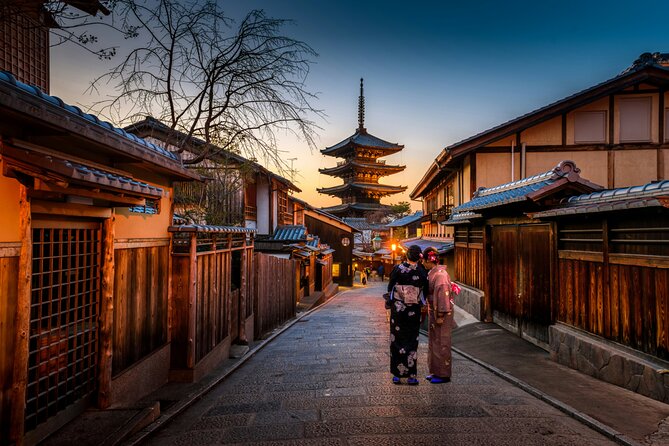
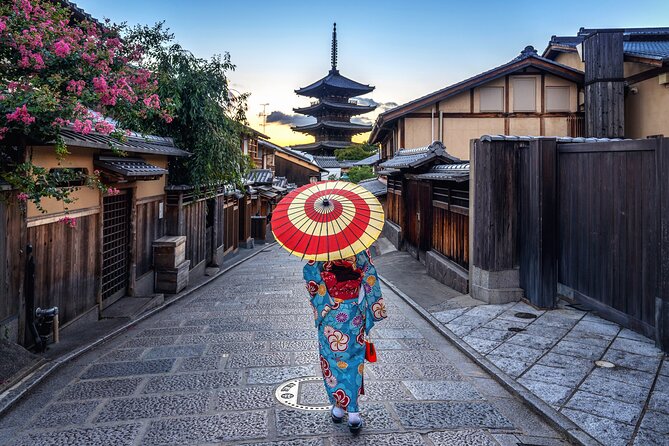
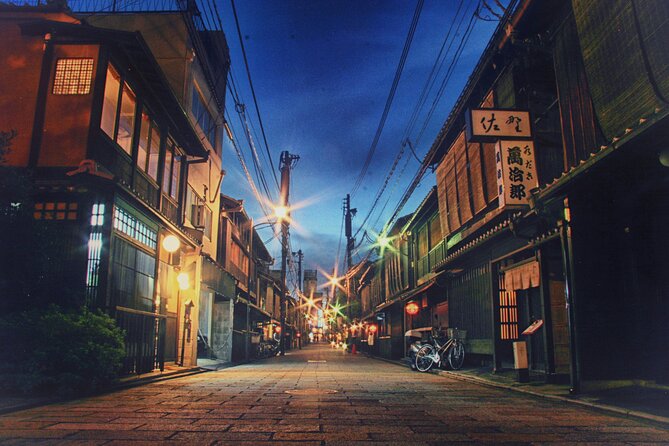
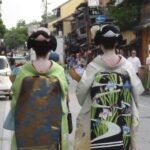
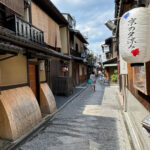
The first part takes you through Gion, Kyoto’s famous geisha district. Its traditional wooden houses, teahouses, lanterns, and narrow lanes offer the kind of setting many people picture when they think of old Kyoto.
Hanamikoji Street is the visual centerpiece. Traditional machiya houses line the route, along with teahouses, craft shops, and places connected with Japanese food and culture. The street has a polished, carefully preserved appearance, but it is also a working district, not an open-air stage built for photographs.
That distinction is worth keeping in mind. Geiko and maiko may pass through Gion, but sightings are uncommon. The tour specifically warns that you might see one, not that you will. I like that expectation because it keeps the focus on the neighborhood itself rather than on chasing a person who is trying to get to work.
Your guide can add value here by explaining what you are looking at. The wooden façades, private teahouses, and quiet side streets can look mysterious if you walk through alone. A good guide helps connect the buildings with Kyoto’s performing arts, dining customs, and neighborhood traditions.
The scheduled Gion portion is about 45 minutes, though the entire route naturally includes more of the surrounding Higashiyama area. Expect frequent photo pauses and plenty of walking between stops. If you want a quick, polished photo tour, this may feel slow. If you want context, the pace is a strength.
Please treat the area with care. Gion is a neighborhood where people live and work. Follow the guide’s lead, avoid blocking entrances, and do not photograph anyone without permission. Seeing a geiko or maiko should be a fortunate moment, not a hunt.
Kennin-ji, a quiet Zen pause in the middle of Gion
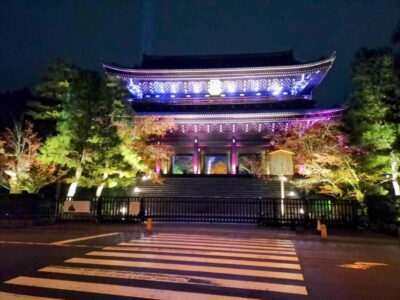
Kennin-ji is one of Japan’s oldest Zen temples and was founded in 1202 by Eisai, the monk associated with bringing the Rinzai school of Zen Buddhism to Japan. Its location makes it a welcome change from Gion’s busy lanes.
The visit includes admission and lasts about 30 minutes. That is enough time to take in the temple’s gardens, sliding-door paintings, historic halls, and the well-known twin dragon ceiling artwork, though it is not a long, leisurely temple study.
Kennin-ji’s appeal comes from the contrast. Outside, Gion is full of shops, movement, and camera phones. Inside, the rock gardens and simple temple spaces ask you to slow down. The guide’s role is especially useful at a site like this because Zen architecture can seem spare until someone points out how the gardens, empty space, and painted screens work together.
You should be prepared to remove shoes if required in temple areas, though the supplied information does not specify the exact footwear rules for this visit. Comfortable shoes are essential either way. The tour has several temple and shrine stops, so the day is better with footwear that handles stone paths and steps.
Yasaka Pagoda and the Higashiyama approach
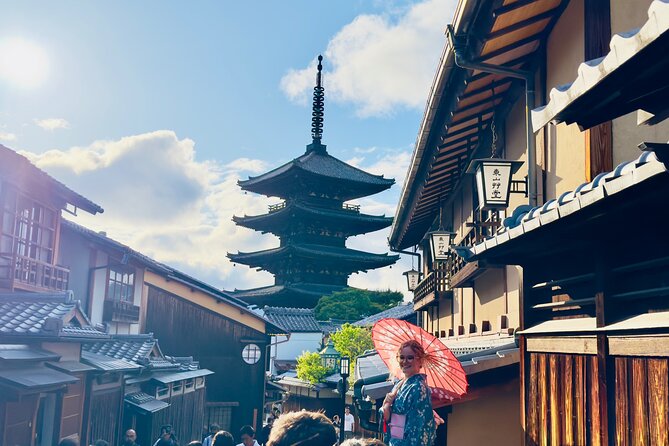
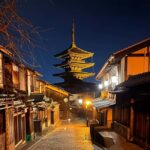
The route continues toward Hokanji Temple, better known as Yasaka Pagoda. The five-story wooden pagoda rises about 46 meters and is one of Kyoto’s most recognizable sights. Its current structure dates from the 15th century, after earlier versions were damaged by fire.
The pagoda works as a visual marker in Higashiyama. You will see it framed by traditional streets and old-style buildings, a combination that makes this one of the route’s strongest photo stops. The surrounding area also leads naturally toward Kiyomizu-dera and Ninenzaka.
The supplied schedule does not assign a separate time or admission detail to Yasaka Pagoda. That means you should treat it as part of the walking route rather than assume you will have a long interior visit. The value is mainly in seeing the structure in its historic setting and learning how it fits into Kyoto’s religious and architectural story.
This section also helps explain why the tour takes four and a half hours. The named stops are not packed together in one courtyard. You are moving through a connected part of eastern Kyoto, with the guide filling in the spaces between major monuments.
Kiyomizu-dera and its famous wooden stage
Kiyomizu-dera is the biggest headline stop on the route. Founded in 778, the temple sits on the Higashiyama hillside and is recognized as a UNESCO World Heritage site. Its wooden stage projects from the main hall and gives you broad views over Kyoto.
Admission is included, and the scheduled visit lasts about 45 minutes. That is a sensible amount of time for a guided overview, but you should not expect to see every corner of the large temple complex. Kiyomizu-dera has enough history, religious features, and scenic points to fill much longer visits.
The temple takes its name from the Otowa Waterfall. Its waters are associated with wish-granting powers, and the site is one of the places where religious practice and popular custom meet. Your guide can help explain the meaning behind the buildings and rituals, rather than leaving you with only a quick photograph from the wooden stage.
Crowds are a factor. Kiyomizu-dera is one of Kyoto’s best-known sights, and the approach can be busy. A guide cannot remove the crowds, but a small group and a clear route can make the visit less confusing. The 10 a.m. start also gives you a reasonable portion of the day before the afternoon wears on, although the temple may still be busy.
The hillside setting brings steps and inclines. One account describes a mid-September walk in very hot weather, with the guide checking that the group was coping. That is a useful sign of what personal guiding can add, but you should still bring water, protect yourself from the sun, and pace yourself. Kyoto heat can be serious.
Other walking tours we've reviewed in Kyoto


Ninenzaka, stone steps and traditional shops
After Kiyomizu-dera, the route passes through Ninenzaka. This pedestrian street is lined with preserved wooden buildings, teahouses, souvenir shops, local crafts, and traditional sweets. Its stone-paved steps give the area a strong old-Kyoto feel.
Ninenzaka is a good place to connect the grand temple with the small details of the city. You can look at shopfronts, browse gifts, and notice how the street’s architecture shapes the experience. The route is not only a march from one famous temple to the next.
The drawback is that this is also one of the most popular shopping and photo areas in Higashiyama. It can feel crowded, and the steps are not ideal for anyone hoping for a flat, effortless walk. Your guide may help you move through it with purpose, but you will still need patience.
I would treat Ninenzaka as a place to make a mental note for later. Since the tour has a set route and several stops, you may not have much shopping time. If you see a sweet or craft you want, ask the guide how much time is available before wandering off.
Yasaka Shrine, lanterns and Kyoto’s festival life
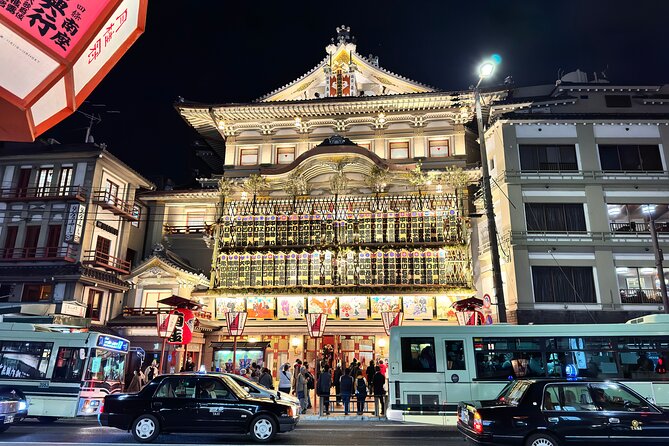
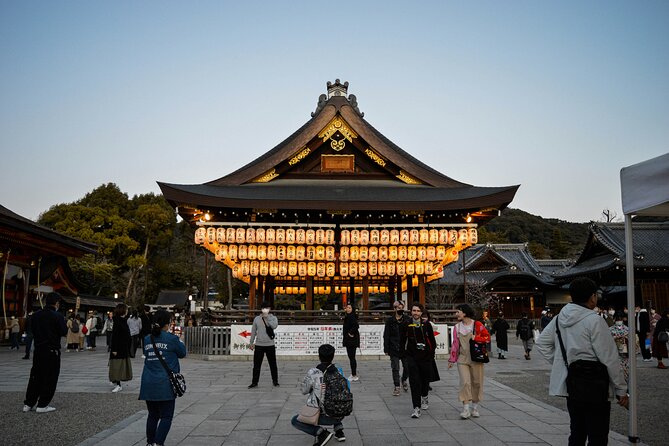
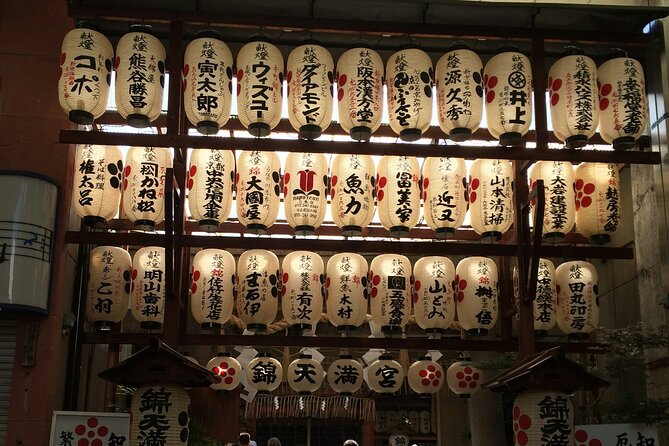
The final major stop is Yasaka Shrine, also called Yasaka Jinja. Located at the end of Shijo Street in Gion, it is one of Kyoto’s best-known Shinto shrines and has a history reaching back more than 1,350 years.
The shrine is known for its vermilion gates, lanterns, and connection with the Gion Matsuri, held in July. The scheduled visit lasts about 30 minutes, and admission is free. That makes it a useful closing stop because you get another side of Kyoto’s spiritual life after seeing Buddhist temples and Zen gardens.
I like the balance here. Kennin-ji and Kiyomizu-dera show Buddhist traditions, while Yasaka Shrine introduces Shinto practice and festival culture. You do not need to be an expert in either religion to appreciate the difference, but the guide’s explanations can make the visit more meaningful.
The activity ends back at the original meeting point. That is convenient if you want to continue into central Kyoto afterward, though you should not plan a tight train connection immediately after the stated 4.5-hour duration. Walking tours can run close to their advertised length, especially when people ask questions or stop for photographs.
What the $28 price really buys you
At $28, this is inexpensive for a four-and-a-half-hour guided walk in Kyoto. The price includes admission to Kennin-ji and Kiyomizu-dera, while Gion, Hanamikoji, and Yasaka Shrine are free areas. You are mainly paying for the guide’s route planning, explanations, local perspective, and the efficiency of seeing several major sights in one outing.
The value is strongest if you are new to Kyoto. Instead of spending time working out how Gion, Higashiyama, and the temple district connect, you get a ready-made route. A good guide can also answer questions as they arise, take photographs during pauses, and adjust the conversation to the group.
The price does not include dinner, transportation to the meeting point, or tips. Tips are welcomed, so include that in your budget if the guide provides the kind of personal care described in the feedback. German and Italian may be available, but only English is guaranteed on shared tours. Contact the provider before booking if language support matters.
Free cancellation is available if you cancel at least 24 hours before the 10 a.m. start time. Changes or cancellations within 24 hours are not refunded, so keep that cutoff in mind when planning around weather, trains, or a day trip from another city.
Who will enjoy this Kyoto walk most

I would recommend this tour to first-time Kyoto visitors who want a strong introduction to Gion and the eastern temple district. It suits people who prefer stories and cultural explanation over simply ticking off photo stops.
It also works well for couples and families. The small group makes it easier to ask questions, and the guides described in the feedback are praised for patience, humor, and helping with photographs. Several accounts describe the experience as feeling like a walk with a friendly local, which is exactly the kind of benefit you hope for from a shared tour.
You should think twice if you dislike long walks, hills, or crowded historic streets. One person had to leave early after combining the tour with a tiring train journey, a reminder that Kyoto sightseeing can take more energy than the map suggests.
This is not the right choice if your main goal is a guaranteed geisha encounter. It is also not a private tour, and the exact guide, language options, and group dynamic can vary. The experience is best seen as a guided cultural walk with a chance of seeing geiko or maiko, not as a geisha-spotting expedition.
Should you book the Gion Morning Walk?
Book it if you want an affordable, well-packed introduction to Gion, Kennin-ji, Yasaka Pagoda, Kiyomizu-dera, Ninenzaka, and Yasaka Shrine. The combination of major sights, smaller streets, included temple admission, and a group capped at 10 gives the tour solid value.
Skip it if you want a slow private visit, a flat route, or guaranteed access to geisha culture. For most first visits, though, this is a practical way to get your bearings in eastern Kyoto and learn what you are seeing instead of simply walking past it.
FAQ
How long does the Kyoto Gion Morning Walk last?
The experience lasts approximately 4 hours and 30 minutes.
What time and where does the tour begin?
It begins at 10 a.m. at the Statue of Izumo-no-Okuni in Kawaramachi, Higashiyama Ward, Kyoto.
Where does the tour end?
The activity ends back at the original meeting point.
Is transportation or hotel pickup included?
No. Pickup service is not available, and you must make your own way to the meeting point. The start area is near public transportation.
Is a geisha sighting guaranteed?
No. You might see a geiko or maiko, but sightings are quite rare.
What languages are available?
English is guaranteed on shared tours. German, Italian, or another language may be available with certain guides, but you must contact the provider before booking to confirm.
More Morning in Kyoto


More Walking Tours in Kyoto
More Gion & Geisha Walks in Kyoto

More tours in Kyoto we've reviewed




Gion & Geisha Walks, compared.
 ★ 4.7Kyoto Geisha Walking Tour: Gion District & Hidden GemsFrom $252 hours
 ★ 4.7Kyoto: Gion Geisha District Walking Tour – Stories of GeishaFrom $202 hours
 ★ 4.9Best of Kyoto: Gion, Geisha, Pagodas & CobblestonesFrom $242 hours
 ★ 4.5Night Walk in Gion: Kyoto’s Geisha DistrictFrom $211h 40m
 ★ 5.0Kyoto Night Foodie Tour in Gion (9+ dishes + 6 Sake tastings)From $163
 ★ 5.0Kyoto Gion Geisha District Walking Tour – The Stories of GeishaFrom $25