
Reviewed · WORKSHOPS
Kyoto: Japanese Calligraphy Class in 150 years old townhouse
The setting gives this short class its special lift. In Kyoto’s historic Ninenzaka district, you enter a 150-year-old townhouse and trade the busy temple streets for a quiet lesson in Japanese calligraphy. The class covers basic brush technique, the background of the writing system, and the making of a piece you can take home.
I like two things right away: the class is friendly to complete beginners, and the teachers are patient when your first attempts look more like nervous brush marks than elegant characters. I also like the compact 50-minute length, which fits neatly between sightseeing stops in Higashiyama.
The main consideration is time. Fifty minutes is enough for an introduction and a finished souvenir, but it can feel rushed if you want a slower, more detailed art lesson. You also need to wear socks, and children under 12 cannot participate.
In This Review
- Key Points Before You Book
- Why This Class Works Well in Ninenzaka
- What Happens During the 50-Minute Lesson
- The Teaching Style: Patient, Calm, and Beginner-Friendly
- How the Short Format Affects the Experience
- What You Take Home
- Is $43 a Fair Price?
- Who Will Enjoy It Most
- Practical Details That Matter
- How to Fit It Into a Kyoto Day
- Should You Book This Kyoto Calligraphy Class?
- FAQ
- Where does the Japanese calligraphy class take place?
- How long does the calligraphy experience last?
- Is the class taught in English?
- Is the class suitable for beginners?
- Can children participate?
- Do I need to wear anything specific?
- Is there a group-size limit?
- What happens if bad weather cancels the class?
Key Points Before You Book
- A historic Ninenzaka setting: Practice inside a 150-year-old Kyoto townhouse near one of the city’s most atmospheric sightseeing areas.
- English instruction every day: The class explains both calligraphy technique and some cultural background in English.
- Patient teaching: The master and assistant guide beginners through repeated attempts without making the class feel intimidating.
- A take-home keepsake: You create a finished calligraphy piece rather than simply watching a demonstration.
- A short, focused format: The 50-minute session works well during a busy Kyoto day, though serious learners may want more time.
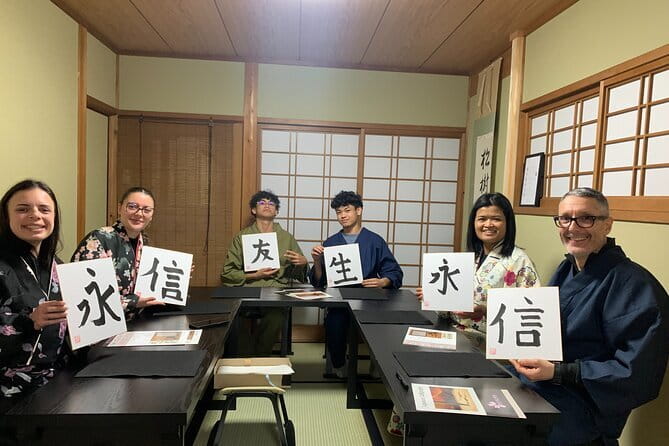
- Small enough to feel personal: The maximum group size is 18 people, with the class returning to its starting point.
Why This Class Works Well in Ninenzaka
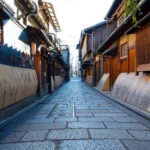
Ninenzaka is one of Kyoto’s most atmospheric areas, with traditional streets, old wooden buildings, and easy access to major Higashiyama sights. That makes this activity more than a stand-alone indoor lesson. You can pair it with a visit to nearby attractions and use the class as a quiet pause in the middle of a full day.
The location matters because calligraphy is best appreciated at a slower pace. Kyoto sightseeing can involve a lot of walking, photo stops, and crowded lanes. Sitting down in a traditional townhouse gives you a change of rhythm. You are not rushing from one sight to the next. Instead, you spend a short stretch of time concentrating on a brush, ink, and the shape of each stroke.
The 150-year-old building also adds atmosphere without requiring a long formal tour. You get a taste of traditional Japanese architecture while taking part in a living cultural practice. The result feels more connected to Kyoto than a generic craft class in a modern commercial space.
A few more Kyoto tours and experiences worth a look


What Happens During the 50-Minute Lesson
The class begins at Tea Ceremony & Cultural Experience Kangetsu Kyoto, at 349-19 Masuyacho in Higashiyama Ward. The activity ends back at this same meeting point, so you do not need to arrange separate transport at the end.
The opening portion introduces Japanese calligraphy and its place in Japanese culture. The explanation is brief, but it gives you useful context before you pick up the brush. You learn that calligraphy is not only about writing words clearly. The movement, pressure, balance, and order of the strokes all affect the finished character.
That short introduction helps you approach the practice with the right expectations. You are not simply copying a printed design. You are learning to control the brush and give each mark a deliberate shape.
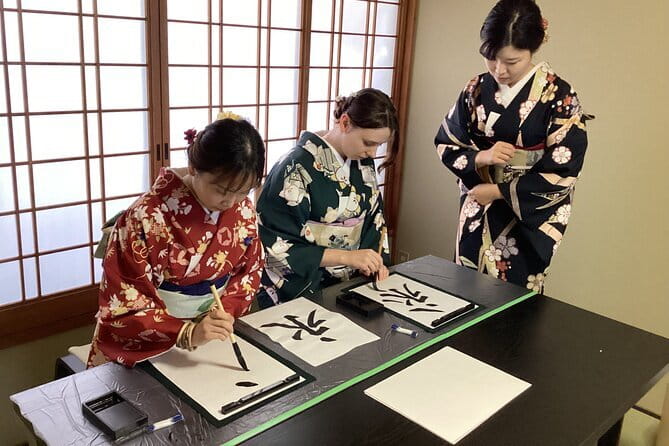
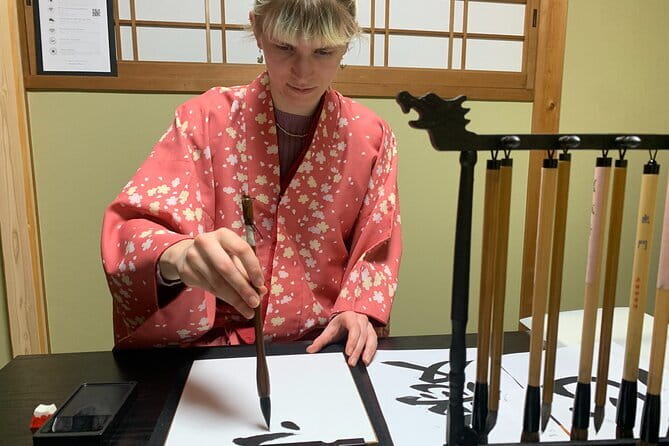
Next comes hands-on practice. The teachers show you the basic movements, then give you time to try them yourself. Expect to make several attempts. The most useful part of the class is the correction between tries, since a small change in brush angle or pressure can alter the look of a stroke.
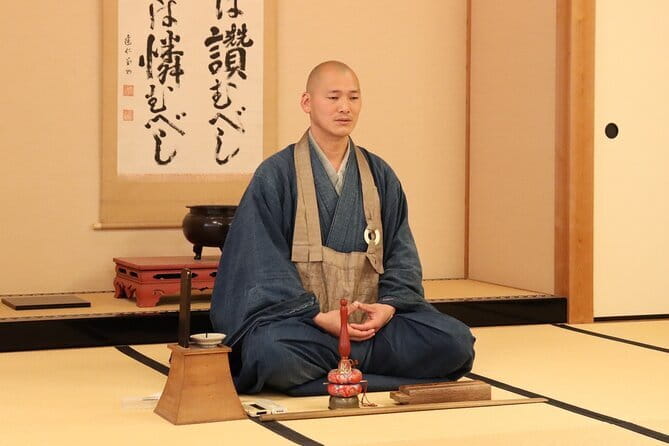
The master leads the instruction, with an assistant helping participants as they work. The teaching style is patient and encouraging. If your first few efforts are uneven, that is normal. The class is designed for beginners, and you are not expected to arrive with artistic training or prior experience.
By the final part of the session, you create a finished piece to take home. This gives the activity a clear purpose. You are not only learning about calligraphy, you are producing a personal reminder of your time in Kyoto.
The Teaching Style: Patient, Calm, and Beginner-Friendly
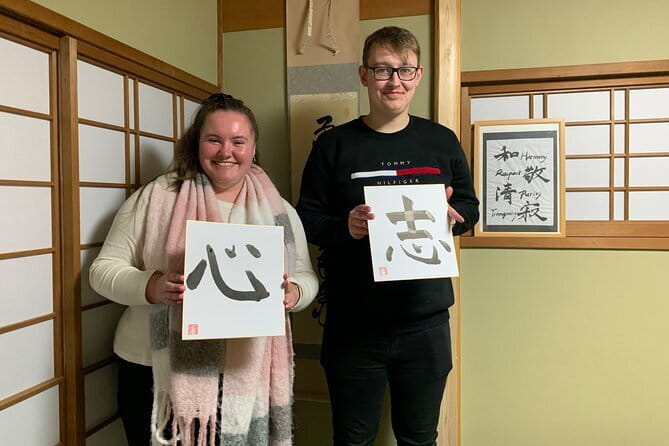
The strongest part of this experience is the instruction. The master and assistant are described as kind, helpful, and patient, which matters in an activity where concentration is part of the challenge.
Calligraphy looks simple from a distance. A brush touches paper, and a character appears. In practice, it requires attention to pressure, timing, and movement. You need to concentrate, but the atmosphere remains peaceful rather than stern.
That balance is important for families with older children, couples, and adults who may feel unsure about trying an unfamiliar art form. A patient teacher lets you focus on learning instead of worrying about getting every stroke perfect.
The class also includes a short explanation of the history of the language. This adds meaning to the exercise, especially if you are visiting Japan for the first time. You leave with a better sense that the characters are part of a larger writing tradition, not just decorative symbols.
The instructors are not identified by personal names in the available information. You can expect teaching from the class master, supported by an assistant. Their role is hands-on, so you should have a chance to receive help while practicing.
How the Short Format Affects the Experience
A 50-minute class is both a strength and a limitation.
For a busy Kyoto itinerary, the timing is excellent. You can fit the session into a morning or afternoon of sightseeing without giving up half a day. It also works well for anyone who wants a cultural activity but is not ready to commit to a long workshop.
The compact schedule keeps the lesson moving. You receive an introduction, practice the basic techniques, and complete a keepsake before the session ends. That is a satisfying amount to accomplish in less than an hour.
Still, the time can feel tight. One participant felt that 90 minutes would allow more room for practice. That is a fair point. If you want detailed instruction, several rounds of correction, or a chance to explore different styles, you may find the class moves quickly.
The format appears designed to work for both children and adults. Since children under 12 cannot join, the youngest participants are older children and teenagers. A 50-minute session is long enough to hold attention without making the activity feel like a formal school lesson.
I would think of this as an introduction, not a full study of Japanese calligraphy. You get the basic experience, the cultural setting, the guidance, and a finished item. You do not get an extended apprenticeship in brushwork.
What You Take Home

The finished calligraphy piece is one of the best reasons to book. A souvenir bought in a shop can be attractive, but it does not carry the same memory as something you created yourself.
Your result may not look like the teacher’s work, and that is part of the point. The value is in seeing your own progress from the first practice marks to the final piece. If you need several attempts before the brush behaves, the process gives the keepsake more meaning.
The class is also a good option if you want a souvenir that is easy to connect with Japanese culture. Calligraphy reflects language, design, discipline, and traditional craft in one small activity.
You should protect the finished work after class. The supplied information does not specify packaging or shipping, so bring a suitable folder or bag if you are carrying it around Kyoto for the rest of the day.

Is $43 a Fair Price?
At $43 per person, this is not the cheapest short activity in Kyoto. The value depends on what you want from the hour.
You are paying for more than supplies. The price includes instruction in English, access to a historic townhouse, an explanation of calligraphy and language, guided practice, and a take-home result. The class also gives you a structured cultural experience in a central sightseeing area.
I think the price is reasonable if you value a personal activity rather than another temple visit. You are getting direct instruction, not just a demonstration. The setting also makes a difference. A lesson in a 150-year-old townhouse feels more rooted in place than a calligraphy session with no connection to Kyoto’s older neighborhoods.
The value is less convincing if you want intensive instruction. At 50 minutes, you are paying for an introduction. Someone hoping to build real calligraphy skill may prefer a longer workshop, if available elsewhere.
The best way to judge the price is to compare it with the rest of your Kyoto day. If you already have a full schedule of major sights, this short class adds a calm cultural break without taking over the itinerary. If you have plenty of free time and want extended practice, the limited duration may be the bigger issue than the price.
Who Will Enjoy It Most
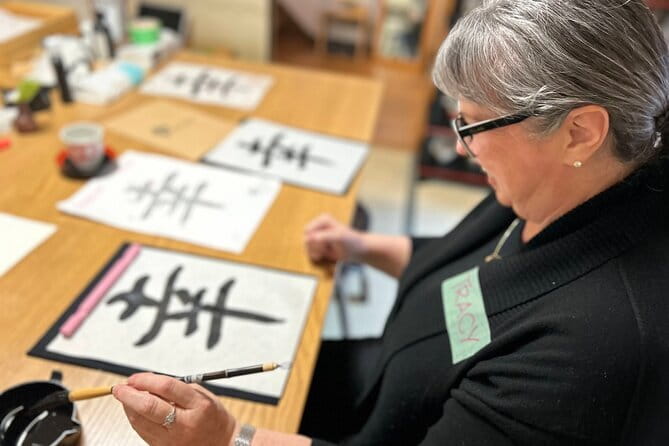
This class suits you if you want a hands-on introduction to Japanese culture, especially if you have never tried calligraphy before. The teachers work with beginners, so lack of experience is not a barrier.
It is a good fit for:
- Adults looking for a quiet break from sightseeing
- Families with children aged 12 and older
- Couples who want to make a shared souvenir
- Teenagers interested in Japanese language or art
- First-time visitors who want an activity with local cultural context
- People who prefer doing something over simply viewing another attraction
The experience may not suit you if you dislike seated activities that require concentration. The class is peaceful, but it is not passive. You need to pay attention and repeat the movements.
It may also disappoint serious art students who want a long session. The teaching is supportive, but the 50-minute structure limits how far the lesson can go.
Practical Details That Matter
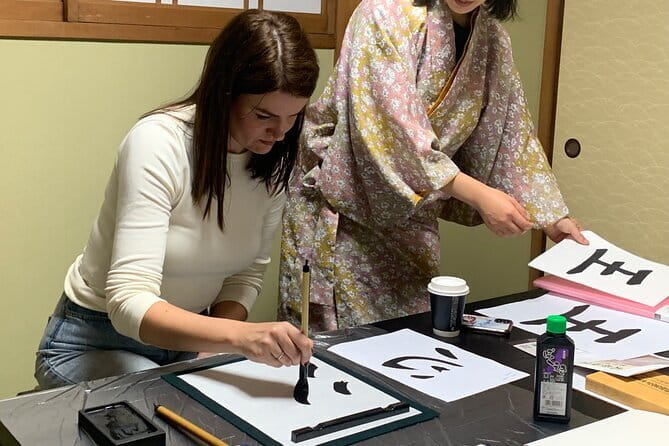
Wear socks. The instruction specifically requires them, and if you arrive without socks, you will need to purchase a pair. This is the kind of small detail that can cause needless trouble, so check your clothing before leaving.
Children under 12 are not allowed to participate. Older children and teenagers can join, and the class is designed for both children and adults.
The maximum group size is 18 people. That is not a private lesson, but it is still a manageable size for a beginner activity with a master and assistant. Your experience may depend on how full the particular session is.
The meeting point is near public transportation in Kyoto’s Higashiyama Ward. Since the activity returns to the starting point, you can continue exploring Ninenzaka after class without needing to find a new end location.
You receive a mobile ticket. Confirmation is normally provided at booking, although bookings made within eight hours of the start time are confirmed as soon as possible and depend on availability.
The class requires good weather. If poor weather causes cancellation, you are offered another date or a full refund. You can also cancel for a full refund up to 24 hours before the start time. Changes or cancellations made within 24 hours are not accepted, and the paid amount is not refunded.
How to Fit It Into a Kyoto Day
The easiest plan is to place the class alongside your Ninenzaka and Higashiyama sightseeing. You can explore the historic streets before or after the lesson, then continue on foot to other nearby sights.
The class is short enough to use as a fixed appointment inside a flexible day. Allow extra time to reach the townhouse, since Ninenzaka is a popular area and street conditions can slow you down. The activity itself lasts about 50 minutes, but your overall schedule should include time for arrival and departure.
I would avoid booking it as the only fixed event on a day when you have a tight series of reservations elsewhere. The class is simple to fit into a plan, but the exact pace of a busy Kyoto day can be unpredictable.
This is also a useful rainy-day alternative only if the provider confirms that the session will run. Since poor weather can lead to cancellation, keep your plans flexible and check for updates if conditions are bad.
Should You Book This Kyoto Calligraphy Class?
Book it if you want a personal, low-pressure cultural activity in a memorable Kyoto setting. The patient teaching, English instruction, and take-home artwork make it accessible even if you have never held a calligraphy brush.
I especially recommend it for a busy itinerary. Fifty minutes gives you a genuine cultural experience without requiring a full afternoon. The class also provides a welcome pause after walking around Ninenzaka.
Think twice if you want a long, technical workshop. The session can feel rushed for anyone hoping to practice at length. But for a first taste of Japanese calligraphy, the combination of a historic townhouse, kind instruction, and a handmade souvenir makes the $43 fee a sensible choice.
FAQ
Where does the Japanese calligraphy class take place?
The class takes place at Tea Ceremony & Cultural Experience Kangetsu Kyoto, at 349-19 Masuyacho, Higashiyama Ward, Kyoto, 605-0826, Japan.
How long does the calligraphy experience last?
The experience lasts approximately 50 minutes.
Is the class taught in English?
Yes. English-language experiences are available every day.
Is the class suitable for beginners?
Yes. The course is designed for beginners and introduces essential Japanese calligraphy techniques.
Can children participate?
Children under 12 years old are not allowed to participate. The course is designed for both children and adults who meet the age requirement.
Do I need to wear anything specific?
You must wear socks. If you forget, you will need to purchase socks.
Is there a group-size limit?
Yes. The activity has a maximum of 18 participants.
What happens if bad weather cancels the class?
If the experience is canceled due to poor weather, you can choose a different date or receive a full refund.
More Workshops & Classes in Kyoto

More tours in Kyoto we've reviewed




Workshops, compared.
 ★ 4.3Kyoto: 45-Minute Tea Ceremony Lesson ExperienceFrom $2245 min
 ★ 5.0Ramen Cooking Class at Ramen Factory in KyotoFrom $131
 ★ 4.9Kyoto: Ramen Cooking Class at a Ramen Factory with SouvenirFrom $1271h 30m
 ★ 4.9Kyoto: Samurai Class, Become a Samurai WarriorFrom $70
 ★ 5.0Ninja 1-hour Hands-on Lesson by Japanese master in Kyoto -EntryFrom $80
 ★ 5.0Kyoto: Ramen, Gyoza, and Onigiri Cooking ClassFrom $901h 30m