
Reviewed · WORKSHOPS
Kyoto: Japanese Calligraphy Workshop
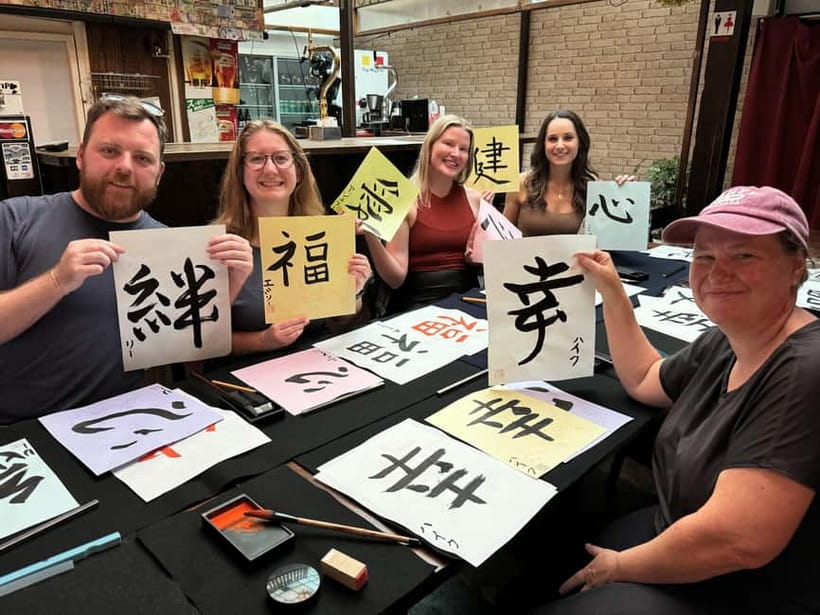
The most rewarding part of this Kyoto workshop is the moment brush, ink, and rice paper turn a few simple strokes into a Japanese character with meaning. At Gojo Paradiso, instructor Takako teaches shodo step by step, making this a real lesson rather than a quick souvenir activity.
I like the patient, personal teaching and the chance to take home finished work on beautiful rice paper. I also like the small group size, limited to 10 people, which gives you room to ask questions and get help with each exercise.
The main thing to consider is the short format. One to two hours is enough for a warm introduction, but not enough to make you an accomplished calligrapher. Children under 10 cannot join, and you need to reserve at least one day ahead.
In This Review
- Key points to know before you book
- Why this short Kyoto class works so well
- Arriving at Gojo Paradiso by the Takase River
- The opening lesson: what shodo means
- Practicing strokes before writing kanji
- Choosing a character and writing your name
- Creating the final rice-paper artwork
- A quiet activity with a small group
- How the timing fits into a Kyoto itinerary
- Who will enjoy this experience most
- Practical value at $32 per person
- Small drawbacks to keep in mind
- Should you book the Kyoto calligraphy workshop?
- FAQ
- Where is the calligraphy workshop held?
- How do I reach Gojo Paradiso?
- How long does the activity last?
- How much does the workshop cost?
- Is the workshop suitable for complete beginners?
- What languages are spoken?
- Can I take my calligraphy home?
- Can children join the workshop?
- Is the venue wheelchair accessible?
- Do I need to reserve ahead of time?
- Can I cancel my booking?
Key points to know before you book
- Practice comes before the final artwork: You learn basic brush strokes before writing a kanji character.
- Takako teaches in English and Japanese: Her instructions are clear, patient, and suited to complete beginners.
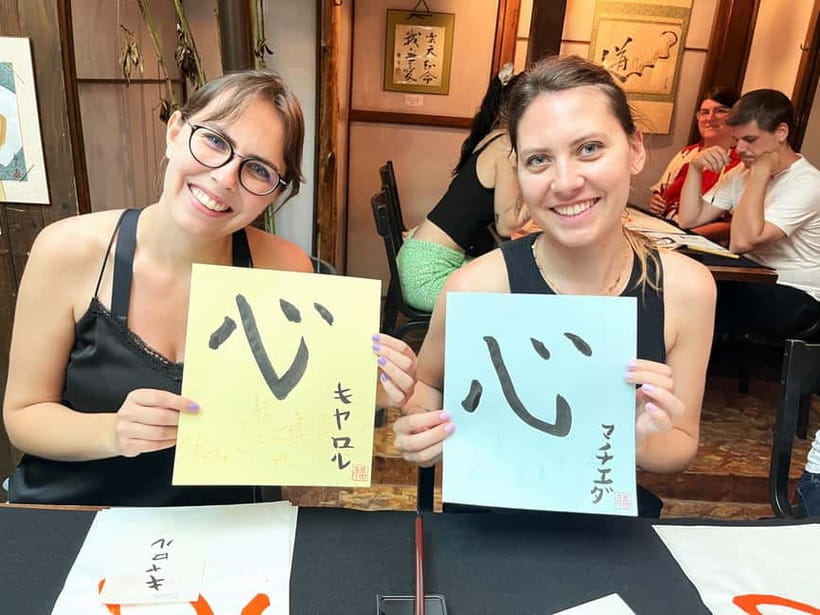
- Your name can become part of the lesson: The class includes writing your name in kanji.
- You take home more than a practice sheet: Your finished work is placed on rice paper, signed in kanji, and stamped by the teacher.
- The setting is quiet and central: Gojo Paradiso sits beside the Takase River on Kiyamachi Street.
- The $32 price is strong value: Supplies, instruction, and a personal cultural activity are included.
Why this short Kyoto class works so well
Kyoto offers plenty of grand sights, but some of the best cultural memories come from sitting down and trying something with your own hands. This shodo class gives you that chance without requiring a full day or prior artistic skill.
You begin with the basics of Japanese calligraphy, including its history and meaning. Then you work through brush exercises before attempting a character of your own. That order matters. Instead of handing you a brush and hoping for the best, the instructor shows you how small changes in pressure, angle, and movement affect the line.
I especially like this approach for first-time visitors to Japan. You do not need to read Japanese, know kanji, or have practiced painting. The point is not perfect handwriting. The point is to understand how a character is built and to create something personal with guidance.
The class is also a good change of pace from sightseeing. Kyoto can involve a lot of walking, waiting, and looking. Here, you slow down, focus on one movement at a time, and leave with an object tied to the city.
A few more Kyoto tours and experiences worth a look


Arriving at Gojo Paradiso by the Takase River
The meeting point is Gojo Paradiso, along the Takase River on Kiyamachi Street. It is about a five-minute walk from Keihan Kiyomizu Gojo Station and around 10 minutes from Keihan Shichijo Station. The stated distance from Kiyomizu Gojo Station is 386 meters.
That central location makes the workshop easy to fit into a Kyoto day. You can schedule it between visits in the Gojo and Shichijo areas, or use it as a quieter activity after a morning of temples and shopping. Check your exact starting time when booking, since the activity lasts about one to two hours and available times can vary.
Gojo Paradiso also has a gallery area. At the end, you have time to take photos, look around, and place special orders if something catches your eye. The gallery adds a little more context to the class, since you can see calligraphy as finished art rather than only as a beginner exercise.
The venue is wheelchair accessible. That is useful to know, though you should still confirm the precise setup and access needs when making your reservation.
The opening lesson: what shodo means
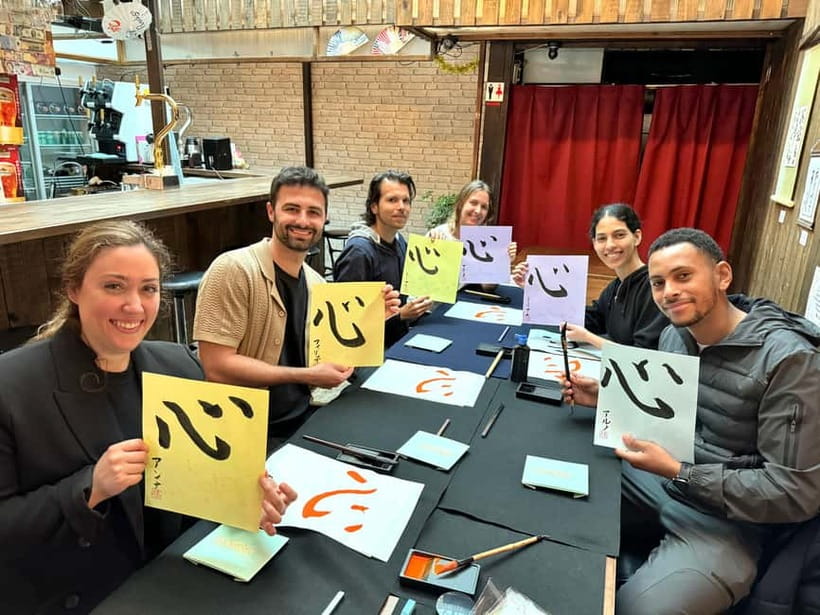
The first part introduces traditional Japanese calligraphy, known as shodo. The teacher explains the background and meaning of the art before asking you to start writing.
This introduction helps you understand why the brushwork matters. A kanji character is not simply a symbol copied from a page. It has an order, balance, and rhythm. The shape may look simple, but the way a line begins and ends changes its appearance.
The class uses English and Japanese instruction. Takako is described as a calligraphy master with a degree in calligraphy and awards, and her teaching style is friendly and encouraging. English-speaking participants can follow the explanations without needing a translator.
That language support is important for a hands-on class. You need to understand how to hold and move the brush, not just watch someone demonstrate from across the room. The teaching team also includes helpers, giving you extra support during the exercises.
Practicing strokes before writing kanji
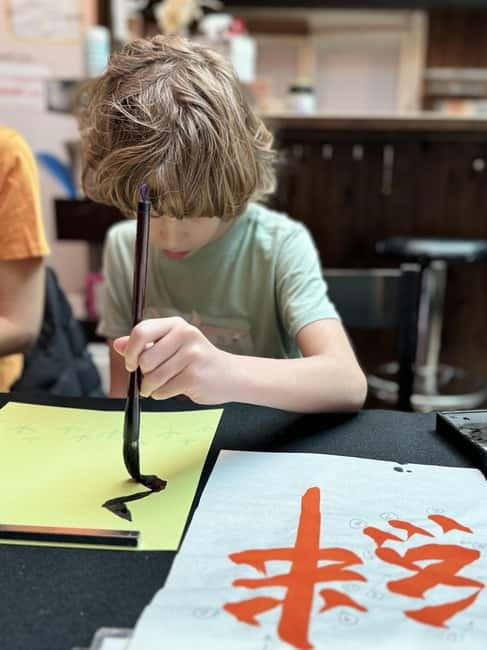
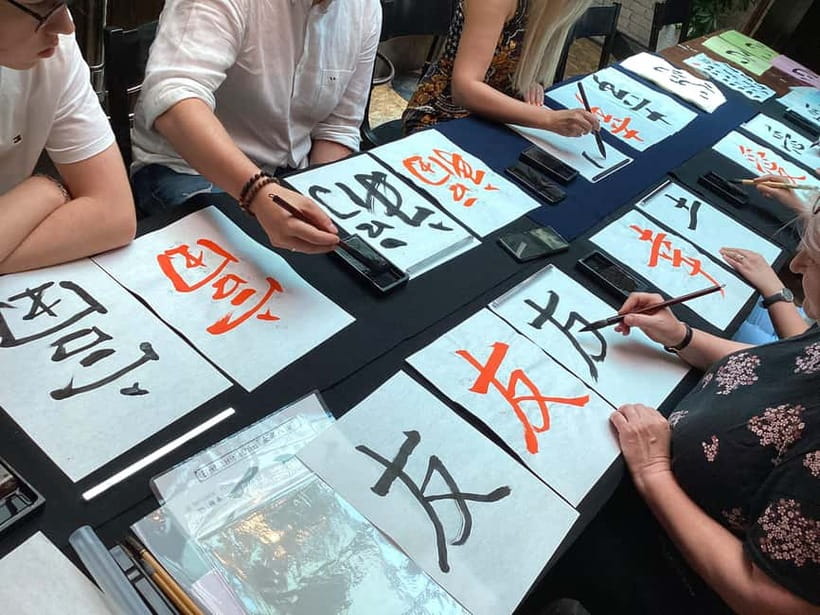
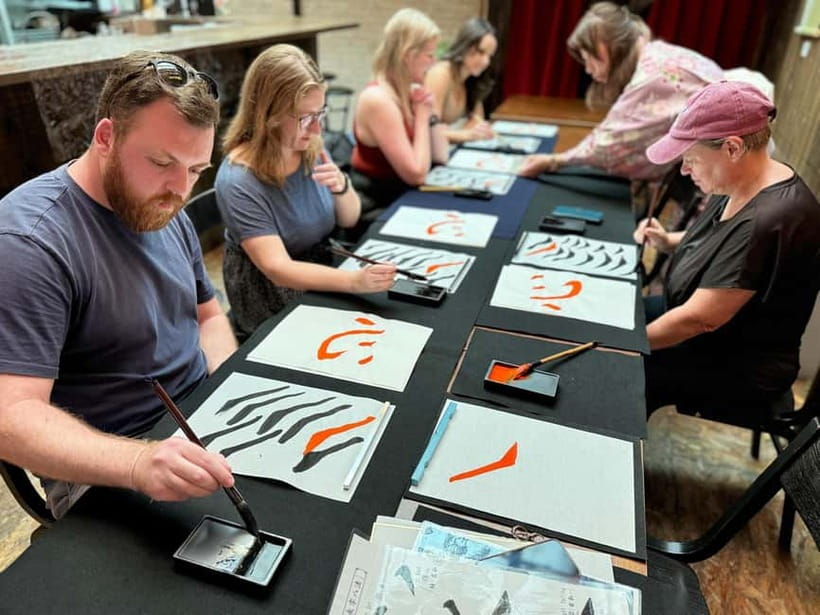
The practice section is where the workshop becomes useful rather than merely decorative. You work on basic brush strokes first, learning to control the ink and create different lines.
Expect to repeat exercises. That may sound modest, but repetition is the heart of calligraphy. It lets you feel how the brush behaves and gives you a better chance of producing a character you will be proud to keep.
Takako works individually with participants during the exercises. She offers corrections and encouragement, which is particularly helpful if your first strokes look uneven. They probably will. That is normal, and the class is designed for beginners.
The supplied materials are described as high quality, with everything needed provided. You do not need to arrive with brushes, ink, paper, or a special outfit. Just be prepared to concentrate and accept that your first attempt may be more expressive than exact.
I would not book this expecting a formal qualification or advanced instruction. The workshop introduces the art and gives you a satisfying first result. If you already practice Japanese calligraphy, you may find the content basic, though the guided attention and chance to write kanji in Kyoto could still appeal.
Choosing a character and writing your name
After practicing strokes, you move on to writing a kanji character. The supplied details do not specify a fixed character menu, so the exact choice may depend on the class and your discussion with the instructor.
A particularly nice feature is the chance to write your name in kanji. That gives the lesson a personal angle and produces a more distinctive memento than a standard souvenir bought from a shop.
You are not simply copying a printed design and leaving. The instructor helps you understand the character and supports you as you work toward your own version. The finished result will reflect your level of experience, but that is part of its charm.
For many people, the name exercise may be the most memorable section. You return home with a Japanese rendering of your name as well as a character connected to the lesson. It creates a direct link between your trip and the writing system you have been learning about.

Creating the final rice-paper artwork
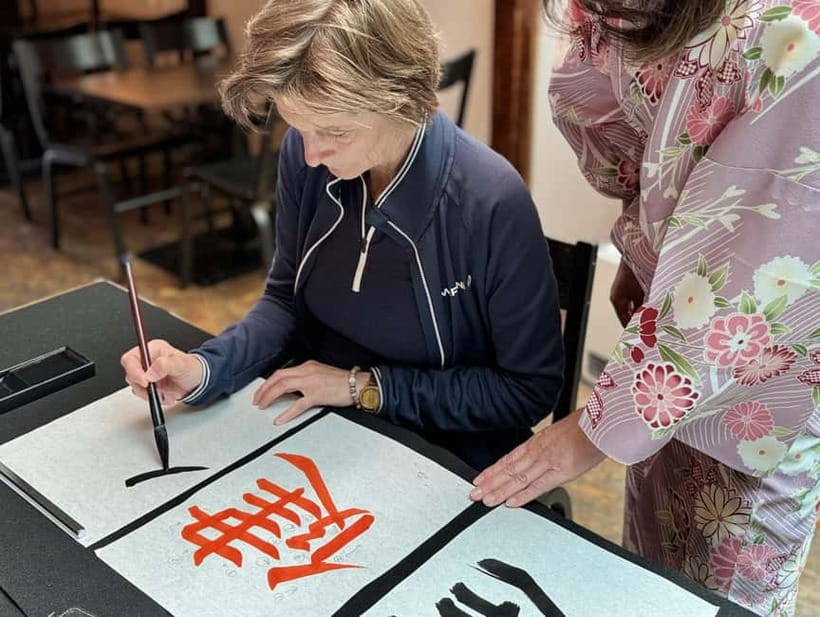
The final stage turns practice into a keepsake. You create a calligraphy piece on rice paper, then sign your name in kanji. The teacher adds a stamp, giving the work a traditional finishing touch.
This is where the $32 fee makes sense. The price includes the instructor, all necessary supplies, and the finished cultural activity. You are paying for guided time and materials, not only admission to a venue.
One of the most thoughtful details is a handmade calligraphy gift from the teacher, accented in gold. This is in addition to the work you create yourself. The gift is not the reason to book the class, but it adds a generous personal touch.
You should take care when carrying your artwork afterward. The information provided does not specify packaging or a protective tube, so ask the staff how best to transport the rice paper before you leave. If you have a busy day planned, keep this in mind.
A quiet activity with a small group
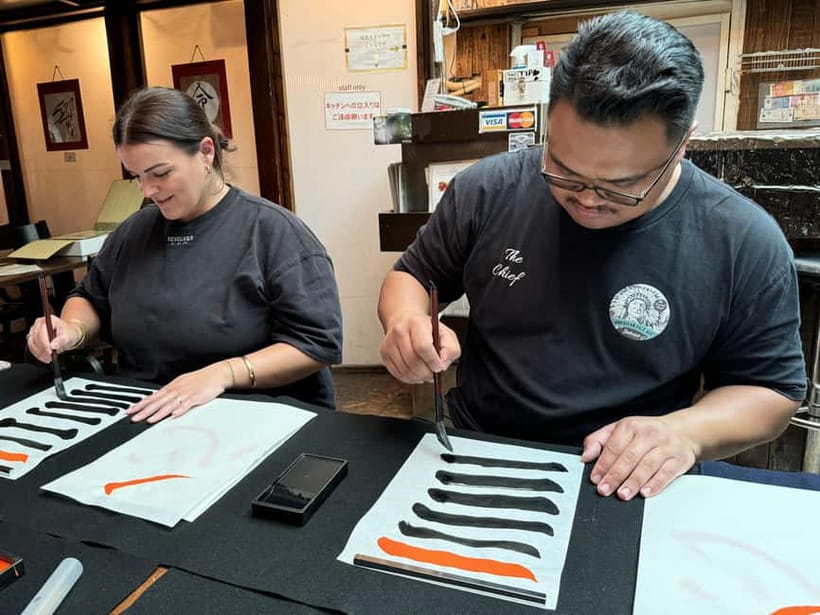
The group is limited to 10 participants. That is a useful middle ground. You get the social feel of a shared class, but the group is small enough for the instructor and helpers to spend time with individuals.
A quiet setting is another plus. Calligraphy requires attention, and a noisy room would undercut the experience. Gojo Paradiso’s position by the Takase River and its gallery setting suit the calm nature of the activity.
The workshop also works well for couples and friends. You can practice side by side, compare your first strokes, and encourage one another without needing to be good at art. It is an easy activity to share across different ages and interests, provided everyone is at least 10 years old.
Solo visitors should feel comfortable booking too. The class is structured around instruction, not around needing a private group. You will have a clear task from the start and support as you work.
How the timing fits into a Kyoto itinerary
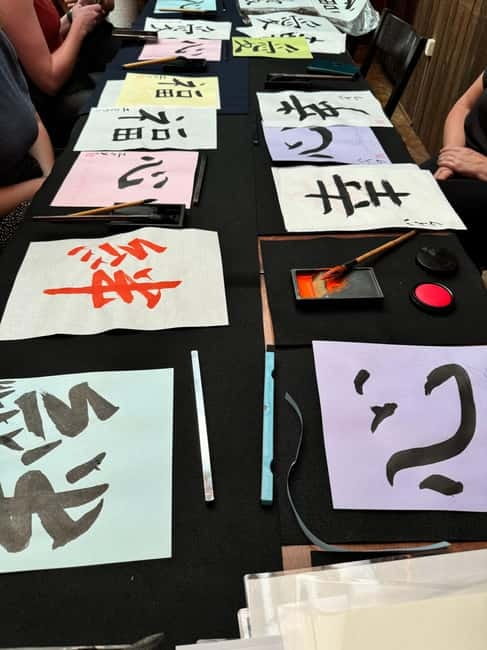
The one to two hour duration is long enough to feel substantial without taking over your day. You can pair it with nearby sightseeing, though the exact timing depends on the session you select.
I would avoid booking it in a rushed gap between two fixed reservations. Calligraphy rewards patience, and arriving worried about the next train or meal will make it harder to enjoy the quiet focus.
The workshop is also a sensible rainy-day plan. Unlike a long outdoor walk, it gives you a cultural activity indoors while still connecting you with a distinctly Japanese art form. The central location makes it practical when weather changes your plans.
Reserve at least one day in advance. You can reserve now and pay later, which helps if your Kyoto schedule is still being arranged. Cancellation is free up to 24 hours before the activity for a full refund, giving you some flexibility.
Who will enjoy this experience most
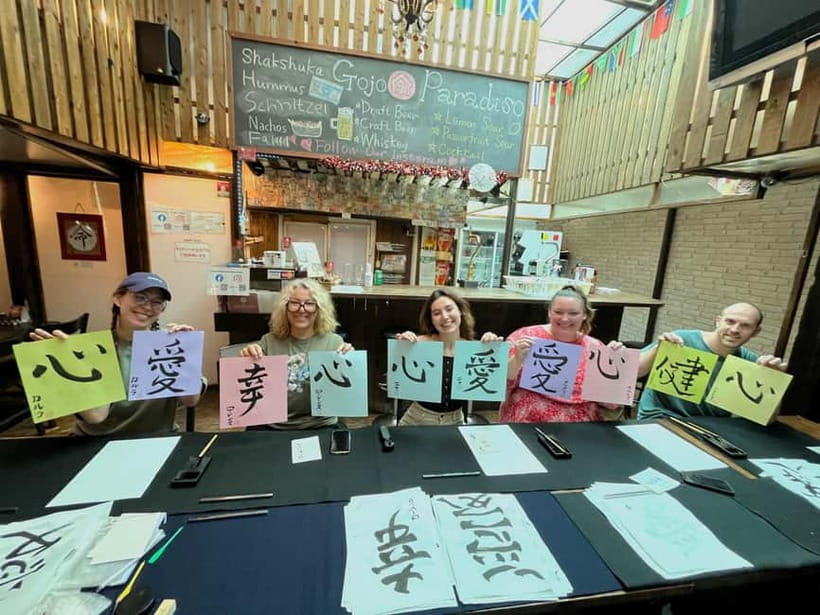
I would recommend this class to you if you want a cultural activity that is active but not physically demanding. It suits first-time visitors who want more than sightseeing photos, couples looking for a shared project, and families with older children.
It is also a good choice for anyone who likes meaningful souvenirs. Your work will not be factory-perfect, and that is precisely why it has value. You made it during your time in Kyoto, with the teacher’s guidance and stamp attached to the memory.
The class may be less suitable if you want an advanced lesson in calligraphy technique. The format is introductory, and the focus is on learning the basic strokes, writing a character, and finishing a piece within a short session.
Children under 10 are not allowed to participate. For older children, the small group and hands-on format should make the class easier to follow than a lecture, though individual attention spans will vary.
Practical value at $32 per person
At $32 per person, this is a reasonably priced Kyoto activity. A short workshop can feel expensive if it offers little beyond a demonstration. Here, the fee includes an instructor, materials, practice time, a finished rice-paper artwork, and a handmade calligraphy gift.
The value also comes from the personal attention. Takako has been praised for being patient, encouraging, and clear in English, while helpers assist with the exercises. You are not left to figure out the brushwork alone.
The class is not a bargain if your only goal is to buy Japanese calligraphy. Kyoto shops offer ready-made pieces, and a workshop takes time. But if you want to understand the process and create your own souvenir, the price is fair.
The published rating is 4.7 from 84 reviews, and the repeated praise centers on the same features: patient teaching, good materials, clear English, a quiet setting, and the pleasure of taking home finished work. Those are the qualities I would use to judge this activity.
Small drawbacks to keep in mind
The workshop is beginner-focused, so experienced calligraphers may want more technical depth. You also have limited time to practice, and your final piece may not look like a professional artist’s work.
That is not a flaw in the class, but it is worth setting the right goal. You are learning the foundations and making a personal memento, not completing a long studio course.
The duration is listed as one to two hours rather than one exact length. Check the available starting time and session details before booking. You should also reserve at least a day in advance, since last-minute participation is not guaranteed.
Finally, ask about protecting your finished rice paper if you have additional sightseeing planned. The artwork is part of the reward, so it is worth keeping it flat and safe for the rest of your trip.
Should you book the Kyoto calligraphy workshop?
Book this if you want a calm, personal activity with clear instruction and a souvenir you actually helped create. The location is convenient, the group is small, and the $32 price covers the supplies and teaching you need.
I would make it a priority for a first Kyoto visit if you have already planned the major temples and want something more hands-on. Takako’s patient English instruction, individual help, kanji name exercise, teacher’s stamp, and handmade gift give the class more substance than a quick brush-and-photo stop.
Skip it if you want advanced calligraphy training or prefer to spend every hour outdoors. For most beginners, though, this is a practical and memorable way to spend part of a Kyoto day.
FAQ
Where is the calligraphy workshop held?
The workshop takes place at Gojo Paradiso on Kiyamachi Street, along the Takase River in central Kyoto.
How do I reach Gojo Paradiso?
It is about a five-minute walk from Keihan Kiyomizu Gojo Station and a 10-minute walk from Keihan Shichijo Station. The stated distance from Kiyomizu Gojo Station is 386 meters.
How long does the activity last?
The workshop lasts one to two hours. Check availability for the specific starting times.
How much does the workshop cost?
The price is $32 per person.
Is the workshop suitable for complete beginners?
Yes. The instructor teaches the basics step by step, beginning with the history and meaning of calligraphy and continuing with basic brush strokes and kanji.
What languages are spoken?
Instruction is available in English and Japanese.
Can I take my calligraphy home?
Yes. You create a calligraphy piece on rice paper, sign your name in kanji, and receive the teacher’s stamp. A handmade calligraphy gift is also provided.
Can children join the workshop?
Children under 10 years old are not suitable for this activity. There is no minimum age stated for older children.
Is the venue wheelchair accessible?
Yes, Gojo Paradiso is wheelchair accessible.
Do I need to reserve ahead of time?
Yes. Reservation is required at least one day in advance.
Can I cancel my booking?
You can cancel up to 24 hours in advance for a full refund. You can also reserve now and pay later.
More Workshops & Classes in Kyoto
More tours in Kyoto we've reviewed



Workshops, compared.
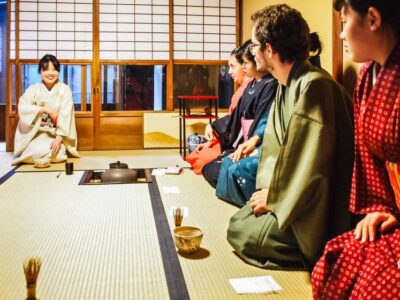 ★ 4.3Kyoto: 45-Minute Tea Ceremony Lesson ExperienceFrom $2245 min
 ★ 5.0Ramen Cooking Class at Ramen Factory in KyotoFrom $131
 ★ 4.9Kyoto: Ramen Cooking Class at a Ramen Factory with SouvenirFrom $1271h 30m
 ★ 4.9Kyoto: Samurai Class, Become a Samurai WarriorFrom $70
 ★ 5.0Ninja 1-hour Hands-on Lesson by Japanese master in Kyoto -EntryFrom $80
 ★ 5.0Kyoto: Ramen, Gyoza, and Onigiri Cooking ClassFrom $901h 30m