
Reviewed · GION & GEISHA WALKS
Kyoto: The Original Geisha Walking Tour (established 2002)
Kyoto’s geisha districts are easy to admire and easy to misunderstand. This 105-minute walk with Peter MacIntosh, a geisha culture expert and photographer, uses the streets, traditional buildings, and local stories to explain what you are actually seeing. His research stretches across three decades, which gives the tour more substance than a quick hunt for a costumed photo.
I like the small group limit of nine, since it should make questions easier and keep the walk from feeling like a parade. I also like the practical photography advice and the promise of straight answers about geisha culture, rather than recycled movie myths. The main catch is simple: you may not see a maiko or geiko, and the tour does not pretend otherwise.
In This Review
- Key points at a glance
- Starting at Minamiza Theatre at 4:00 p.m.
- Reading Kyoto’s Hanamachi streets
- Three decades of research in plain English
- What the 105-minute route gives you
- Photography tips and the rules that matter
- Maiko, geiko, and the luck factor
- Is $54 a fair price?
- Weather, comfort, and who should book
- Booking flexibility and practical planning
- Should you book the Original Geisha Walking Tour?
- FAQ
- Where does the tour meet?
- What time does the tour start and finish?
- How long is the walking tour?
- Is the tour conducted in English?
- Who leads the tour?
- Will I definitely see a maiko or geiko?
- Is photography allowed?
- Is the tour wheelchair accessible?
Key points at a glance
- Meet beside Minamiza Kabuki Theatre: The tour begins at 4:00 p.m. on the corner of Shijo and Kawabata, a clear central meeting point.
- Walk Kyoto’s Hanamachi streets: Expect cobblestones, traditional architecture, and a look at the districts known as the flower and willow world.
- Learn from Peter MacIntosh: His three decades of research and photography shape the stories and explanations.
- Keep the group small: No more than nine participants can join, a useful size for questions and street-side explanations.
- Use your camera with care: Photography is allowed, but tripods, video, audio recording, smoking, and intrusive photos are not allowed.
- Allow for luck: Seeing real maiko or geiko is possible, but never guaranteed.
Starting at Minamiza Theatre at 4:00 p.m.
Your meeting point is in front of the Minamiza Kabuki Theatre, at the corner of Shijo and Kawabata. The tour starts at 4:00 p.m. and finishes at about 5:45 p.m., so the timing gives you a useful late-afternoon window in Kyoto.
That location matters. Minamiza is a well-known central landmark, and meeting outside a major theatre is easier than searching for a small shop or obscure side street. You should still arrive with enough time to get oriented, especially if Kyoto is new to you.
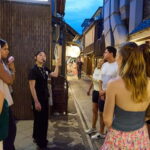
From there, Peter MacIntosh leads the group on foot into the Hanamachi districts. The walk is not presented as a series of ticketed sights. Its subject is the district itself: the streets, buildings, customs, and stories connected with geisha culture.
Wear comfortable shoes. You will be walking on cobblestones and should be ready for changing weather. Bring water and a camera if you want one, but leave the tripod at your accommodation.
A few more Kyoto tours and experiences worth a look


Reading Kyoto’s Hanamachi streets
The first strength of this experience is its setting. Hanamachi means geisha district, and the walk takes place among the traditional streets where the culture developed and continues today.
You can expect a scenic stroll through charming cobblestone lanes and past traditional architecture. The value is not just visual. A building or street can look attractive while telling you very little on its own. Peter’s role is to explain what these places represent and how they connect with the wider world of geisha entertainment.
The tour also places geisha culture in the context of Japanese art and popular culture. Woodblock prints, books, and films have shaped many outside ideas about geisha. Some of those ideas are accurate, some are simplified, and some are simply wrong. The walk gives you a chance to sort them out as you move through the real setting.
Because no exact sequence of streets or stops is promised, you should think of this as a guided district walk rather than a fixed sightseeing route. That is a benefit if you want interpretation and atmosphere. It may be less satisfying if you prefer a checklist of named landmarks.
Three decades of research in plain English
Peter MacIntosh brings more than a script memorized for a busy season. He has spent about 30 years researching and photographing geisha culture, and that long interest is central to the experience.
I like this format because geisha culture is a subject where short explanations can create more confusion than clarity. You may have questions about the difference between maiko and geiko, the meaning of clothing and makeup, or how the districts function. The tour is designed to give truthful answers and correct common misconceptions.
The phrase flower and willow world refers to the traditional world of geisha entertainment. It is a phrase with a poetic sound, but the tour aims to connect it with actual people, places, customs, and history rather than leaving it as a romantic label.
The supplied feedback includes a five-star rating from a Dutch participant who described the tour as inspiring, full of information, and led by a guide who knew a great deal about geisha culture. That matches the clearest reason to book: you are paying for Peter’s interpretation and stories, not simply for a walk through attractive streets.
What the 105-minute route gives you
Ninety minutes to two hours is a good length for this subject. At 105 minutes, the walk is long enough to build a clear picture without taking up an entire day in Kyoto.
The route begins with the city around Minamiza, then moves into Hanamachi streets. As you walk, expect the focus to shift between architecture, historical background, cultural details, and photography advice. The experience is built around conversation, so the exact balance may depend on the group’s questions.
That small-group design matters here. With a maximum of nine people, you should have a better chance to hear Peter in narrow streets and ask about details that catch your eye. It also makes the experience less anonymous than a large group tour.
The walk is wheelchair accessible, according to the activity information. Even so, the cobblestone setting and outdoor format mean you should consider your own comfort with walking surfaces and weather. The tour is not suitable for children under eight.
You are not buying entrance to a museum or a reserved performance. There are no meals or drinks included, and hotel pickup and drop-off are not provided. Plan to reach the meeting point under your own arrangements and carry anything you need for the 105 minutes.
Photography tips and the rules that matter
Photography is part of the tour, which makes sense given Peter’s background. You can bring a camera and receive practical tips on photographing Kyoto’s streets and traditional architecture.
The rules are important. Do not use tripods, record video, or make audio recordings. Smoking is also not allowed during the activity.
Most important, respect the privacy of geishas and local people. Photography is allowed, but that does not mean every person you see is available for a close-up. If a maiko or geiko appears, the right approach is restraint. Listen to Peter’s guidance and avoid blocking streets, following people, or treating someone’s daily work as a staged performance.
This is also why the possibility of seeing a maiko or geiko should be treated as a bonus, not the product itself. The tour gives you context even if nobody appears during the walk. That honest expectation is a plus.
Other walking tours we've reviewed in Kyoto


Maiko, geiko, and the luck factor
The chance of seeing real maiko and geiko adds excitement, but there is no guarantee. That uncertainty is worth taking seriously before you book.
If your only goal is to photograph a maiko, this is a poor bet. Street sightings depend on timing and chance, and the activity does not promise a meeting, performance, or posed photograph.
If you want to understand the culture and see the districts where it belongs, the uncertainty is easier to accept. The walk still has a full purpose without a sighting. You get explanations about the past and present of geisha culture, plus a chance to ask questions while standing in the actual neighborhood.
I would also avoid treating a sighting as the measure of success. The strongest part of the tour is the informed walk through the Hanamachi setting. A brief glimpse of a maiko or geiko may be memorable, but it cannot replace the cultural context.
Is $54 a fair price?
The price is $54 per person. That is not the cheapest way to walk through Kyoto, since you can explore public streets without paying an admission fee.
The value comes from the guide. Peter’s three decades of research, his photography background, the small group, and the chance to ask direct questions give the fee a clear purpose. You are paying for interpretation that you would not get from wandering alone.
The price makes more sense if geisha culture is a major interest for you, or if you want a thoughtful introduction before attending a cultural performance or visiting other historic parts of Kyoto. It is less convincing if you mainly want general sightseeing or a guaranteed photograph.
The included souvenir postcards are a pleasant extra, but they should not drive your decision. Meals, drinks, and transportation are not included, so your total spending will be slightly higher if you need refreshments or paid transport before or after the walk.
A useful way to judge the cost is to ask how much you value access to a specialist. If you would spend an hour reading about geisha culture but still have unanswered questions, the guided format may be worth it. If you prefer to move at your own pace and stop whenever you like, a self-guided walk will cost less.
Weather, comfort, and who should book
This is an outdoor walking experience, so prepare for any weather condition. Comfortable shoes are essential, and water is sensible. Kyoto’s streets can be pleasant in mild weather but tiring if you are not dressed for the conditions.
The tour suits adults and older children who can manage 105 minutes of walking and who are willing to listen, ask questions, and follow photography rules. Children under eight cannot join.
It is especially suitable for:
- First-time Kyoto visitors who want cultural background, not just pretty streets
- People interested in Japanese history, photography, art, or traditional performance
- Visitors who prefer small groups and direct access to a guide
- Anyone unsure which common ideas about geisha are true
- Photographers who want advice on respectful street photography
It may not suit you if you need a fully indoor activity, dislike walking on cobblestones, or expect a guaranteed sighting of maiko or geiko. It is also not the right choice for anyone hoping to record the tour, since video and audio recording are prohibited.
Booking flexibility and practical planning
You can cancel up to 24 hours before the activity for a full refund. The reserve-now-and-pay-later option lets you hold a place without paying immediately, which is useful when your Kyoto schedule is still changing.
The activity is conducted in English with a live guide. It is a small-group tour limited to nine participants, rather than a private tour.
I would place it on a day when you are already in central Kyoto. The 4:00 p.m. start leaves your morning and early afternoon free, and the 5:45 p.m. finish gives you time to continue your evening plans. Since the route is on foot and no hotel pickup is offered, allow time to reach Minamiza Theatre on your own.
The activity information gives a rating of 4.7 from three ratings, including a verified five-star rating dated January 21, 2026. The sample feedback praises Peter’s information, enthusiasm, and ability to explain geisha culture. With only a small number of ratings available, I would treat that score as encouraging but not as the only reason to book.
Should you book the Original Geisha Walking Tour?
Book it if you want a serious, compact introduction to Kyoto’s geisha districts led by a specialist. The small group, clear meeting point, photography advice, and three decades of research give the walk a stronger purpose than a simple neighborhood stroll.
Do not book it solely to see a maiko or geiko. That may happen, but it is not promised, and respectful conduct comes first. The better reason to go is to understand the streets, traditions, images, and myths surrounding the flower and willow world.
At $54, I see good value for someone who wants cultural explanation and the chance to ask questions in English. For independent explorers focused on low-cost sightseeing, it is an optional splurge. For anyone curious about geisha culture and traditional Kyoto, it is a well-focused way to spend 105 minutes.
FAQ
Where does the tour meet?
Meet in front of the Minamiza Kabuki Theatre on the corner of Shijo and Kawabata.
What time does the tour start and finish?
The tour starts at 4:00 p.m. and finishes at about 5:45 p.m.
How long is the walking tour?
The activity lasts 105 minutes.
Is the tour conducted in English?
Yes. The tour has a live English-speaking guide.
Who leads the tour?
Geisha culture expert and photographer Peter MacIntosh leads the walk.
Will I definitely see a maiko or geiko?
No. Seeing maiko or geiko is possible, but there is no guarantee.
Is photography allowed?
Yes, photography is allowed. You must respect the privacy of geishas and local people. Tripods, video recording, and audio recording are not allowed.
Is the tour wheelchair accessible?
Yes, the activity is listed as wheelchair accessible. Comfortable shoes are still recommended because the walk includes cobblestone streets.
More Walking Tours in Kyoto
More Gion & Geisha Walks in Kyoto
More tours in Kyoto we've reviewed











Gion & Geisha Walks, compared.
 ★ 4.7Kyoto Geisha Walking Tour: Gion District & Hidden GemsFrom $252 hours
 ★ 4.7Kyoto: Gion Geisha District Walking Tour – Stories of GeishaFrom $202 hours
 ★ 4.9Best of Kyoto: Gion, Geisha, Pagodas & CobblestonesFrom $242 hours
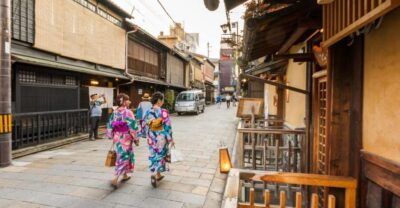 ★ 4.5Night Walk in Gion: Kyoto’s Geisha DistrictFrom $211h 40m
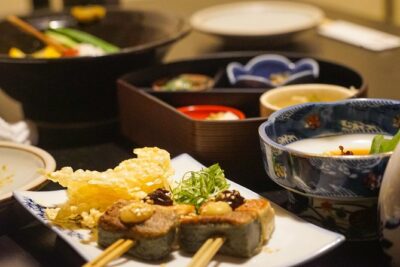 ★ 5.0Kyoto Night Foodie Tour in Gion (9+ dishes + 6 Sake tastings)From $163
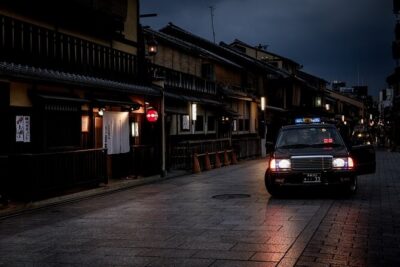 ★ 5.0Kyoto Gion Geisha District Walking Tour – The Stories of GeishaFrom $25