
Reviewed · E-BIKES
Kyoto : True Kyoto Avoid the crowds E-Bike Tour
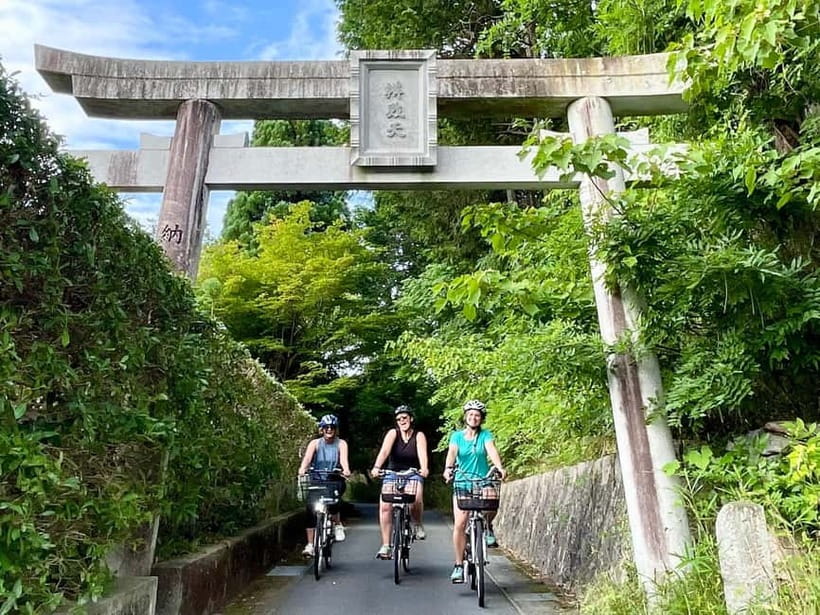
Kyoto’s best moments are often found away from its famous crowd magnets. This e-bike ride takes you into quieter parts of Northeast Kyoto, where Enkouji Temple and Shimogamo Shrine provide a calmer look at the city. Guide Maki keeps the pace easy, uses quieter roads, and adds stories along the way.
I like the mix of cycling and culture. You see more ground than on foot, yet the ride is gentle rather than athletic. I also like that local food tastings are part of the outing, giving you a small but useful taste of the area. The catch is that food is not included in the $88 price, so bring extra money if you want to try everything offered.
In This Review
- Key points at a glance
- Why this ride reaches a quieter Kyoto
- Starting at Raku-chari’s Sanjo branch
- Riding through Northeast Kyoto
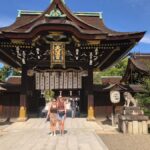
- Enkouji Temple and a quieter temple visit
- Shimogamo Shrine and Kyoto’s sacred side
- Local communities and food along the route
- Maki’s role in shaping the experience
- Is $88 a fair price?
- Who should book this Kyoto e-bike tour?
- Practical details before you reserve
- Should you book it?
- FAQ
- Where does the Kyoto e-bike tour start?
- Where does the tour finish?
- What is included in the price?
- Is food included?
- Which temples and shrines are visited?
- Who guides the tour?
- Is the tour suitable for children?
- Are there any height or age restrictions?
- Can I cancel for a full refund?
Key points at a glance
- Quiet Northeast Kyoto routes: Ride away from the busiest streets and see local communities at a slower pace.
- Enkouji Temple: Visit a peaceful temple that receives far less attention than Kyoto’s headline sights.
- Shimogamo Shrine: Add one of Kyoto’s important shrine sites to a route built around calm rather than crowds.
- Maki’s guiding style: Expect a relaxed pace, special stories, and a varied route.
- Easy electric cycling: The e-bike helps keep the ride comfortable, with water and a helmet supplied.
- Local tastes: Try regional delicacies along the way, with food purchases paid separately.
Why this ride reaches a quieter Kyoto
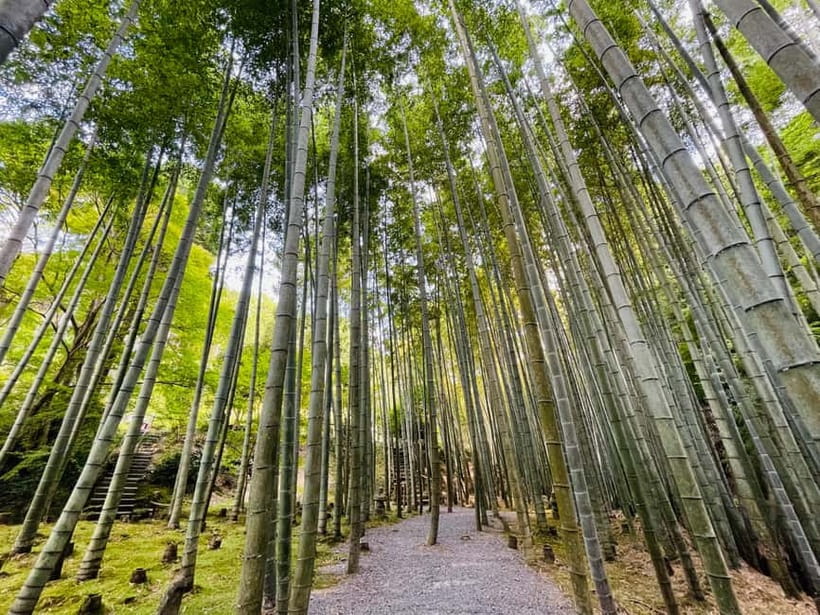
Many Kyoto outings funnel you toward the same famous temples and packed lanes. This tour takes a different approach. You start near central Kyoto, then pedal toward the northeastern part of the city, visiting religious sites and local areas that many first-time visitors miss.
That change matters. On foot, you may spend much of your day moving between major sights and crowds. By e-bike, you can cover more ground without turning the outing into a workout. You also get the simple pleasure of moving through Kyoto at street level, with a breeze and a better view of daily life than you get from a train or taxi.
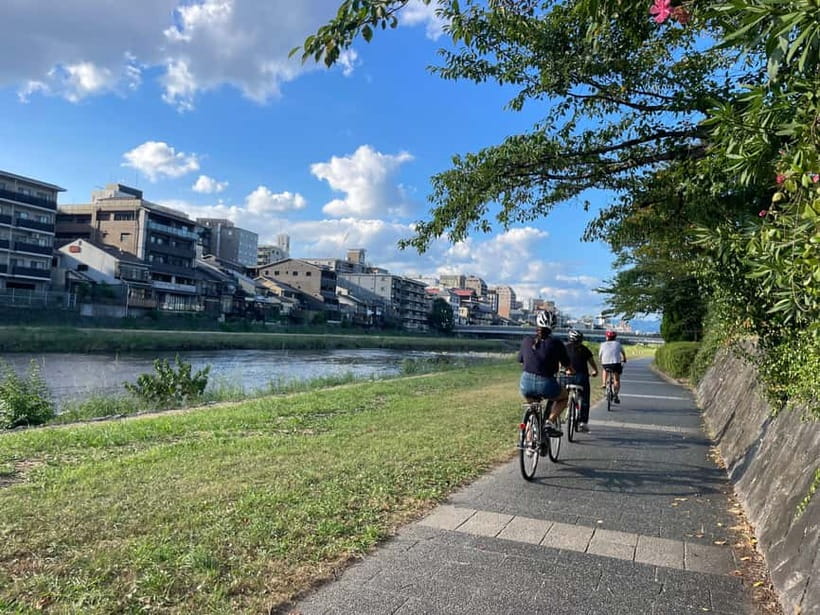
The route is described as safe and away from busy roads, and the city is notably flat. One rider compared Kyoto’s terrain to a pool table, which is a useful way to picture the effort involved. You should still feel comfortable riding a bicycle, but this is not presented as a strenuous cycling challenge.
Maki is the guide to know by name. The experience depends heavily on her route choices and storytelling, and the available feedback points to a calm, personal style. She is described as kind and passionate about Kyoto, with a talent for adding unusual stops and special stories rather than simply leading you from one famous site to another.
No group size or tour duration is provided, so you should not book this expecting a clearly defined half-day schedule unless the final booking details confirm it. What is clear is the character of the ride: relaxed, cultural, and designed for people who want a less standard view of Kyoto.
Other cycling tours in Kyoto
Starting at Raku-chari’s Sanjo branch
The meeting point is the Sanjo branch of Raku-chari, a bicycle rental shop in central Kyoto. This detail matters because the shop has more than one branch. You need to go specifically to the Sanjo location, not simply search for the company name and walk into the first shop you see.
At the start, you receive the e-bike and helmet. Water is included, which is a useful touch for a ride that combines cycling with several stops. The activity finishes back at the same meeting point, making the return simple if you have dinner plans or another central Kyoto activity afterward.
The Sanjo location is also practical for a city visit because it keeps the beginning and end in a central part of Kyoto. Still, give yourself enough time to identify the correct branch. A wrong turn at the start could create unnecessary stress before the ride begins.
The tour is offered in English. Since no other language is listed, English is the safe choice for anyone hoping to follow Maki’s explanations and local stories comfortably.
Riding through Northeast Kyoto
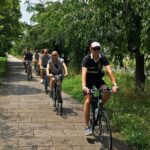
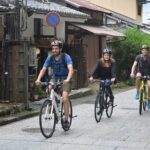
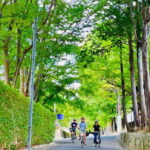
The ride itself is one of the strongest reasons to choose this experience. Kyoto is often explored by train, bus, or foot, but an e-bike gives you a useful middle ground. You can travel farther than you would on foot without losing contact with the streets, homes, small businesses, and local communities along the way.
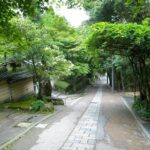
The route avoids busy roads as much as possible. That does not mean you can switch off completely. You are still riding in a city, so you need to follow Maki’s instructions and remain comfortable around other bicycles, pedestrians, and traffic. The safety note is encouraging, but it is not a promise that every meter will be traffic-free.
The electric motor should help on any mild incline and make the overall ride less tiring. This is especially useful if you are already spending several days walking around Kyoto. You can arrive at the temples with enough energy to look around rather than feeling that the cycling was the main event.
I like the pace described in the feedback: not strenuous, not rushed, and varied enough to keep the ride interesting. A fast route can turn temples into quick photo stops. A slower one gives you time to notice how the city changes as you leave central streets behind.
Enkouji Temple and a quieter temple visit
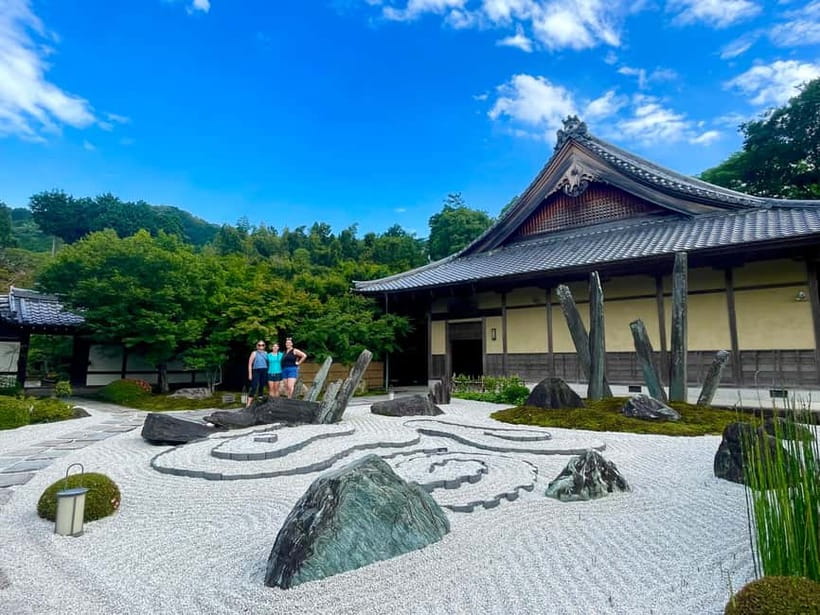
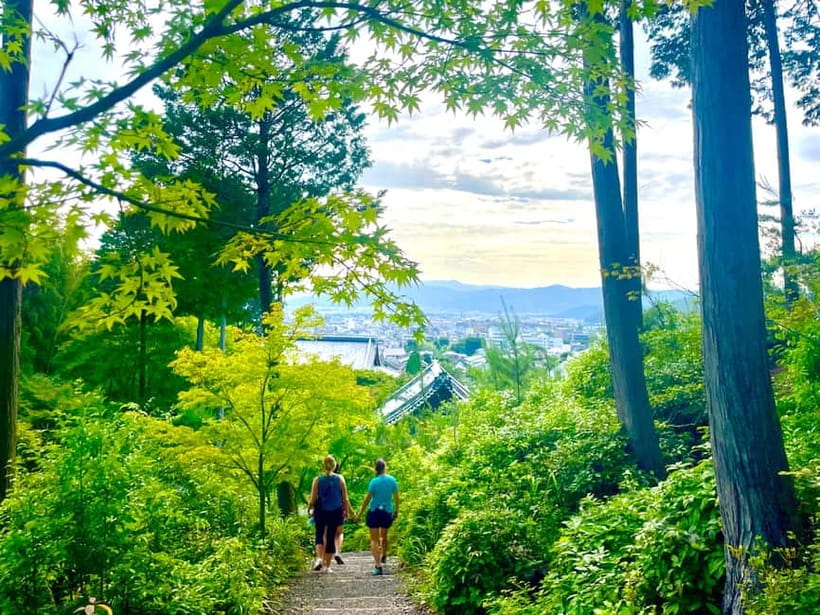
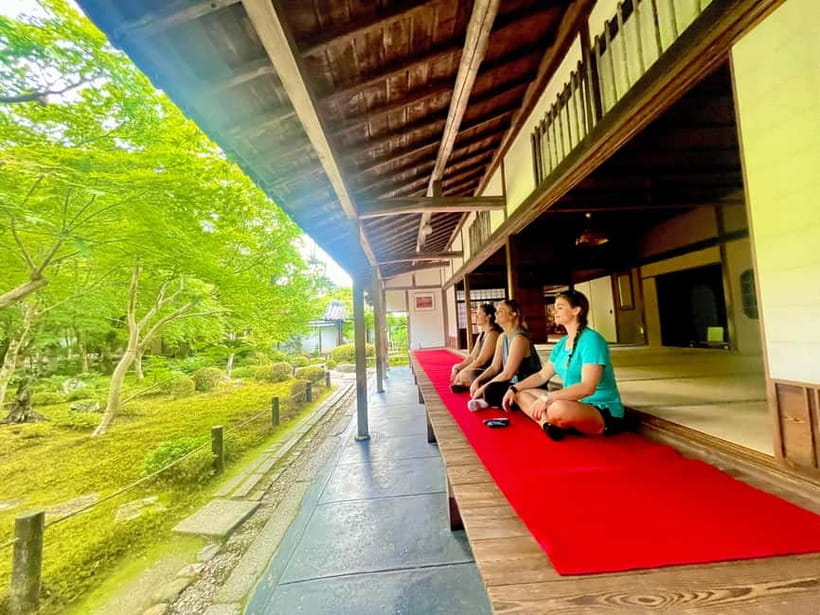
Enkouji Temple is one of the central stops. The tour presents it as a serene site that many people do not reach, which makes it a good match for the main aim of the outing. You are not simply checking off another famous Kyoto name. You are making room for quiet.
That calm setting is valuable in Kyoto. At the city’s most popular temples, the visual beauty can be diluted by packed paths and a steady stream of photographs. At Enkouji, the point is likely less about spectacle and more about atmosphere, attention, and the chance to hear Maki explain what makes the place special.
The available information does not specify admission arrangements, seasonal views, gardens, or the amount of time spent inside. Do not assume those details are included. What you can count on is a visit to the temple as part of the route, with Maki providing context in English.
I would especially consider this stop if you have already seen several of Kyoto’s major temples. It offers a change of rhythm. Instead of racing between headline attractions, you can pause at a place selected for its peaceful character.
Shimogamo Shrine and Kyoto’s sacred side
Shimogamo Shrine adds a different kind of religious site to the itinerary. Visiting both a temple and a shrine lets you see two important parts of Japanese religious tradition within one ride. You do not need to be an expert to appreciate the contrast, and Maki’s explanations should help connect the site to Kyoto’s wider story.
Shimogamo is also a useful stop for people who want more than pretty buildings. Shrines are active places of worship, not just historic displays. The right approach is respectful observation: keep your voice low, follow local signs, and watch what people around you are doing before entering a ritual area.
The listing does not promise a ceremony, special access, or a particular seasonal event. You should book it for the chance to visit the shrine as part of a thoughtful cycling route, not for a guaranteed performance or private encounter.
Placed alongside Enkouji, Shimogamo helps give the ride variety. One stop offers a serene temple setting, while the other brings you to a major shrine associated with Kyoto’s spiritual life. The route is stronger for having both.
A few more Kyoto tours and experiences worth a look

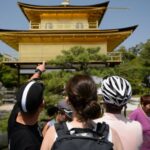
Local communities and food along the route
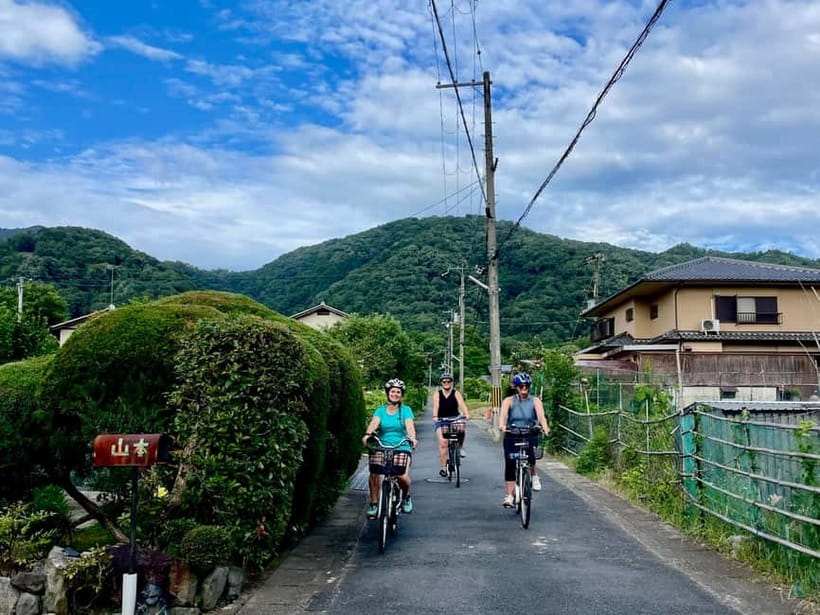
The tour also passes through local community areas. This may be the part that most clearly separates it from a standard sightseeing circuit. You get to see Kyoto not only as a collection of temples, but as a lived-in city where people work, shop, travel, and carry on with ordinary routines.
The supplied details do not name specific neighborhoods or food stops, so you should avoid expecting a fixed menu or a famous restaurant visit. The promise is more modest and more appealing: chances to taste local delicacies and learn about the flavors of the area.
Food is not included in the $88 price. That is an important point when comparing this tour with other Kyoto activities. You are paying for the e-bike, helmet, water, guiding, and visits to shrines and temples. Any tastings or food purchases are extra.
This arrangement gives you some freedom. You can spend only a little on small samples, or buy more if something catches your eye. If you have dietary restrictions, allergies, or strong dislikes, ask about the food before booking because no menu or ingredient information is provided.
I like the food element because it links the ride to daily Kyoto rather than treating the city as a museum. Just keep your expectations realistic. The information promises local delicacies, not a full meal or a dedicated food tour.
Maki’s role in shaping the experience
A bicycle tour lives or dies by its guide. The route matters, but so do the pace, road choices, explanations, and small decisions made during the day. Here, Maki is the key figure.
Her approach appears to be relaxed and personal. The ride is praised for special stories, a varied route, and a pace that does not feel strenuous. That suggests you are likely to receive more than directions to the next stop. You should expect commentary that helps connect temples, shrines, food, and neighborhoods.
The experience seems particularly well suited to returning visitors who have already seen Kyoto’s most famous sights. Maki’s value is not just knowing where Enkouji or Shimogamo Shrine is. It is knowing how to link those places into a route that feels distinct from a standard city tour.
At the same time, you should remember that guide-led tours are personal by nature. Maki’s English delivery and storytelling style will shape your day. The available comments are strongly positive, but no tour can guarantee that every guest wants exactly the same pace or amount of explanation.
Is $88 a fair price?
At $88 per person, this is not the cheapest way to see Kyoto. You could visit many shrines independently for the price of local transport and admission fees. The value here comes from the combination of equipment, route planning, local guidance, and access to a side of Kyoto that is harder to arrange on your own.
You receive an e-bike, helmet, and water. You also get an English-speaking guide, visits to temples and shrines, and opportunities to taste local food. Food itself costs extra, so budget for that separately.
I think the price is easier to justify if you value your time and want a ready-made route. Finding quiet cycling paths, choosing worthwhile stops, and navigating between them can take effort. The tour handles that work while giving you a fuller view of the city than a single temple visit would.
The value is less convincing if you already know Northeast Kyoto well, own a bicycle, and prefer to explore without a guide. It is also less suitable if you are looking for a formal food tour, a long athletic ride, or a detailed schedule with fixed timings.
Who should book this Kyoto e-bike tour?
This ride is a strong choice for:
- Returning Kyoto visitors who have already seen the major sights and want a different side of the city.
- First-time visitors who dislike crowds and would rather trade famous queues for quieter temples and neighborhoods.
- Couples and small groups looking for a relaxed cultural outing with some movement.
- People who enjoy local food but do not need a full meal-focused tour.
- Moderately active visitors who are comfortable riding a bicycle but do not want a demanding route.
The tour is not suitable for children under 12, people over 80, or anyone taller than 6 feet 6 inches, or 200 centimeters. Baby strollers and baby carriages are not allowed. Bare feet, alcohol, and drugs are also prohibited.
You should be comfortable getting on and off an e-bike and following road and guide instructions. The ride is described as easy and flat, but the supplied information does not promise a completely effortless experience for every person.
Practical details before you reserve
Meet at the Sanjo branch of Raku-chari. There are several branches, so check the exact location carefully before setting out. The activity ends back at that same meeting point.
The price is $88 per person. E-bike rental, helmet, water, and visits to some shrines and temples are included. Food is not included, even though local tastings are part of the experience.
You can reserve and pay later, which may help if your Kyoto plans are still changing. Cancellation is allowed up to 24 hours in advance for a full refund. The experience is available in English.
No duration, group size, or detailed stop-by-stop timing is supplied. If those details affect your planning, confirm them before you pay. The flexible schedule may be part of the relaxed feel, but it also means you should not plan another tightly timed activity immediately afterward unless you have exact tour times.
Should you book it?
Book this tour if you want Kyoto to feel less like a checklist and more like a city. The combination of an easy e-bike route, Enkouji Temple, Shimogamo Shrine, local neighborhoods, food tastings, and Maki’s storytelling gives you a good reason to leave the standard sightseeing path.
I would choose it for a second or third day in Kyoto, especially after visiting the major temples. The $88 cost is fair when you value the bicycle, guide, route, and local perspective, but remember to pay separately for food.
Skip it if you need a guaranteed duration, a full meal, a strenuous cycling challenge, or a tour designed for young children. For most other visitors who want a calm ride and a more personal look at Northeast Kyoto, this is an appealing choice.
FAQ
Where does the Kyoto e-bike tour start?
The tour starts at the Sanjo branch of Raku-chari. The company has several branches, so you need to go to the Sanjo location specifically.
Where does the tour finish?
The activity ends back at the meeting point, at the Sanjo branch of Raku-chari.
What is included in the price?
The price includes e-bike rental, a helmet, water, and visits to some shrines and temples.
Is food included?
No. Food is not included, although you have opportunities to taste local delicacies during the tour.
Which temples and shrines are visited?
The tour includes Enkouji Temple and Shimogamo Shrine, along with visits to other shrines and temples in Northeast Kyoto.
Who guides the tour?
The English-speaking guide is Maki.
Is the tour suitable for children?
The tour is not suitable for children under 12 years old.
Are there any height or age restrictions?
The experience is not suitable for people over 6 feet 6 inches, or 200 centimeters, and is not suitable for people over 80 years old.
Can I cancel for a full refund?
Yes. You can cancel up to 24 hours in advance for a full refund.
More E-Bikes in Kyoto
More Cycling Tours in Kyoto
More tours in Kyoto we've reviewed



E-Bikes, compared.
 ★ 5.0Hidden Kyoto E-Biking tourFrom $116
 ★ 5.05 Top Highlights of Kyoto Full Day Bike Tour (E-bike option)From $172
 ★ 5.0E-Bike Tours of the highlights of Kyoto!!!From $109
 ★ 4.9Kyoto: Memory Kyoto E-Bike TourFrom $105
 ★ 4.9Kyoto: City Secrets eBike TourFrom $1273h 45m
 ★ 5.0Pedal Adventure Kyoto’s iconic landmarks on an e-bike tourFrom $86