
Reviewed · ARASHIYAMA & BAMBOO TOURS
Arashiyama Bamboo Forest E-Biking Tour
Kyoto’s famous bamboo grove is only one part of this 25-kilometer electric-bike ride. You pedal from the NORU meeting point through city streets and quieter countryside, stopping at Otagi Nenbutsu-ji, Tōji-in, and the Arashiyama Bamboo Forest. The e-bike helps with hills, but you still need to be a confident cyclist for about four hours.
I like the small group, capped at eight, because a guide such as Yuta, Michael, Sean, or Henry can explain Buddhist customs, local history, and everyday Kyoto life without shouting over a crowd. I also like the route’s variety: laughing Buddha statues, mossy temple grounds, rural roads, and bamboo all fit into one afternoon.
The main catch is that this is not a gentle sightseeing spin. You share some roads with cars, ride through busy pedestrian areas, and cover a long distance. The bamboo stop is also brief and can be crowded, so anyone seeking a quiet, extended grove visit should go early on another day.
In This Review
- Key points to know before you ride
- Why an e-bike makes sense in Kyoto
- Starting at NORU Kyoto Bike Tours
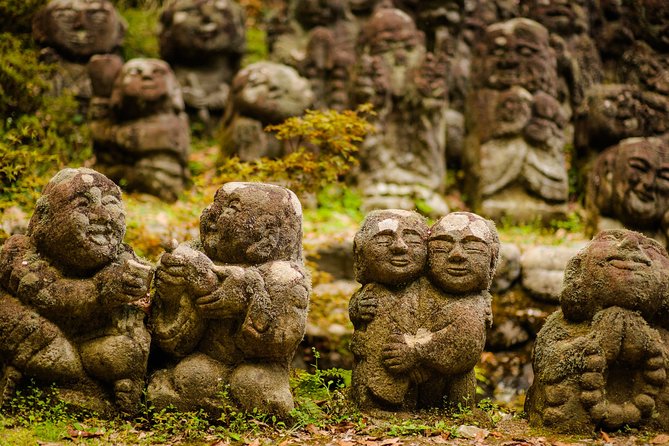
- Otagi Nenbutsu-ji and its 1,200 smiling figures
- Tōji-in, moss, and a slower temple visit
- Entering the Arashiyama Bamboo Forest
- The ride between the sights
- What the $116 price includes
- Weather, clothing, and physical demands
- Who should book this Kyoto ride
- Should you book the Arashiyama E-Biking Tour?
- FAQ
- Where does the Arashiyama Bamboo Forest E-Biking Tour start?
- What time does the tour begin?
- How long does the experience last?
- How far do you ride?
- What sights are included?
- Are bikes and helmets included?
- How many people can join the tour?
- What happens if the weather is poor?
Key points to know before you ride
- 25 kilometers by pedal-assist bike: The motor reduces effort on hills, but you must be comfortable riding for four hours.
- Otagi Nenbutsu-ji is a major highlight: Its collection of about 1,200 small Buddhist figures gives you a quieter and more playful temple visit.
- Tōji-in brings a slower pause: Expect moss, calm temple grounds, and time to walk rather than simply snap a photo.
- The bamboo grove is not the whole tour: You walk part of the famous trail for about 30 minutes, then return to the wider Kyoto route.
- Small groups make the guiding personal: The maximum is eight people, with guides including Yuta, Michael, Sean, and Henry.
- The price covers the basics: At $116 per person, the package includes the e-bike, helmet, temple fees, and snacks.
Why an e-bike makes sense in Kyoto
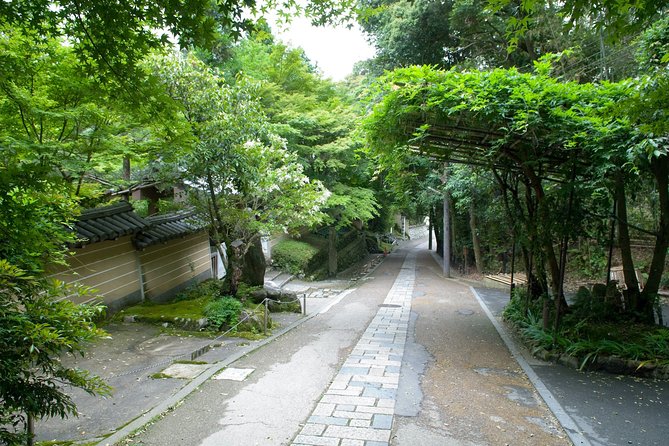
Kyoto rewards slow travel, but its sights are spread out. Walking from one major temple area to another can consume much of your day, while buses and trains do not always take you through the quieter streets between attractions. This tour uses an electric bicycle to link several very different parts of the city.
The pedal assist matters most on the hills and over the full 25-kilometer route. You still pedal, steer, brake, and watch the road, but the motor takes the sting out of climbs. That lets you save energy for temple visits and the return ride.
I would not book this simply because an e-bike sounds easy. The operator describes the outing as suitable for people comfortable riding a bicycle for four hours. Some roads carry cars, and some paths can have heavy foot traffic. You need steady control, good awareness, and enough confidence to start and stop without trouble.
The ride also offers a useful change of pace from temple hopping on foot. You move through urban Kyoto, then reach greener countryside and residential areas that you would probably miss from a taxi window. The route itself becomes part of the experience, not just a way to get from one famous sight to the next.
A few more Kyoto tours and experiences worth a look

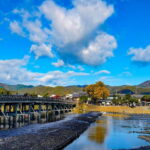
Starting at NORU Kyoto Bike Tours
The tour begins at NORU Kyoto Bike Tours, at 429-22 Takigahanachō in Kamigyo Ward. The scheduled start is 1:00 pm, and the activity returns to this same meeting point after about four hours and 15 minutes.
You receive a mobile ticket and booking confirmation at the time of purchase. The meeting point is near public transportation, which helps, but leave enough time to arrive before the start. This is not a tour where arriving late works well. The group must set off together, and missed or late arrivals are not eligible for a refund.
At the start, expect to receive your electric bike and helmet, with basic riding guidance before departure. The bikes are generally described as easy to operate and capable on the hills. Still, check your fit carefully before leaving. One short rider, about 5 feet tall or 150 centimeters, found it difficult to stop and place both feet down comfortably. If you are petite, ask for a bike that allows confident stopping.
Battery condition also matters. One outing had a bike battery fail on the steepest hill. That appears to be an isolated problem, but it is sensible to confirm that your battery is charged and that you understand the assist controls before the group leaves.
Otagi Nenbutsu-ji and its 1,200 smiling figures
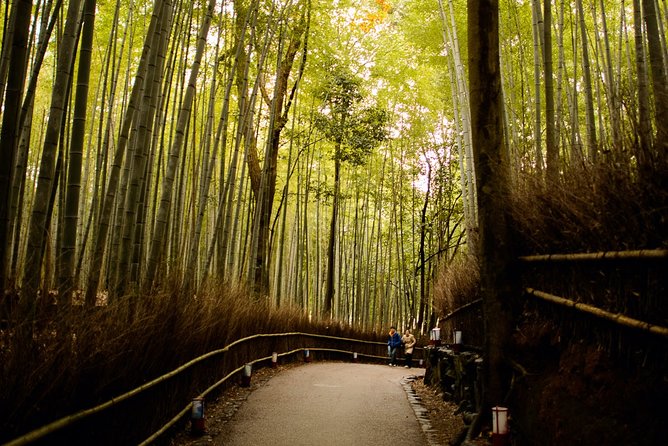
The first named temple stop is Otagi Nenbutsu-ji, reached away from the busiest sightseeing areas. You have about 45 minutes here, enough time to walk through the grounds and study its unusual collection of small Buddhist statue figures.
The statues are the reason this stop stays in the memory. Rather than presenting one grand monument, the temple offers a field of individual faces and expressions. Many appear cheerful or comic, and the guide points out amusing details that are easy to miss if you rush through alone.
This is also where the tour’s quieter side becomes clear. Otagi Nenbutsu-ji is not simply a quick photo stop beside a famous street. You have room to look around, ask questions, and learn how Buddhist imagery works in a temple setting.
The temple admission is shown as free for the stop, while the tour package says temple fees are included. Either way, you should not need to arrange separate entry during the outing. Your main cost here is time, and 45 minutes is well used.
Tōji-in, moss, and a slower temple visit
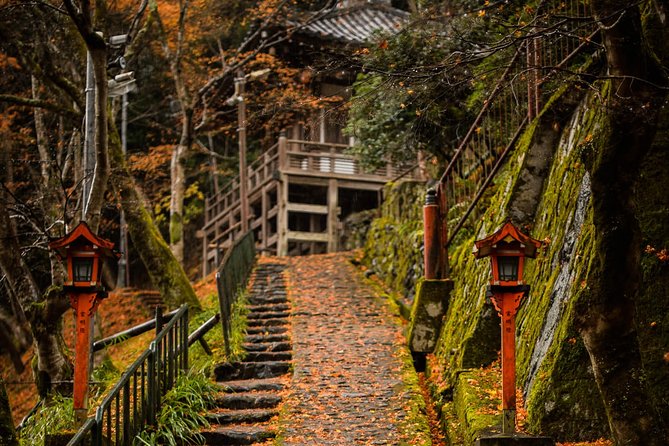
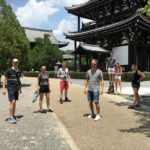
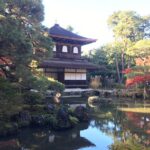
Next comes Tōji-in, where the group spends about 30 minutes walking through the grounds. This stop has a different feel from Otagi Nenbutsu-ji. The appeal is less about comic statues and more about quiet gardens, moss, and a calm setting that encourages you to slow down.
A good guide adds value here by explaining what you are looking at without turning the visit into a lecture. Guides such as Michael, Sean, Henry, and Yuta have been praised for explaining Japanese history, Buddhism, and culture in clear, entertaining ways. Their approach seems especially useful if you want context rather than a string of dates and names.
The 30-minute stop is enough for an introduction, not a full temple study. If Tōji-in is a personal priority, you may wish you had more time. That is the tradeoff of combining several sites with a long bike route. You gain variety, but each stop has a firm limit.
Some outings have also included a short Zen session led by a guide at a temple. Treat that as a possible bonus rather than a guaranteed part of the published schedule, and ask your guide at the start if it is planned for your group.
Entering the Arashiyama Bamboo Forest
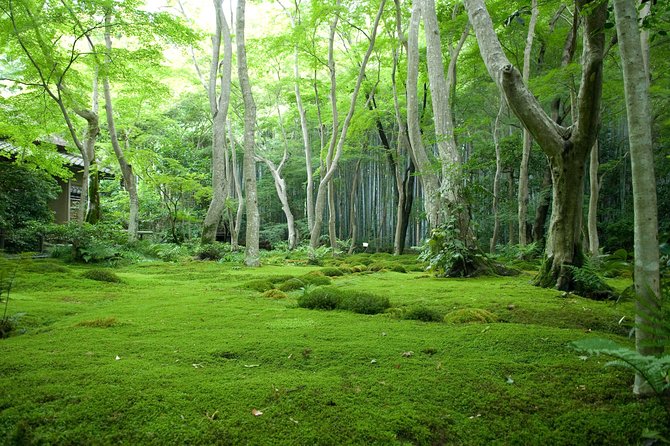
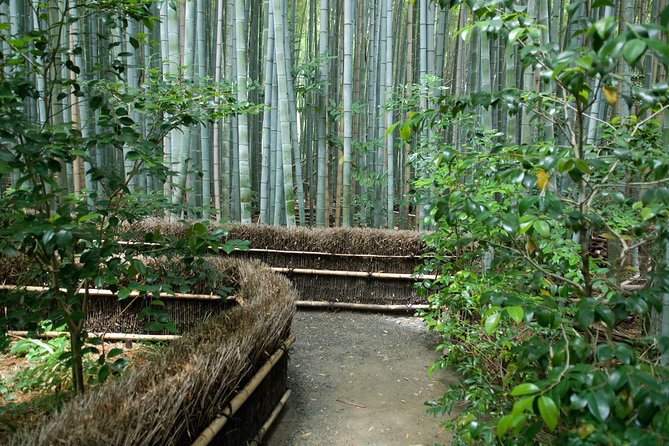
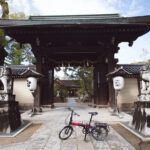
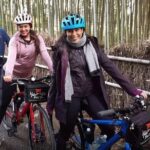
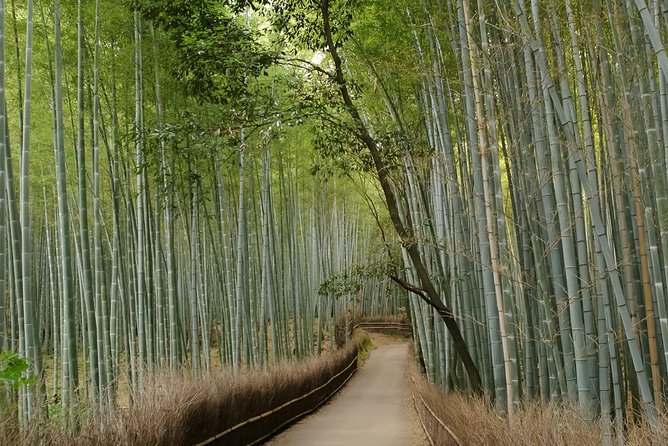
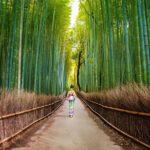
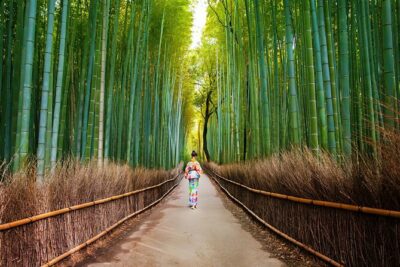
The bamboo grove is the tour’s most famous stop, but it is not the longest. You park the bikes and walk part of the Bamboo Forest Trail for about 30 minutes.
That short walk lets you experience the tall bamboo corridor without committing the entire afternoon to one attraction. You can take photos, hear the bamboo move in the wind, and see why this corner of Kyoto draws so many people. The wider bike route gives the grove more meaning because you reach it as one piece of a larger area, rather than treating it as an isolated backdrop.
There is an important practical warning: the grove can be very crowded, and the stop is brief. You may not get the quiet, empty path often shown in photographs. If standing among the bamboo is your top reason for visiting Kyoto, go independently early in the morning as well, when you can spend more time there.
On this tour, the strength is efficiency. You see the grove, then move on to other temples and countryside instead of spending hours in one packed corridor. For many people, that balance is better than building an entire day around the bamboo trail.
Other cycling tours in Kyoto
The ride between the sights
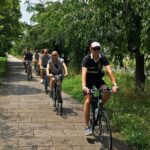
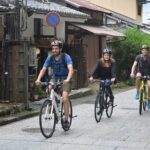
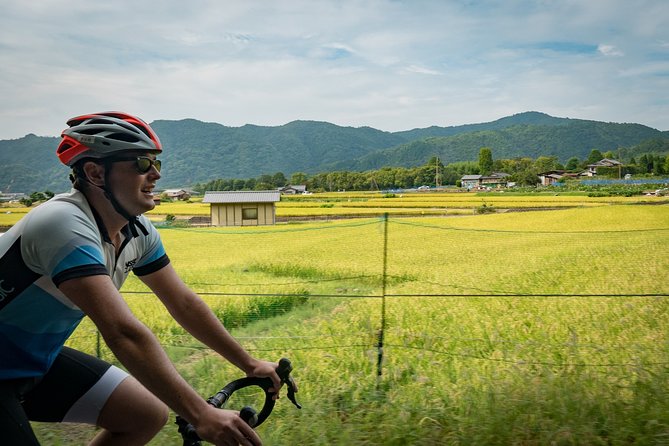
The stretches between the stops are not filler. You ride through a mix of Kyoto’s urban streets, countryside, and less visited areas, with chances to stop for photos. The route helps you see how the polished sightseeing districts connect with ordinary neighborhoods and open rural spaces.
There are a few hills, but the electric assist makes them much easier than they would be on a standard bicycle. You still need to keep a steady pace and follow the guide’s instructions. Previous cycling experience is useful because you may share roads with vehicles and paths with many pedestrians.
The small group helps here. With no more than eight people, the guide can keep the pace together and answer questions while stopped. A group of seven, for example, can still feel personal without requiring the cost of a private tour.
Guides are a major part of the experience. Yuta is described as warm, funny, and attentive to individual needs. Michael is praised for making history and culture easy to follow. Sean brings strong local knowledge, humor, and, according to the experience details, bilingual communication. Henry is known for a well-planned route and a lively way of explaining what you pass.
Guide assignments can change, so you should not book on the assumption that one particular person is guaranteed. The consistent point is the tour’s emphasis on explanation, conversation, and personal recommendations. Some guides have stayed after the scheduled finish to offer restaurant suggestions and more Kyoto advice.
What the $116 price includes
At $116 per person, this is not the cheapest way to see Arashiyama. The value comes from what the fee combines: an electric bike, helmet, guide, temple fees, snacks, and a route covering about 25 kilometers.
Renting a bicycle independently might cost less, but you would need to plan the route, navigate Kyoto traffic, decide which temples to enter, and work out how to connect the city with Arashiyama. You would also lose the explanations that give Otagi Nenbutsu-ji and Tōji-in their meaning.
The tour is particularly good value if your Kyoto visit is short. In one afternoon, you cover more ground than you could comfortably walk and see several types of scenery. It can also serve as a break from repeated pedestrian sightseeing, especially if your feet are tired from temple visits.
The price is harder to justify if you already know Kyoto well, dislike group schedules, or only want the bamboo grove. In that case, local transit and an early independent visit may suit you better. The tour earns its cost through the combination of transport, guiding, and access to quieter stops.
Snacks are included, and some outings have featured ice cream or a tea and snack break, especially when weather conditions required extra pauses. Do not count on a specific treat beyond the included snacks, but the ride does allow room for short refreshment stops.
Weather, clothing, and physical demands
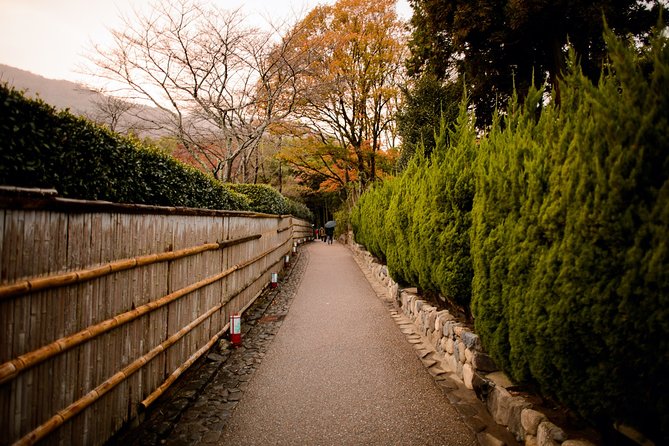
The tour depends on good weather. If poor weather cancels it, you are offered another date or a full refund. The same applies if the minimum number of participants is not met.
For a cool or wet afternoon, dress for cycling rather than only for temple visits. A winter outing at about 5°C with light drizzle felt very cold, and gloves plus a neck scarf were especially useful. Weather also affects the comfort of the bamboo walk and the condition of the roads.
You must be at least 15 years old and have a moderate level of physical fitness. The key requirement is not athletic speed. It is the ability to ride confidently for four hours, manage hills with assistance, and stay alert around vehicles and pedestrians.
This is not recommended if you cannot cycle 25 kilometers or cannot remain on a bicycle for the full outing. If you have not ridden in years, remember that the e-bike reduces effort but does not eliminate saddle discomfort, balance work, or the need to brake and turn safely.
Who should book this Kyoto ride
I would choose this tour if you want to see more than the headline attractions and enjoy moving under your own power. It suits couples, families with older children, and solo visitors who like a social outing but prefer a small group.
It is also a strong choice for anyone with limited time in Kyoto. The route gives you a practical overview of Arashiyama and nearby areas, with a guide to connect the sights. The combination of Buddhist temples, countryside, and bamboo feels more complete than visiting the grove alone.
I would look elsewhere if you are not a regular cyclist, are uncomfortable in traffic, need a slow pace, or want to spend several hours at each temple. Petite riders should check bike fit, and anyone with mobility concerns should think carefully about the four-hour cycling requirement.
Cancellation is free up to 24 hours before the 1:00 pm start. Changes or cancellations inside that window are not accepted, and choosing not to ride does not bring a refund. Plan carefully, since late arrival and no-shows are also non-refundable.
Should you book the Arashiyama E-Biking Tour?
Book it if you want a lively, efficient way to connect Kyoto’s famous bamboo with quieter temples and rural roads. The strongest reasons are the well-planned 25-kilometer route, the small group, the helpful guides, and the chance to see places that are easy to miss on foot.
Skip it if the bamboo grove alone is your goal, or if four hours on a bike sounds tiring rather than fun. For confident cyclists, though, the e-bike turns a demanding route into a manageable afternoon and gives you a broader, more personal look at Kyoto than a quick visit to Arashiyama can provide.
FAQ
Where does the Arashiyama Bamboo Forest E-Biking Tour start?
It starts at NORU Kyoto Bike Tours, 429-22 Takigahanachō, Kamigyo Ward, Kyoto, 602-8336, Japan.
What time does the tour begin?
The scheduled start time is 1:00 pm.
How long does the experience last?
The tour lasts approximately four hours and 15 minutes.
How far do you ride?
The route covers about 25 kilometers by electric bike.
What sights are included?
The named stops are Otagi Nenbutsu-ji Temple, Tōji-in Temple, and the Bamboo Forest Trail in Arashiyama.
Are bikes and helmets included?
Yes. The tour includes an electric bike and helmet, along with temple fees and snacks.
How many people can join the tour?
The maximum group size is eight people.
What happens if the weather is poor?
If the tour is canceled because of poor weather, you are offered a different date or a full refund.
More E-Bikes in Kyoto
More Cycling Tours in Kyoto
More Arashiyama & Bamboo Tours in Kyoto
More tours in Kyoto we've reviewed




Arashiyama & Bamboo Tours, compared.
 ★ 4.8Kyoto: Fushimi Inari, Kinkakuji, Bamboo Grove 1 Day Bus TourFrom $122510 minutes - 9 hours
 ★ 4.1Osaka/Kyoto:Kinkakuji,Arashiyama,FushimiInariShrine,NaraParkFrom $66
 ★ 4.7Kyoto/Osaka: Nara, Fushimi Inari Taisha, Arashiyama Bus TourFrom $529 - 10 hours
 ★ 5.0Kyoto Arashiyama Walking Tour: Bamboo, Monkeys, Gardens & SecretsFrom $65
 ★ 4.8Arashiyama Bamboo, Temple, Monkeys, or Secret Sake BreweryFrom $875 hours - 330 minutes
 ★ 4.4Osaka/Kyoto: Arashiyama, Nara & Fushimi Inari Shrine w/LunchFrom $61