
Reviewed · ARASHIYAMA & BAMBOO TOURS
Kyoto:Quiet Arashiyama and Sagano Temples
Arashiyama is famous for its bamboo grove, but the most moving part of this walk comes in the quieter corners beyond it. Guide Masa leads you through temples where sorrow, faith, death, and daily life are not museum subjects. They are part of the place.
I like the small-group setting, which lets you ask questions and adjust the pace. I also like the human stories, especially Giou-ji’s tale of women cast aside by Taira no Kiyomori and Adashino Nenbutsu-ji’s field of memorial stones. The drawback is simple: this is a lot of ground for three hours, and one past participant wished there had been more time to pause.
In This Review
- Key points
- Why this Arashiyama walk feels different
- Meeting Masa at JR Saga-Arashiyama
- Adashino Nenbutsu-ji and the meaning of Muen Botoke
- Saga Toriimoto, old Kyoto outside the center
- Giou-ji and a story of women cast aside
- Walking through the Sagano Bamboo Grove
- Tenryu-ji, the grand final temple
- What the $38 price covers
- How much walking and preparation you need
- Who should book this experience
- Should you book the quiet Arashiyama tour?
- FAQ
- Where does the tour begin?
- Is the meeting point at Hankyu or Randen Arashiyama Station?
- How long does the tour last?
- What language is the tour conducted in?
- Is this a private tour?
- Which places are included?
- Are temple admission fees included?
- What should I bring?
- Is the tour suitable for wheelchair users?
Key points
- Masa meets you at JR Saga-Arashiyama, not at the Hankyu or Randen stations.
- Giou-ji and Adashino Nenbutsu-ji add emotional weight to the usual Arashiyama sightseeing route.
- Saga Toriimoto preserves old farmhouses and machiya homes in a quieter suburban Kyoto setting.
- Temple admissions and selected hands-on activities are included in the $38 price.
- The private English-language format suits curious visitors who want conversation rather than a fixed group script.
- Comfortable shoes and water matter, since the route involves sustained walking and several temple visits.
Why this Arashiyama walk feels different
You probably already know Arashiyama as Kyoto’s bamboo destination. The bamboo grove is photogenic, but it can also be crowded and brief. This tour gives the famous area a wider frame, taking you toward Sagano temples and old streets where the mood changes from sightseeing to quiet reflection.
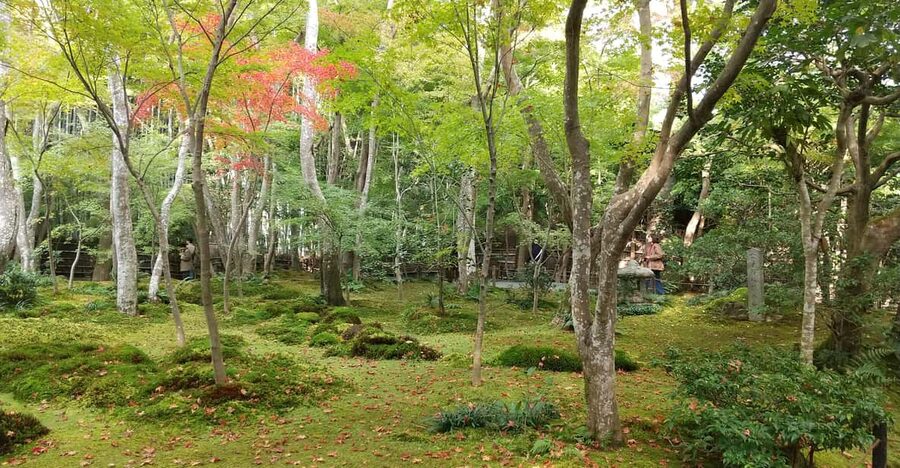
The guide’s approach is narrative rather than purely architectural. You learn who lived here, what people believed, and how the temples cared for the dead. That makes the buildings easier to understand. A mossy garden is no longer just a pretty stop. A stone statue is connected to a real religious purpose.
Masa is the guide named for this experience. He is a lifelong local, according to the tour information, and he can also point out artisan shops that are easy to miss. One useful detail from a recent booking is that he adjusted plans when the visitor arrived hungry and helped arrange lunch. That kind of flexibility can be valuable, though food is not included.
This is a private group tour in English. You are not being moved through with a large crowd, so you can ask about Buddhist customs, local history, or the meaning of a particular temple practice.
A few more Kyoto tours and experiences worth a look

Meeting Masa at JR Saga-Arashiyama
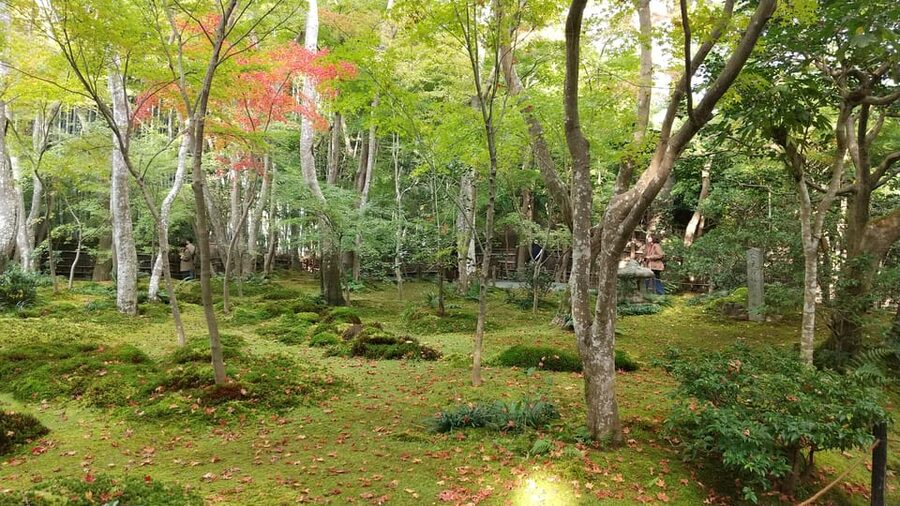
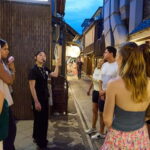
The starting point is JR Saga-Arashiyama Station. This detail matters because Arashiyama has several railway stops, and the Hankyu and Randen stations are different places. Masa waits in the plaza just outside the JR station ticket gates with a sign bearing your name.
Plan to arrive 15 minutes early. Kyoto train stations can be confusing when you are unfamiliar with the exits, and a late arrival cuts into a short tour. You are responsible for getting to the station, and transportation to the meeting point is not included.
From there, the route returns to JR Saga-Arashiyama. That makes the tour easy to combine with a train journey, though you should not assume the same timing if you stop for a full meal or spend extra time shopping.
Adashino Nenbutsu-ji and the meaning of Muen Botoke
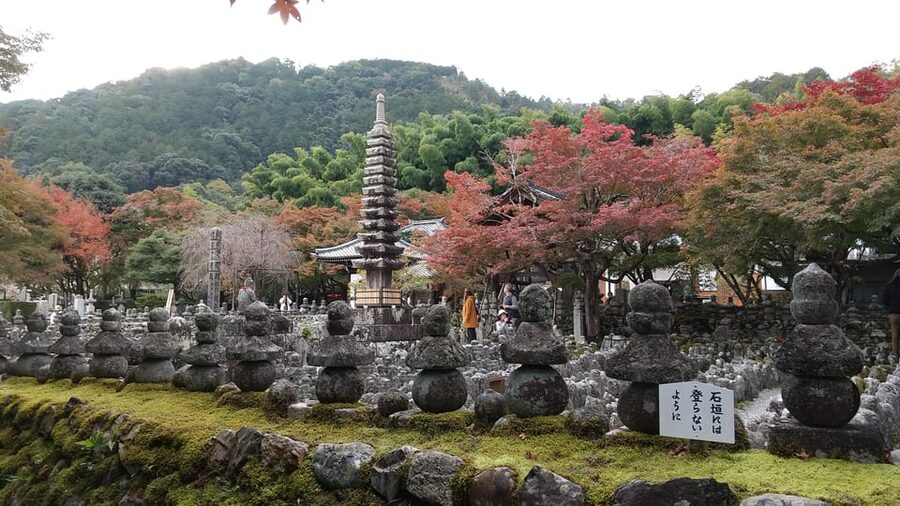
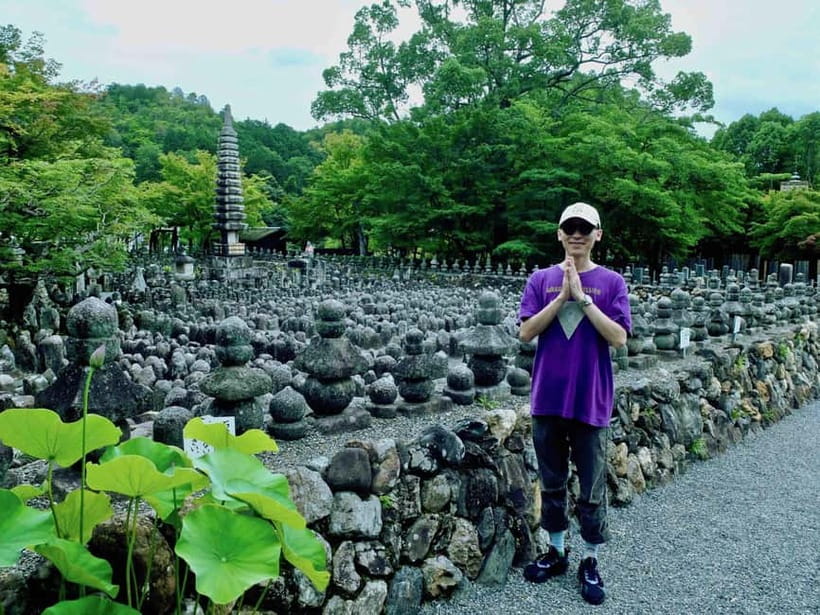
Adashino Nenbutsu-ji is one of the most serious stops on the route. The temple dates to the Kamakura period, and its name refers to a vain or heartless field. The reason is grim but important: this area was once used for abandoned bodies.
The temple is connected with Honen, the monk who taught nenbutsu, the chanting of a Buddhist sutra. It also honors Muen Botoke, the dead whose spirits have no relatives to pray for them. Nearly 8,000 stone Buddhist figures were gathered and enshrined here.
That number can be hard to picture until you see the stones together. They give the site a strong sense of human loss, but also of care. Someone made an effort to remember people who might otherwise have disappeared without a name or family ritual.
Masa’s explanation helps place the temple in the wider culture of memorial practice. You are not simply looking at a collection of statues. You are considering how communities treat the forgotten dead.
In August, the temple holds the Sentou Kuyo ceremony. Thousands of candles are lit, and flowers are offered. The tour does not promise that you will attend this event, but knowing about it adds meaning to the stone figures.
This stop may not suit someone seeking only light sightseeing. It deals with death, abandonment, and grief. For many people, that seriousness is exactly why it becomes one of the most memorable parts of the walk.
Saga Toriimoto, old Kyoto outside the center
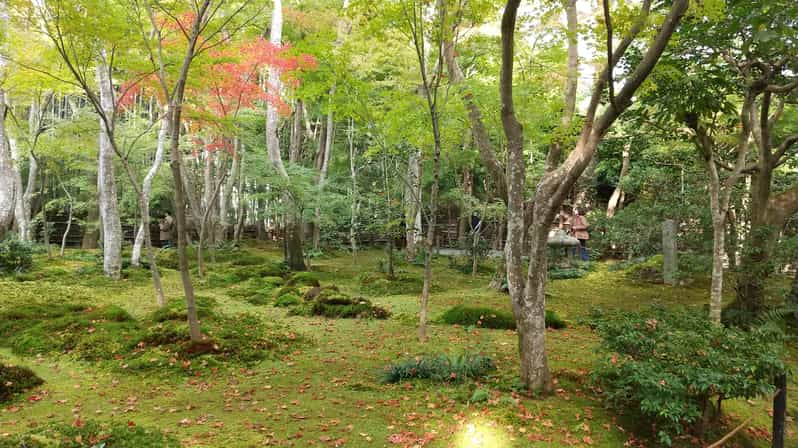
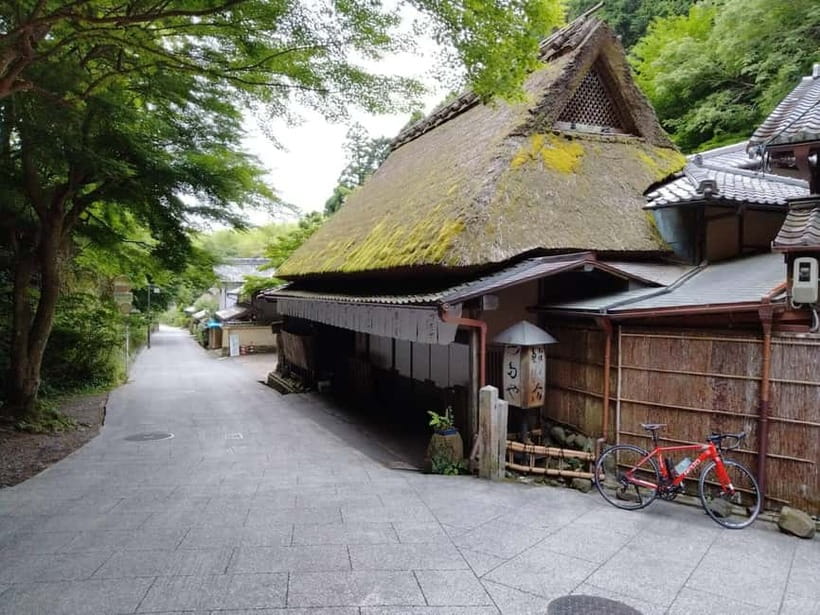
The route then passes along Saga Toriimoto Preserved Street. Here, farmhouses and machiya homes sit together in an old suburban Kyoto setting. It is a useful counterpoint to the temples because it shows how ordinary people lived, not only where monks prayed or nobles were remembered.
The street is included as a scenic passage rather than a long independent visit. You have about 15 minutes here in the planned schedule. That is enough to notice the preserved building styles, but not enough for an extended look inside every house or shop.
I like this part because it slows the tour down visually. Kyoto is often presented through grand gates and famous gardens. Saga Toriimoto shows a more modest side of the city, with traditional homes shaping the road itself.
You might also find the area less hectic than the central bamboo route. Still, do not expect complete solitude. Arashiyama is one of Kyoto’s best-known areas, and quiet is relative, especially during popular seasons.
Giou-ji and a story of women cast aside
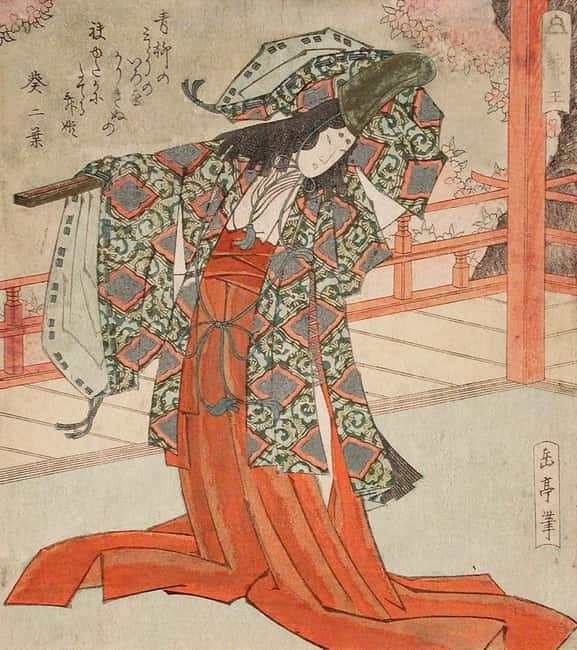
Giou-ji is a small temple associated with the tragedy of Giou, a dancer who lived during the Heian period. Taira no Kiyomori, a powerful military leader of the era, first favored her. Later, his attention shifted to another woman, Butsugozen, and Giou was driven away.
Giou became a nun and lived at the small retreat known as Giou-an with her sister and mother. The story takes another turn when Butsugozen herself was later cast aside by Kiyomori. She too became a nun and joined the women there.
The tale is remembered as a story of four women who practiced Buddhism together. It gives this compact temple an unusually personal focus. You are not only learning about a date or a school of architecture. You are hearing about power, rejection, aging, and the search for peace after public disgrace.
The setting supports that mood. The temple is small, and its intimacy makes the story feel close rather than grand. It is a good place to reflect on the difference between status and security. A favored person can lose everything quickly, while a quiet religious life may offer a different kind of stability.
The supplied route does not assign a separate time to Giou-ji, though the tour description presents it as one of the key temple stories. Ask Masa how it fits into the day’s exact order. The schedule includes a 30-minute temple visit after Saga Toriimoto without naming it, so Giou-ji may be that stop.
Walking through the Sagano Bamboo Grove
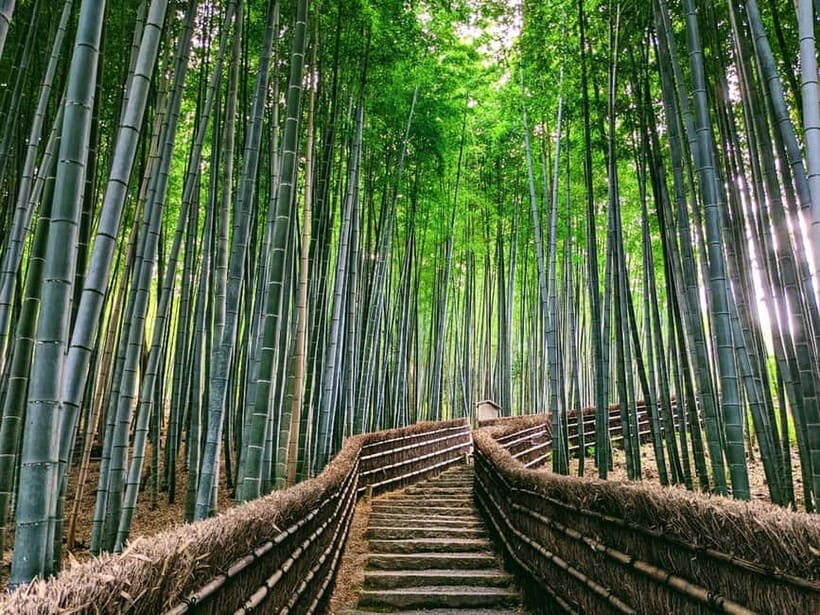
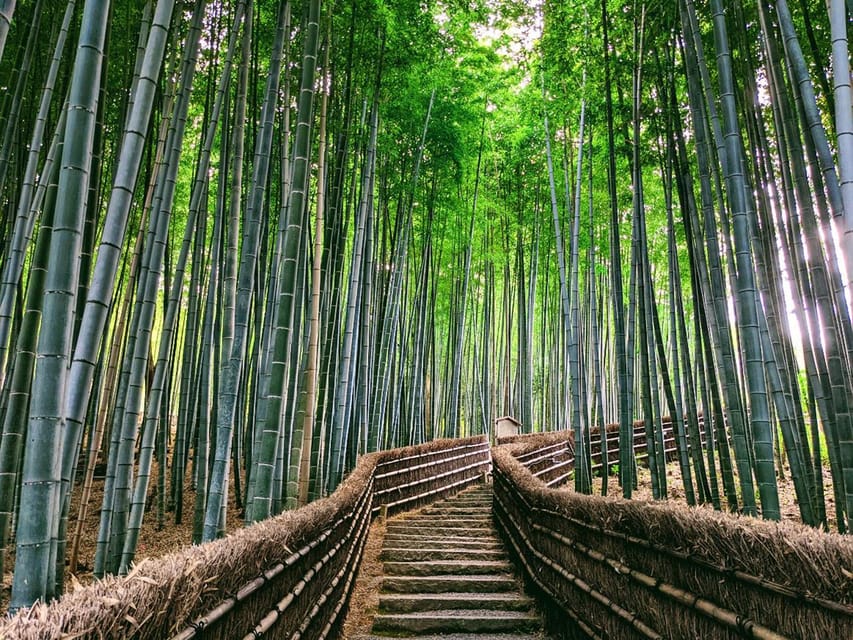
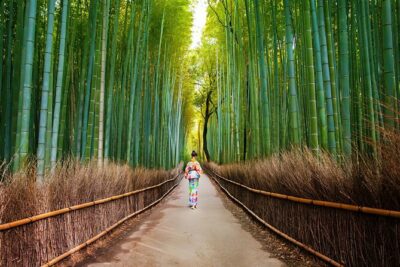
The bamboo grove receives about 30 minutes as a scenic section of the walk. This gives you time to see the tall stalks and take photographs without treating the grove as the whole point of Arashiyama.
The main practical fact is that bamboo paths are walking paths, not a quiet garden reserved for one group. Conditions change with the time of day and season. Your guide can help you move through the area efficiently, but you should keep expectations realistic if you want completely empty photographs.
The grove works better here because it follows the more thoughtful temple visits. After hearing about abandoned bodies and women who withdrew from courtly life, the bamboo becomes a natural pause. You can look upward, slow your breathing, and reset before the final major temple.
Bring a camera, but do not let photography take all your attention. The tour’s strongest feature is the connection between place and story, and that is easy to miss while chasing the perfect angle.
Tenryu-ji, the grand final temple
Tenryu-ji is the largest named temple stop and receives about 1.5 hours in the stated plan. Its scale provides a contrast with Giou-ji. After visiting a small retreat shaped by personal sorrow, you enter a major temple complex with a broader public and religious role.
The guided visit includes temple admission. The guide’s explanations are designed to help you notice more than roofs, gates, and gardens. You can ask about the faith and culture tied to the site, then use the remaining time to take in its setting at a slower pace.
The timing here deserves attention. The listed segments add up to more than three hours: 45 minutes at Adashino Nenbutsu-ji, 15 minutes along Saga Toriimoto, 30 minutes at another temple, 30 minutes in the bamboo grove, and 1.5 hours at Tenryu-ji. Since the advertised duration is three hours, the exact pace or sequence may vary.
If Tenryu-ji is your priority, tell Masa at the beginning. If you want to linger at every temple, take photographs, and stop for food, this route may feel rushed. One person specifically wished the group had slowed down to absorb the sites more fully.
What the $38 price covers
At $38 per person, the tour is priced as an accessible guided introduction rather than a luxury excursion. The fee includes the English-speaking guide, admissions to all temples visited, and selected hands-on experiences. That matters in Kyoto, where entrance fees can accumulate across several sites.
The private format adds value if you want direct conversation. A large group tour can explain the same facts, but it may not give you time to ask why a temple honors forgotten dead people or how a Buddhist practice relates to modern life.
Meals, drinks, transportation to the station, and personal spending are not included. A recent booking shows that Masa may help arrange lunch when needed, but you should budget separately and not count on a meal being part of the tour.
The current rating is 4.8 from five reviews, with particular praise for Masa’s warmth, local perspective, spiritual explanations, and ability to show visitors places they might otherwise miss. That is a small sample, so I would treat it as encouraging rather than final proof. The consistent theme is personal guidance, not simply sightseeing efficiency.
How much walking and preparation you need
Wear comfortable walking shoes. You will move between station, temples, preserved streets, bamboo paths, and the final temple, with little benefit from fashionable but stiff footwear.
Bring water, sunscreen, and a hat. Check the forecast and dress for the day, since much of the experience takes place outdoors. Smoking is not allowed.
This tour is not suitable for wheelchair users or people with mobility impairments. The route includes sustained walking and temple grounds, so consider your stamina before booking. The schedule is also better for someone who enjoys walking at a steady pace than for someone who wants long seated explanations at each stop.
The tour lasts three hours, uses a live English guide, and operates as a private group. Starting times vary, so check availability when choosing a date.
Who should book this experience
I would choose this tour if you want Arashiyama to mean more than bamboo photographs. It suits first-time Kyoto visitors who want a clear introduction to local religious customs, as well as repeat visitors looking for smaller temples and old streets beyond the standard highlights.
It is especially useful if you appreciate stories with moral and emotional weight. Giou-ji and Adashino Nenbutsu-ji ask you to think about rejection, death, memory, and compassion. That is not the usual cheerful sightseeing script, but it gives the route substance.
Families with older children may find the stories memorable, provided everyone is comfortable with the serious subjects. The private format also helps if members of your group have different levels of interest.
You should think twice if your main goal is an unhurried temple study. The itinerary is ambitious for three hours, and the walking pace may leave little room for lingering. You can improve the experience by telling Masa which stop matters most to you at the start.
Should you book the quiet Arashiyama tour?
Book it if you want local stories, temple access, and a private English guide in one compact walk. Masa’s local background and willingness to demonstrate prayer or meditation traditions give the experience a personal quality that a self-guided route may not provide.
Skip it if you dislike walking, need step-free access, or want to spend a full morning at only one or two sites. For everyone else, $38 is a fair price for admissions and direct guidance, especially if you value understanding why these places matter.
Arrive early at JR Saga-Arashiyama, carry water, and set your preferred pace at the beginning. If you do that, this tour offers a thoughtful way to see Arashiyama’s quieter side and connect its past with your own present life.
FAQ
Where does the tour begin?
The tour begins at JR Saga-Arashiyama Station. The guide waits in the plaza just outside the station ticket gates with a sign bearing your name.
Is the meeting point at Hankyu or Randen Arashiyama Station?
No. The meeting point is specifically JR Saga-Arashiyama Station, not the Hankyu or Randen station.
How long does the tour last?
The advertised duration is three hours. Check availability for the starting times offered on your chosen date.
What language is the tour conducted in?
The tour has a live English-speaking guide.
Is this a private tour?
Yes. The group type is private.
Which places are included?
The route includes Adashino Nenbutsu-ji, Saga Toriimoto Preserved Street, a temple visit that may include Giou-ji, the Sagano Bamboo Grove, and Tenryu-ji Temple before returning to JR Saga-Arashiyama.
Are temple admission fees included?
Yes. Admission to all temples visited is included.
What should I bring?
Bring comfortable walking shoes, a hat, a camera, sunscreen, and water. Dress for the weather.
Is the tour suitable for wheelchair users?
No. The experience is not suitable for wheelchair users or people with mobility impairments.
More Arashiyama & Bamboo Tours in Kyoto
More tours in Kyoto we've reviewed



Arashiyama & Bamboo Tours, compared.
 ★ 4.8Kyoto: Fushimi Inari, Kinkakuji, Bamboo Grove 1 Day Bus TourFrom $122510 minutes - 9 hours
 ★ 4.1Osaka/Kyoto:Kinkakuji,Arashiyama,FushimiInariShrine,NaraParkFrom $66
 ★ 4.7Kyoto/Osaka: Nara, Fushimi Inari Taisha, Arashiyama Bus TourFrom $529 - 10 hours
 ★ 5.0Kyoto Arashiyama Walking Tour: Bamboo, Monkeys, Gardens & SecretsFrom $65
 ★ 4.8Arashiyama Bamboo, Temple, Monkeys, or Secret Sake BreweryFrom $875 hours - 330 minutes
 ★ 4.4Osaka/Kyoto: Arashiyama, Nara & Fushimi Inari Shrine w/LunchFrom $61