
Reviewed · WORKSHOPS
Traditional Japanese Flower Styling Workshop – Ikebana in Kyoto
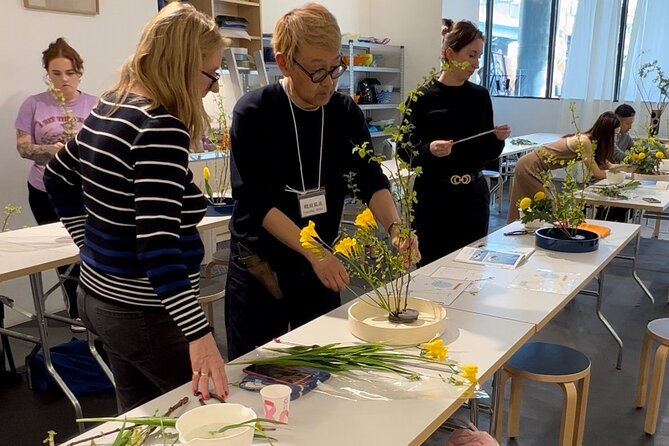
Ikebana is not simply putting flowers in a vase. It is a careful study of line, space, balance, and the changing seasons. At Sogetsu WEST, Master Fooraku teaches you how to make your own arrangement, then shows you how to adapt the ideas at home without special flowers or a traditional container.
I like two things right away: the private format gives you direct help, and the lesson goes beyond a craft project into Japanese aesthetics and daily life. I also like that the workshop includes practical flower-care advice, a photo of your finished work, and time to ask about food, customs, and culture. The one drawback is the price: at $104.24 per person for about 1 hour and 45 minutes, this is a focused cultural lesson rather than a cheap, quick activity.
In This Review
- Key points
- What you actually do during the 1-hour-45-minute workshop
- Why Sogetsu WEST makes the lesson more interesting
- The first lesson: ikebana as a way of seeing
- Making your own arrangement with Master Fooraku
- The useful promise of no special vase or tools
- Flower care and the small details that matter
- Photographing the finished piece
- Conversation after the flowers are finished
- What the private format is worth
- Who should book this Kyoto activity
- Who might want to skip it
- Planning your visit to Sogetsu WEST
- My verdict on this Kyoto ikebana workshop
- FAQ
- Where does the ikebana workshop take place?
- How long does the activity last?
- Is this a private activity?
- Who teaches the workshop?
- Do I need special flowers, tools, or a traditional vase?
- Can I cancel for a full refund?
Key points
- Create an arrangement yourself: You work with Master Fooraku to make your own ikebana piece, not just watch a demonstration.
- Use ideas at home: The techniques are designed to work without special flowers, tools, or traditional Japanese containers.
- Learn in a major ikebana space: Sogetsu WEST has more than 300 types of flower containers.
- Get personal instruction: This is a private activity for your group, so the pace and questions stay manageable.
- Go beyond flowers: The session covers ikebana’s history, philosophy, seasonal beauty, and flower care.
- End with conversation: You photograph your finished arrangement and have relaxed time to talk about Japanese food and culture.
What you actually do during the 1-hour-45-minute workshop
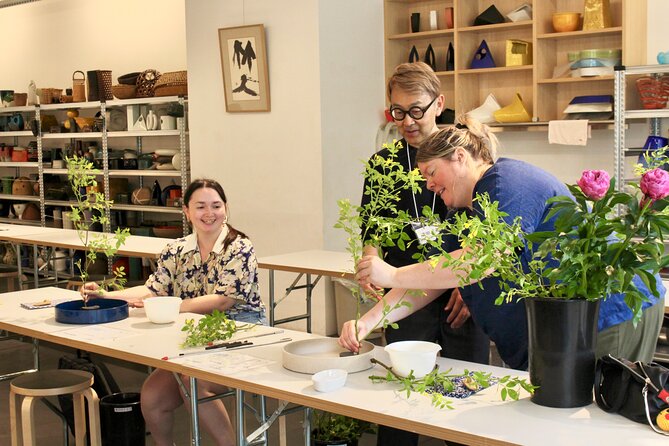
This workshop takes place at Sogetsu WEST, at 20-4 Sujakudōnokuchichō in Kyoto’s Shimogyo Ward. The activity begins and ends at the same address, and the location is near public transportation, which makes it easier to fit into a Kyoto sightseeing day.
The lesson is built around doing, not simply listening. You first get an introduction to ikebana, then move into the basic forms and techniques used to shape an arrangement. Master Fooraku has studied and taught ikebana for more than 30 years, so you are learning from someone with long practice in the art.
The timing matters. One hour and 45 minutes is long enough to explain the ideas, let you make an arrangement, and leave room for questions. It is still short enough to fit between other Kyoto plans. You will not spend an entire afternoon on the activity, but you should reserve enough time to arrive at the meeting point without rushing.
A few more Kyoto tours and experiences worth a look


Why Sogetsu WEST makes the lesson more interesting
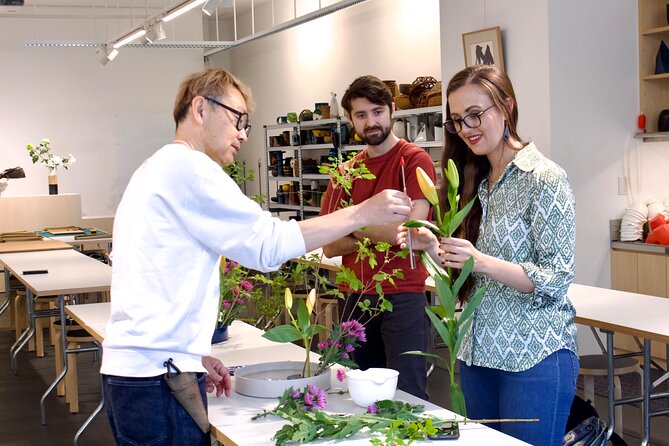
Sogetsu WEST is described as a leading ikebana space in western Japan, with more than 300 different types of flower containers. That number gives the setting a sense of scale, even if you do not handle every container during your visit.
The important point is not the display alone. A traditional container can make ikebana seem like an art that requires a special room, special flowers, and years of training. This workshop takes a more useful approach. You see the formal tradition, but you also learn ways to use its principles in ordinary surroundings.
That makes the class a good fit if you want to carry a little of Kyoto home with you. The goal is not to copy one arrangement forever. You learn how to think about form and placement so you can make different arrangements later.
The first lesson: ikebana as a way of seeing
The introduction covers the history and philosophy of ikebana, along with the basic forms of the art. This context helps explain why an ikebana arrangement often has more open space than a typical Western bouquet.
In ikebana, the shape of a branch, the direction of a stem, and the empty area around the flowers all matter. The result is not meant to look packed or perfectly symmetrical. It is meant to show structure, movement, and a sense of the season.
I like this part because it gives the hands-on work a clear purpose. You are not just trimming flowers and hoping the result looks attractive. You are learning why one line may be placed higher, why another may angle outward, and how empty space can be part of the design.
The workshop also introduces different ikebana styles and techniques. The supplied details do not specify a fixed arrangement style or a particular flower selection, so you should expect instruction in basic principles rather than a guaranteed copy of one famous design.
Making your own arrangement with Master Fooraku
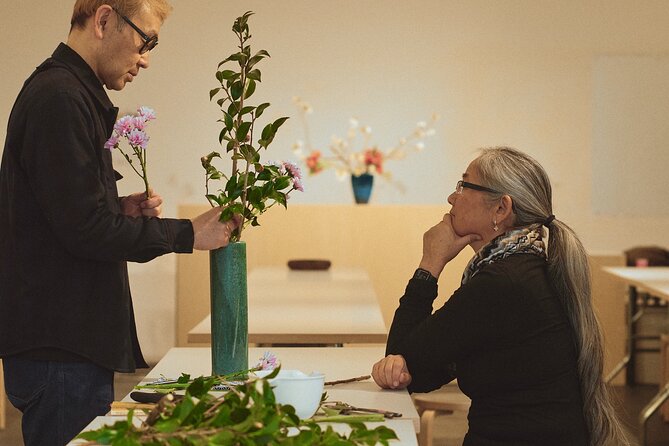
The central part of the session is your own arrangement. Master Fooraku guides you through the process and helps you create a piece that reflects the basic ikebana ideas introduced earlier.
This private format is especially useful for beginners. You can ask why a stem should move in a certain direction, how to adjust the balance, or how to keep the arrangement from looking crowded. In a larger class, those questions can be harder to ask. Here, the lesson is limited to your group.
The arrangement is also where the Japanese sense of season and everyday beauty becomes practical. Flowers do not need to look formal or expensive to work well. A simple branch or seasonal bloom can offer a strong line, an unusual shape, or a small contrast in texture.
You should expect to make choices yourself, with guidance rather than having the teacher do the work for you. That is one of the reasons this activity feels more valuable than a demonstration. You leave with a better sense of how the decisions are made.
The useful promise of no special vase or tools
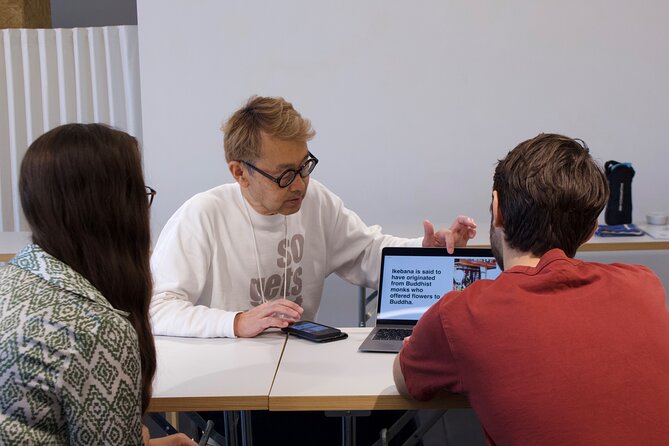
Many visitors like the idea of ikebana but assume they need a traditional container and a collection of specialist equipment. This workshop directly addresses that concern.
You learn methods that can be adapted after you return home, even if you do not own special flowers or an ikebana vase. That does not mean every arrangement will look identical to the one made in Kyoto. It means the underlying principles can be used with materials and containers you already have.
This is a practical strength. A cultural lesson is easier to remember when you can repeat it. If the class only produced one beautiful arrangement that depended on equipment you could not find at home, its value would end at the studio door. Here, the teaching aims to give you a way to continue.
The information provided does not specify exactly which household items you should use later, so you should ask during the session for suggestions suited to your home. The chance to ask those practical questions is one of the benefits of having Master Fooraku present for your group.
Flower care and the small details that matter
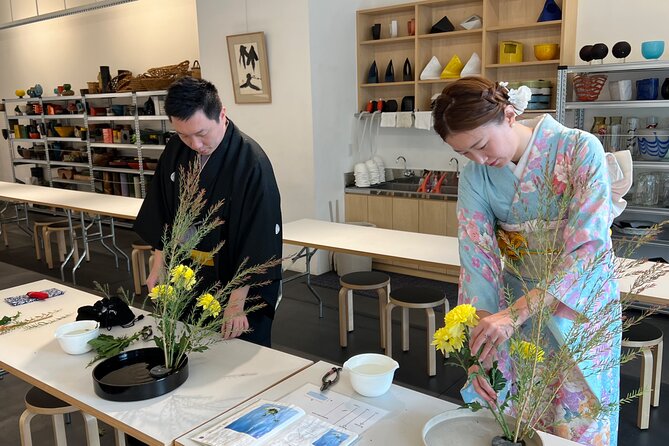
The workshop includes techniques for keeping flowers fresh. This is a useful addition because ikebana is not only about the first moment of arrangement. Care affects how long you can enjoy the piece and how its shape changes over time.
You may already know basic flower-care habits, but ikebana gives those habits a design purpose. If a stem bends, a flower opens, or a branch changes position, the arrangement may take on a new look. The changing condition of the flowers becomes part of the seasonal experience.
I would pay close attention here and take notes if needed. The session slides are available by email upon request, which gives you a way to retain the main ideas after the class. Since the slides are not automatic according to the details provided, ask for them during or after the workshop if you want a copy.
Photographing the finished piece
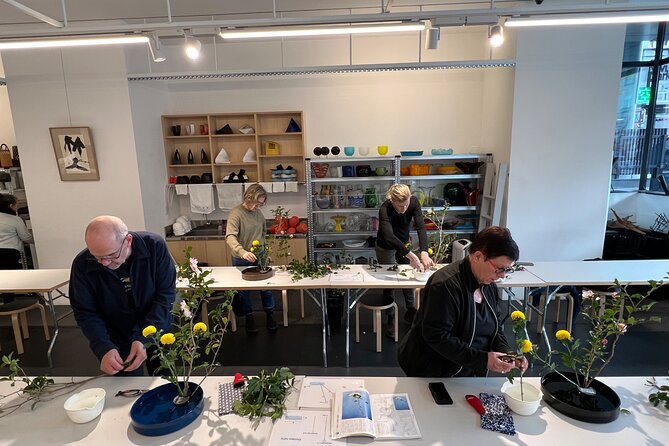
Once your arrangement is complete, you take a photograph to remember it. This is a small but welcome part of the activity. The picture records not only the flowers, but also the design choices you made during the lesson.
A photo is helpful because ikebana arrangements are temporary. The flowers change, and you may not be able to take the physical piece with you in the way you would carry home a souvenir. The image lets you remember the shape and use it as a reference later.
Do not think of the photograph as the main reward. The useful part is the process that leads to it. The picture works best as a prompt to try another arrangement at home.
Conversation after the flowers are finished
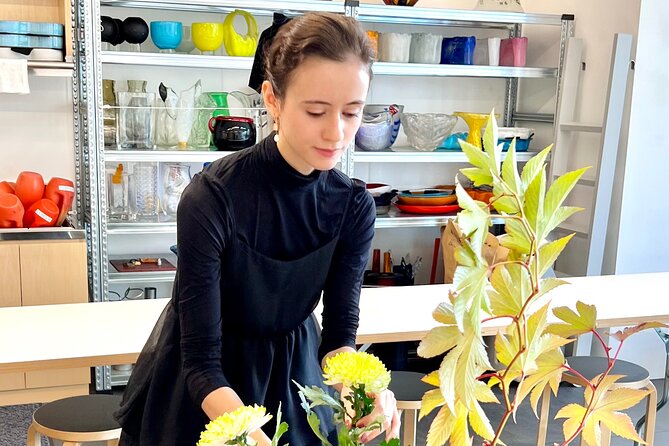
The formal teaching ends with a relaxed conversation. You can ask about Japanese food, culture, and traditions, and you are invited to share something about your own country and background.
This part gives the workshop a personal touch without adding another scheduled sightseeing stop. If you have been moving from temple to temple, a quiet conversation about ordinary Japanese life can offer a welcome change of pace.
The discussion is also a practical chance to ask follow-up questions about ikebana. You might ask how to adapt a lesson to your home, how to care for a different type of flower, or how the art fits into Japanese life. The experience is conducted in English, and Master Fooraku’s English has been described as good, so communication should be workable for English-speaking visitors.
What the private format is worth
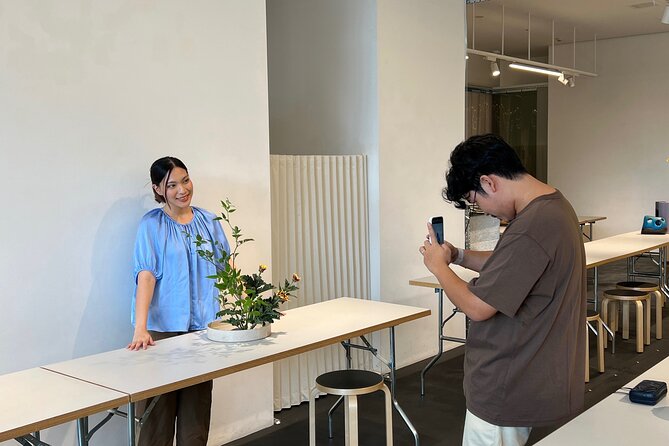
The price is $104.24 per person. That is a substantial amount for an activity lasting about 1 hour and 45 minutes, especially when compared with a brief demonstration or a casual craft class.
The value comes from the type of attention you receive. This is a private activity, so only your group participates. You are not paying only for a prepared talk. You are paying for instruction, the use of a specialist ikebana setting, help with your own arrangement, flower-care advice, and time for questions.
I would consider it good value if you have a real interest in Japanese design, flowers, hands-on crafts, or cultural traditions. It is less convincing if you want a low-cost way to fill an hour or are mainly looking for a photograph in a pretty setting.
The price also makes sense for a special occasion or a trip where you want one personal cultural activity among the usual Kyoto sights. If you are traveling on a tight budget, compare it with free temple visits and less expensive workshops before booking.
Who should book this Kyoto activity
I would recommend this workshop to first-time ikebana students who want patient instruction and a finished piece of their own. You do not need to arrive with previous experience, and the lesson is intended to cover the basics.
It also suits people who enjoy Japanese aesthetics but do not want a long formal ceremony. The session offers cultural context, yet it remains hands-on and direct. You learn by making rather than sitting through a long lecture.
This could be a good choice for couples, families, friends, or a small private group. Most people can participate, and the activity is near public transportation. The information does not give a specific age policy or detailed accessibility features, so contact the provider if your group has special mobility or participation needs.
You might also like it if you are looking for an activity away from Kyoto’s busiest sightseeing areas. The workshop does not replace a temple visit, but it lets you spend time with a Japanese art form in a more personal setting.
Who might want to skip it
You may want to skip this experience if you have no interest in flowers, design, or cultural instruction. The arrangement is the heart of the activity, and the lesson asks you to pay attention to small choices in line, shape, and balance.
It may also disappoint you if you expect a large display, a tour of Kyoto, or a long list of attractions. You remain at the meeting point, and the entire activity focuses on ikebana and conversation.
Finally, think carefully about the cost. At just under $105 per person, this is not an impulse purchase for most budgets. You should book it because you want the lesson and the chance to practice the art, not because you simply need something to do between major sights.
Planning your visit to Sogetsu WEST
The meeting point is:
20-4 Sujakudōnokuchichō
Shimogyo Ward
Kyoto 600-8842, Japan
The activity ends back at the same place. Since it is near public transportation, you can plan it as a stop before or after other Kyoto activities, but give yourself time to locate the address and arrive calmly.
A mobile ticket is provided, and confirmation arrives at booking. The experience is often reserved about 26 days ahead, so do not leave it until the last minute if your Kyoto dates are fixed.
The cancellation policy is friendly if your plans change early. You can cancel for a full refund up to 24 hours before the local start time. Cancellations or changes made less than 24 hours in advance are not accepted for a refund.
My verdict on this Kyoto ikebana workshop
Book this if you want a small, personal introduction to Japanese floral art and value skills you can use after your trip. Master Fooraku’s more than 30 years of ikebana study, the private format, and the focus on arrangements without special equipment give the session real substance.
Skip it if you want a cheap activity, a sightseeing tour, or a fast demonstration. The $104.24 price is easiest to justify when you will ask questions, take part fully, and use the ideas at home.
FAQ
Where does the ikebana workshop take place?
It takes place at Sogetsu WEST, 20-4 Sujakudōnokuchichō, Shimogyo Ward, Kyoto 600-8842, Japan. The activity ends back at the meeting point.
How long does the activity last?
The workshop lasts approximately 1 hour and 45 minutes.
Is this a private activity?
Yes. Only your group participates in the activity.
Who teaches the workshop?
The workshop is taught by Fooraku, also referred to as Master Fooraku. He has studied ikebana for more than 30 years.
Do I need special flowers, tools, or a traditional vase?
No special flowers or traditional Japanese containers are required for the techniques you learn. The workshop focuses on methods you can use at home without special equipment.
Can I cancel for a full refund?
Yes. You can cancel at least 24 hours before the experience start time for a full refund. Cancellations or changes made less than 24 hours before the start time are not accepted for a refund.
More Workshops & Classes in Kyoto
More tours in Kyoto we've reviewed


Workshops, compared.
 ★ 4.3Kyoto: 45-Minute Tea Ceremony Lesson ExperienceFrom $2245 min
 ★ 5.0Ramen Cooking Class at Ramen Factory in KyotoFrom $131
 ★ 4.9Kyoto: Ramen Cooking Class at a Ramen Factory with SouvenirFrom $1271h 30m
 ★ 4.9Kyoto: Samurai Class, Become a Samurai WarriorFrom $70
 ★ 5.0Ninja 1-hour Hands-on Lesson by Japanese master in Kyoto -EntryFrom $80
 ★ 5.0Kyoto: Ramen, Gyoza, and Onigiri Cooking ClassFrom $901h 30m