
Reviewed · SHOW
Traditional Japanese Music show & Experience Tour in Kyoto
Kyoto has plenty of cultural shows where you sit quietly and watch. This one asks you to pick up the instruments yourself. You’ll hear a 25-minute concert featuring instruments such as the shamisen, koto, and wadaiko, then spend another 25 minutes trying them with help from the performers.
I like the clear two-part format and the small maximum of 12 people. I also like that no musical skill is needed, and that the session includes time to take photos with the instruments and performers. The main consideration is timing: it begins at 11:00 am only on Monday, Tuesday, Thursday, and Friday, so it may not fit every Kyoto schedule.
In This Review
- Key points before you book
- A Kyoto music show that lets you take part
- What happens during the 25-minute concert
- The 25-minute instrument session
- Shamisen, koto, and wadaiko: what makes each one different
- Photos with the instruments and performers
- Why the small group matters
- Price and value at $46.24
- Location and timing in central Kyoto
- Who will enjoy this most
- Booking advice and cancellation terms
- Should you book the Kyoto traditional music experience?
- FAQ
- How long does the traditional Japanese music experience last?
- What time does the activity begin?
- Which days is the activity available?
- Where does the experience begin and end?
- Which instruments can I try?
- Do I need previous musical experience?
- Is transportation included?
- How many people can join the activity?
- Is the activity guaranteed to run with one participant?
- Can I cancel for a full refund?
Key points before you book
- Watch first, then play: The 25-minute concert gives you a useful sound preview before you handle the instruments.
- Try several Japanese instruments: You may work with the shamisen, koto, wadaiko, and other instruments available that day.
- Small group setting: A maximum of 12 people allows more room for personal help than a large stage show.
- One hour from start to finish: The session is easy to fit into a morning of sightseeing in central Kyoto.
- Hands-on cultural context: You do more than take photos of instruments. You learn basic ways to handle and play them.
- Good value for active visitors: At $46.24 per person, the price covers a concert, instruction, instrument use, and photo time.
A Kyoto music show that lets you take part
The strongest idea here is simple: you do not remain in the audience for the whole hour. Harmony in Japan Tour combines a short live concert with a guided session where you try traditional Japanese instruments for yourself.
That makes the activity useful for visitors who want more than a brief cultural performance. A concert can show you what Japanese music sounds like, but picking up the instrument helps you understand its shape, technique, and physical feel. Even a short attempt can make the music easier to appreciate later.
The format also keeps the subject manageable. You are not signing up for a long music class or a full-day cultural program. In about 60 minutes, you receive a performance, a practical introduction, and time for photographs.
The published rating is 5 out of 5 from 57 reviews, with 100 percent recommending the activity. That is a strong record, though the experience is best understood for what it is: a compact introduction rather than formal musical training.
A few more Kyoto tours and experiences worth a look

What happens during the 25-minute concert
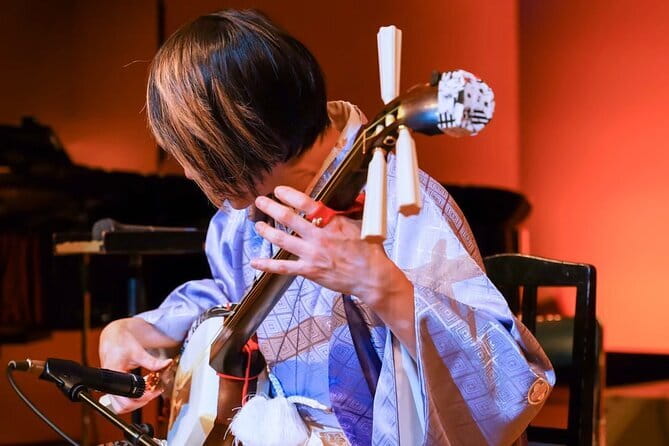
The first 25 minutes are devoted to an authentic Japanese music performance. The exact concert content changes by day, so the program is not identical every time. That gives repeat visitors a reason to return, but it also means you should not expect a fixed set list.
The instruments named for the session include the shamisen, koto, and wadaiko. The shamisen is a Japanese lute with a distinctive shape and sound. The koto is a long stringed instrument often described in simple terms as a Japanese harp. Wadaiko refers to Japanese drums, bringing a very different physical force to the music.
Seeing several instruments together helps you compare their roles. Strings offer one kind of tone and technique, while drums depend on rhythm, movement, and controlled impact. The concert is short enough to hold your attention, yet long enough to give you a real performance before the practical portion begins.
One especially appealing feature is the chance to hear singing along with instrumental music. The experience can include participation in some songs, so you may not be only a silent observer. That part will appeal to you if you enjoy cultural activities that ask you to listen actively.
The changing content is worth keeping in mind. If you are hoping to hear one particular instrument or style, contact the provider before booking. The supplied information confirms that the selection varies by day, but it does not promise a specific program for each date.
The 25-minute instrument session
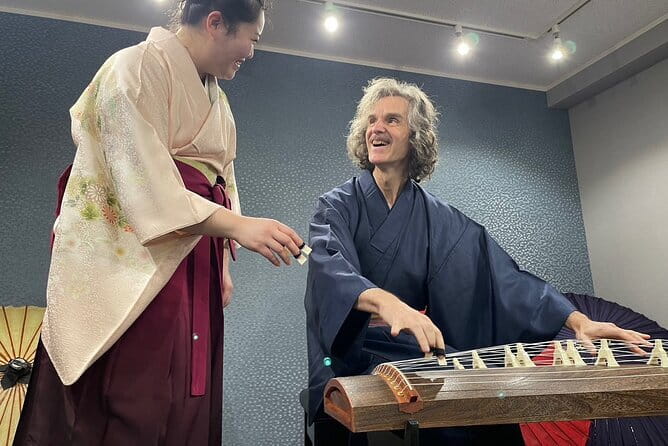
After the concert, you get about 25 minutes to try traditional instruments. You choose from the instruments available, with the shamisen, koto, and wadaiko among the listed options. The activity includes the musical instrument needed for the experience, so you do not need to bring or rent anything yourself.
This is not presented as a test. No previous experience is required, and the performers guide you through the basics. That matters because traditional instruments can look less familiar than a guitar, piano, or drum kit. Without instruction, you might be unsure where to place your hands or how much force to use.
The hands-on portion is also where the small group size earns its keep. With no more than 12 people, the organizers can give individual attention as you try the instruments. The session may still feel brief if you want to practice everything, but the format lets you make a real attempt instead of simply posing beside the instruments.
You may find that your first sounds are uneven. That is part of the point, and the tone of the session is patient rather than competitive. One participant described the two organizers as patient with beginners who were not naturally musical. That is useful reassurance if you feel awkward about making mistakes in front of other people.
The practical session also changes your view of the performance. After trying an instrument, you have a better sense of the coordination and control involved. The musicians’ skill becomes easier to notice because you have felt, in a small way, how difficult it can be to produce a clean sound.
Shamisen, koto, and wadaiko: what makes each one different
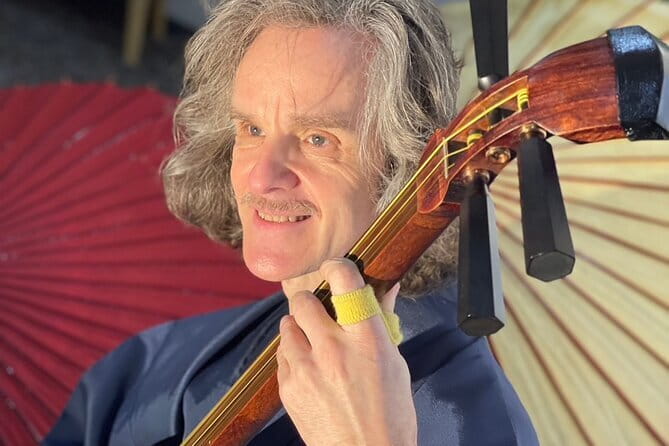
The shamisen, koto, and wadaiko offer three distinct entry points into Japanese music.
The shamisen is a Japanese lute. Its compact body and strings make it visually approachable, but producing the right sound still requires guidance. If you are drawn to string instruments, this is likely to be one of your first choices.
The koto is a Japanese harp with a long, horizontal form. Its appearance alone gives the session a strong visual element, and trying it lets you see how a traditional stringed instrument is played from a position unlike a standard guitar.
The wadaiko is a Japanese drum. It offers the most physical option among the named instruments, with rhythm and controlled striking at the center. If you prefer an instrument that feels immediate and energetic, you may gravitate toward the drums.
The program includes other instruments as well, but the exact range is not specified. You can ask about special requests before the activity. Since the concert program and available instruments can vary, do not assume every listed instrument will be offered in the same way on every date.
Photos with the instruments and performers
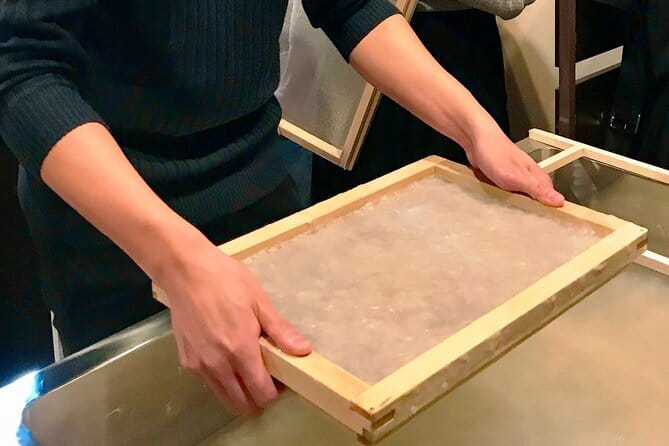
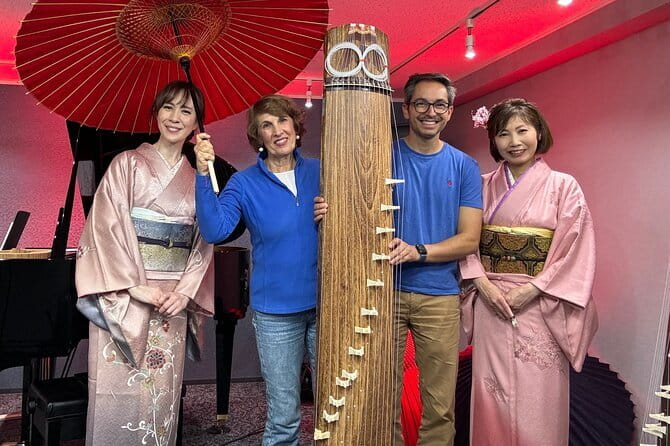
The final 10 minutes are set aside for photographs with the instruments and performers. This may sound like a small addition, but it gives the hour a pleasant finish and lets you record the part of the activity you cannot easily capture during the concert.
You can use the photo time to take pictures with the shamisen, koto, wadaiko, or other instruments available. It also gives you a chance to look more closely at their construction after the music and practice have ended.
The photo session should not replace the music itself as the reason to book. The strongest value comes from the concert and the playing session. Still, the final 10 minutes are helpful if you want a physical reminder of the activity or are looking for a cultural stop that works well in a Kyoto photo diary.

Why the small group matters
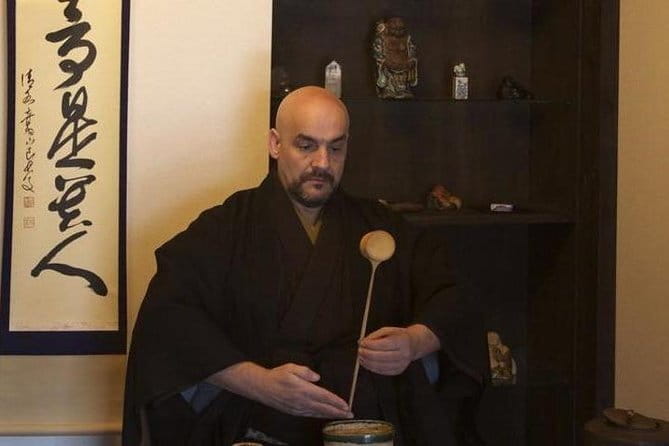
The maximum group size is 12 people. That is not the same as a private lesson, but it is small enough to support personal guidance and questions.
For a performance alone, group size may matter less. Once you begin handling the instruments, it matters much more. You want enough time to try your chosen instrument, receive advice, and hear corrections without waiting behind a large crowd.
A small group can also make participation in songs feel less intimidating. You are part of a limited gathering rather than a large audience. If you are traveling with children, older relatives, or people who are shy about music, that personal setting may help them take part.
The minimum is two participants. If that minimum is not met, the activity can be canceled, with the choice of another date or experience, or a full refund. This is a practical point to remember when building a tightly scheduled Kyoto itinerary.
Price and value at $46.24
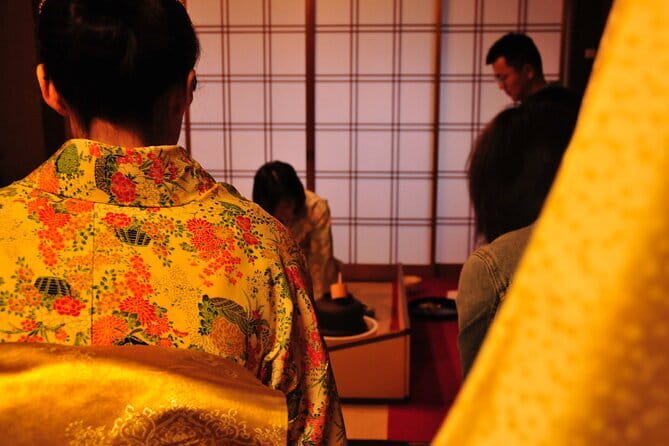
At $46.24 per person, this is not the cheapest way to spend an hour in Kyoto. You are paying more than you would for simply walking through a public area or viewing an instrument display. The question is what you receive for the money.
Here, the price includes a live Japanese music concert, access to an instrument for the practical session, guidance from the performers, and 10 minutes for photos. You also get a structured cultural activity in a small group rather than an unplanned encounter with traditional music.
I consider the cost reasonable for visitors who value active learning. The experience combines three things that are often sold separately: watching skilled musicians, trying the instruments, and asking questions in a close setting. It is especially useful if you have limited time in Kyoto and want a compact activity with a clear beginning and end.
The value is weaker if you only want a long concert. With 25 minutes devoted to performance, this is not a full music recital. It is designed for participation, so book it because you want to play, not because you want an hour of uninterrupted listening.
Location and timing in central Kyoto
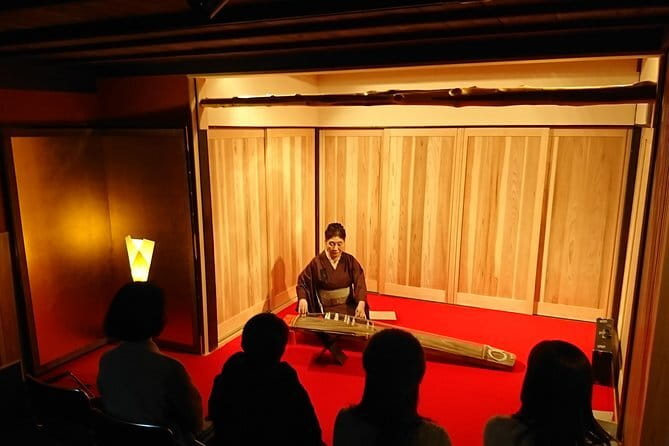
The meeting point is at 5F, 306 Higashidaimonjicho, Nakagyo Ward, Kyoto, postal code 604-8043. The activity begins at 11:00 am and finishes back at the same meeting point.
The location is near public transportation, which makes it practical to reach without private transport. Private transportation is not included, so you need to make your own way there. A mobile ticket is provided, and confirmation is received at booking.
The one-hour length makes this an easy morning addition. You can attend the 11:00 session and still have much of the day available for other Kyoto sights. At the same time, the limited schedule requires planning. Sessions are offered Monday, Tuesday, Thursday, and Friday, with no listed Wednesday, Saturday, or Sunday departure.
Check the exact address carefully before setting out. The meeting point is on the fifth floor, and arriving a little early gives you time to find the building and prepare your mobile ticket. The information provided does not give a recommended arrival time, so do not rely on a last-second arrival in an unfamiliar part of the city.
Who will enjoy this most
I would recommend this activity to you if you want a cultural experience that involves your hands as well as your eyes and ears. It suits first-time visitors who want an introduction to traditional Japanese music without committing to a long class.
It is also a good choice for families, couples, and small groups with mixed interests. Someone who enjoys music can focus on the concert, while someone who prefers active activities can look forward to the instrument session. Most people can participate, and service animals are allowed.
You do not need to be musical. In fact, beginners may get the most from the guided format because the instruction removes some of the uncertainty. The organizers are used to helping people who are trying the instruments for the first time.
This may be less suitable if you need a private experience, want advanced instruction, or expect a full-length concert. The group can include up to 12 people, and the hands-on portion lasts only 25 minutes. You will receive an introduction, not a detailed course in shamisen, koto, or wadaiko technique.
Booking advice and cancellation terms
The experience is available through a mobile ticket, and confirmation arrives when you book. It is commonly booked about 39 days ahead, so planning early is sensible if you need one particular date.
You can cancel for a full refund up to 24 hours before the local start time. Cancellations or changes made less than 24 hours before the 11:00 am start are not refunded or accepted.
Because at least two people are needed for the activity to run, keep an eye on any notice from the provider. If the minimum is not met and the session is canceled, you can choose another date or experience, or receive a full refund.
Should you book the Kyoto traditional music experience?
Book it if you want a short, hands-on introduction to Japanese culture, especially if playing an instrument sounds more appealing than sitting through a standard show. The mix of concert, guided practice, and photos gives the hour a good shape, and the $46.24 price is fair for a small group activity with live performers.
Skip it if your main goal is a long formal concert, private tuition, or a flexible weekend option. The 11:00 am schedule runs only Monday, Tuesday, Thursday, and Friday, and the program changes by day.
For most visitors with room in their Kyoto morning, I see this as an engaging way to meet Japanese music at close range. You will hear the instruments in skilled hands, make your own first attempts, and leave with a clearer sense of the work behind the sound.
FAQ
How long does the traditional Japanese music experience last?
The activity lasts approximately 60 minutes. It includes 25 minutes of concert music, 25 minutes of trying traditional instruments, and 10 minutes for photos.
What time does the activity begin?
The session starts at 11:00 am.
Which days is the activity available?
It is available Monday, Tuesday, Thursday, and Friday.
Where does the experience begin and end?
It begins at 5F, 306 Higashidaimonjicho, Nakagyo Ward, Kyoto, 604-8043, Japan, and ends back at the same meeting point.
Which instruments can I try?
The listed instruments include the shamisen, koto, and wadaiko, along with other traditional Japanese instruments.
Do I need previous musical experience?
No. No prior experience is needed, and expert guidance is provided during the instrument session.
Is transportation included?
No. Private transportation is not included. The meeting point is near public transportation.
How many people can join the activity?
The maximum group size is 12 people.
Is the activity guaranteed to run with one participant?
No. A minimum of two participants is required for the activity to be held.
Can I cancel for a full refund?
Yes. You can cancel up to 24 hours before the local start time for a full refund. Changes or cancellations made less than 24 hours before the start are not accepted or refunded.
More Shows & Entertainment in Kyoto

More tours in Kyoto we've reviewed





Show, compared.
 ★ 5.0Kyoto Gion Cultural Walk & Geisha Show with Dining OptionsFrom $121
 ★ 5.01 Hour Geisha Show in KyotoFrom $79
 ★ 4.5Kyoto: Samurai Kenbu Traditional Sword Dancing ShowFrom $321 hour
 ★ 5.0Kyoto: Gion Cultural Walk with Geisha ShowFrom $110
 ★ 4.8Kyoto: Meet-and-Greet, Maiko Show and ExperienceFrom $4445 min
 ★ 4.9Kyoto: Non-Verbal Theatre Show Tickets at GEARFrom $49