
Reviewed · GION & GEISHA WALKS
Kyoto: Gion Cultural Walk with Geisha Show
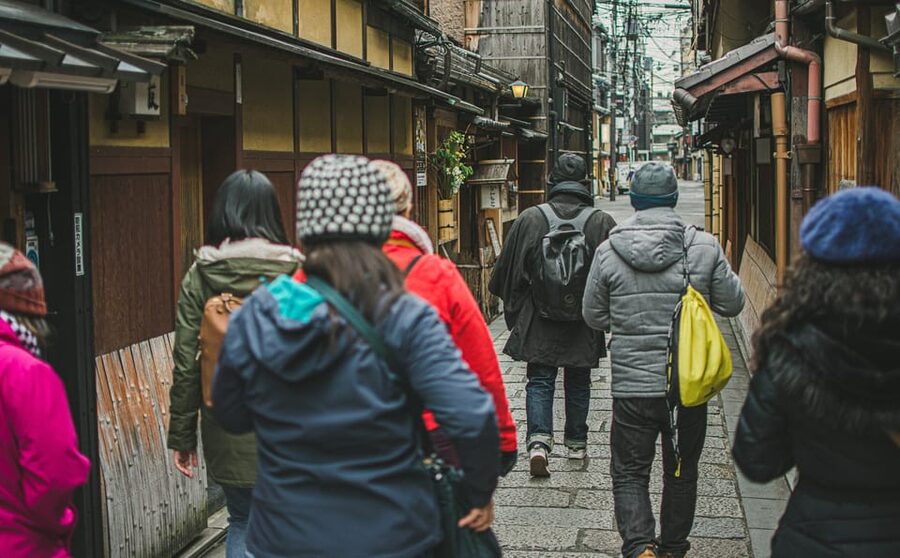
Kyoto’s geisha world is usually kept behind sliding doors, but this tour gives you a respectful look inside. You walk through Gion with an English-speaking guide, then watch a maiko, a geisha apprentice, perform traditional dances and answer questions about her work and training.
I like the small group limit of eight, which makes it easier to hear the guide and speak during the question session. I also like the clear two-part format: a 1.5-hour walk through Gion followed by a performance and meal or tea, rather than a quick photo stop.
The main drawback is the price, $110 per person, and there is quite a bit of walking. It is also not suitable for people with mobility impairments, and large bags are not allowed, so plan this as a light, comfortable outing.
In This Review
- Key points to know before booking
- What this Gion experience is really about
- Meeting at the Izumo-no-Okuni statue
- Walking through Gion for 1.5 to 2 hours
- The maiko performance in Miyagawasuji
- Choosing lunch, tea, or dinner
- Why the small group changes the experience
- What the experience explains well
- Timing, comfort, and practical planning
- Who should book this Gion tour
- Should you book it?
- FAQ
- Where does the tour begin?
- Where does the tour end?
- How long does the experience last?
- Is the tour offered in English?
- What food options are available?
- Can I bring luggage or a large bag?
Key points to know before booking
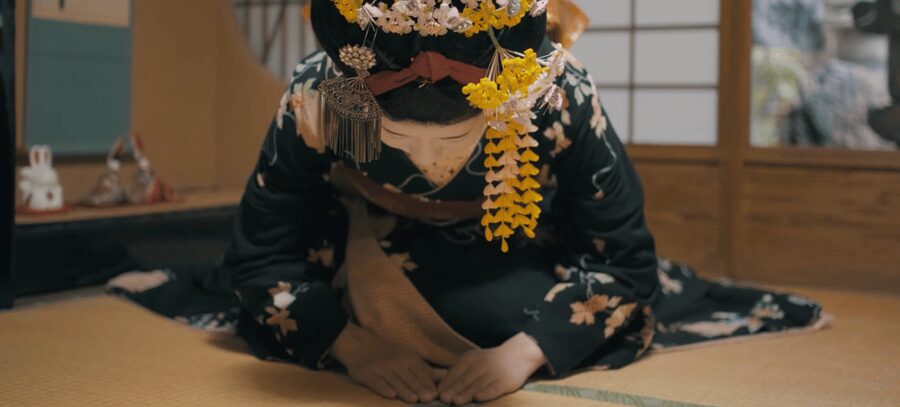
- A real conversation with a maiko: The 50-minute meeting includes a performance, one or two songs, and time for questions.
- Three food and timing choices: Pick lunch at 10:30 a.m., tea at 2:30 p.m., or dinner at 6:30 p.m., subject to availability.
- Gion comes before the show: The guide explains local customs, geisha terminology, training, and the district’s traditional life during a 1.5- to 2-hour walk.
- A genuinely small group: No more than eight participants join the English-language tour.
- Guides who add context: Ken, Kenta, and Akari are among the guides praised for clear explanations, warmth, and help with questions.
- Wear good shoes and carry little: The tour lasts about three to three and a half hours, ends where it begins, and does not allow luggage or large bags.
What this Gion experience is really about
This is not simply a dance show with a meal attached. The walking portion helps you understand the setting before you meet the performer. That matters because Gion can look like a pretty collection of old wooden facades if you do not know what you are seeing.
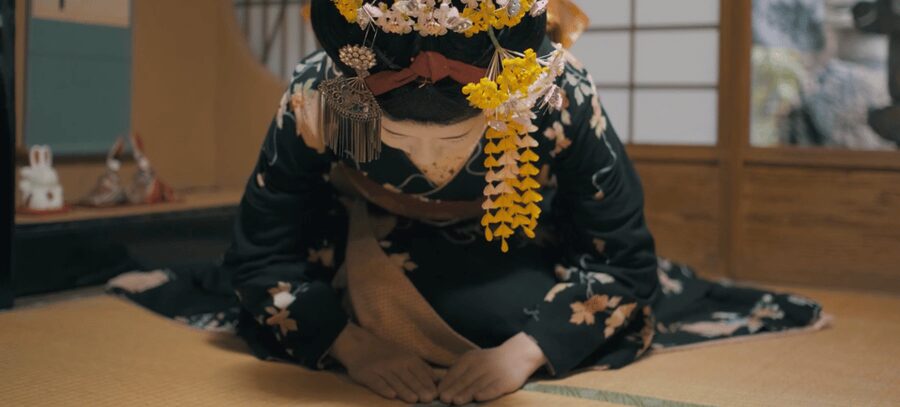
Your guide explains the traditions and daily rules connected with geisha, or geiko, culture. You also learn about the difference between geisha, geiko, and maiko. In Kyoto, geiko is the local term often used for a fully trained geisha, while maiko refers to an apprentice. The tour uses the meeting with the maiko to give those terms a human face.
I appreciate that the experience deals with the subject as a living profession rather than a costume display. The questions raised during the meeting can cover training, performance, work, and the demands of the career. One account described learning about the years of preparation involved for a young woman beginning at 16, a detail that helps you understand how much discipline sits behind the makeup, kimono, and polished movements.
The tone also matters. Gion has suffered from visitors chasing photographs of women in traditional dress. This tour gives you a better way to look at the culture: listen first, ask politely, and understand that the people you see are working. That alone makes the experience more worthwhile than wandering the district with a camera and no context.
A few more Kyoto tours and experiences worth a look

Meeting at the Izumo-no-Okuni statue
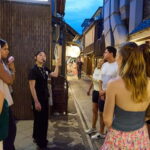
The tour begins in front of the statue of Izumo-no-Okuni near Exit 4 of Keihan Gion-Shijo Station. This is a useful starting point because the station is easy to identify, and the statue gives you a fixed landmark rather than a vague meeting instruction somewhere in Gion.
Allow enough time to reach the station and find Exit 4. The experience ends back at the same meeting point, which makes it easier to fit into a day of Kyoto sightseeing. You can visit nearby parts of eastern Kyoto before or after the tour, but remember that the activity itself takes most of a morning, afternoon, or evening.
The available schedules are built around three food choices:
- Lunch with a Japanese plate from 10:30 a.m.
- Tea with a cup of tea from 2:30 p.m.
- Dinner with eight shared food plates from 6:30 p.m.
Starting times depend on the date you select. The meal is not a minor snack added at the last second. It forms part of the 50-minute meeting, giving you time to settle in, watch the performance, and talk with the maiko.
Walking through Gion for 1.5 to 2 hours
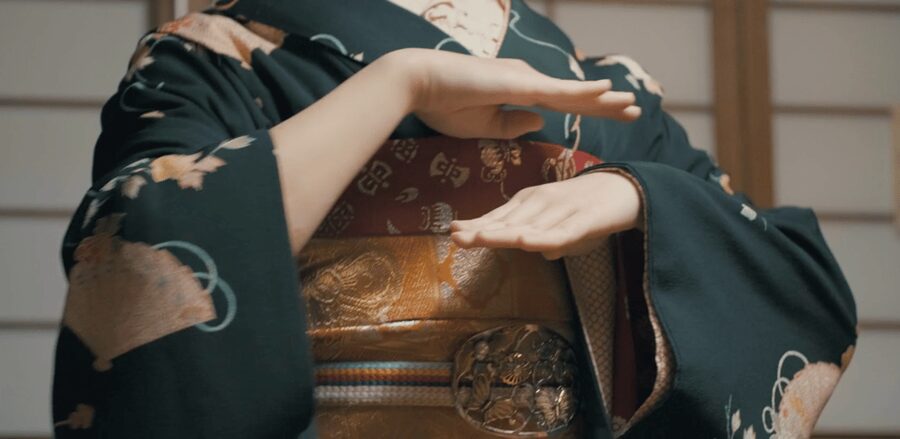
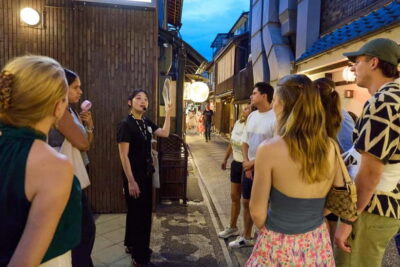
The first half is a guided walk of Gion lasting about 1.5 to 2 hours. The route is listed as ending in the Miyagawasuji area, with the exact path explained by your guide during the outing.
This is the part that gives the show its meaning. Your guide explains the inner workings of the traditional lifestyle, along with its rituals and customs. You learn how the district functions, why the geisha world can seem closed to outsiders, and how the arts connect to the profession.
The guides are one of the strongest parts of the experience. Ken and Kenta are praised for explaining the subject in a friendly, organized way. Akari is also noted for strong English and detailed explanations of the geiko, geisha, and maiko traditions. Names and guides can change with the departure, so treat these as examples rather than a promise that one particular person will lead your group.
I like the balance between walking and conversation. You are not parked in a room for three hours listening to a lecture. You see the streets connected with the culture, then have a chance to ask questions in a more private setting. The walking also helps you notice details that could otherwise pass without comment.
There are practical limits. Gion is a real urban district, not a museum arranged for tour groups. You will be on foot for a substantial part of the outing, and the activity is specifically marked as unsuitable for people with mobility impairments. Comfortable shoes are essential. Leave large luggage elsewhere, since it is not allowed on the tour.
The maiko performance in Miyagawasuji
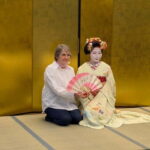
The second half takes place in Miyagawasuji, Kyoto. Here you meet a maiko for a performance and question session lasting about 50 minutes. The program includes one or two songs and traditional dance.
The performance is close enough to make the details count. You can watch the controlled hand movements, posture, costume, and careful rhythm without the distance of a large theater. The dances are not presented as a long stage production, so set your expectations correctly. This is a compact cultural presentation paired with conversation.
The maiko’s work requires more than attractive clothing and formal manners. The performance shows the discipline of movement and timing, while the question period gives you a chance to learn about the person behind the role. The supplied details describe maiko performers as patient and approachable during questions, though the guide helps manage the conversation and interpret cultural points.
Your questions are a major part of the value. You might ask about training, the meaning of the dances, daily responsibilities, or the path from maiko to geiko. Keep your questions respectful and listen closely. The small group means you have a real chance to participate, but it also means each person should leave room for others.
The format avoids one common problem with cultural shows: watching a performance without knowing why it matters. By the time the maiko appears, you have already heard the background. The dance becomes part of a tradition you can place in context, not just something attractive to photograph.
Choosing lunch, tea, or dinner
The food option changes the feel of the experience.
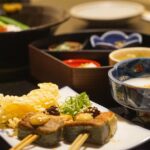
The lunch departure includes a Japanese lunch plate. This is a sensible choice if you prefer a daytime activity and want to keep your evening free for another Kyoto meal. The plate is part of the meeting with the maiko, so it provides time for conversation without turning the event into a rushed photograph and goodbye.
The tea departure includes a cup of tea. It is the lightest option and may suit you if you have a full meal planned elsewhere. It also keeps the focus on the performance and questions rather than on a larger dining service.
The dinner departure includes shared plates of eight different foods. This gives the meeting a longer meal setting and may feel like the fullest version of the activity. It is also the most natural choice if you want the tour to become an evening event in Gion.
Food quality receives strong praise in the supplied comments, with fresh dishes and traditional serving pieces mentioned. Allergy requests have also been accommodated in at least one case, but you should raise any dietary needs before booking or as early as possible. Do not assume every preference can be met unless the operator confirms it.
The $110 price looks high for a walking tour, but the comparison is not really with an ordinary city stroll. You are paying for a small English-language group, a trained guide, a live performance, direct questions with a maiko, and food or tea. If you only want to see Gion’s streets, you can do that at no cost. If you want access to the culture explained by a guide and presented by a performer, the fee is easier to justify.
Still, the price will not suit every budget. Dinner, tea, or lunch does not turn this into a luxury dining event, and the performance lasts about 50 minutes rather than an entire evening show. I would book it for the cultural access, not for the amount of food.
Other walking tours we've reviewed in Kyoto




Why the small group changes the experience
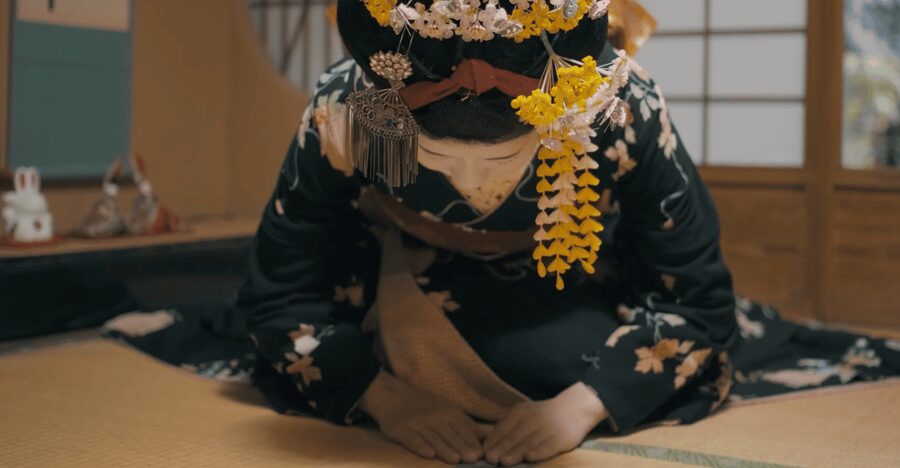
The group is limited to eight people. That is a useful number for Gion, where a large crowd would make the walking portion harder to follow and the meeting less personal.
A small group also improves the question session. You are more likely to hear the maiko clearly, and you have a reasonable chance to ask something yourself. Several comments highlight the intimate nature of the meeting, including the ability to speak directly with the performer rather than watch from a distant seat.
There is a tradeoff. A small group can feel more exposed if you dislike asking questions in front of others. The experience works best when everyone arrives curious and polite. You do not need specialist knowledge, but you should be ready to take part instead of treating the meeting as a silent photo opportunity.
The guide helps keep the session moving. Ken and Kenta are praised for handling questions and explaining difficult points in clear English. Akari is also noted for making the cultural material easy to follow. The guide’s role is important because the maiko’s answers may need context for people unfamiliar with Japanese customs.
What the experience explains well
The tour is especially useful for correcting common misunderstandings about geisha culture. It explains that geisha and maiko are professional artists, not simply women wearing old-fashioned clothing for visitors. Their work includes dance, music, etiquette, appearance, and social performance.
You also gain a better sense of the training involved. The path is demanding, and the careful presentation is not accidental. One account describes a young maiko’s long process toward becoming a geiko, which gives you a clearer idea of the time and effort behind the public image.
The tour does not turn the performer into a museum object. You meet a working person who answers questions and performs for the group. That direct contact can change your understanding in a way that a book or temple visit may not.
The walking section adds another layer. Gion is famous, but fame can flatten a place into a backdrop. With a guide, you can connect the streets, buildings, customs, and working life to the larger story of Kyoto’s traditional arts.
Timing, comfort, and practical planning
Plan on three to three and a half hours from meeting to finish. The walking tour itself takes up 1.5 to 2 hours, followed by the 50-minute maiko meeting, with transitions included in the total.
I would avoid scheduling a major attraction immediately afterward. Kyoto trains and streets can be busy, and the exact end time may vary. Since the tour returns to the starting point, you can continue from Keihan Gion-Shijo Station once it is over.
Bring only what you need. Large bags and luggage are not allowed, which is especially important if you are arriving directly from a hotel checkout or train transfer. Arrange storage before the meeting time.
Wear shoes that can handle a long walk. This is not a good choice for anyone who needs a low-effort route or has mobility limitations. The activity is conducted in English, so it suits visitors who can comfortably follow an English explanation and take part in an English question session.
The booking terms are flexible: you can cancel up to 24 hours in advance for a full refund, and the reserve-now, pay-later option lets you hold a place without paying immediately. Availability controls the start time, so check the date carefully before building the rest of your Kyoto schedule.
Who should book this Gion tour
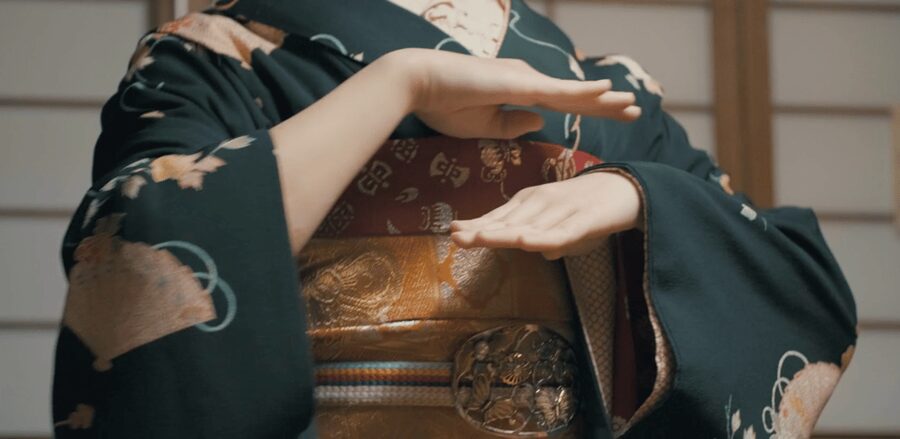
I would choose this experience if you want more than temples and shrine gates. It suits you if you are curious about Japanese performing arts, enjoy asking questions, and value direct contact with a cultural tradition.
It is also a strong choice for a first visit to Kyoto. The guide supplies the background that makes Gion easier to understand, while the maiko meeting gives the afternoon or evening a clear focus.
Families may appreciate the personal format, especially if children are old enough to listen and ask respectful questions. One account describes a maiko making a young boy feel especially welcome, but the tour is still best for children who can manage several hours of walking and a formal cultural setting.
I would skip it if your priority is a cheap self-guided walk, a large dinner, or a long theatrical production. I would also skip it if carrying luggage, walking for hours, or following English explanations is difficult.
Should you book it?
For $110, this is a specialized Kyoto experience rather than a general sightseeing tour. I think it earns the cost for the small group, thoughtful guide, live dance, direct questions, and choice of Japanese lunch, tea, or dinner.
Book it when you want to understand the people and customs behind Gion’s famous streets. Pick lunch for a daytime cultural stop, tea for the lightest food option, or dinner for the fullest evening format. Wear comfortable shoes, leave your large bag behind, and arrive ready to listen.
If that sounds like your kind of Kyoto, I would book it. The combination of a district walk and a personal maiko meeting offers access you are unlikely to get from simply strolling through Gion alone.
FAQ
Where does the tour begin?
Meet in front of the statue of Izumo-no-Okuni near Exit 4 of Keihan Gion-Shijo Station.
Where does the tour end?
The activity ends back at the meeting point near the Izumo-no-Okuni statue.
How long does the experience last?
The total duration is about three to three and a half hours. The Gion walk lasts 1.5 to 2 hours, followed by a 50-minute maiko meeting with a performance and questions.
Is the tour offered in English?
Yes. The tour has an English-speaking live guide, and the group is limited to eight participants.
What food options are available?
You can select a Japanese lunch plate with the 10:30 a.m. departure, tea with the 2:30 p.m. departure, or dinner with eight shared food plates with the 6:30 p.m. departure, subject to availability.
Can I bring luggage or a large bag?
No. Luggage and large bags are not allowed. The activity is also not suitable for people with mobility impairments.
More Shows & Entertainment in Kyoto



More Walking Tours in Kyoto
More Gion & Geisha Walks in Kyoto
More tours in Kyoto we've reviewed






Gion & Geisha Walks, compared.
 ★ 4.7Kyoto Geisha Walking Tour: Gion District & Hidden GemsFrom $252 hours
 ★ 4.7Kyoto: Gion Geisha District Walking Tour – Stories of GeishaFrom $202 hours
 ★ 4.9Best of Kyoto: Gion, Geisha, Pagodas & CobblestonesFrom $242 hours
 ★ 4.5Night Walk in Gion: Kyoto’s Geisha DistrictFrom $211h 40m
 ★ 5.0Kyoto Night Foodie Tour in Gion (9+ dishes + 6 Sake tastings)From $163
 ★ 5.0Kyoto Gion Geisha District Walking Tour – The Stories of GeishaFrom $25