
Reviewed · FUSHIMI INARI TOURS
TREASURES of Kyoto: Fushimi Inari, Kiyomizu Temple, and more!
Kyoto’s best-known sights are at their most enjoyable early in the morning, and this 7:00 am small-group tour uses that timing well. You visit Fushimi Inari’s endless torii gates, Kiyomizu-dera Temple, and a preserved old district before the day gets crowded.
I like the included taxi rides between stops, since Kyoto’s temples are spread across different areas. I also like the maximum group size of 12, which gives you a fair chance to ask questions. The catch is simple: at $98.53, you are paying for convenience and guiding, not just admission. An independent visitor who is happy using trains and taxis can spend less.
In This Review
- Key points at a glance
- Why the 7:00 am start matters in Kyoto
- Fushimi Inari and the famous red gates
- Taxi transfers keep the morning moving
- Kiyomizu-dera, Kyoto’s grand temple stop
- A walk through Kyoto’s preserved streets
- The guide can make or break the value
- Who will get the most from this four-hour route
- Price, booking timing, and cancellation
- Should you book Kyoto Fun’s early morning tour?
- FAQ
- How much does the Kyoto tour cost?
- How long does the experience last?
- What time does the tour start?
- Where does the tour begin?
- Where does the tour end?
- Which main sights are included?
- Are entrance fees included?
- Are taxi fares included?
- How many people can join the tour?
- Can I cancel for a full refund?
Key points at a glance
- The 7:00 am start beats the tour-bus rush: Fushimi Inari and Kiyomizu-dera are easier to enjoy in the early calm.
- Fushimi Inari gives you Kyoto’s classic torii-gate walk: You get 45 minutes for photos, a short walk, and background from the guide.
- Kiyomizu-dera is the main temple stop: One hour is set aside for Kyoto’s famous wooden temple and its city views.
- Taxi fares are included during the tour: This saves time moving between Fushimi and eastern Kyoto.
- The group is capped at 12 people: That is small enough for questions without paying for a private tour.
- The tour ends near Sanjūsangendō Temple: You finish in a useful part of Higashiyama for more sightseeing.
Why the 7:00 am start matters in Kyoto
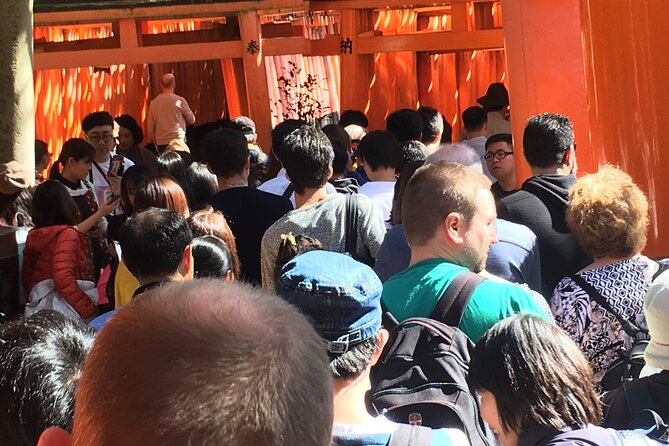
Kyoto’s famous temples are not secret. By late morning, the approach to Kiyomizu-dera can feel packed, and Fushimi Inari’s lower gates fill with people taking the same photograph. Starting at 7:00 am gives you the best chance of seeing both places with more breathing room.
That timing is the strongest feature of the tour. It does not make the sites empty, but it shifts your visit toward the quieter part of the day. The early hour also gives the visit a calmer mood, especially at Kiyomizu-dera, where the city views are often most pleasant before the streets below become crowded.
You need to be comfortable getting to Inari Station on your own before the start time. The meeting point is at Inari Station, Fukakusa Inarionmaecho, in Fushimi Ward. The tour ends at Sanjūsangendō Temple in Higashiyama, so you do not return to the starting point. That is useful if you plan to continue sightseeing in eastern Kyoto.
A few more Kyoto tours and experiences worth a look

Fushimi Inari and the famous red gates
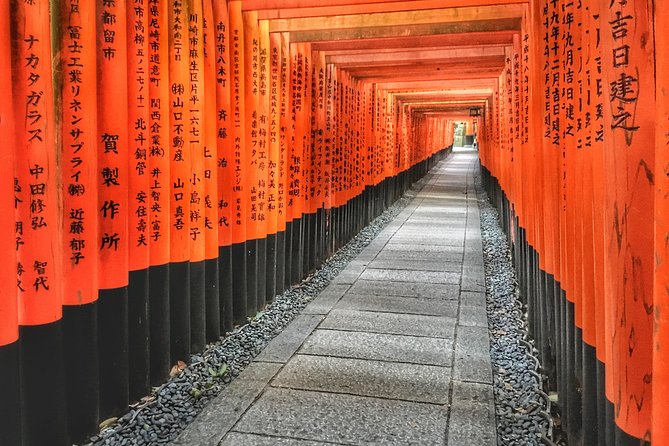
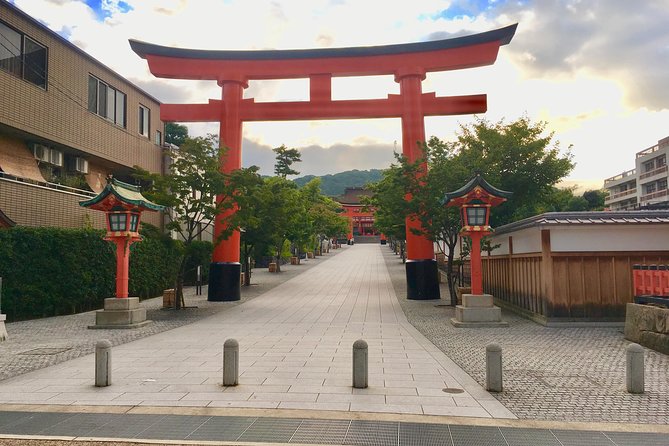
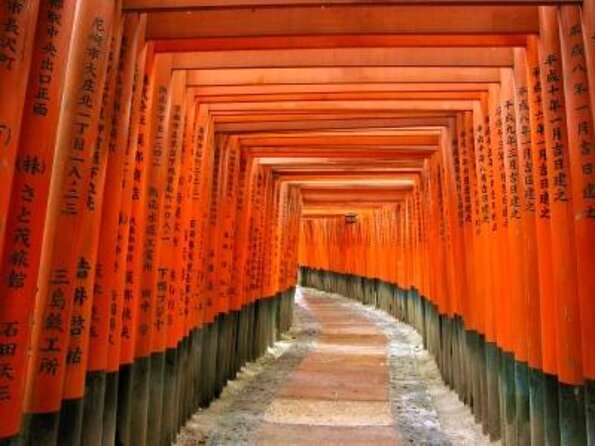
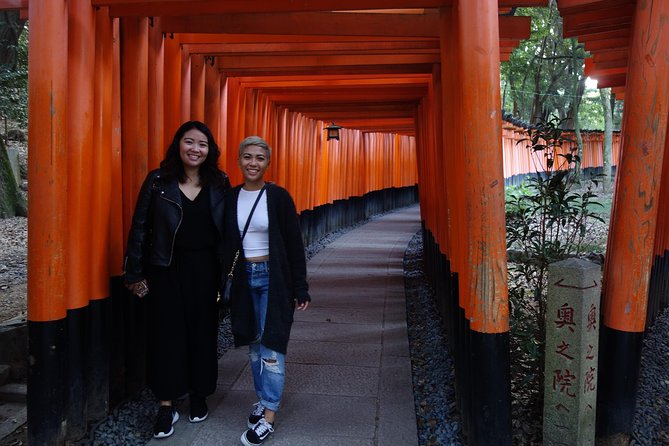
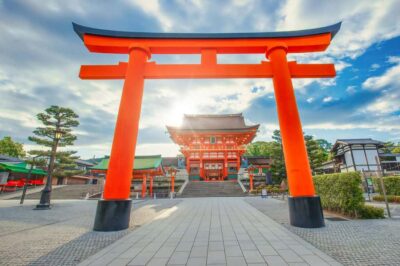
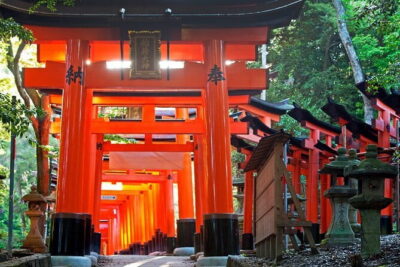
Fushimi Inari-taisha is the first stop, with about 45 minutes set aside for the shrine. The main visual treat is the maze of sacred torii gates, which create long red-orange corridors up the wooded slopes.
You will not walk the entire mountain in 45 minutes. Instead, expect a focused visit through the lower section, with time to take photographs and hear the guide explain why the shrine is important. That is a sensible choice for a four-hour tour. A full climb would take much longer and would leave less time for Kiyomizu-dera.
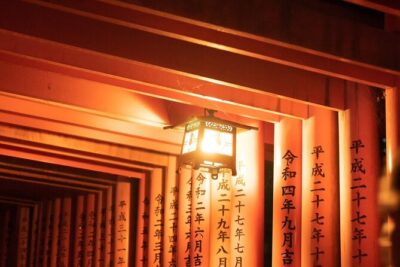
Fushimi Inari is dedicated to Inari, a Shinto deity linked with rice, business, and prosperity. The torii gates have been donated over many years by individuals and companies, which explains the names and dates written on their backs. The repeating gates are beautiful, but the shrine is more than a photo stop. A guide can help you notice the religious purpose behind the design rather than treating it as a red tunnel made for pictures.
The free admission is another plus. You are paying for the guide, organization, and transportation rather than an entrance ticket here. Wear shoes that handle steps and uneven paths. Even the shorter section requires walking, and the tour is not designed as a seated sightseeing ride.
Taxi transfers keep the morning moving
The route links Fushimi Inari in southern Kyoto with Kiyomizu-dera in the eastern hills. Taxi fares during the tour are included, which is a practical advantage. You avoid spending time figuring out which train, bus, or taxi to use next, and you are less likely to lose part of the morning at a transfer point.
This is also where the price needs a close look. A do-it-yourself visitor could reach both major sights with public transportation and pay only the required temple admission. The tour costs $98.53 per person, so it is not the cheapest way to see Fushimi Inari and Kiyomizu-dera.
I would view the taxi cost as part of the time-saving service. If you have only one morning in Kyoto, or you do not want to plan routes across town, that convenience may be worth paying for. If you already feel confident with Kyoto’s transport system and enjoy setting your own pace, the value is weaker.
The taxis also reduce the amount of time spent walking between districts, but they do not remove walking from the tour. You still walk through shrine paths, temple grounds, and old streets. One unhappy customer felt the tour could have been done independently and found the guide unhelpful. That criticism is worth taking seriously because the tour’s value depends heavily on the guide and on how much you want help with the logistics.
Kiyomizu-dera, Kyoto’s grand temple stop
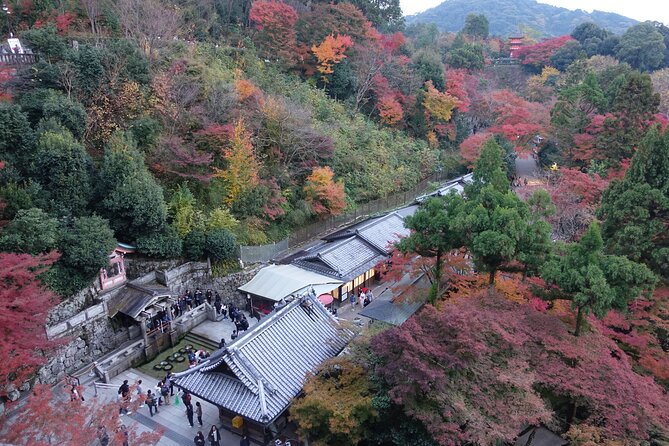
The second major stop is Kiyomizu-dera, with about one hour allotted and admission included. This is the tour’s main temple visit and the place where the route delivers its biggest architectural view.
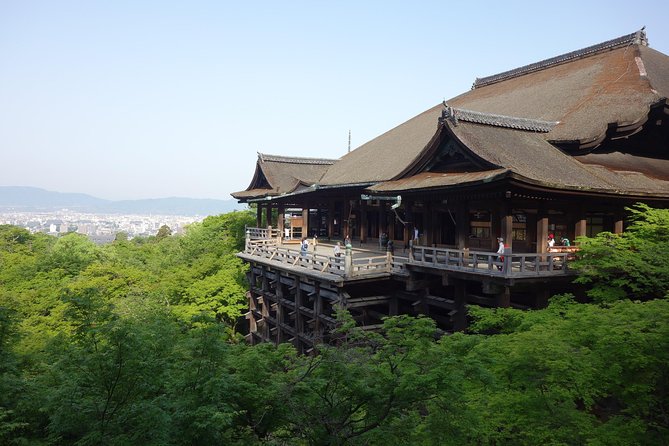
Kiyomizu-dera is famous for its large wooden stage and broad views across Kyoto. The temple sits on a hillside, so the approach and grounds involve slopes and walking. The setting gives the visit a different feel from Fushimi Inari. Fushimi is about repeating gates and a route through the trees, while Kiyomizu-dera opens outward toward the city.
One hour is enough to see the key areas at a steady pace, but it is not enough for every corner of the temple complex. You should not expect a long, unhurried temple visit with time to explore every side path. The benefit is that the tour keeps moving and allows you to see another important part of Kyoto in the same morning.
The early timing helps here. Kiyomizu-dera’s approach is lined with shops and traditional-style townhouses, and the area can become crowded later in the day. In the morning, you have a better chance of appreciating the temple’s setting without fighting through the thickest foot traffic.
Admission is included at Kiyomizu-dera, unlike Fushimi Inari, which is free to enter. That makes the price slightly easier to assess, though the main cost is still the guide and transport.
A walk through Kyoto’s preserved streets
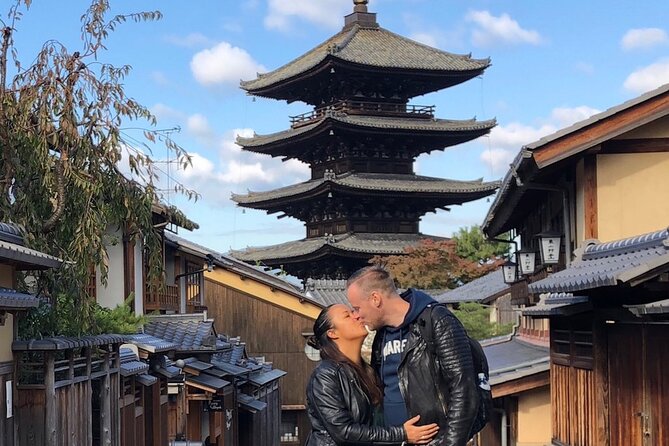
The route also includes time to wander through cobblestoned streets in a preserved district of Kyoto. The description points to quaint shops and traditional townhouses, and the tour ends at Sanjūsangendō Temple.
This portion adds texture to the morning. The major shrines and temples are the obvious sights, but Kyoto is also defined by the spaces between them: narrow streets, wooden facades, small shops, and old residential buildings. A short walk through this area helps connect the formal temple grounds with the everyday appearance of historic eastern Kyoto.
The supplied timing does not give a separate duration for this walk, so you should think of it as part of the route rather than a long free period. If you want to shop, stop for a drink, or photograph every lane, you may prefer to return later on your own.
Ending at Sanjūsangendō Temple is convenient. You can continue your day in Higashiyama instead of doubling back to Fushimi. The listed endpoint is Sanjūsangendō Temple, at 657 Sanjūsangendōmawari, Higashiyama Ward. The tour does not say that entry to Sanjūsangendō itself is included, so do not assume it is part of the paid temple admissions.
A few more Kyoto tours and experiences worth a look


The guide can make or break the value
The tour is led by Kyoto Fun, and Niall is identified as the owner and guide. One strong experience specifically praised Niall for his enthusiasm for Japanese culture and for giving an informative morning before the crowds arrived.
That personal element matters. Fushimi Inari and Kiyomizu-dera are easy to find, so the guide needs to add context, not just point out the next gate or building. A good guide can explain religious customs, show you where to focus your attention, answer questions, and keep the morning on schedule.
The small group helps. With a maximum of 12 people, you should have better access to the guide than on a large bus tour. It is not a private tour, and the actual group may vary, but the limit is reasonable for walking through narrow shrine paths and old streets.
The feedback is not perfect. One poor experience described the guide as unhelpful and judged the whole outing poor value. That tells you what to consider before booking: if you want only transportation and a list of famous locations, you can arrange this yourself. If you value explanation, structure, and a person who keeps the route moving, the tour has a stronger case.
The overall rating is 4.8 out of 5 from 20 ratings, with 95 percent recommending it. That is a very positive record, but the small sample means you should still match the tour to your own style.
Who will get the most from this four-hour route
I would recommend this tour most strongly to first-time Kyoto visitors with limited time. You see two major sites, one old-street area, and several parts of the city without spending a morning planning routes.
It also suits people who prefer a guide for cultural context. You do not need to research the shrine and temple beforehand, and the route is already arranged. Families and mixed-age groups may appreciate the included taxis, though everyone should be ready for walking and temple paths.
The tour is a good fit if you want to begin sightseeing early and keep the rest of the day free. After the 4-hour experience, you can continue around Higashiyama, visit Sanjūsangendō if you choose, or make your way elsewhere in Kyoto.
I would be more cautious if you dislike early starts, need a slow pace, or want a long visit at each site. Forty-five minutes at Fushimi Inari and one hour at Kiyomizu-dera are efficient allocations, not leisurely ones. The route checks off important sights, but it does not let you linger everywhere.
It may also be a poor match for someone who normally avoids walking. The operator has noted that Kyoto can be difficult for people who do not walk much, even with taxis between stops. The cars shorten the transfers, not the shrine and temple visits themselves.
Price, booking timing, and cancellation
The listed price is $98.53 per person, and the experience is often booked about 26 days ahead. That advance pattern suggests you should not leave it until the final morning if the early start and small group are important to you.
The price includes admission to Kiyomizu-dera and taxi fares during the tour. Fushimi Inari has no admission charge. A mobile ticket makes the booking simple, but you still need to reach Inari Station for the 7:00 am start.
Free cancellation is available if you cancel at least 24 hours before the start time. Changes or cancellations inside that 24-hour window are not accepted for a refund. The experience requires good weather and a minimum number of participants. If poor weather or an insufficient number of bookings causes cancellation, you are offered another date or experience, or a full refund.
Most people can participate, and the activity is near public transportation. Those facts make the meeting point manageable, but they do not promise a completely easy route. Temple grounds and old streets still involve walking.
Should you book Kyoto Fun’s early morning tour?
Book it if you want a well-planned introduction to Kyoto, prefer a guide, and value taxis between Fushimi and Higashiyama. The early start, included transport, small group, and strong overall rating make it a practical choice for a time-tight visit.
Skip it if your main goal is the lowest possible cost or complete control over your pace. You can visit both major sites independently, and you may want more than 45 minutes at Fushimi Inari or more than an hour at Kiyomizu-dera.
My call: this is a convenience-focused Kyoto tour, not a bargain sightseeing pass. The best reason to book is the combination of early access, local explanation, and simple movement between distant sights. If those three things matter to you, $98.53 can be fair. If they do not, save the money and plan the morning yourself.
FAQ
How much does the Kyoto tour cost?
The listed price is $98.53 per person.
How long does the experience last?
The tour lasts approximately four hours.
What time does the tour start?
The tour starts at 7:00 am.
Where does the tour begin?
The meeting point is Inari Station, Fukakusa Inarionmaecho, Fushimi Ward, Kyoto, 612-0881, Japan.
Where does the tour end?
The tour ends at Sanjūsangendō Temple, 657 Sanjūsangendōmawari, Higashiyama Ward, Kyoto, 605-0941, Japan.
Which main sights are included?
The route includes Fushimi Inari-taisha Shrine, Kiyomizu-dera Temple, and a walk through a preserved district with cobblestoned streets, shops, and traditional townhouses.
Are entrance fees included?
Admission to Kiyomizu-dera is included. Fushimi Inari-taisha Shrine has free admission. The provided information does not confirm admission to Sanjūsangendō Temple.
Are taxi fares included?
Taxi fares during the tour are included. The tour uses taxis to move from one stop to the next.
How many people can join the tour?
The experience has a maximum of 12 participants.
Can I cancel for a full refund?
Yes. You can cancel at least 24 hours before the local start time for a full refund. Cancellations or changes made less than 24 hours before the start time are not refunded or accepted.
More Golden Pavilion & Temple Tours in Kyoto
More Fushimi Inari Tours in Kyoto
More tours in Kyoto we've reviewed





Fushimi Inari Tours, compared.
 ★ 4.8Kyoto: Fushimi Inari, Kinkakuji, Bamboo Grove 1 Day Bus TourFrom $122510 minutes - 9 hours
 ★ 5.0Fushimi Inari Hidden Hiking Tour (Private Option Available)From $63
 ★ 4.7Kyoto/Osaka: Nara, Fushimi Inari Taisha, Arashiyama Bus TourFrom $529 - 10 hours
 ★ 4.4Osaka/Kyoto: Arashiyama, Nara & Fushimi Inari Shrine w/LunchFrom $61
 ★ 5.0Kyoto: Nijo, Kinkaku-ji, Arashiyama, Kiyomizu & Fushimi InariFrom $51
 ★ 5.0Kyoto Fushimi-Inari Night Walking TourFrom $43