
Reviewed · NIJO CASTLE TOURS
Nijo Castle Samurai Inside Story — Top-Rated Guide (Max 8)
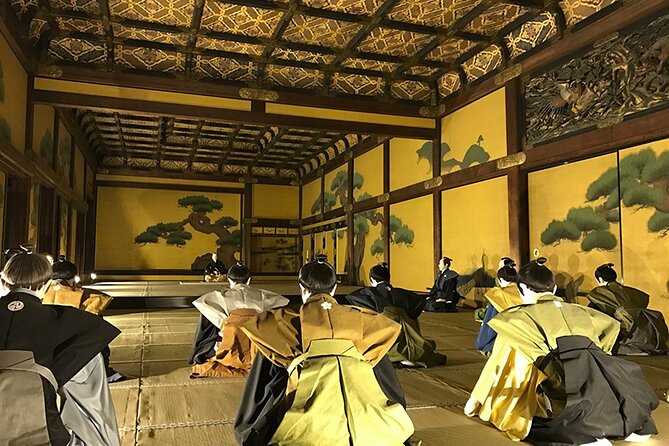
Nijo Castle is more than a handsome former residence. It is a place where samurai power, shogun rule, and imperial authority meet, and guide Richard explains the hidden rules and working systems that helped the castle function. You’ll also learn how the site fits into Japanese culture and the Edo period.
I like two things right away: the small group limit of eight, which gives you room to ask questions, and the full three-hour visit, which allows time for both the castle and its wider setting. Admission is included, and a green tea or coffee break adds a welcome pause.
The main consideration is pace. Three hours inside one historic site can feel long if you prefer a quick look and a few photographs. This tour is built for people who want detailed explanation, not simply a guided walk from gate to gate.
In This Review
- Key points to know before you book
- Why Nijo Castle makes a good history tour
- Meeting Richard at the west Main Gate
- Walking through a samurai castle
- The stories most people miss
- What the three hours feel like
- Is the $98 price fair?
- Who will get the most from this tour
- Practical details that affect your day
- What the praise tells you about the guide
- Should you book Nijo Castle Samurai Inside Story?
- FAQ
- Where does the tour begin?
- Where does the tour end?
- How long does the Nijo Castle tour last?
- Is Nijo Castle admission included?
- What is included besides castle admission?
- How many people can join?
- Is private transportation included?
- Is the tour suitable for small children?
- What happens if bad weather cancels the tour?
Key points to know before you book
- Richard’s personal style is a major part of the experience: He explains samurai life, Japanese customs, the shogun, the emperor, and the Edo period in clear English.
- The group is capped at eight people: You get more chance to ask questions than on a large coach tour.
- Nijo Castle admission is included: You do not need to arrange a separate entry ticket for the full course.
- The tour lasts about three hours: Plan for a steady visit rather than a short introduction.
- A green tea or coffee break is included: The pause comes in the middle of the tour.
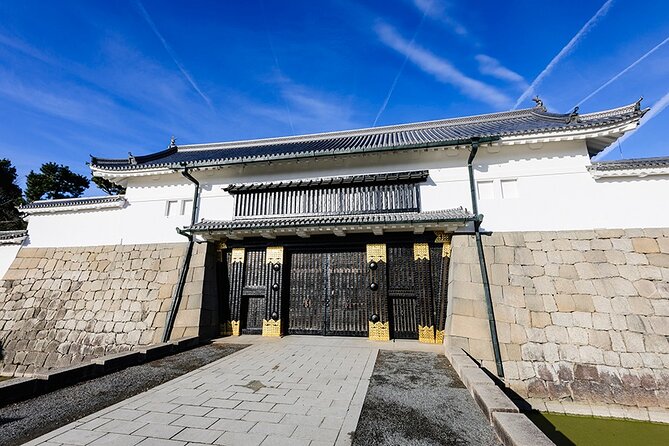
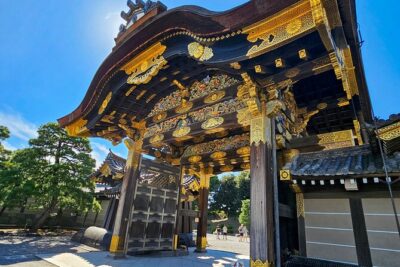
- The meeting point is specific: Richard meets you in front of the large white Main Gate on the west side of the castle.
Why Nijo Castle makes a good history tour
Nijo Castle can be easy to misread. At first glance, you may see a grand historic site with gates, buildings, and grounds. Without context, the details can blur together. The value of this tour is that Richard connects the physical place to the people and rules that shaped it.
The focus is samurai history, but the discussion reaches further. You’ll hear about the lives of the castle’s inhabitants, Japanese customs, the role of the shogun, and the changing relationship between military and imperial authority. That wider frame helps you understand why Nijo Castle matters beyond its architecture.
I especially like this approach for a first visit to Kyoto. You do not need to arrive with a background in Japanese history. The guide’s job is to explain what you are seeing and why it matters, while also pointing out details that can be easy to miss when you walk through alone.
The experience is not presented as a theatrical samurai show. Instead, it centers on stories, explanation, and the social systems behind the castle. If you are curious about how samurai operated and how power worked in Japan, that makes the tour more useful than a quick photo stop.
A few more Kyoto tours and experiences worth a look
Meeting Richard at the west Main Gate
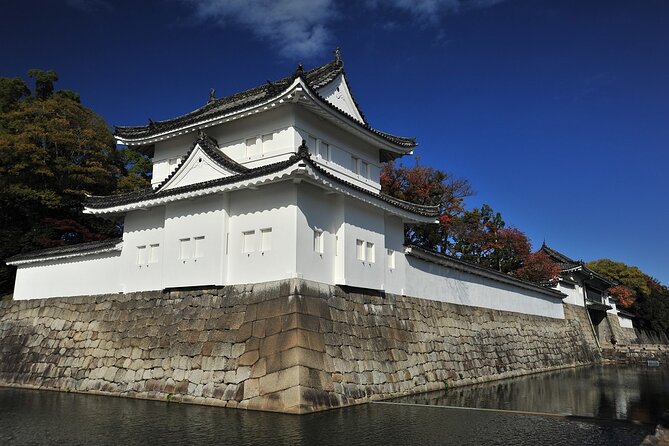
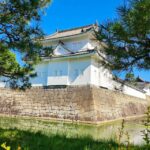
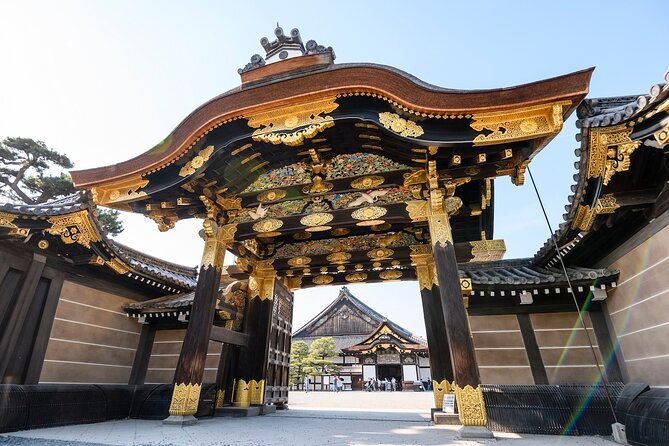
The meeting point is in front of Nijo Castle’s Main Gate, described as the large white gate on the west side of the castle. This is an important detail because Nijo Castle is a large site, and arriving at the wrong entrance could cost you time before the tour even begins.
The activity starts and ends at the castle meeting point. Private transportation is not included, but the castle is near public transportation, so you can reach the area without arranging a private vehicle. Your mobile ticket should be ready, and booking confirmation is supplied at the time of reservation.
Richard’s strongest quality is his communication. The available feedback repeatedly points to his clear English, enthusiasm, thorough explanations, and willingness to answer questions. One particularly useful feature is his ability to place Nijo Castle alongside Kyoto’s Imperial Palace and broader Japanese history.
That comparison is not listed as a separate stop, so you should not book this expecting a second formal attraction. Instead, treat it as historical context woven into the castle visit. If you are also seeing the Imperial Palace during your Kyoto stay, Richard’s comparisons can help you sort out the different roles of military and imperial sites.
Walking through a samurai castle
The tour’s only formal stop is Nijo Castle, but that does not mean you simply arrive, hear a short talk, and leave. The three-hour format gives Richard time to lead you through the castle and grounds while explaining the lives of the people connected to the site.
You can expect the visit to focus on three layers:
- Samurai life: What samurai did, how they operated, and what their social role involved.
- Castle systems: The unspoken rules and hidden arrangements that helped the site work.
- Japanese culture: Customs and ideas that give the buildings and grounds more meaning.
The phrase hidden systems should not be taken to mean a secret passage adventure. The appeal is more practical and historical. You learn about the rules, roles, and patterns that ordinary sightseeing may not reveal.
This is where the guide adds real value. A sign can tell you a date or name. Richard’s explanations help you connect the date to a person, the person to a political system, and the system to the spaces you are walking through.
The tour also pays attention to the castle’s physical properties and the lives of its inhabitants. That combination is useful because it keeps the visit grounded. You are not listening to detached facts. You are learning how people used and understood the place.
The stories most people miss
A central promise of the tour is access to lesser-known stories about samurai life. The supplied details do not list each specific story in advance, and that is probably wise. The exact discussion may depend on the guide, the group’s questions, and the parts of the castle being visited that day.
What you can expect is a focus on the less obvious side of samurai history. That includes unspoken rules, the secret roles of samurai, and systems that may not be immediately visible. Richard also explains the customs connected to the castle, rather than treating samurai as simple movie characters.
That distinction matters. Popular images often reduce samurai to armor, swords, and combat. This tour aims to show the social and cultural side as well. You may come away with a better sense of how samurai fit into Japanese society and how power was expressed inside a castle.
I would choose this experience over a short overview if you enjoy asking questions. The small group makes that easier, and the guide’s willingness to discuss Japanese history and culture is one of the most repeated strengths of the experience.
What the three hours feel like
Three hours is enough time for a serious visit, but it also creates the main question: do you want detail or speed?
If you are setting aside a full day for several Kyoto sights, this tour may require careful planning. Nijo Castle is the entire scheduled stop, and the tour ends back at the meeting point. You should not expect to finish in an hour and quickly move on to an unrelated attraction.
On the other hand, the length is a benefit if you dislike rushed tours. Richard has time to explain a point, take questions, and compare what you are seeing with other parts of Japanese history. Several comments describe the tour as thorough and say it became a highlight of a Kyoto visit.
The middle break includes green tea or coffee. That is a modest inclusion, but it matters during a three-hour walking visit. It gives you a chance to rest and continue the discussion without treating the tour as one long stream of information.
The experience is not recommended for small children. That warning fits the format. The subject requires attention, and the length may be difficult for young children who need a faster pace or more active entertainment.
A few more Kyoto tours and experiences worth a look



Is the $98 price fair?
At $98 per person, this is not the cheapest way to see Nijo Castle. You are paying for more than entry, though. The price includes admission for the full castle course, a three-hour guided visit, a small group capped at eight, and the tea or coffee break.
The value depends on how you normally visit historic sites. If you prefer to wander alone and read signs, you may find the price high. If you want a guide who can explain samurai life, Japanese customs, the shogun, the emperor, and the Edo period, the cost becomes easier to justify.
A large group can make a guided visit feel generic. Here, the maximum of eight gives the experience a more personal shape. You can ask about a detail that catches your eye, request clarification, or connect the discussion to another site you have visited in Kyoto.
The strongest value comes from Richard’s range. He is not limited to Nijo Castle facts. He also discusses Japanese history and culture, and his comparisons with the Imperial Palace can help you build a clearer picture of Kyoto’s political past.
Tips are not required, but they are appreciated if you enjoy the experience. Private transportation is not included, so factor in your own local transit costs.
Who will get the most from this tour
I would recommend this tour most strongly to:
- First-time Kyoto visitors who want context before seeing more historic sites.
- People interested in samurai life beyond popular film and television images.
- Travelers who enjoy asking questions and discussing history.
- Couples, families with older children, and small groups who prefer personal attention.
- Visitors who plan to see the Imperial Palace and want help comparing the two settings.
- Anyone who finds historic buildings confusing without a guide.
You may want to skip it if you have very young children, dislike a three-hour visit, or only want time for independent photography. The tour is built around explanation. It is not a quick entrance ticket with a short orientation.
The format also works well for people who worry about getting lost. Nijo Castle is large enough that a guide can save you from spending your visit deciding where to go next. Instead, you can focus on the stories and the spaces around you.
Practical details that affect your day
The tour takes place in Kyoto, at Nijo Castle, 541 Nijojocho, Nakagyo Ward. It is near public transportation, but private transportation is not provided. You should arrive at the stated west-side Main Gate meeting point rather than assuming the guide will meet you at any entrance.
The activity uses a mobile ticket, and confirmation arrives when you book. Most people can participate, but the experience is not recommended for small children. The group limit is eight people, which is small enough for a more conversational visit without the cost of a fully private tour.
The tour requires good weather. If poor weather causes cancellation, you are offered another date or a full refund. For your own plans, keep this in mind if you are arranging several fixed Kyoto activities around the same day.
You can cancel for a full refund if you do so at least 24 hours before the local start time. Changes or cancellations inside that 24-hour window are not accepted for a refund.
What the praise tells you about the guide
The most consistent strength is Richard himself. He is described as clear, enthusiastic, friendly, and thorough. His English is praised, and his approach seems to make the tour feel more like a conversation than a formal speech.
That personal approach matters at Nijo Castle. The subject can include unfamiliar names, political shifts, social customs, and terms connected to samurai life. A guide who explains clearly can keep those details from becoming a blur.
Richard also appears comfortable with questions. You can ask about the castle, Japanese customs, samurai roles, or broader national history. His interest in the subject comes through strongly, which helps the tour feel lively even when the topic is serious.
The high rating and 100 percent recommendation are encouraging, but you should still match the experience to your own style. The praise centers on depth, clarity, and enthusiasm. If that sounds appealing, the tour has a strong case. If you want total independence, you may prefer a self-guided visit.
Should you book Nijo Castle Samurai Inside Story?
Book it if you want meaning behind the buildings, not just access to them. The included admission removes one small chore, while the eight-person limit and three-hour schedule give Richard room to explain samurai life, castle customs, and the wider relationship between the shogun and emperor.
I would especially choose it for a first Kyoto visit, or for a return visit when you want to understand the site more fully. The green tea break is pleasant, and the comparison with the Imperial Palace can sharpen your sense of Kyoto’s history.
Skip it if you need a short stop, are traveling with small children, or prefer to explore without a guide. For everyone else, the $98 price is reasonable when you value clear English, personal attention, and a serious explanation of what makes Nijo Castle important.
FAQ
Where does the tour begin?
The tour begins at Nijo Castle, 541 Nijojocho, Nakagyo Ward, Kyoto. The guide meets you in front of the large white Main Gate on the west side of the castle.
Where does the tour end?
The activity ends back at the meeting point.
How long does the Nijo Castle tour last?
The tour lasts approximately three hours.
Is Nijo Castle admission included?
Yes. Admission for the full Nijo Castle course is included in the tour price.
What is included besides castle admission?
A green tea or coffee break is included during the middle of the tour.
How many people can join?
The tour has a maximum of eight travelers.
Is private transportation included?
No. Private transportation is not included, though the meeting point is near public transportation.
Is the tour suitable for small children?
The activity is not recommended for small children. Most other travelers can participate.
What happens if bad weather cancels the tour?
If poor weather causes cancellation, you will be offered a different date or a full refund. You can also receive a full refund by canceling at least 24 hours before the experience start time.
More Guided Tours in Kyoto



More Samurai & Kendo Experiences in Kyoto
More Nijo Castle Tours in Kyoto
More tours in Kyoto we've reviewed





Nijo Castle Tours, compared.
 ★ 4.7Kyoto: Nijo-jo Castle and Ninomaru Palace Guided TourFrom $161 hour
 ★ 5.0Kyoto: Nijo, Kinkaku-ji, Arashiyama, Kiyomizu & Fushimi InariFrom $51
 ★ 4.7Kyoto: Imperial Palace & Nijo Castle Guided Walking TourFrom $493 hours
 ★ 4.5Kyoto Imperial Palace & Nijo Castle Guided Walking Tour – 3 HoursFrom $55
 ★ 4.6Kyoto: Nijo Castle and Kyoto Imperial Palace Guided TourFrom $633 hours
 ★ 5.0Nijo Castle and Imperial Palace Visit with GuideFrom $79