
Reviewed · TEA CEREMONY EXPERIENCES
Kyoto: Table-Style Tea Ceremony at a Kyo-Machiya
The clever idea here is simple: you get a real introduction to Japanese tea ceremony without sitting on the floor. At a more than 100-year-old machiya in southern Kyoto, you watch the formal tea service, prepare your own frothy matcha, try calligraphy, and explore a traditional home without feeling trapped in a rigid ritual.
I especially like the mix of quiet ceremony and hands-on activities. Making matcha with a bamboo whisk gives you something practical to remember, while writing your name in Japanese and receiving it on a scroll or envelope makes a thoughtful keepsake. The main consideration is location: this is about 20 to 25 minutes from central Kyoto by train, so you need to plan it with your Fushimi, sake-town, or Uji sightseeing.
In This Review
- Key points to know before booking
- Entering a 100-year-old Kyoto machiya
- Purifying yourself at the garden basin
- A clear introduction to tea ceremony manners
- Watching the formal tea service
- Making your own creamy matcha
- Calligraphy, flowers, and a personal keepsake
- Choosing the kimono option
- Why Fushimi makes the trip worthwhile
- Price, group size, and overall value
- Who should book this experience
- Should you book it?
- FAQ
- How long does the tea ceremony experience last?
- How much does the experience cost?
- Do I have to sit on the floor?
- Is the activity offered in English?
- What is included in the experience?
- Can I rent a kimono?
- Can pregnant participants wear a kimono?
- Is hotel pickup included?
- How do I reach the townhouse from Kyoto Station?
- Is the activity suitable for wheelchair users?
- Can I cancel for a refund?
Key points to know before booking
- Table seating makes the ceremony easier: Chairs replace the usual floor seating, a helpful choice if kneeling is uncomfortable.
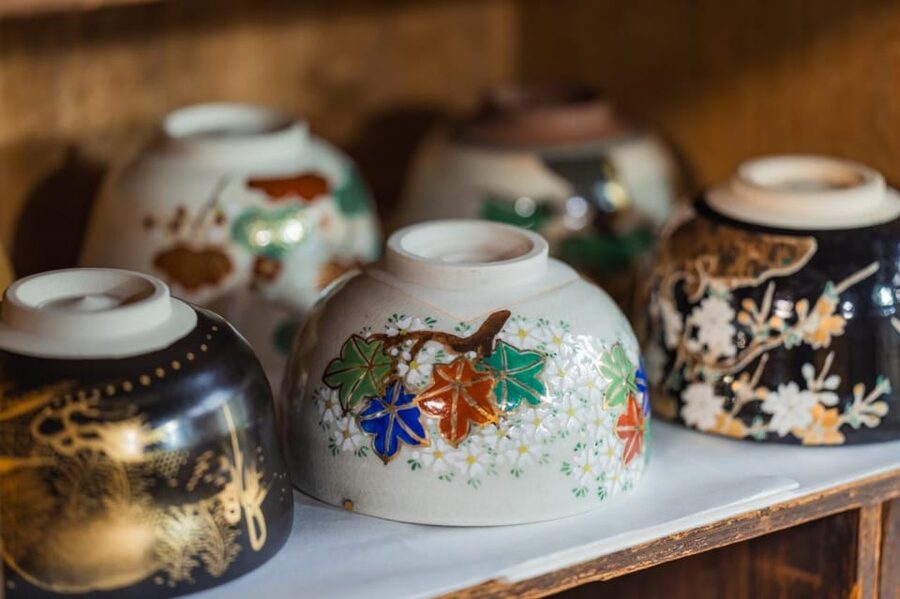
- The machiya is part of the experience: You can see old Buddhist and Shinto altars, antiques, a garden, and the details of a century-old Kyoto townhouse.
- You do more than watch: Prepare matcha, taste traditional sweets, try calligraphy, and arrange flowers.
- Kimono rental adds time and photographs: Reserve the option in advance and arrive 30 minutes early for dressing.
- Fushimi is a smart base for the afternoon: The area is known for sake, casual restaurants, shopping streets, and rail links to Fushimi Inari, Uji, Osaka, and Nara.
- The format suits first-time visitors: English-speaking hosts explain the history, manners, utensils, and movements in a friendly small-group setting.
Entering a 100-year-old Kyoto machiya
The tea ceremony takes place in Fushimi, a southern Kyoto district with a more everyday feel than the city’s busiest sightseeing zones. The activity is held in a traditional Kyoto townhouse, or machiya, with a blue curtain outside. Guides wearing kimono wait near the entrance, which makes the meeting point easier to spot once you reach the shopping arcade.
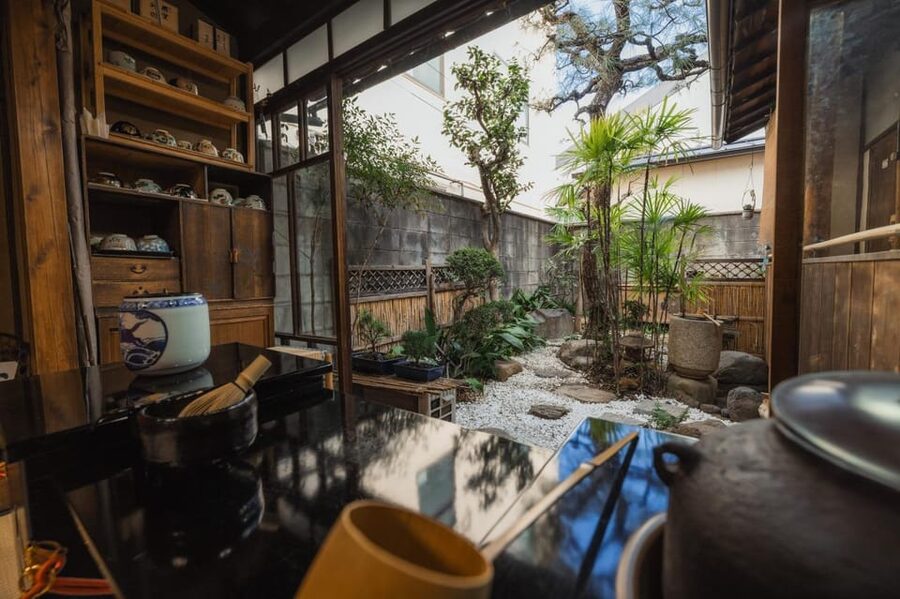
I like that the building is not just a room hired for a demonstration. You are invited to stroll through the townhouse and notice its old Buddhist and Shinto altars, antiques, garden, and traditional architecture. The exterior may look modest, but the interior provides much of the atmosphere.
This setting matters. A tea ceremony can feel abstract when it takes place in a modern hotel or classroom. Here, the house connects the tea, the manners, and the quiet movements to the kind of domestic setting in which Japanese customs developed. You are not simply drinking powdered green tea. You are seeing how the activity fits into a Japanese home.
The house has stairs, and the activity is not suitable for wheelchair users. If stairs are difficult for you, ask before booking rather than assuming the chair seating solves every mobility concern.
A few more Kyoto tours and experiences worth a look
Purifying yourself at the garden basin
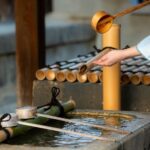
Early in the experience, you learn about purification at a stone basin in the garden. This echoes the practice found at Shinto shrines, where visitors cleanse themselves before approaching a sacred place.
The action is brief, but it gives useful context. Japanese etiquette often places importance on preparing yourself before an encounter, not just rushing toward the main event. The hosts explain the meaning and guide you through the steps, so you do not need prior knowledge of shrine customs.
The garden also becomes a natural setting for photographs. Depending on the setup and season, you can pose with Japanese umbrellas, folding fans, and even a katana sword. These props add a playful side to the experience, especially if you have chosen kimono rental. The result is less formal than the tea service itself, but it gives you a chance to take photographs without interrupting the ceremony.
I would treat the photo time as a bonus rather than the main reason to book. The house, garden, tea, and instruction carry the experience. The props are useful for couples, families, and anyone who wants a few memorable images in traditional clothing.
A clear introduction to tea ceremony manners
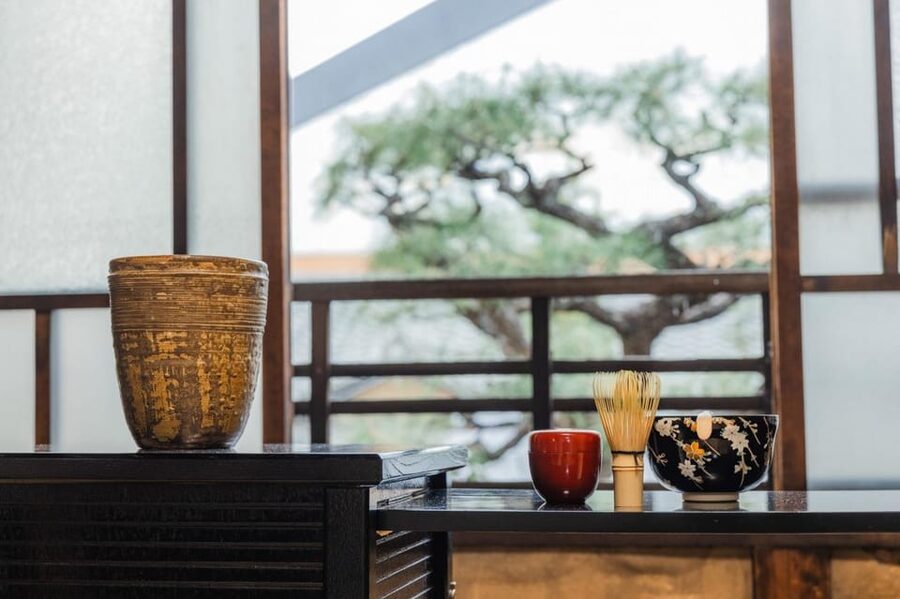
Before you prepare tea, the hosts explain how tea ceremony developed in Japan, along with its spirit and manners. A PowerPoint presentation supports the explanation, which may sound plain, but it is useful for first-time participants. You learn why guests move in certain ways, how utensils are handled, and what to notice when the host performs the service.
The instruction is in English, and the hosts are used to guiding international visitors through unfamiliar steps. The strongest part of the format is its patience. You are not expected to know when to bow, how to hold a bowl, or how to respond to the sweets. The hosts demonstrate first, then let you try.
That balance keeps the activity welcoming without stripping away the ceremony’s formal character. You still see the careful preparation and respectful movements, but the explanations help you understand what is happening instead of watching in silence.
I would not expect a full-length study of tea school traditions in 90 minutes. This is an accessible introduction, not specialist training. For most people, that is the right tradeoff during a busy Kyoto visit.
Watching the formal tea service
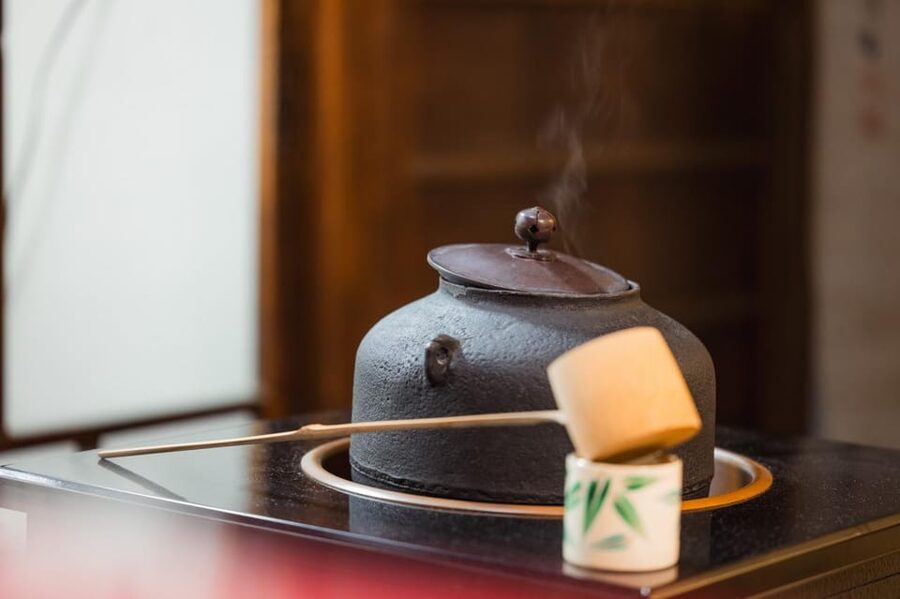
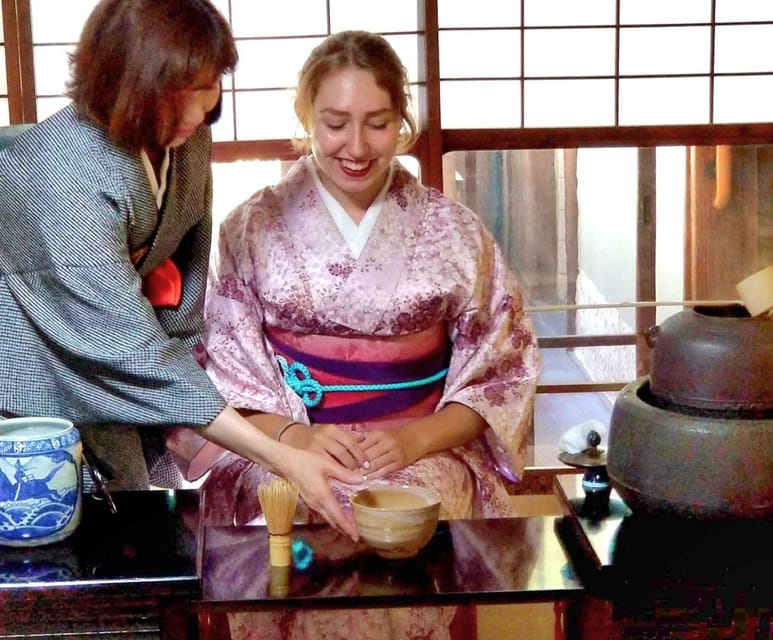
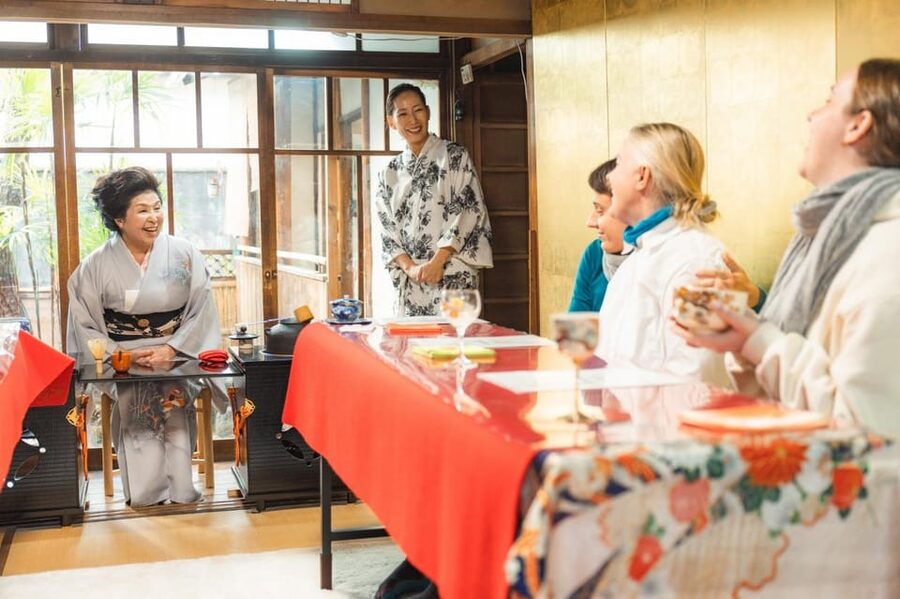
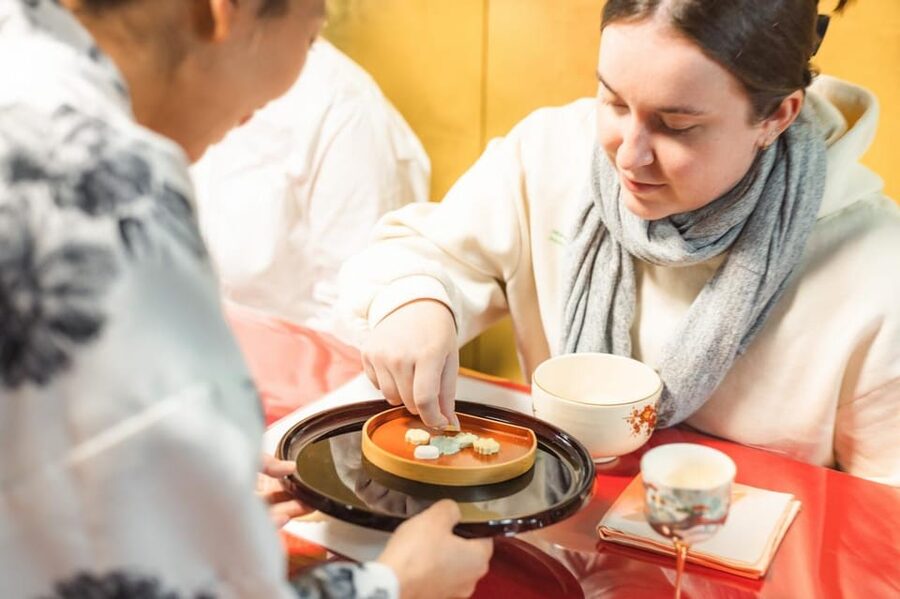
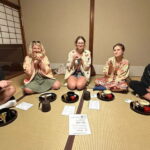
The central performance is the tea ceremony itself. You sit at a table on a chair, while the host prepares and serves matcha with deliberate movements. Traditional sweets accompany the tea.
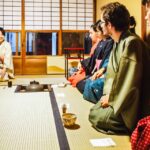
The chair seating is one of the activity’s best practical features. Formal tea ceremony is often associated with sitting on tatami in a kneeling position, which can be uncomfortable for anyone with stiff knees, leg pain, or limited flexibility. This version keeps the manners and visual details while making the experience easier to follow.
Do not mistake comfort for informality. The utensils, gestures, order of service, and attention to detail remain central. You have time to watch the host before trying parts of the process yourself.
The sweets are not just a snack. In the tea ceremony, their sweetness prepares your palate for the slightly bitter matcha. You learn to appreciate the contrast, rather than treating the tea as an ordinary latte or dessert drink.
A welcome drink is also included, with options such as sake or juice. Japanese tea is part of the refreshments as well. Since sake is associated with Fushimi, the local drink fits the neighborhood, though you should choose juice if you do not drink alcohol.
Making your own creamy matcha
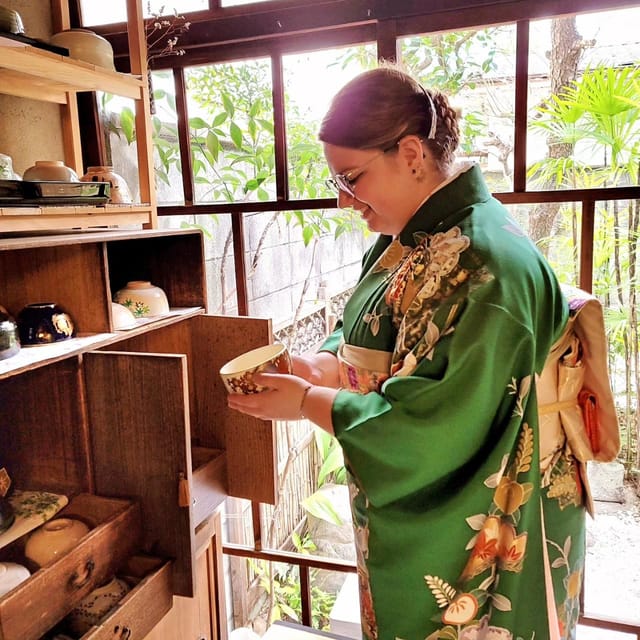
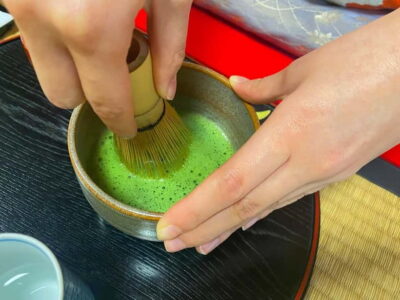
After watching the tea service, you make your own matcha with a bamboo whisk. This is the most useful hands-on part for anyone who wants to repeat the experience later.
You add the tea and whisk it until it becomes creamy and frothy. The hosts show you the motion and help you correct your technique. Matcha preparation looks simple, but the whisking takes more control than many people expect. The activity gives you enough instruction to understand how the powder, water, and whisk work together.
I like this step because it changes your relationship with the drink. After preparing it yourself, you pay closer attention to the texture, foam, bitterness, and way the tea is served. It also works well for families and teenagers, who may find it easier to engage with an activity than with a demonstration alone.
The included sweets soften the tea’s bitterness. If you already drink matcha, you may appreciate the chance to compare your preparation with the host’s. If you are new to it, do not expect a sweet café-style beverage. Matcha has a strong, grassy taste, and the ceremony presents it in a traditional form.
The activity also includes latte art using thick tea. The exact presentation can vary, but it adds another creative element to the matcha portion.


Calligraphy, flowers, and a personal keepsake
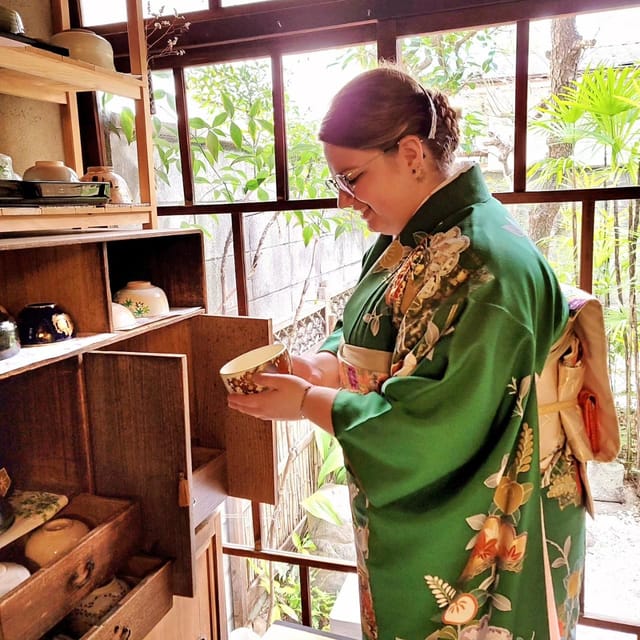
The final activities broaden the experience beyond tea. You write your name in Japanese, with kanji or hiragana available, and some sessions include katakana as well. The hosts help you form the characters and explain the writing process.
You receive your name on a hanging scroll or envelope. This is more personal than a generic souvenir because it connects your own name with the language and setting you encountered in Kyoto. Keep it flat during the rest of your trip if possible.
Flower arranging is also included. The activity introduces the basic idea of Japanese flower arrangement, often called ikebana, in a simple practical format. You do not need artistic skill. The point is to notice shape, balance, and placement, much as the tea ceremony asks you to notice utensils and movement.
These extras explain why the 90-minute schedule feels full. You are not spending an hour watching someone else work. You move between cultural topics, small tasks, photographs, and the main tea service.
The pace may feel busy if you hoped for a very slow, meditative ceremony. I see that as the chief stylistic tradeoff. This is designed for visitors who want several windows into Japanese culture in one sitting, not for someone seeking a silent, highly formal tea-school lesson.
Choosing the kimono option
Kimono rental is optional, but it adds a strong visual and cultural layer. The hosts help you select and put on a kimono, and photographs in the garden and townhouse become part of the memory.
The fitting process requires extra time. If you select this option, arrive 30 minutes before the scheduled start. Do not arrive at the normal meeting time and expect the dressing to happen without affecting the ceremony.
The kimono option has special appeal for couples, families, and anyone marking a birthday, anniversary, or first trip to Japan. You can take photographs with fans, umbrellas, and the garden backdrop, then wear the clothing during the tea service and calligraphy.
There are practical limits. A kimono can feel restrictive, and the provider asks pregnant participants not to wear one for health and safety reasons. You should also remember that the townhouse has stairs.
I would pay for the option if photographs and dress-up are important to you. If your main goal is learning about matcha and etiquette, the standard experience still contains the essential material.
Why Fushimi makes the trip worthwhile
The activity is not in central Kyoto, but the journey gives you useful choices. From Kintetsu Kyoto Station, take an express train toward Kintetsu Momoyama-Goryo-mae Station. From Keihan Gion-Shijo, use the train to Fushimi-Momoyama Station. JR Momoyama Station is another option.
From the station, walk west along the Otesuji shopping arcade. Turn right near Mizuho Bank or the Rakuten mobile shop, then continue toward the old townhouse with the blue curtain. From JR Momoyama, walk northwest, pass Gokogu Shrine on your right, and join the arcade. Guides in kimono wait at the house.
Allow roughly 20 to 25 minutes from central Kyoto, depending on your station and train. The effort is easiest if you combine the ceremony with nearby sights rather than making a separate cross-town trip.
Fushimi is famous for sake and has casual restaurants and shopping streets. You can eat before or after the activity, browse the arcade, or visit a local shrine. Fushimi Inari Shrine is also nearby by train, and Uji, known for tea, takes about 20 minutes by train.
The rail connections make this a practical add-on to a wider day. Osaka is about 40 minutes away by express train, while Nara takes about 50 minutes. Check your exact train route and allow time for transfers, but the district is well connected.
Price, group size, and overall value
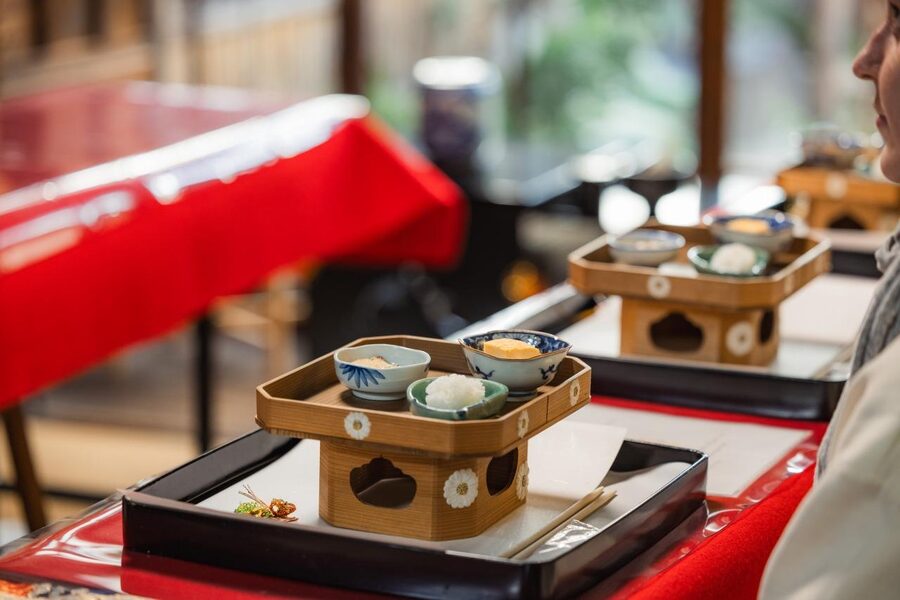
The listed price is $45 per person for 90 minutes. That is fair value if you take part in several elements: welcome drinks, sweets, the tea service, your own matcha, calligraphy, flower arranging, and access to the traditional house and garden.
Kimono rental costs extra, so compare the total against your priorities. A cheaper tea demonstration might cover only the performance and a cup of tea. This activity gives you instruction and several take-home or photographable parts, which helps justify the base price.
Private and small-group formats are available. A smaller group should give you more room to ask questions and more time with the whisk, brush, and photo props. If you are booking for a family, ask which format is available at your chosen time.
The hosts are English-speaking, and the explanations are intended for beginners. I would choose this for a first tea ceremony rather than for a repeat visitor who wants advanced study of a particular tea school.
Cancellation is flexible up to 24 hours before the start for a full refund, and you can reserve now and pay later. Hotel pickup and drop-off are not included, so you handle the train journey yourself.
Who should book this experience
I would recommend it to you if you want a friendly introduction to Japanese culture with plenty of participation. It works especially well for couples, families with older children, teenagers, and first-time visitors who want more than a standard sightseeing stop.
The chair seating makes it a better choice than many floor-based ceremonies for people who cannot kneel comfortably. It does not remove every physical issue, since the townhouse has stairs and wheelchair users cannot take part.
Choose the kimono option if photographs and traditional clothing matter to you, and arrive early. Skip it if you prefer to focus on tea, calligraphy, and the history without spending extra time dressing.
I would schedule it on a Fushimi day, perhaps alongside sake shops, local food, Fushimi Inari, or Uji. That turns the train ride into part of a well-planned southern Kyoto outing.
Should you book it?
Yes, if you want a broad, approachable cultural activity rather than a strict ceremonial lesson. The combination of a century-old machiya, chair seating, English instruction, matcha preparation, calligraphy, flower arranging, and optional kimono gives you a lot to do for the price.
Book it with realistic expectations. The 90-minute format is lively and educational, not a silent retreat. If that sounds right, this is one of the more useful ways to spend an afternoon outside central Kyoto, especially when paired with Fushimi’s sake district or a visit to Fushimi Inari.
FAQ
How long does the tea ceremony experience last?
The experience lasts 90 minutes.
How much does the experience cost?
The listed price is $45 per person. Kimono rental is an optional addition.
Do I have to sit on the floor?
No. The tea ceremony uses tables and chairs, so you do not need to sit on the floor.
Is the activity offered in English?
Yes. English-speaking instructors guide the activity and explain the ceremony, manners, and cultural background.
What is included in the experience?
The base experience includes the tea ceremony, traditional sweets, welcome drinks such as sake or juice, matcha preparation, calligraphy, and a hanging scroll or envelope with your name written in Japanese. Flower arranging and tea-related activities are also included.
Can I rent a kimono?
Yes. Kimono rental is available as an optional selection. You should arrive 30 minutes early if you choose it.
Can pregnant participants wear a kimono?
No. The provider asks pregnant participants not to wear a kimono for health and safety reasons.
Is hotel pickup included?
No. You must travel to the townhouse independently. Hotel pickup and drop-off are not included.
How do I reach the townhouse from Kyoto Station?
From Kintetsu Kyoto Station, take an express train for about 15 minutes to Kintetsu Momoyama-Goryo-mae Station. From there, walk west along the Otesuji shopping arcade and turn right near Mizuho Bank or the Rakuten mobile shop.
Is the activity suitable for wheelchair users?
No. Wheelchair users cannot take part in this experience.
Can I cancel for a refund?
Yes. You can cancel up to 24 hours in advance for a full refund. You can also reserve now and pay later.
More Tea Ceremony Experiences in Kyoto
More tours in Kyoto we've reviewed



Tea Ceremony Experiences, compared.
 ★ 4.9Kyoto: Tea Ceremony in a Traditional Tea House in KiyomizuFrom $4945 min
 ★ 4.9Kyoto: Tea Ceremony Ju-An at Jotokuji TempleFrom $291h 10m
 ★ 4.3Kyoto: 45-Minute Tea Ceremony Lesson ExperienceFrom $2245 min
 ★ 5.0World Heritage Kyoto & Nara Uji Authentic Matcha ExperienceFrom $129
 ★ 5.0Kimono Tea Ceremony at Kyoto Maikoya, NISHIKIFrom $65
 ★ 4.9Kyoto: Tea Museum Tickets and Matcha Grinding ExperienceFrom $231 hour