
Reviewed · TEA CEREMONY EXPERIENCES
Kimono Tea Ceremony at Kyoto Maikoya, NISHIKI
Kyoto Maikoya Nishiki puts kimono dressing and a matcha tea ceremony into one compact cultural experience. You choose your outfit, have your hair arranged in a simple style, then sit on tatami while the host explains the ritual and guides you through making tea.
I like the easy all-in-one format, especially if you do not want to arrange kimono rental separately. I also like the hands-on element: you do not just watch the tea being prepared, you whisk your own matcha and taste it with Japanese sweets. The main consideration is that the session can feel less private than the booking wording suggests, since some ceremonies include around 8 to 12 participants.
In This Review
- Key points to know
- Choosing a Kimono at Maikoya Nishiki
- Photos Before the Tea Begins
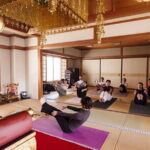
- Sitting on Tatami for the Ceremony
- Making Matcha Instead of Only Watching
- What Makes the Cultural Context Useful
- Timing, Duration, and Group Feel
- Is $65.66 a Fair Price?
- Who Will Enjoy This Kyoto Experience
- Practical Details Before You Book
- Should You Book Kimono Tea Ceremony at Kyoto Maikoya?
- FAQ
- Where does the tea ceremony take place?
- How long does the experience last?
- What is included in the price?
- Do I make my own matcha?
- Are Japanese sweets served?
- Are morning and afternoon times available?
- Can children join the activity?
- Is transportation included?
- What is the cancellation policy?
Key points to know
- Kimono, hairstyling, and tea are combined: You can handle several Kyoto customs in one 90-minute visit.
- You make your own matcha: The tea master explains the utensils and each step before you prepare the drink.
- The setting is traditional: Expect tatami seating, Japanese-style manners, wagashi sweets, and a calm tea-room atmosphere.
- Photos are part of the fun: Staff help with the outfit and may take pictures, with some sessions offering garden photo time.
- The central Nishiki location is practical: You make your own way to 329 Ebiyacho, close to public transportation and Kyoto’s Nishiki area.
- Small-group details need checking: The booking information allows a maximum of two people per reservation, while session accounts describe groups of roughly 8 to 12.
Choosing a Kimono at Maikoya Nishiki
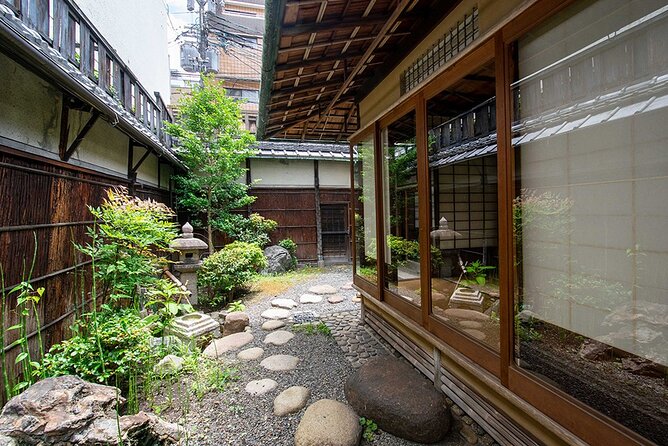
The experience begins at Maikoya’s Nishiki location, at 329 Ebiyacho on Gokomachi-dori, south of Sanjo. You do not receive hotel pickup, so plan to reach the venue on your own. Its central location makes it a useful stop during a day around downtown Kyoto, particularly if you are already visiting Nishiki Market or nearby shopping streets.
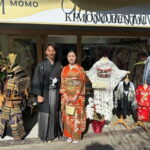
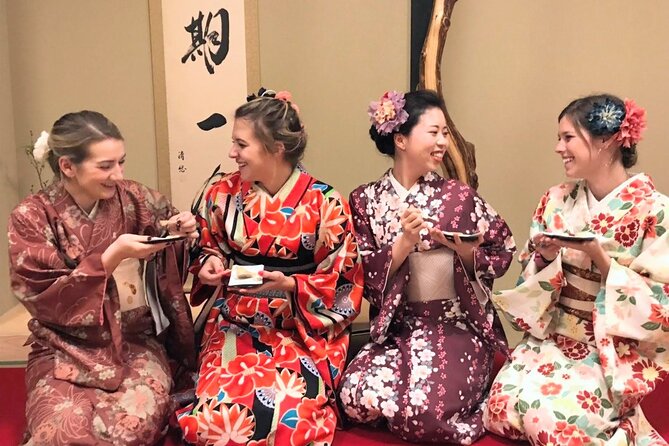
Once you arrive, staff help you select a kimono from the available collection. This is not simply a costume tossed over your clothes. The outfit is arranged properly, with accessories chosen to complete the look. The women assisting with dressing are described as friendly and helpful, and the process is handled in an organized way.
The choice of clothing is one of the strongest parts of the visit. You get a chance to consider colors and patterns, and the finished outfit gives the tea ceremony a stronger sense of occasion. It also makes the photographs more memorable than a standard seated demonstration.
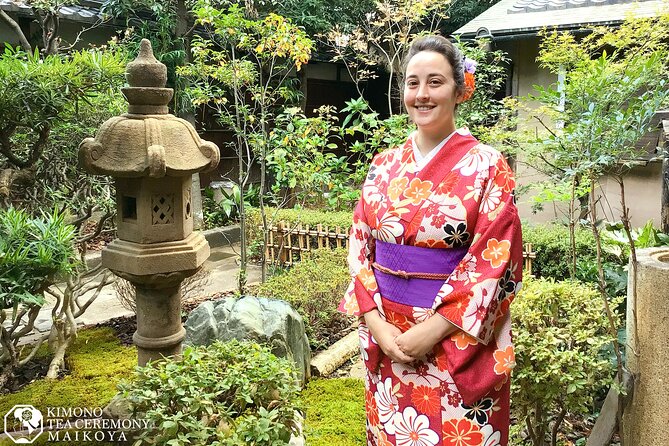
For women, a simple hairstyle is included. Staff pin the hair up and add decorative pieces such as flowers. You also receive a small purse for valuables, a useful touch when you are dressed in layers and do not want to keep a regular day bag beside you.
Allow yourself a little patience during this stage. The dressing process is part of the activity, but it is also a practical sequence, especially when several people are being prepared around the same time. You may find that the amount of personal attention varies with the size of your session.
A few more Kyoto tours and experiences worth a look
Photos Before the Tea Begins
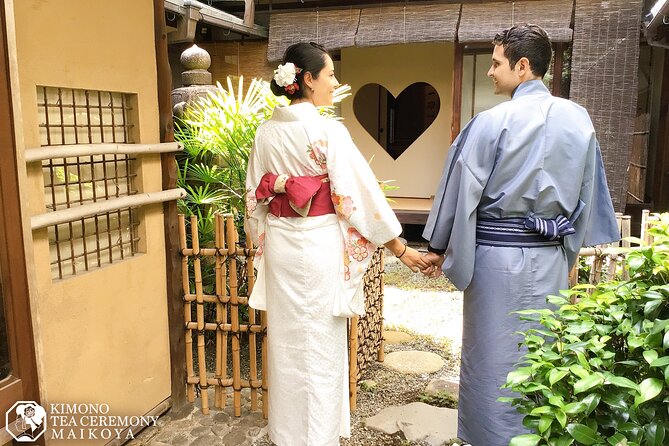
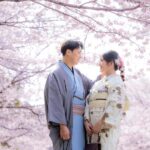
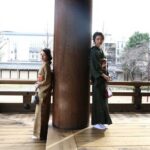
After dressing, you have time for photographs. Staff are willing to help take pictures, and some sessions include time in a garden area. This matters because a kimono ceremony is partly about learning and partly about creating a lasting memory of Kyoto.
You should take your pictures before the tea portion begins, when you can move more freely and ask for help with poses. If you are visiting with family or a partner, this is also the best point to take group photographs before everyone settles onto the tatami.
The photo time is not presented as a professional photo shoot, so keep your expectations sensible. You receive help from the staff, but the focus remains the cultural activity rather than a long portrait session. Still, the combination of a well-arranged kimono, hair ornaments, and a traditional room gives you plenty to work with.
This part will appeal most to first-time visitors who want a visual memory of Kyoto. If you have little interest in dressing up or taking pictures, the tea lesson itself is the reason to book, not the clothing.
Sitting on Tatami for the Ceremony
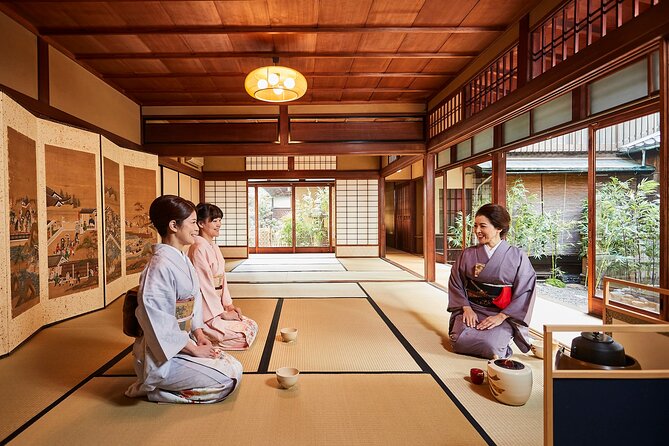
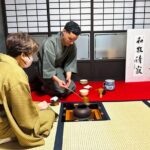
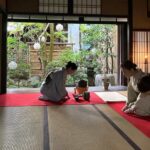
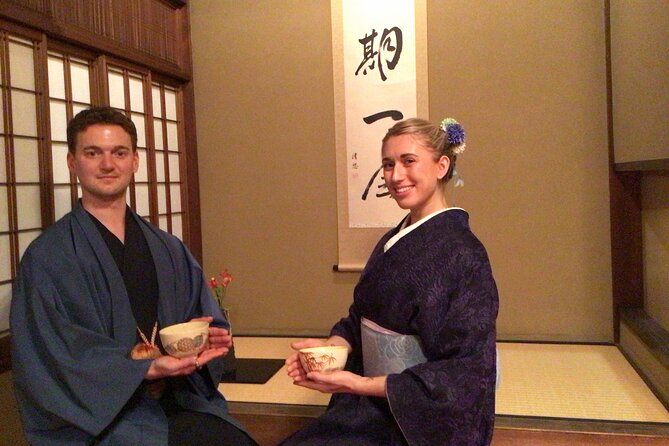
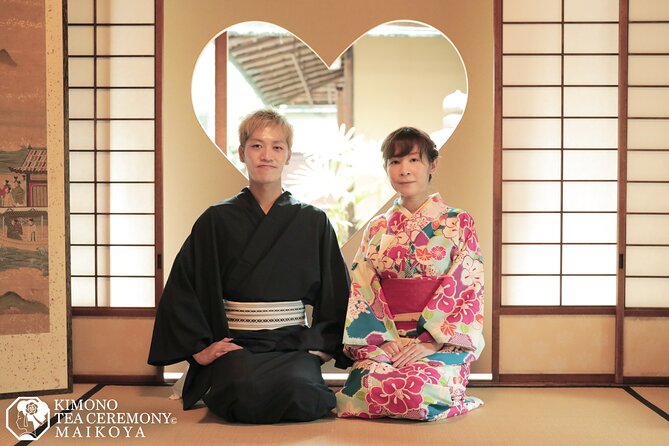
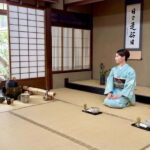
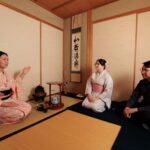
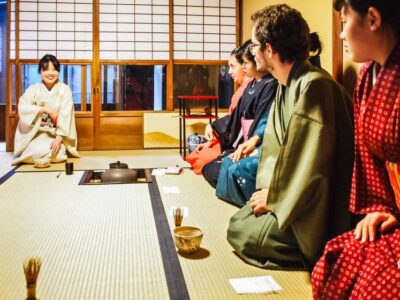
The tea ceremony takes place after everyone is ready. You sit Japanese-style on a tatami floor while the host introduces the customs, utensils, and meaning behind the ritual. The ceremony is designed for people who may know little about Japanese tea, so you do not need prior experience.
A host such as Sono may lead the session, explaining the ceremony in clear, approachable terms. The teaching includes the origins and customs of tea preparation, along with parts of Kyoto’s cultural past. Some sessions also include a short meditation, adding a quiet pause before the practical tea-making begins.
The presentation is educational without requiring you to memorize formal rules. You learn why the utensils matter, how the tea is handled, and how the sequence fits together. That context is important. Without it, whisking green tea can feel like a craft demonstration. With it, the movements have a clear purpose.
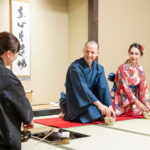
You should also expect the host to guide the room through the process together. That keeps the activity friendly and accessible, though it means the experience is not a private lesson. The supplied booking details describe a maximum of two participants, while session descriptions refer to groups of about 8 to 12 people. If privacy is important to you, confirm the group arrangement before booking.
Making Matcha Instead of Only Watching
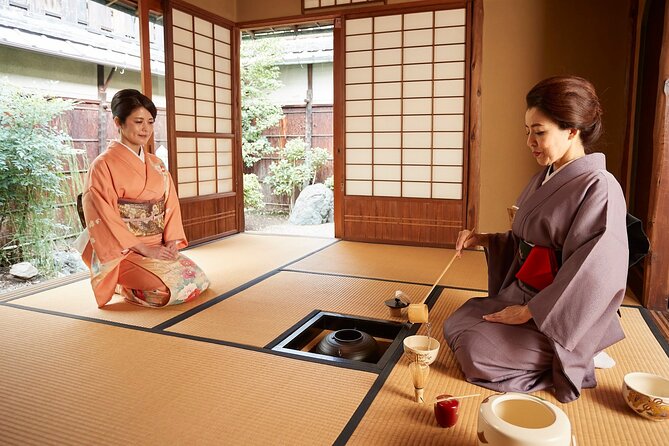
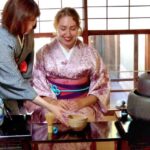
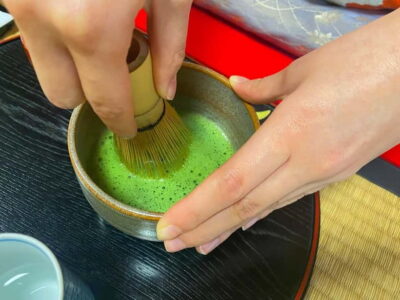
The most useful part of the ceremony is the chance to prepare your own matcha. The tea master first shows how the utensils are used and explains the steps. You then mix the high-quality matcha powder yourself under guidance.
This hands-on approach gives the ritual a practical shape. You are not expected to perform perfectly, and the host explains what to do as the session progresses. It is a good choice for families with older children, couples, and anyone who learns better by trying something rather than sitting through a demonstration.
The tea has a strong, earthy flavor that may surprise anyone used to sweetened drinks. Wagashi, small Japanese sweets, are served with the matcha to balance the bitterness. These sweets are modest in size, but they are an important part of the tasting and help you understand how the two flavors work together.
The ceremony also encourages you to slow down. A brief meditation may be included, and the formal movements create a calmer pace than most sightseeing in central Kyoto. I would not book this expecting a long spiritual retreat, but the quiet break can be welcome after a morning of shops, temples, and crowded streets.
What Makes the Cultural Context Useful
A tea ceremony is not just about drinking powdered green tea. The ritual places value on attention, respect, clean movement, and the meeting between host and participant. The host explains these ideas in a way that gives the ceremony more meaning than a simple tasting.
You also receive an introduction to the utensils and their roles. That detail helps you notice the small actions that might otherwise pass too quickly. The bowl, whisk, scoop, and other items are part of a carefully ordered process, not random equipment.
The setting supports the lesson. Traditional tea rooms and tatami seating make the ceremony feel distinct from a modern workshop. The kimono adds another layer, though it is worth remembering that you are receiving a visitor-friendly introduction rather than formal training in tea ceremony.
That distinction is not a criticism. Kyoto offers many levels of tea practice, and this 90-minute format is made for visitors with limited time. You get a respectful introduction, a chance to participate, and enough explanation to understand what you are seeing.
A few more Kyoto tours and experiences worth a look
Timing, Duration, and Group Feel
The activity lasts about one hour and 30 minutes, with morning and afternoon start times. That makes it easy to place between other Kyoto plans. A morning session can lead into lunch around Nishiki Market, while an afternoon booking can provide a quiet cultural stop after sightseeing.
The timing is long enough to cover dressing, hairstyling, photos, the explanation, and tea preparation without requiring a full day. You should still avoid scheduling another fixed activity immediately afterward. Dressing several people and organizing the ceremony takes time, and the exact pace may change with the group.
The group size deserves attention. The booking information says you can reserve a maximum of two people through one booking channel, and it also says the activity has a maximum of two participants. Yet the experience descriptions include a ceremony with about eight people and another with 10 to 12. The safest advice is to treat this as a small shared activity, not a guaranteed private appointment, and ask the operator if group size affects your decision.
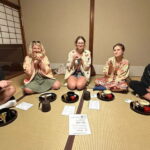
A shared session can add a pleasant international quality. One ceremony included people from Russia, Israel, Poland, the United States, Argentina, and other countries. That does not change the lesson, but it can make the event feel like a friendly cultural exchange.
Is $65.66 a Fair Price?
At $65.66 per person, the value depends on what you would otherwise book separately. The fee covers the kimono, simple hairstyling, accessories, green tea, utensils, and snacks. It also includes the host’s explanation and the chance to prepare matcha yourself.
A kimono rental alone may not include a tea ceremony, and a tea lesson may not include dressing or photographs. Combining both saves you the work of finding two providers and coordinating times. For a first Kyoto visit, that convenience has real value.
The price is less attractive if you only want to taste matcha or watch a short performance. In that case, you may be paying mainly for the clothing and preparation. The activity earns its price when you want the full package: dressing, photos, cultural instruction, and participation.
The 4.8 rating and 96 percent recommendation also suggest a dependable experience, but I would still focus on the details that matter most to you. Ask about the expected group size if you want intimacy, and remember that transportation and hotel transfers are not included.
Who Will Enjoy This Kyoto Experience
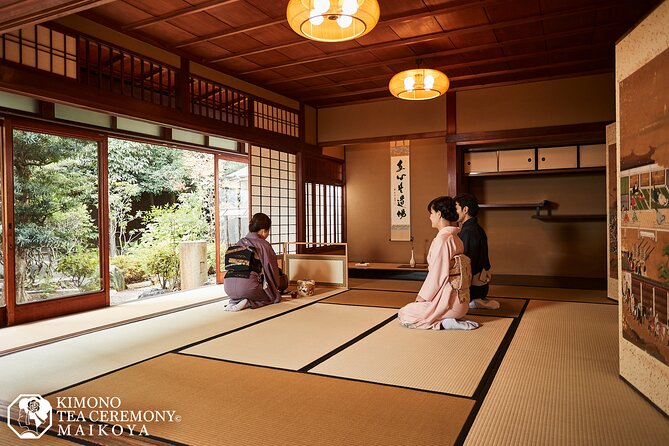
I would recommend this activity to first-time Kyoto visitors who want a clear introduction to two well-known Japanese traditions. It works especially well for couples, families with children aged seven and above, and friends who enjoy photographs as much as cultural lessons.
Children can take part from age seven, according to the venue rules. A 10-year-old has been able to join successfully, including the tea history lesson and a short meditation. Children under seven cannot enter the tea ceremony venue, and a party that includes a child under seven cannot reserve this experience.
The activity also suits people who feel unsure about kimono dressing. Staff help you through the process, so you do not need to know how to tie or arrange the clothing. You can focus on enjoying the transformation rather than worrying about getting every layer right.
It may not suit anyone who cannot sit on a tatami floor in a Japanese-style position, since the ceremony is held on the floor. The supplied information does not provide an alternative seating arrangement, so ask before booking if this is a concern.
Practical Details Before You Book
You receive confirmation when you book, and the venue is near public transportation. You must make your own way there, and the activity ends at the same location.
Morning and afternoon options let you fit the ceremony around a full Kyoto itinerary. I would allow extra time to arrive, since missing the start could make the dressing and group schedule harder to manage.
Free cancellation is available if you cancel at least 24 hours before the local start time. Changes made within 24 hours are not accepted, and late cancellations are not refunded. If poor weather causes the activity to be canceled, you are offered another date or a full refund.
The weather note matters because some photo time may take place outdoors. The tea ceremony itself is indoors, but the provider still lists good weather as a condition for the activity.
Should You Book Kimono Tea Ceremony at Kyoto Maikoya?
Book it if you want a well-organized first taste of Kyoto culture rather than a long, formal study of tea ceremony. The kimono selection, hair arrangement, photographs, matcha preparation, sweets, and clear teaching give you plenty to do in 90 minutes.
I especially like that you make the tea yourself and learn why the steps matter. That turns the event into more than dressing up for pictures. Just confirm the group size if you want a private setting, and skip it if sitting on tatami or wearing a kimono does not appeal to you.
For most first-time visitors, the combination is the main advantage. At $65.66, it is a fair buy for a compact cultural activity in central Kyoto, particularly when you value convenience and memorable photographs.
FAQ
Where does the tea ceremony take place?
It takes place at Kimono Tea Ceremony Maikoya Nishiki, at 329 Ebiyacho, Gokomachi-dori Sanjo sagaru, in Kyoto.
How long does the experience last?
The activity lasts approximately one hour and 30 minutes.
What is included in the price?
The price includes a kimono costume, simple hairstyling, green tea, tea utensils, and snacks.
Do I make my own matcha?
Yes. The tea master explains the utensils and steps, then guides you as you prepare your own matcha green tea.
Are Japanese sweets served?
Yes. Wagashi sweets are served with the matcha at the end of the tea experience.
Are morning and afternoon times available?
Yes. You can choose between morning and afternoon timing options.
Can children join the activity?
Children aged seven and older can join. Children under seven cannot enter the venue, and a party with a child under seven cannot make a reservation.
Is transportation included?
No. You make your own way to the Nishiki meeting point, and hotel pickup and drop-off are not included.
What is the cancellation policy?
You can cancel at least 24 hours before the local start time for a full refund. Cancellations or changes made less than 24 hours before the start are not accepted for a refund. If poor weather cancels the activity, you are offered another date or a full refund.
More Nishiki Market Tours in Kyoto
More Kimono Experiences in Kyoto
More Tea Ceremony Experiences in Kyoto
More tours in Kyoto we've reviewed




Tea Ceremony Experiences, compared.
 ★ 4.9Kyoto: Tea Ceremony in a Traditional Tea House in KiyomizuFrom $4945 min
 ★ 4.9Kyoto: Tea Ceremony Ju-An at Jotokuji TempleFrom $291h 10m
 ★ 4.3Kyoto: 45-Minute Tea Ceremony Lesson ExperienceFrom $2245 min
 ★ 5.0World Heritage Kyoto & Nara Uji Authentic Matcha ExperienceFrom $129
 ★ 4.9Kyoto: Table-Style Tea Ceremony at a Kyo-MachiyaFrom $451h 30m
 ★ 4.9Kyoto: Tea Museum Tickets and Matcha Grinding ExperienceFrom $231 hour