
Reviewed · CITY TOURS
Kyoto: Full-Day City Highlights Bike Tour with Light Lunch
Kyoto’s big sights are spread across the city, and this 44-kilometer bike ride links them in one ambitious day. You move from the bamboo of Arashiyama to Fushimi Inari, Gion, Kiyomizu-dera, and the Golden Pavilion, with quiet lanes between the famous stops. I like the small groups of no more than eight and the chance to see ordinary Kyoto streets that buses cannot reach.
I also like the care given to the ride itself. Guides such as Rob, Cass, Peter, and Ray have been praised for clear explanations, safe riding, good photographs, and patience with different cycling speeds. The main drawback is simple: eight hours is a long day in the saddle, and you need decent fitness. An e-bike can make a major difference, especially in Kyoto’s heat.
In This Review
- Key points to know before booking
- Why this bike tour covers Kyoto so well
- Arashiyama Bamboo Grove: an early start among tall green stalks
- Fushimi Inari: vermilion gates and fox statues
- Lunch: a practical pause, not a long restaurant visit
- Gion: wooden streets, shops, and Kyoto’s traditional image
- Kiyomizu-dera: eastern Kyoto and the Otowa Spring
- Kinkaku-ji: the Golden Pavilion at the end of the route
- What 44 kilometers feels like on the road
- The guide can shape the whole day
- Is the $167 price good value?
- Who should book this Kyoto cycling day?
- Should you book this full-day bike tour?
- FAQ
- Where does the Kyoto bike tour start and finish?
- How long is the tour?
- How far do you cycle?
- Which Kyoto sights are included?
- Is lunch included?
- Is an e-bike included?
- What language is the tour conducted in?
- Can children or people with limited mobility join?
Key points to know before booking
- Five major sights in one day: Arashiyama, Fushimi Inari, Kiyomizu-dera, Gion, and Kinkaku-ji.
- About 44 kilometers of cycling: This is a serious full-day ride, not a casual pedal around one neighborhood.
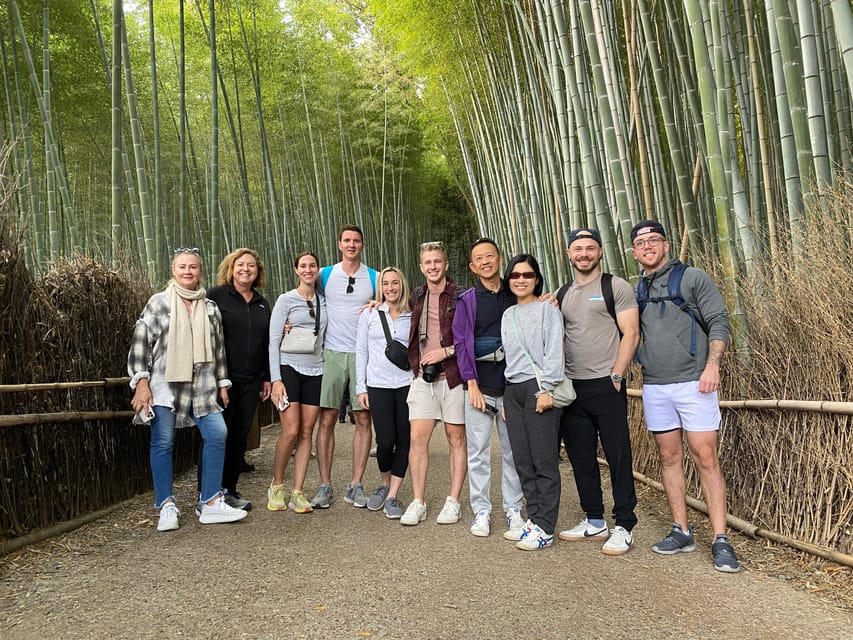
- Small group size: The tour is limited to eight participants, which helps the guide manage city traffic and answer questions.
- Quiet streets add real value: You ride through back lanes, residential areas, gardens, and less-used routes between the headline sights.
- Light lunch and entry fees are included: You do not need to organize food or pay separate admission at the listed attractions.
- E-bikes are worth considering: Several riders found pedal assist especially useful in hot weather or after many hours on the road.
Why this bike tour covers Kyoto so well
The strength of this experience is its range. Kyoto is not a compact old town where every major sight sits around one square. Arashiyama lies in the west, Fushimi Inari in the south, Kiyomizu-dera and Gion sit toward the east, and Kinkaku-ji is back in the northwest.
Public transport can reach these places, but you spend time finding stations, changing trains or buses, and walking between stops. By bicycle, the spaces between the sights become part of the day. You pass through streets where people live, work, garden, and fish, rather than seeing only the usual tourist corridors.
The route is also more personal than a large coach tour. With a maximum of eight people, your guide can keep an eye on the group and adjust explanations to your interests. Rob has been praised for giving useful cultural background without talking too long, while Cass was noted for keeping the day organized and friendly. Peter has been described as patient and flexible, and Ray was especially careful with road safety and local customs.
The tour begins outside JR Saga-Arashiyama Station. Look for a guide wearing a helmet and a Kyoto Bike Tour shirt. You receive a bicycle, helmet, bottled water, and a safety briefing before setting off. The guide also fits your bike, an important step for a ride this long.
Other cycling tours in Kyoto
Arashiyama Bamboo Grove: an early start among tall green stalks
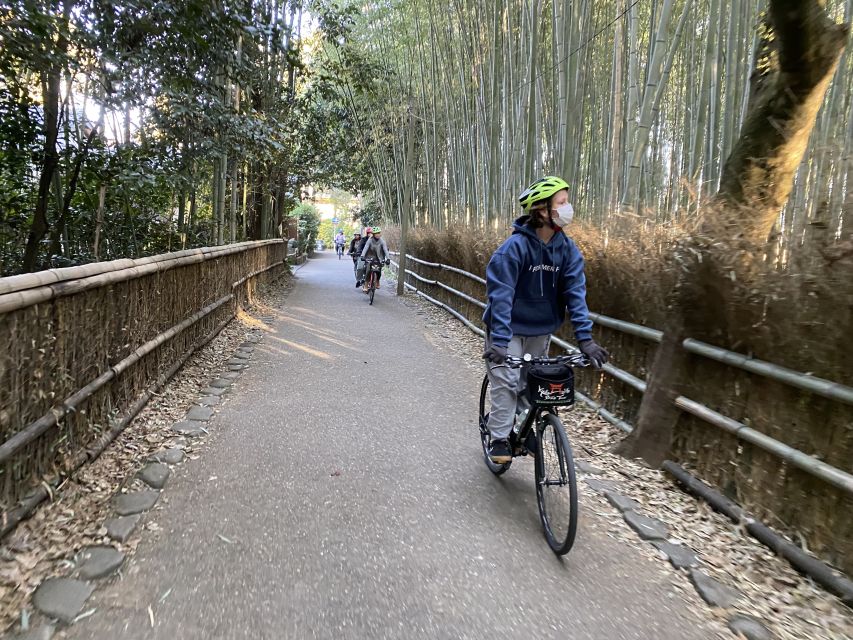
The first major stop is the Arashiyama Bamboo Forest. The tall bamboo stalks create a cool, shaded corridor, and the color changes with the light as you move through it. This is one of Kyoto’s most photographed places, so arriving as part of a morning route can help you see it before the day feels fully crowded.
You should expect about 30 minutes here for guided sightseeing and walking. That is enough to appreciate the grove and take photographs, but not enough for a long wander through every nearby lane and temple. The appeal of the bike tour is that you do not need to spend half your day staying in Arashiyama. You see its most famous sight, then continue by bicycle.
Arashiyama is also a useful opening section because it gives you a gentle start before the longer cross-city stretches. Wear shoes you can walk in comfortably. The tour is not only cycling, and sandals, flip-flops, boots, and high heels are not allowed.
Fushimi Inari: vermilion gates and fox statues
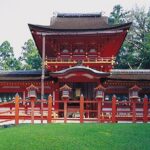
From Arashiyama, the route continues toward Fushimi Inari Taisha. The shrine is famous for its rows of orange-red torii gates, which climb the wooded hills behind the main buildings. You will leave the bicycle for a stroll through the shrine grounds and can look for the fox statues connected with Inari worship.
The listed stop lasts about 30 minutes, so plan on seeing the lower shrine area and the Senbontorii gate section rather than walking the full mountain trail. That is a sensible choice on a day already covering nearly 44 kilometers. The complete Fushimi Inari route can take much longer, and attempting all of it would make the rest of the schedule difficult.
I find this stop valuable because it shows a different side of Kyoto from the polished temple gardens. The repeated gates create a strong visual experience, but the fox figures and shrine customs give the place more meaning than a quick photo stop. Your guide can help explain what you are seeing and point out details you might otherwise miss.
Lunch: a practical pause, not a long restaurant visit
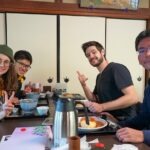
After Fushimi Inari, you stop for a light lunch. The meal is included, and one reported option was curry udon in a local restaurant. That gives you a useful break without turning lunch into a drawn-out event.
Keep your expectations in line with the tour format. This is fuel for a full day on a bicycle, not a dedicated food tour. If you have dietary needs, check the arrangements before booking, since the supplied information does not specify vegetarian, vegan, allergy, or religious-food choices.
Bring the provided water and drink regularly. On hot days, the cycling can feel harder than the distance suggests, especially when you are stopping, starting, walking, and riding through city streets.
Gion: wooden streets, shops, and Kyoto’s traditional image
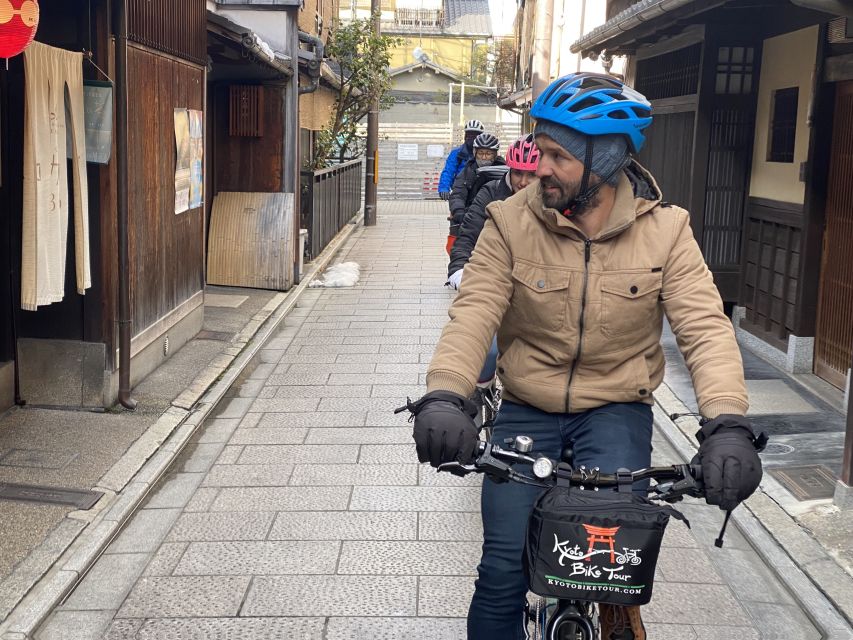
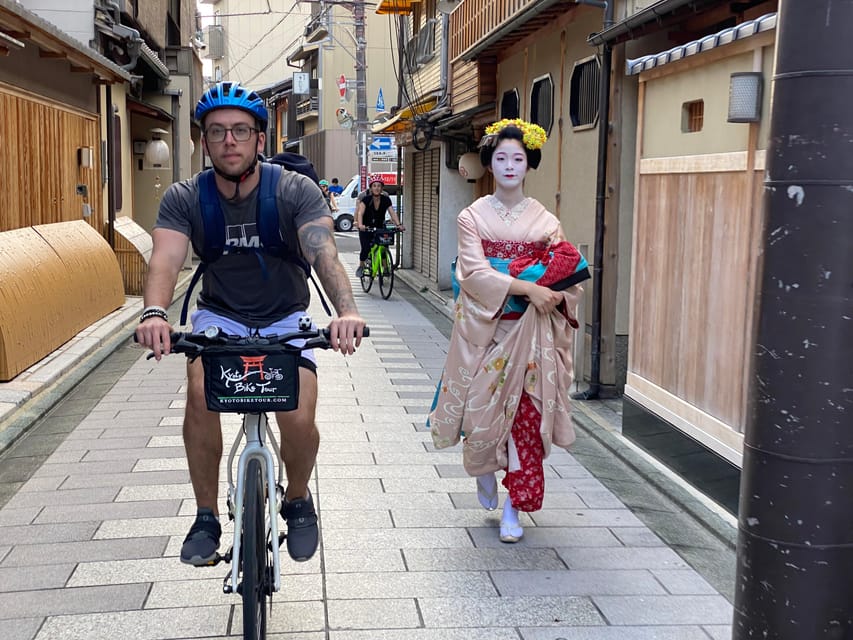
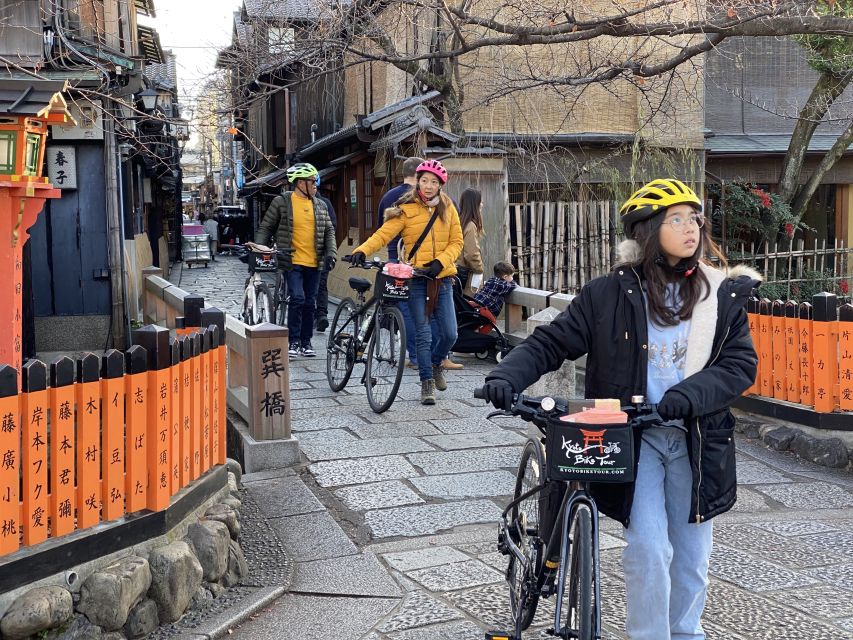
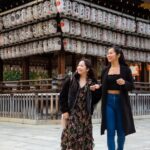
The route then reaches Gion, Kyoto’s best-known entertainment district. You ride through streets lined with wooden buildings, restaurants, and small shops, including the area around Tatsumi Bridge and Hanamikoji Street.
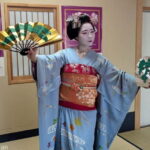
Gion is a place for quiet observation. You might see women in colorful kimono, including maiko, but you should not treat the district like a stage. The guide’s role is useful here, since the area has customs that are easy to misunderstand if you simply arrive, take photographs, and leave.
This portion also shows why the bicycle is useful. Large buses cannot use every narrow street, and a small cycling group can pass through more of the traditional-looking lanes. You still need to follow the guide closely and ride carefully. Kyoto’s streets can be busy, and the group will be sharing space with pedestrians, cars, and other cyclists.
Other city tours we've reviewed in Kyoto


Kiyomizu-dera: eastern Kyoto and the Otowa Spring
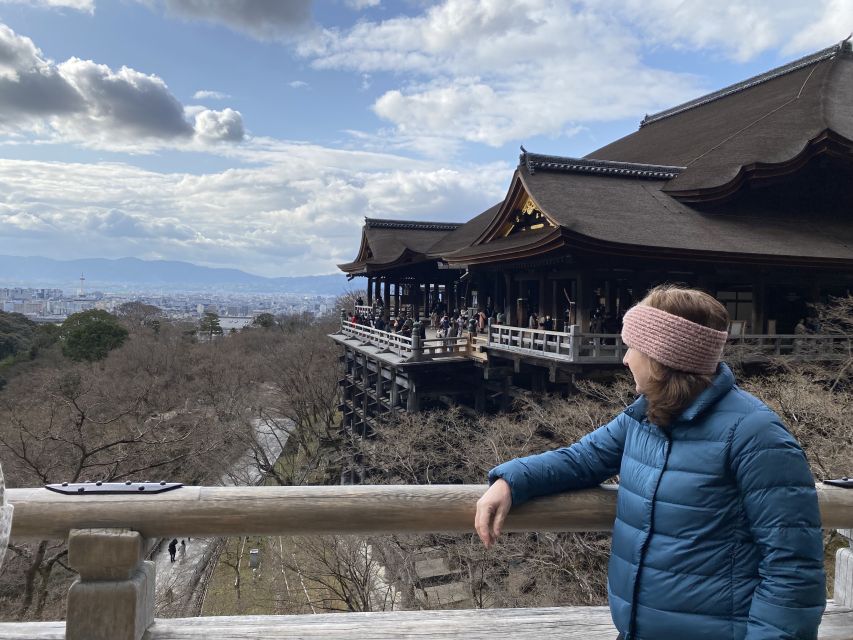
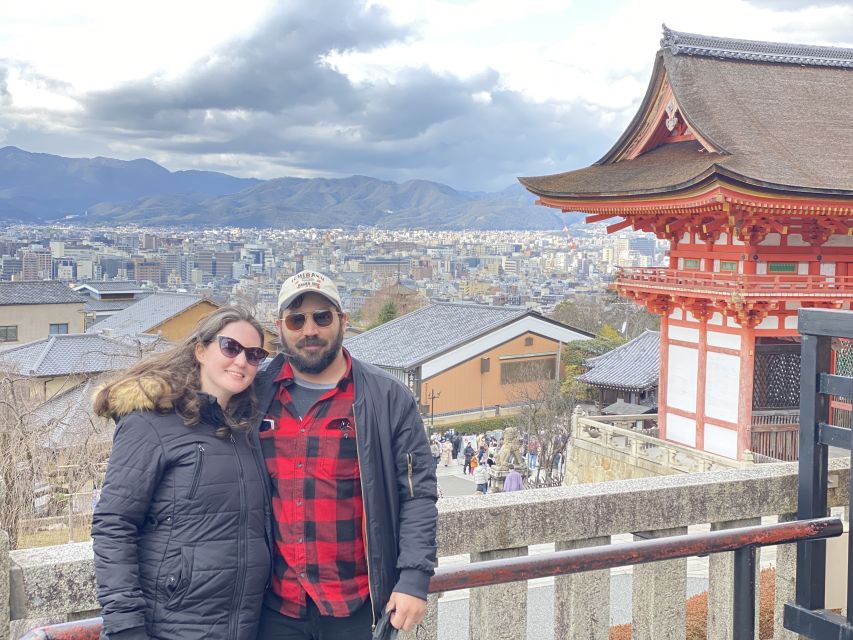
Next, you ride toward Kyoto’s eastern hills to visit Kiyomizu-dera. The temple is a UNESCO World Heritage Site and is associated with the pure waters of the Otowa Spring, traditionally linked with beneficial qualities.
The ride toward the temple gives you a change of setting. After the flat-looking city streets and commercial lanes, the eastern edge of Kyoto feels more hilly. This is one reason the day rewards people who already cycle regularly, or those who choose pedal assist.
At Kiyomizu-dera, the time is again about 30 minutes. You can see the key temple areas and take in the setting, but you will not have time for every nearby lane, shop, and side temple. If Kiyomizu-dera is your highest priority, you may want to return independently on another day for a slower visit.
The stop still works well in this itinerary because it places one of Kyoto’s most important Buddhist temples alongside the city’s Shinto shrines and traditional districts. You get a broad introduction to Kyoto’s religious culture rather than seeing only one kind of sacred site.
Kinkaku-ji: the Golden Pavilion at the end of the route
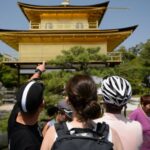
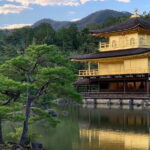
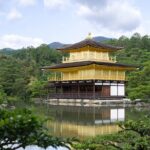
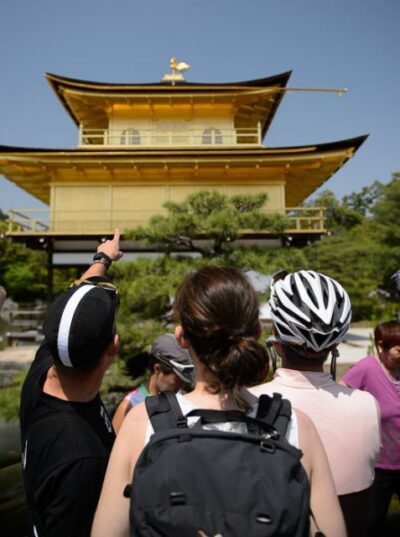
The final major sight is Kinkaku-ji, better known as the Golden Pavilion. The gold-covered building rises beside a reflecting pond, creating the sharp, formal image that appears in so many Kyoto photographs.
Timing can make a real difference here. One guide managed to reach the pavilion during the golden hour, when the light made the building especially striking. The schedule cannot guarantee that exact light on every date, but the afternoon finish can produce excellent photographs if the timing and weather cooperate.
The 30-minute stop is focused. You see the pavilion, walk the main viewing route, and continue back toward Arashiyama. Kinkaku-ji is not a place where visitors generally enter the pavilion itself, so the experience centers on the view across the pond and the surrounding temple grounds.
Ending with Kinkaku-ji gives the day a strong visual finish, but it also means you will be tired by this point. The last ride back to Saga-Arashiyama Station is part of the tour, so do not treat the Golden Pavilion as the end of your physical effort.
What 44 kilometers feels like on the road

The distance is the most important fact to understand. This is not a gentle sightseeing ride with a few short transfers. You cycle for much of the day, with stops for walking and sightseeing, and the total distance is approximately 44 kilometers, or 27 miles.
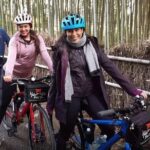
Several riders who described themselves as fit but not regular cyclists found pedal-assist bikes helpful. E-bikes still require you to pedal, but they reduce the strain on longer stretches and in hot weather. If the operator offers an e-bike upgrade for your date, I would seriously consider it unless you are comfortable riding long distances.
The tour is not suitable for children under 14, people who cannot ride a bicycle, people with mobility impairments, people with back problems, or people with a low fitness level. Those limits are practical rather than fussy. You need to mount and control a bicycle, ride for hours, and manage the physical demands of repeated stops and starts.
Wear comfortable clothing that suits the forecast. Loose clothing is not allowed, and sturdy comfortable shoes are a better choice than anything open, slippery, or difficult to pedal in. December through February brings shorter stops so the group can finish before sunset, which means the sightseeing rhythm changes in winter.
The guide can shape the whole day
On a route this long, the guide matters almost as much as the sights. You are not simply following arrows between attractions. You need someone who can explain Kyoto, set a manageable pace, handle traffic, and keep the group together.
Rob has been praised for interesting explanations, helpful photographs, and a good balance between historical detail and everyday observations about life in Japan. Cass has been described as friendly and organized, with enough information to make each stop meaningful without slowing the day. Peter is a strong choice if you value patience and a relaxed manner, while Ray has been praised for safety awareness and respect for Japanese culture.
You may not be able to choose your guide, so I would not book based on one individual name alone. The wider pattern is encouraging: the guides are expected to lead in English, and the inclusions describe the guide as bilingual. If the guide is not named in advance, focus on the tour’s small size and safety briefing as the practical benefits.
The guides also add something you cannot get from a map. They can point out local details, explain shrine symbols, help you understand Gion’s customs, and choose back streets that fit the group’s ability and the day’s traffic.
Is the $167 price good value?
At $167 per person, this is not a budget way to see Kyoto. The value comes from how much the fee bundles into one day: bicycle rental, helmet, bottled water, a guide, entry fees, and light lunch.
You also avoid arranging separate transport between five widely spaced sights. If you tried to cover the same route on your own, you would need to plan trains and buses, find the correct entrances, pay admissions, manage meals, and work out how to fit the stops into one day. The tour’s price pays for structure and local guidance as much as for the bicycle.
I would call it good value for an active visitor with limited time, especially if you want both major sights and ordinary streets. It is less attractive if you dislike exercise, prefer long visits at individual temples, or already understand Kyoto’s public transport system and want to explore at your own pace.
Hotel pickup and drop-off are not included. You must reach JR Saga-Arashiyama Station yourself, so allow enough time to arrive before the safety briefing and bike fitting.
Who should book this Kyoto cycling day?
I would recommend it to you if you:
- Have only one full day for Kyoto highlights
- Like active sightseeing and can comfortably ride for several hours
- Want a small group rather than a large coach
- Prefer back streets and local neighborhoods between major sights
- Value explanations about religion, history, customs, and everyday life
- Are willing to use an e-bike if the distance or heat concerns you
I would choose another format if your ideal day means lingering for an hour or more at each temple. The schedule gives you a useful overview, but each major stop is fairly brief.
The tour also requires flexibility. Weather, traffic, daylight, and the group’s pace can affect how long you spend at each place. In winter, stops are shortened. In summer, the heat can make the ride much tougher, even for someone who exercises regularly.
Should you book this full-day bike tour?
Book it if you want to see a great deal of Kyoto in one day and are happy to work for it. The combination of major temples, shrines, Gion, bamboo, local streets, lunch, and a small group is hard to match by public transport in the same time.
My clearest advice is to treat the 44 kilometers seriously. Choose comfortable clothes, check the forecast, and consider pedal assist. If you do, this can be one of the most memorable ways to understand Kyoto’s shape and character, not just its famous photographs.
FAQ
Where does the Kyoto bike tour start and finish?
The tour starts outside JR Saga-Arashiyama Train Station and returns to Saga-Arashiyama Station at the end of the day.
How long is the tour?
The experience lasts eight hours, including cycling, sightseeing stops, lunch, and the ride back to the starting point.
How far do you cycle?
The tour covers approximately 44 kilometers, or 27 miles, of riding.
Which Kyoto sights are included?
The route includes the Arashiyama Bamboo Forest, Fushimi Inari Taisha Shrine, Kiyomizu-dera, Gion, and Kinkaku-ji, also called the Golden Pavilion.
Is lunch included?
Yes. A light lunch and bottled water are included. One reported meal option was curry udon.
Is an e-bike included?
The included equipment lists a bicycle and helmet but does not specify an e-bike. Some riders chose pedal-assist bikes and found them helpful, so ask about availability and any additional cost when booking.
What language is the tour conducted in?
The activity information lists a live English-speaking guide. The inclusions also describe the guide as bilingual.
Can children or people with limited mobility join?
Children under 14 are not permitted. The tour is also not suitable for people with mobility impairments, back problems, low fitness, or anyone who cannot ride a bicycle.
More Lunch Experiences in Kyoto
More City Tours in Kyoto
More Cycling Tours in Kyoto
More tours in Kyoto we've reviewed


City Tours, compared.
 ★ 4.9Kyoto: City Secrets eBike TourFrom $1273h 45m
 ★ 5.0Kyoto: Calligraphy class at Buddhist temple in city centerFrom $551h 10m
 ★ 5.0Private departure transfer from Kyoto city to Kansai International airportFrom $109
 ★ 4.5Private departure transfer from Kyoto city to Osaka Itami International airportFrom $79
 ★ 5.0Private arrival transfer from Kansai International airport to Kyoto CityFrom $97
 ★ 4.5Private Transfer by Sedan from Itami Airport ITM to Kyoto CityFrom $117