
Reviewed · TEA CEREMONY EXPERIENCES
A Unique Antique Kimono and Tea ceremony Experience in English
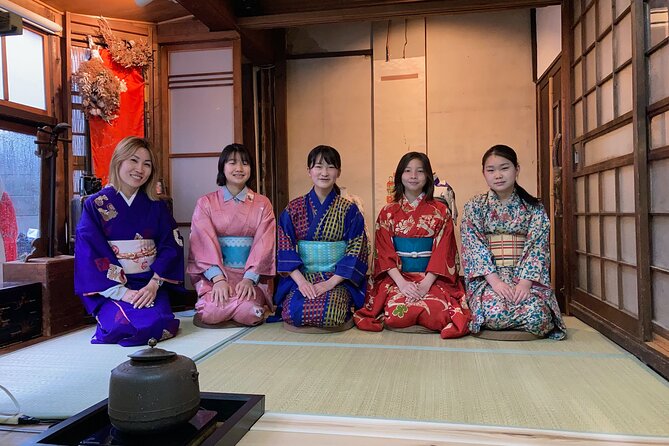
The rare treat here is not simply drinking matcha. You choose an antique kimono often more than 80 years old, have it fitted by Toku, and then take part in a tea ceremony inside a century-old private house near Katsura Imperial Villa. The setting is residential and quiet, far from Kyoto’s busiest sightseeing streets.
I like the small six-person limit, which gives Toku and his family time to explain each movement and help with photographs. I also like the personal touch: you learn about the link between samurai culture and tea, then make matcha yourself rather than just watching a formal performance. The main consideration is the price, $99.10, and the simple residential setting may not suit you if you want a grand teahouse or garden backdrop.
In This Review
- Key points before you book
- A 100-year-old house near Katsura Imperial Villa
- Choosing an antique kimono with Toku
- Learning why tea ceremony is more than tea
- Making matcha instead of just watching
- The personal touch from Toku and his family
- What the 90 minutes actually delivers
- Is $99.10 a fair price?
- Who will enjoy this Kyoto activity most?
- My recommendation: book it for the people, not the backdrop
- FAQ
- Where does the tea ceremony take place?
- How long does the experience last?
- Is the activity available in English?
- Is kimono rental included?
- How old are the antique kimonos?
- How many people can join?
- What food and drink are included?
- Does the activity end at the meeting point?
- Are service animals allowed?
- What is the cancellation policy?
Key points before you book
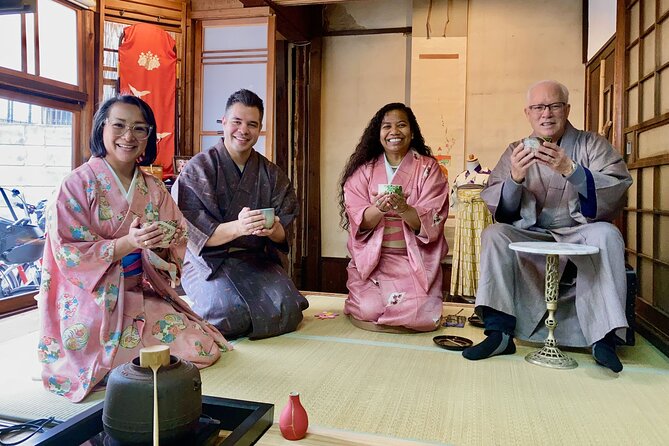
- Antique kimono fitting: Choose from a large collection, with Toku helping match the kimono, obi, and accessories.
- English instruction: Learn tea etiquette, the meaning of the ceremony, and matcha preparation from an experienced host.
- Quiet Kyoto location: The house is near Katsura Imperial Villa, in a calmer residential area away from central Kyoto crowds.
- Small-group format: The experience is capped at six people, though some sessions may have only two participants.
- Family welcome: Toku, his wife, and an assistant create a warm, personal atmosphere and take photographs during the visit.
- Ninety-minute visit: The activity includes kimono rental, the ceremony, green tea, and Japanese sweets, but no meal.
A 100-year-old house near Katsura Imperial Villa
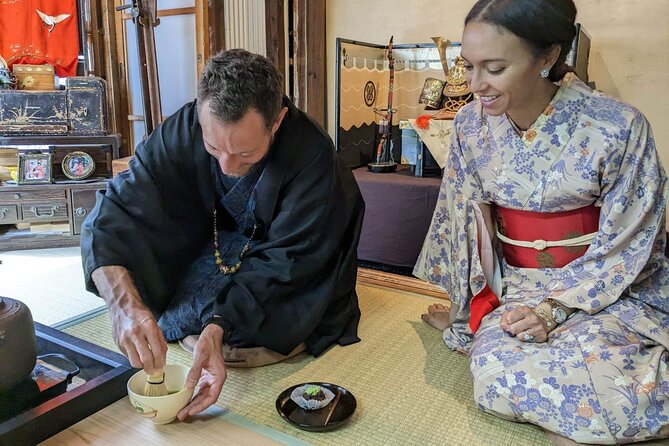
You meet at Miyagawa Tokusaburo Shoten, at 32-4 Katsuranozatocho in Kyoto’s Nishikyo Ward. The activity begins and ends here, so you do not need to arrange a second pickup point or find your way across town after the ceremony.
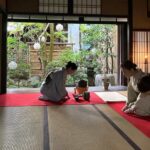
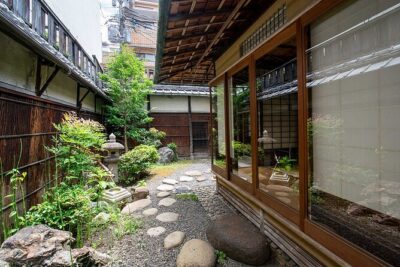
The house is more than a convenient venue. Its age and residential surroundings shape the whole visit. You are not entering a large cultural attraction with a line of groups waiting behind you. Instead, you step into a family-run shop and home where the atmosphere is quiet and personal.
That calm has a clear advantage. Tea ceremony depends on attention, patience, and small gestures. In a noisy tourist district, it is harder to notice how the bowl is held, how you receive the sweets, or why guests move in a certain way. Here, the slower pace gives those details room.
There is also a trade-off. This is not a polished temple garden or an ornate teahouse designed for dramatic photographs. One disappointed participant found the house too ordinary and the kimono storage less theatrical than expected. You should book this for the people, instruction, and old-house atmosphere, not for a spectacular architectural backdrop.
A few more Kyoto tours and experiences worth a look
Choosing an antique kimono with Toku
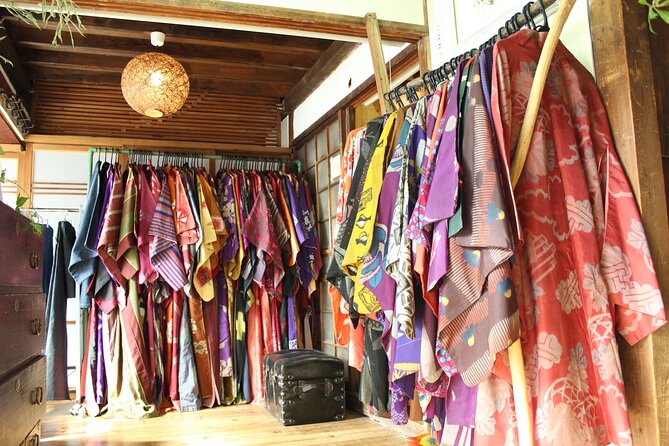
The kimono portion comes first. You browse the available garments and choose one with help from Toku, who has more than 20 years of experience with tea ceremonies and works as a kimono fitter. His role matters because wearing a kimono properly is not just a matter of putting on a colorful robe.
Toku helps select an obi and accessories to suit your choice. The collection includes antique garments, with some pieces more than 80 years old. You might also have your hair arranged with decorative accessories. The exact options will depend on what is available during your visit, but the fitting is a central part of the experience rather than a quick costume change.
This makes the visit different from a basic kimono rental. You are not simply handed an outfit and sent outside for an hour. The clothing becomes part of the lesson. Toku can explain the garments, help you wear them correctly, and prepare you to sit and move through the ceremony.
The fitting is also useful if you are visiting as a family. Children have been included in the activity, and the hosts have adapted their approach for young children. One family even brought a two-and-a-half-year-old child and found the host patient and welcoming.
Still, keep expectations sensible. Antique clothing can feel formal and snug, and a tea ceremony traditionally involves kneeling. The ceremony has been adapted for a participant who could not kneel, so it is worth explaining any physical needs when you arrive. The supplied information confirms that service animals are allowed and that the venue is near public transportation, but it does not give full details about step-free access.
Learning why tea ceremony is more than tea
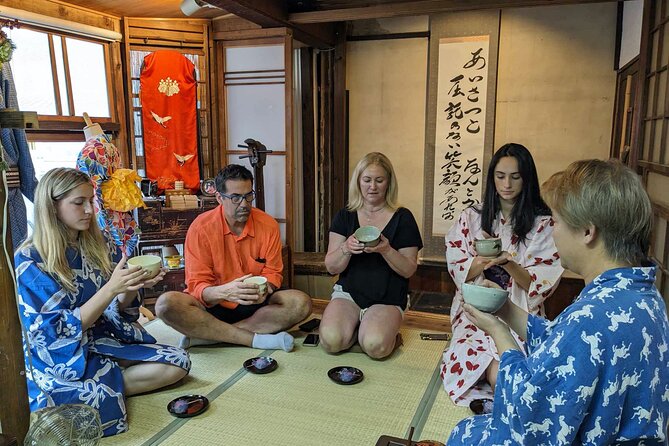
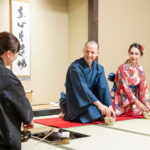
Once you are dressed, Toku explains the ceremony’s etiquette and basic manners in English. This is where the visit earns its place on a Kyoto itinerary. You learn not only what to do, but why each action matters.
The tea ceremony is built around care and attention. The host prepares the space, handles the utensils, serves the tea, and guides the guest through a set order of movements. You learn how to receive the bowl, how to appreciate the sweets, and how to respond respectfully.
The instruction is designed for people who have never attended a tea ceremony. You are not expected to know the rules in advance. Toku explains the steps patiently, and the small group means you can ask questions without holding up a large audience.
The connection with samurai culture adds an unusual layer. Tea was not merely a refreshment for Japan’s warrior class. It was also linked with discipline, hospitality, restraint, and the careful sharing of time. That context helps you understand why the ceremony can feel solemn even when it is being taught in a friendly, informal way.
Toku also shares his own path back to this tradition. He previously worked as a shop builder and later reconnected with his family’s tea customs. His family is described as carrying a fourth-generation tea-house tradition. Those personal details make the lesson feel grounded in a real household rather than reduced to a set of tourist instructions.
Making matcha instead of just watching
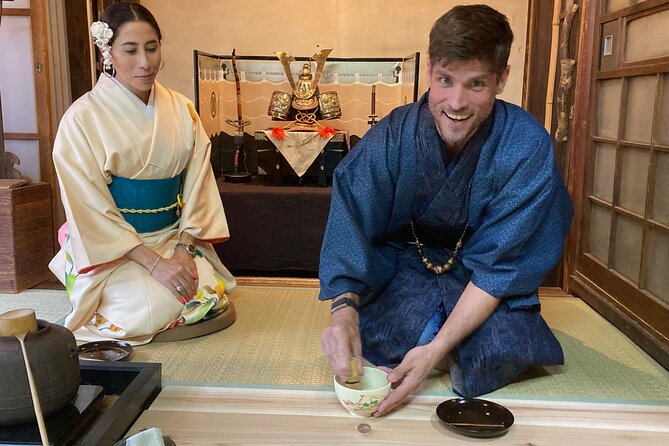
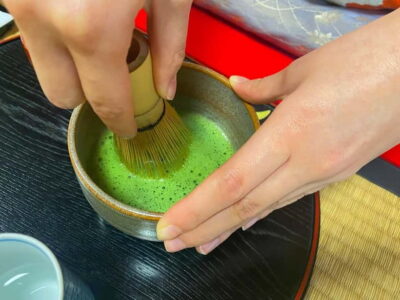
A key feature is the chance to learn how matcha is made. You do not simply sit while someone else performs every step. With guidance, you take part in preparing the green tea and learn the purpose behind the movements.
The activity includes green tea and Japanese sweets. The sweets are not a full snack course, and lunch and dinner are not included, so plan to eat separately. Think of the food as part of the ceremony’s balance: a small sweet alongside bitter matcha, with each element prepared and served with care.
The ceremony itself is slow. That is usually a strength, since rushing would defeat the purpose. You have time to follow the sequence and take photographs. One family described the process as solemn but clear, with every stage explained carefully.
Not everyone will value this pace. If you want to taste several varieties of Japanese tea or learn the full agricultural process from leaf to powder, this visit may feel limited. It focuses on ceremonial matcha preparation, etiquette, and cultural meaning. A participant expecting several special teas and a broader lesson found the ninety minutes too stretched and the price too high.
That criticism is useful. The activity promises a tea ceremony and an introduction to matcha, not a full tea-production workshop or a formal tea-school qualification. Book it for participation and cultural context, not for a technical tasting session.
The personal touch from Toku and his family
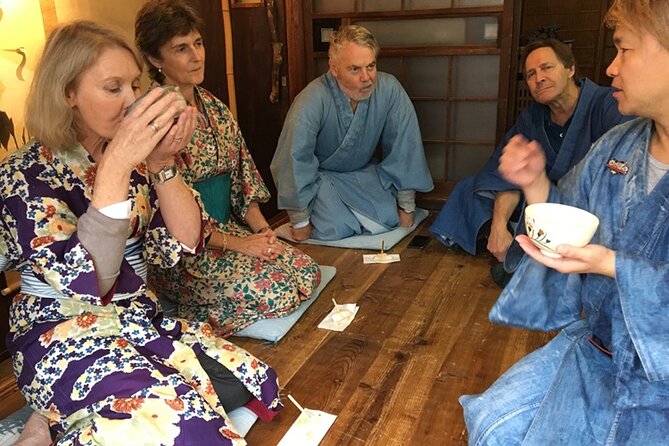
The hosts are one of the strongest reasons to choose this experience. Toku, his wife, and an assistant handle the fitting, instruction, ceremony, and photographs. The mood is friendly without losing the quiet respect of the ritual.
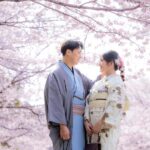
You can expect help choosing clothing and accessories rather than being left to sort through the collection alone. The hosts also take photographs during the ceremony and while you are dressed, which is useful because it lets you stay present instead of constantly reaching for your phone.
The family setting makes the visit feel less staged than a large commercial demonstration. You are welcomed into a working home and shop, and the hosts share their own connection to the tradition. That personal exchange is especially valuable if you want to understand how Japanese customs continue in ordinary family life.
English is available throughout the activity. Clear instruction matters here because tea etiquette involves details that are easy to miss. The host’s long experience allows him to explain the movements to beginners, while the small group gives you space to repeat them.
The warmth may also help younger participants. Families with children have been accommodated, and the hosts have made an effort to involve them rather than treating them as a distraction. Couples and solo visitors can also benefit from the intimate format, particularly if they prefer conversation over a large staged presentation.
A few more Kyoto tours and experiences worth a look
What the 90 minutes actually delivers
The advertised duration is approximately one hour and 30 minutes. In that time, you should expect a compact sequence:
- Arrival at the old house and introduction to the hosts
- Selection and fitting of an antique kimono and obi
- Possible hair styling and accessory selection
- Explanation of tea ceremony etiquette and background
- Guided preparation and serving of matcha
- Green tea and Japanese sweets
- Time for photographs in the kimono
- Return to the same meeting point
The order may vary, and the exact amount of time spent on clothing or instruction will depend on the group. A session with only two people can feel more conversational. A full group of six will still be small, but the fitting and explanations naturally take longer.
The ninety-minute length works well as a focused cultural activity. You can fit it into a day that includes Katsura Imperial Villa or other sights in western Kyoto. It is too short to fill half a day, and there is no included meal, so do not treat it as a complete morning or afternoon outing.
The location also affects your planning. The meeting address is in the Nishikyo Ward near Katsura Imperial Villa, not in the center around Gion or Kiyomizu-dera. Allow extra time to reach the house, especially if you are crossing Kyoto from the eastern sightseeing districts. A taxi ride has been described as easy and about 15 minutes by one participant, while the venue is also described as near public transportation. Confirm your route and arrival time before setting out.
Is $99.10 a fair price?
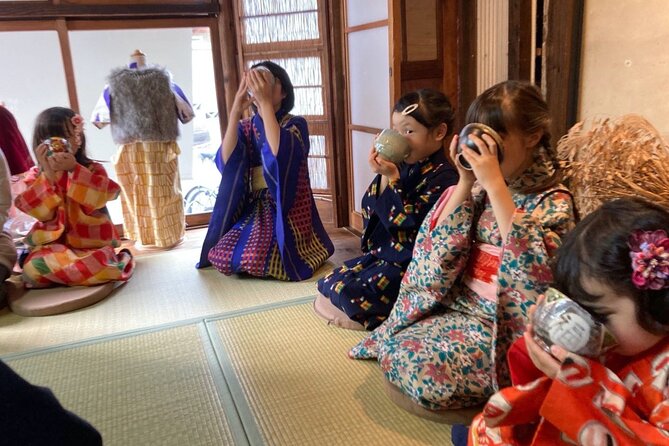
At $99.10 per person, this is not a bargain activity. The cost includes the antique kimono rental, fitting, tea ceremony, green tea, and Japanese sweets. You are also paying for a small group, English guidance, the hosts’ time, and access to garments that are presented as rare and valuable.
The value depends on what you would otherwise book. If you only want to put on a modern yukata and pose for a few photographs, cheaper options may exist. If you want a grand garden ceremony, another venue may suit you better. This activity is priced as a personal cultural lesson with clothing included.
I think the price is easier to justify for couples, families, or anyone who values direct contact with a local household. The photographs add practical value, and the fitting is more involved than a simple rental counter. A small group also means your questions receive attention.
The price is harder to justify if you are mainly interested in drinking tea, sampling several types of matcha, or seeing elaborate surroundings. The one negative assessment supplied a useful warning: the experience can feel overlong if the teaching does not match your expectations. Read the description carefully and decide if the family setting appeals to you.
Who will enjoy this Kyoto activity most?
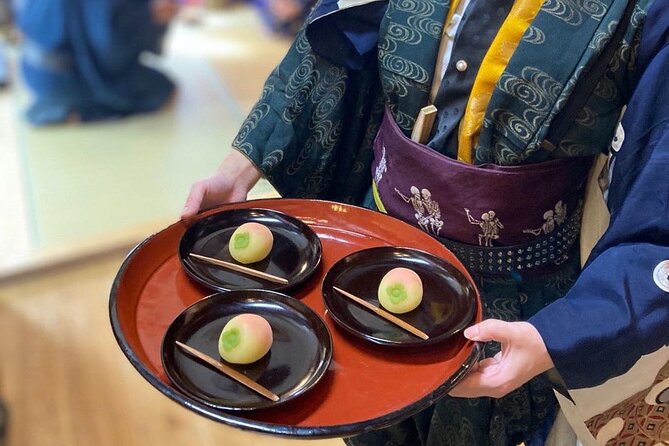
This is a good match for you if you want to:
- Wear an antique kimono rather than a basic rental outfit
- Learn formal tea manners in English
- Meet a family who actively shares its connection to tea and kimono
- Take part in matcha preparation
- Enjoy a quiet setting away from central Kyoto crowds
- Travel with children who can benefit from a gentle, hands-on introduction
- Take photographs without rushing through the visit
It may not be right for you if you want a temple, garden, or palace setting. It may also disappoint if your main goal is a detailed lesson on tea farming, grinding, or regional tea varieties. The activity is about the ceremony and the human side of the tradition.
People who cannot kneel should not automatically rule it out. The ceremony has been adapted for someone with that limitation. Mention your needs at the start so the hosts can make the arrangement comfortable.
The group limit is six people, and mobile tickets are accepted. Confirmation is normally issued at booking, although bookings made within one day of the activity are confirmed as soon as possible, subject to availability. Free cancellation is available up to 24 hours before the start time. Changes or cancellations inside that window are not accepted for a refund.
My recommendation: book it for the people, not the backdrop
I would book this if I wanted a quiet, personal introduction to Kyoto’s tea culture and valued the chance to wear a genuine antique kimono. Toku’s fitting skills, the English explanations, family welcome, and small group make the activity feel more substantial than a quick photo stop.
I would skip it if I expected an ornate tea pavilion, garden views, or a long tasting of different teas. The house is ordinary in appearance, the visit lasts only 90 minutes, and the price reflects personal attention rather than a grand venue.
For many visitors, the best part will be the combination of clothing, ceremony, and conversation. You arrive as a sightseer and leave with a better sense of why tea etiquette, hospitality, and patience matter in Japanese culture. If that sounds like the kind of memory you want from Kyoto, this is a strong choice.
FAQ
Where does the tea ceremony take place?
It takes place at Miyagawa Tokusaburo Shoten, 32-4 Katsuranozatocho, Nishikyo Ward, Kyoto, 615-8073, Japan.
How long does the experience last?
The activity lasts approximately one hour and 30 minutes.
Is the activity available in English?
Yes. The tea ceremony and explanations are available in English.
Is kimono rental included?
Yes. The antique kimono rental fee is included in the price.
How old are the antique kimonos?
The experience includes rare antique kimonos, with garments described as more than 80 years old.
How many people can join?
The group is limited to a maximum of six participants.
What food and drink are included?
Green tea and Japanese sweets are included. Lunch and dinner are not included.
Does the activity end at the meeting point?
Yes. The activity ends back at Miyagawa Tokusaburo Shoten.
Are service animals allowed?
Yes. Service animals are allowed.
What is the cancellation policy?
You can cancel at least 24 hours before the start time for a full refund. Cancellations or changes made less than 24 hours before the start time are not accepted for a refund.
More Kimono Experiences in Kyoto
More Tea Ceremony Experiences in Kyoto
More tours in Kyoto we've reviewed




Tea Ceremony Experiences, compared.
 ★ 4.9Kyoto: Tea Ceremony in a Traditional Tea House in KiyomizuFrom $4945 min
 ★ 4.9Kyoto: Tea Ceremony Ju-An at Jotokuji TempleFrom $291h 10m
 ★ 4.3Kyoto: 45-Minute Tea Ceremony Lesson ExperienceFrom $2245 min
 ★ 5.0World Heritage Kyoto & Nara Uji Authentic Matcha ExperienceFrom $129
 ★ 4.9Kyoto: Table-Style Tea Ceremony at a Kyo-MachiyaFrom $451h 30m
 ★ 5.0Kimono Tea Ceremony at Kyoto Maikoya, NISHIKIFrom $65