
Reviewed · TEA CEREMONY EXPERIENCES
Kimono & Tea Ceremony Experience in a Kyoto Cultural Asset
The best part of this Kyoto outing is the setting: you dress in a 100% silk kimono inside Tondaya, a Meiji-period townhouse still filled with old rooms, storehouses, gardens, and tatami spaces. I like that the visit gives you more than a quick costume photo. You also see how a traditional Kyoto home is arranged and watch a proper tea ceremony.
I especially like the six tsuboniwa gardens, which bring small pockets of light, air, and seasonal change into the house. The ceremony itself is calm and carefully explained, and staff usually make time for personal photos after you are dressed.
The main consideration is the group format. A full session can feel crowded, and the English explanation may rely on a translation device. If the ceremony matters most to you, pay extra for the private option.
In This Review
- Key points to know before booking
- Entering Tondaya, a Meiji-era machiya in Nishijin
- Getting dressed in a 100% silk kimono
- Walking through the six tsuboniwa gardens
- Watching the matcha ceremony in Rakuju
- What the 90-minute schedule feels like
- Group session or private booking?
- Is $126 a fair price?
- Who will enjoy this Kyoto activity most?
- Should you book Tondaya’s kimono and tea ceremony?
- FAQ
- Where does the kimono and tea ceremony experience begin?
- How long does the experience last?
- What is included in the price?
- Is the kimono made of real silk?
- Do I need to bring socks?
- Can I take photographs?
- Is lunch included?
- Is the experience private?
- Is the activity available in English?
Key points to know before booking
- A 140-year-old Kyoto townhouse: Tondaya is a Meiji-period machiya with three storehouses, six small gardens, and a detached tatami room once used for Noh performances.
- Real silk, not just a photo costume: The kimono is made from 100% silk, though available colors and patterns can vary by size.
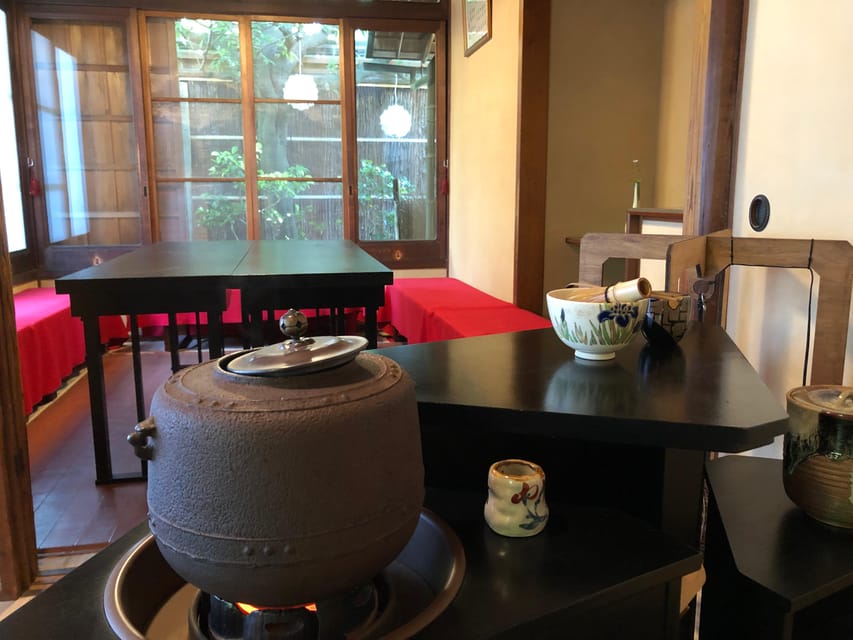
- The tea ceremony takes place in Rakuju: You watch matcha being prepared and learn why the movements, tools, and hospitality matter.
- Photos are welcome after dressing: You can take plenty of pictures around the townhouse, but photography is not allowed while the kimono is being put on or removed.
- Group size affects the mood: Shared sessions can include waiting and limited viewing angles, while private bookings offer more time and conversation.
- Bring socks: Bare feet are not allowed, and stockings are discouraged. Loose clothing around the neck helps the kimono sit well.
Entering Tondaya, a Meiji-era machiya in Nishijin
You meet at Tondaya, Nishijin Japanese Cultural Experience Museum, at 697 Ishiyakuchicho in Kyoto’s Kamigyo Ward. The activity begins and ends there, so you do not need to manage a second meeting point after the ceremony.
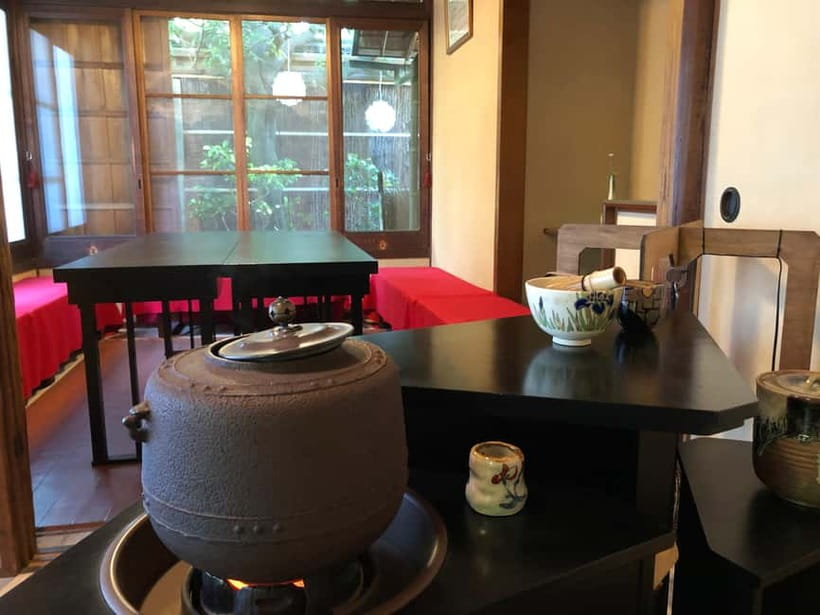
Tondaya is not a modern studio dressed up to look old. It is a traditional machiya with a long domestic and cultural story, and the house itself is a major reason to book this activity. The rooms, wooden details, storehouses, gardens, and tatami areas give you a clearer sense of how space was used in an older Kyoto townhouse.
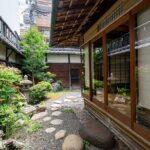
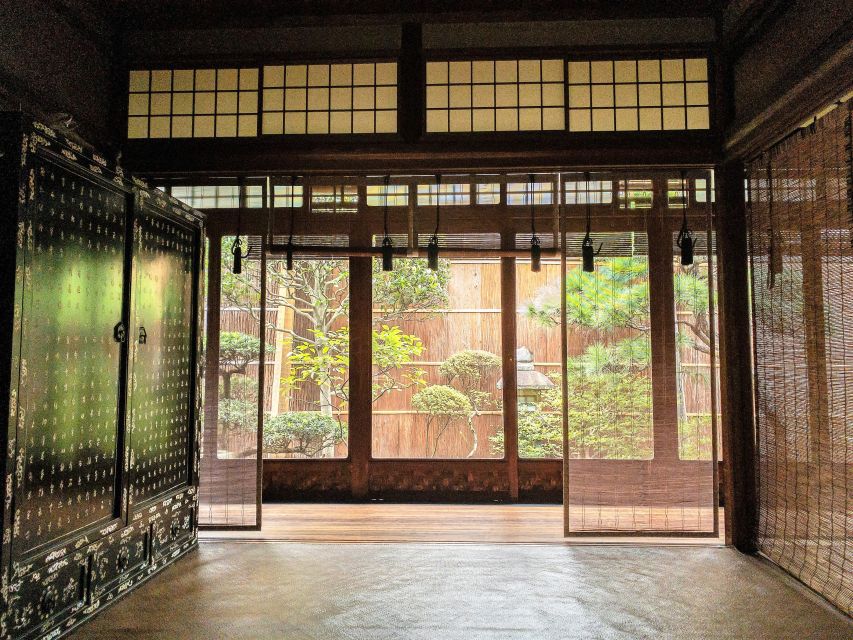
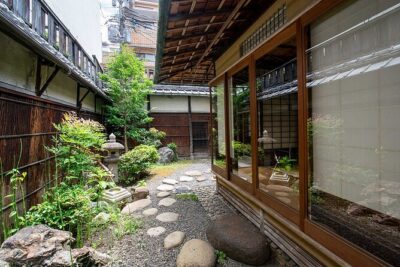
The visit includes three storehouses and six tsuboniwa gardens. These are compact inner gardens rather than large parks, but that is exactly their charm. As you move through the house, you notice small changes in light, breeze, and greenery. The gardens help explain why traditional Japanese architecture often opens inward, using carefully framed views instead of wide outdoor lawns.
Take your time with the building. The kimono and tea ceremony get most of the attention, but the house provides the setting that makes both activities feel connected to daily Japanese life rather than staged in a rental room.
A few more Kyoto tours and experiences worth a look
Getting dressed in a 100% silk kimono
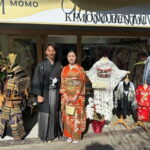
After arrival, staff fit you with an authentic silk kimono. The dressing is efficient and fairly quick, since several people may be preparing for the same session. You should expect the garment to feel fitted and structured, with layers arranged to create the correct shape.
Wear something comfortable underneath, and avoid clothing that is too tight around the neck. The neckline matters because it affects how the kimono looks. You also need socks. Bare feet are not permitted, and the instructions specifically ask you not to wear stockings.
One practical warning is easy to miss: do not arrive in a wet T-shirt. Staff cannot help dress you while your shirt is wet, so bring a dry shirt if you may have been walking in heat or rain. Hair styling and makeup are not included, so plan those separately if they matter to your photos.
The kimono selection is attractive, but it may not be equally varied for every body type. Larger sizes can be limited to solid colors, while smaller sizes may have more printed designs. If you are tall or need a larger garment, keep your expectations flexible. Fit matters more than pattern, but it is fair to know that the most elaborate prints may not be available in every size.
Dressing is part of the cultural lesson, though the amount of explanation can vary. You may learn some useful points about the garment, but this is not advertised as a detailed kimono-making or textile class. If you want a long discussion of fabric, rank, seasonal patterns, or formal versus casual dress, ask questions during the fitting when possible.
Photography is not allowed while you are being dressed or undressed. Once the kimono is on, though, you can take as many pictures as you like during the rest of the visit. Staff may also help take photos, which is useful when you are traveling as a couple or group.
Walking through the six tsuboniwa gardens
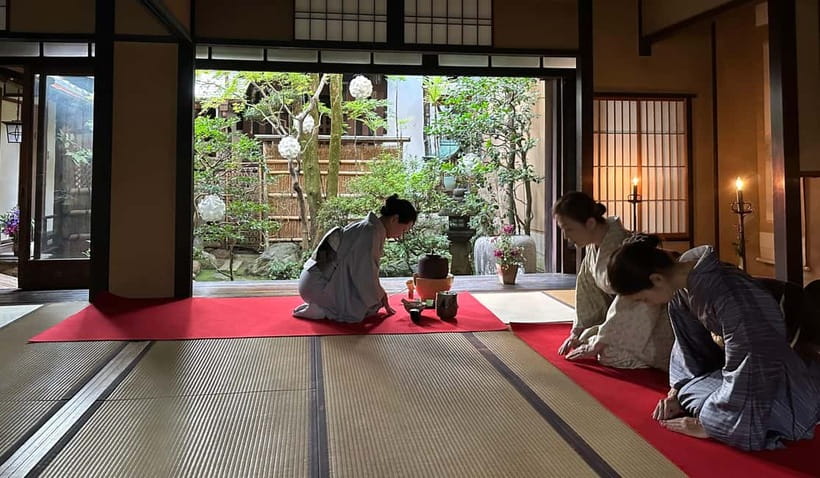
The townhouse tour gives the activity its sense of place. Rather than simply putting on traditional clothing and sitting down for tea, you move through a working architectural setting with several layers of space.
The six tsuboniwa gardens are small, enclosed gardens positioned within or between the townhouse rooms. They are designed to be viewed at close range, often through openings or from tatami rooms. You can feel the difference between each area as you move through the property, particularly in the way the gardens bring in air and soft daylight.
The three storehouses add another practical detail. They show that this was a substantial townhouse, not a single narrow room arranged for visitors. The house tour also includes art and architectural features, with explanations of the building’s story and use.
There is a detached tatami room where Noh performances were once held. This is one of the more unusual parts of the visit because it links the house to performance traditions, not only tea and domestic life. Sitting in a tatami room also gives you a physical sense of the space, although anyone uncomfortable sitting on the floor should request one of the small chairs when available.
The tour can be more interesting when the guide has strong English. Some staff members speak limited English, and a translation device may be used. That need not spoil the visit, but it can make detailed questions and longer explanations slower. A little patience helps, especially during the quieter parts of the house tour.
Watching the matcha ceremony in Rakuju
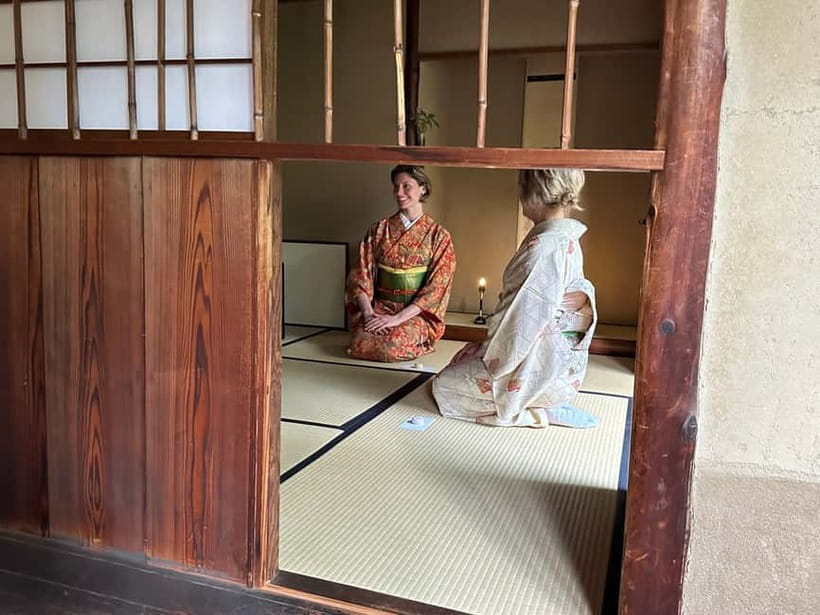
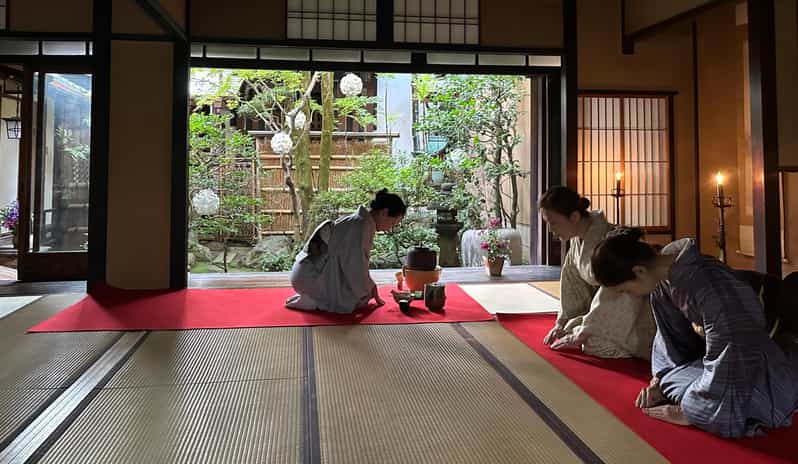
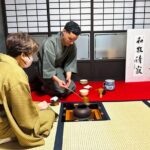
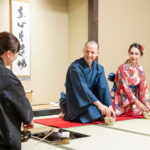
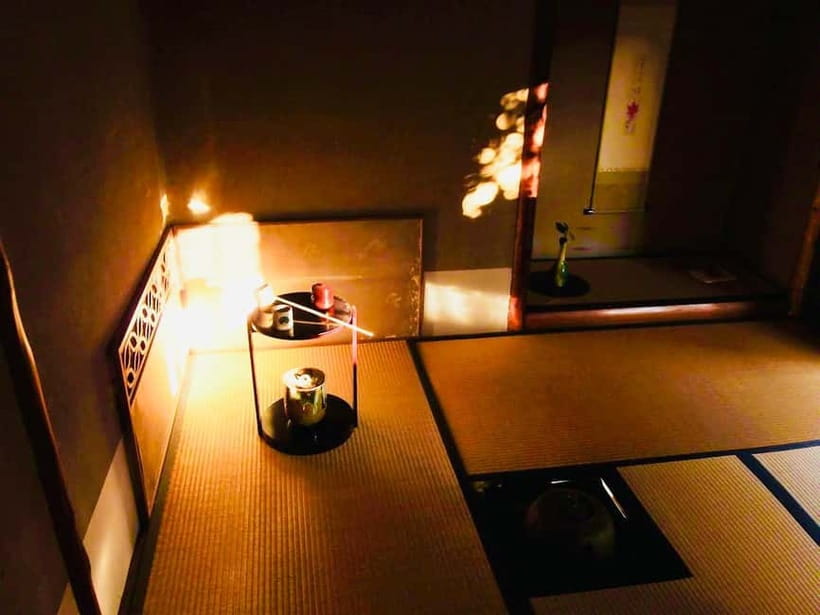
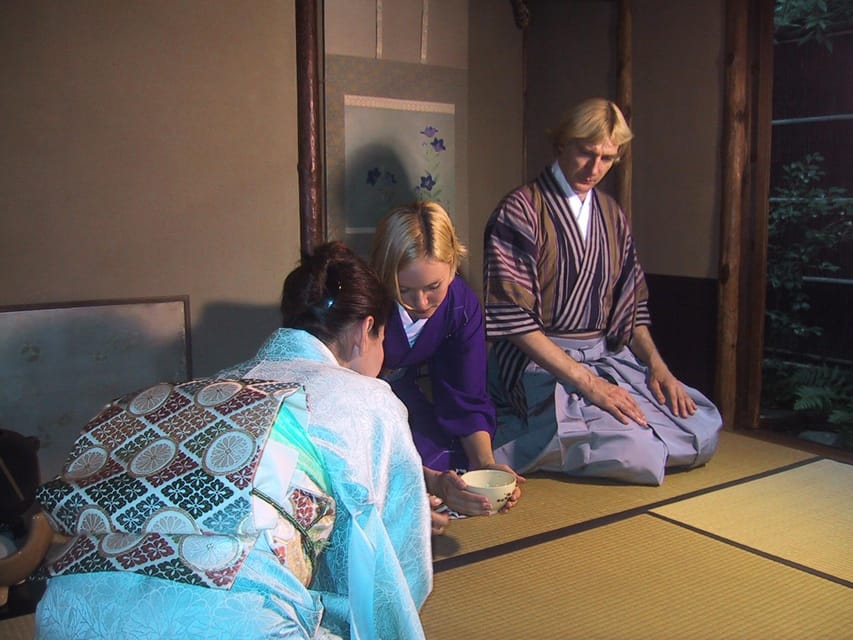
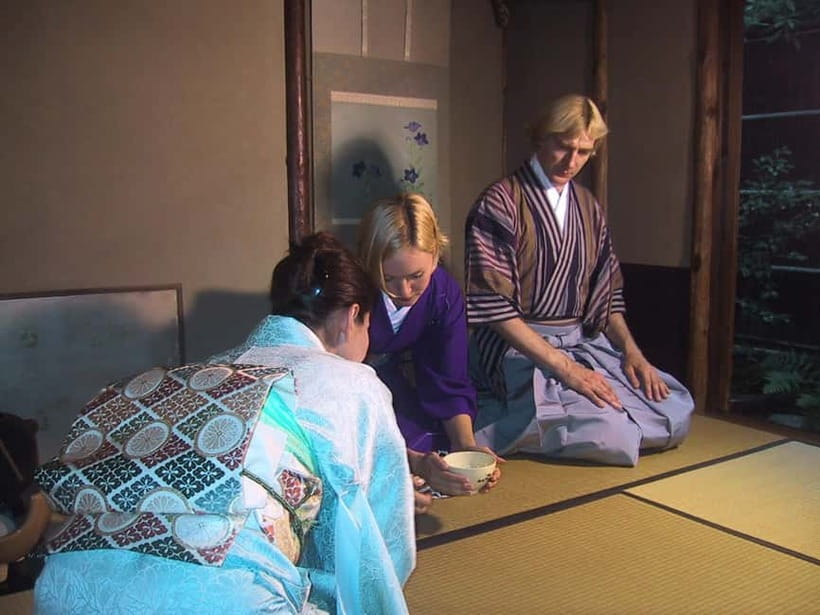
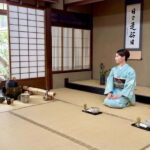
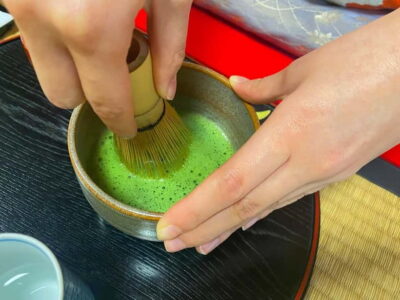
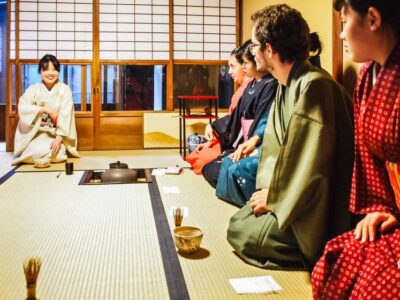
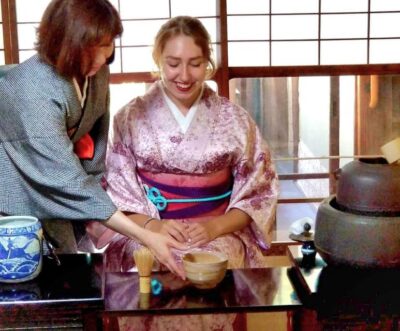
The tea ceremony takes place in Rakuju, the traditional tea room. You receive an explanation of what will happen, then watch the tea being prepared and served.
The value here is not simply drinking matcha. Japanese tea practice places attention on preparation, presentation, movement, and the relationship between host and guest. The ceremony gives you a short look at Japanese hospitality as a formal act, where the arrangement of the room and the way tea is offered are part of the message.
The ceremony is generally described as beautiful, calm, and informative. It can be a welcome pause during a busy Kyoto schedule. You sit quietly, watch the preparation, and notice details that are easy to miss when tea is treated as just another drink.
The shared format changes the mood. Some sessions have a number of participants, which can make the room feel crowded. You may not have the best view of the tea master, and people may have to wait before or after the ceremony. Seating can also be tight, particularly if you are on the floor for the full presentation.
Please treat this part with care. Phones should be put away during the ceremony unless you are specifically told that photography is allowed. The hosts make an effort to create a peaceful atmosphere, and filming from very close range can distract from the ritual and from other people’s view.
If you want more time to ask questions, a private session is the better choice. Private participants can usually enjoy a slower pace, direct conversation, and more personal help with photographs. The standard group activity can still be rewarding, but it is less predictable in size and timing.
What the 90-minute schedule feels like
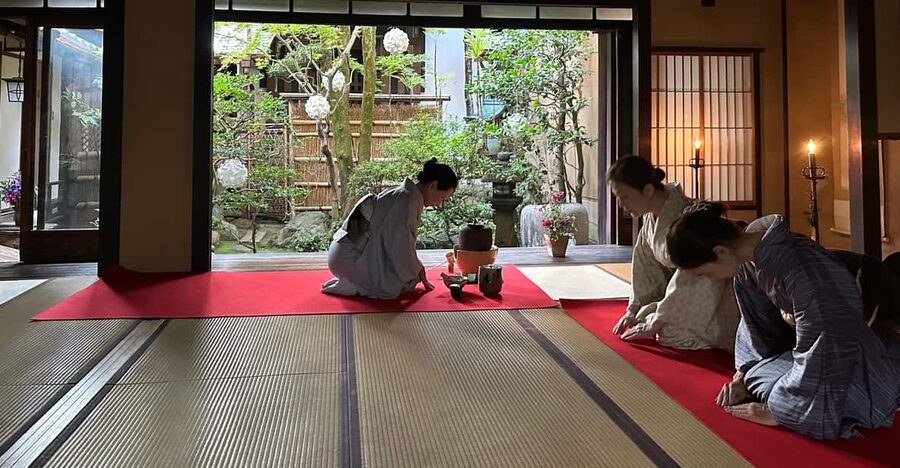
The stated duration is 1.5 hours, but the pace can vary depending on group size and how many people need to be dressed. The basic sequence is:
- Kimono fitting and dressing
- A tour of the machiya, storehouses, gardens, and tatami rooms
- An explanation and performance of the tea ceremony
- Time for photographs
- Kimono removal before the activity ends at Tondaya
Some people may be asked to arrive early or may spend extra time preparing before the formal start. Arriving early can help you get settled, but do not assume that the entire period will be a quiet, perfectly timed program. The dressing area may feel busy, and waiting is possible in a shared session.
The order of the house tour and tea ceremony may also feel practical rather than theatrical. Staff are managing clothing, rooms, and several participants at once. That can create a little bustle, but it is also part of visiting a real cultural property instead of a polished stage set.
Plan your day with some breathing room afterward. The official length is short, yet the experience may run somewhat beyond the stated time if dressing or group movement takes longer. Do not schedule a tight restaurant reservation immediately afterward.
A few more Kyoto tours and experiences worth a look
Group session or private booking?
The standard experience is conducted with other participants. It is the lower-cost way to see Tondaya, put on a silk kimono, and watch the tea ceremony, but the tradeoff is less control.
A group session suits you if you mainly want:
- A first introduction to kimono and matcha
- A chance to see a traditional townhouse
- A short cultural activity between sightseeing stops
- Time for personal photos without paying for a fully private visit
A private session suits you better if you care about:
- Asking detailed questions
- Having a slower, quieter ceremony
- Getting a clear view of the tea preparation
- Receiving more individual help with your kimono and photos
- Avoiding the uncertainty of a larger group
Small-group options are also available, so check the exact booking choice rather than assuming every session has the same format. The difference matters here. The ceremony is inherently quiet, and a crowded room can reduce the sense of calm.
English and Japanese are offered, but not every staff member speaks English fluently. Translation support may be used. You should be able to follow the main activity, but if cultural explanation is your top priority, the private option may give you more space to communicate.
Is $126 a fair price?
At $126 per person, this is not a bargain kimono rental. You are paying for several pieces together: entrance to Tondaya, dressing in a 100% silk kimono, a guided house tour, and the tea ceremony.
The price makes more sense if you value the building and the setting. A basic costume session elsewhere might be cheaper, but it may not include a Meiji-period townhouse, six inner gardens, three storehouses, and a tea room with this level of traditional context.
Still, the cost can feel high if you mainly want a few kimono photographs. Hair styling, makeup, socks, and lunch are not included. The standard session may also feel commercial and crowded at busy times, so the value depends heavily on how much you want the cultural explanation and ceremony.
The private option will cost more if selected, but it may be the smarter use of money for couples or families who want personal attention. Several people have found the experience worth the extra cost for the memories and photos, while others have felt the group size and limited English made the price harder to justify.
The activity includes free cancellation up to 24 hours before the start, and you can reserve now and pay later. New Year dates from December 28 through January 5 cost 30 percent more, and Tondaya is closed December 31 through January 1.
Who will enjoy this Kyoto activity most?
I would recommend it to first-time visitors who want a manageable introduction to Japanese customs without committing half a day. The 90-minute format fits well between visits to other Kyoto sights, and the townhouse gives you plenty to see beyond the tea room.
It is also a good fit for couples and families who want photographs in traditional dress. The setting is more distinctive than a plain rental shop, and staff may take pictures for you. You can also stay focused on the visit rather than carrying a camera through every part of the dressing process.
People with a strong interest in Japanese architecture will get more from this than they might expect. The six tsuboniwa gardens, storehouses, tatami spaces, and Noh room make the property worth attention even if you are not usually drawn to dress-up activities.
I would be cautious about booking if you dislike sitting on the floor, crowded indoor activities, or translation-assisted explanations. Chairs may be available, but they are limited. You should also skip the group format if you need a highly private, polished photo session.
Most important, come ready to be attentive. The ceremony is not a performance designed for constant filming. Put your phone away when asked, listen to the explanation, and allow the hosts to set the pace.
Should you book Tondaya’s kimono and tea ceremony?
Book this experience if you want a short, place-based introduction to Kyoto culture. The silk kimono, Meiji-era townhouse, six gardens, and matcha ceremony create a fuller visit than a simple dressing appointment.
Choose a private or small-group session if quiet conversation and a clear view of the ceremony matter to you. Choose the standard group activity if you are comfortable with some waiting and mainly want the house, clothing, ceremony, and photos at a fixed 1.5-hour length.
Bring socks, a dry shirt, and modest expectations about English instruction and kimono choice. With those details handled, Tondaya offers a memorable look at Kyoto tradition in a setting that feels connected to the city’s older way of life.
FAQ
Where does the kimono and tea ceremony experience begin?
Meet at Tondaya, Nishijin Japanese Cultural Experience Museum, at 697 Ishiyakuchicho, Kamigyo Ward, Kyoto, Japan. The activity ends back at the same meeting point.
How long does the experience last?
The stated duration is 1.5 hours. The exact starting time depends on availability, and shared sessions may involve some waiting.
What is included in the price?
The price includes entrance, a townhouse tour guide, the tea ceremony, and kimono dressing.
Is the kimono made of real silk?
Yes. The kimono provided for the activity is made from 100% silk.
Do I need to bring socks?
Yes. Socks are required, and bare feet are not allowed. The instructions ask you to bring socks rather than wear stockings.
Can I take photographs?
Yes, you can take photographs during the visit and may take as many as you like once you are dressed. Photography is not allowed while the kimono is being put on or removed.
Is lunch included?
No. Lunch is not included.
Is the experience private?
The standard experience is conducted with other participants. Private and small-group options are available when selected during booking.
Is the activity available in English?
The activity is offered in English and Japanese. Not all staff members speak English fluently, so a translation device may be used.
More Kimono Experiences in Kyoto
More Tea Ceremony Experiences in Kyoto
More tours in Kyoto we've reviewed




Tea Ceremony Experiences, compared.
 ★ 4.9Kyoto: Tea Ceremony in a Traditional Tea House in KiyomizuFrom $4945 min
 ★ 4.9Kyoto: Tea Ceremony Ju-An at Jotokuji TempleFrom $291h 10m
 ★ 4.3Kyoto: 45-Minute Tea Ceremony Lesson ExperienceFrom $2245 min
 ★ 5.0World Heritage Kyoto & Nara Uji Authentic Matcha ExperienceFrom $129
 ★ 4.9Kyoto: Table-Style Tea Ceremony at a Kyo-MachiyaFrom $451h 30m
 ★ 5.0Kimono Tea Ceremony at Kyoto Maikoya, NISHIKIFrom $65