
Reviewed · TOURS
Complete Kyoto Tour: Explore 10 Must-See Sights& Hidden Gems
Kyoto is a city where a single famous sight can eat up half a day. This tour solves that problem with a brisk route through 10 major sights, from the Arashiyama bamboo forest to Fushimi Inari, Kiyomizu Temple, Yasaka Pagoda, and Gion. You ride trains, buses, the Randen tram, and the metro, so you see how Kyoto works as well as how it looks.
I like the small group of no more than 10 people and the way the guides connect temples with everyday Japanese life, etiquette, food, and public transport. I also like the lunch stop, where you can try conveyor-belt sushi, ramen, kara-age, beer, and mochi in the sort of casual restaurant many Japanese people use.
The catch is simple: this is a very full day. You may walk about 20,000 steps, and there is little room for a slow, leisurely temple visit. If your feet, back, or energy are not up to a long day, choose a gentler plan.
In This Review
- Kyoto in one long, well-planned day
- Arashiyama bamboo forest starts the morning
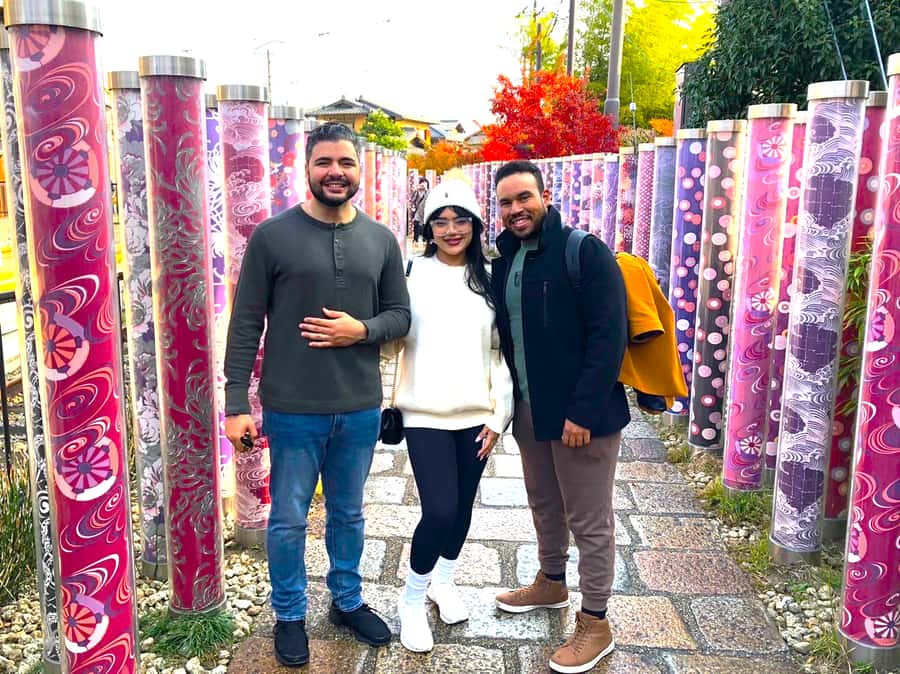
- A ride on the small Randen tram
- Ryoan-ji and the quiet power of a stone garden
- A casual conveyor-belt lunch at Kura
- Kinkakuji, Kyoto’s Golden Pavilion
- Fushimi Inari and its endless red gates
- Kiyomizu-zaka and Kyoto shopping streets
- Kiyomizu Temple and its famous wooden stage
- Yasaka Pagoda and the old Kyoto streets
- Finishing in Gion
- What the $105 price really covers
- The walking and pace deserve serious attention
- How to prepare before 8:50 a.m.
- Who should book this Kyoto tour?
- FAQ
- Where does the Kyoto tour begin?
- Where does the activity end?
- How long does the tour last?
- How many people can join the group?
- What language is the tour conducted in?
- Are transportation costs included?
- Are food and entry tickets included?
- How much walking is involved?
- Can children, pregnant women, or wheelchair users join?
Kyoto in one long, well-planned day
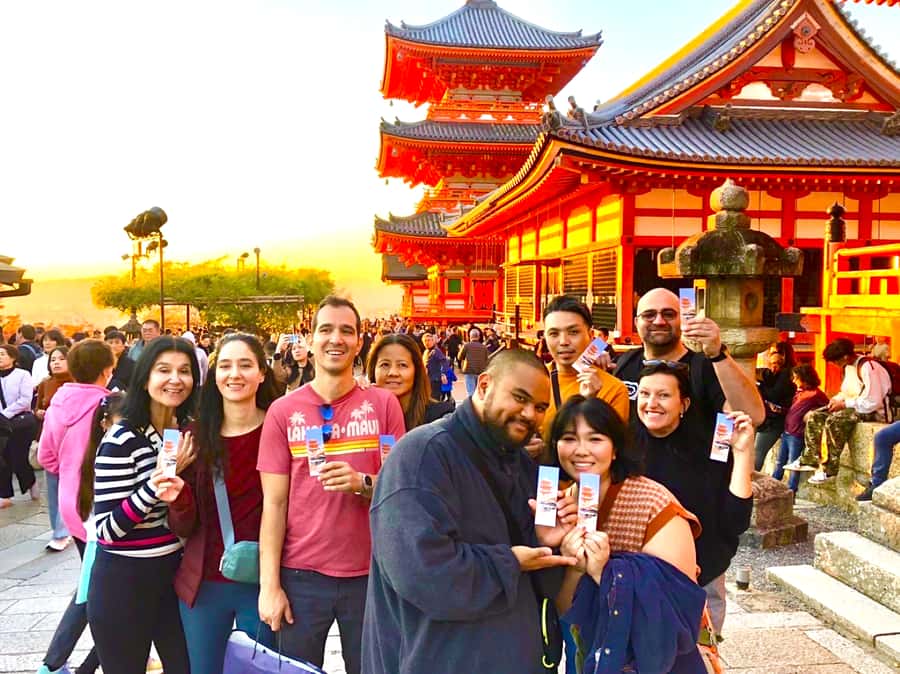
This is not a temple tour with lots of time to sit and sketch. It is a smart orientation day for someone who wants to cover a great deal of Kyoto before deciding where to return.
You meet your guide at 8:50 a.m. on the second floor of JR Saga-Arashiyama Station, past the ticket gate. Look for the paging board marked Beautiful day tours. The tour ends back at the same station area, though the final sightseeing stop is in Gion.
The route depends on public transport and walking. That matters in Kyoto, where buses can be crowded, train lines use different operators, and tourist areas are spread across the city. Your guide handles the route while explaining how people move around town. Guides such as Megumi, Masa, Masako, and Meg have been especially praised for their English, warmth, patience, cultural explanations, and ability to keep the day moving.
This tour is best on your first day in Kyoto. You get a quick map of the city, learn the basic manners for shrines and temples, and collect ideas for places to visit later.
Arashiyama bamboo forest starts the morning
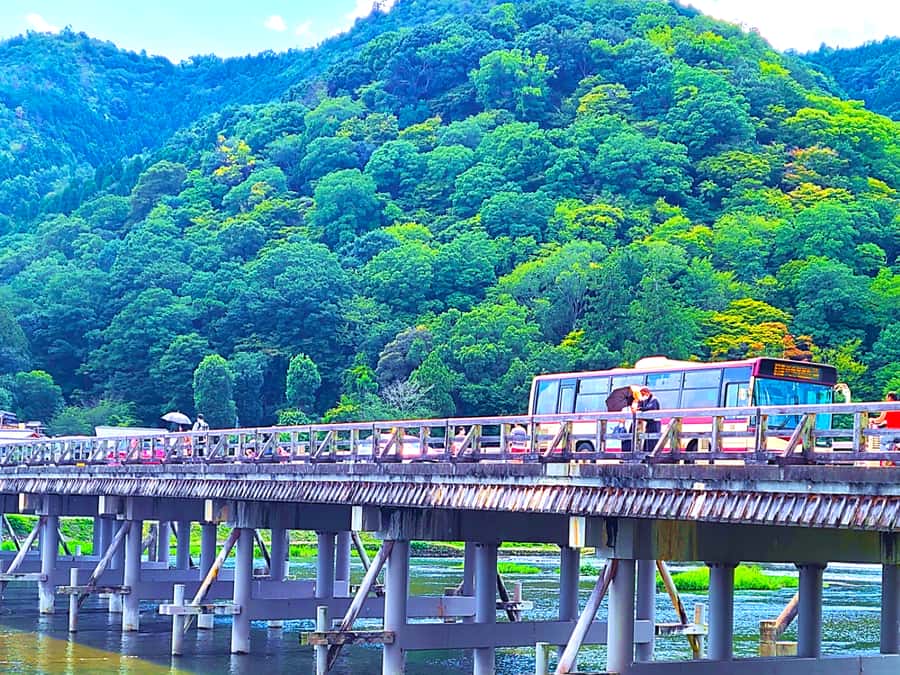
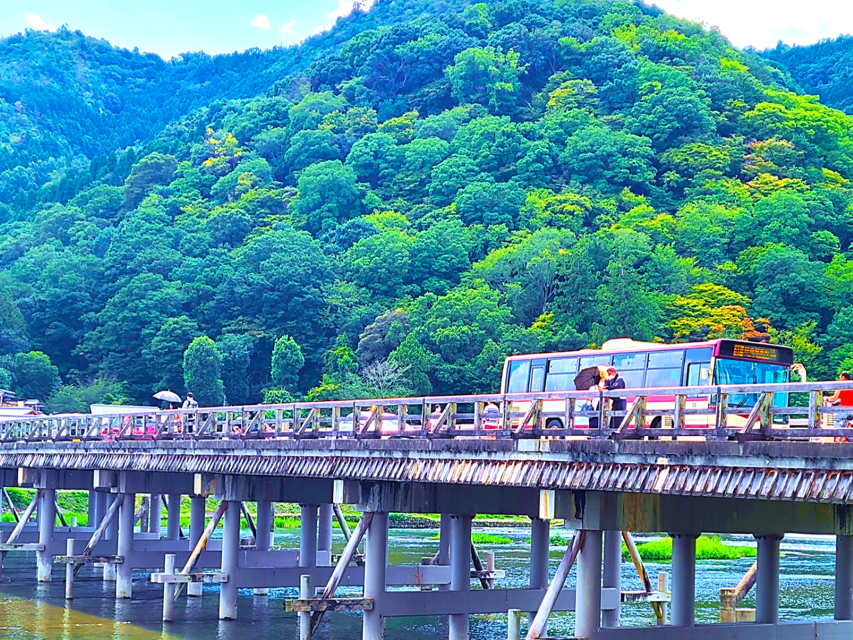
Arashiyama is an excellent starting point because it gives you Kyoto in several forms at once: a famous bamboo path, wooded hills, old religious sites, and a popular sightseeing district.
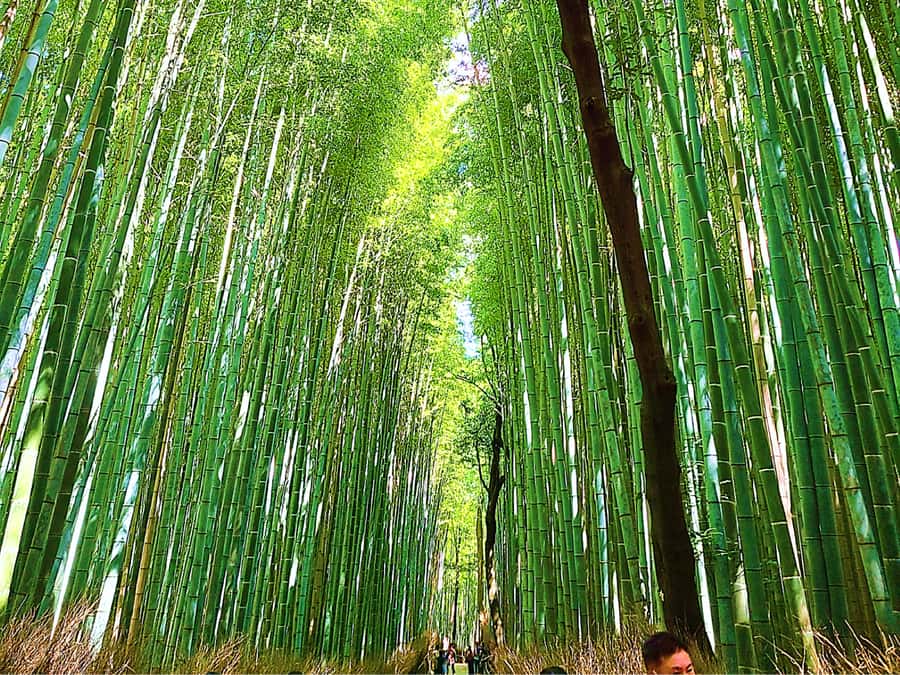
The bamboo forest is the headline attraction. Tall green stalks close in around the path, making it one of Kyoto’s most recognizable views. The tour also includes the surrounding forested mountain area, so you are not limited to a single photo stop.
The practical advantage of arriving early is clear. Arashiyama is one of Kyoto’s busiest areas, and the morning start gives you a better chance to walk through it before the day reaches full speed. Still, do not expect solitude. This is a major attraction, and the path is shared with many other visitors.
Your guide can add context that a quick walk alone would miss, including how to behave in the area, how Japanese visitors use the sites, and what details are worth noticing. Keep your camera ready, but also keep pace. The schedule has many more stops ahead.
If you're still narrowing it down, here are other tours in Kyoto we've reviewed.

A ride on the small Randen tram
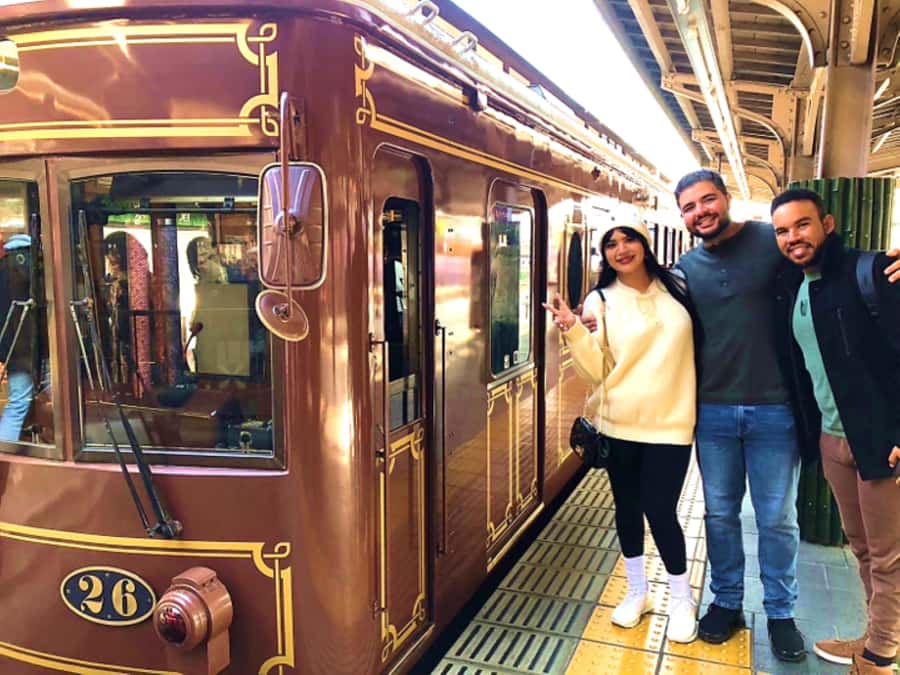
After Arashiyama, you ride the Randen tram, a small local railway with a more intimate feel than Kyoto’s larger train routes. This is one of the tour’s nicest touches because it is both useful transport and part of the day’s sightseeing.
The tram helps connect western Kyoto with the next section of the route. You get a taste of ordinary city travel rather than being moved around in a private vehicle. That makes the tour more practical for the rest of your stay, especially if Kyoto’s transport map looks confusing.
You will need an IC card such as SUICA or PASMO, charged with at least 1,500 yen before the tour. Transportation costs are not included and total about $10 for the day. You should also carry cash, since many facilities and food stops in Japan may not accept cards.
Ryoan-ji and the quiet power of a stone garden
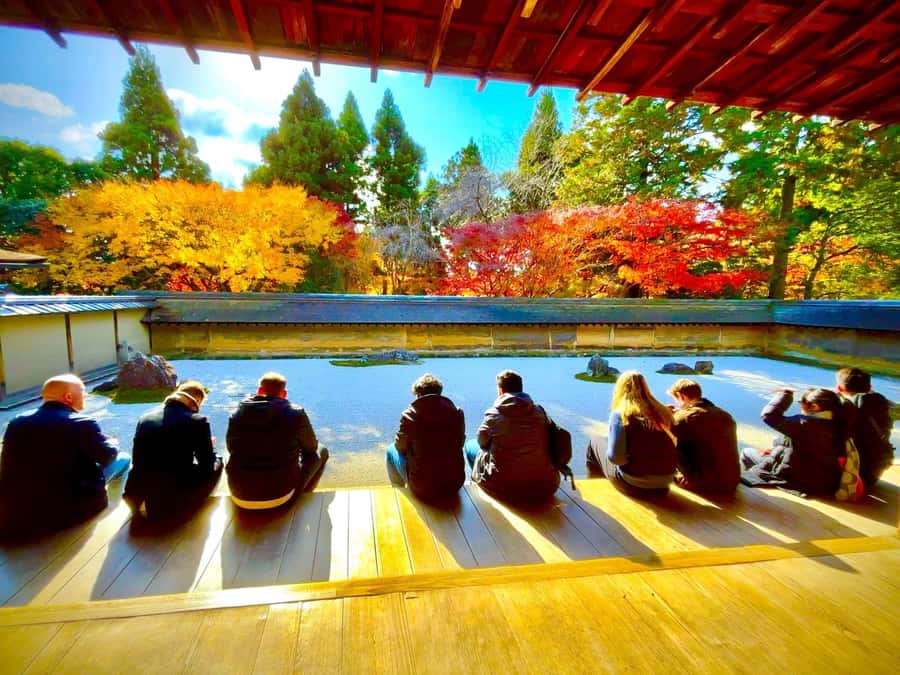
Ryoan-ji offers a change of pace from Arashiyama’s trees and crowds. The temple is famous for its dry stone garden, a spare arrangement of rocks and gravel that invites quiet observation rather than quick sightseeing.
The garden became internationally famous after Queen Elizabeth II visited and praised it. That detail helps explain why this modest-looking space became such a powerful symbol of Japanese design abroad.
Do not expect a long meditation session here. The overall route moves quickly, and your guide has to keep the group on schedule. Still, this stop gives the day some balance. You see that Kyoto’s appeal is not only colorful gates and gold-covered buildings. It also includes restraint, empty space, and ideas that take time to absorb.
Entry fees are separate from the tour price. Allow roughly $10 in total for admissions across the day, though the exact amount depends on the sites visited and current fees.
A casual conveyor-belt lunch at Kura
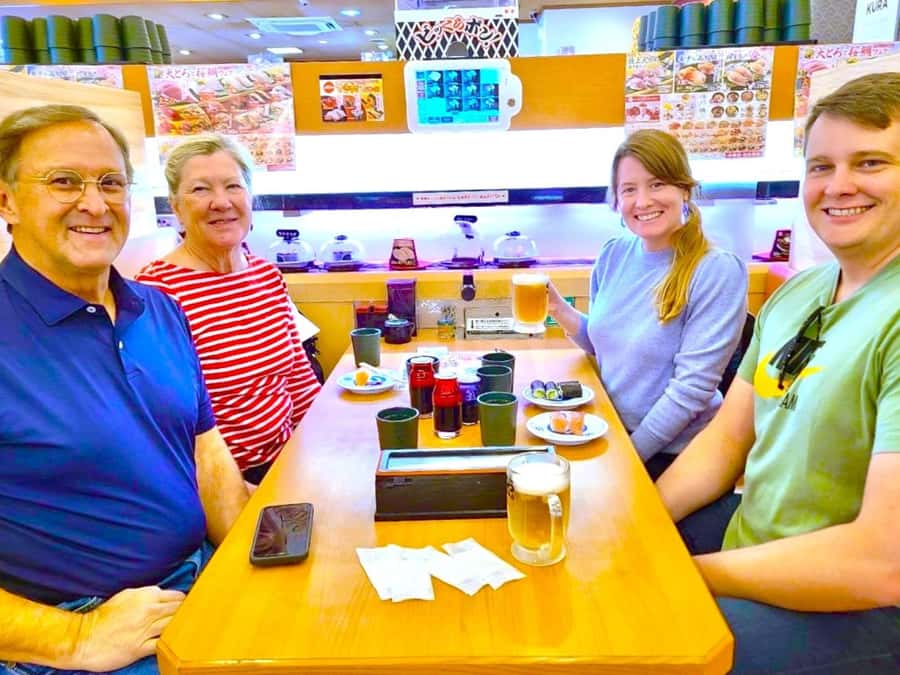
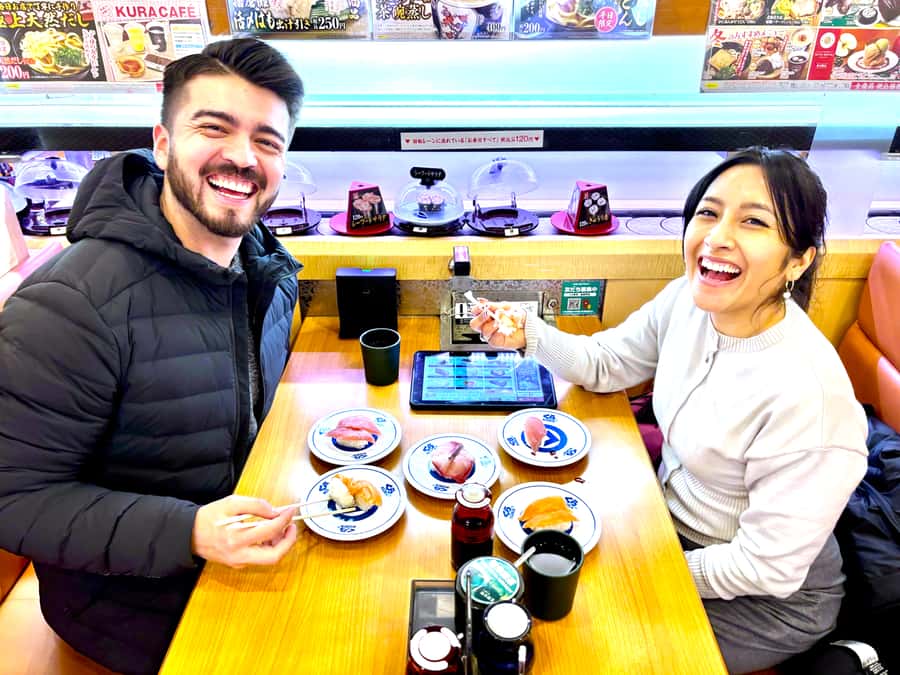
The lunch stop is one of the most useful parts of the day for first-time visitors. At Kura, you can try conveyor-belt sushi in a casual setting, with other choices such as ramen, kara-age, beer, and mochi.
This is not presented as a formal food tasting. It is closer to a look at everyday Japanese dining, where a conveyor-belt restaurant can function as a quick, low-cost meal for local residents. You choose and pay for your own food, so the final cost depends on your appetite.
The stop also gives your feet a break. After several major sights and several changes in transport, a seated meal helps reset the group before the afternoon temples.
If you have dietary needs, tell the organizer ahead of time. One guest with a vegan diet received special vegan items at the sushi restaurant, but this should be arranged in advance rather than assumed. Food and drinks are not included in the $105 tour fee.
Kinkakuji, Kyoto’s Golden Pavilion
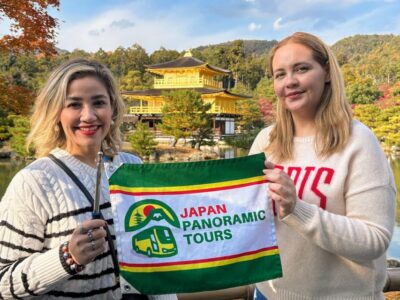
Kinkakuji is the visual showstopper of the western part of the tour. The upper levels of the pavilion are covered in gold leaf, and the building reflects in the pond in front of it.
You cannot come to Kyoto and skip every famous sight. Kinkakuji earns its place because it is immediately striking, even if you know nothing about its background. Your guide can explain the building’s place in Kyoto’s religious and cultural story, giving the photograph more meaning.
The drawback is crowding. The viewing area can feel tight, and your time here is limited by the rest of the itinerary. Treat it as a focused visit rather than a free afternoon. Admission is extra.

Fushimi Inari and its endless red gates
Fushimi Inari Taisha is one of Kyoto’s most memorable places. Its path is lined with thousands of red torii gates, creating a tunnel that rises into the wooded hills behind the shrine.
The tour includes time to explore the shrine and, if you are interested, stop for street food and drinks afterward. This is a good place to sample small local snacks, though your guide can help you understand the choices and keep the stop within the day’s tight schedule.
The shrine is popular with overseas visitors, and it can be very busy near the entrance. The route through the gates continues uphill, so the walking can feel more demanding than the first part of the visit suggests. Wear shoes with good support and do not spend all your energy at the beginning.
Fushimi Inari is also a useful lesson in Shinto practice. Your guide can explain how to approach a shrine, where to bow, and how to behave respectfully without turning the visit into a stiff classroom exercise.
Kiyomizu-zaka and Kyoto shopping streets

The afternoon continues toward the Kiyomizu area, where Kiyomizu-zaka slopes upward past souvenir shops and food stalls. This is one of the best places on the tour to browse for small gifts, sweets, and traditional items.
The street is pedestrian-friendly but not quiet. It can be crowded, and the slope adds another physical challenge after a full day of walking. Keep your purchases small because you still have more ground to cover.
I like this part of the route because it connects the polished image of old Kyoto with the practical business of tourism. You see shops serving both visitors and people looking for familiar regional foods or gifts. Your guide can point out stalls popular with local residents as well as the more obvious tourist stops.
Kiyomizu Temple and its famous wooden stage
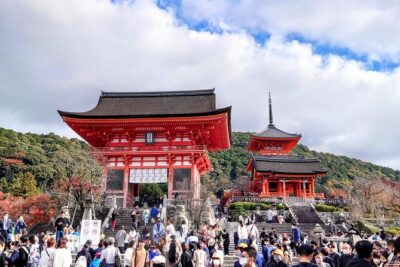
Kiyomizu Temple is one of the most important stops for Japanese visitors to Kyoto. Its wooden stage is built without a single nail, an impressive piece of construction that projects over the hillside.
The temple complex offers broad views and a strong sense of place. It is also one of the stops where the guide’s explanations matter most. Buddhism, Shinto practice, temple architecture, and Japanese customs can seem confusing when you see them all in a short trip. A good guide helps you sort out what you are looking at.
This is another busy site, so expect crowds and a fair amount of walking. The wooden stage and surrounding paths are not suited to a slow, private visit during this tour. If you want detailed time inside every building, plan to return on your own.
Yasaka Pagoda and the old Kyoto streets
Yasaka Pagoda is a major symbol of Kyoto. The tower rises above the old streets near Kiyomizu Temple and gives this part of town its instantly recognizable profile.
The stop is brief compared with the larger temples, but it helps you understand the scale and character of the district. Narrow streets, traditional-looking buildings, shops, and temple structures come together here in a way that feels distinctly Kyoto.
This area is also good for learning how to move respectfully through residential and historic streets. Follow your guide closely, keep noise down, and avoid blocking narrow lanes for photos.
Finishing in Gion
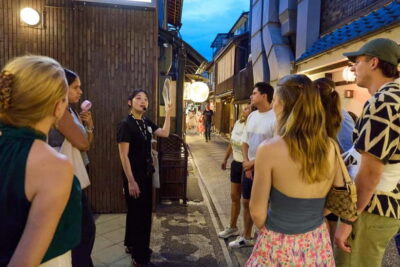
The tour finishes in Gion, Kyoto’s historic entertainment district. Old streets and traditional architecture make it a fitting final chapter after a day of shrines, temples, food, and public transport.
Ending here gives you a chance to see Kyoto after the main sightseeing route has taken shape in your mind. You can ask your guide about dinner, later visits, or other parts of the city. The activity itself returns to the JR Saga-Arashiyama meeting point, so remember that the end of the sightseeing route and the official end point are not the same thing.
Gion is associated with geisha culture, but you should treat the area as a living neighborhood, not a stage set. Walk quietly, respect privacy, and follow local rules about photography.
What the $105 price really covers
The tour costs $105 per person. That is not an all-inclusive price. You should budget about $10 for public transportation, around $10 for entry tickets, plus lunch, snacks, and drinks.
The value comes from the route design and the guide, not from included admissions. In one day, you cover the bamboo forest, Ryoan-ji, Kinkakuji, Fushimi Inari, Kiyomizu Temple, Yasaka Pagoda, Gion, and several connecting areas without having to work out every train, bus, tram, and metro change yourself.
If you have only one or two days in Kyoto, that can be a fair trade. You also receive help with etiquette, local life, Japanese society, and the way the city functions. Guides such as Megumi and Masa have been singled out for their energy, clear English, visual aids, humor, and patience with questions.
The price is less attractive if you already know Kyoto’s transport system or prefer to spend an entire morning at one temple. Independent travelers can visit these areas for much less, but they will need to manage the route and research the background themselves.
The walking and pace deserve serious attention
The tour covers about 20,000 steps. That is the most important practical fact in the booking decision.
You should wear comfortable walking shoes and light, practical clothing. There are hills, slopes, station connections, temple paths, and long stretches between transport stops. On a hot day, hydration becomes especially important, although drinks are your responsibility.
The guide cannot slow the whole group for one person who falls behind. You are expected to stay with the guide, and if you leave the group, the guide will not search for you. Late arrivals cannot join because the group departs on time.
The tour is not suitable for children under 13, pregnant women, wheelchair users, people with back problems, people with a cold, or anyone with a low level of fitness. Anyone under 18 must have a guardian. Oversize luggage, strollers, and baby carriages are not allowed.
How to prepare before 8:50 a.m.
Buy and charge your IC card before arriving. Each participant should have a SUICA, PASMO, or similar public transport card with at least 1,500 yen loaded.
Carry Japanese yen, since cash may be needed for food, drinks, and admissions. Bring a small bag, but not oversize luggage. You will be on your feet for most of the day, so keep your load light.
If you want to visit other Kyoto sights, consider doing them before or after this tour rather than trying to add them to the route. Suggested options include Nijo Castle, the Kyoto Imperial Palace, Nishiki Market, Sanjusangendo, Nanzenji, Tofukuji, Byodoin, Toji, and Higashihonganji.
Free cancellation is available up to seven days in advance for a full refund. Check the start time when booking, since availability controls the exact departure.
Who should book this Kyoto tour?
Book it if you want a strong first-day introduction and prefer local guidance over figuring out Kyoto’s transport network alone. It is especially useful for a short stay, when seeing 10 major places in one day matters more than lingering at one or two.
You should also book if you enjoy asking questions about Japanese culture, religion, etiquette, food, and daily life. The guides bring more than directions. They explain why the places matter and help you feel less lost in a complicated city.
Skip it if you dislike group pacing, long walks, crowds, or frequent transport changes. You will also want another plan if your main goal is quiet temple time or careful photography.
For active visitors with limited time, I would book this tour early in the Kyoto stay. Use it to get your bearings, then return independently to the places that deserve another look.
FAQ
Where does the Kyoto tour begin?
Meet your guide at 8:50 a.m. on the second floor of JR Saga-Arashiyama Station, past the ticket gate. The guide will hold a paging board marked Beautiful day tours.
Where does the activity end?
The activity ends back at the meeting point near JR Saga-Arashiyama Station. The final sightseeing area is Gion.
How long does the tour last?
The tour lasts 9.5 hours. Check availability for the exact starting time.
How many people can join the group?
The group is limited to 10 participants.
What language is the tour conducted in?
The live tour guide speaks English.
Are transportation costs included?
No. Public transportation costs are separate and total about $10 for the day. Each participant should bring an IC card such as SUICA or PASMO, charged with at least 1,500 yen.
Are food and entry tickets included?
No. Food, drinks, and entry tickets are separate. Entry fees total about $10, while lunch and snacks depend on what you choose.
How much walking is involved?
You may walk approximately 20,000 steps. Comfortable shoes and clothing are required.
Can children, pregnant women, or wheelchair users join?
The activity is not suitable for children under 13, pregnant women, people with back problems, wheelchair users, people with a cold, or people with a low level of fitness. Anyone under 18 must be accompanied by a guardian.
More tours in Kyoto we've reviewed










Tours, compared.
 ★ 5.0PERFECT KYOTO 1-Day Bus TourFrom $129
 ★ 4.8Kyoto: Fushimi Inari, Kinkakuji, Bamboo Grove 1 Day Bus TourFrom $122510 minutes - 9 hours
 ★ 4.7Kyoto Geisha Walking Tour: Gion District & Hidden GemsFrom $252 hours
 ★ 4.7Kyoto: Gion Geisha District Walking Tour – Stories of GeishaFrom $202 hours
 ★ 5.0Hidden Kyoto E-Biking tourFrom $116
 ★ 5.0Kyoto Night Foodie Tour in Gion (9+ dishes + 6 Sake tastings)From $163