
Reviewed · GION & GEISHA WALKS
Kyoto Early Bird English Tour: Fushimi Inari & Gion(Private opt)
The best reason to book this Kyoto morning tour is the early start. You reach Fushimi Inari Shrine before the torii gates fill with people, then work your way through Kiyomizu-dera and the old streets toward Gion. That order matters. The famous red gates are far more atmospheric when you can actually pause beneath them.
I like two things here. First, guide Ikki, who was born and raised in Kyoto, brings local knowledge and fluent English to the temples and shrines. Second, he takes professional photos during the walk, a welcome perk when you are traveling as a couple or family and normally have to rely on hurried phone snapshots.
The main caution is timing. The tour is advertised at four to five hours, yet at least one booking was completed in about two and a half hours. You should also expect plenty of walking, public transport, and extra costs for the train or bus and Kiyomizu-dera admission.
In This Review
- Key points to know before booking
- Why the early start changes Fushimi Inari
- Kiyomizu-dera delivers the big city view
- Sannenzaka and Ninenzaka feel like old Kyoto
- Yasaka Pagoda is a quick but memorable pause
- Yasaka Koshin-Do adds color and local custom
- Gion reveals Kyoto’s refined old streets
- Yasaka Shrine makes a fitting finish
- What the private guide adds to the morning
- Is $99.10 a fair price?
- Who will enjoy this Kyoto route most?
- Practical details that can make the morning easier
- Should you book the Fushimi Inari and Gion tour?
- FAQ
- Where does the tour begin?
- Where does the tour end?
- How long does the tour last?
- Is this a private tour?
- Is transportation included?
- Is Kiyomizu-dera admission included?
- Are photographs included?
- Can I cancel for a full refund?
Key points to know before booking
- Early access to Fushimi Inari: Begin with Kyoto’s famous torii gates before the worst crowds arrive.
- Seven major stops in one morning: The route covers Fushimi Inari, Kiyomizu-dera, Sannenzaka and Ninenzaka, Yasaka Pagoda, Yasaka Koshin-Do, Gion, and Yasaka Shrine.
- Private guiding: Only your own party takes part, so you can ask questions and set the pace more easily than on a large group walk.
- Photos included: Your guide takes pictures during the tour and sends them to you afterward.
- Extra costs are modest but real: Budget ¥390 per person for public transport and ¥500 per person for Kiyomizu-dera.
- Best for first-time Kyoto visitors: The route gives you a quick, useful introduction to shrines, temples, old streets, and geisha culture.
Why the early start changes Fushimi Inari
You begin at Kyoto Station, then use public transportation and your feet to reach the first stop. The meeting point is at Kyoto Station in the Higashishiokoji Kamadonocho area, so arrive early and allow time to find your guide. If you are late, you cannot join the tour or receive a refund.
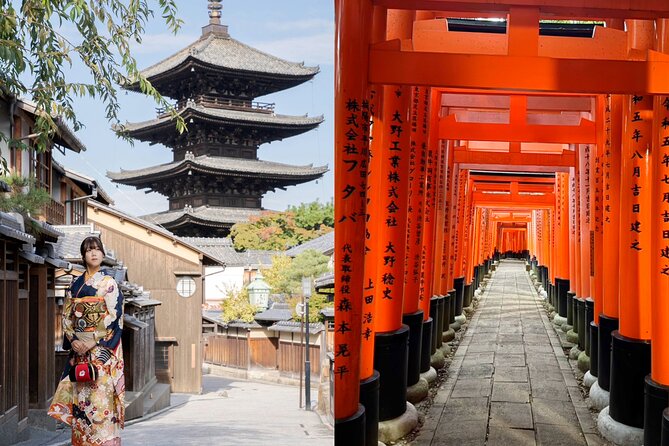
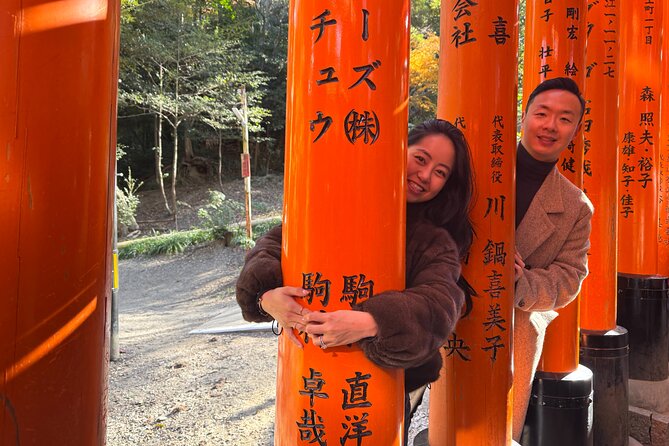
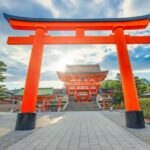
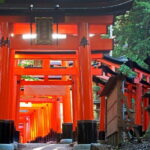
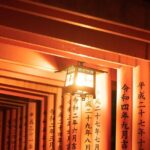
Fushimi Inari-taisha is the morning’s strongest opening. Its long paths are marked by thousands of orange-red torii gates, donated by businesses and individuals seeking prosperity. The gates climb Mount Inari through wooded slopes, creating one of Japan’s most recognizable walks.
The tour gives you about an hour here. That is enough to see the main approach and walk through a striking section of gates, but not enough for a full climb to the summit. If you hoped to hike all the way up Mount Inari, this tour will feel too brief. The tradeoff is that you see another six stops afterward.
I like having a guide at Fushimi Inari because the place can look simple at first: gate after gate, uphill. A good explanation gives meaning to the fox figures, offerings, and worship customs. Ikki is also praised for explaining how to pray at shrines, an especially useful lesson if this is your first visit to Japan.
Early light helps with photos, too. Ikki takes pictures throughout the tour, including at Fushimi Inari, so you can enjoy the walk without constantly asking strangers to take your picture.
A few more Kyoto tours and experiences worth a look

Kiyomizu-dera delivers the big city view

From Fushimi Inari, the route continues by public transportation. The fare is listed as ¥390 per person, separate from the tour price. Keep some yen available, or confirm the accepted payment method before setting out.
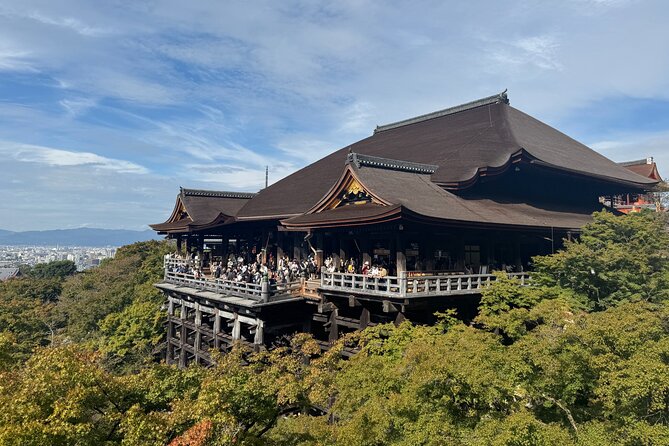
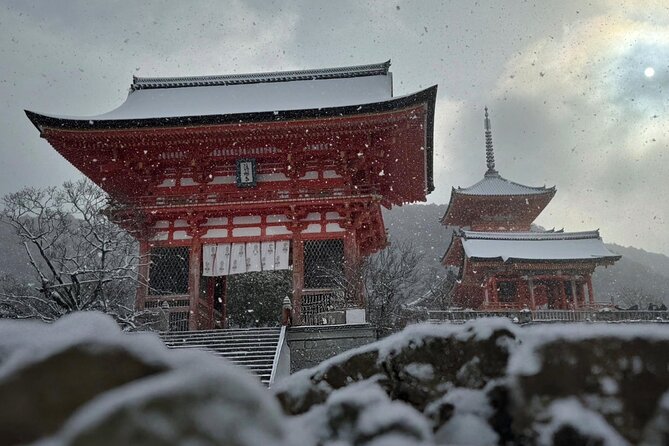
Kiyomizu-dera is the largest paid stop and one of Kyoto’s essential sights. The temple sits high above the city and is known for its broad view across Kyoto. You pay a separate admission fee of ¥500 per person.
The scheduled visit lasts about an hour. That gives you time to take in the main temple grounds, enjoy the view, and ask questions about the site. Your guide can explain the religious meaning behind what you see instead of reducing the visit to a series of photo stops.
The hilltop setting has a practical downside. You will walk uphill and over temple paths, then continue through sloping historic streets. The tour asks for moderate physical fitness, so comfortable shoes are a must. This is not a vehicle-based sightseeing ride where you step out, take a picture, and climb back aboard.
Crowds can build quickly at Kiyomizu-dera. The tour reaches it after Fushimi Inari, so the early departure helps, though it does not guarantee an empty temple. If you want long, quiet stretches at every sight, a private custom tour with fewer stops may suit you better.
Sannenzaka and Ninenzaka feel like old Kyoto
After Kiyomizu-dera, you walk through Sannenzaka and Ninenzaka. These stone-paved lanes run between traditional wooden buildings, small shops, and restaurants. They are attractive, but they are also busy commercial streets, so expect souvenirs and food alongside the old architecture.
The planned time here is 15 minutes. That is enough for a guided orientation and a few photos, not a serious shopping session. If you see a shop you want to explore, tell your guide, but remember that extra browsing may shorten time at later stops.
This is one place where the private format helps. Your guide can point out details you might pass without noticing and adjust the walk if someone in your party needs a short pause. Families may appreciate that flexibility, although the stone streets and hills still require steady walking.
The route also gives you a natural transition from major religious sites to everyday Kyoto streets. You get to see how temples, shops, restaurants, and old houses fit together rather than visiting each attraction as an isolated stop.
Yasaka Pagoda is a quick but memorable pause
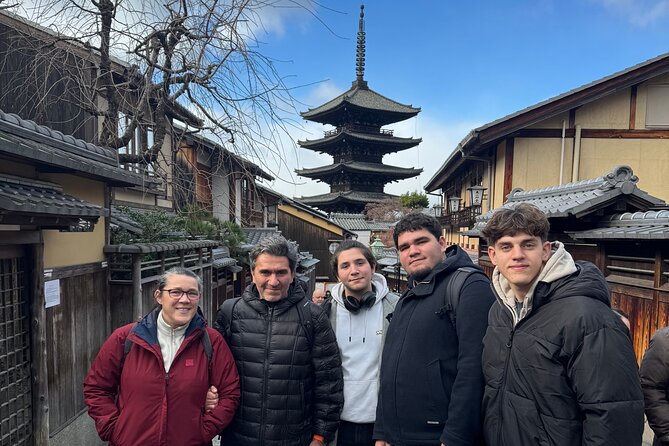
Yasaka Pagoda, part of Hokanji Temple, is scheduled for 15 minutes. Its tall wooden structure rises above the surrounding streets and has become one of Kyoto’s most familiar views.
You may not spend long here, but the short stop makes sense. The pagoda is best appreciated from the street, where its height and wooden construction are easy to see. The schedule allows you to take photos and hear its place in Kyoto’s story without turning the morning into a single-site tour.
This is also a good photo location. Since photography is built into the experience, your guide can help position your group with the pagoda behind you. Do not expect a long interior visit or a detailed exploration of the temple complex. The stop is brief and focused.
Yasaka Koshin-Do adds color and local custom
Yasaka Koshin-Do is another 15-minute stop, but it offers a different look from the large temples. The small temple is decorated with colorful hanging ornaments, making it easy to spot among Kyoto’s more restrained religious buildings.
The unusual decoration gives your guide a chance to explain local beliefs and temple customs. This is the kind of brief stop that benefits from interpretation. Without context, you might simply photograph the colors and move on. With an English-speaking guide, you can ask what the ornaments represent and how the site fits into Kyoto’s religious life.
Do not expect a long visit. The stop is designed as a compact piece of the walking route, not a full hour at a major temple.
A few more Kyoto tours and experiences worth a look

Gion reveals Kyoto’s refined old streets
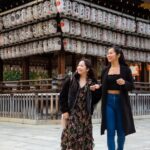
The route then reaches Gion, Kyoto’s best-known geisha district. Traditional machiya houses, teahouses, and preserved lanes give this area its special character. The scheduled visit is 15 minutes, so you receive an introduction rather than a full neighborhood exploration.
Gion requires respectful behavior. Walk quietly, do not block narrow lanes, and do not photograph people without permission. The area is a living neighborhood, not a stage set. A local guide can help you understand the difference between observing traditional architecture and treating residents as part of the scenery.
The short stop is useful if this is your first Kyoto visit and you want to know where to return later. You can continue exploring Gion after the tour ends, especially since the final stop is nearby at Yasaka Shrine.
Yasaka Shrine makes a fitting finish
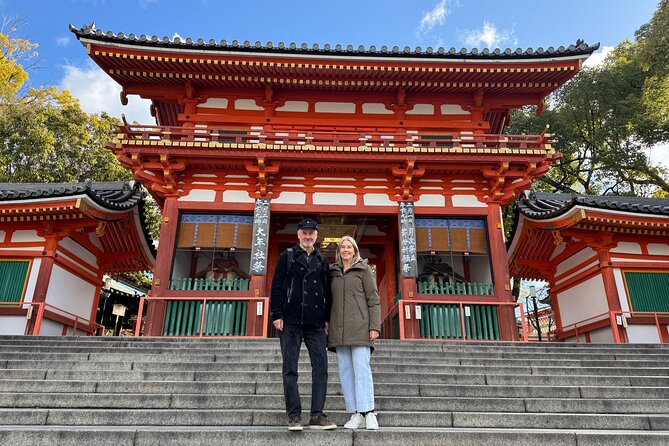
The tour ends at Yasaka Shrine, with about 30 minutes set aside for the visit. Yasaka Shrine is the headquarters of more than 2,300 related shrines across Japan and is associated with prosperity and protection.
This is a fitting final stop because it connects the morning’s themes. You have seen Inari worship at Fushimi Inari, Buddhist temple life at Kiyomizu-dera, old streets around Higashiyama, and the geisha district of Gion. Yasaka Shrine brings you back to an active Shinto setting.
The end point is useful, too. You finish in central Gion rather than at a distant parking area or back at Kyoto Station. From Yasaka Shrine, you can continue sightseeing, find food, or take a bus toward your hotel. Tell your guide where you plan to go next, and the guide can point you toward a suitable route.
What the private guide adds to the morning
This is a private activity, meaning only your group participates. That matters most when you have questions, children, older family members, or different interests within the group. You are not waiting for a large crowd to gather before moving between stops.
The guide praised most often in the supplied material is Ikki. He is described as born and raised in Kyoto, fluent in English, friendly, patient, and clear in his explanations. He also uses prepared support material, including a booklet with pictures and information about Japanese language, temple and shrine history, and prayer customs.
That preparation can make a major difference. Kyoto’s religious sites have layers of symbols and rules that are easy to miss. A guide who explains how to approach a shrine, what to look for, and why a site matters gives you a better chance of remembering the visit after the photographs are gone.
Ikki also offers food suggestions and, in one case, helped a family find a conveyor-belt sushi restaurant after the tour. You should treat that as a helpful possibility, not a guaranteed add-on. The confirmed benefit is the guide’s local advice during the experience.
The photography service is another practical strength. Couples and families often have to choose between appearing in the picture and taking it. Having your guide handle photographs gives you more natural records of the morning. Photos are taken during the tour and sent afterward.
Is $99.10 a fair price?
At $99.10 per person, the tour is not the cheapest way to walk through Kyoto. You also pay ¥390 per person for public transportation and ¥500 per person for Kiyomizu-dera admission, bringing known additional costs to ¥890 per person before food and drinks.
Still, price depends heavily on group size. For a couple or small family, a private English-speaking guide, transport between districts, historical explanation, and professional photos may offer solid value. You are paying for time saved, local orientation, and the ability to ask questions as you go.
The tour also covers seven locations in one morning. You will not explore every site at length, but you get a strong first look at Kyoto’s most requested sights. If you have only one morning in the city, that efficiency has real value.
The group discount feature may improve the price for a larger party, though the exact discount is not provided. Check the total for your group before booking. Since this is private, a larger family or group can divide the guiding cost among more people, if the available rate makes sense.
Food and drinks are not included. Plan to eat before the early start or after reaching Gion. The tour ends in an area with places to continue your day, but no specific meal is promised.
Who will enjoy this Kyoto route most?
I would choose this tour for a first visit to Kyoto, especially if you want a guided introduction rather than a slow study of one temple. The route gives you a useful overview of the city’s religious sites, old streets, and Gion district in a single morning.
It also suits families. The guide has been praised for being kind to children, and the private format lets parents ask for help or adjust the pace. Teenagers may enjoy the photography, while older relatives benefit from having one person manage the route and explanations.
Couples should consider it for the same reason. You can see the main sights and leave with photographs of both of you. Solo visitors may also value the photos and company, though the per-person price is higher than simply visiting independently.
You should think twice if you dislike early mornings, hills, or scheduled sightseeing. The route involves public transportation and plenty of walking. The short stops at Sannenzaka, Ninenzaka, Yasaka Pagoda, Yasaka Koshin-Do, and Gion leave limited time for shopping or lingering.
The advertised duration is four to five hours, but one experience was completed in about two and a half hours. If your schedule depends on a full five-hour block, confirm the expected pace and finish time before you commit.
Practical details that can make the morning easier
Wear shoes suited to hills, stone streets, and temple paths. Bring water, since food and drinks are not included, and allow extra time to reach the Kyoto Station meeting point.
The tour uses a mobile ticket and confirmation is provided when you book. It operates near public transportation, but public transport costs are separate. Kiyomizu-dera admission is also separate.
Free cancellation is available if you cancel at least 24 hours before the local start time. Changes or cancellations inside that window are not accepted for a refund.
The tour ends at Yasaka Shrine, 625 Gionmachi Kitagawa, in the historic Gion area. That location makes it easy to continue your day, but it does not return you to Kyoto Station. Plan your next move before the final shrine visit.
Should you book the Fushimi Inari and Gion tour?
Book it if you want to see Kyoto’s headline sights efficiently, prefer a private guide, and value clear English explanations plus personal photographs. Ikki is the guide to request if available, based on the strong praise for his Kyoto background, patient manner, local advice, and photo skills.
Skip it if you want to spend half a day at Fushimi Inari alone, shop at length in Ninenzaka, or move at an unhurried pace. The route is packed, and the actual finish may be shorter than the advertised four to five hours.
For a first Kyoto morning, though, this is a smart route. Start early, wear good shoes, budget the ¥890 in extra per-person costs, and treat the tour as an orientation to the city rather than a complete study of every stop.
FAQ
Where does the tour begin?
The tour begins at Kyoto Station in the Higashishiokoji Kamadonocho area of Shimogyo Ward, Kyoto.
Where does the tour end?
The tour ends at Yasaka Shrine in the Gion area. From there, you can continue sightseeing or take a bus toward your hotel or another attraction.
How long does the tour last?
The stated duration is approximately four to five hours. One booking was completed in about two and a half hours, so confirm the expected timing if your schedule is tight.
Is this a private tour?
Yes. Only your group participates in the activity.
Is transportation included?
Public transportation is used during the walking experience, but the fare of ¥390 per person is not included.
Is Kiyomizu-dera admission included?
No. Kiyomizu-dera admission costs ¥500 per person and is paid separately.
Are photographs included?
Yes. The English-speaking guide takes professional photos during the tour and sends them to you afterward.
Can I cancel for a full refund?
Yes, if you cancel at least 24 hours before the experience start time. Cancellations or changes made less than 24 hours before the start are not eligible for a refund.
More Private Tours in Kyoto
More Fushimi Inari Tours in Kyoto
More Gion & Geisha Walks in Kyoto
More tours in Kyoto we've reviewed


Gion & Geisha Walks, compared.
 ★ 4.7Kyoto Geisha Walking Tour: Gion District & Hidden GemsFrom $252 hours
 ★ 4.7Kyoto: Gion Geisha District Walking Tour – Stories of GeishaFrom $202 hours
 ★ 4.9Best of Kyoto: Gion, Geisha, Pagodas & CobblestonesFrom $242 hours
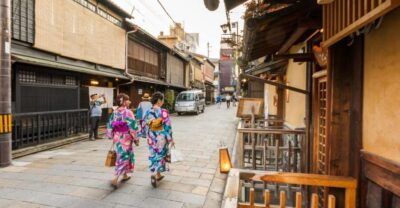 ★ 4.5Night Walk in Gion: Kyoto’s Geisha DistrictFrom $211h 40m
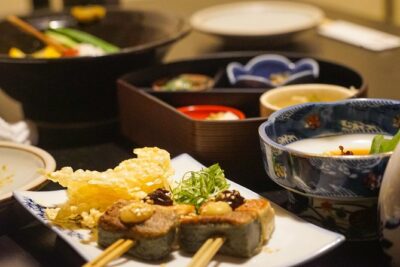 ★ 5.0Kyoto Night Foodie Tour in Gion (9+ dishes + 6 Sake tastings)From $163
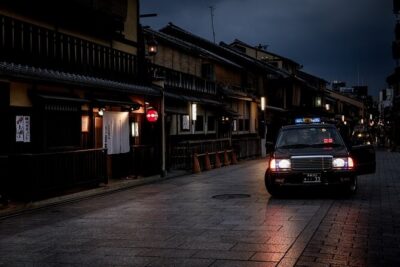 ★ 5.0Kyoto Gion Geisha District Walking Tour – The Stories of GeishaFrom $25