

Reviewed · KIMONO EXPERIENCES
Experience Kimono in Kyoto
Kyoto’s kimono tradition is wonderful to see, but buying one is costly and dressing yourself is no small task. This one-hour experience handles the hard parts, then sends you into the old city dressed for the occasion.
I like the private dressing room and the freedom to choose your own kimono, obi, bag, and hair accessories. I also like the personal help with photo locations, since the shop sits near Gion, Higashiyama, the Keihan railway, and the subway. The main catch is timing: your kimono must be returned by 5:00 p.m., so this is best for a focused Kyoto outing rather than an all-day rental.
In This Review
- Key points to know before booking
- Choosing a kimono that feels like your own
- Private hair styling and kimono dressing
- Why the $25 price can be good value
- Walking out toward Gion and Higashiyama
- Photographing the old city in traditional dress
- What makes this more than a costume change
- How the one-hour format works for different groups
- Getting there and planning the day
- Who should book this Kyoto kimono experience
- Should you book it?
- FAQ
- How much does the Kyoto kimono experience cost?
- How long does the experience take?
- Where does the experience start?
- Where does the experience end?
- Is hair styling included?
- Are shoes and accessories included?
- Are tabi socks provided?
- Is a yukata available in summer?
- Can children participate?
- Can I cancel for a full refund?
Key points to know before booking
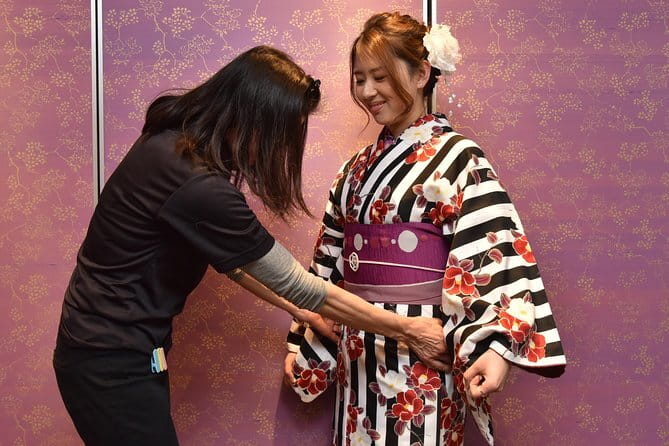
- Choose your own look: Select from the kimono collection, then match an obi, bag, shoes, and hair accessories with staff advice.
- Private preparation: Kimono dressing and hair styling take place in a private room, giving you a calmer start than a rushed public fitting.
- Summer option: During the warmer months, the outfit changes to a lighter yukata.
- Kyoto photo access: The shop is close to Gion, Higashiyama, nearby temples, and Kawaramachi shopping streets.
- Useful inclusions: Hair styling, hair accessories, shoes, a Japanese bag, obi, kimono or yukata, and tabi socks are included.
- Short but flexible outing: The preparation takes about an hour, and you can walk around independently until the 5:00 p.m. return time.
Choosing a kimono that feels like your own
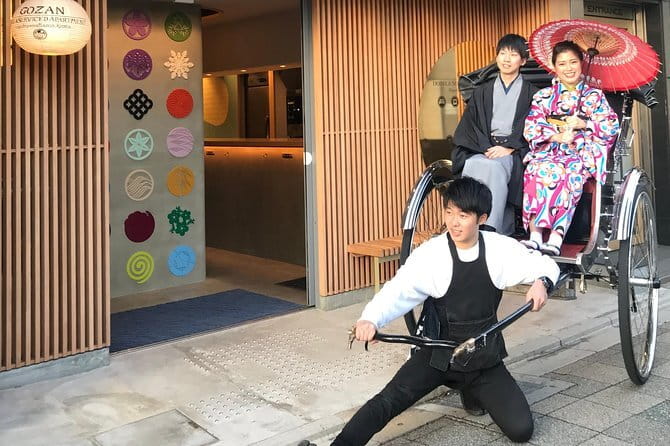
The experience begins at GOZAN HOTEL & SERVICED APARTMENT Higashiyama Sanjo, at 35-7 Sanchōme in Kyoto’s Higashiyama Ward. From there, you choose a kimono from the available collection. This first step matters more than it may seem. The color and pattern will shape every photo you take later, so you have a chance to create a look that suits your taste rather than simply accepting a standard outfit.
Staff help you choose an obi, the wide sash that holds the kimono in place. You can also select a Japanese bag, shoes, and other accessories. If you are unsure how to match colors or patterns, ask for advice. The staff are there to guide the styling, and that makes this a good choice for first-time kimono wearers.
I appreciate that the process gives you some control without making you handle the technical work. Traditional kimono dressing involves several layers and careful wrapping. A professional handles the fit, ties the obi, and makes sure the outfit is presentable for walking and photographs.
The clothing collection and available sizes are not specified, so anyone with special sizing needs should check before booking. The activity is not recommended for children under three or for anyone who is unwell. It is also worth remembering that kimono dressing can feel more restrictive than ordinary sightseeing clothes, particularly during a long walk.
A few more Kyoto tours and experiences worth a look
Private hair styling and kimono dressing
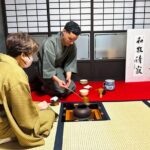
After choosing your clothing and accessories, you move into a private room for hair styling and dressing. Hair styling is included, as are hair accessories. This is a useful saving, since a complete kimono look depends on more than the robe alone. Hair, shoes, socks, bag, and obi all help make the outfit feel finished.
The private room is one of the strongest parts of the experience. You can relax while the staff work, ask questions, and make small choices about your appearance without standing in an open shop with other groups. The preparation also gives you a chance to learn how the clothing is put together.
The package includes tabi, the special socks worn with kimono, from October through May. They are presented as a keepsake, which gives you a small souvenir beyond your photographs. During summer, the shop prepares yukata instead. A yukata is lighter and more suited to warm weather, so this seasonal change should make the outing more comfortable.
The listing does not give an exact dressing time within the one-hour appointment. Plan your schedule around roughly an hour at the shop, then leave enough time for your walk before the 5:00 p.m. return. A late start will limit how much of Gion or Higashiyama you can see in your rented clothing.
Why the $25 price can be good value
At $25, this is an inexpensive way to try a traditional Kyoto outfit. The price includes the kimono or yukata, obi, shoes, Japanese bag, hair styling, hair accessories, and tabi socks. There is no additional charge listed for these included items.
That matters because arranging each part separately would be a nuisance, and the outfit would not have the same finished appearance without the hair and accessories. You also avoid the cost and difficulty of buying a kimono, which can be a serious purchase rather than a casual holiday souvenir.
The value is strongest if you want photographs and a cultural activity but do not want to spend a whole day in a formal tour group. You get an hour of preparation and then independent time in the city. This lets you set your own pace, stop for food or shopping, and choose your own temples and streets.
The price does not include a private photographer, meals, temple admission, transportation beyond reaching the shop, or a guide walking with you. Staff can take many photographs during the preparation, according to the experience details, and can suggest good locations, but you should not book this expecting a dedicated photo session throughout the day.
Walking out toward Gion and Higashiyama

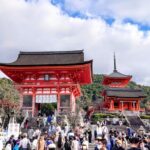
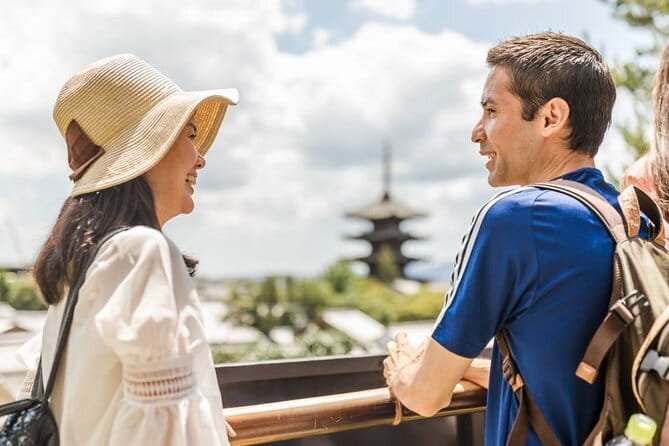
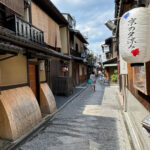
Once dressed, you can explore Kyoto until the shop closes at 5:00 p.m. The location is convenient for several of the city’s most atmospheric areas. Gion is nearby, with traditional streets and buildings that suit a kimono photo. Higashiyama also offers easy access to famous temples and older lanes.
The independent format is a real advantage. You are not tied to a group schedule or a guide’s walking speed. You can spend ten minutes taking pictures in one spot, browse a shop, or head toward a temple without waiting for anyone else.
Staff offer personal suggestions about where to go and how to reach different places. Use that advice before you leave, since it can save time and help you choose a route that fits your return deadline. The staff can also point out locations that make strong photographs, which is especially helpful if you have only a short afternoon.
Keep the practical side in mind. Kimono shoes may feel different from your usual footwear, and walking in traditional clothing is not the same as walking in sneakers. You might find a shorter route more enjoyable than trying to cover every nearby district. Gion, Higashiyama, and Kawaramachi are all within reach, but you do not need to turn this into a race.
Photographing the old city in traditional dress

This activity works especially well for photographs because Kyoto supplies the setting and the shop supplies the finished outfit. A kimono adds a clear sense of occasion to ordinary street scenes, and the staff can recommend places suited to pictures.
The most useful approach is to choose one or two areas rather than chasing every famous landmark. Gion and Higashiyama are the natural choices because they are nearby and have the traditional streets people often associate with Kyoto. You can also visit temples or continue toward Kawaramachi if shopping is part of your plan.
The staff may help take photographs during the experience, and the information says one host took many pictures throughout the visit. That personal attention is a strong point, particularly for families or couples who want photographs together. Still, bring your own phone or camera, and be clear about which moments you want recorded.
A little courtesy goes a long way in Kyoto. Keep doorways clear, avoid blocking narrow lanes, and follow any photography rules at temples or private properties. Wearing a kimono does not give you special permission to photograph anywhere, and the best pictures usually come from being patient rather than stopping in the middle of a busy walkway.

What makes this more than a costume change
The activity has a light, playful side, but it also gives you a practical introduction to how a kimono is worn. You learn the names and purpose of some basic pieces, see how the obi shapes the outfit, and get a feel for the accessories used with it.
One family found the dressing process educational as well as fun. That combination is useful for parents and children old enough to participate comfortably. Instead of simply putting on a costume for a quick photograph, you receive advice about styling and get a closer look at an important part of Japanese dress.
The experience also notes that some shops and locations offer special services or discounts to people dressed in kimono. These offers can vary, so do not build your budget around them. Treat them as a possible extra rather than a guaranteed benefit.
The cultural value is modest but genuine. This is not a museum lesson or a formal class on textile history. It is a hands-on way to connect your day in Kyoto with traditional clothing, while still leaving you free to enjoy the city on your own terms.
How the one-hour format works for different groups
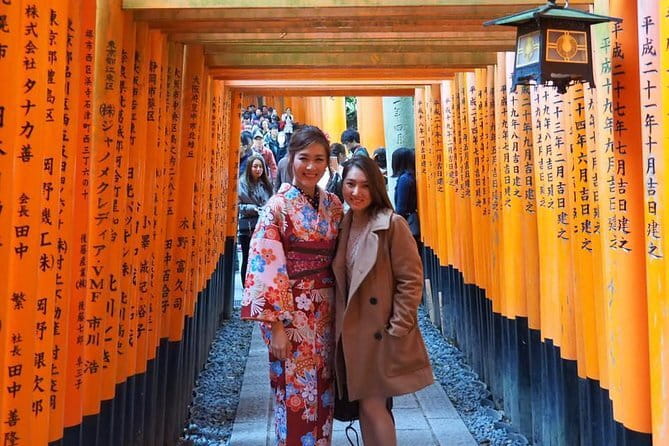
The activity is private, so only your own group participates. That is helpful for families, couples, and friends who want to choose outfits together without sharing the fitting room with strangers. It also makes the setting feel more personal, since staff can advise your group on colors, accessories, and nearby places.
Families should note the age guidance. The experience is not recommended for children under three. For older children, the main question is comfort. Traditional clothing can feel unusual, and a child who dislikes being dressed or having their hair styled may not enjoy the process.
The activity suits adults who want a polished Kyoto photograph without committing to an expensive full-day plan. It also works for anyone with a free afternoon near Higashiyama. Since you explore independently after dressing, it is less suitable if you want a guide explaining every street and temple along the way.
The private format does not mean the entire experience lasts only one hour. The preparation takes about an hour, then you can keep the outfit for your city walk until the return deadline. Confirm the exact appointment details when booking, because the provided information gives an approximate duration rather than a minute-by-minute schedule.
Getting there and planning the day
The starting point is near public transportation, with access to both the subway and the Keihan railway. That makes it easy to combine the kimono appointment with other Kyoto plans. The end point is the same meeting point, so you return the clothing there when your outing is over.
Build your day around the 5:00 p.m. return time. If you plan to visit a temple, shop in Kawaramachi, and spend time in Gion, begin early enough to avoid watching the clock. The kimono rental is most useful when it fits into a larger route, not when it is squeezed between two distant reservations.
A simple plan might be:
- Arrive at the shop and choose the kimono, obi, and accessories.
- Allow about an hour for hair styling and dressing.
- Walk through Gion or Higashiyama for photographs.
- Visit a nearby temple or continue to Kawaramachi.
- Return to the original meeting point before 5:00 p.m.
The experience has mobile ticketing and confirmation is received at booking. Free cancellation is available if you cancel at least 24 hours before the start time. Cancellations or changes made within 24 hours are not accepted for a refund, so keep your Kyoto schedule firm once the deadline passes.
Who should book this Kyoto kimono experience
I would choose this for someone who wants three things: traditional clothing, good photo opportunities, and freedom to explore without a guide. The $25 price is especially appealing if you would otherwise spend much more on a formal rental or a full photography package.
It is a good fit for couples and families, since you can dress together and keep the outing private. It also suits first-time visitors who want staff to explain the styling choices and suggest nearby places.
I would think twice if you dislike restrictive clothing, have a health condition that makes dressing or walking difficult, or want a full educational tour. The activity provides help and local suggestions, but the sightseeing portion is self-guided. You are responsible for choosing where to go and returning on time.
Should you book it?
Book this if you want an affordable, low-pressure way to wear a kimono in Kyoto. The private dressing room, included hair styling, full set of accessories, photo advice, and nearby access to Gion and Higashiyama give the experience more value than a simple clothing rental.
Skip it if you need a long guided tour, a professional photographer for the entire outing, or a late-day activity after 5:00 p.m. For most visitors with a free morning or afternoon, though, this is a practical way to add color, tradition, and a few memorable photographs to a Kyoto day.
FAQ
How much does the Kyoto kimono experience cost?
The experience costs $25. Hair styling, hair accessories, kimono or yukata, obi, shoes, Japanese socks, and a Japanese bag are included.
How long does the experience take?
The preparation takes approximately one hour. After dressing, you can explore Kyoto independently until the shop’s closing time, with the kimono returned by 5:00 p.m.
Where does the experience start?
It starts at GOZAN HOTEL & SERVICED APARTMENT Higashiyama Sanjo, 35-7 Sanchōme, Higashiyama Ward, Kyoto, 605-0005, Japan.
Where does the experience end?
The activity ends back at the meeting point, where you return the kimono or yukata.
Is hair styling included?
Yes. Hair styling and hair accessories are included at no extra charge.
Are shoes and accessories included?
Yes. The package includes an obi, shoes, a Japanese bag, hair accessories, and Japanese socks.
Are tabi socks provided?
Tabi socks are provided as a keepsake from October through May. The supplied information does not state that the same seasonal gift applies during summer.
Is a yukata available in summer?
Yes. During the summer months, the shop prepares yukata instead of the heavier kimono option.
Can children participate?
Most people can participate, but the experience is not recommended for children under three. It is also not recommended for anyone who is sick.
Can I cancel for a full refund?
Yes, if you cancel at least 24 hours before the experience start time. Cancellations or changes made less than 24 hours before the start time are not accepted for a refund.
More Kimono Experiences in Kyoto
More tours in Kyoto we've reviewed



Kimono Experiences, compared.
 ★ 5.0Kimono Tea Ceremony at Kyoto Maikoya, NISHIKIFrom $65
 ★ 4.8Kyoto: Kimono Rental with Hairstyling and AccessoriesFrom $211 day
 ★ 5.0KYOTO Tea Ceremony with kimono near by Imamiya Jinjya ShrineFrom $99
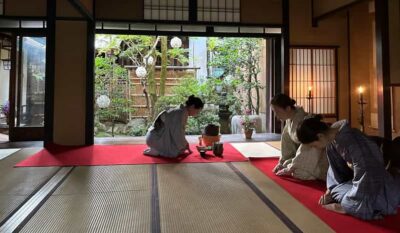 ★ 4.2Kimono & Tea Ceremony Experience in a Kyoto Cultural AssetFrom $126
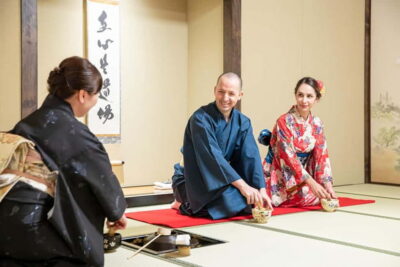 ★ 4.9Kyoto: Kimono Tea Ceremony with Matcha and SweetFrom $661h 30m
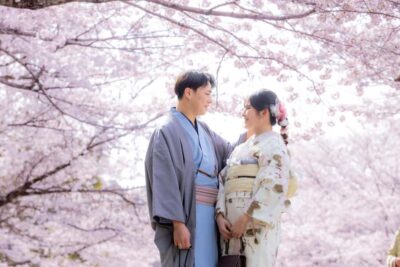 ★ 4.7Enjoy Kyoto Summer in Traditional Kimono / YukataFrom $29