
Reviewed · WORKSHOPS
Fish cutting class
A fish-cutting class in a 400-year-old Kyoto fish shop gives you something most food workshops skip: you start with a whole fish, handle the knife yourself, and turn that fish into lunch. At Kimura in Nishiki Market, an English-speaking instructor demonstrates each step before you try it.
I like the small group, limited to eight, because you get room to ask questions and correct your technique. I also like the honest payoff: you eat the sashimi and carpaccio you prepared, with rice and sauces included. The main drawback is that this is hands-on knife work, not a quick sushi-making show, so you should wear clothes that can get dirty and expect to concentrate.
In This Review
- Key points to know before booking
- Why starting with a whole fish matters
- Meeting Kimura inside Nishiki Market
- The demonstration: watch before you cut
- Your turn to fillet the fish
- Turning your fillet into sashimi and carpaccio
- Lunch tastes different when you made it
- What the $77 price includes
- Who will enjoy this most
- Practical tips for a smoother class
- Should you book the fish-cutting class?
- FAQ
- Where does the fish-cutting class take place?
- How long does the class last?
- Is the class taught in English?
- Is previous fish-cutting experience required?
- What food is included?
- Can children take part?
- What should I bring?
- Are special soy sauces available?
Key points to know before booking
- You work with a whole fish: The class teaches basic fish handling and filleting instead of starting with ready-cut pieces.
- The setting is unusually traditional: You meet at Kimura, a fish shop in Nishiki Market with 400 years of business behind it.
- Chef Masashi teaches in English: He demonstrates first, then watches your technique and fixes mistakes as you work.
- Your lunch is the lesson: You prepare sashimi and carpaccio, then eat the fish with rice, soy sauce, and carpaccio sauce.
- The group stays small: No more than eight people take part, which matters when everyone needs cutting-board space and personal guidance.
- Dietary options are available: Gluten-free soy sauce and halal soy sauce can be provided if you ask.
Why starting with a whole fish matters
Many Japanese food classes begin with ingredients already cleaned and portioned. That makes the activity easy, but it hides the skill behind the final dish. Here, you see the less polished part of the process first: handling the fish, working with a knife, and separating the flesh properly.
That difference gives the class real value. You begin to understand why sashimi is not simply raw fish placed on a plate. The cuts, direction of the knife, thickness, and care taken with the flesh all affect the final bite.
I especially like that the class connects preparation with eating. You do not just practice on a piece of fish and move on. You prepare food that becomes your lunch, which makes every careful cut matter.
The work is suitable for beginners. You do not need previous experience with fish or Japanese cooking. The instructor first introduces himself, demonstrates the process, and then helps you repeat it. Chef Masashi is described as patient and quick to correct mistakes, a useful trait when you are holding a sharp knife in an unfamiliar way.
A few more Kyoto tours and experiences worth a look

Meeting Kimura inside Nishiki Market
The class takes place at Kimura, a fish shop in Kyoto’s Nishiki Market. The meeting point is not a separate cooking studio with a staged theme. You are working inside a functioning fish shop with centuries of history, which gives the lesson a direct connection to Kyoto’s food culture.
Look for the staff wearing blue and orange aprons. That detail helps in the busy market setting, where finding the right shop can otherwise take a little extra attention.
The location also makes this a good choice for a morning or midday plan around Nishiki Market. The class lasts 150 minutes, so allow enough time for the full lesson and meal rather than trying to squeeze it between two tightly scheduled activities.
Because the shop environment is practical, you should dress for work. Choose clothes that can get dirty, and avoid anything precious or difficult to move in. The supplied equipment includes an apron, rubber gloves, and the knife you use during class.
The demonstration: watch before you cut
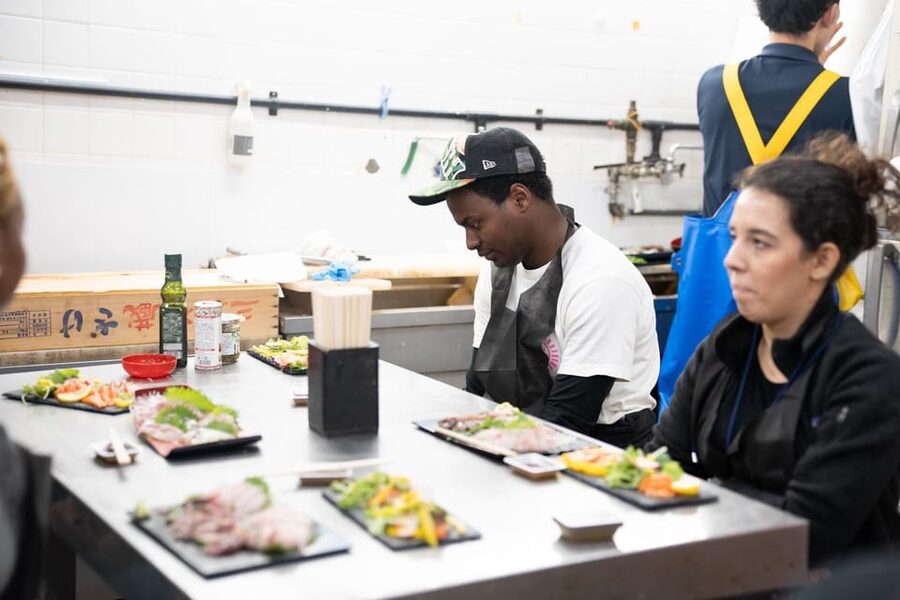
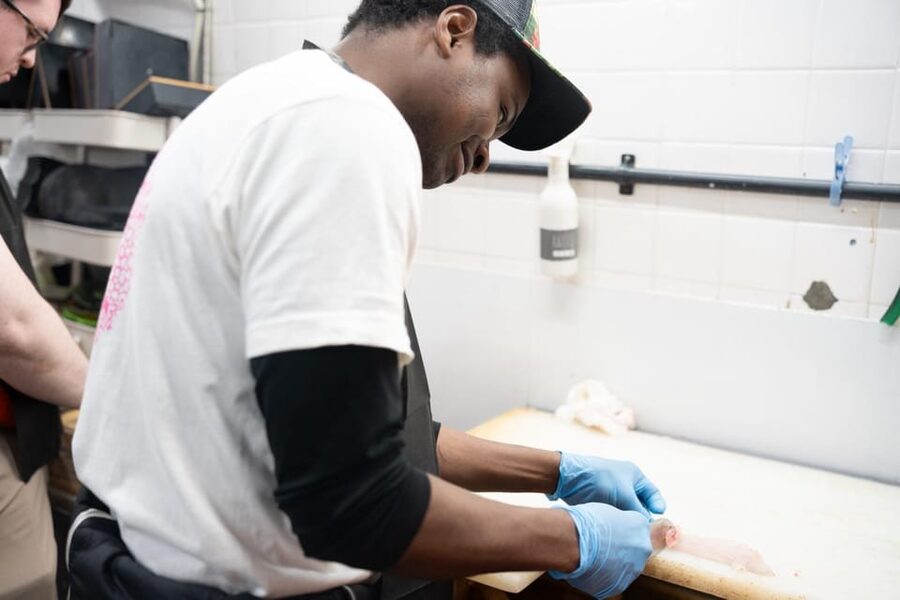
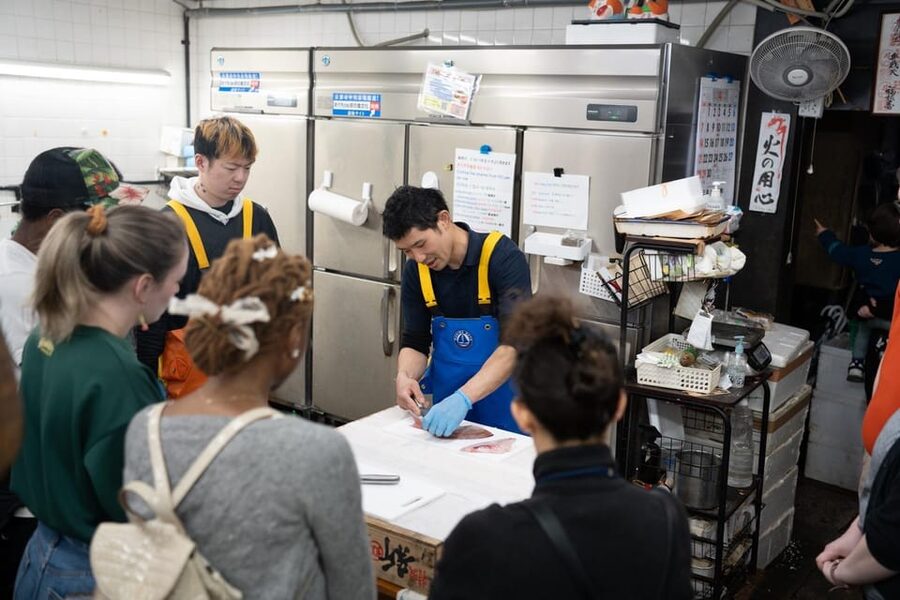
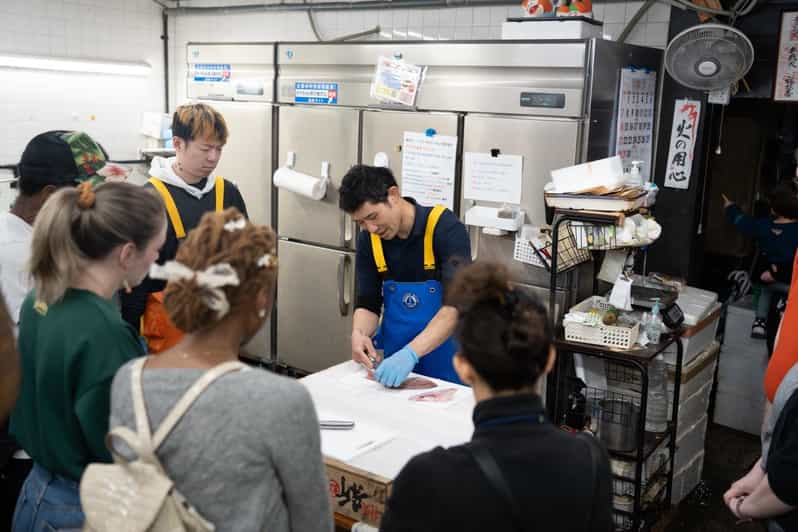
The first working stage is observation. The instructor fillets a fish and shows you how the knife should move. This is more useful than a long lecture because you can see the angle, pressure, and order of the cuts before trying them yourself.
Pay close attention here. The demonstration sets the pattern for your own work, and small details are easier to understand when you watch them happen. If you are nervous about the knife, this part also gives you time to see that the process is broken into manageable steps.
The class is taught in English. You are not expected to guess what to do from gestures or copy a demonstration without explanation. Chef Masashi guides participants through the technique and corrects problems as they appear.
That personal help is one reason the eight-person limit matters. A group of eight is not private, but it is small enough for the instructor to keep an eye on individual cutting. If your first attempt is uneven, you have a chance to adjust rather than simply watch the next step.
Your turn to fillet the fish
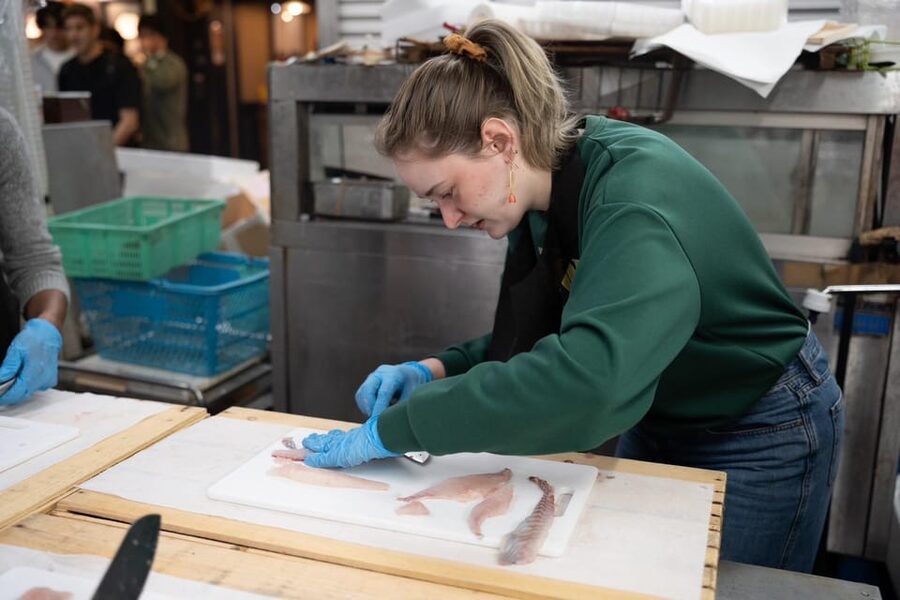
Next, you take over. This is the point where the class becomes a genuine skill lesson rather than a food tasting.
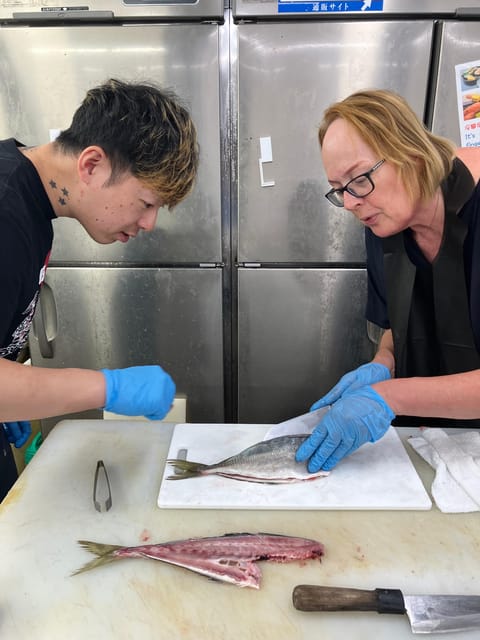
You use the provided knife, apron, and gloves while working on the fish supplied for the class. Expect to handle the fish directly and to work at a deliberate pace. The goal is not speed. It is learning how to make controlled cuts and remove the flesh in a way that can be served.
This part may feel messy, especially if you are used to tidy cooking classes. That is why the clothing advice matters. Fish handling is a physical task, and the workshop does not pretend otherwise.
The instructor watches your progress and offers careful guidance. You may need to repeat a movement or fix a cut before continuing. I see that as a benefit, not a flaw. The point is to leave with a basic understanding you can use again, not just a photograph of a perfect fish prepared by somebody else.
The class also gives you a new respect for sushi chefs. Even a simple-looking sashimi plate depends on knife control and preparation that are easy to overlook when you only see the finished dish.
Turning your fillet into sashimi and carpaccio
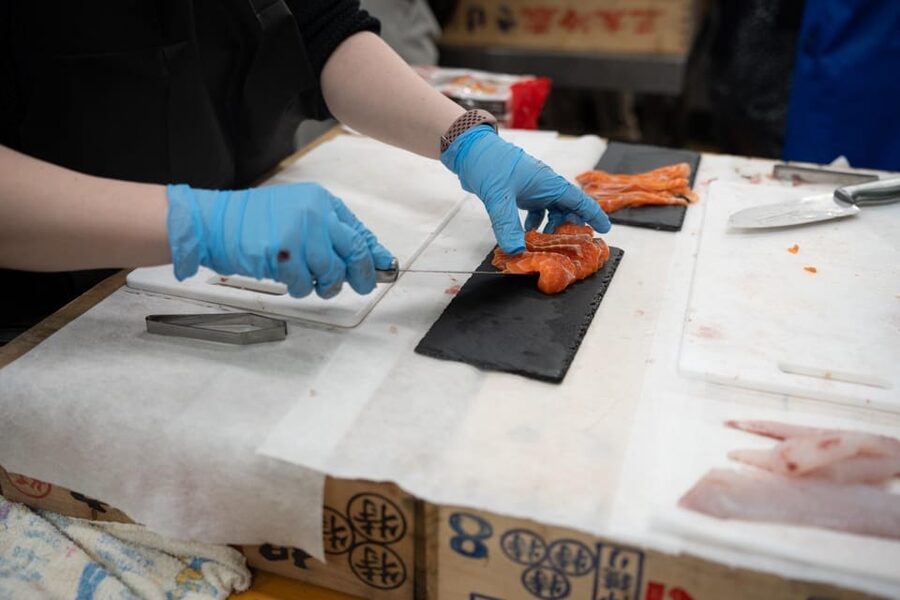
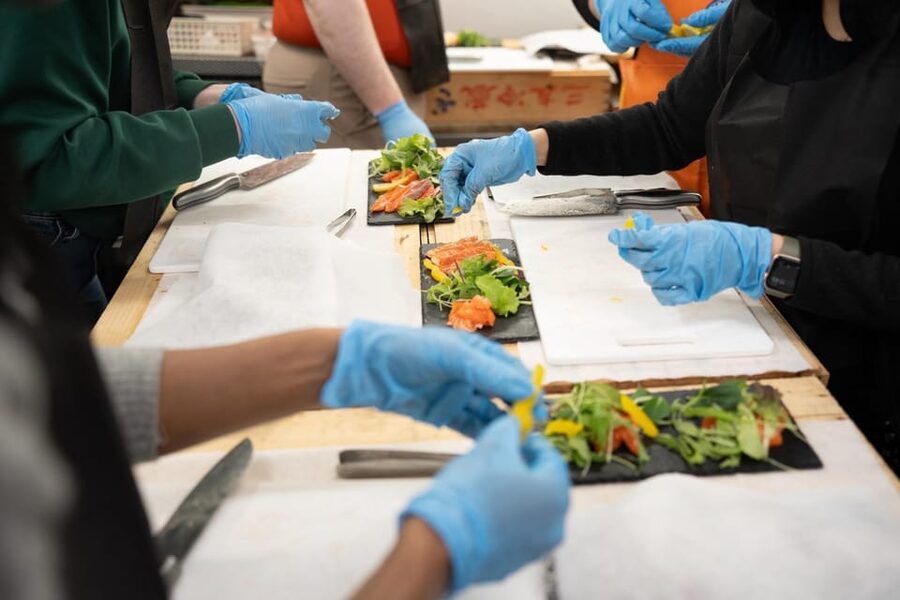
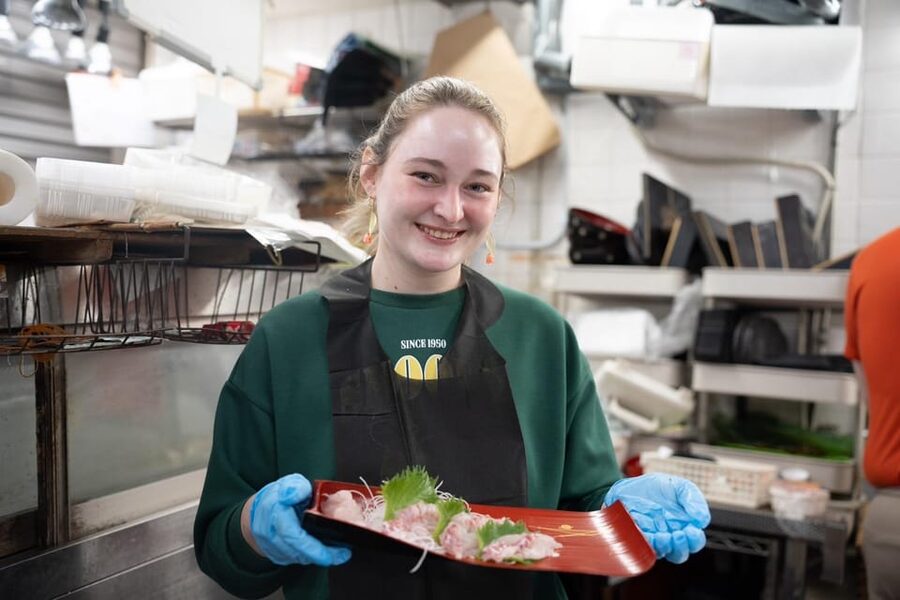
Once the fish is filleted, you prepare two dishes: sashimi and carpaccio. The sashimi lets you taste the fish in a direct Japanese style, while the carpaccio gives you a different way to use the same ingredient.
This is where the work pays off. You have seen the fish whole, handled it, and cut it yourself. The meal becomes more than a sample served at the end of a class. You can connect the taste to each stage of preparation.
Rice is included, along with soy sauce and carpaccio sauce. Gluten-free soy sauce and halal soy sauce are available by request, so mention your needs before or at booking rather than waiting until the meal is served.
One class menu also included miso soup and tempura, though the core description specifically promises sashimi, carpaccio, and rice. If those extra dishes matter to you, ask what will be served on your date. The reliable part of the experience is the fish you handle and the dishes made from it.
You may also take a commemorative photo with the fish. It is a small touch, but it records the unusual starting point of your meal, before the fish becomes sashimi.

Lunch tastes different when you made it
The final stage is lunch. You eat the fish you filleted yourself, with rice and the included sauces.
Freshness is part of the appeal, but the bigger change is your attention. After doing the work, you notice the texture and cut more closely. You have a practical reason to slow down and consider what is on the plate.
This makes the experience useful for anyone interested in Japanese food culture, not only people who already love sashimi. You learn why preparation matters and gain a clearer idea of the labor behind dishes that are often presented as simple.
There is also a pleasant bit of humor in the setup: the best sashimi of the day may be the piece you cut yourself, even if your knife work is not yet restaurant standard. You are not being judged against a professional chef. You are learning, then eating the result.
Beer and other alcohol are not included. If you want a drink with lunch, plan to arrange that separately, assuming it is available under the shop’s rules.
What the $77 price includes
At $77 per person, this class costs more than a basic market snack or a short cooking demonstration. The value comes from the amount of participation and the meal at the end.
Your fee covers:
- The fish you handle
- Use of the knife
- Apron and rubber gloves
- Rice
- Soy sauce
- Carpaccio sauce
- The 150-minute lesson
- English instruction
- The sashimi and carpaccio you prepare
You are paying for more than lunch. You are paying for access to a long-running fish shop, instruction from a chef, equipment, ingredients, and enough time to practice. For someone who wants a practical food experience, that is a fair package.
It is less compelling if you only want to eat sashimi or take a quick cooking photo. Nishiki Market offers easier ways to sample food. This class earns its price through the work involved and the close guidance.
The reserve-now, pay-later option can help if your Kyoto schedule is still shifting. Free cancellation is available up to 24 hours before the class for a full refund, which gives you some protection when planning ahead.
Who will enjoy this most
I would choose this class for adults and older children who enjoy food, hands-on activities, or learning a skill they can repeat at home. It is especially well suited to sashimi fans who want to understand fish preparation rather than simply eat the finished dish.
It also suits people who have already taken a sushi-making workshop and want something more substantial. Sushi rolling often starts with prepared ingredients. Fish cutting takes you one step earlier, into the basic handling and knife work.
The minimum age is 10. Children under 10 cannot take part, and younger children may find the knife work and fish handling unsuitable anyway.
You should also be comfortable with raw fish. The central meal is sashimi, and the purpose of the class is to process raw fish from the beginning and eat it. If you dislike raw seafood or do not want to handle a whole fish, choose another Kyoto food activity.
This is not ideal for anyone wanting a passive tour. You will be standing or working through several stages, following instructions, and paying attention to knife safety. The reward comes from participation.
Practical tips for a smoother class
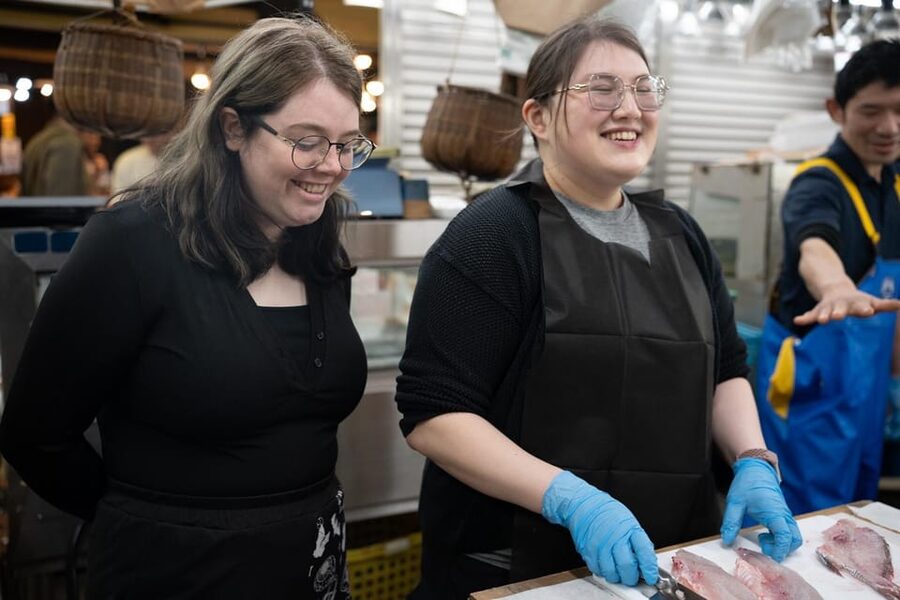
Wear washable clothes and shoes that you do not mind getting splashed or marked. The apron and gloves help, but they are not a guarantee that your outfit will stay spotless.
Arrive with enough time to locate Kimura inside Nishiki Market. The blue and orange aprons identify the class staff, so keep an eye out for them.
Tell the provider if you need gluten-free or halal soy sauce. Both are available, but the information says to inquire, so do not assume they will automatically know your preference.
Plan the rest of your day with some flexibility. The class is scheduled for two and a half hours, and the meal is part of the experience. Rushing away halfway through would defeat the point.
Alcohol is not included, and meeting or return transport is not provided. You are responsible for getting to Kimura in Nishiki Market and arranging your onward travel.
The class has a five-star rating from nine published ratings, but the more useful takeaway is the repeated pattern in the feedback: the instructor’s patience, the small group, the chance to learn knife skills, and the pleasure of eating your own sashimi. Those are the features most likely to shape your experience.
Should you book the fish-cutting class?
Book it if you want a real preparation lesson, not just a Japanese food tasting. The setting at Kimura, the English instruction from Chef Masashi, and the chance to eat your own sashimi make this a distinctive Kyoto activity.
I would also book it if you value small groups and want to leave with a better understanding of fish handling. The class is practical, slightly messy, and much more rewarding when you are willing to work.
Skip it if you dislike raw fish, have little patience for knife practice, or want alcohol included with lunch. For everyone else, $77 buys a focused 150-minute lesson and a meal with a story behind it. That is a good use of a Kyoto morning or afternoon.
FAQ
Where does the fish-cutting class take place?
The class takes place at Kimura fish shop in Nishiki Market on Honshu, Japan. Staff wear blue and orange aprons.
How long does the class last?
The experience lasts 150 minutes, or two and a half hours. Starting times depend on availability.
Is the class taught in English?
Yes. English instruction is provided.
Is previous fish-cutting experience required?
No. Beginners are welcome, and the instructor demonstrates the process before participants try it.
What food is included?
You handle a fish, prepare sashimi and carpaccio, and eat the food for lunch with rice. Soy sauce and carpaccio sauce are included. A class menu may also include dishes such as miso soup or tempura.
Can children take part?
Participants must be at least 10 years old. Children under 10 are not suitable for this activity.
What should I bring?
Wear clothes that can get dirty. The knife, apron, and rubber gloves are provided.
Are special soy sauces available?
Yes. Gluten-free soy sauce and halal soy sauce are available if you inquire in advance.
More Workshops & Classes in Kyoto
More tours in Kyoto we've reviewed

Workshops, compared.
 ★ 4.3Kyoto: 45-Minute Tea Ceremony Lesson ExperienceFrom $2245 min
 ★ 5.0Ramen Cooking Class at Ramen Factory in KyotoFrom $131
 ★ 4.9Kyoto: Ramen Cooking Class at a Ramen Factory with SouvenirFrom $1271h 30m
 ★ 4.9Kyoto: Samurai Class, Become a Samurai WarriorFrom $70
 ★ 5.0Ninja 1-hour Hands-on Lesson by Japanese master in Kyoto -EntryFrom $80
 ★ 5.0Kyoto: Ramen, Gyoza, and Onigiri Cooking ClassFrom $901h 30m