
Reviewed · PRIVATE
Private Early Bird Tour of Kyoto!
Kyoto is at its best before the tour buses arrive. This 7:00 am private tour takes you from the famous torii gates of Fushimi Inari to Kiyomizu-dera and the old streets of Higashiyama while the morning is still calm. You get the major sights in about three hours, with a guide explaining Buddhist customs, Japanese gardens, and local history along the way.
I like two things right away. First, the route is smart: Fushimi Inari and Kiyomizu-dera are two of Kyoto’s busiest sights, so an early start can change the whole experience. Second, the private format lets your guide adjust explanations to your questions and help with plans for the rest of your stay. The main catch is simple: you must be ready to meet at Inari Station at 7:00 am, and the tour requires good weather.
In This Review
- Key points to know
- Why the 7:00 am start matters in Kyoto
- Meeting at Inari Station and entering Fushimi Inari
- Kiyomizu-dera before the day gets busy
- Walking Sannenzaka and Ninenzaka
- What the private guide adds
- Is $156.37 per person good value?
- The walking and practical side of the morning
- Who should book this early Kyoto route?
- Should you book the Private Early Bird Tour of Kyoto?
- FAQ
- Where does the tour start?
- What time does the tour begin?
- Where does the tour end?
- How long does the tour last?
- Which sights are included?
- Is admission included?
- Is this a private tour?
- Can most people participate?
- What happens if the weather is poor?
Key points to know
- Early access to Fushimi Inari: Walk beneath the famous torii gates before the main crowds build.
- Three Kyoto essentials: The route links Fushimi Inari, Kiyomizu-dera, and Sannenzaka and Ninenzaka.
- Private group setting: Only your own group takes part, so the pace and questions can feel more personal.
- Guide-led cultural context: Expect explanations about Buddhism, Japanese gardens, customs, and Kyoto’s past.
- Convenient finish: The tour ends near % ARABICA Kyoto Higashiyama in the historic Higashiyama area.
- A useful first morning: Your guide can answer questions and help you shape the rest of your Kyoto plans.
Why the 7:00 am start matters in Kyoto
The early hour is the reason to book this experience. Fushimi Inari and Kiyomizu-dera are not obscure side streets. They are among Kyoto’s best-known sights, and both can become packed later in the morning.
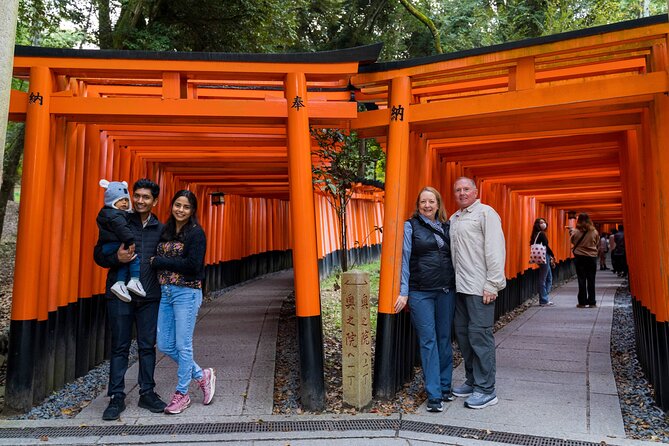
At 7:00 am, you have a better chance of seeing the torii gates and temple grounds with room to pause. That matters most at Fushimi Inari, where the gates create a narrow, winding path. You can take photographs without constantly stepping aside for large groups, and you can listen to the guide without competing with as much noise.
The timing also gives the tour a different mood from a standard sightseeing outing. Kyoto’s shrines and temples feel more connected to daily religious practice in the morning, before the streets fill with shopping groups and organized tours. You are not guaranteed complete solitude, but you are giving yourself the best part of the day for these popular stops.
I also see the early start as a useful answer to jet lag. If you have just arrived in Japan and find yourself awake before dawn, you can turn that inconvenient sleep schedule into a productive first outing. If you are not naturally an early riser, plan for a very early night before the tour.
Other private tours in Kyoto
Meeting at Inari Station and entering Fushimi Inari
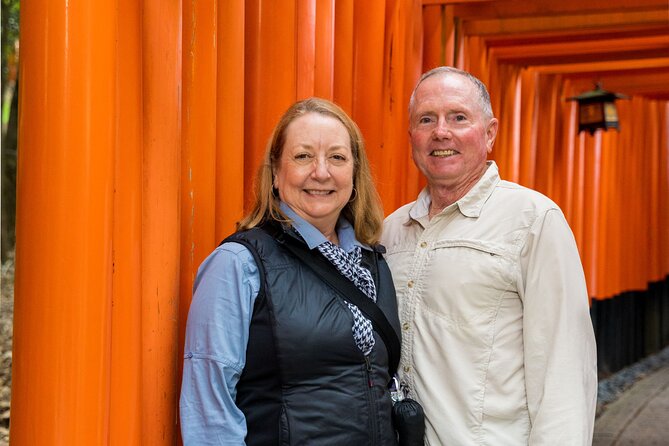
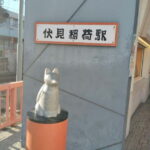
The tour begins at Inari Station, at Fukakusa Inarionmaecho in Kyoto’s Fushimi Ward. The meeting point is opposite Fushimi Inari, which makes the location practical for anyone arriving by train. It is near public transportation, but you should still allow enough time to reach the station and find the guide before the 7:00 am start.
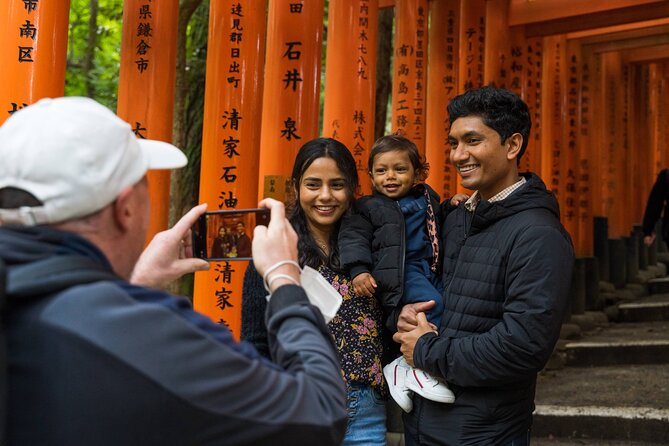
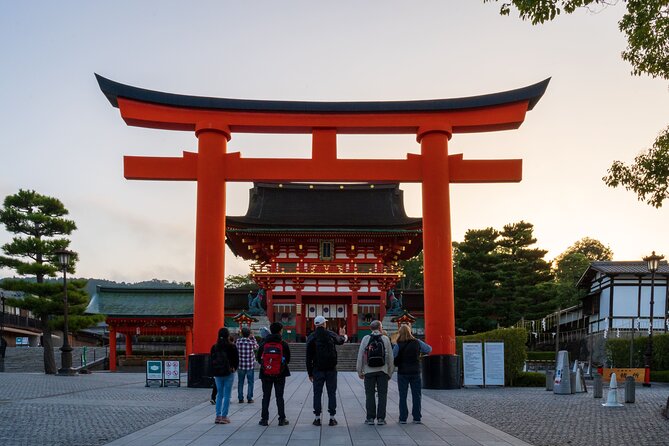
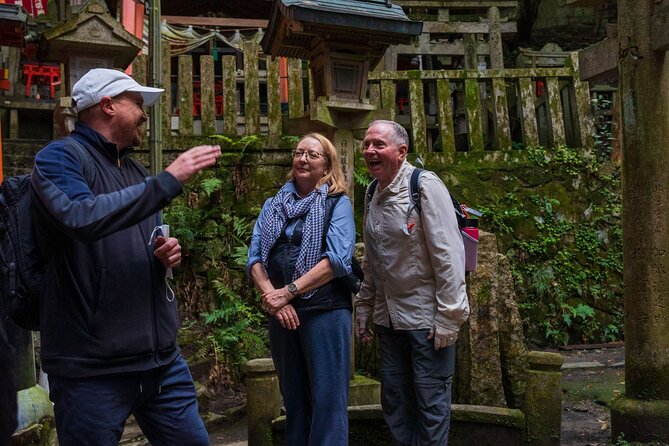
Fushimi Inari-taisha is famous for its thousands of orange torii gates. They form a long series of covered paths on the wooded slopes behind the shrine. The first section is the most recognizable and the easiest place to get those classic photographs.
You will spend about 45 minutes here. That is enough time for an introduction, photographs, and a walk through part of the gate-lined route, but it is not enough to hike the entire mountain. This is an important point if you picture yourself completing the full trail. The tour is designed to show you the signature area and explain its meaning, not to turn the morning into a long mountain walk.
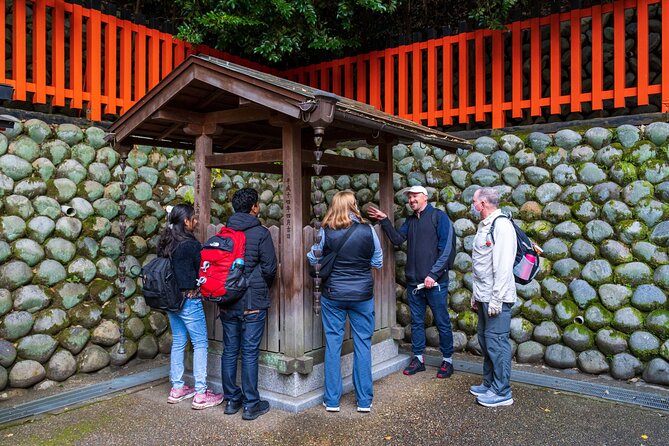
Your guide puts the shrine into context, including the role of Shinto worship and the reason businesses and individuals donate torii gates. The result is more useful than simply being told to take pictures. You begin to understand why this place looks the way it does and how it fits into Japanese religious life.
The early timing is especially valuable here. Fushimi Inari is easy to reach independently, but it is much harder to enjoy once the narrow paths become crowded. The guide also helps you focus on the parts that matter most if your Kyoto schedule is tight.
Kiyomizu-dera before the day gets busy
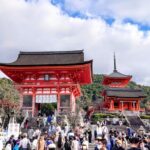
From Fushimi Inari, the route continues to Kiyomizu-dera, one of Kyoto’s best-known temples. About an hour is set aside for this stop, and admission is included.
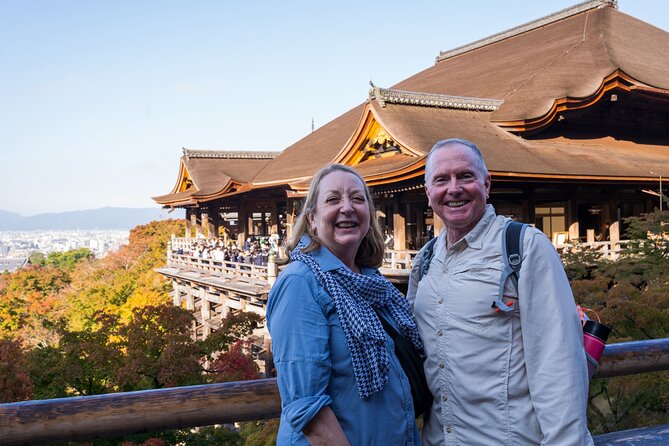
Kiyomizu-dera is known for its broad wooden stage and views across Kyoto. The temple sits on the eastern hills, so the setting gives you a wide look over the city. In the morning, the light and quieter grounds can make the visit feel more reflective than a midday stop.
The temple is also a good place for your guide to explain Buddhism, temple customs, and Japanese design. The tour description specifically highlights Buddhist ideas and garden design, so you should expect more than a quick walk to the viewpoint. Ask questions here. A private tour gives you a better chance to shape the discussion around what interests you.
One hour is a sensible amount of time for a first visit, but it has limits. Kiyomizu-dera is a large complex, and you will not see every corner at a leisurely pace. If you want a long temple visit, extended photography, or time for every side path, you may prefer to return independently later.
Still, this stop works well in the larger route. You see one of Kyoto’s major temples while the day is young, then move into the historic streets below. The guide can also explain how the temple relates to the surrounding Higashiyama district, which makes the next part of the tour feel like a continuation rather than a separate attraction.
Walking Sannenzaka and Ninenzaka
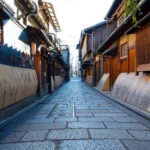
The final area is Sannenzaka and Ninenzaka, a preserved part of Higashiyama known for cobblestoned lanes, traditional townhouses, and small shops. There is no admission charge, and the appeal is the setting itself.
This is where the tour shifts from shrine and temple architecture to old Kyoto street life. The sloped lanes are lined with wooden buildings and shops, giving you a sense of the city’s historic character. It is also a good place to slow down after the more formal visits to Fushimi Inari and Kiyomizu-dera.
Because the area is popular, it will not necessarily be empty even early in the morning. Some shops may not yet be open, too. That is not a flaw in the tour so much as a result of the start time. You are seeing the streets in their quiet morning state, not arriving for a full shopping session.
The tour ends near % ARABICA Kyoto Higashiyama, at 87-5 Hoshinocho. This is a useful finish because you are already in Higashiyama, one of Kyoto’s key sightseeing areas. From there, you can continue exploring on your own, stop for coffee if the shop is open, or use the guide’s suggestions to plan the next part of your day.
What the private guide adds
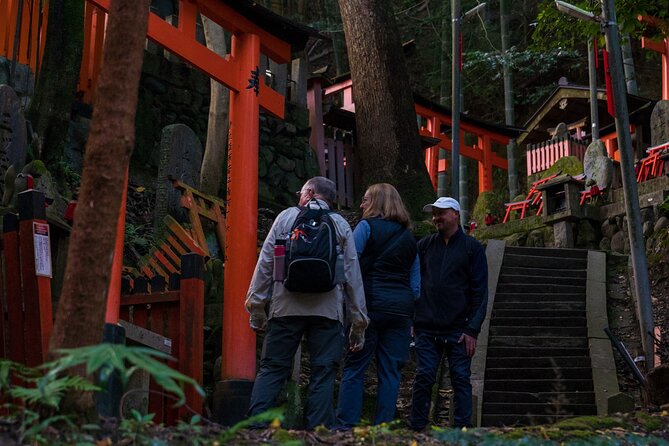
The guide is the main reason to choose this tour instead of following a route on your phone. The experience is private, meaning only your group participates. That does not guarantee a particular guide, but Shanda is specifically associated with the early morning route, and the supplied information also identifies Kyoto Fun guides such as Kevin B. and Niall for other private experiences.
The strongest guide-related benefit is the chance to ask practical questions. You can ask about Buddhist customs, shrine etiquette, Japanese gardens, Kyoto neighborhoods, food, transport, or what to do later in the trip. The operator also says guides can help plan your coming days, which adds value if this is one of your first activities in Kyoto.
The guide’s role is especially useful at places that can otherwise feel visually impressive but hard to understand. At Fushimi Inari, you learn why the gates are there. At Kiyomizu-dera, you get context for the temple’s religious purpose and design. In Higashiyama, you can connect the preserved streets with the city’s older way of life.
A private tour also allows a little flexibility in emphasis. If you care most about photography, ask for time at the torii gates. If you want cultural explanations, use the temple visits for questions. The route itself is set, but your attention does not have to be.

Is $156.37 per person good value?
The listed price is $156.37 per person. That is not a budget walking tour, especially for only about three hours. The value depends on what you want from the morning and how many people are in your private group.
You are paying for a private guide, admission to Kiyomizu-dera, route planning, and the advantage of visiting two major sights early. You are also buying time and reduced uncertainty. Instead of working out the best order, transport, shrine etiquette, and background on your own, you have someone guiding the morning from the station to Higashiyama.
The price makes more sense for couples, families, or a small group that values private attention. Group discounts are available, so check how the cost changes for your party before booking. For a larger group, the per-person price may compare more favorably with several separate guided bookings.
If you are comfortable using Kyoto’s trains, reading signs, and researching the sights in advance, you can visit these places for much less on your own. The independent option gives you more time and costs less, but you lose the guide’s explanations and the convenience of a planned early route.
I would view this as a focused introduction to eastern Kyoto, not an all-day tour. It is most worthwhile at the start of a short stay, when you want orientation and major sights quickly. It is less compelling if you already know the temples well or prefer to spend a whole morning at one place.
The walking and practical side of the morning
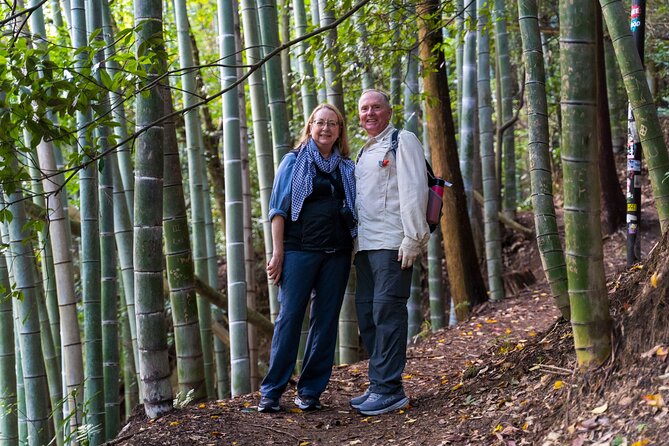
The tour takes place on foot through shrine grounds, temple areas, and old streets. Fushimi Inari’s torii route includes an uphill setting, while Kiyomizu-dera and Higashiyama involve walking through temple grounds and sloping historic lanes.
The supplied details say most people can participate, but no precise walking distance or accessibility information is provided. If you have mobility concerns, contact the operator before booking and ask how the route can be adjusted.
Wear comfortable shoes and dress for the morning weather. The tour requires good weather, so rain can affect the schedule. If poor weather causes cancellation, you are offered another date or a full refund.
A mobile ticket is available, which keeps the booking simple. Confirmation is normally provided at booking, though bookings made within one day of departure are confirmed as soon as possible, subject to availability.
The cancellation rule is straightforward but strict near departure. You receive a full refund if you cancel at least 24 hours before the local start time. Cancellations or changes made less than 24 hours ahead are not accepted for a refund.
Who should book this early Kyoto route?
I would recommend it to a first-time Kyoto visitor who wants a clear introduction without spending a full day on a guided program. It also suits anyone staying only briefly and hoping to see Fushimi Inari and Kiyomizu-dera before tackling other parts of the city.
It is a good fit for people who enjoy asking questions. The guide can explain customs and history in plain terms, then help you decide what to do next. Families and small groups may also appreciate not having to keep up with strangers or wait for a large party.
This is less suitable for late sleepers, people who want a relaxed breakfast before sightseeing, or anyone hoping to complete the full Fushimi Inari mountain route. It also may not suit shoppers, since the Sannenzaka and Ninenzaka stores may not all be open during the early visit.
Should you book the Private Early Bird Tour of Kyoto?
Book it if you want quiet access to Kyoto’s biggest eastern sights, personal explanations, and a useful start to the rest of your trip. The route is compact but well chosen, and the 7:00 am meeting time is the feature that gives it real purpose.
Skip it if you are happy to visit independently, need a late start, or want a slower and more detailed look at each temple. At $156.37 per person, the tour earns its price through the private guide and early timing, not through the number of hours.
For most first-time visitors with a small group, I see this as a strong opening morning. Get up early, bring comfortable shoes, and use the guide’s local advice before continuing through Kyoto on your own.
FAQ
Where does the tour start?
The tour starts at Inari Station in Kyoto, at Fukakusa Inarionmaecho in Fushimi Ward.
What time does the tour begin?
The start time is 7:00 am.
Where does the tour end?
The tour ends at % ARABICA Kyoto Higashiyama, at 87-5 Hoshinocho in Higashiyama Ward.
How long does the tour last?
The experience lasts approximately three hours.
Which sights are included?
The route includes Fushimi Inari-taisha Shrine, Kiyomizu-dera Temple, and the Sannenzaka and Ninenzaka streets.
Is admission included?
Admission to Kiyomizu-dera is included. Fushimi Inari and Sannenzaka and Ninenzaka do not require an admission ticket.
Is this a private tour?
Yes. Only your own group participates in the activity.
Can most people participate?
The activity information says most people can participate. Specific accessibility details are not provided, so contact Kyoto Fun if you have mobility concerns.
What happens if the weather is poor?
The experience requires good weather. If it is canceled because of poor weather, you are offered another date or a full refund.
More Private Tours in Kyoto
More tours in Kyoto we've reviewed


Private, compared.
 ★ 5.0Fushimi Inari Hidden Hiking Tour (Private Option Available)From $63
 ★ 5.0Private Kyoto Tour with a Local, Highlights & Hidden Gems, PersonalisedFrom $102
 ★ 5.0Kyoto 6hr Private Tour with Government-Licensed GuideFrom $155
 ★ 5.010 Must-see Spots in Kyoto One Day Private Tour (up to 7 people)From $179
 ★ 5.0Kyoto 4hr Private Tour with Government-Licensed GuideFrom $109
 ★ 4.8Kyoto: Private Tour with Local Licensed GuideFrom $1064 - 8 hours