
Reviewed · FULL-DAY
Full-Day Sightseeing to Kyoto Highlights
Kyoto’s biggest sights are scattered across the city, and this tour tackles the problem with a smart route by train, bus, and foot. In about seven and a half hours, you visit Arashiyama Bamboo Forest, Kinkakuji, Gion, and Fushimi Inari, with a guide explaining both the famous sites and everyday Japanese customs.
I like the maximum group size of seven, which gives the day a more personal feel and makes it easier to ask questions or get help with photos. I also like the cultural angle: guides such as Indra, Maureen, Toshi, Naomi, and Adella explain topics ranging from Buddhism and Shinto to Japanese phrases, local etiquette, and why public trash cans are uncommon.
The tradeoff is the pace. You cover a lot of ground, change transportation several times, and walk for much of the day. That makes this a strong first-day overview, but not the right choice if you want long, quiet visits at each temple or need a low-effort sightseeing plan.
In This Review
- Key points to know before booking
- Why this route works for a first day in Kyoto
- Arashiyama Bamboo Forest: an early start among the tall stalks
- The ride to Kinkakuji turns transport into part of the lesson
- Kinkakuji: Kyoto’s famous Golden Pavilion
- Shijo Kawaramachi: lunch, shopping, and an ordinary side of Kyoto
- Crossing Shijo Bridge toward Gion Shirakawa
- Gion Shirakawa: a quieter look at the geiko and maiko world
- Fushimi Inari: thousands of vermilion torii gates
- The guide can make or break a packed Kyoto day
- What the $165.17 price really covers
- Who should book this full-day Kyoto tour
- Should you book it?
- FAQ
- How long does the Kyoto highlights tour last?
- What time does the tour start?
- Where do I meet the guide?
- Where does the tour finish?
- How large is the group?
- Is Kinkakuji admission included?
- How much does public transportation cost?
- Is the tour suitable for people with limited mobility?
Key points to know before booking
- Seven major Kyoto stops in one day: Arashiyama, Kinkakuji, Shijo Kawaramachi, Gion Shirakawa, Fushimi Inari, and Kyoto Station are all part of the route.
- Small groups capped at seven: The experience can feel nearly private when bookings are light, and guides may tailor the day to your questions and pace.
- Public transportation is part of the experience: Expect trains, buses, and walking, with ¥1,510 per person paid separately for transportation.
- Kinkakuji admission costs extra: The Golden Pavilion entrance fee is ¥500 per person and is not included in the tour price.
- Strong guide-led cultural context: Indra is especially noted for clear explanations, humor, Japanese customs, and helpful photographs.
- A physically active 7.5 hours: You need moderate fitness, and the tour is not recommended for people with bad legs or for pregnancy beyond the first trimester.
Why this route works for a first day in Kyoto
At $165.17 per person, this is not a bargain-priced walking tour. It becomes easier to justify when you consider the planning involved. Kyoto’s major sights sit in different parts of the city, and seeing them independently in one day means working out several train and bus connections, deciding what to skip, and keeping an eye on closing times and crowds.
Here, your guide handles the route while you focus on the city. The transportation is not private, so you still experience Kyoto as a resident does, using public trains and buses rather than moving from sight to sight inside a tour vehicle.
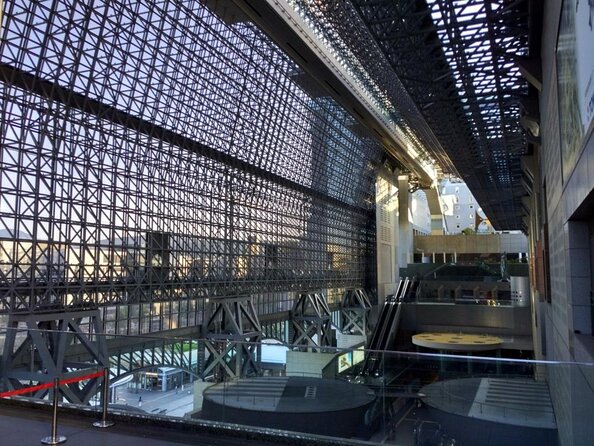
The tour begins at 8:30 am beside the main entrance of Kyoto Tower Sando, at the Starbucks Coffee near Kyoto Station. After a short introduction, you take a train to Saga Arashiyama. The day ends back at Kyoto Station, making the start and finish easy to connect with the city’s rail network.
The small group matters. A party of seven or fewer is far easier to keep together at busy sights than a large coach group. It also gives you a better chance to ask why a custom works a certain way, rather than simply listening to a stream of facts.
A few more Kyoto tours and experiences worth a look

Arashiyama Bamboo Forest: an early start among the tall stalks
The first major stop is Arashiyama Bamboo Forest, where you have about an hour. The tall bamboo is the visual star, but the guide uses the setting to talk about Japan, Japanese identity, and the ideas behind local customs.
Starting here is practical. The forest is one of Kyoto’s most photographed places, and an early visit gives you a better chance of enjoying it before the day becomes even busier. Still, this is a public path, not a private garden. You should expect other people and should not count on a completely quiet walk.
The stop lasts long enough for photos and an introduction to the area, but not for an extended exploration of every corner of Arashiyama. If bamboo is your main reason for visiting Kyoto, you may want a separate visit with more time. If you want a broad first look at the city, the one-hour stop is a fair compromise.
This is also where the guide’s role becomes clear. The tour is not only a photo circuit. Guides use the walk to explain cultural quirks and daily life, helping you connect what you see with how people live.
The ride to Kinkakuji turns transport into part of the lesson
After Arashiyama, you spend roughly 40 minutes getting toward Kinkakuji by bus and train, followed by another period of travel built into the route. The schedule lists about one hour and 40 minutes for this section, including the transfer and the visit structure around the next stop.
This is one of the tour’s useful features and one of its limits. You are not wasting time trying to find the right platform or bus stop on your own, and the day gives you a quick lesson in Kyoto’s public transport system. At the same time, transportation takes a meaningful part of a seven-and-a-half-hour tour.
One solo participant described the first day in Japan as a good way to learn several forms of transportation. That is a fair way to see it. The transfers are not merely dead time, but they do mean less time at the actual sights.
Pay attention to your guide’s instructions and stay ready to move. This is an active day, and the route works best when the group keeps a steady pace.
Kinkakuji: Kyoto’s famous Golden Pavilion
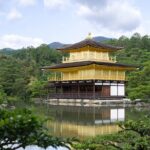
Kinkakuji, the Golden Pavilion, receives about 40 minutes of touring time. The entrance fee is extra, at ¥500 per person. Your guide explains Buddhism in Japan and the temple’s past, then helps you find good spots for photographs of the gold-covered pavilion and its setting beside the water.
This is one of Kyoto’s essential postcard views, but it is also one of the city’s most visited attractions. The path can feel crowded, and you follow a defined visitor route rather than wandering freely through the grounds. Forty minutes is enough to see the main view, hear the explanation, and take pictures. It is not enough for a slow, reflective temple visit.
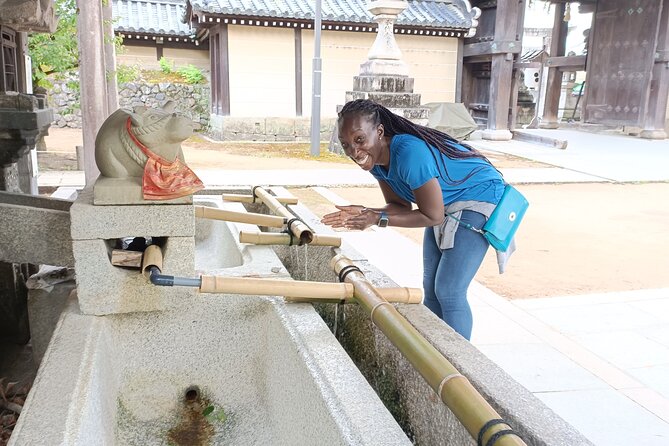
The guide adds value here by giving the building a place within Japanese religious life. Without context, Kinkakuji can become a quick photo and a quick exit. With an explanation of Buddhism and the site’s past, the stop becomes more than an attractive building.
The fee is modest, but remember that it is not part of the advertised tour cost. The tour also lists ¥1,510 per person for public transportation, so your actual day cost is higher than $165.17 before lunch and any personal purchases.
Shijo Kawaramachi: lunch, shopping, and an ordinary side of Kyoto
The next major stop is Shijo Kawaramachi, with about 75 minutes to explore. This is the practical city portion of the day, with a shopping street, Japanese arcades, and time for lunch.
I like this pause because it breaks up the temple visits. Kyoto is not only shrines, gardens, and old streets. Shopping arcades show you a more everyday side of the city, where local life continues alongside sightseeing.
Lunch takes place here, but it is not listed as included. Plan to pay for your own meal. The exact restaurant and menu are not specified, so you should treat this as a chance to eat in the area rather than as a fixed dining experience.
The timing is enough for a meal and a look around, though you will not have an open-ended shopping session. If you find a shop or food stall you love, you may need to save the address and return later.

Crossing Shijo Bridge toward Gion Shirakawa
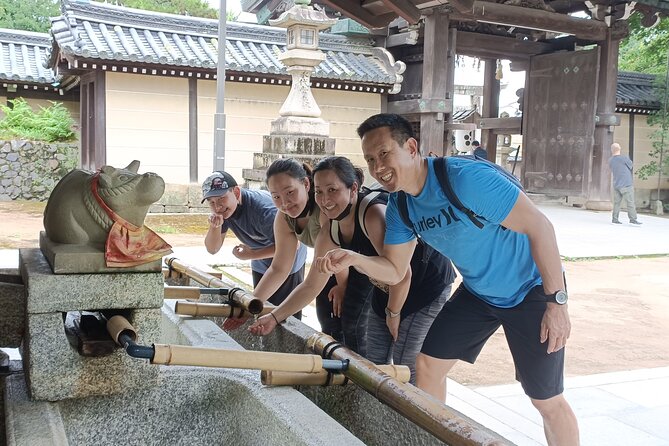
From Shijo Kawaramachi, the group walks across Shijo Bridge and continues toward Gion Shirakawa. The transition takes about 15 minutes, and the total section is listed at roughly one and a half hours.
This walk is valuable because it links busy commercial Kyoto with the quieter streets of Gion. Rather than treating each attraction as an isolated stop, the route lets you see how neighborhoods change as you move through them.
The distance also adds to the physical demands of the day. Comfortable shoes are essential. You should expect a steady amount of walking on pavement, along with stops where you stand while listening.
Gion Shirakawa: a quieter look at the geiko and maiko world
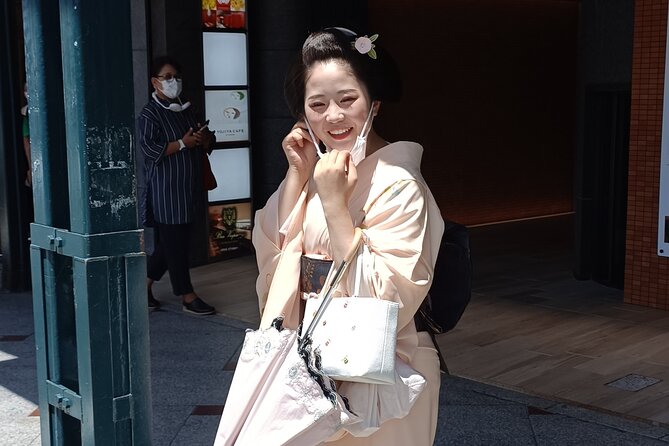
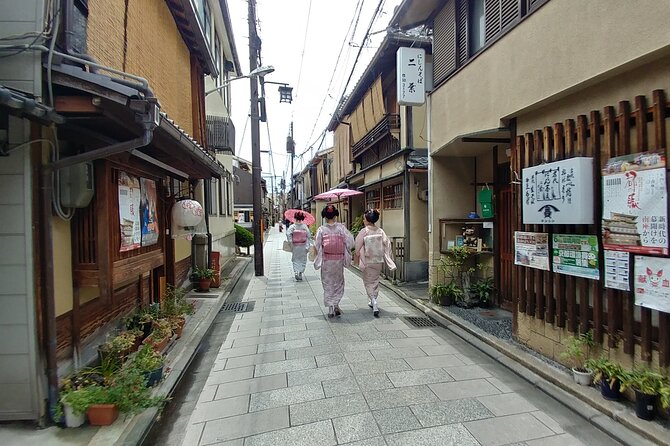
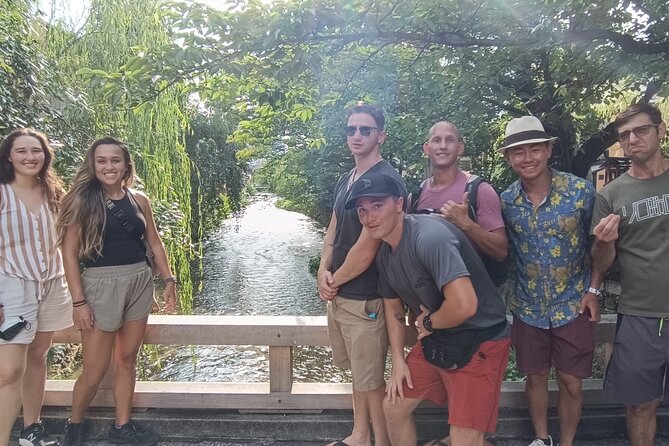
Gion Shirakawa is the calmer side of Kyoto’s famous entertainment district. You have about an hour to enjoy the scenery while learning about geiko and maiko, the performers associated with Kyoto’s traditional arts and hospitality culture.
This stop is less about checking off a monument and more about understanding a neighborhood. The setting gives the guide room to explain the world behind the elegant streets, rather than reducing it to a search for a famous face.
The itinerary hints that you might happen to see a geiko or maiko, but that is never something to book the tour for. Treat any sighting as chance, and follow your guide’s advice about respectful behavior. The real value is learning about the people and traditions connected with Gion.
Gion Shirakawa also offers a change of mood after the shopping district. The scenery is more restrained and atmospheric, and the guide’s explanations can help you notice details you might otherwise pass without understanding.
Fushimi Inari: thousands of vermilion torii gates
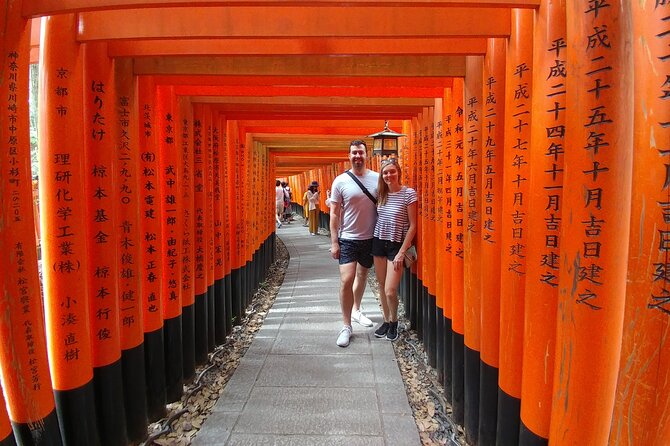
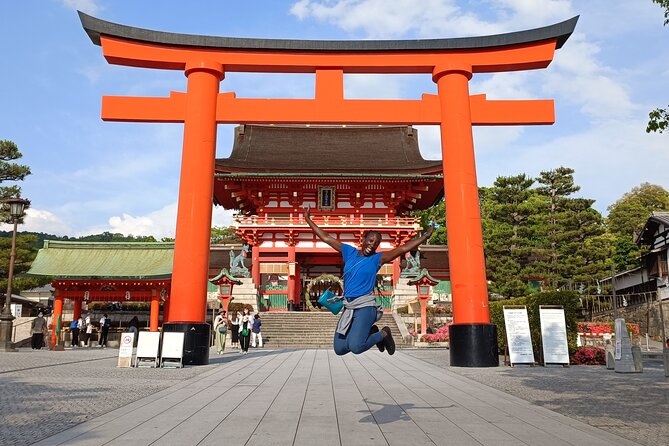
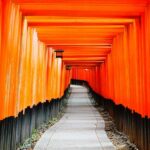
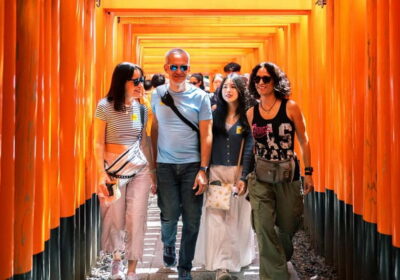
The final major sightseeing stop is Fushimi Inari-taisha Shrine, with about 50 minutes to explore. You pass through the famous rows of vermilion torii gates while learning about Shinto, the shrine, and its place in Japanese religious life.
Fushimi Inari is described as Kyoto’s top tourist spot for good reason. The torii gates create one of the city’s most memorable views, and even a short visit gives you a strong sense of the site.
Fifty minutes does not allow you to hike the full mountain trail. The tour is designed to show you the main approach and teach you about the shrine, not to complete a long uphill walk. If you want to explore far beyond the first gates, plan a separate visit on another day.
This late stop may also be the most tiring. By then, you have already walked through several districts and managed multiple transportation changes. The reward is a powerful final sightseeing scene, but you should keep your expectations realistic about how far you can go in the available time.
The guide can make or break a packed Kyoto day
The experience depends heavily on the guide, and the feedback points to a consistently strong team. Indra is repeatedly praised for his clear English, humor, Japanese culture lessons, historical explanations, patience, and willingness to take photos. Several people also appreciated his personal perspective on modern Japanese society rather than receiving only dates and temple facts.
Maureen is described as cheerful, professional, easy to talk with, and skilled at guiding people through trains and buses. Her approach appears especially suited to small parties that want a friendly, flexible day.
Toshi is noted for handling last-minute changes, while Naomi is praised for moving a larger group through different transportation modes. Adella is described as bright, warm, and detailed when explaining local customs and history.
That range of names suggests you should expect a guide-led experience rather than one tied to a single individual. The common thread is personal attention, practical help, and explanations that connect famous places with Japanese life.
The photo help is a useful bonus for solo visitors and couples. Several participants had small groups or private-style departures, giving the guide time to take pictures. It is not a guaranteed private tour, though. The published maximum is seven people.
What the $165.17 price really covers
The price includes an experienced local guide and the walking experience. It does not include the ¥500 Kinkakuji admission fee or ¥1,510 in public transportation costs. Lunch is also not listed among the inclusions, so budget separately for food.
That means you should compare this with the cost of your own time, not only with the admission fees. The tour removes much of the route planning and gives you cultural explanations at every stop. For a first day in Kyoto, that can be worth the premium, especially if you have only one day.
The value is weaker if you already know Kyoto’s train and bus system, prefer to set your own pace, or plan to spend an entire morning at one temple. This is a broad overview, not a slow specialist tour.
The experience is often booked around 39 days ahead, so reserving early is sensible if your Kyoto dates are fixed. Confirmation arrives at booking, and a mobile ticket is provided.
Who should book this full-day Kyoto tour
I would recommend it to first-time visitors with one full day in Kyoto, solo visitors who want help with photos and navigation, and couples or small groups who value conversation with a guide. It also suits people who want cultural background, not just a list of famous buildings.
It is a good fit if you want to see Kyoto’s main sights quickly and learn how the city connects by public transport. The tour can also help you decide where to return independently on a later day.
I would hesitate if your mobility is limited, you dislike changing trains and buses, or you need plenty of sitting time. The operator asks for moderate physical fitness, calls it a walking tour, and does not recommend it for people with bad legs. It is also not recommended for pregnancy beyond the first trimester.
The tour requires good weather and a minimum number of participants. If poor weather or insufficient bookings cancel the experience, you are offered another date or experience, or a full refund. You can cancel for a full refund up to 24 hours before the start time, but later cancellations and changes are not refunded or accepted.
Should you book it?
Book this tour if you want an efficient first look at Kyoto and would rather let a local guide manage the city’s complicated geography. The best features are the small group limit, the mix of major sights and local context, and the chance to learn public transportation while moving between districts.
Do not book it expecting a relaxed temple day. The route is packed, transportation takes time, lunch is separate, and the walking adds up. For an active visitor with limited time, though, this is a strong way to see Arashiyama, Kinkakuji, Gion, and Fushimi Inari in one carefully organized day.
FAQ
How long does the Kyoto highlights tour last?
The tour lasts approximately 7 hours and 30 minutes.
What time does the tour start?
The tour starts at 8:30 am.
Where do I meet the guide?
Meet at Starbucks Coffee beside the main entrance of Kyoto Tower Sando, near Kyoto Station, in Kyoto’s Shimogyo Ward.
Where does the tour finish?
The activity ends back at the meeting point near Kyoto Station.
How large is the group?
The tour has a maximum of seven participants.
Is Kinkakuji admission included?
No. Kinkakuji admission costs ¥500 per person and is paid separately.
How much does public transportation cost?
Public transportation is listed at ¥1,510 per person and is not included in the tour price.
Is the tour suitable for people with limited mobility?
The tour requires moderate physical fitness and involves substantial walking. It is not recommended for people with bad legs or for pregnant people beyond the first trimester. Service animals are allowed, and the tour operates near public transportation.
More Full-Day in Kyoto
More tours in Kyoto we've reviewed




Full-Day, compared.
 ★ 4.5Kyoto: Full-Day English Guided Tour of Kyoto’s HighlightsFrom $88
 ★ 4.6Kyoto: Full-Day Guided Bus Tour to Top Highlights & TicketsFrom $50
 ★ 5.05 Top Highlights of Kyoto Full Day Bike Tour (E-bike option)From $172
 ★ 5.0Full Day Biking Tour Exploring the Best of KyotoFrom $119
 ★ 5.0Kyoto Private Car Tour – Full Day with Local Guide & Nara OptionFrom $170
 ★ 5.0Full Day Guided Tour to Kyoto and Nara from Osaka by VanFrom $96