
Reviewed · GION & GEISHA WALKS
Gion Night Walking Tour
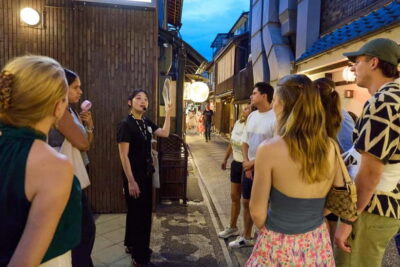
Gion after dark is a different Kyoto. Lanterns glow beside wooden townhouses, footsteps echo on cobblestones, and you may catch sight of a maiko or geiko hurrying to an evening appointment. The guide explains what happens behind Gion’s closed doors without turning the district into a stage show.
I like the small maximum of 10 people, which makes it easier to hear, ask questions, and move through narrow lanes. I also like the mix of geisha culture, Zen Buddhism, Shinto practice, and old Kyoto streets. The main consideration is that sightings are never guaranteed, and the walk depends on good weather.
In This Review
- Key points at a glance
- Why Gion works best after sunset
- A small group makes the narrow lanes easier
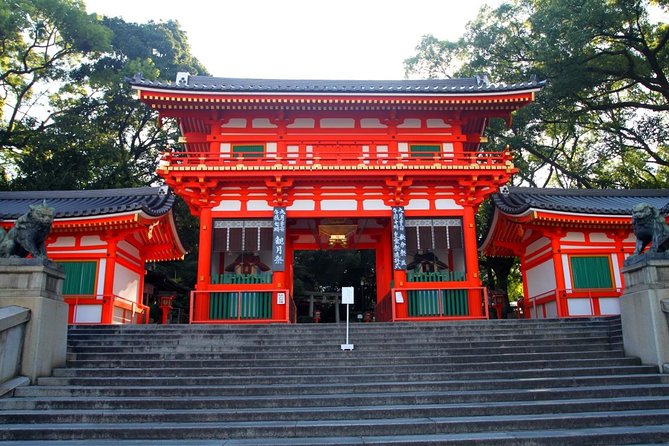
- Meeting near Yasaka Shrine
- Miyagawacho Kaburenjo and the world of geiko
- A quiet temple and a short Zen introduction
- Yasakanoto gives you a classic night view
- Preserved lanes and the changing face of Gion
- Yasaka Shrine under lantern light
- Gion Shirakawa closes the walk
- What $33.03 buys you
- Weather, cancellations, and simple planning tips
- Who should book the Gion night walk?
- Should you book it?
- FAQ
- How long does the Gion Night Walking Tour last?
- How many people can join the tour?
- What age range is the tour suitable for?
- Where does the tour start?
- Where does the tour finish?
- Which places does the walking tour visit?
- Will I definitely see a geiko or maiko?
- Is the tour accessible by public transportation?
- Can I cancel for a full refund?
Key points at a glance
- Up to 10 people: A small group gives you more room for questions and a calmer walk through Gion.
- Two hours after sunset: The timing brings out the lantern light and the evening activity of the district.
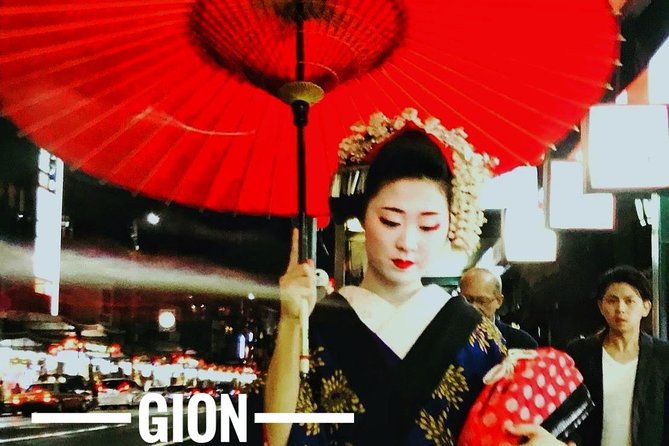
- Geiko and maiko context: Guides explain the difference between geisha, geiko, and maiko, along with the work behind the makeup and dress.
- Several classic Kyoto stops: The route includes Miyagawacho Kaburenjo, Yasakanoto, Yasaka Shrine, Gion Shirakawa, and a Zen temple area.
- Possible performer sightings: You might see maiko or geiko leaving for appointments, but the tour should be booked for the cultural background, not a guaranteed sighting.
- Good value at $33.03: For a guided two-hour walk with no separate admission charges, the price is reasonable for first-time visitors to Kyoto.
Why Gion works best after sunset
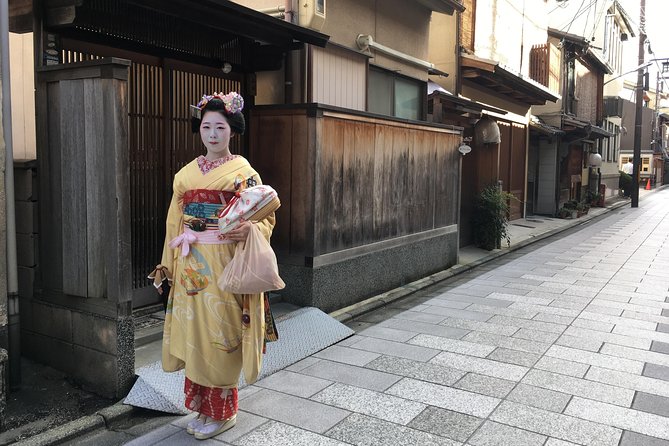
Gion can feel crowded and confusing during the day. At night, the mood changes. Wooden facades catch the light, shrine lanterns glow, and the narrow streets feel more atmospheric. This walk uses that setting well.
The focus is not simply on taking photos. You learn how Kyoto’s traditional entertainment districts work, why geiko and maiko move between appointments, and why much of their professional life remains private. That context matters. Without it, you may see a beautifully dressed woman and mistake a working performer for a costumed attraction.
The tour also gives you a respectful way to observe the district. Gion is a living neighborhood, not an outdoor theater. A good guide can help you understand where to pause, what to notice, and why you should avoid blocking lanes or approaching performers.
The tour is rated 4.9 out of 5 from 142 ratings, with 99 percent recommending it. Those numbers point to a consistently strong experience, especially for the guides. Kevin is praised for clear English, local familiarity, and a good balance of facts. Niall is noted for warmth and insight, while Karim, Shanda, Philippe, Cha Cha, and Nile are also named in strong accounts of the tour.
Guide assignments can change, so do not book with the expectation of receiving one particular person. The useful point is that the guiding team appears comfortable with questions, local history, and the delicate subject of geisha culture.
A few more Kyoto tours and experiences worth a look

A small group makes the narrow lanes easier
The group limit is 10 people. That is a real advantage in Gion, where streets can be tight and large groups can clog a lane or make it hard to hear.
With 10 or fewer, you can usually stay close enough to follow the explanation without relying on a distant flag or loudspeaker. You also have a better chance to ask about details that interest you, such as the role of a maiko, the layout of a traditional entertainment district, or the meaning of a shrine ritual.
The age guidance is 10 to 77. That suggests the walk suits older children, adults, and many older visitors who are comfortable walking for about two hours. You should still expect to be on your feet for the full tour. No special physical challenge is stated, but cobblestones, evening weather, and standing at several stops are part of the experience.
Service animals are allowed, and the activity is near public transportation. Most people can take part. Since the exact surface conditions and route pace can vary, wear shoes that you would happily use for a long city walk.
Meeting near Yasaka Shrine
The stated starting point is Tsuruha Drug Yasaka Shrine Store at 543 Gionmachi Minamigawa, Higashiyama Ward, Kyoto, postal code 605-0074. The general directions also describe an easy meeting point near a 7-Eleven by Miyagawasuji.
Because both descriptions appear in the tour information, check your booking confirmation carefully for the exact place and time. This is a small but important practical step. Gion has several busy streets, stores, shrines, and convenience shops, and a few minutes of confusion can make a group walking tour stressful.
The experience ends back at the meeting point. That makes it easier to plan dinner, return to your hotel, or continue exploring the area afterward. Since the tour finishes in Gion, you can also use the guide’s advice about nearby restaurants and shopping. Several tour accounts specifically value those local suggestions.
Miyagawacho Kaburenjo and the world of geiko
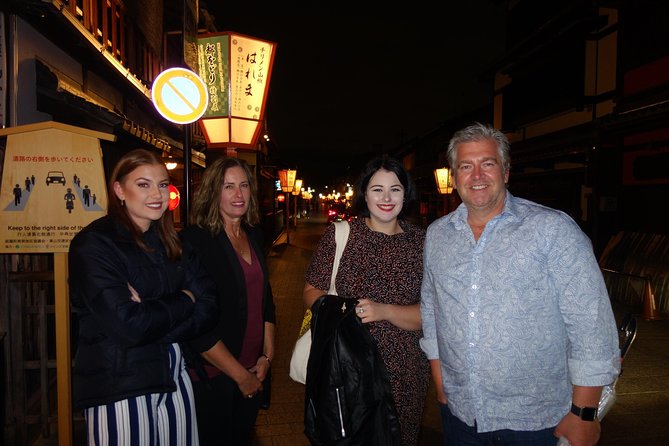
The first major stop is Miyagawacho Kaburenjo, in one of Kyoto’s traditional entertainment quarters. The group spends about 30 minutes walking through the geisha district while the guide explains the private world of these performing artists.
The terms can be confusing. In Kyoto, geiko is the local word for a fully trained geisha, while maiko refers to a young apprentice. The tour’s explanations help put the clothing, hairstyle, makeup, and schedule into context. You get a better sense of these women as trained artists who work in music, dance, conversation, and formal hospitality.
The setting also helps. Rather than discussing the subject in a classroom, you are standing in the streets where the work takes place. That gives the information a practical connection to the buildings and lanes around you.
Some people join specifically hoping to see a maiko or geiko. Several accounts describe sightings of one, three, or even seven performers, including maiko, geiko, and an older geiko. Those moments can be memorable, but they depend on timing and chance. The responsible reason to book is the explanation of the district. A sighting should be a bonus.
Do not expect access inside the private establishments. The tour explains what happens behind closed doors, but the doors remain closed. That boundary is part of the character of Gion.
A quiet temple and a short Zen introduction
The route includes a walk through the grounds of a beautiful temple, with a brief introduction to Zen Buddhism. The information does not name the temple, so you should not book this tour expecting a detailed temple visit or a long religious lecture.
This portion adds welcome range to the walk. Gion is not only about geiko and maiko. Kyoto’s older neighborhoods also reflect Buddhist and Shinto traditions, and a short explanation helps you read the setting more carefully.
Expect this to be a compact stop rather than the central event. The tour has several districts to cover, so the temple segment is best viewed as a moment of quiet and a chance to connect the evening streets with Kyoto’s spiritual life.
A few more Kyoto tours and experiences worth a look

Yasakanoto gives you a classic night view
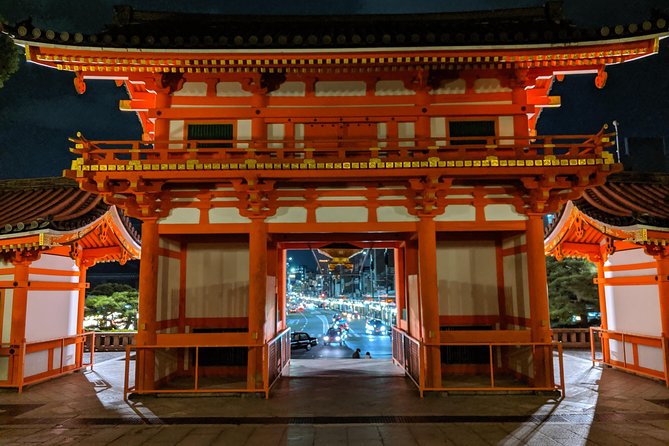
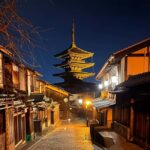
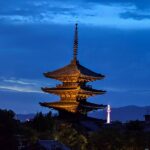
Yasakanoto is listed as one of the route’s most striking views. The stop lasts about 15 minutes and is designed for the kind of photograph many people hope to take in Kyoto: a traditional street, a pagoda or temple feature, and evening light working together.
This is one of the places where the tour’s timing pays off. Daylight gives you clearer detail, but night brings a softer and more dramatic feel. Your guide can also help explain what you are looking at, which makes the picture more than a quick stop for a photo.
The drawback is simple: 15 minutes is not a long time. If the area is busy, you may need to share the best viewpoints and keep moving with the group. Bring a phone or camera with enough battery, but stay aware of residents and other people using the street.
Preserved lanes and the changing face of Gion
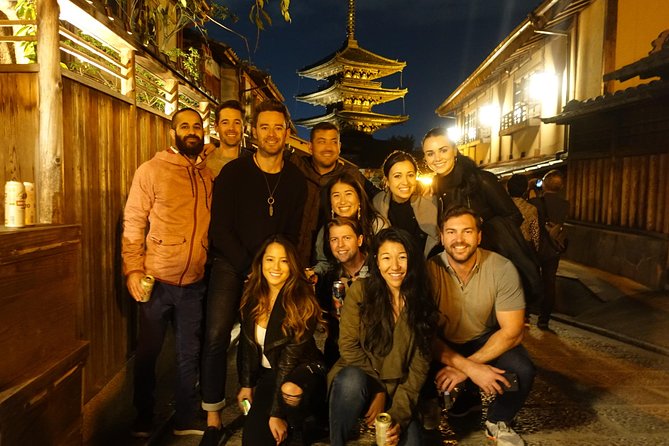
After Yasakanoto, you wander through the preserved streets of the district. The route also passes modern clubs and high-end restaurants. That contrast is useful because it shows that Gion is not frozen in the past.
The polished wooden buildings and narrow lanes create the classic image of old Kyoto, while the restaurants and nightlife show how the area continues to function after dark. Your guide’s role here is important. Without local explanation, it is easy to see only the surface.
The walk can also help you notice the difference between a public street and a private entrance. The district rewards patience. Look at rooflines, lanterns, doorways, and the way the streets open and narrow rather than rushing from one photo point to the next.
Yasaka Shrine under lantern light
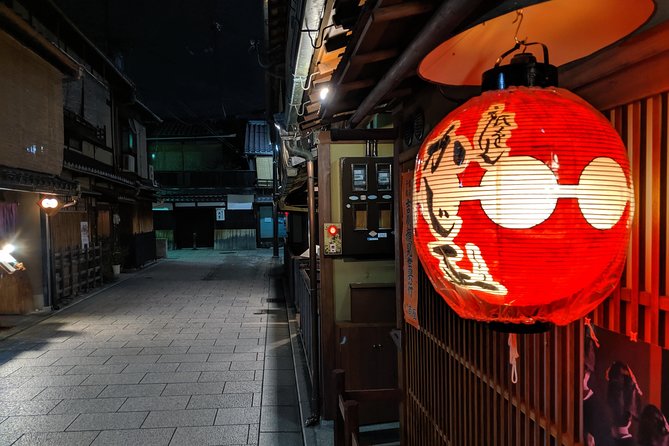
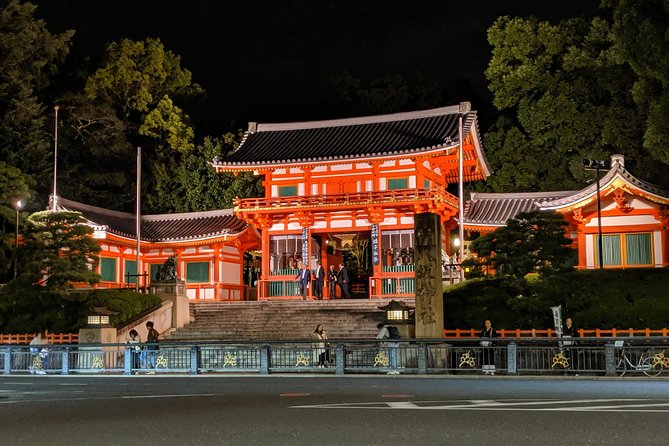
Yasaka Shrine is the next named stop, with about 20 minutes set aside for the visit. At night, the shrine is lit by lanterns, giving the grounds a warm and memorable appearance.
Here the guide introduces Shinto, Japan’s native religious tradition. You can also make a prayer for good fortune. If you have never visited a Japanese shrine, this is a useful chance to learn the basic etiquette and meaning behind the visit instead of treating it as a decorative backdrop.
The shrine stop gives the tour a change of pace. After narrow lanes and stories about the entertainment district, you get an open religious space and a chance to pause. It is also one of the more accessible parts of the experience for families, since younger participants often connect with the simple act of making a prayer.
Again, the visit is brief. If you want a long, careful study of the shrine’s buildings and traditions, plan a separate visit. The tour offers an introduction, not an extensive shrine tour.
Gion Shirakawa closes the walk
The final named stop is Gion Shirakawa, one of the most scenic parts of Gion. The group spends about 15 minutes here, walking along the picturesque waterway and traditional streets.
This is a fitting end because it brings together the main elements of the evening: old architecture, quiet lanes, water, lanterns, and the possibility of seeing performers on their way to work. It is also a good place to understand why Gion remains one of Kyoto’s most photographed districts.
The walk past clubs and expensive restaurants adds a practical note. You see the difference between the public image of Gion and the working nightlife that supports it. The guide may also point out places to eat or shop, which can help if you plan to stay in the area after the tour.
The route returns to the original meeting point. The published stop times add up to about 80 minutes, with the remaining time used for walking between areas, explanations, and pauses. That fits the stated total of roughly two hours.
What $33.03 buys you
At $33.03 per person, this is a fairly priced introduction to Gion. You are paying for a guided walk, not for a meal, performance, private geisha meeting, or entry to an exclusive teahouse. The free admission at the listed stops keeps the cost straightforward.
I see the best value in the small group and the guide’s local interpretation. You could walk through Gion alone, but you would miss much of the meaning behind the buildings, costumes, religious sites, and evening routines. A guide also helps you use your limited Kyoto time efficiently.
The price is less compelling if you already know Gion well or have arranged another detailed cultural tour. It is also not the right choice if your main goal is a guaranteed geisha encounter. No walking tour can promise that, and the route’s strongest feature is its context.
Past tours have included a short slideshow and drinks at the Kyoto Fun office before the walk. That detail appears in one account, but it may not be part of every departure, so treat it as a possible extra rather than a guaranteed feature.
Weather, cancellations, and simple planning tips
Good weather is required. If poor weather cancels the experience, you can be offered another date or a full refund. The same applies if the minimum number of participants is not reached.
You can cancel for a full refund up to 24 hours before the start time. Inside that period, the amount paid is not refunded, and changes are not accepted. The cut-off uses Kyoto local time.
For the walk itself, I would plan to arrive early at the confirmed meeting point, wear comfortable shoes, and carry a light rain layer if the forecast looks uncertain. Evening temperatures can change, and the group will be outside for about two hours.
Keep your camera ready, but do not let photography take over. If you see a maiko or geiko, follow the guide’s lead and give the person space. The setting is a workplace and neighborhood, not a photo call.
Who should book the Gion night walk?
This tour suits you if you are visiting Kyoto for the first time, want a clear introduction to geiko and maiko culture, and prefer a small group over a large guided crowd. It also works well for couples, families with children aged 10 and up, and solo visitors who want useful local orientation.
You will get the most from it if you enjoy stories, architecture, religion, and street atmosphere in equal measure. The route is not limited to one theme, and that variety keeps the two hours moving.
I would choose another activity if you want a formal performance, a meal, a private cultural meeting, or a long temple study. I would also avoid making this your only plan for seeing geiko or maiko. Sightings may happen, and several departures have had multiple sightings, but chance controls that part.
Should you book it?
I would book this Gion walk for its small group, strong guides, and reasonable cost, especially early in a Kyoto visit. It gives you useful cultural ground rules before you explore Gion on your own and places the evening scenery in context.
Book it with realistic expectations. You are buying a well-paced neighborhood walk with stories, shrine and temple stops, and a possible glimpse of working performers. You are not buying guaranteed access or a staged geisha show. If that sounds right, $33.03 is a sensible way to spend two hours in one of Kyoto’s most atmospheric districts.
FAQ
How long does the Gion Night Walking Tour last?
The tour lasts approximately two hours.
How many people can join the tour?
The activity has a maximum of 10 participants.
What age range is the tour suitable for?
The tour is listed as suitable for ages 10 to 77.
Where does the tour start?
The stated meeting point is Tsuruha Drug Yasaka Shrine Store at 543 Gionmachi Minamigawa, Higashiyama Ward, Kyoto, 605-0074, Japan. General directions also refer to a 7-Eleven near Miyagawasuji, so check your booking confirmation for the exact meeting details.
Where does the tour finish?
The activity ends back at the meeting point.
Which places does the walking tour visit?
The route includes Miyagawacho Kaburenjo, a temple area with a brief Zen Buddhism introduction, Yasakanoto, preserved streets in Gion, Yasaka Shrine, and Gion Shirakawa.
Will I definitely see a geiko or maiko?
No. Sightings are possible, and some departures have seen several performers, but the tour does not guarantee one.
Is the tour accessible by public transportation?
The activity is near public transportation.
Can I cancel for a full refund?
Yes. You can cancel at least 24 hours before the start time for a full refund. Cancellations or changes made less than 24 hours before the start time are not accepted for a refund.
More Walking Tours in Kyoto

More Night Walks & Ghost Tours in Kyoto
More Gion & Geisha Walks in Kyoto
More tours in Kyoto we've reviewed




Gion & Geisha Walks, compared.
 ★ 4.7Kyoto Geisha Walking Tour: Gion District & Hidden GemsFrom $252 hours
 ★ 4.7Kyoto: Gion Geisha District Walking Tour – Stories of GeishaFrom $202 hours
 ★ 4.9Best of Kyoto: Gion, Geisha, Pagodas & CobblestonesFrom $242 hours
 ★ 4.5Night Walk in Gion: Kyoto’s Geisha DistrictFrom $211h 40m
 ★ 5.0Kyoto Night Foodie Tour in Gion (9+ dishes + 6 Sake tastings)From $163
 ★ 5.0Kyoto Gion Geisha District Walking Tour – The Stories of GeishaFrom $25