
Reviewed · WORKSHOPS
Kyoto: Beginner Knife Sharpening & Handle Fitting Workshop
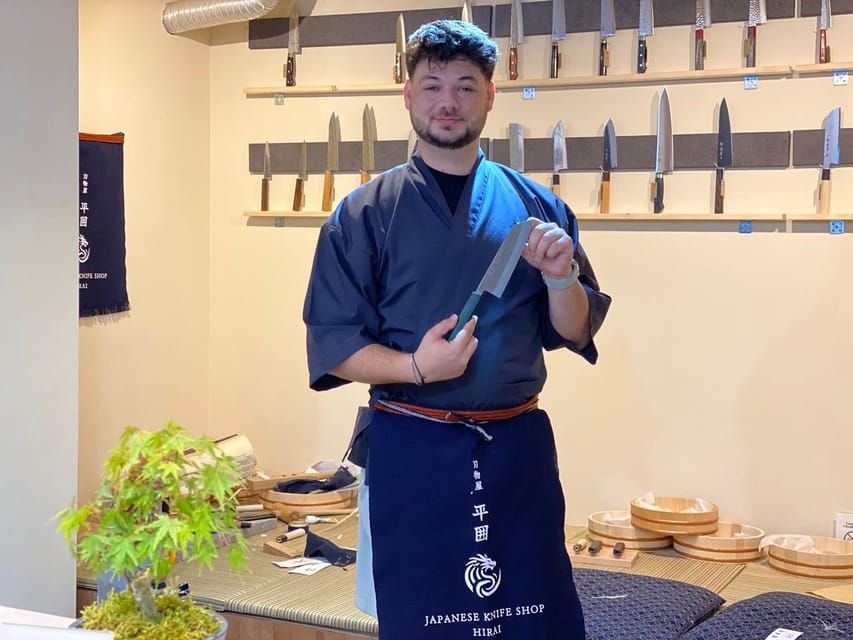
The most useful souvenir in Kyoto may be the one you learn to maintain yourself. At Japanese knife shop HIRAI, you choose a Santoku, Deba, or Yanagi blade, sharpen it on a whetstone, then fit a magnolia wood handle with help from the shop’s makers.
I like the patient, hands-on teaching, especially the close correction that helps beginners feel the proper sharpening angle. I also like the value: the $161 fee includes the knife, handle, uniform, apron, engraving fee, and two hours of instruction.
The main consideration is the smoke. Fire is used during handle fitting, so wear clothes you do not mind smelling smoky. The shop is in the Nishiki Market area, where finding the correct storefront can take a little care.
In This Review
- Key points to know before booking
- Why this Kyoto workshop is more than a knife purchase
- Finding HIRAI near Nishiki Market
- Choosing between Santoku, Deba, and Yanagi
- Learning the whetstone method step by step
- Fitting the magnolia handle with the makers
- Engraving and the finished knife
- How the English instruction works
- Is $161 good value?
- Who will enjoy this experience most?
- Practical tips for a smoother two hours
- Should you book the HIRAI knife workshop?
- FAQ
- Where does the knife sharpening workshop take place?
- How long does the workshop last?
- How many people are in each group?
- Which knives can I choose?
- Can I take the knife home?
- What kind of handle is included?
- Can I have the knife engraved?
- Is the workshop available in English?
- What should I wear?
- Can I cancel my booking?
- Is the workshop suitable for children?
Key points to know before booking
- You make a knife you can take home: The included knife becomes both a useful kitchen tool and a personal Kyoto memento.
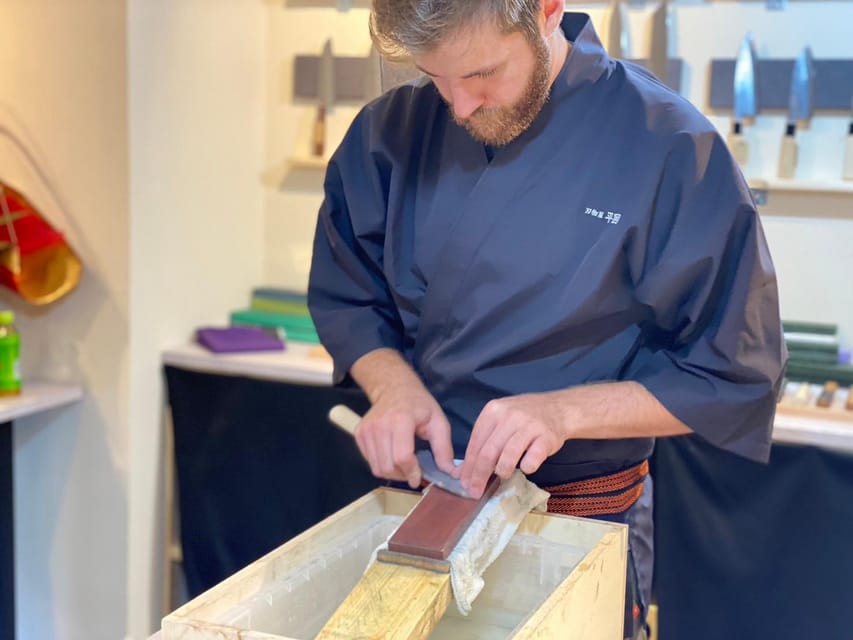
- Sharpening is genuinely hands-on: You first see demonstrations, then practice on provided whetstones with direct feedback.
- Choose from three blade types: Pick a Santoku, Deba, or Yanagi knife before or during the workshop.
- The group is tiny: With no more than three participants, instruction stays personal and easy to follow.
- Handle fitting uses fire: The included handle is magnolia wood, while other handle types cost extra.
- Plan for a smoky session: Wear practical clothes and arrive five minutes early at the shop’s white curtain entrance.
Why this Kyoto workshop is more than a knife purchase
Many Kyoto souvenirs sit on a shelf and collect dust. This one asks you to work with your hands, learn a skill, and leave with an object you can use at home.
The workshop combines two jobs that are often separated: sharpening the blade and fitting the handle. That makes the $161 price easier to judge. You are not paying only for a class, and you are not simply buying a finished knife. You receive both the tool and the instruction needed to care for it.
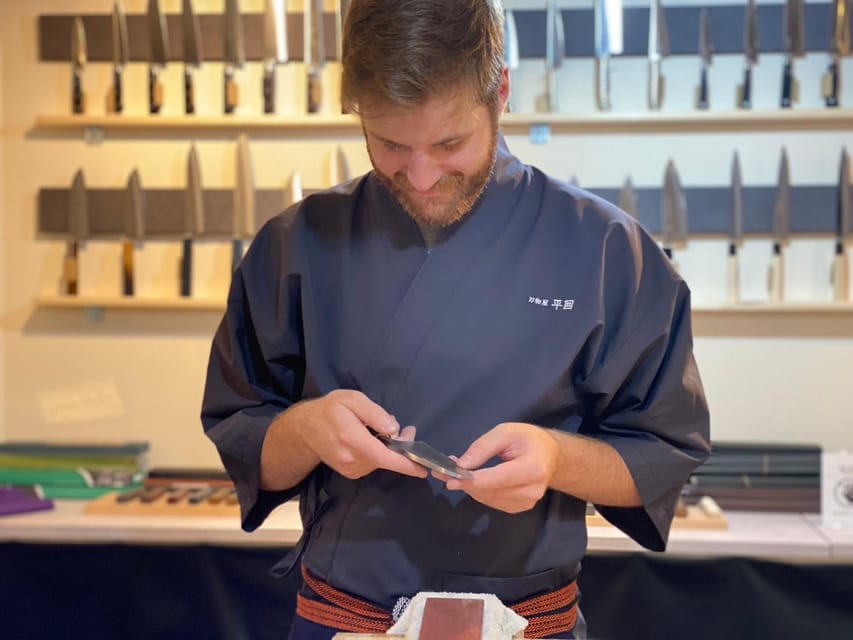
I especially like that the lesson is aimed at beginners. You do not need prior experience with a whetstone. The teaching starts with simple explanations, demonstrations, and practice knives before you work on your own blade. That order matters, since sharpening can feel awkward until your hands understand the angle.
The shop also provides a Japanese working uniform and apron. This gives the session a proper workshop feel, but it has a practical side too: you do not have to worry as much about protecting your own clothes while working.
A few more Kyoto tours and experiences worth a look


Finding HIRAI near Nishiki Market
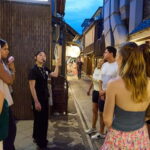
You go directly to the shop rather than meeting a guide at a station or hotel. Look for the white storefront curtain at the building. The shop is in the busy Nishiki Market area, and the entrance can be easy to miss, so allow a few extra minutes to get your bearings.
Arrive at least five minutes before your scheduled start. The workshop lasts two hours, and arriving late could cut into the demonstration and hands-on practice. This is a compact class, with a maximum of three participants, so the pace depends on everyone being ready at the start.
Nishiki Market is a convenient place to pair with the workshop, but it can also be crowded and noisy outside. Inside the class, you are expected to keep noise low. Pets, baby strollers, smoking, alcohol, and drugs are not allowed.
Choosing between Santoku, Deba, and Yanagi
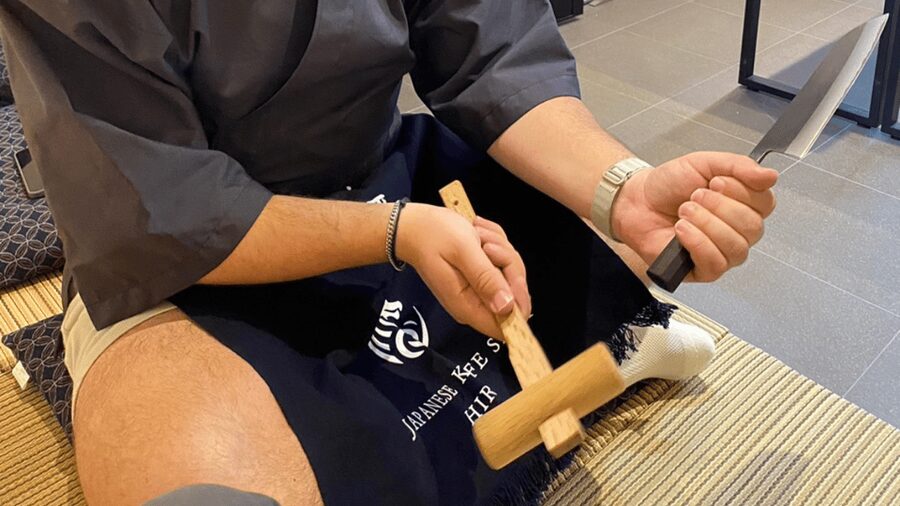
Your first important decision is the blade. You can choose from Santoku, Deba, and Yanagi knives. The standard choices are included in the fee, and they are considered good enough by many participants to make upgrades unnecessary.
A Santoku is likely the most straightforward choice if you want a general kitchen knife for regular home use. A Deba or Yanagi may appeal more if you have a specific interest in Japanese knife forms. The supplied information does not assign particular cooking tasks to each option, so ask the instructor for advice based on how you plan to use the knife.
This choice gives the workshop a personal touch before the sharpening begins. You are not taking home an identical souvenir selected for everyone. You are choosing the blade that will become your own project.
The shop also sells additional knives. You can buy one, but that purchase is separate from the $161 workshop fee. There is no need to buy another knife to get value from the class, though the selection may tempt anyone interested in Japanese kitchen tools.
Learning the whetstone method step by step
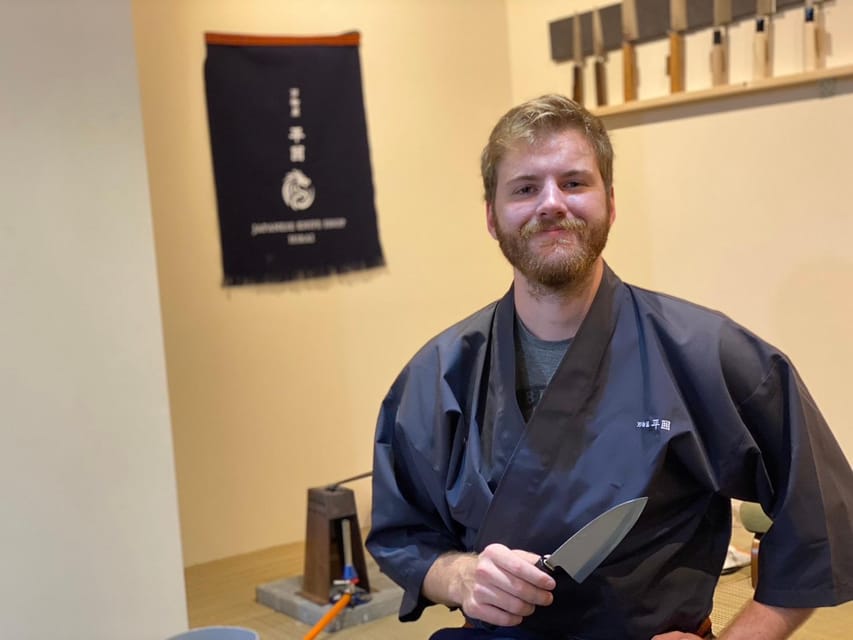
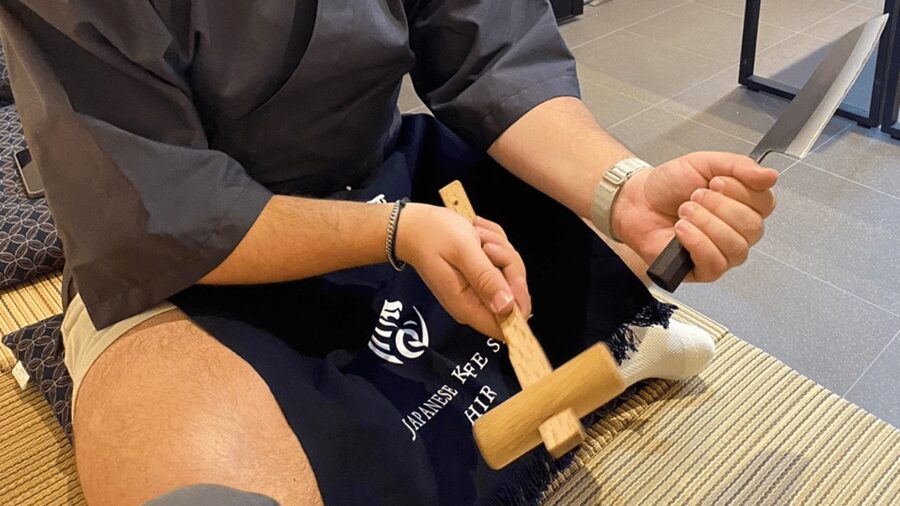
The sharpening section is the heart of the experience. The instructor begins with a simple explanation of the process and demonstrates the technique before you handle your own knife. You then practice using the whetstones supplied by the shop.
This is a good setup for anyone who has watched videos and still feels unsure. A screen can show hand position, but it cannot tell you when your pressure or angle feels wrong. In this workshop, the instructor can watch your movement, correct it, and confirm when your progress is on track.
The teaching is practical rather than overly technical. You learn the basic method in a way that should help you repeat it at home. Several people have found the process less intimidating after receiving direct guidance, which is useful if you have avoided whetstones because they seemed difficult to control.
Expect to concentrate. Sharpening is not a passive demonstration, and two hours can pass quickly when you are trying to keep your hands steady. The class is beginner-friendly, but it still asks you to pay attention.
One useful improvement would be a written reminder of the technique. The workshop teaches by demonstration and correction, but no printed sharpening guide is included in the supplied details. Take mental notes, and if the instructor permits it, ask questions about how to remember the method at home.
Fitting the magnolia handle with the makers
After sharpening, you choose and attach the handle. The included handle is made from magnolia wood, a simple, traditional-feeling option that keeps the base price clear.
Handle fitting gives the workshop a different character from the sharpening lesson. Instead of refining the blade on a stone, you work with the physical assembly of the knife. The makers guide you through the process, and the result feels more personal because you selected and fitted the handle yourself.
Fire is used in this section, and smoke may come out. This is the most important clothing warning. Wear something practical that you do not mind smelling smoky, especially if you are continuing on to dinner or another activity afterward.
You can choose a different type of handle for an additional fee. The surcharge depends on the handle you select, so ask about the price before making a choice. The standard magnolia handle is included, and it keeps the experience from turning into a series of unexpected add-ons.



Engraving and the finished knife
Engraving is included, but you must request it in advance. You can add up to four letters, so decide what characters you want before the workshop and provide the details ahead of time.
A short engraving can make the knife feel more distinctly yours. Keep the limit in mind, since a full name may not fit. You should also confirm the exact characters in advance, particularly if you want something other than a simple Roman-letter inscription.
At the end, the shop packages the knife so you can take it home. That final step matters for luggage and transport, although you should still handle the package carefully and follow any airline or local transport rules that apply to your trip.
The finished object carries a memory that a shop-bought knife does not. You have selected the blade, sharpened it, and fitted the handle. That personal work is the real souvenir.
How the English instruction works
English and Japanese are available. The class may involve an English-speaking instructor, an interpreter, or staff members sharing the teaching, depending on the session. Julio has been praised for clear, patient instruction, and Tatsu has also helped participants during the workshop. Staff support in English has been described as effective for beginners.
Do not expect every explanation to sound like a formal cooking-school lecture. The strength of this class is the direct demonstration and correction. You can see what to do, try it yourself, and receive help when your technique needs adjustment.
The small group size makes language support more useful. With no more than three participants, the instructor has time to check each person’s work. That is far better for a physical skill than standing behind a large group and trying to copy movements from a distance.
Is $161 good value?
At first glance, $161 is a serious price for a two-hour activity. The comparison changes once you count what is included: a knife, a magnolia handle, sharpening instruction, handle fitting, uniform, apron, engraving, and the packaged knife to take home.
The best value comes if you want both the knife and the skill. If you only want an inexpensive kitchen tool, buying a basic knife elsewhere will cost less. If you already own several Japanese knives and do not care about learning maintenance, the class may not fit your priorities.
For someone considering a Japanese knife purchase, though, the workshop adds useful instruction at little extra cost compared with buying a quality knife alone. You leave with more than a product. You know how the blade was prepared, and you have practiced a maintenance skill that can be used on future knives.
Upgrades are optional. Some participants choose a more expensive blade or handle, while others find the included knife entirely satisfactory. I like this arrangement because you can keep the base experience within the advertised price and decide only after seeing the options.
Who will enjoy this experience most?
This workshop suits home cooks, food lovers, knife enthusiasts, and anyone who prefers a useful souvenir to a decorative one. It is also a good choice for a couple, parent and adult child, or two friends, since the small group creates a shared activity without a large class atmosphere.
It is designed for beginners, but experienced cooks can still enjoy choosing a blade and working with Japanese sharpening methods. If you already sharpen knives regularly, the lesson may feel basic, so consider it mainly for the hands-on craft and finished knife.
The experience is not suitable for children under 15, wheelchair users, or people over 80. Baby strollers are not allowed, and the shop does not permit smoking, alcohol, drugs, pets, or disruptive noise.
Practical tips for a smoother two hours
Wear clothes you can expose to smoke, and avoid scheduling an important dinner immediately afterward if you are concerned about the smell. Arrive five minutes early, since the class is small and begins directly at the shop.
Choose your knife in advance if possible. Think about your intended use, then ask the instructor for help if you are unsure between Santoku, Deba, and Yanagi.
If you want engraving, send the request before arrival and keep it to four letters or fewer. Confirm the exact characters, since the engraving fee is included but changing your mind at the last moment may not be possible.
The shop provides the whetstones, so you do not need to buy one to take part. A whetstone purchase is not included, but you can ask staff about buying one separately if you want to continue practicing at home.
The activity has free cancellation up to 24 hours before the start time, and you can reserve now and pay later. That gives you some room to adjust a Kyoto schedule, though the five-minute early arrival rule still matters on the day.
Should you book the HIRAI knife workshop?
Book it if you want a small, practical Kyoto experience that leaves you with a knife and a new skill. The strongest reasons are the patient instruction, direct feedback on sharpening, personal handle fitting, and the fact that the standard knife is included rather than sold as a surprise extra.
Skip it if your main goal is a cheap souvenir, if smoke on your clothing would be a problem, or if you have no interest in learning knife care. For everyone else, $161 is a fair price for two hours of focused instruction plus a useful Japanese knife that carries your own hands-on story home.
FAQ
Where does the knife sharpening workshop take place?
Go directly to Japanese knife shop HIRAI in the Nishiki Market area of Kyoto, on Honshu. Look for the white storefront curtain at the shop building.
How long does the workshop last?
The workshop lasts two hours. Starting times vary, so check availability when booking.
How many people are in each group?
The group is limited to three participants, making it a small and personal class.
Which knives can I choose?
You can choose one knife from three options: Santoku, Deba, or Yanagi.
Can I take the knife home?
Yes. After the sharpening and handle fitting are complete, the shop packages the knife for you to take home.
What kind of handle is included?
A magnolia wood handle is included. Other handle types are available for an additional fee, with the price depending on your selection.
Can I have the knife engraved?
Yes. Engraving is included, but you must request it in advance and provide up to four letters.
Is the workshop available in English?
Yes. English and Japanese instruction are available.
What should I wear?
Wear clothes you do not mind getting smoky. Fire is used during the handle fitting section, and smoke may come out.
Can I cancel my booking?
You can cancel up to 24 hours in advance for a full refund. Reserve now and pay later is also available.
Is the workshop suitable for children?
No. It is not suitable for children under 15, wheelchair users, or people over 80.
More Workshops & Classes in Kyoto
More tours in Kyoto we've reviewed








Workshops, compared.
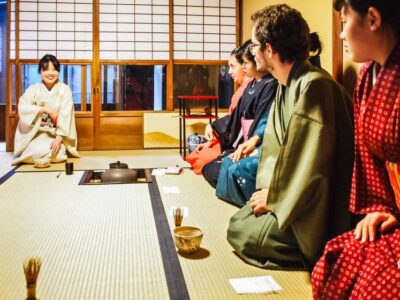 ★ 4.3Kyoto: 45-Minute Tea Ceremony Lesson ExperienceFrom $2245 min
 ★ 5.0Ramen Cooking Class at Ramen Factory in KyotoFrom $131
 ★ 4.9Kyoto: Ramen Cooking Class at a Ramen Factory with SouvenirFrom $1271h 30m
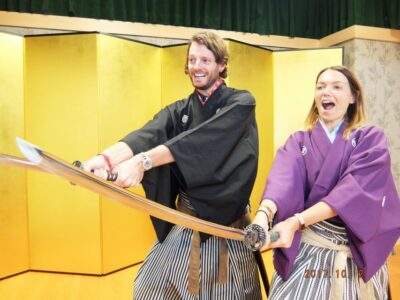 ★ 4.9Kyoto: Samurai Class, Become a Samurai WarriorFrom $70
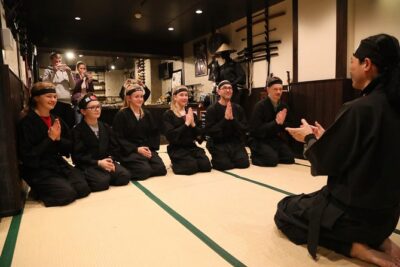 ★ 5.0Ninja 1-hour Hands-on Lesson by Japanese master in Kyoto -EntryFrom $80
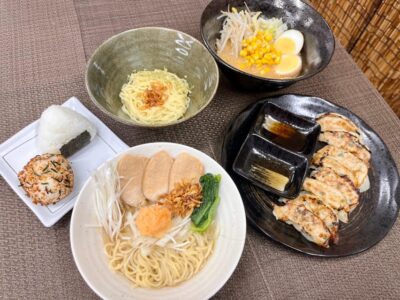 ★ 5.0Kyoto: Ramen, Gyoza, and Onigiri Cooking ClassFrom $901h 30m