
Reviewed · WORKSHOPS
Hanakoushi cotton Scarf Class
The clever part of this Kyoto class is that you create a useful souvenir instead of simply buying one. At the Kyoto Shibori Museum, you fold fabric, choose a color, and watch a patterned scarf emerge from a traditional Japanese dyeing method. Your group has the class to itself, which makes the short lesson easy to follow.
I like the quick, hands-on format, and I like that the museum visit gives the craft some context. Staff members, including Nina and Yokahama-san, are described as kind and clear in their instruction. The main consideration is that the process has been simplified for visitors, so you should expect a well-guided introduction rather than a long, technical apprenticeship.
In This Review
- Key points at a glance
- Making a Kyoto souvenir with your own hands
- At Kyoto Shibori Museum, the setting matters
- Folding, coloring, and revealing the pattern
- What happens while the scarf dries
- A private class with patient instruction
- Is $43.35 good value?
- The museum shop adds another layer
- Who will enjoy this most?
- Practical timing and booking advice
- The main strengths and limits
- Should you book the Hanakoushi cotton Scarf Class?
- FAQ
- Where does the Hanakoushi cotton Scarf Class take place?
- How long does the class last?
- How long does the scarf take to dry?
- What size scarf will I make?
- Which shibori method does the class use?
- Is the class private?
- Can most people participate?
- Is the experience near public transportation?
- What can I see at the museum?
- What is the cancellation policy?
Key points at a glance
- A private 30-minute class: Your party works together without a large shared group.
- A full-size keepsake: You make a scarf measuring about 175 by 50 centimeters.
- Traditional folding and dyeing: The class uses the hanakoushi shibori method, with a focus on folding fabric before dyeing.
- A useful museum stop: Drying time gives you a chance to see tools, samples, artworks, and an explanatory video.
- A strong family-friendly choice: The instructions are simple, staff speak solid English, and most people can take part.
- Flexible booking: The activity costs $43.35 per person and allows a full refund if you cancel at least 24 hours ahead.
Making a Kyoto souvenir with your own hands
Kyoto is full of beautiful goods, but a scarf you help create carries a different kind of memory. This class gives you a short introduction to shibori, a Japanese resist-dyeing craft in which folding, binding, or shaping fabric controls where the color reaches.
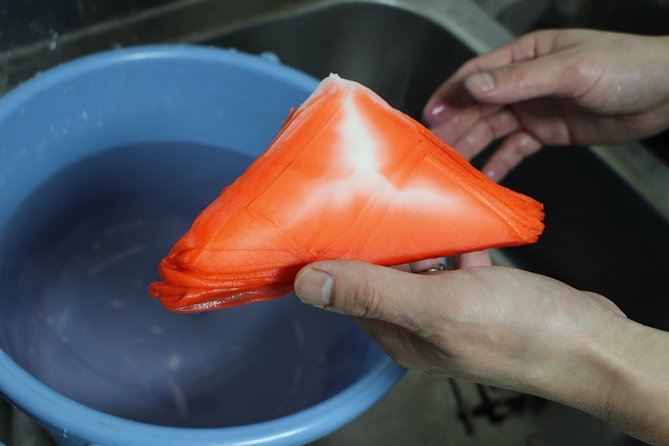
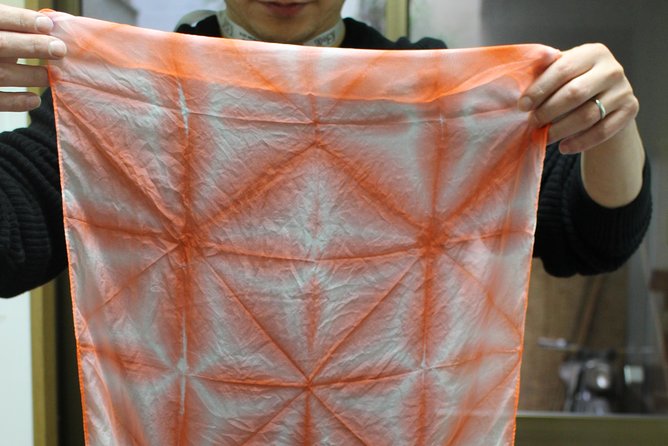
Here, you begin with a large scarf and select your preferred color. An instructor shows you how to fold the fabric in the required pattern, then helps you apply the dye. The folded sections resist the color, producing the patterned effect associated with shibori.
The method is traditional, but the class is designed for visitors. You are not asked to spend hours tying tiny sections of cloth or mastering every stage of professional textile production. That makes the class approachable, though it also explains why one less enthusiastic assessment found the hands-on portion too limited.
I see that trade-off as the key to deciding if this is right for you. If you want to understand the basic idea and leave with a finished scarf, the format works well. If you want a detailed craft lesson with many independent steps, you may find the process too brief.
A few more Kyoto tours and experiences worth a look


At Kyoto Shibori Museum, the setting matters
The class takes place at Kyoto Shibori Museum, at 135-5 Shikiamicho in Nakagyo Ward. The activity begins and ends there, and the location is near public transportation.
The museum is not large. That is worth knowing before you arrive. You should think of it as a compact specialist museum attached to a working craft experience, not as a major Kyoto attraction that takes half a day to see.
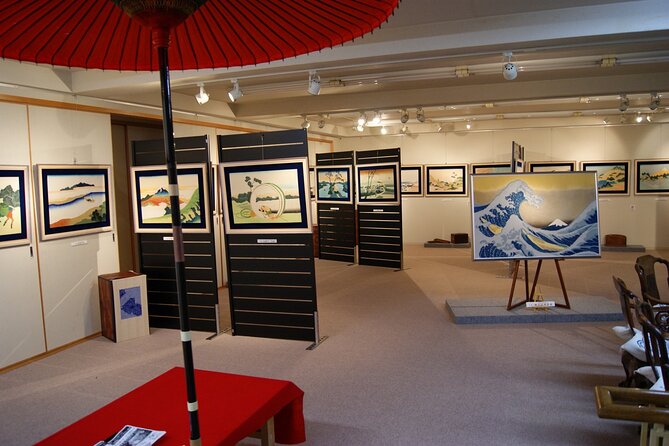
Its size can be an advantage. You can look closely at the displayed shibori pieces, tools, and fabric samples without having to cover a huge building. The museum also uses an explanatory video and show-and-tell material to explain the work behind the finished textiles.
That context makes the class more meaningful. A scarf can look simple once it is complete, but the museum shows how much planning and handwork can go into more complex shibori pieces. Large and small examples help you see the difference between a visitor project and the highly detailed work made by skilled artisans.
Plan to spend extra time looking around after the dyeing session. The class itself may last about 30 minutes, while the broader visit can take 30 to 60 minutes depending on how closely you study the displays and how long the fabric needs to dry.
Folding, coloring, and revealing the pattern
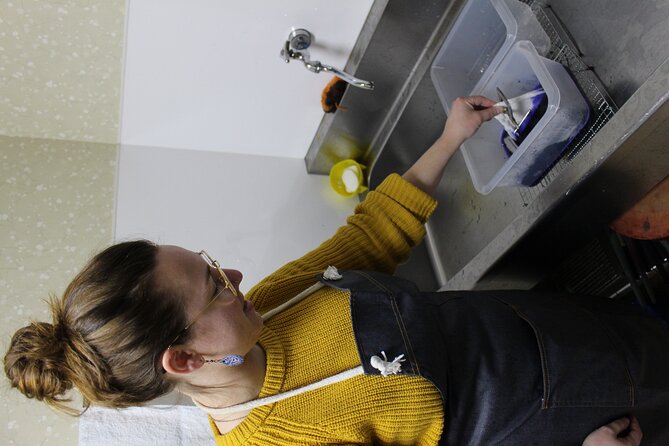
The active portion begins with your choice of color. This is a small decision, but it gives you control over the final look of the scarf. You then learn the particular folding technique used for the project.
The folding is the heart of the lesson. It determines the areas that resist the dye and the shapes that appear when the scarf is opened. You do not need prior craft experience, and the instructors guide you through the process step by step.
Once the fabric is prepared, you dye it with the selected color. The most satisfying moment comes when the material is opened and the pattern becomes visible. Because the result depends on the folds, your scarf will feel personal even though the class follows a simplified format.
The finished piece is approximately 70 inches by 17 inches, or 175 by 50 centimeters. That is a generous size for a scarf, and it is practical to pack compared with a larger textile or framed artwork.
The supplied information uses both cotton and silk when describing the scarf. The title calls it a cotton scarf, the detailed class description also gives the cotton size, while several comments refer to silk scarves. If the fabric matters to you, ask the museum to confirm the material when you book or before the dyeing begins.
What happens while the scarf dries
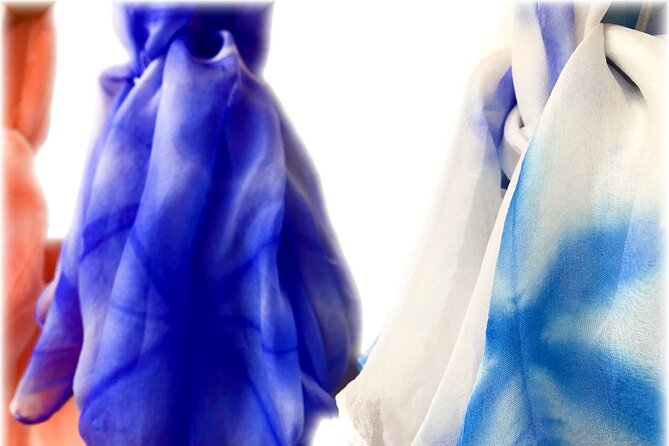
After dyeing, the scarf needs about 30 minutes to dry. You do not simply wait around. This is when the museum visit becomes part of the class rather than an optional extra.
You can browse shibori artwork, tools, and fabric samples. You can also watch the explanatory video and see examples of the techniques used in Japanese textile work. The displays help connect your small project with a broader craft tradition.
This timing is useful if you are planning a tight Kyoto day. The workshop is short enough to fit between other stops, but you should not treat the listed 30 minutes as the total time needed at the museum. Allow room for drying and browsing if you want to get the full value from the visit.
The compact museum also gives family groups something to do while the fabric dries. One person can look at the displays while another checks the finished scarf, and the private format keeps the pace centered on your own party.
A private class with patient instruction
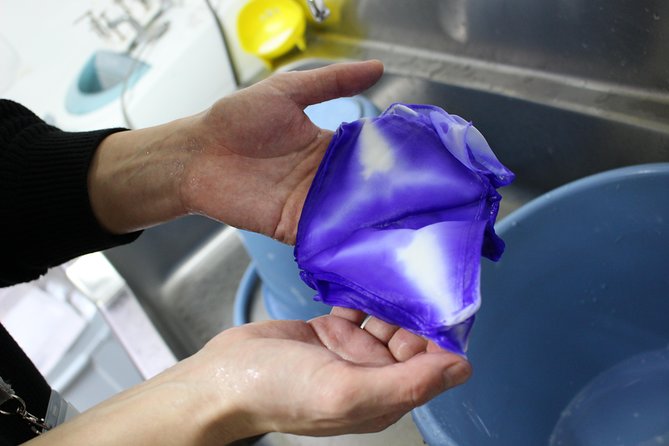
The private setup is one of the strongest features. Only your group participates, so you do not have to keep pace with strangers or compete for the instructor’s attention.
That matters in a craft class. Folding fabric correctly can be confusing if you are watching from the back of a crowded room. Here, the instructor can show your party the steps directly and adjust the explanation as needed.
The staff are described as welcoming, patient, and easy to understand. English communication is reported to be solid, which removes one common worry about a hands-on lesson in Japan. Nina is specifically praised for guiding an individual participant through the process in an informative and enjoyable way. Yokahama-san and other staff are also noted for adding historical and craft context to the visit.
The class is usually individual in format and runs from 30 to 60 minutes. The exact length may depend on the pace of your group and the surrounding museum visit. Families of five have taken part, and most people can participate.
The private format does not mean the class is highly customized in every artistic detail. The folding and dyeing method has a set structure. Its benefit is personal attention, not unlimited freedom.




Is $43.35 good value?
At $43.35 per person, this is not the cheapest souvenir activity in Kyoto. It is also more than the cost of buying a basic scarf at a shop. The value comes from combining instruction, a full-size textile, museum access, and the memory of making the item yourself.
I think the price is fair if you want a physical souvenir with a story behind it. The scarf is large enough to use, and the class gives you a direct connection to one of Japan’s traditional handcrafts. You also have time to browse the shop, where shibori purses, fabrics, samue, and other handmade items are sold.
The value is less convincing if you only want a short entertainment stop and have no interest in textiles. Since the class is brief and simplified, someone looking for advanced technique may feel that the price pays more for the finished item and museum setting than for extensive instruction.
A useful way to judge the cost is to compare it with a purchased craft item. If you were already planning to buy a Kyoto scarf or fabric gift, the class adds a personal story for a reasonable increase. If you are traveling on a very tight budget, the museum alone may provide a shorter and less costly-feeling visit, though the provided details do not list a separate museum admission price.
The museum shop adds another layer
The shop is worth leaving time for, especially if you are looking for gifts. It carries shibori items, fabrics, clothing, purses, and other handmade goods.
One family purchased a purse for a mother and a samue for a father. That gives you an idea of the shop’s range: you are not limited to small trinkets or the scarf you make in class.
Shopping is optional, of course, but it helps you see how the same techniques can be used in finished clothing and accessories. Your own scarf may have a simple pattern, while the shop pieces show more elaborate work and different uses of the fabric.
The presence of the shop can also affect your time and budget. If you are easily tempted by Japanese textiles, set a spending limit before you arrive. The class price covers the activity, but extra purchases are separate.
Who will enjoy this most?
I would recommend this class to several kinds of visitors:
- First-time craft learners: The steps are simple, guided, and manageable without previous experience.
- Families: The private format, short class length, and clear instruction suit mixed ages, as long as everyone can take part in the folding and dyeing.
- Couples and friends: Each person can create a scarf, making the finished items a shared memory with different results.
- Gift hunters: You leave with a useful Kyoto-made item, and the shop offers more choices.
- Culture-focused visitors: The museum explains the work and history behind shibori instead of treating the scarf as a stand-alone craft.
I would be more cautious about recommending it to a serious textile artist who wants to learn professional-level shibori methods. The class has been adapted to fit a short tourist schedule, and the activity may feel more like a guided introduction than a full workshop.
Practical timing and booking advice
The experience is often booked about 23 days ahead, so I would reserve in advance if your Kyoto dates are fixed. Confirmation is provided at booking, and the ticket is mobile, which keeps arrival simple.
The meeting point is Kyoto Shibori Museum, and the activity returns to that same location. Since the class is near public transportation, it can fit into a day built around central Kyoto stops.
Do not schedule an important appointment immediately afterward. The listed class duration is approximately 30 minutes, but the fabric takes about 30 minutes to dry, and you will likely want time for the museum displays and shop. A one-hour window is a sensible minimum, with more time if you enjoy crafts or shopping.
The cancellation terms are straightforward. You receive a full refund if you cancel at least 24 hours before the local start time. Cancellations or changes made within 24 hours are not accepted for a refund.
The main strengths and limits
The strongest part is the combination of personal instruction and a finished souvenir. You are not only looking at Japanese craft behind glass. You handle the fabric, make the folds, choose the color, and take home the result.
The museum is another major plus. Even people who finish the practical work quickly can learn from the examples, tools, video, and textile displays. The class gains meaning when you see the patience and precision required for more advanced shibori.
The limits are just as clear. The museum is tiny, and the class is short. The simplified process means you will not experience every demanding stage of traditional production. The mixed descriptions of cotton and silk also make it wise to confirm the material before booking if that detail affects your decision.
Still, the 4.8 rating from 18 ratings and 94 percent recommendation figure fit the experience’s strengths: friendly teaching, attractive results, simple steps, and a pleasant museum stop. The one lower assessment points to a real issue, not a flaw hidden by enthusiasm: if you want to do most of the work yourself, the lesson may feel too controlled.
Should you book the Hanakoushi cotton Scarf Class?
Book it if you want a short, private, hands-on Kyoto activity with a useful souvenir at the end. It is especially well suited to couples, families, and anyone who likes the idea of learning a traditional craft without giving up half a day.
Skip it if you are searching for a long technical workshop or if a small museum will leave you unsatisfied. Before paying, confirm whether your scarf will be cotton or silk, since the supplied descriptions use both terms.
For most visitors, the best plan is to allow about an hour or slightly more, enjoy the class at an easy pace, study the museum while the scarf dries, and browse the shop only if your budget allows. At $43.35, you are paying for more than fabric: you are paying for guidance, context, and a souvenir you helped shape.
FAQ
Where does the Hanakoushi cotton Scarf Class take place?
The class takes place at Kyoto Shibori Museum, located at 135-5 Shikiamicho, Nakagyo Ward, Kyoto, 604-8261, Japan.
How long does the class last?
The class takes approximately 30 minutes. Some classes may take between 30 and 60 minutes, depending on the session.
How long does the scarf take to dry?
The fabric takes about 30 minutes to dry after dyeing. You can use that time to explore the museum displays.
What size scarf will I make?
The scarf measures about 175 by 50 centimeters, or approximately 70 by 17 inches.
Which shibori method does the class use?
The class teaches the hanakoushi shibori method. The process involves folding the fabric in a particular way before dyeing it.
Is the class private?
Yes. The activity is private, and only your own group participates.
Can most people participate?
The additional information states that most people can participate. No special experience is required in the provided details.
Is the experience near public transportation?
Yes. The Kyoto Shibori Museum is near public transportation.
What can I see at the museum?
You can see shibori artwork, tools, fabric samples, and an explanatory video. The museum shop also sells shibori goods, fabrics, clothing, and souvenirs.
What is the cancellation policy?
You can cancel at least 24 hours before the local start time for a full refund. Cancellations and changes made less than 24 hours before the start time are not accepted for a refund.
More Workshops & Classes in Kyoto

More tours in Kyoto we've reviewed







Workshops, compared.
 ★ 4.3Kyoto: 45-Minute Tea Ceremony Lesson ExperienceFrom $2245 min
 ★ 5.0Ramen Cooking Class at Ramen Factory in KyotoFrom $131
 ★ 4.9Kyoto: Ramen Cooking Class at a Ramen Factory with SouvenirFrom $1271h 30m
 ★ 4.9Kyoto: Samurai Class, Become a Samurai WarriorFrom $70
 ★ 5.0Ninja 1-hour Hands-on Lesson by Japanese master in Kyoto -EntryFrom $80
 ★ 5.0Kyoto: Ramen, Gyoza, and Onigiri Cooking ClassFrom $901h 30m