
Reviewed · PRIVATE
Higashiyama | Kyoto: Sakura Season Private Rickshaw Tour
Kyoto’s cherry blossoms are lovely from any street, but you see them differently from a rickshaw. Sitting above the crowd, you can watch pink and white blossoms frame Higashiyama’s wooden townhouses, while your guide points out the streets and traditions around you. The ride also passes through Gion, Kyoto’s famous geisha district.
I like the private format and the choice of a 70-minute or 120-minute route. I also like that the guides can explain geisha culture in English or Japanese, rather than simply pulling you from one photo stop to the next. The main consideration is timing: cherry blossoms are not guaranteed to be in full bloom, and the rickshaw seats are narrow.
In This Review
- Key points to know before booking
- Why a rickshaw works so well in Higashiyama
- Meeting at Ichinenzaka and Nene Street
- The 70-minute route through Higashiyama
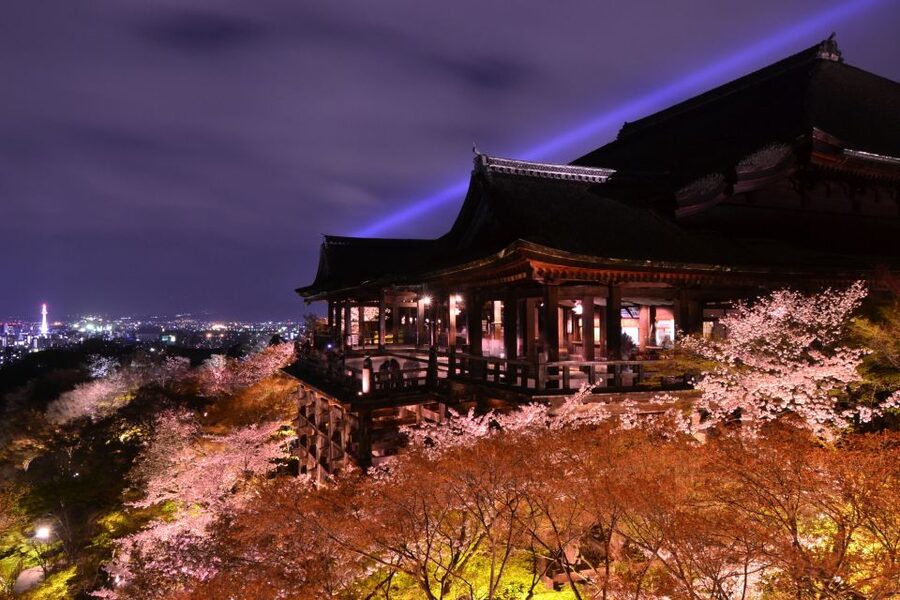
- Choosing the 120-minute option and Kiyomizu-Dera
- Wooden townhouses, shops, and Gion stories
- Cherry blossoms and the limits of nature
- Seating, family rules, and comfort
- What the $125 price means
- Who will get the most from this ride
- Practical booking advice for sakura season
- Should you book the Higashiyama rickshaw tour?
- FAQ
- Where does the tour meet?
- How do I find the meeting point?
- How long is the tour?
- Is the rickshaw tour private?
- How many adults fit in one rickshaw?
- How are groups of three or four accommodated?
- Can children ride in the rickshaw?
- Is Kiyomizu-Dera included?
- Are cherry blossoms guaranteed to be in full bloom?
- Is the tour suitable for wheelchair and stroller users?
Key points to know before booking
- Cherry blossom timing is not guaranteed: Tour dates are based on earlier blooming patterns and current estimates, but nature keeps the final say.
- The longer route includes Kiyomizu-Dera: Choose the 120-minute option if you want time to walk among the blossoms at this World Heritage temple.
- You ride through Higashiyama and Gion: Expect traditional wooden townhouses, small shops, historic lanes, and the geisha district.
- It is private, not a shared ride: One rickshaw carries one or two participants, with two rickshaws provided for groups of three or four.
- The guide adds the human story: English-speaking guides can explain local sights and geisha culture as you pass through the neighborhood.
- Seats are only 21.1 inches, or 74 centimeters, wide: Families and larger parties should read the seating rules carefully before booking.
Why a rickshaw works so well in Higashiyama
Higashiyama is one of Kyoto’s best areas for seeing old wooden architecture, narrow streets, traditional shops, and temple approaches in one outing. It is also a place where walking can become slow during cherry blossom season. A rickshaw gives you a moving seat and a clear view above much of the street-level activity.
The guide pulls you along at an easy pace, allowing you to look up at blossom branches and across the facades of old townhouses. You are not simply being transported. The guide can explain what you are seeing and add stories about the local neighborhood and geisha culture.
I find this most useful early in a Kyoto visit. The route helps you understand the shape of Higashiyama and Gion before you return on foot. You can also note which lanes and shops deserve more time later.
The experience is private, so you do not share the rickshaw with strangers. That matters in a compact historic district. You can ask questions, pause for photographs, and keep the outing focused on your own pace within the time booked.
Other private tours in Kyoto
Meeting at Ichinenzaka and Nene Street
The meeting point is on the corner of Ichinenzaka and Nene Street. The guide will be waiting there, and you should check your booking email for the map image and photograph showing the exact spot.
For the easiest arrival, search Google Maps for Ebisuya Higashiyama Rickshaw. That search term is more useful than relying only on a broad destination such as Gion or Kiyomizu-Dera. Higashiyama has many small lanes, so allow enough time to find the corner without rushing.
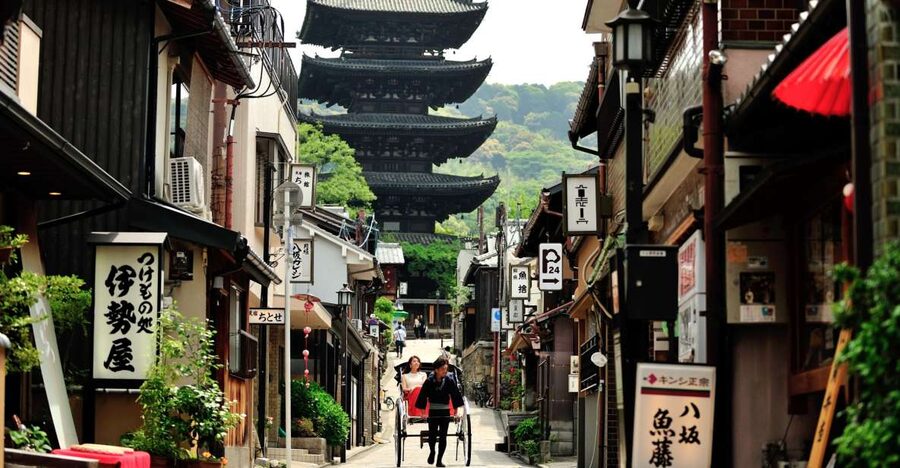
The starting area is part of the appeal. Ichinenzaka and Nene Street lead through one of Kyoto’s most traditional-looking sections, with preserved wooden buildings and small shops. You begin among the sights rather than spending the first part of the tour on a long transfer.
The guide speaks English or Japanese. English ability can vary by guide, but the available information points to clear communication and useful explanations. Specific guide names are not provided, so you should not expect to request a particular person.
The 70-minute route through Higashiyama
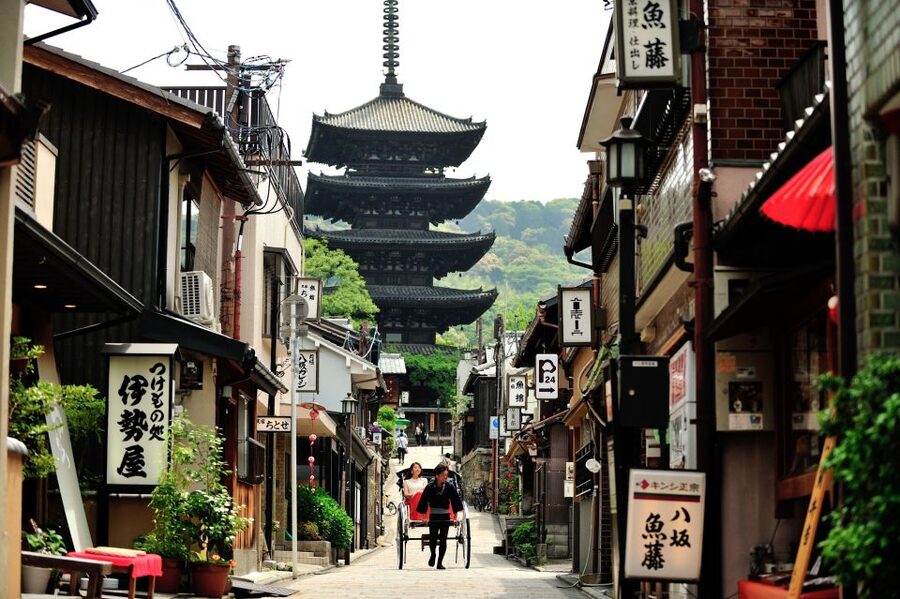
The shorter option is a good match if you want a first look at Higashiyama without giving up most of your day. You will ride through the historic neighborhood, seeing wooden townhouses, shops, blossom-lined sections, and parts of Gion.
The charm comes from the transitions. One moment you are passing old timber-fronted buildings, and soon you are near streets associated with Kyoto’s geisha culture. The guide can explain the character of the area while you watch the city pass at a slow, comfortable pace.
Photo stops are included. This is important during cherry blossom season, when the best view may be a particular street opening, a branch overhanging a wall, or a traditional building framed by flowers. The guide can help you stop at attractive points instead of leaving you to guess where the strongest photographs are.
The 70-minute route does not give you as much time for a long walk or temple visit as the two-hour option. If your main goal is Kiyomizu-Dera, book the longer duration. If you mainly want a private introduction to the old streets and blossoms, the shorter ride may be enough.
Choosing the 120-minute option and Kiyomizu-Dera
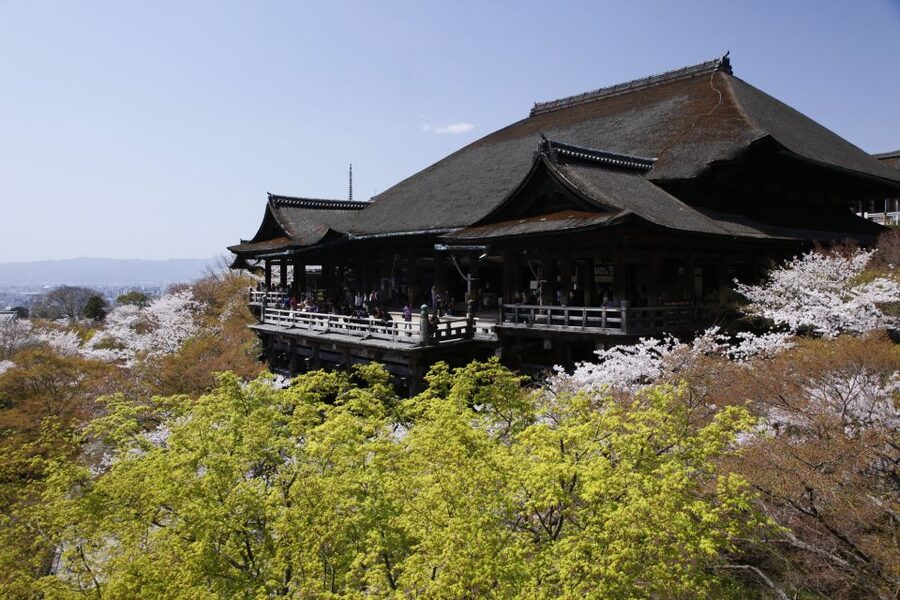
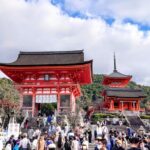
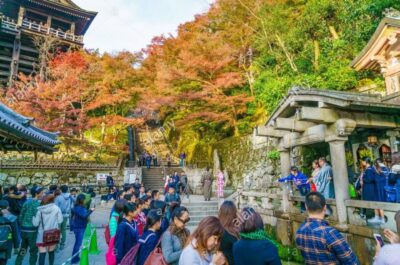
The longer route adds time to explore the cherry blossoms on foot at World Heritage Kiyomizu-Dera Temple. That changes the nature of the outing. You are not only passing through Higashiyama, you are also given time to walk amid one of Kyoto’s best-known historic sights.
Kiyomizu-Dera is especially valuable during sakura season because the temple setting gives the blossoms a wider backdrop. You can spend time looking at the flowers, the old structures, and the surrounding views rather than trying to photograph everything from a moving seat.
Entrance fees to attractions are included. Food and drinks are not, so plan any snack or meal separately. The tour itself is centered on sightseeing, guiding, and photography rather than dining.
The longer route costs you more time, but it may offer better value if this is your main cherry blossom outing in Kyoto. You get the rickshaw ride, the neighborhood context, photo stops, and a walk at Kiyomizu-Dera in one private experience.
Wooden townhouses, shops, and Gion stories
The traditional buildings are not just decoration. Higashiyama’s wooden townhouses help you picture the older scale of Kyoto, when streets were shaped by small homes, workshops, and local businesses rather than modern blocks.
From a rickshaw, you can pay attention to details that are easy to miss while navigating on foot. Look at the narrow fronts, timber construction, shop entrances, and the way the lanes lead toward temple areas. The guide’s commentary gives these details a local frame.
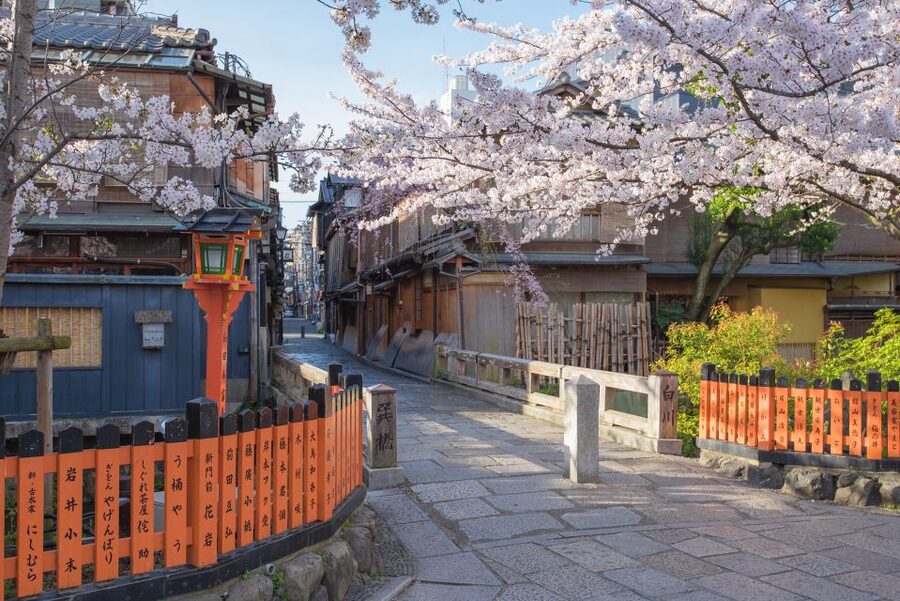
The route also passes through Gion, the geisha district. This is where a good guide matters most. The experience includes stories about geisha culture, helping you understand the district as a working cultural area rather than treating it as a collection of pretty streets.
Use your camera with care. Selfie sticks are not allowed, and narrow streets make bulky equipment awkward. Your guide will provide photo stops, so you can put the phone away between stops and focus on the buildings and blossoms.

Cherry blossoms and the limits of nature
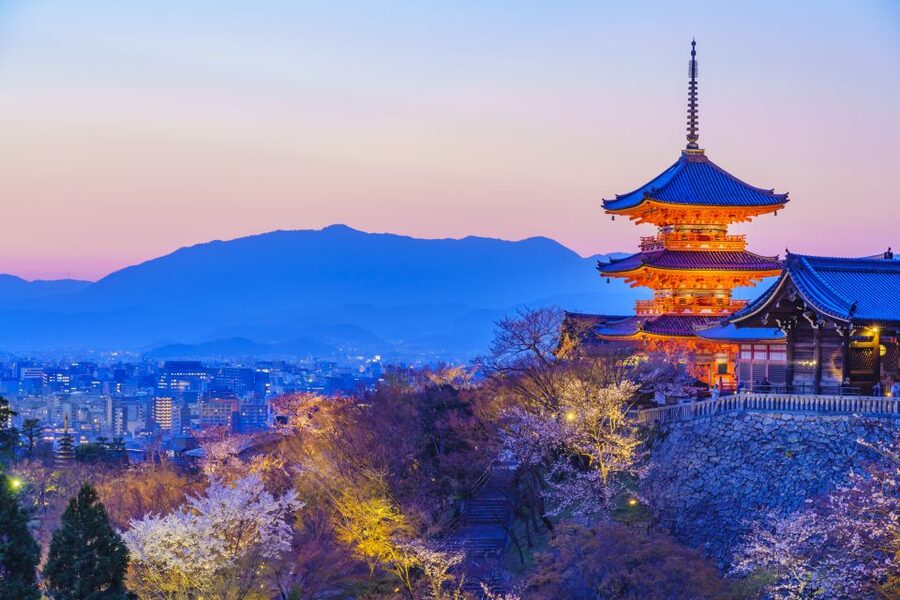
The tour is planned around sakura season, but no operator can promise full bloom. Dates are chosen from previous years and current estimates. Weather can shift the season, and blossoms may be at different stages across Kyoto.
This is the biggest uncertainty in booking. You may see full clouds of flowers, partly opened trees, or petals already falling. The experience still includes the traditional neighborhood and historic streets, but the exact pink-and-white effect cannot be guaranteed.
I would book this for the overall Higashiyama experience, not only for a perfect blossom photograph. That mindset protects you from disappointment. The rickshaw, guide, wooden buildings, Gion route, and possible Kiyomizu-Dera visit all have value even if the bloom is early or late.
The fixed timing does offer one advantage. You do not need to spend the morning checking several parks and temple grounds to find blossoms. The guide takes you through a district selected for its traditional character and seasonal appeal.
Seating, family rules, and comfort
Each rickshaw is 21.1 inches, or 74 centimeters, wide. One rickshaw carries one or two participants, and the maximum is two adults per rickshaw. That width is manageable for many people, but it is not a broad bench.
For a group of three or four, two rickshaws are provided. If you want one rickshaw per person, or if your party has five or more people, you need to contact the provider about alternate arrangements. A fare difference may apply.
Children aged six and older use adult pricing. Up to two children aged five or younger can ride with two adults, but they must sit on an adult’s lap. If a child aged five or younger uses one of the two seats, that child must be booked as a full-fare participant.
The tour is wheelchair and stroller-friendly, which is useful in a historic district where moving around independently can be tiring. At the same time, the activity is not suitable for people with back problems and is not recommended during the first 16 weeks of pregnancy. The supplied information also lists pregnant women among those for whom the tour is not suitable, so ask your medical provider if you have any concern.
What the $125 price means
The listed price is $125 per group up to one, which is an unusual way to display a private activity. Since one rickshaw carries one or two participants, check the final booking details carefully to see how your party is priced.
The value improves when two people share the private rickshaw. You receive a guide, the ride, photo stops, and entrance fees to attractions. The private format also means you are not paying for a large coach transfer or waiting for a group to move through the lanes.
For a solo visitor, the price is harder to assess because the group pricing may not divide as favorably. For a couple, it can make sense as a special seasonal outing, particularly with the two-hour route and Kiyomizu-Dera included.
Food, drinks, and hotel pickup are not included. You must reach the Ichinenzaka and Nene Street meeting point yourself and arrange your own return afterward. This is not a door-to-door tour.
Who will get the most from this ride
I would recommend the experience to couples, families with young children, and first-time Kyoto visitors who want an organized look at Higashiyama. The private guide makes it easier to ask about architecture, local customs, and geisha culture as the route unfolds.
It also suits photographers who prefer planned stops over wandering without a route. You will not control every stop, but the guide knows the neighborhood and can point out attractive views during the limited blossom season.
The ride may be less appealing if you want a long, quiet walk through every lane. The rickshaw gives you an overview, not unlimited time at each location. You should also reconsider it if a narrow seat or gentle road movement could aggravate your back.
For families, read the child rules before paying. Lap seating for young children may work for a short ride, but it is worth considering carefully for the full 120 minutes.
Practical booking advice for sakura season
Choose the 70-minute route if your schedule is tight or you want a neighborhood introduction before visiting other Kyoto sights. Choose 120 minutes if Kiyomizu-Dera and a more complete Higashiyama visit are central to your plans.
Book with the blossom uncertainty in mind. The activity cannot guarantee full bloom, even though its dates use earlier seasons and current forecasts. A flexible booking policy helps: cancellation is free up to 24 hours before the start time, and you can reserve now and pay later.
Bring a camera without a selfie stick. Wear clothing that lets you sit comfortably, and keep your arrival simple by using the Ebisuya Higashiyama Rickshaw search result and the meeting-point image sent by email.
The strongest part of this outing is the guide. The available feedback specifically praises helpful guides, strong attention to detail, good English communication, and stories about geisha culture. Those qualities turn a pleasant ride into a useful introduction to Kyoto’s older neighborhoods.
Should you book the Higashiyama rickshaw tour?
Book it if you want a private, seasonal look at Kyoto without spending the entire day walking. The combination of Higashiyama’s wooden townhouses, Gion’s cultural setting, guided stories, and planned photo stops offers more than a simple ride.
The 120-minute option is the better choice for a first visit if you want Kiyomizu-Dera included. The 70-minute option is the smarter value when you mainly want an overview and have other temple visits planned.
Skip it if your top priority is guaranteed full-bloom cherry trees, a wide seat, or a self-directed walking tour. For everyone else, this is a polished way to see Kyoto’s most traditional streets at blossom time, provided you accept the limits of the season and the compact rickshaw seating.
FAQ
Where does the tour meet?
Meet the guide on the corner of Ichinenzaka and Nene Street. Check your email for the map image and photograph of the exact meeting place.
How do I find the meeting point?
Search for Ebisuya Higashiyama Rickshaw on Google Maps. The email map and meeting-point photograph can also help you locate the corner.
How long is the tour?
You can choose a 70-minute or 120-minute tour. Starting times vary, so check availability for the date you want.
Is the rickshaw tour private?
Yes. The experience is operated as a private group tour.
How many adults fit in one rickshaw?
A maximum of two adults can ride in one rickshaw. One rickshaw is provided for one or two participants.
How are groups of three or four accommodated?
Groups of three or four receive two rickshaws.
Can children ride in the rickshaw?
Up to two children aged five or younger can ride with two adults on an adult’s lap. Children aged six and older use adult pricing. A child aged five or younger who uses one of the two seats must be booked as a full-fare participant.
Is Kiyomizu-Dera included?
The 120-minute tour includes a stop to walk among the cherry blossoms at World Heritage Kiyomizu-Dera Temple. Entrance fees to attractions are included.
Are cherry blossoms guaranteed to be in full bloom?
No. The dates are selected using previous years and current estimates, but full bloom cannot be guaranteed.
Is the tour suitable for wheelchair and stroller users?
The activity is wheelchair and stroller-friendly. It is not suitable for people with back problems and is not recommended for expecting mothers during the first 16 weeks of pregnancy.
More Private Tours in Kyoto
More tours in Kyoto we've reviewed










Private, compared.
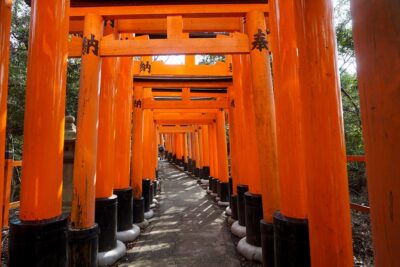 ★ 5.0Fushimi Inari Hidden Hiking Tour (Private Option Available)From $63
 ★ 5.0Private Kyoto Tour with a Local, Highlights & Hidden Gems, PersonalisedFrom $102
 ★ 5.0Kyoto 6hr Private Tour with Government-Licensed GuideFrom $155
 ★ 5.010 Must-see Spots in Kyoto One Day Private Tour (up to 7 people)From $179
 ★ 5.0Kyoto 4hr Private Tour with Government-Licensed GuideFrom $109
 ★ 4.8Kyoto: Private Tour with Local Licensed GuideFrom $1064 - 8 hours