
Reviewed · PRIVATE
Highlights & Hidden Gems With Locals: Best of Kyoto Private Tour
Kyoto can feel like a puzzle of temples, lanes, shrines, and markets. This private three-hour walking tour gives you a guide to connect the pieces, from Kiyomizu-dera and Gion to the Kamo River and Nishiki Market. The route mixes famous sights with quieter streets around Higashiyama.
I like the freedom to choose your start time and shape the route around your interests. I also like the personal scale: it is only your party and the guide, so families can ask questions, couples can linger, and first-time visitors can get help finding their feet. The main caution is guide quality. Some guides, including Ted, Guia, and Shohei, have earned especially warm praise, but a few guests found their guide lacked local knowledge or Japanese-language ability.
In This Review
- Key points at a glance
- A personal introduction to Kyoto in three hours
- What the $167.92 price really buys
- Higashiyama lanes near the Kyoto Municipal Zoo
- Yasaka Shrine and the curious Kongoji Temple
- Kiyomizu-dera, the tour’s main temple visit
- Gion’s lanes and the geisha district
- The Kamo River and a slower Kyoto moment
- Nishiki Market for snacks and souvenirs
- Why the guide matters more than the route
- Walking pace, timing, and practical planning
- Who should book this Kyoto tour
- Should you book it?
- FAQ
- How long is the Kyoto private tour?
- Is the tour private?
- Where does the tour start and end?
- Is hotel pickup included?
- Is Kiyomizu-dera admission included?
- Is food included?
- Can I cancel for a full refund?
Key points at a glance
- Private route for your group: You avoid a large coach party and can adjust the pace, stops, and focus.
- A useful Kyoto sampler: The route links Kiyomizu-dera, Gion, Yasaka Shrine, the Kamo River, and Nishiki Market.
- Good guides make the difference: Ted, Guia, and Shohei are repeatedly singled out for energy, cultural context, and customization.
- One drink or tasting is included: Confirm when and where this will happen, since one guest said it was missed.
- Expect a walking-heavy morning or afternoon: The three-hour schedule covers several districts, so comfortable shoes matter.
- Value depends on your guide: At $167.92 per person, the price makes most sense for a small private group that wants orientation and conversation.
A personal introduction to Kyoto in three hours
This experience is best understood as a guided introduction rather than a full Kyoto sightseeing day. You will move through several of the city’s most recognizable areas, but the real benefit is having someone connect them for you and point out side streets you might otherwise pass.
The route begins near 198 Nakanochō in Higashiyama and returns to the same meeting point. That central location places you close to Gion and the eastern temple district, making it a practical starting place if you are already sightseeing in central Kyoto. There is no hotel pickup or drop-off, so you need to reach the meeting point yourself.
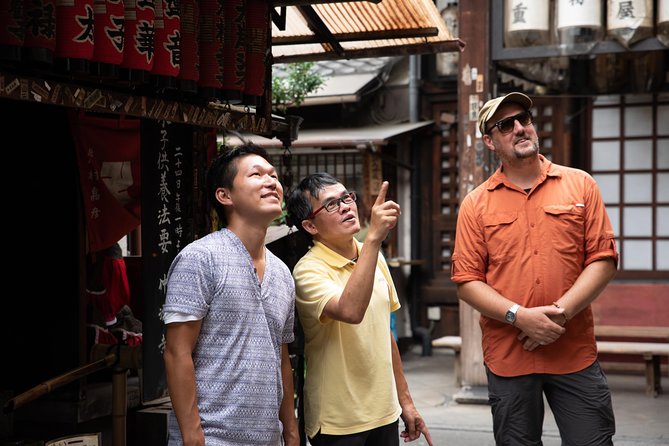
You have a private guide, not a fixed group leader speaking to a crowd. That matters in Kyoto, where a quick question about a shrine, a tea house, or a narrow lane can turn a simple walk into a useful lesson. The quality of that lesson, however, depends heavily on who is assigned to you.
Other private tours in Kyoto
What the $167.92 price really buys
At $167.92 per person, this is not a budget walking tour. It becomes more reasonable when you are sharing the cost with family or friends and want a private guide rather than a large group. Group discounts are available, and a small party can make better use of the flexible format.
The price includes the private tour, a local guide, one local drink or tasting, and admission to Kiyomizu-dera. Other food and drinks are extra. That inclusion matters at Kiyomizu-dera, one of Kyoto’s essential sights, but you should confirm the admission arrangement at the start because one guest reported paying cash for temple tickets despite expecting them to be covered.
I see the strongest value in the time saved and questions answered. You do not have to work out how the sights connect or decide which lane leads toward Gion. If your guide is strong, you also gain stories and cultural context that a map cannot provide.
The value is weaker if you already know Kyoto well or mainly want a deep temple study. Three hours passes quickly, and the itinerary gives you a taste of several districts rather than a long visit at each one.
Higashiyama lanes near the Kyoto Municipal Zoo
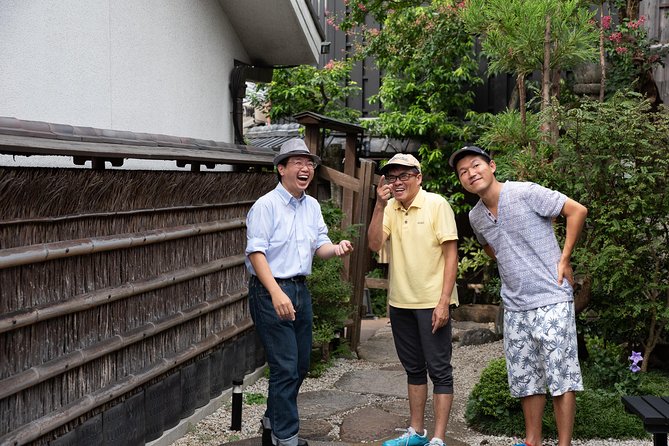
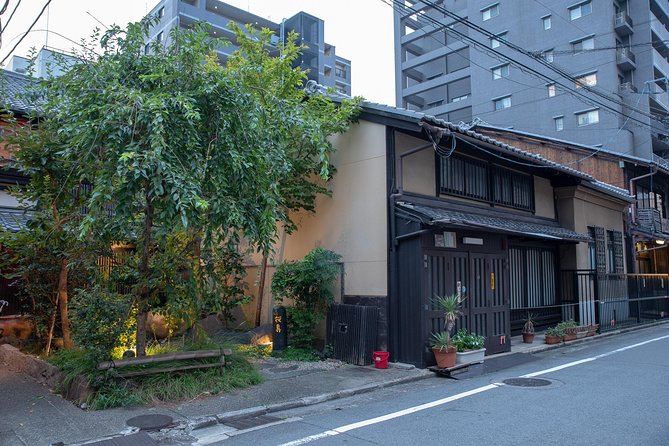
The first listed stop is the Kyoto Municipal Zoo, though the experience is described as passing by the zoo and exploring the surrounding neighborhood rather than visiting the animal exhibits. The point is the old-fashioned feel of this part of Kyoto, with narrow lanes, wooden buildings, pottery stores, tea houses, and small resting places.
This is a good opening because it shifts your attention away from only the major monuments. Kyoto’s character often appears in the spaces between the headline sights: a quiet street, a traditional shopfront, or a small store that has served local customers for years.
The scheduled time is about 30 minutes. Do not expect a full neighborhood tour and a zoo visit in that window. Think of it as a short orientation to an older quarter before the route moves toward the larger shrines and temples.
Yasaka Shrine and the curious Kongoji Temple
The itinerary includes Yasaka Shrine, one of Kyoto’s best-known Shinto sites, with a listed visit of about 20 minutes. The shrine was founded more than 1,350 years ago, making it a useful place to ask about the long relationship between religious practice, seasonal celebrations, and daily life in Kyoto.
The route also includes Kongoji Temple, where you learn about a folk belief that says a wish can be granted only if you give up one desire. That unusual idea is more memorable than a simple construction date, and it gives your guide a chance to explain how local religious customs can blend formal temple practice with everyday hopes and bargains.
Yasaka Shrine appears twice in the supplied route, once before Kongoji and once after it. This may reflect a route description that uses the shrine as a reference point at two moments, or it may simply be a duplicated stop. Ask your guide at the beginning how the path is arranged so you know how much time will be spent there.
There is also a planned coffee break before the second Yasaka Shrine reference. Coffee is not listed as a separate included food item, so clarify whether the included local drink or tasting is being used for this stop.
Kiyomizu-dera, the tour’s main temple visit
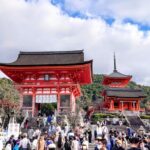
Kiyomizu-dera gets about 30 minutes and is the most substantial temple stop on the route. Founded more than 1,200 years ago, it sits partway up Mt. Otowa in the Higashiyama range. Its hillside setting is a major part of the experience, with the temple connected to the surrounding slopes and views across Kyoto.
Admission is listed as included. Still, confirm the practical details before entering, especially if your guide’s ticket is handled separately. One past guest said both personal and guide admission had to be paid in cash, while another expected the temple tickets to be covered.
Thirty minutes is enough for an introduction and a focused look, but not enough for every corner of the complex. If Kiyomizu-dera is your priority, tell the guide early. You may need to trade time at another stop for a slower temple visit.
The temple is also a place where a good guide earns the fee. Dates and names alone do not say much. Ask about the temple’s setting, religious purpose, and how it fits into Kyoto’s larger story. Guides such as Ted and Shohei have been praised for adding history, religion, anecdotes, and cultural explanation rather than merely listing facts.
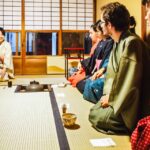
Gion’s lanes and the geisha district
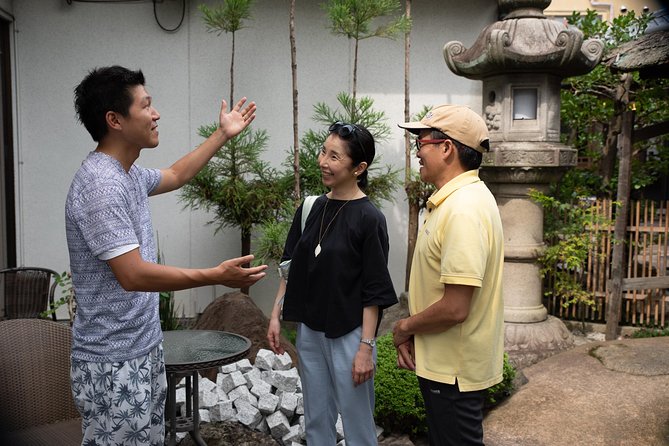
Gion is Kyoto’s most famous geisha district, and the route gives it about 20 minutes. That is enough for a first look at the traditional streets and an explanation of the area, but it is too short for an unhurried wander through every lane.
The most useful part of a guided visit here is learning how to behave respectfully. Gion is a working neighborhood, not a stage set. A guide can help you understand the difference between a public street and a private entrance, and can point out architectural details without encouraging intrusive behavior.
Some of the strongest praise for this tour centers on access to less visited parts of Gion. David, Ted, Guia, and Shohei are all described as guides who added side streets, local stops, or extra explanation. This is exactly where the private format can improve on a basic checklist tour.
Do not book this experience expecting guaranteed geisha sightings. The route takes you through the district, but no appearance is promised. The reward is the streetscape and the context, not a staged encounter.
The Kamo River and a slower Kyoto moment
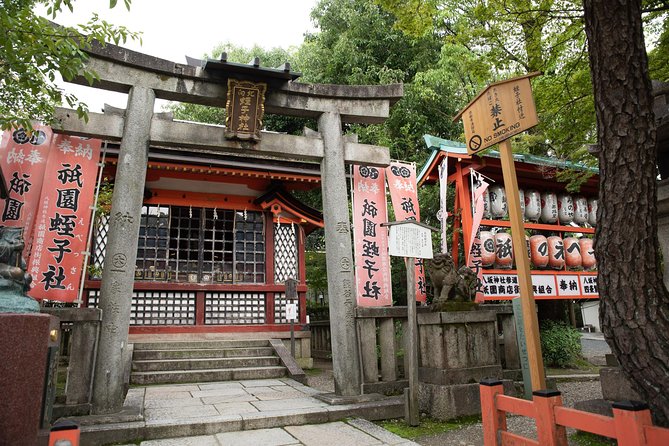
The Kamo River receives another 20-minute stop. It is one of Kyoto’s most recognizable public spaces, and it offers a welcome change after the temple and shrine visits.
The river is especially useful as a place to pause and understand Kyoto’s layout. Your guide can help you see how the central districts relate to Higashiyama, Gion, and the market area. The route is not only about ticking off buildings. It also shows how people use open space within a dense historic city.
This stop may feel simple if you are expecting another major monument. I would treat it as a breathing space and a chance to ask broader questions about Kyoto. On a short tour, those pauses help keep the experience from becoming a rushed march between entrances.
Nishiki Market for snacks and souvenirs
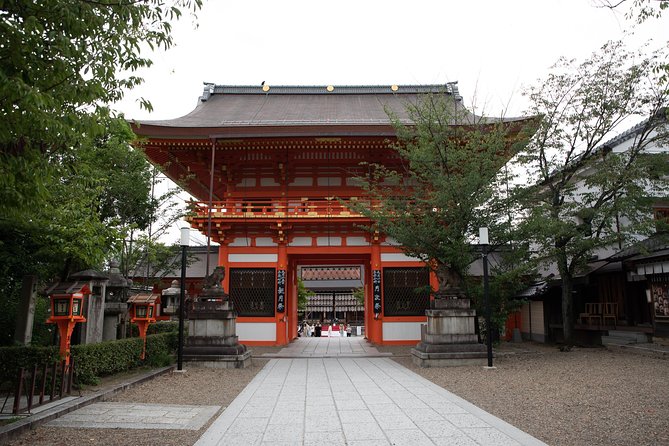
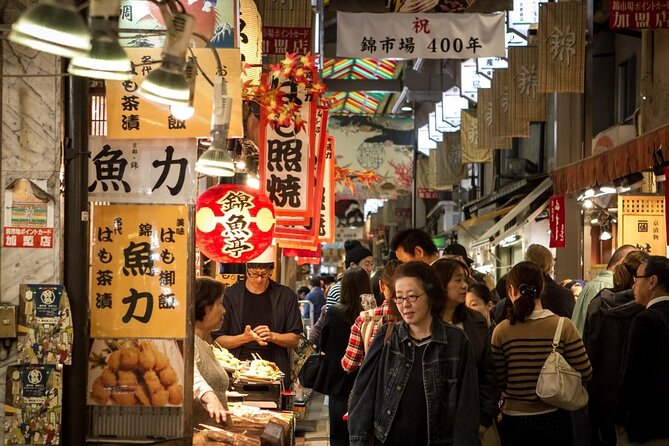
The final listed stop is Nishiki Market, a 400-year-old shopping district where you can sample local Japanese foods and browse for souvenirs. The schedule allows about 20 minutes, so you will get an introduction rather than a full food crawl.
Food and drinks beyond the stated tasting are not included. Bring some yen if you want to try something that catches your eye, though the tour price does not include those purchases.
Nishiki is a practical ending because it leaves you in a useful central area with plenty of choices for a later meal or more shopping. If food is one of your main interests, tell your guide before the tour. One family used a guide for additional food exploration and found that helpful, but the standard experience itself should be treated as a short market visit, not a dedicated food tour.
Why the guide matters more than the route
The route is solid. The greater uncertainty is the person leading it.
Ted is praised for bringing history, culture, and religion together, adjusting the route to match what a group had already seen, and helping families discover food along the way. Guia is described as attentive with children, flexible with family needs, and willing to add refreshments and treats. Shohei is praised for energy, humor, detailed explanations, and finding places that could easily be missed.
Those examples show what this tour can be at its best: a flexible conversation with someone who knows how to read your interests. You can ask for more temples, more food, more neighborhood walking, or more help with the basics of Kyoto.
But you should not assume every guide will offer the same level of local expertise. Several negative accounts describe guides who were not Japanese, did not speak Japanese, or had spent only a limited period living in the country. One guide was described as an expatriate with a useful personal perspective, but not the local viewpoint the buyer expected.
That distinction matters because the product is sold around local insight. If having a Japanese guide or Japanese-language ability is important to you, ask the provider before booking if that can be confirmed. Also explain what you have already seen and what you want to learn. A private tour gives you the chance to set expectations clearly.
Walking pace, timing, and practical planning
The tour lasts about three hours and is private, with only your group and the guide. It is near public transportation, but hotel pickup and drop-off are not included. The route returns to the starting meeting point, so plan your next activity with that in mind.
Because the route covers Higashiyama, Gion, the river, and Nishiki Market, you should expect plenty of walking. The supplied information does not give a total distance or a detailed accessibility assessment, but most travelers can participate. Comfortable shoes and water are sensible choices.
The route has many stops, each generally lasting 20 or 30 minutes. That structure keeps the tour moving, but it also means you will not have time for long temple visits or extended shopping. If you prefer a relaxed pace, ask the guide to reduce the number of stops.
The start time can be chosen to fit your plans. That is useful in Kyoto, where early or later sightseeing can make a difference to how busy a district feels. The tour does not promise a particular crowd level, so treat the flexible start as a scheduling benefit rather than a guarantee of quiet streets.
Who should book this Kyoto tour
I would recommend it most strongly to first-time visitors, families, and small groups who want a useful introduction without committing to a full-day excursion. It suits people who enjoy asking questions and adjusting plans as they go.
Families may appreciate the private format, especially since Guia is praised for keeping children engaged. Groups of friends can also get good value from the per-person price if the group discount applies.
This is less suitable for someone seeking a specialist history tour, a detailed religious study, or a dedicated food walk. It is also not the best choice if you want a guaranteed Japanese-born guide or a tightly standardized experience. Confirm those expectations before paying.
Free cancellation is available up to 24 hours before the start time. After that point, the amount paid is not refunded, and late changes are not accepted.
Should you book it?
Book this tour if you want a flexible Kyoto orientation with major sights, neighborhood walking, and a private guide who can adjust the conversation to your group. The route gives you a useful first look at Higashiyama, Kiyomizu-dera, Gion, the Kamo River, and Nishiki Market, while the best guides add the stories that make those places stick.
Before booking, ask which guide is available, whether the guide is Japanese-speaking, how the Kiyomizu-dera admission will be handled, and when the included drink or tasting will take place. With a strong guide, $167.92 per person can be fair for a private introduction. With a weak one, the same route is easy to follow with a map.
FAQ
How long is the Kyoto private tour?
The tour lasts approximately three hours.
Is the tour private?
Yes. Only your group and the local guide participate.
Where does the tour start and end?
It starts at 198 Nakanochō in Kyoto’s Higashiyama Ward and ends back at the meeting point.
Is hotel pickup included?
No. Hotel pickup and drop-off are not included.
Is Kiyomizu-dera admission included?
Yes, tickets for Kiyomizu-dera are listed as included. Because one guest reported paying cash for temple admission, confirm the ticket arrangement with the provider or guide before entering.
Is food included?
One local drink or tasting is included. Other food and beverages are not included.
Can I cancel for a full refund?
Yes, if you cancel at least 24 hours before the experience start time. Cancellations or changes made less than 24 hours in advance are not refunded.
More Private Tours in Kyoto
More tours in Kyoto we've reviewed

Private, compared.
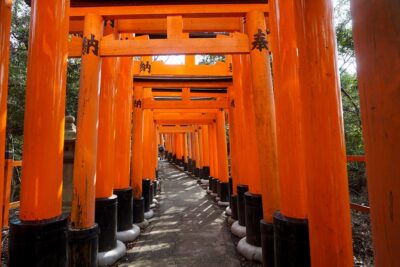 ★ 5.0Fushimi Inari Hidden Hiking Tour (Private Option Available)From $63
 ★ 5.0Private Kyoto Tour with a Local, Highlights & Hidden Gems, PersonalisedFrom $102
 ★ 5.0Kyoto 6hr Private Tour with Government-Licensed GuideFrom $155
 ★ 5.010 Must-see Spots in Kyoto One Day Private Tour (up to 7 people)From $179
 ★ 5.0Kyoto 4hr Private Tour with Government-Licensed GuideFrom $109
 ★ 4.8Kyoto: Private Tour with Local Licensed GuideFrom $1064 - 8 hours