
Reviewed · FUSHIMI INARI TOURS
Inside of Fushimi Inari – exploring and lunch with locals
Fushimi Inari is more than a quick photo beneath its famous red gates. This four-hour walk takes you beyond the main route, into quiet bamboo and cedar paths, small holy sites, a torii-making workshop, and a summit shrine 233 meters above sea level. Guides including Ko, Go, Kenji, Yuya, and Taishi bring local context to a place that can feel very busy on your own.
I like two things here. First, the guides steer you toward less-crowded viewpoints and photo spots. Second, the simple mountain break with hot tea and a salted boiled egg gives the hike a welcome pause, while the included soba lunch turns sightseeing into a local meal. The main consideration is the walking: stairs and uphill sections make this an easy to moderate hike, not a flat temple visit.
In This Review
- Key points to know before you book
- Why this Fushimi Inari walk feels different
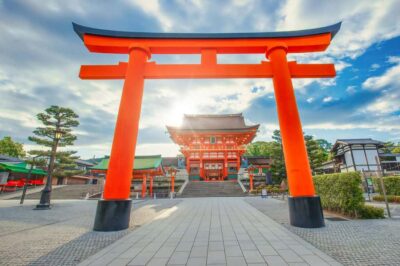
- Meeting beneath the Great Torii
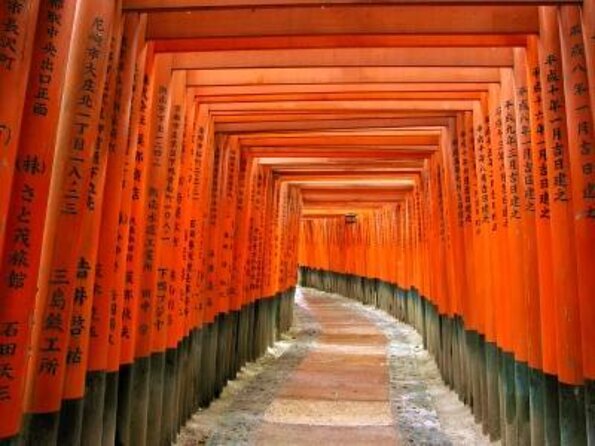
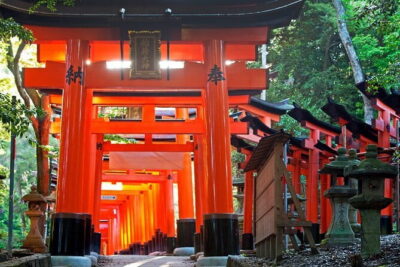
- The main shrine and thousands of red gates
- Bamboo, cedar, worship stones, and a waterfall
- The 233-meter summit shrine
- Photo stops away from the main crowds
- Tea, a boiled egg, and a Kyoto panorama
- Soba lunch at a traditional local restaurant
- The guides make the difference
- What the $67 price buys you
- Who should book this experience
- My verdict: book it for the quieter mountain
- FAQ
- How long does the Fushimi Inari experience last?
- Where does the tour meet?
- How far is the meeting point from Fushimi-Inari Station on the Keihan Line?
- Is the tour conducted in English?
- How large is the group?
- Does the tour include hiking?
- How high is the summit shrine?
- What food is included?
- Are vegan or allergy-friendly options available?
- Are drinks at lunch included?
- What should I wear?
- Can I cancel for a full refund?
Key points to know before you book
- The quieter side of Fushimi Inari: Walk beyond the famous torii corridor to bamboo, cedar forest, worship stones, and a waterfall.
- A summit reached on foot: The route climbs to a shrine at 233 meters, with roughly 20 minutes of uphill walking to the top.
- Local food is part of the deal: Your included meal is soba noodles with fried sweet inari sushi. Lunch drinks cost extra.
- A useful tea stop: Enjoy Japanese hot tea and a salted boiled egg at a mountain hut, with vegan alternatives available.
- Small-group guiding: The English-language group is limited to 10 people, making questions and a relaxed pace easier.
- Dietary planning matters: Vegan and other dietary options are available, but you need to give advance notice.
Why this Fushimi Inari walk feels different
Most first visits to Fushimi Inari Taisha follow the lower stretch of vermilion torii gates, take a few photographs, and turn back. That is a fine introduction, but it leaves out much of what makes the mountain shrine special.
This experience uses the famous gates as a starting point, then takes you into the quieter parts of the site. You will still see the main shrine and the long rows of torii, with an explanation of their cultural background and purpose. But the real value comes afterward, when the path narrows into forest and the crowds often thin.
I especially like that the guides do not treat Fushimi Inari as a simple staircase with red gates. They introduce Shinto traditions, explain the meaning of worship stones, and show you places that are easy to miss without local help. The focus is not only on taking a picture. It is on understanding how the shrine functions as a sacred mountain.
The small group helps. With no more than 10 people, you can ask about the symbols, customs, and local area without trying to catch a guide’s words over a large crowd. The walking speed can also adjust to the group, although the full schedule may change according to how quickly everyone climbs.
A few more Kyoto tours and experiences worth a look

Meeting beneath the Great Torii
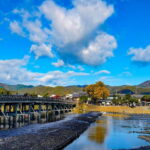
The meeting point is the stone pillar at the Great Torii, directly across from the JR Inari Station exit. You finish at the same place, which keeps the day easy to plan.
If you arrive by the Keihan Line, Fushimi-Inari Station is about a 10-minute walk away. Give yourself enough time to find the correct gate and meet the guide without rushing. The large torii is an obvious landmark, but the meeting instructions are specific, so check the map before setting out.
This is a practical starting point for a morning or afternoon in southern Kyoto. You are already at Fushimi Inari, rather than spending part of the tour traveling across the city. From the gate, the group begins with the main shrine area before moving into the mountain route.
The main shrine and thousands of red gates
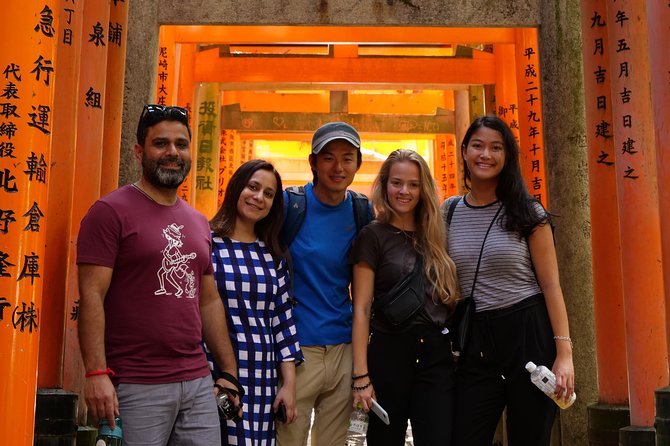
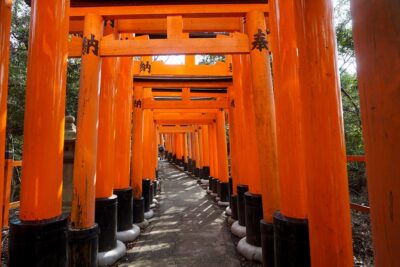
The first section gives you the classic Fushimi Inari experience: shrine buildings, sacred details, and thousands of red torii gates climbing the mountain.
A guide adds real value here because the visual effect can distract you from the meaning of the place. You will hear about the background of the shrine and the traditions connected with the torii. The gates are not simply decoration. They form a long religious route, and their repetition creates a strong sense of movement from the ordinary world toward the mountain’s sacred spaces.
This is also the busiest part of the walk. If you want photographs without people, you will need patience at the lower gates. The advantage is that the group does not spend the whole tour here. After seeing the essential sights, your guide leads you away from the most familiar corridor.
That change of pace is one of the tour’s strongest features. You get the famous view, but you do not have to remain in the thick of the crowds for the entire four hours.
Bamboo, cedar, worship stones, and a waterfall
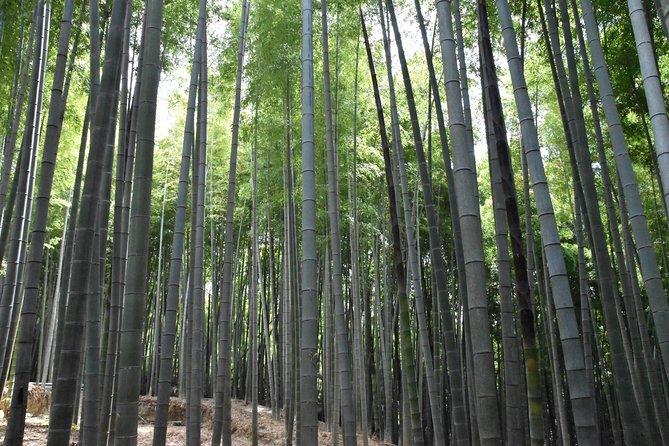
The quieter forest section is where the experience begins to feel more personal. You walk through bamboo and cedar trees on organized paths, visiting holy places that many independent visitors pass without noticing.
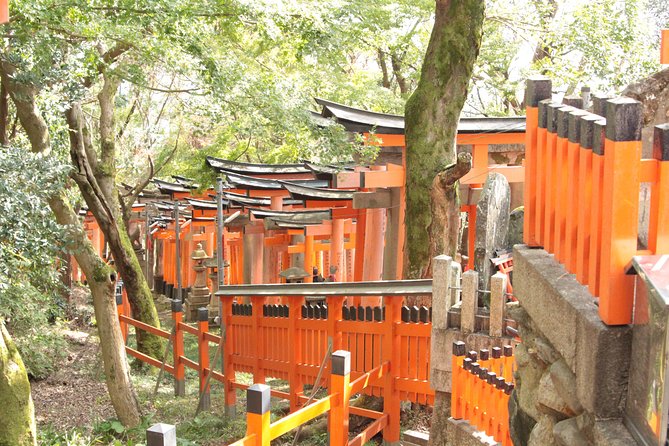
The route includes worship stones and a waterfall. These spots offer a different view of Fushimi Inari, one based less on grand buildings and more on small acts of devotion in the forest. Your guide explains how these places fit into the shrine’s religious setting, helping you read the mountain rather than simply walk through it.
You will also visit a factory. One particularly memorable possibility is seeing a master carve torii columns, an unusual look at the hands-on work behind the shrine’s famous gates. The carving visit is an added point of interest, especially if you have already seen many torii but never considered how they are made.
The path is well organized, but this is still a hill walk. Wear shoes with a good grip and clothes you can move in. A hands-free backpack is better than a shoulder bag because you will need your arms for balance and photographs on the stairs.
The 233-meter summit shrine
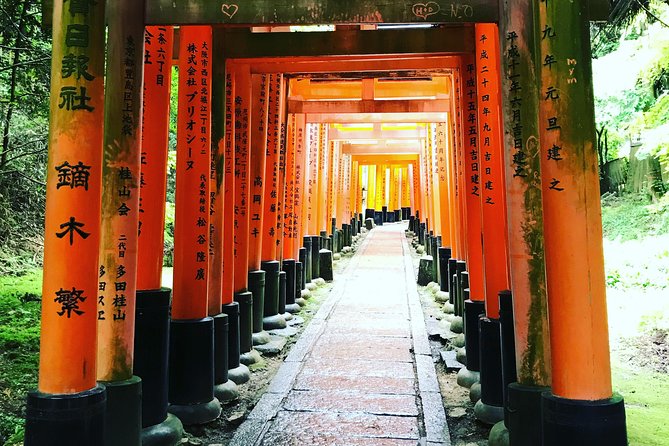
The climb to the summit shrine takes about 20 minutes on a forest route. That estimate describes one part of the walk, not the entire hiking portion, which lasts about three hours with stops and sightseeing.
At 233 meters, the summit is not a high mountain expedition. Still, repeated stairs and uphill sections can feel tiring, especially in warm weather or if you are not used to walking hills. The guides keep the pace casual and build in breaks, but you should not book this expecting a gentle stroll through temple courtyards.
At the top, your guide shows you around the summit shrine and explains its place within Fushimi Inari. Reaching this point gives the walk a clear purpose. You are not simply wandering through the gates. You are following the route upward to one of the mountain’s central sacred points.
The climb is best suited to you if you can comfortably manage stairs for several hours. The tour is not described as wheelchair accessible, and the stairs and forest route would make it unsuitable for anyone who needs a fully level path.
A few more Kyoto tours and experiences worth a look

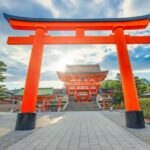


Photo stops away from the main crowds
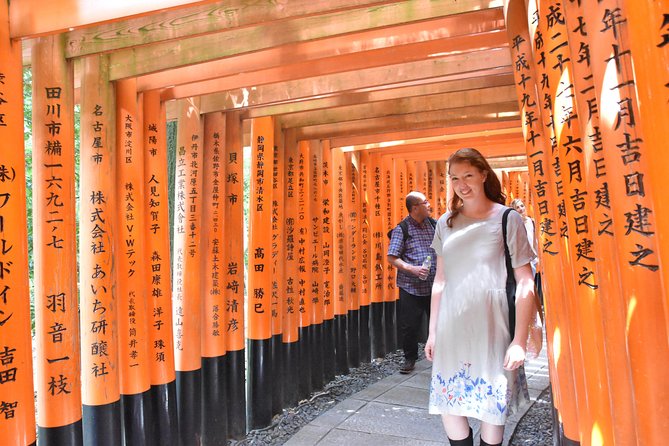
After the summit, the route turns downhill and the guide points out photogenic places that are usually quieter. This is useful because the most famous torii corridor is often difficult to photograph without other people in the frame.
You will have more chances to take pictures of the gates, forest, and surrounding shrine details without stopping the group in a busy passage. The guide’s local knowledge also helps with timing and positioning. Instead of wandering around hoping to find a good angle, you are shown specific places along the descent.
Keep your camera or phone easy to reach, but do not let photography slow you so much that you miss the explanations. The strongest part of this walk is the combination of images and context. You get the striking red gates, but also the less polished forest paths and small sacred sites around them.
Tea, a boiled egg, and a Kyoto panorama
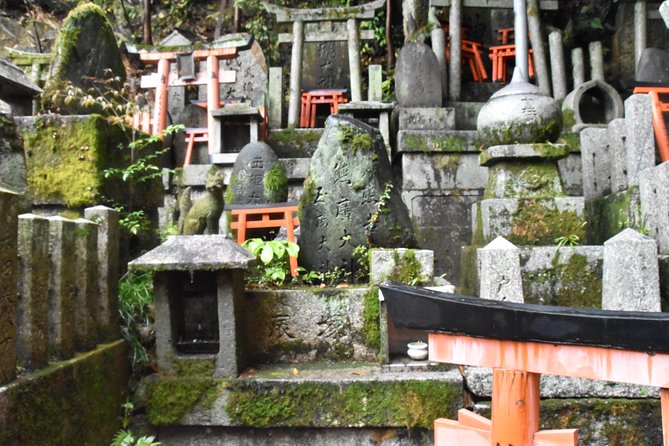
A mountain hut provides a welcome rest stop. You can have hot Japanese tea and a boiled egg with salt while looking out over Kyoto from a viewpoint.
This is a modest snack, not a full meal, but it is exactly the kind of pause that makes a hill walk more enjoyable. The tea gives you a chance to warm up or catch your breath, and the egg adds a little substance before lunch. Vegan alternatives are available, but tell the operator in advance so the food can be arranged.
The viewpoint offers a panorama of Kyoto city. The sight is a useful reminder that Fushimi Inari is both a religious site and a mountain within the city. You get a broad view after moving through enclosed forest, and the contrast makes the stop especially effective.
Bring water as well, since the included tea is only part of your refreshment. The schedule can shift with the group’s pace, so do not plan a tight appointment immediately after the tour.
Soba lunch at a traditional local restaurant
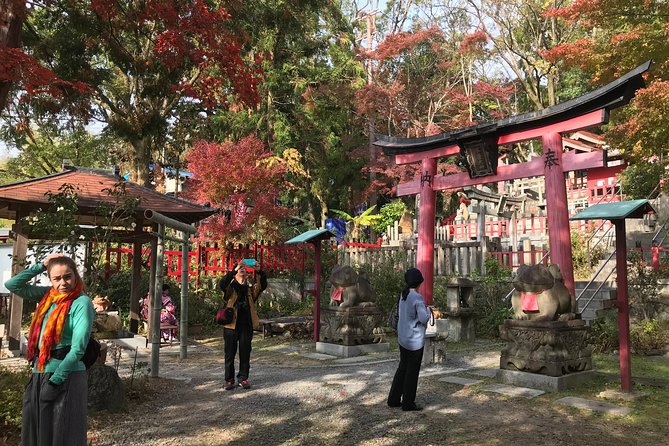
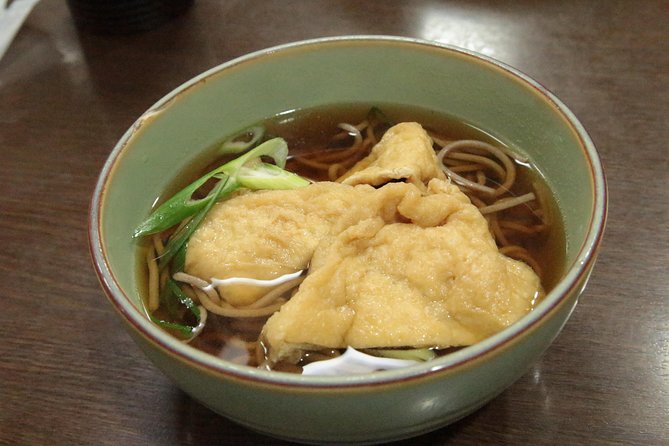
Lunch is served at a local soba restaurant and lasts about 30 minutes. The included meal features Japanese noodle soba and fried sweet inari sushi.
Soba makes sense after this walk. It is familiar enough for many first-time visitors to Japan, yet still a distinctly local meal. Inari sushi also connects neatly with Fushimi Inari, whose name and traditions are associated with Inari, the Shinto deity linked with rice and prosperity.
The meal is one of the better reasons to choose this experience over a simple guided walk. You do not have to stop afterward to search for a restaurant, and the guide can help explain what you are eating. Lunch drinks are not included, so allow a little extra money if you want something beyond the supplied food.
Vegan options and other dietary accommodations are available, but advance notice is essential. Do not wait until you sit down to explain a serious allergy or dietary restriction. Tell the tour provider when booking.
The schedule information places lunch as a 30-minute stop, so this is a focused local meal rather than a long restaurant break. If you prefer an unhurried lunch with several courses, you may find the timing short. If you want food included without losing much sightseeing time, it works well.
The guides make the difference
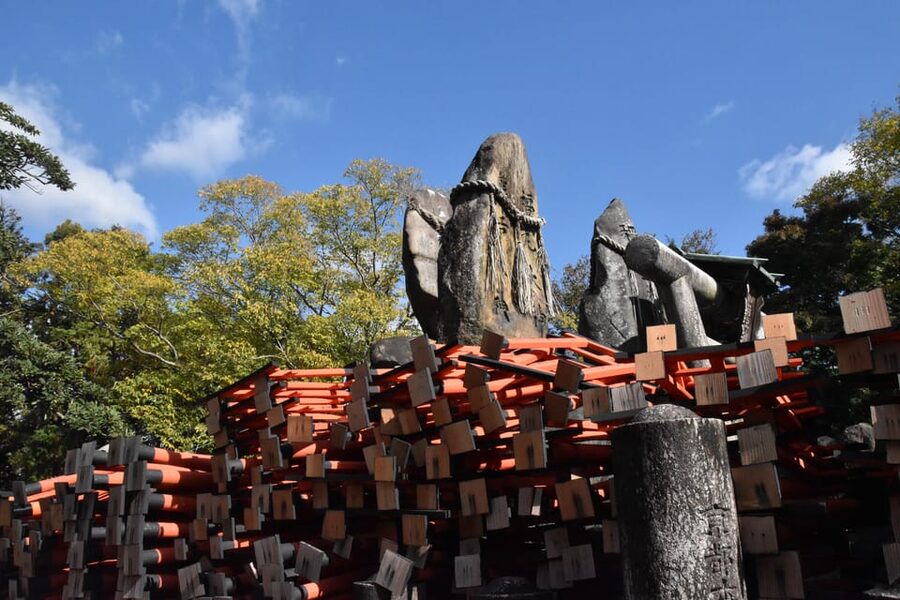
The tour is delivered in English, and several guide names appear in the experience record, including Ko, Go, Kenji, Yuya, and Taishi. Their roles go beyond leading people up the hill.
Go is noted for giving useful suggestions for places to visit after the tour. Kenji is especially strong on the background of Fushimi Inari and Shinto traditions. Taishi and his assistant have been praised for answering questions during the walk and creating a friendly, relaxed atmosphere. Ko and Go have also guided visitors through quiet paths and local encounters.
The exact guide for your departure can vary, so do not book on the assumption that one particular person will lead your group unless the provider confirms it. The consistent benefit is the local approach: explanations, quieter routes, help with photographs, and recommendations for other restaurants in Kyoto.
A guide is most helpful here if you want more than directions. You can visit the lower shrine and torii gates alone, but you are less likely to find the bamboo area, worship stones, waterfall, factory, and quieter photo points without someone who knows the mountain.
What the $67 price buys you
At $67 per person, this is not the cheapest way to see Fushimi Inari. You can enter the shrine grounds independently, and there is no admission charge listed for this experience. The price needs to be judged by what it adds.
You are paying for four hours with an English-speaking guide, a small group capped at 10, local interpretation, route finding, a mountain snack, and lunch. You also avoid spending time choosing a restaurant after a long climb. For a first visit to Kyoto, that bundle can offer good value.
The price makes less sense if you only want the famous lower torii gates or prefer to walk at your own speed without a fixed group. It also may not suit you if you want a long, leisurely restaurant meal. But if you want the lesser-seen parts of Fushimi Inari and appreciate having the day’s food organized, $67 is reasonable.
Free cancellation is available up to 24 hours before the start time, and you can reserve now and pay later. Those terms help if your Kyoto schedule is still changing.
Who should book this experience
I would choose this tour for a first visit to Fushimi Inari, especially if you want cultural explanation and a less crowded route. It also suits photographers who want more than the standard gate corridor, and curious eaters who would rather have soba at a local restaurant than grab a quick meal near the station.
It is a good match for solo visitors and couples who want company without joining a huge bus group. Families with older children may enjoy it too, provided everyone can handle several hours of stairs and uphill walking.
I would think twice if you have limited mobility, dislike hills, or need a very flexible schedule. The route includes stairs, the summit climb, and downhill walking. Your pace affects the timing, and the four-hour duration is long enough to require comfortable shoes and a little stamina.
My verdict: book it for the quieter mountain
Book this experience if you want Fushimi Inari as a living religious mountain, not only as a row of photogenic gates. The bamboo and cedar route, small holy sites, torii craftsmanship, summit shrine, tea break, and Kyoto viewpoint give the visit much more shape.
The strongest reasons to book are the local route and the included soba lunch. The main tradeoff is physical effort. You will walk uphill and manage stairs, but the pace is casual and the breaks help.
For a first-time visitor who wants context, quieter paths, and a practical meal, this is a strong four-hour choice. If you only want a quick photograph beneath the red gates, save your money and explore independently.
FAQ
How long does the Fushimi Inari experience last?
The experience lasts four hours. The schedule can change depending on the group’s walking speed.
Where does the tour meet?
Meet at the stone pillar beside the Great Torii, across from the JR Inari Station exit. The tour finishes at the same place.
How far is the meeting point from Fushimi-Inari Station on the Keihan Line?
The meeting point is about a 10-minute walk from Fushimi-Inari Station on the Keihan Line.
Is the tour conducted in English?
Yes. The experience includes a live English-speaking guide.
How large is the group?
The group is limited to 10 participants.
Does the tour include hiking?
Yes. The hiking section lasts about three hours and includes stairs, uphill walking, forest paths, and a route to the summit shrine.
How high is the summit shrine?
The summit shrine is at an elevation of 233 meters. The uphill route to the summit takes about 20 minutes.
What food is included?
Lunch includes Japanese soba noodles and fried sweet inari sushi. The tour also includes Japanese hot tea and a salted boiled egg at a mountain hut.
Are vegan or allergy-friendly options available?
Yes. Vegan and other dietary options are available, but you must notify the provider in advance.
Are drinks at lunch included?
No. Drinks at the lunch restaurant are not included, although tea is provided during the mountain break.
What should I wear?
Wear comfortable clothes and sturdy, comfortable shoes. A hands-free backpack is recommended because the route includes stairs and hiking.
Can I cancel for a full refund?
Yes. You can cancel up to 24 hours in advance for a full refund. You can also reserve now and pay later.
More Lunch Experiences in Kyoto
More Fushimi Inari Tours in Kyoto
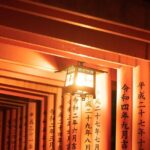
More tours in Kyoto we've reviewed




Fushimi Inari Tours, compared.
 ★ 4.8Kyoto: Fushimi Inari, Kinkakuji, Bamboo Grove 1 Day Bus TourFrom $122510 minutes - 9 hours
 ★ 5.0Fushimi Inari Hidden Hiking Tour (Private Option Available)From $63
 ★ 4.7Kyoto/Osaka: Nara, Fushimi Inari Taisha, Arashiyama Bus TourFrom $529 - 10 hours
 ★ 4.4Osaka/Kyoto: Arashiyama, Nara & Fushimi Inari Shrine w/LunchFrom $61
 ★ 5.0Kyoto: Nijo, Kinkaku-ji, Arashiyama, Kiyomizu & Fushimi InariFrom $51
 ★ 5.0Kyoto Fushimi-Inari Night Walking TourFrom $43