
Reviewed · NARA DAY TRIPS
From Kyoto: Nara History Guided Half Day Bus Tour with Lunch
Nara gives you three of Japan’s best-known sights in one tidy outing: the giant Buddha at Todaiji Temple, the lantern-lined Kasuga Taisha Shrine, and deer wandering through Nara Park. From Kyoto, this six-hour tour takes care of transport, guiding, temple admission, and lunch, so you can focus on the sights rather than the timetable.
I like the small-group feel many departures seem to have, even though this is a group tour. I also like the balance: you get serious history at the temple and shrine, then a lighter hour with the deer and a Japanese-style meal. The main drawback is the pace. You have only 45 minutes at each major religious site, and this is a walking-heavy outing with no wheelchair access.
In This Review
- Key points to know before booking
- From Kyoto Station to Nara in one morning
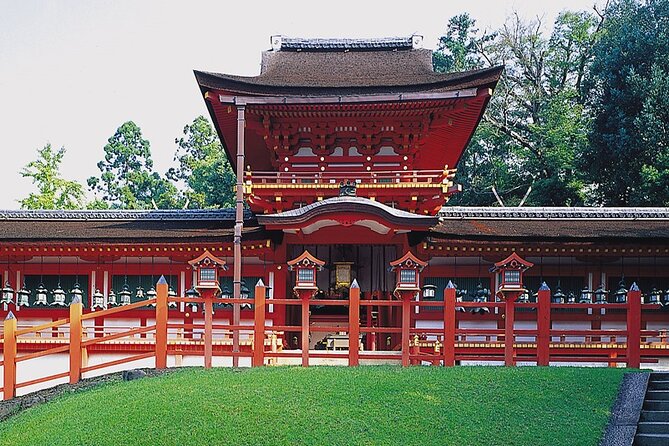
- Kasuga Taisha and the lantern-lined approach
- Todaiji Temple and the 15-meter Great Buddha
- Nara Park, deer, and a little controlled chaos
- A Japanese-style lunch and souvenir stop
- Guides who make the tight schedule work
- Is $77 good value for six hours?
- Walking, weather, and practical limits
- Who should book this Nara tour?
- Should you book it?
- FAQ
- How long does the Nara tour last?
- Where does the tour meet in Kyoto?
- Is lunch included?
- Can dietary restrictions be accommodated?
- Is admission to Todaiji Temple included?
- Is the tour wheelchair accessible?
Key points to know before booking
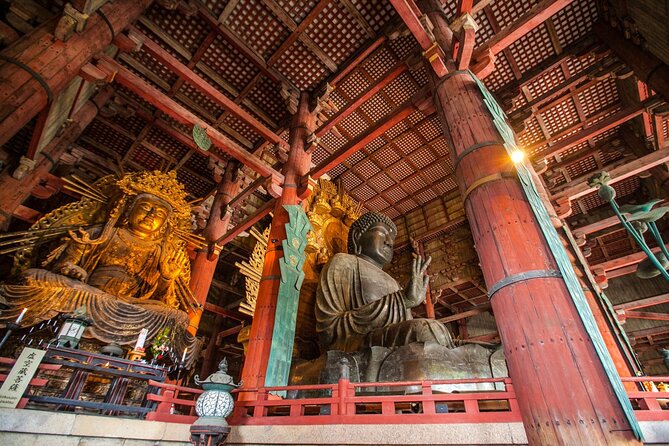
- The Great Buddha is the headline sight: Todaiji’s roughly 15-meter bronze Buddha is housed in one of the world’s largest wooden buildings.
- Kasuga Taisha comes before Todaiji: The 45-minute guided visit covers the main sanctuary for general worship, but not the museum, botanical garden, or special sanctuary access.
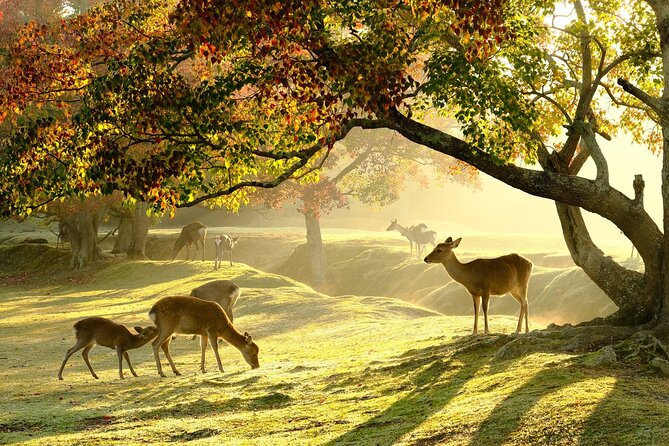
- Nara Park is a close-up deer experience: You have about 30 minutes to see and feed the famously friendly deer.
- Lunch is built into the schedule: A 50-minute Japanese-style meal follows the sightseeing, with a shop nearby for souvenirs.
- Transport can vary: The route may use a coach, train, or both. Some departures have used the train to Kintetsu-Nara and a smaller bus around Nara.
- Bring walking shoes, not large luggage: The tour is not wheelchair accessible and cannot accommodate large bags.
From Kyoto Station to Nara in one morning
The tour begins at Kyoto Station’s Hachijo Exit Tourist Bus Parking Area, in front of Kyoto Avanti, at the Hachijo Entrance Square Sunken Garden. The exact meeting information is sent by email seven days before the activity date, so check your inbox before the morning of the tour. Kyoto Station is large and the meeting area can be confusing, so allow extra time to find the correct exit and parking area.
The journey to Nara is listed as about 75 minutes by bus. Depending on the departure, the operator may instead use a train or a combination of train and road transport. One departure traveled by train from Kyoto to Kintetsu-Nara, followed by a smaller private bus around Nara. That flexibility can work well, but you should not expect every group to use the same vehicle.
The air-conditioned transport is useful in Nara’s hot months and welcome after several hours on foot. Transport was also praised for being clean and comfortable, though the exact vehicle depends on the group and operating conditions. A group of four is required for the tour to run, and a date can be canceled if that minimum is not reached 14 days before departure.
A few more Kyoto tours and experiences worth a look
Kasuga Taisha and the lantern-lined approach
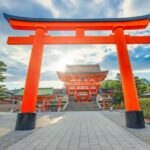
Kasuga Taisha is the first major stop. This is one of Nara’s most important Shinto shrines, tied to the city’s early importance as Japan’s capital. The 45-minute guided visit focuses on the main sanctuary and general worship.
The setting matters as much as the buildings. Kasuga Taisha is known for its rows of stone and bronze lanterns, and the approach gives you an early taste of Nara’s old religious district. Your English-speaking guide can explain how to behave at a shrine, what the entrance gates mean, and how Shinto worship differs from Buddhist temple practice.
That guidance is valuable if you are new to Japan. Rather than simply walking through a pretty site, you get a basic framework for understanding what you see. Guides such as Tammy have been praised for explaining shrine customs, while Yuko and Sachi have been singled out for clear explanations and careful organization.
Keep your expectations precise. General worship at the main sanctuary is included, but special worship of the main sanctuary, the Kasugataisha Museum, and the Botanical Garden are not part of this tour. If you want a longer, more detailed look at the shrine complex, you will need more time on your own.
Todaiji Temple and the 15-meter Great Buddha
A 15-minute walk connects Kasuga Taisha with Todaiji Temple. This short transfer is easy for most people, but it adds to the day’s total walking, especially in warm weather or rain. Comfortable shoes are essential.
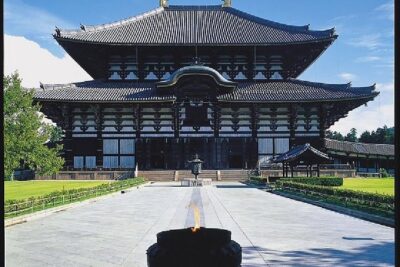
Todaiji is the tour’s major historical stop. Its Great Buddha is about 15 meters high, and the scale is hard to grasp until you enter the wooden hall and look up. The temple building itself is famous for its enormous timber construction. The included entrance fee means you do not need to arrange a separate ticket for this central sight.
The guided visit lasts around 45 minutes. That is enough to see the Great Buddha, take in the huge hall, and hear the main points about Todaiji’s place in Nara’s story. It is not enough for a slow architectural study or an unhurried visit to every corner, so you should treat this as a focused introduction.
I like this stop because the guide helps turn sheer size into meaning. Without context, you may remember only a very large statue in a very large building. With an English explanation, you can better understand why Todaiji is one of Nara’s defining landmarks and why the temple remains such a powerful symbol of the city.
Construction can occasionally affect what you see. Some buildings or Buddha statues may look different, or parts of them may be unavailable during repair work. That is a general risk at historic sites in Japan, and it is worth accepting if Todaiji is high on your list.
Nara Park, deer, and a little controlled chaos
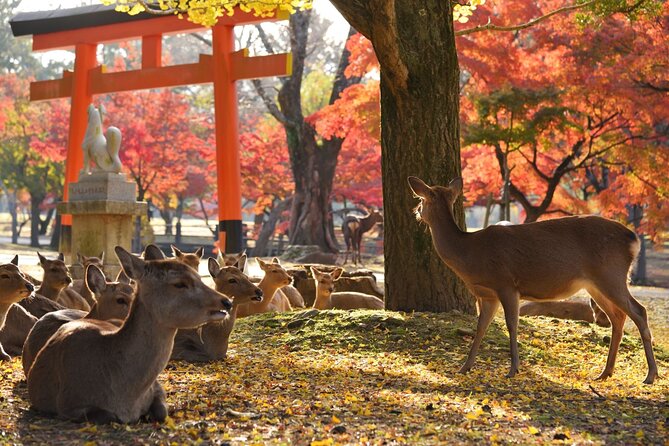
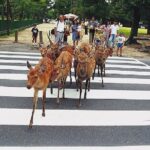
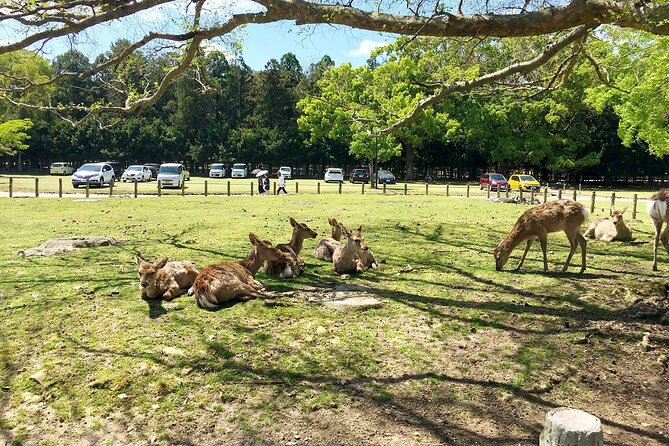
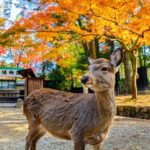
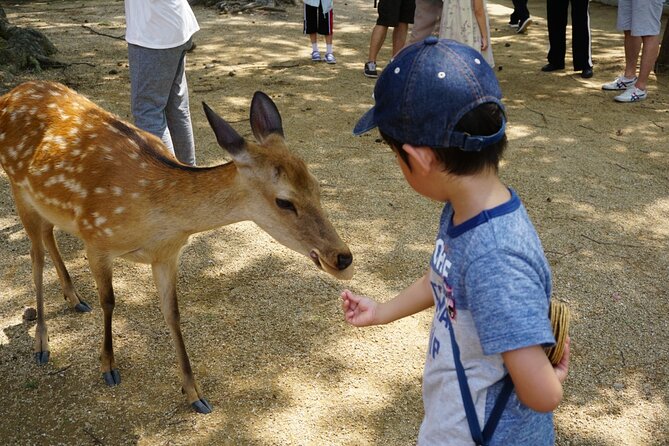
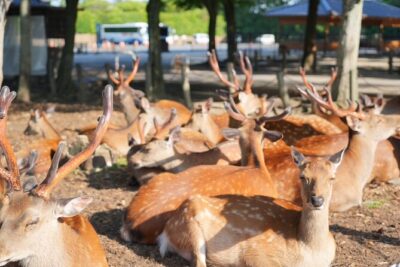
After Todaiji, the group spends about 30 minutes in Nara Park. The park is best known for its free-roaming deer, which are accustomed to people and often approach visitors closely.
This is the most playful part of the day. You can watch the deer, take photographs, and, when appropriate, feed them. Keep in mind that these are still animals, not tame pets. Follow the guide’s instructions, keep food away when you have finished, and pay attention when several deer gather around you.
The short time here works well for families and first-time visitors who mainly want to meet the deer. It is less suitable if you want a long walk through the park or a relaxed afternoon around the temples. Nara Park is large, but this tour gives you a compact introduction rather than hours of free exploration.
The deer also provide a welcome change of rhythm. Kasuga Taisha asks you to slow down and observe religious customs. Todaiji asks you to look upward and take in monumental architecture. Nara Park lets you enjoy something immediate and memorable, with a bit of harmless unpredictability.
A Japanese-style lunch and souvenir stop
Lunch comes after the sightseeing, in Nara, and lasts about 50 minutes. The meal is Japanese-style, and beverages are not included. If you have allergies or dietary restrictions, provide that information when booking. Menu changes cannot be made on the day itself.
One useful detail is that a child’s meal may be changed to chicken instead of sashimi if requested during booking. That makes the tour more practical for families, but do not wait until you sit down to ask for alterations.
The meal is not merely a pause to refuel. It gives you a chance to try a set Japanese meal without having to choose a restaurant in an unfamiliar area. A shop at the restaurant also sells local souvenirs, so you can pick up small mementos without adding another stop to the schedule.
The tradeoff is limited choice. This is a fixed group lunch, not a food tour or a flexible restaurant crawl. If you have strong dietary needs, confirm in advance that the provided meal suits you. For most people, the included lunch adds good value and keeps the day moving.
A few more Kyoto tours and experiences worth a look
Guides who make the tight schedule work
The guide is the most important variable on a short history tour. The strongest departures have featured guides including Yuko, Tammy, Emiko, Aki, Sachi, Kato, and Mana. You cannot choose a particular guide, but the repeated pattern is clear: the best guides add context at each stop, answer questions, and keep everyone together without making the outing feel rushed.
One guide, Mana, was described as a retired history teacher, which gives you an idea of how much background some guides bring. Emiko has led departures using the train and a small bus, and was praised for keeping the day interesting even in bad weather. Kato has also been noted for an easygoing manner and strong command of the subject.
Small groups can make a real difference. One departure had only five people, while another had such a small turnout that it felt almost private. A separate small group found the van, driver, and timing especially comfortable. You should not count on a private tour, but a modest group can make questions easier and reduce the feeling of being herded from one stop to the next.
The tour is conducted in English. If you want detailed explanations of Japanese history, temple design, and shrine etiquette without arranging a private guide, this is one of the main reasons to book.
Is $77 good value for six hours?
At $77 per person, the price is reasonable for a six-hour trip that includes air-conditioned transport, an English-speaking guide, Todaiji admission, and lunch. You are also paying for the convenience of connecting Kyoto and Nara without planning separate train tickets, local transport, restaurant arrangements, and entrance fees.
The value is strongest if you have only one day for Nara or prefer a guided introduction. You see the three central sights in an orderly sequence, then return to Kyoto the same day. The price also protects you from wasting time finding your way between Kasuga Taisha, Todaiji, Nara Park, and lunch.
Independent visitors can spend less. Nara is reachable by public transport, and you could visit the main sights on your own with a map and a guidebook. That option gives you more freedom and more time at each location, but you must handle all transport, tickets, navigation, and lunch yourself.
I would choose this tour for a first visit, especially if Kyoto is your base and you value explanations in English. I would skip it if you already know Nara well, want to spend hours photographing the park, or dislike fixed meal schedules.
Walking, weather, and practical limits
This is not a difficult hike, but it involves substantial walking. The 15-minute transfer between Kasuga Taisha and Todaiji is only one stated section. You will also walk through shrine and temple grounds, around the deer area, and between transport points.
The tour is not suitable for wheelchair users, and the route should be avoided if walking is difficult. Large luggage is not allowed, so leave suitcases at your Kyoto accommodation or station storage before meeting the group. Pets are not permitted.
Weather can change the mood without ruining the day. Rain may mean slick paths and less comfortable deer viewing, while heat makes the air-conditioned coach and sensible footwear especially helpful. One wet departure still found the sites worthwhile because the guide kept the history engaging, but you should dress for outdoor walking.
The schedule is compact, so arrive ready to move. There is no room for personal additions to the itinerary, even if your party is large. This is a set group route, not a private excursion that can pause for extra temples or shopping.
Who should book this Nara tour?
I recommend it to first-time visitors based in Kyoto, families who want a simple plan, and anyone who would rather hear the story behind the sites than manage the day alone. The deer are an easy hit with children, while Todaiji and Kasuga Taisha give adults plenty of cultural substance.
It also suits you if you want a half-day introduction rather than a full day in Nara. The six-hour length leaves room for an evening back in Kyoto, though the exact start time should be checked when booking.
I would be more cautious if you need an accessible route, have strict dietary requirements, carry large bags, or want a completely flexible day. The tour offers convenience, but that convenience comes with a fixed route, a fixed lunch, and limited time at each stop.
Should you book it?
Book this tour if you want Nara’s essential sights explained clearly, with transport and lunch handled for you. The combination of Todaiji’s Great Buddha, Kasuga Taisha, deer-filled Nara Park, and an included Japanese meal gives you a strong first look at the city for $77.
Skip it only if your priority is independence or slow exploration. For everyone else, especially visitors with limited time in Kyoto, this is a well-balanced way to meet Nara without spending the day worrying about logistics.
FAQ
How long does the Nara tour last?
The tour lasts six hours, including transport, guided visits, lunch, and the return journey to Kyoto.
Where does the tour meet in Kyoto?
Meeting is at Kyoto Station’s Hachijo Exit Tourist Bus Parking Area, in front of Kyoto Avanti, at the Hachijo Entrance Square Sunken Garden. Participants receive the meeting-place information by email seven days before the activity date.
Is lunch included?
Yes. A Japanese-style lunch is included and lasts about 50 minutes. Beverages are not included.
Can dietary restrictions be accommodated?
You should provide allergy or dietary information when booking. Menu changes cannot be made on the day of the tour. For children, chicken may be requested instead of sashimi during booking.
Is admission to Todaiji Temple included?
Yes. The entrance fee for Todaiji Temple is included. General worship at Kasuga Taisha is included, but the museum, Botanical Garden, and special worship of the main sanctuary are not.
Is the tour wheelchair accessible?
No. The tour is not suitable for wheelchair users and involves a lot of walking. Large luggage and pets are also not allowed.
More Guided Tours in Kyoto


More Kyoto Bus Tours in Kyoto
More Nara Day Trips in Kyoto
More tours in Kyoto we've reviewed





Nara Day Trips, compared.
 ★ 5.0World Heritage Kyoto & Nara Uji Authentic Matcha ExperienceFrom $129
 ★ 4.7Kyoto/Osaka: Nara, Fushimi Inari Taisha, Arashiyama Bus TourFrom $529 - 10 hours
 ★ 4.4Osaka/Kyoto: Arashiyama, Nara & Fushimi Inari Shrine w/LunchFrom $61
 ★ 5.0Nara Early Morning Tour (Kyoto or Osaka Departure Available)From $61
 ★ 4.5Kyoto and Nara Day Trip from KyotoFrom $194
 ★ 4.5Nara Afternoon Tour from Kyoto or OsakaFrom $102