
Reviewed · GION & GEISHA WALKS
Kyoto: Lunch or Dinner with Maiko
Kyoto’s Maiko lunch or dinner puts you close to a living performance tradition, not behind a museum rope. In 90 minutes, you’ll watch a tea ceremony, two formal dances, a playful game, and a question session, with time for a photo beside the performer. The Maiko encounter is the main event, and the meal gives the evening a distinctly Kyoto setting.
I like two things in particular. First, the Q&A lets you ask about daily life rather than simply watch a polished show. Second, the combination of dance and participation makes this more personal than a standard stage performance. You may even meet a Geiko instead of a Maiko, which adds a welcome element of surprise.
The main consideration is the setting. This is not an ochaya or an old Japanese house. It takes place in a building with a relaxed atmosphere, and some sessions combine people having dinner with others taking part in the optional tea experience. Food opinions also vary, so book this mainly for the cultural program, not as a stand-alone culinary event.
In This Review
- Key details at a glance
- Meeting a Maiko near Gojo Station
- The opening tea ceremony
- A traditional Kyoto meal with dashi
- Questions that open a hidden world
- Two dances, each with a different mood
- A photo, a charm, and a simple game
- What the 90-minute schedule feels like
- Is the $63 price fair?
- Who should book this experience?
- Practical details before you reserve
- Should you book Kyoto: Lunch or Dinner with Maiko?
- FAQ
- Where does the Maiko experience take place?
- How long does the program last?
- Is dinner included in the price?
- Is the tea ceremony included?
- Can I take a photo with the Maiko?
- Is the program available in English?
- Are children under two free?
Key details at a glance
- Two traditional dances: Watch dances tied to Japanese seasons, love stories, or everyday life.
- A real question session: Ask the Maiko directly about her world and routine.
- Tea ceremony included: You see the ceremony, with tea-making available for an extra ¥1,600.
- Personal photo and Senjafuda: Take a commemorative picture and receive a lucky paper charm.
- Central Gojo location: The venue is one minute from Exit 1 of Gojo Station.
- Three paid seating upgrades: First-row SS seating costs ¥3,300, second-row S2 costs ¥2,200, and third-row S3 costs ¥1,100.
Meeting a Maiko near Gojo Station
The venue is easy to reach in central Kyoto. From Exit 1 of the Subway Karasuma Line’s Gojo Station, it is about a one-minute walk, and the entrance faces Gojo-dori, the main street.
That short walk matters if you are fitting this meal between sightseeing stops. You do not need to cross into one of Kyoto’s more confusing back streets or arrange a separate transfer. Still, allow enough time to find the entrance and climb the stairs. The building has no elevator, and the event cannot be held for late arrivals.
The atmosphere is relaxed and friendly, but do not expect an ornate tea house. The room is in a regular building rather than a traditional Japanese residence. Some sessions have been described as plain, with classroom-style furniture and lighting, so the visual setting may not match the elegance of the costume and performance.
That contrast is worth understanding before you book. You are paying for access to the Maiko program, the meal, and the interaction. You are not paying for an old wooden machiya, elaborate screens, or a stage dressed like a historic ochaya.
A few more Kyoto tours and experiences worth a look

The opening tea ceremony
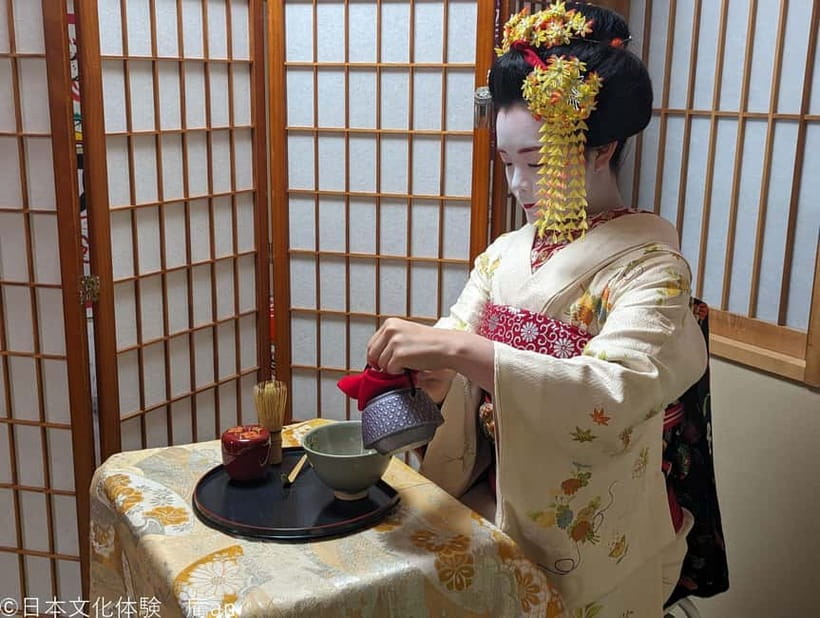
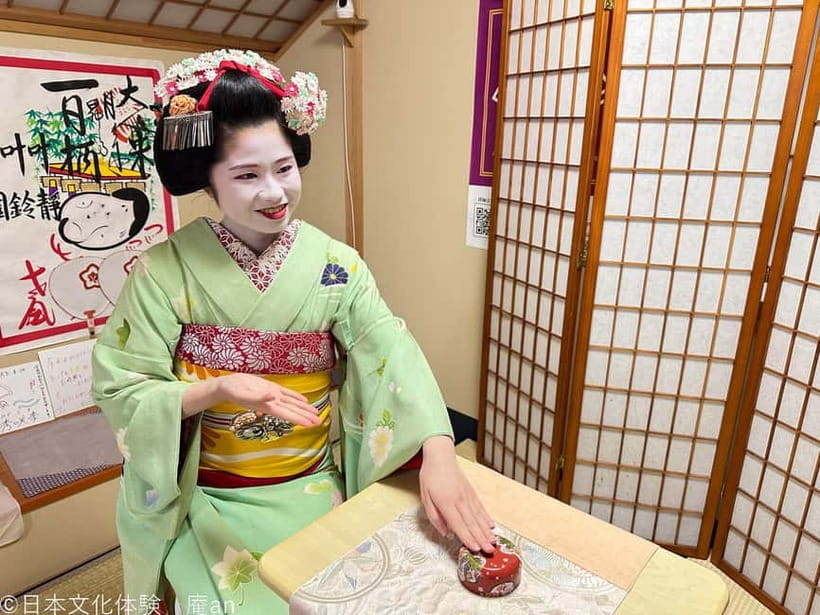
The program begins with a tea ceremony demonstration by the Maiko. Watch for the measured movements, careful etiquette, and calm pace. This opening gives you a useful frame for the rest of the program, since the Maiko’s appeal is tied not only to costume and dance but also to disciplined traditional practice.
You can add a tea-making option for ¥1,600. Without that add-on, you watch the demonstration. With it, you have the chance to prepare your own tea, which is a better choice if you want a hands-on activity rather than a formal presentation.
English translation is available as much as possible by request. The listed instructor language is Japanese, so you should contact the provider before booking if English explanation is important to you. Do not assume every exchange will be fully translated on the spot.
The tea segment also explains one practical quirk of the experience: not everyone in the room is necessarily doing the same add-on. Some people may be eating while others take part in the tea preparation. That shared-room format can feel less private, but it also keeps the event accessible at a moderate price.
A traditional Kyoto meal with dashi
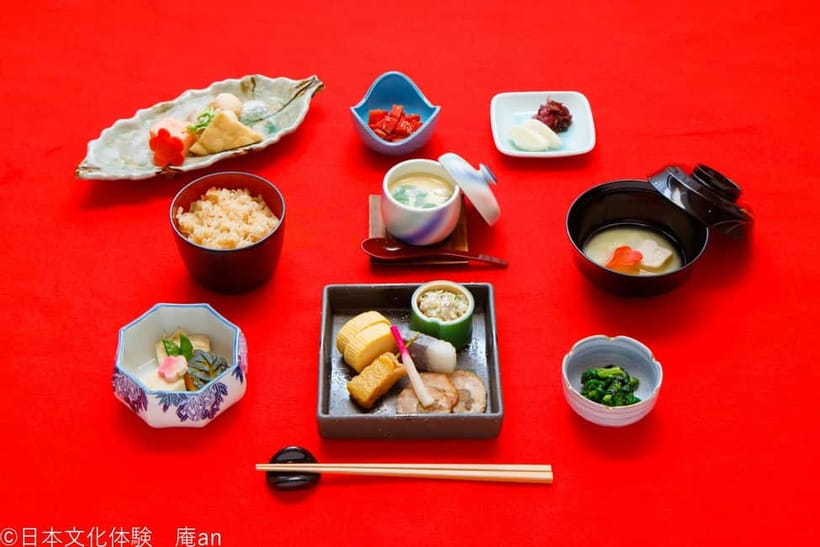
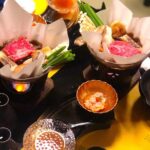
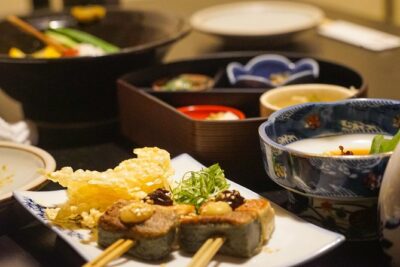
After the tea demonstration, you receive dinner prepared by a long-established Kyoto restaurant. The food is described as traditional Kyoto cuisine, with dashi, the soup stock used widely in local cooking, playing an important role.
You may also encounter shidashi, a traditional Kyoto practice of ordering prepared food for delivery. The meal is part of the cultural setting, not simply fuel before the show. It gives you a taste of the restrained flavors and familiar cooking methods associated with Kyoto.
I would keep your expectations measured. The meal is included in the $63 price, which makes the overall package attractive when you value the performance and direct contact. But the food has not pleased every palate. Some diners found it mild and lacking in aroma, while another reported that the meal seemed barely thawed and inedible.
Those are serious cautions, though they may not represent every sitting. The safest approach is to regard the dinner as a traditional accompaniment to the program rather than the reason to reserve. If your priority is an outstanding Kyoto meal, choose a dedicated restaurant separately and book this experience for the Maiko.
Questions that open a hidden world
The Q&A is one of the strongest parts of the program. Instead of only watching a performer, you get a chance to ask about the Maiko’s daily life and the routines behind the appearance.
This matters because the costume can easily become the whole story. The kimono, hairstyle, and formal movements are striking, but the question period points to the work and commitment required to maintain this traditional way of life today.
Have a few questions ready before you arrive. Ask about the day’s routine, the dances, the tea ceremony, or the meaning of the clothing. Since the instructor language is Japanese and translation is offered as much as possible by request, contacting the provider in advance is sensible if you want to ask detailed questions in English.
The program does not name a regular guide, so you should not book it expecting a particular host or interpreter. The focus is the Maiko herself, supported by the staff and the translation available for the session.
Two dances, each with a different mood
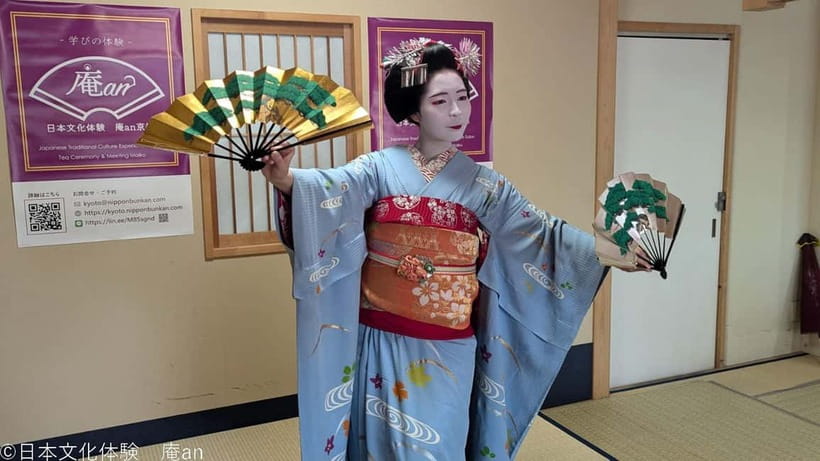
The Maiko performs two traditional dances. Their themes may express the changing seasons, love stories, or scenes from daily life. The appeal lies in the small details: controlled posture, precise hand movements, careful footwork, and the quiet pace that lets each gesture register.
This is not a long theater performance. The full program lasts 90 minutes, and the Maiko leaves at about the 75-minute mark. That means the dances are presented as part of a compact cultural experience, alongside the meal, tea, questions, and game.
I like this format for a first introduction. You see enough to understand the style without giving up an entire evening. It also prevents the performance from becoming distant or overly formal, since the dance is balanced by conversation and direct contact.
Seating can affect how well you see the details. Optional upgrades cost ¥3,300 for SS first-row seating, ¥2,200 for S2 second-row seating, and ¥1,100 for S3 third-row seating. Standard seating may suit a budget-conscious booking, but the first row makes more sense if the dance is your chief reason for coming.
A few more Kyoto tours and experiences worth a look

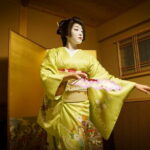
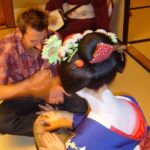
A photo, a charm, and a simple game
After the Q&A, you have a chance to take a photo beside the Maiko. This is a close-up keepsake rather than a distant stage picture, and it gives the program a clear personal highlight.
The Maiko also presents a Senjafuda, a lucky charm, as a special gift. It is a small item, but it helps turn the meeting into something tangible you can carry away.
The final activity is an interactive game. Maiko often play simple games as part of their hospitality, and volunteers may join while everyone else watches, claps, and cheers. You do not need to volunteer to enjoy this part, but the room becomes more lively when people take part.
Do not expect a serious contest. The fun comes from the informal change of pace after the quiet tea ceremony and refined dance. The organizers even frame it as a challenge against a professional Maiko, so bring a willingness to play along rather than a need to win.
What the 90-minute schedule feels like
The published order is clear:
- Start with the tea ceremony demonstration
- Eat the traditional Kyoto dinner
- Take part in the Q&A
- Take a photo with the Maiko
- Receive the Senjafuda
- Watch two dances
- Join or watch the game
- Leave the room at about 75 minutes
- Use the remaining time for conversation before departing at 90 minutes
The timing gives each part a purpose. You begin quietly, move into food and conversation, then finish with the most theatrical sections and informal play.
The Maiko’s departure at 75 minutes is important. The final 15 minutes are chatting time, not another performance. If you want to ask questions or make a personal connection, use the Q&A and the brief period before departure rather than expecting the Maiko to remain for the full 90 minutes.
The event may be held with people who are not having the dishes. This shared format can make the room feel less exclusive, but it keeps the experience flexible for different bookings. If you want a private meal or a carefully staged setting, this is probably not the right choice.
Is the $63 price fair?
At $63 per person, the value depends on what you count as the main product. You receive dinner, the tea demonstration, two dances, a Q&A, a photo opportunity, a Senjafuda charm, and a game. Add those pieces together and the price is reasonable for a short cultural program in Kyoto, especially if meeting a Maiko is high on your wish list.
The value weakens if you judge it mainly by the food or the room. The meal may be mild, and the venue lacks the decor you might picture when you hear traditional Kyoto experience. Paid seating upgrades also push the total higher, particularly the ¥3,300 first-row option.
The tea-making add-on is fairly modest at ¥1,600. I would consider it if you enjoy hands-on cultural activities. The seating upgrades are more personal. Choose one if close views matter to you, but standard seating may be enough if you mainly want the overall program.
Children under two are free when they sit on a parent’s lap. If a seat or meal is needed, the adult fee applies. Anyone who does not participate in the experience cannot enter, so this is not a useful arrangement for one adult attending while another person simply waits inside.
Who should book this experience?
I would recommend it to you if you want a compact introduction to Maiko culture without committing to a long evening. It suits first-time Kyoto visitors, families with an interest in Japanese arts, and anyone who values conversation as much as performance.
It is also a good choice if you want a predictable central location and a short program that fits around other plans. The one-minute walk from Gojo Station makes the meeting point practical, and the 90-minute length leaves room for another dinner, evening walk, or activity afterward.
You may want to skip it if you need a fully English-led experience. Japanese is the listed program language, and translation is provided as much as possible when requested. Contact the provider before reserving if language support will determine your enjoyment.
You should also look elsewhere if atmosphere and food quality are your top priorities. This is not an ochaya, the building is plain, and the meal may not satisfy someone seeking a refined restaurant experience. Book it for the Maiko, the dances, the questions, and the chance to take part.
Practical details before you reserve
The provider is B.B.Advisors Inc. AN KYOTO. Operating hours for reservations are 10:00 to 17:00, and requests received after 17:00 are processed the next day.
You can cancel for a full refund up to eight days in advance. After the cancellation deadline, fees apply, including when you later change the date or time. The provider will not hold the event for delays and does not compensate transportation expenses if you cancel, so plan to arrive early at Gojo Station.
The activity is listed at $63 per person, but optional extras are charged in Japanese yen. Confirm the total cost, especially if you want tea-making or upgraded seating.
Should you book Kyoto: Lunch or Dinner with Maiko?
Book it if your priority is direct contact with a Maiko, two dances, a photo, and a glimpse of traditional etiquette in one short sitting. The Q&A and game give the program more warmth than a simple show, and the chance of meeting a Geiko adds a pleasant possibility.
Do not book it expecting a historic house, a private room, or a destination meal. The plain venue and uneven food experience are real considerations. For many people, the cultural access will justify the $63 price, but you will enjoy it most when you treat dinner as part of the package and the Maiko program as the star.
FAQ
Where does the Maiko experience take place?
The venue is a one-minute walk from Exit 1 of Gojo Station on the Subway Karasuma Line. The entrance faces Gojo-dori, the main street.
How long does the program last?
The full experience lasts 90 minutes. The Maiko leaves at about 75 minutes, followed by chatting time before you depart.
Is dinner included in the price?
Yes. Dinner prepared by a long-established Kyoto restaurant is included. The menu features traditional Kyoto dishes and commonly uses dashi.
Is the tea ceremony included?
A tea ceremony demonstration is included. If you want to make your own tea, you can add that option for ¥1,600.
Can I take a photo with the Maiko?
Yes. The program includes a commemorative photo opportunity beside the Maiko. You also receive a Senjafuda lucky charm.
Is the program available in English?
The listed instructor language is Japanese. English translation is provided as much as possible if you request it, so contact the provider before booking if you need translation support.
Are children under two free?
Children under two are free when they sit on a parent’s lap. If a child needs a separate seat or meal, the same fee as one person applies.
More Lunch Experiences in Kyoto

More Dining Experiences in Kyoto
More Gion & Geisha Walks in Kyoto

More tours in Kyoto we've reviewed




Gion & Geisha Walks, compared.
 ★ 4.7Kyoto Geisha Walking Tour: Gion District & Hidden GemsFrom $252 hours
 ★ 4.7Kyoto: Gion Geisha District Walking Tour – Stories of GeishaFrom $202 hours
 ★ 4.9Best of Kyoto: Gion, Geisha, Pagodas & CobblestonesFrom $242 hours
 ★ 4.5Night Walk in Gion: Kyoto’s Geisha DistrictFrom $211h 40m
 ★ 5.0Kyoto Night Foodie Tour in Gion (9+ dishes + 6 Sake tastings)From $163
 ★ 5.0Kyoto Gion Geisha District Walking Tour – The Stories of GeishaFrom $25