
Reviewed · WORKSHOPS
Japanese Calligraphy – Shodo – Lesson (near Kyoto Station)
Japanese calligraphy becomes much more enjoyable when you stop treating the brush like a pen. In this small Kyoto workshop, you learn how ink, pressure, and brush angle work together, then practice simple Kanji and create pieces to take home. I love the hands-on format and the chance to write your own name in Kanji with help from the staff. I also like that brushes, ink, and washi paper are supplied, so you can simply show up and begin.
The main drawback is finding the meeting point. It is at the MK Taxi VIP Station by Kyoto Station’s Hachijo Exit, and you need to look for the MK taxi stand and the nearby ibis Styles Kyoto Station building. The class lasts only about an hour, so this is a friendly introduction, not a full course in calligraphy.
In This Review
- Key points at a glance
- Why this one-hour Kyoto class works
- Finding the class at Kyoto Station
- The first lesson: brush, ink, and pressure
- Practicing One, A, Forever, and Kyoto
- Turning your name into Kanji
- What you take home
- Price, timing, and overall value
- Who should book this class
- Booking details worth knowing
- Should you book the Kyoto calligraphy lesson?
- FAQ
- Where does the Japanese calligraphy lesson meet?
- How long does the activity last?
- What is the price?
- What materials are included?
- Can I take my calligraphy home?
- Can I write my name in Japanese?
- Is the class suitable for children?
- How many people can join the class?
- Is the class near public transportation?
- Can I cancel for a full refund?
Key points at a glance
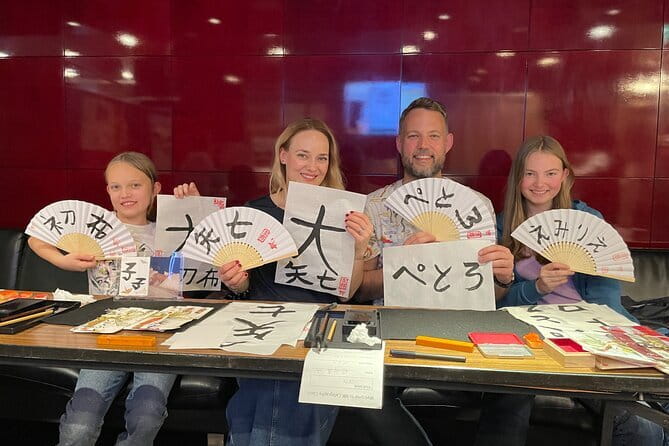
- Write more than basic strokes: Practice Kanji such as One, A, Forever, and Kyoto before making your own pieces.
- Create a personal souvenir: Staff help you choose approximate Kanji characters for your name and explain their meanings.
- Small groups help: The maximum group size is 10, giving you a better chance to receive brush and lettering guidance.
- Good for families: Children can take part, and a 9-year-old was able to enjoy the activity alongside a parent.
- Near Kyoto Station: The location is useful on arrival, departure day, or between train connections, though the taxi-station entrance can be easy to miss.
- Everything is provided: You use the workshop’s brushes, ink, and washi paper, then take your calligraphy home.
Why this one-hour Kyoto class works
Many cultural activities ask you to watch a demonstration, take a few photos, and move on. This one puts a brush in your hand almost at once. You learn by making marks, correcting them, and trying again.
That matters because Japanese calligraphy, or shodo, is not just handwriting in another alphabet. The shape of a character depends on stroke order, brush pressure, ink flow, and the moment you lift the brush from the paper. Even simple characters can look very different when you change the speed or weight of a stroke.
The class is designed for beginners. You do not need to read Japanese, own special equipment, or arrive with artistic experience. The staff first explain how to hold and use the brush and how to apply ink. That basic coaching gives you enough confidence to begin without spending the hour wondering why your brush is behaving like a wet mop.
The group limit of 10 is useful here. A large class would make it harder to get help with small details, especially when you are working on a name or preparing a final piece. The available information describes the atmosphere as friendly and helpful, with staff able to explain in English. Haruko is specifically praised for being patient, kind, and clear while explaining the activity.
A few more Kyoto tours and experiences worth a look


Finding the class at Kyoto Station
The meeting point is the MK Taxi VIP Station at Kyoto Station’s Hachijo Exit. The address is in the MK taxi stand and Kyoto sightseeing reception area near the ibis Styles Kyoto Station building.
This is close to the station, but do not rely on the phrase near Kyoto Station alone. The taxi-station setting can be confusing if you walk out of the wrong exit or expect a conventional shopfront. Look for the MK building diagonally across from the station exit, and keep an eye out for the MK taxi stand. That simple search tip could save you from circling the station with a brush workshop starting soon.
The location is particularly handy if you are staying near the station. It can also fit neatly into a day when you are using Kyoto Station for trains, though you should allow enough time to find the exact meeting point. The activity returns to the same place, so you do not need to work out a second pickup location afterward.
The first lesson: brush, ink, and pressure
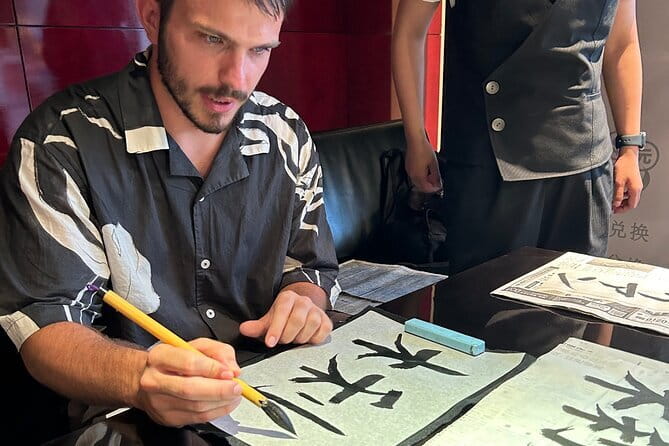
The session begins with an explanation of brush use and ink application. This is the practical heart of the lesson. You learn how to control the brush, how much ink to use, and how to make a stroke begin and end with purpose.
For a first-timer, this step is more valuable than a long talk about calligraphy history. You need to feel how the brush responds. Too much pressure can make a stroke broad and heavy. Too little can leave a thin, hesitant mark. The amount of ink also changes the result, so the instructor’s advice helps you avoid wasting your paper while you work out the basics.
The workshop supplies the brushes, ink, and washi paper. That keeps the experience simple and helps justify the price. You are not paying for a short demonstration followed by a list of materials to buy. The tools are ready for you, and the paper gives your work the proper look and feel of a Japanese calligraphy piece.
The pace is likely brisk because the full session lasts approximately one hour. You should expect an introduction and repeated practice rather than a long technical lesson. If you already study Japanese calligraphy, you may find the material basic. If you have never held a calligraphy brush, the short format is a sensible way to see if you enjoy it.
Practicing One, A, Forever, and Kyoto
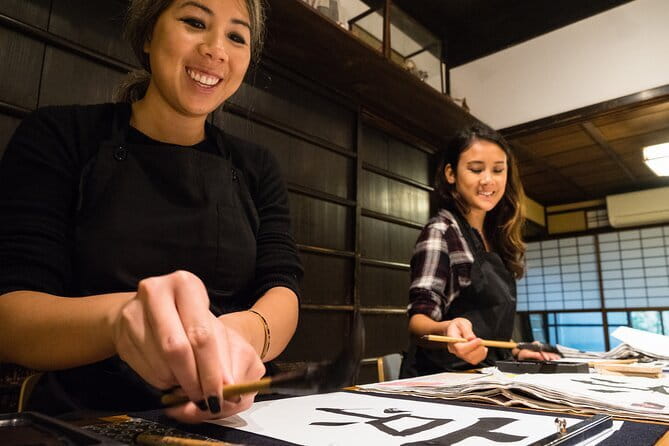
After learning the basic handling, you practice several simple characters. The class names Kanji including One, A, Forever, and Kyoto. These give you a useful range of shapes and strokes without making the first exercise too demanding.
Starting with basic characters is a good choice. You can focus on brush control instead of trying to copy a complicated phrase. The repetition also gives you several chances to improve before creating a finished piece. Your first attempt may look uncertain, while the next one has a cleaner line and better balance. That visible progress is one of the pleasures of a short workshop.
The characters also make attractive souvenirs. You can turn the Kanji you write into a scroll and take it home. The result is more personal than a souvenir purchased from a shop because you made the marks yourself, even if the instructor helped you get there.
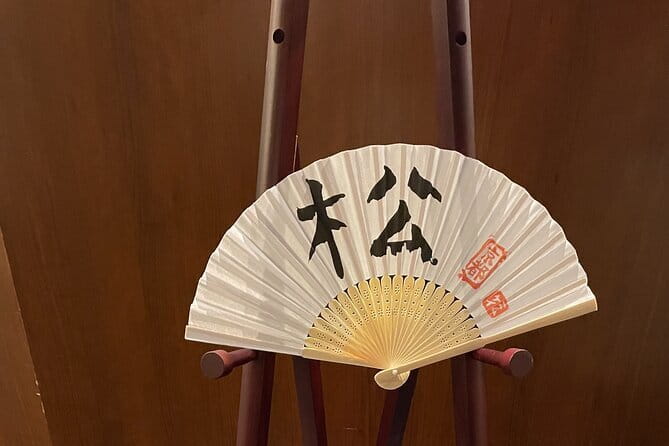
Some of the activity feedback also describes additional keepsake options such as decorated items, fans, and a photo frame. The core information confirms that you receive calligraphy creations to take home, while the exact selection may vary by session. Treat these extras as possible additions rather than something to book solely for a particular item.
Turning your name into Kanji
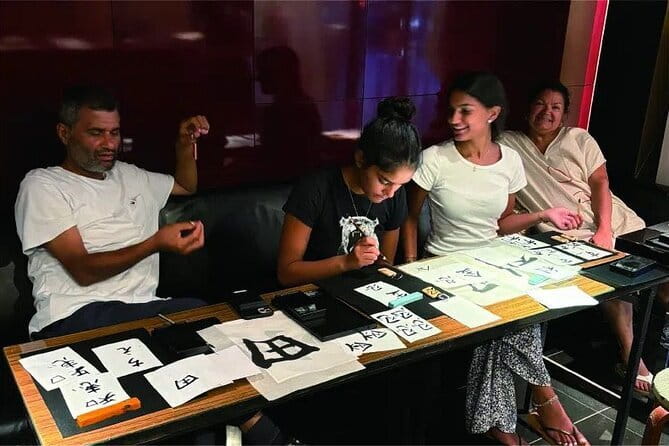
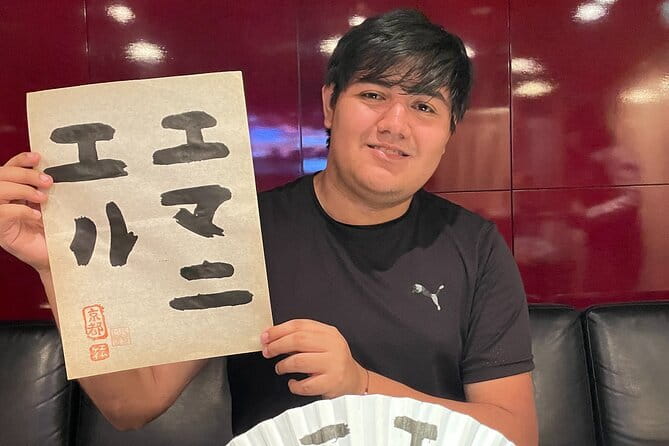
The most unusual part of the class is creating an approximate Kanji version of your own name. Japanese names and foreign names do not always match neatly, so the staff help you choose characters based on sound and meaning.
For example, the name Brian may be rendered as 武礼安. The characters can suggest ideas such as martial strength or bravery, politeness or gratitude, and peace. Liz may become 梨図, using characters connected with pear and painting. These examples show why the exercise is more than a simple letter-for-letter translation.
You should understand that this is an approximate artistic rendering, not necessarily a standard Japanese name. That is part of the fun. The staff can explain the possible characters and their meanings, helping you choose something that feels suitable for your souvenir.
This personal element is where the activity becomes especially memorable for families and couples. Each person can leave with a different piece, and children can take part in choosing characters and practicing their names. A parent and a 9-year-old both enjoyed the session, which gives you a useful sense of the family-friendly level.
You may also write favorite words in Kanji, Hiragana, or Katakana, depending on the session and the guidance available. The supplied information confirms that staff help with names and meanings, while hands-on accounts describe working with several Japanese writing systems. Ask the instructor what options are available when you arrive.

What you take home
The finished work is the strongest value in this experience. You are not left with only a memory and a quick photo. You can take your calligraphy creations home, including a possible scroll made from the characters you write.
Washi paper also gives the work a different feel from ordinary printer paper. Its texture makes even a beginner’s character look more like a keepsake. Do not expect museum-quality calligraphy after one hour, but that is not the point. The charm comes from the connection between the character, the meaning, and the fact that you made it in Kyoto.
If you are packing light, think about how you will protect the paper during the rest of your trip. The activity information confirms that you can take the work home, but it does not specify protective packaging or mailing services. A firm folder or a little space in your luggage would be sensible.
The souvenir value also makes this a good choice near the end of a Japan trip. You can write your name or Kyoto and carry home something tied directly to your time in the country. It works better as a personal memento than as a polished art lesson.
Price, timing, and overall value
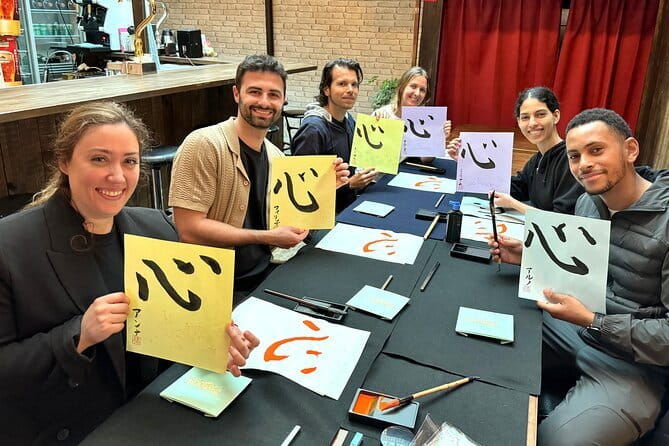
The listed price is $50.40 per person for about one hour. That is not a bargain if you judge the experience only by clock time. You are paying for instruction, a small group setting, use of brushes and ink, washi paper, help with Japanese characters, and finished pieces to take home.
I think the value is strongest for first-time visitors who want an activity rather than another sightseeing stop. The class gives you a cultural experience you cannot get from looking at calligraphy in a shop window. It also avoids the extra cost and effort of buying equipment for a hobby you may not continue.
The price makes less sense if you are seeking advanced training or a long, quiet study session. This is an introduction with souvenirs, not a serious multi-hour course. You should book it for the combination of instruction and personal keepsakes.
The one-hour length is also easy to fit into a Kyoto schedule. You can pair it with time around Kyoto Station, use it on a day with an early train, or place it between other plans. Since the activity ends at the meeting point, you return to the same convenient area.
Who should book this class
I would recommend it most strongly to:
- Families looking for a creative activity that children can join
- First-time visitors who want to try a traditional Japanese art
- Couples or friends who want matching or contrasting name souvenirs
- People staying near Kyoto Station
- Anyone with an interest in Japanese writing but no previous experience
- Visitors with a spare hour who prefer participation to passive sightseeing
It is less suitable if you need a long lesson, formal artistic training, or a highly detailed study of calligraphy history. It may also feel rushed if you spend too much time taking photos or arrive late, since the total session is short.
English support is an important practical advantage. The staff are described as conversant in English, and the activity includes explanations of brush technique, Kanji choices, and meanings. That makes the class approachable even if you know no Japanese.
Booking details worth knowing
Confirmation is received at booking, and the experience accepts a mobile ticket. The maximum group size is 10, so the class has a more personal scale than a large bus-tour activity.
Most people can take part, and the workshop is near public transportation. The provided information does not list special accessibility arrangements, so contact the provider if you have specific mobility or support needs.
Cancellation is free when you cancel at least 24 hours before the local start time. Cancellations or changes made less than 24 hours ahead are not accepted for a refund. That policy is fairly standard, but Kyoto station plans can shift, so check your train and sightseeing schedule before reserving.
Should you book the Kyoto calligraphy lesson?
Book this class if you want a short, friendly introduction with something personal to carry home. The name-in-Kanji exercise, small group size, English guidance, and supplied materials make it easy for beginners, while the location saves travel time.
I would especially choose it for a family or for a final-day activity near Kyoto Station. Just allow time to find the MK taxi stand and keep your expectations realistic. You will not become a calligrapher in one hour, but you can learn the basics, make a few handsome marks, and leave Kyoto with a souvenir that carries your own handwork.
FAQ
Where does the Japanese calligraphy lesson meet?
The meeting point is the MK Taxi VIP Station at Kyoto Station’s Hachijo Exit, near the MK taxi stand and Kyoto sightseeing reception area.
How long does the activity last?
The lesson lasts approximately one hour.
What is the price?
The listed price is $50.40 per person.
What materials are included?
The activity includes the use of brushes, ink, and washi paper.
Can I take my calligraphy home?
Yes. You can take your finished calligraphy creations home as souvenirs, including a possible scroll made from the Kanji you write.
Can I write my name in Japanese?
Yes. Staff assist you with possible Kanji characters for your name and explain their approximate meanings.
Is the class suitable for children?
Yes. The experience is family-friendly, and activities are available for kids.
How many people can join the class?
The activity has a maximum group size of 10 travelers.
Is the class near public transportation?
Yes. It takes place near Kyoto Station and public transportation.
Can I cancel for a full refund?
Yes, if you cancel at least 24 hours before the experience start time. Cancellations or changes made less than 24 hours before the start time are not refunded or accepted.
More Workshops & Classes in Kyoto
More tours in Kyoto we've reviewed






Workshops, compared.
 ★ 4.3Kyoto: 45-Minute Tea Ceremony Lesson ExperienceFrom $2245 min
 ★ 5.0Ramen Cooking Class at Ramen Factory in KyotoFrom $131
 ★ 4.9Kyoto: Ramen Cooking Class at a Ramen Factory with SouvenirFrom $1271h 30m
 ★ 4.9Kyoto: Samurai Class, Become a Samurai WarriorFrom $70
 ★ 5.0Ninja 1-hour Hands-on Lesson by Japanese master in Kyoto -EntryFrom $80
 ★ 5.0Kyoto: Ramen, Gyoza, and Onigiri Cooking ClassFrom $901h 30m