
Reviewed · SAMURAI & KENDO EXPERIENCES
Kendo and samurai experience in Kyoto
Handling a Japanese sword is the heart of this two-hour class near Shugakuin. You learn how to stand, draw, swing, and cut with control, then practice kendo with bamboo and foam swords. The class aims to finish with tatami-mat cutting, but that part is no longer reliably available because of a change in Japanese law.
I like the small-class feel, which gives the instructor time to correct your posture and answer questions. I also like the mix of serious martial-arts instruction and playful photo moments, including samurai clothing and sword poses.
The main drawback is the price, about $105.68 per person, especially if tatami cutting is not offered. The venue can also be hard to find, and the amount of time spent dressing, taking photos, and talking varies by instructor.
In This Review
- Key points at a glance
- What you actually do in the two-hour class
- At studio NIN near Shugakuin
- Learning the samurai basics
- Kendo with bamboo and foam swords
- Samurai clothing, replica blades, and photo time
- The important question about tatami cutting
- How much value do you get for $105.68?
- Who will enjoy this most
- Booking, cancellation, and useful planning details
- Should you book the Kyoto kendo class?
- FAQ
- Where does the kendo and samurai experience take place?
- How long does the experience last?
- Is previous martial-arts experience required?
- What equipment do I use?
- Can I wear samurai or kendo clothing?
- Is tatami-mat cutting included?
- What is the cancellation policy?
Key points at a glance
- Practice real kendo basics: Learn posture, movement, sword handling, and striking with training weapons.
- Expect personal instruction: The class is private or capped at 15 people, and some bookings have had only one group present.
- Meet near Shugakuin: The studio is at 16 Shūgakuin Daidōchō in Kyoto’s Sakyo Ward, outside the busiest sightseeing areas.
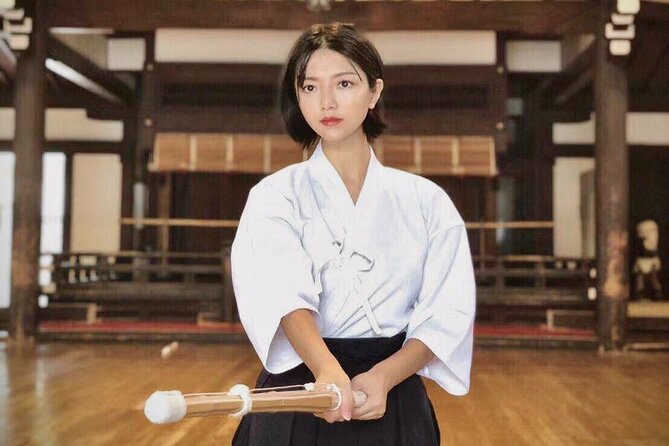
- Try samurai clothing and photo poses: Training gear and staged sword scenes are part of the appeal.
- Treat tatami cutting as uncertain: Some earlier sessions included it, but a legal change means it may not be offered now.
- Plan for a two-hour visit: That time includes explanations, changing, photography, and hands-on practice.
What you actually do in the two-hour class
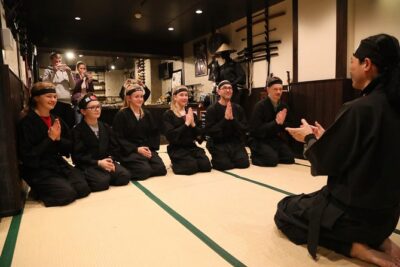
This is not a stage show where you sit and watch a performer swing a sword. You take part from the beginning, with instruction on the history, manners, movements, and discipline connected with samurai sword arts.
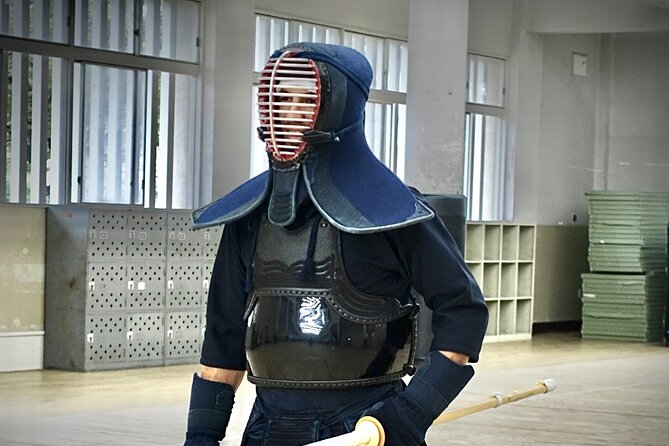
The lesson uses several training tools. You may handle a bamboo sword for kendo, a foam sword for safer movement practice, and a blunt replica blade for learning traditional sword handling. That mix matters because each tool teaches something different. The bamboo sword introduces kendo’s rhythm and striking method, while the replica blade helps you understand how a katana is held, drawn, and controlled.
No martial-arts background is needed. You are not expected to know Japanese terms or arrive in good fighting shape. The instructor demonstrates each movement, then gives you a chance to repeat it. Patient teaching is one of the strongest parts of the class, especially for beginners who need several attempts to get the footwork and hand position right.
You should expect a class that feels educational but not stiff. The tone is described as friendly and light, with time for questions and photographs. Instructors such as Taka, Kengo, and Hayato-San have been praised for clear explanations, patience, and a good sense of humor. English ability may vary, though several sessions have been led in very good English. Keep Google Translate available if you need detailed explanations and your instructor’s English is limited.
A few more Kyoto tours and experiences worth a look
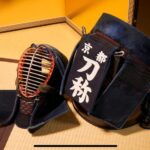
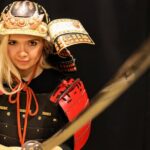
At studio NIN near Shugakuin
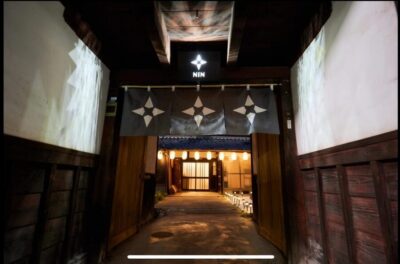
The meeting point is studio NIN, at 16 Shūgakuin Daidōchō in Kyoto’s Sakyo Ward. The activity begins and ends there, and the listed itinerary identifies Shugakuin Imperial Villa as the stop.
This is not a central Kyoto attraction beside the usual temple circuit. The area is on the outskirts of the city, and finding the studio can take extra attention. One person arrived late after missing trains and having trouble finding directions. Another described the location as peaceful but a little difficult to reach and locate.
Give yourself time to get there. Keep the address saved on your phone, and do not assume that the studio will be obvious from a busy street. The quieter setting is part of the charm, since the class offers a break from Kyoto’s crowded core. Still, the location is a real practical consideration if you have a packed day of temples, markets, and appointments.
The venue itself may not match every visitor’s expectation of a polished martial-arts school. One dissatisfied participant found the space small, dusty, and run down, while others enjoyed the atmosphere of an old Japanese dojo. Your reaction may depend on what you value more: a spotless modern studio or a simple, lived-in training space with character.
Learning the samurai basics
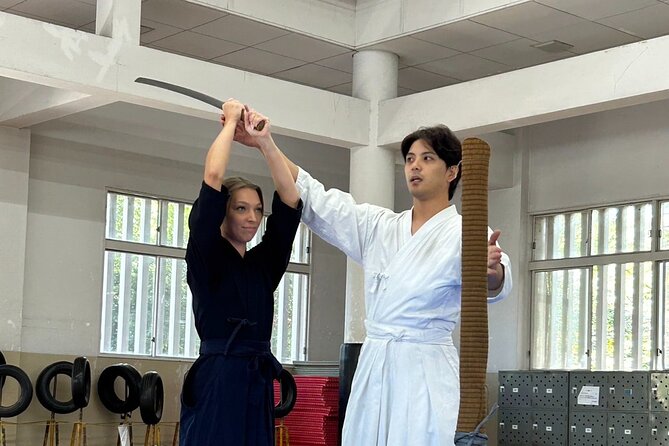
The opening part of the lesson covers context. You learn about samurai customs, kendo traditions, sword terminology, rules, and the proper way to treat the weapon. This section gives the physical practice a purpose. You are not simply learning a dramatic pose for a photograph.
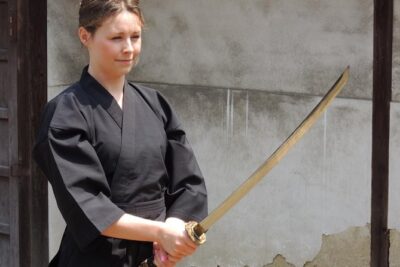
You may practice taking the sword in and out, standing correctly, gripping the handle, and making a controlled swing. The instructor watches your form and explains that technique matters more than raw strength. That is good news if you are smaller, older, or simply new to martial arts.
The discipline can be surprisingly precise. The angle of your arms, position of your feet, and direction of your cut all affect the result. This is where the class offers more than a costume photo session. You get a short introduction to the concentration and repetition behind Japanese sword arts.
The schedule is not rigidly described, so the balance between teaching and practice may change. Some people felt they had enough time for technique and sparring. Others wanted less small talk and more sword work during the two-hour session. If practice is your priority, say so early and ask the instructor how the time will be divided.
Kendo with bamboo and foam swords
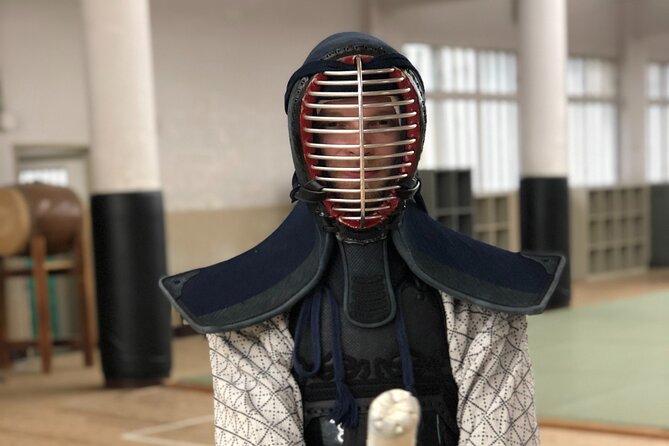
Kendo is the sport side of the experience. You use a bamboo practice sword, and foam equipment may also be used for safer drills. The instructor introduces basic strikes and movement before you try them yourself.
Some sessions include a little sparring between members of the same group. This can be a fun payoff after learning the rules and posture, though it should not be confused with a full kendo lesson or formal match. The class gives you a taste of the art rather than the training needed to become proficient.
You will also learn why kendo is not simply theatrical sword fighting. The emphasis is on timing, control, stance, and discipline. A good instructor keeps the class safe and makes sure beginners do not feel pressured. That no-pressure approach is important when you are holding a sword for the first time.
The class works particularly well for families with older children, couples, friend groups, and solo participants who enjoy trying something physical. Most people can participate, and no prior martial-arts experience is required. Service animals are allowed, according to the activity details.
Samurai clothing, replica blades, and photo time
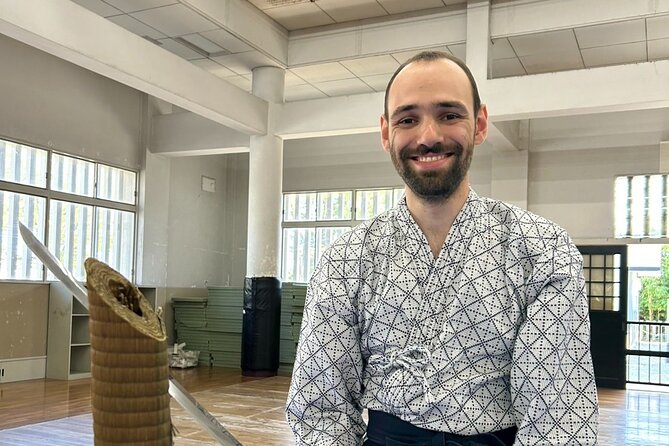
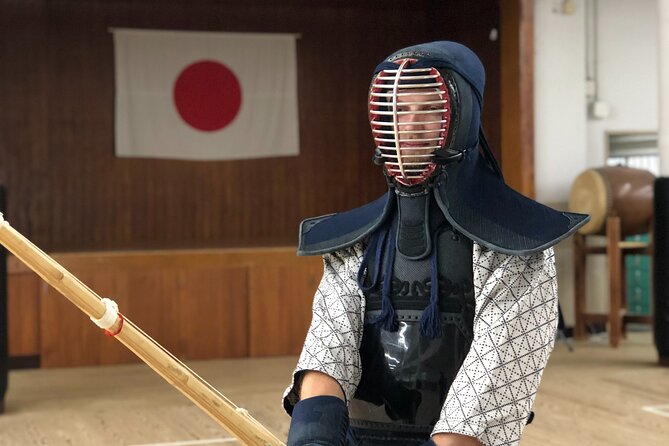
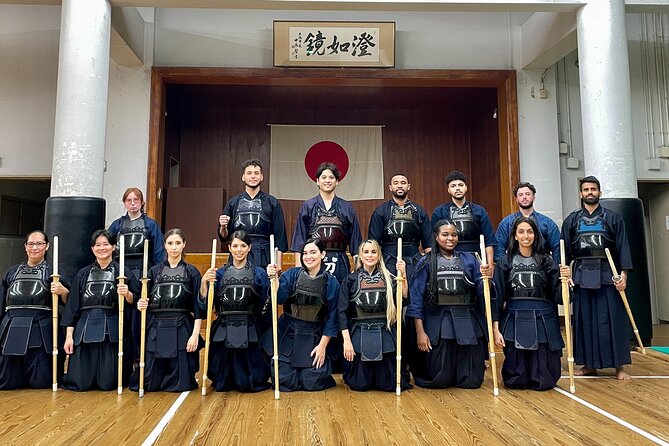
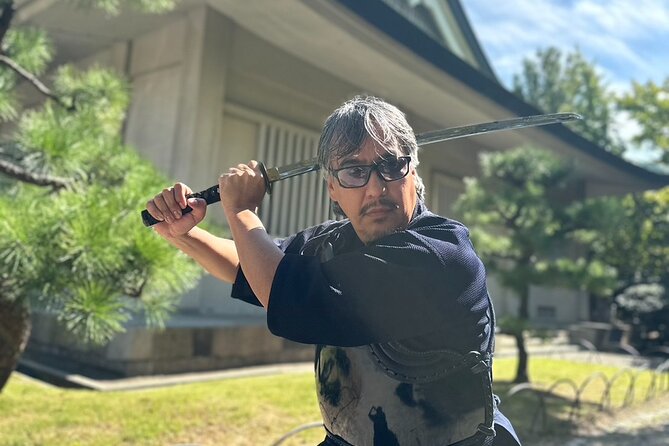
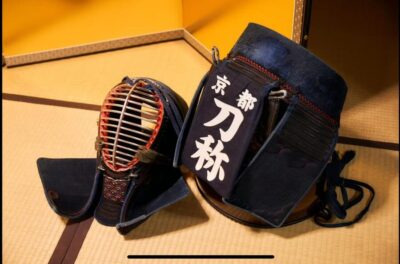
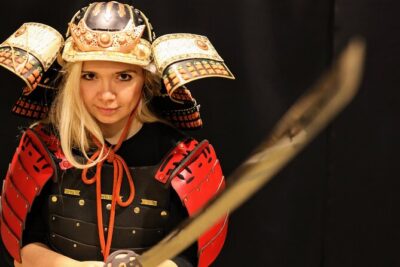
The visual side of the class is a major reason to book. You may wear authentic training gear, samurai attire, or kendo armor for photographs. The instructor can help take pictures and videos, so you do not have to rely entirely on a stranger or a timer.
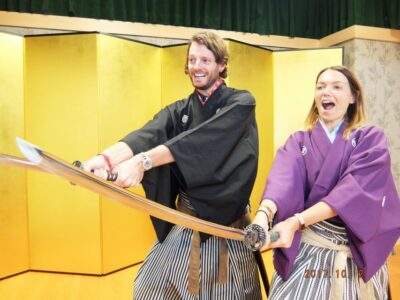
This part can produce some of the best memories, especially if you are traveling with friends or family. You get photos of formal sword positions, kendo movements, and the atmosphere of the dojo. The staged scenes are clearly part of the fun, but they are connected to the lesson rather than being the entire activity.
Expect some time to go toward changing clothes and posing. That is worth knowing because the advertised two hours is not two full hours of continuous sword drills. One participant felt too much time went to dressing, conversation, and photos. Another considered the photos and costume moments an essential part of the visit.
Tell the instructor what matters most to you. If you want strong photos, ask for time to take them. If you care more about technique, ask for extra practice after the basic demonstrations. A small group makes that sort of adjustment easier.

The important question about tatami cutting
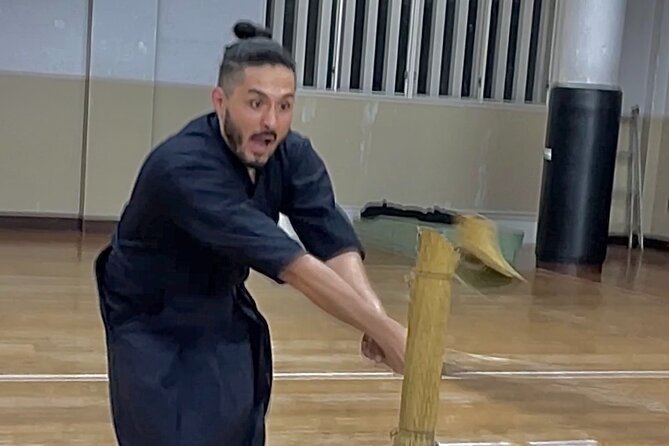
Tatami-mat cutting, known as tameshigiri, is the most confusing part of this activity. Earlier sessions included it, and some people describe cutting a tatami roll with a real katana in one clean stroke. For many, that was the high point.
However, a legal change in Japan means the provider may no longer offer tatami cutting legally. You should not book this activity expecting that part to happen. The current practical assumption is that you will learn sword handling and kendo, while tatami cutting remains uncertain or unavailable.
That change is frustrating because the experience has been promoted around the idea of a final cut. It is also not something the instructor can simply ignore. If tatami cutting is essential to your decision, contact Atelier NIN before booking and ask for the current policy.
You may still handle a blunt replica blade and learn the mechanics of a proper cut. That gives you a useful sense of technique without turning the class into a dangerous stunt. Just separate the value of the lesson from the possibility of cutting a mat.
How much value do you get for $105.68?
At roughly $105.68 per person, this is not a cheap Kyoto activity. The value depends on what you want from it.
For a private class, the price is easier to justify. You receive direct instruction, equipment, clothing, photo help, and a cultural lesson in one visit. A group of five once found that nobody else had booked their time slot, so they received what was effectively a private class. The maximum group size is 15, but your actual session may be much smaller.
The price is harder to defend if your class is mostly dressing and photographs, or if you specifically expected tatami cutting and do not receive it. Communication quality and the instructor’s approach can also affect how much practice you get.
I would compare this with the cost of other specialized Kyoto activities, but the key question is personal. If you want a polished attraction with guaranteed spectacle, this may disappoint. If you want a hands-on introduction with a real instructor, personal correction, and a cultural angle beyond castles and museums, the price can make sense.
The overall rating is 4.7 from 47 ratings, with 94 percent recommending it. That points to a strong experience for most people, but the lower scores identify the same risks: no tatami cutting, a modest venue, a hard-to-find meeting point, and uneven value for the time available.
Who will enjoy this most
I would recommend this class to you if you enjoy learning by doing. It suits people who want more than a standard sightseeing stop and who like the mix of history, physical practice, clothing, and photographs.
It is also a good choice for a small group. Friends can practice together, take turns with the camera, and enjoy a little sparring if the instructor includes it. Couples and families can get personal attention without the pressure of joining a large martial-arts workshop.
You should think twice if you want a formal, advanced kendo lesson. Two hours is enough for an introduction, not mastery. You should also reconsider if your main goal is guaranteed tatami cutting, since that feature may no longer be legal.
The setting may appeal to you if you like quieter parts of Kyoto. Shugakuin gives the outing a different rhythm from the city center, but you need to accept the extra effort of finding the studio.
Booking, cancellation, and useful planning details
Confirmation is provided when you book, and the experience uses a mobile ticket. The activity requires a minimum number of participants, so a cancellation for low enrollment is possible. In that case, you are offered another date or experience, or a full refund.
You can cancel for a full refund up to 24 hours before the start time. Changes or cancellations inside that 24-hour window are not accepted and are not refunded. The cut-off follows Kyoto local time.
Wear something that makes changing easy, though the supplied information does not specify a required dress code. Since dressing and photographs take part of the session, arrive ready to follow the instructor’s directions and keep your phone available for pictures.
Should you book the Kyoto kendo class?
Book it if you want a personal, beginner-friendly introduction to kendo and samurai sword handling, especially with a small group of friends. The best parts are the patient instruction, the chance to use several training weapons, and the photographs in samurai or kendo gear.
Do not book it on the promise of tatami cutting alone. Ask Atelier NIN directly if that activity is currently permitted and included. Also allow extra time to reach studio NIN near Shugakuin, and expect a simple dojo rather than a polished tourist attraction.
For the right person, this is a memorable way to connect physical technique with Japanese culture. At $105.68, it needs to deliver more than a costume change, but the personal teaching and hands-on practice can make the price worthwhile.
FAQ
Where does the kendo and samurai experience take place?
It begins and ends at studio NIN, 16 Shūgakuin Daidōchō, Sakyo Ward, Kyoto, 606-8037, Japan. Shugakuin Imperial Villa is identified as the itinerary stop.
How long does the experience last?
The activity lasts approximately two hours.
Is previous martial-arts experience required?
No. The instructor teaches the basics, and most people can participate.
What equipment do I use?
The class uses bamboo practice swords, foam swords, and blunt replica blades. You also learn real techniques used in kendo and traditional swordsmanship.
Can I wear samurai or kendo clothing?
The activity includes authentic training gear, and some sessions include samurai attire or kendo armor for photographs. The exact clothing available may vary.
Is tatami-mat cutting included?
Tatami cutting is uncertain. A legal change in Japan means it may no longer be offered, even though some earlier sessions included it. Ask Atelier NIN before booking if this is important to you.
What is the cancellation policy?
You can cancel up to 24 hours before the start time for a full refund. Cancellations or changes made less than 24 hours before the start time are not accepted or refunded.
More Samurai & Kendo Experiences in Kyoto
More tours in Kyoto we've reviewed










Samurai & Kendo Experiences, compared.
 ★ 5.0Kyoto Samurai ExperienceFrom $119
 ★ 4.9Kyoto: Kendo and Samurai Experience with Uniform and GearFrom $1032 hours
 ★ 4.5Skip the lines Basic Ticket at SAMURAI NINJA MUSEUM KYOTOFrom $28
 ★ 4.9Kyoto: Samurai Class, Become a Samurai WarriorFrom $70
 ★ 5.0Ninja 1-hour Hands-on Lesson by Japanese master in Kyoto -EntryFrom $80
 ★ 4.8Kyoto: Ninja Weapon Forging ExperienceFrom $1482h 30m